
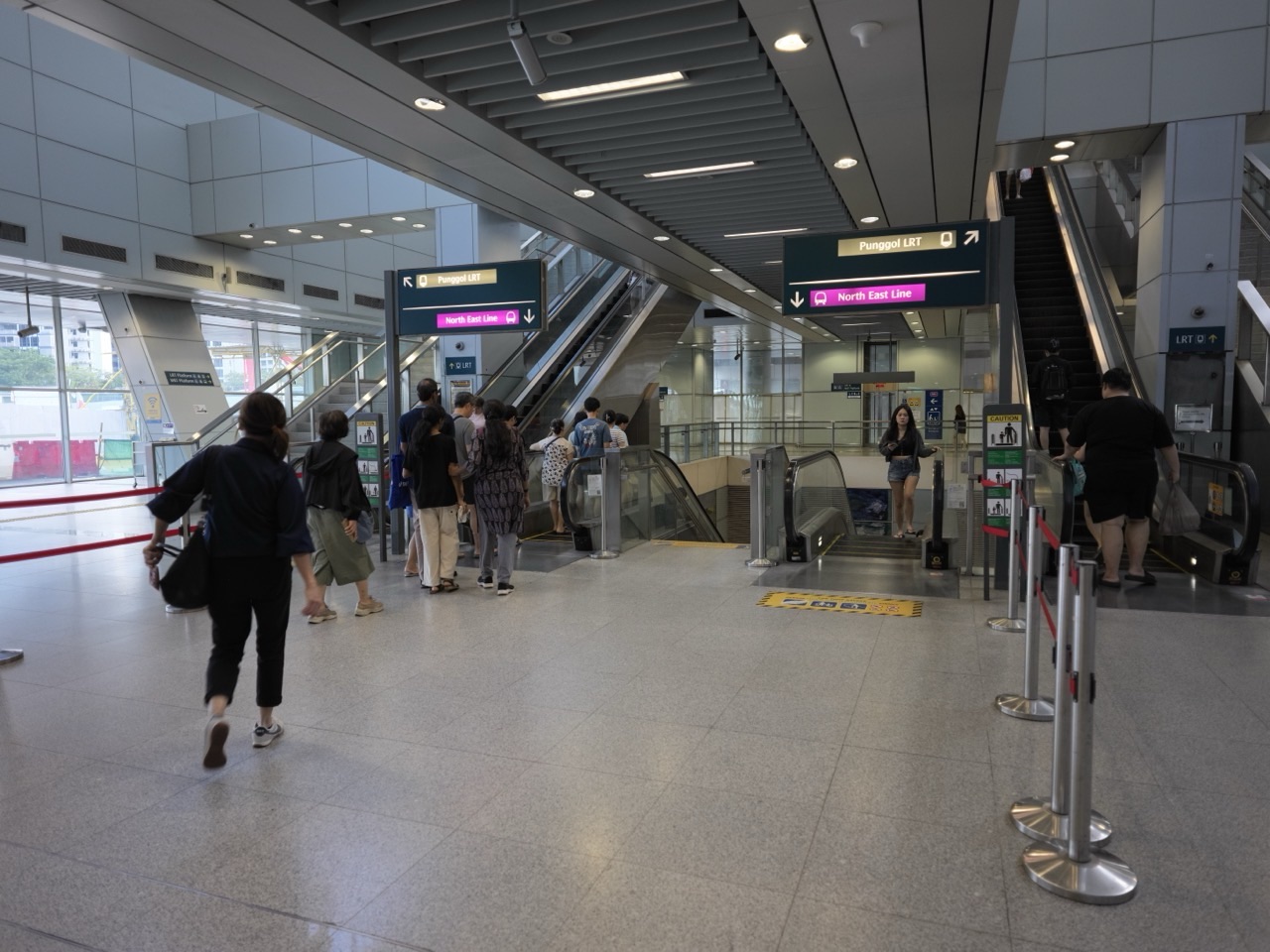
For Punggol parents comparing G3, G2, G1, the Integrated Programme (IP) and the International Baccalaureate (IB), begin with one clear distinction: PG1, PG2 and PG3 are Secondary 1 posting categories, G1/G2/G3 are subject levels, IP is a defined school programme, and the IB Diploma is a pre-university qualification. Punggol’s four mainstream secondary schools—Edgefield, Greendale, Punggol and Yusof Ishak Secondary—are not IP schools. A family seeking IP or a school pathway leading to IB will generally need to look beyond Punggol and make a much more deliberate travel and programme decision.
First check the child’s actual PSLE and school-entry eligibility, then compare the education that the child would experience over four to six years. Examples of established IP-to-IB Diploma routes include St. Joseph’s Institution and Anglo-Chinese School (Independent); other IP schools lead to the A-Levels. A student can also complete a mainstream SEC route and apply later for appropriate pre-university options. The right choice turns on academic fit, gender-specific lower-secondary admission rules, fees and support where applicable, CCAs, family travel and the child’s own preferences—not the letters ‘IP’ or ‘IB’ alone.
- Punggol’s four mainstream secondary schools are not IP schools; use them as ordinary Full SBB school choices.
- IP is a six-year or equivalent integrated pathway and does not automatically mean IB: some routes lead to A-Levels.
- The IB Diploma involves six subjects and core elements including Theory of Knowledge, Extended Essay and Creativity, Activity, Service.
- At SJI, Years 1–4 are boys-only; its Year 5–6 IBDP is coeducational. Check each school’s actual entry route.
- A long Punggol-to-Bishan, Novena, Dover or other cross-town commute is a four- to six-year family consideration.
- An IP/IB decision should preserve realistic school fit, wellbeing and alternative paths, not a status ranking.
Five terms that parents should separate immediately
| Term | What it actually describes | What it does not mean |
|---|---|---|
| PSLE Score | Sum of four PSLE subject Achievement Levels; a key input to admissions. | A lifelong measure of intelligence or effort. |
| PG1, PG2, PG3 | Admission categories for ordinary Secondary 1 posting under Full SBB. | Three rigid streams determining every subject and all later choices. |
| G1, G2, G3 | Demand level at which an individual secondary subject is taught and examined. | The name of a school or the entire educational pathway. |
| Integrated Programme (IP) | A school-specific longer integrated secondary/pre-university route, generally without the ordinary SEC examination at Year 4, subject to programme rules. | A guarantee of university entry or automatically the IB curriculum. |
| International Baccalaureate Diploma (IBDP) | A two-year pre-university diploma with a defined subject-and-core framework. | A standard MOE Secondary 1 Posting Group or a programme provided by every IP school. |
A child who applies for an IP school is making an institutional and learning-style decision, not selecting a fourth Posting Group called ‘IP’. Likewise, enrolling in a non-IP school after PSLE does not permanently prohibit reaching the IBDP or A-Levels later. The correct route depends on later qualifications and admissions requirements, which can change with policy. Always read the named school’s own programme and admissions page.
What is available inside Punggol?
| Mainstream local school | Location | IP / IBDP status | Decision relevance |
|---|---|---|---|
| Edgefield Secondary | 36 Punggol Field | Not an IP school | Ordinary Full SBB options; review current G1–G3 admissions and subjects. |
| Greendale Secondary | 51 Edgedale Plains | Not an IP school | Ordinary Full SBB with school-specific programmes and CCAs. |
| Punggol Secondary | 51 Edgefield Plains | Not an IP school | Ordinary Full SBB; verify current electives and student support. |
| Yusof Ishak Secondary | 8 Sumang Walk | Not an IP school | Ordinary Full SBB; consider Sumang/Soo Teck transport access. |
A strong local mainstream school is not a second-best school merely because it does not have an IP label. Local schools offer national curricula, teachers, CCAs, applied learning and possible post-secondary progression. A Punggol child who wants Science, Mathematics, English, performing arts or service learning may discover excellent daily opportunities in a mainstream school, with less time lost commuting. Parents should examine programmes in concrete detail, not assign educational worth by abbreviation.
Which established IP schools might Punggol families investigate?
| School or programme | Region / access question | Important entry or outcome distinction |
|---|---|---|
| St. Joseph’s Institution | Malcolm Road / Novena area; test from Punggol by actual route | Boys-only Years 1–4; IP leads to IB Diploma; also a separate SEC track. |
| Anglo-Chinese School (Independent) | Dover area; long cross-island travel question | IP progresses to IBDP in Years 5–6; check Year 1 admission conditions and school-specific policy. |
| Raffles Institution | Bishan / central north | Boys’ lower-secondary IP; leads along its own pre-university route, not automatically IBDP. |
| Catholic High School | Bishan | Boys’ IP track; verify the current programme, entry and onward partner arrangements. |
| CHIJ St. Nicholas Girls’ School | Ang Mo Kio | Girls’ IP; a geographically relevant north-east-side option for eligible students. |
| Cedar Girls’ Secondary School | Potong Pasir / Aljunied corridor | Girls’ IP route; check linked JC route and real commute. |
| Victoria School | Eastern Singapore | Boys’ IP route; compare long-term study goals and eastward commute. |
This is a research list, not a current-year eligibility list. Entry categories, programme availability, school gender policies, affiliated arrangements and admissions rules must be checked at the time of application. Some schools have both IP and mainstream tracks, and admission to one does not imply admission to the other. The practical school location may also change if a campus temporarily relocates or a transport service changes.
Two different IP-to-IB routes: SJI and ACS (Independent)
St. Joseph’s Institution: distinguish its IP and SEC tracks
The official St. Joseph’s Institution overview states that SJI offers boys a six-year IP leading to the IBDP in Years 5 and 6, alongside a four-year SEC track. Its IBDP in Years 5 and 6 admits boys and girls. That gender distinction matters: a family should not claim that a girl can enter the SJI boys-only lower-secondary IP merely because the eventual IBDP is coeducational. The school publishes route-specific entry arrangements; the family should ask which exact programme an application concerns.
SJI’s approach emphasises interdisciplinary inquiry, character formation and the ability to learn independently. That description is useful only when connected to the child: does the pupil enjoy researching a question, reading across disciplines, presenting an argument and working steadily without constant external pressure? A child who thrives on frequent exam checkpoints may prefer a different school rhythm. Ask about assessment, workload, learning help, CCAs, costs and travel before letting a one-number score comparison decide.
ACS (Independent): IP progressing to IBDP
The official ACS (Independent) information describes a six-year IP where pupils enter in Year 1 or Year 3 and progress to the IBDP in the final two years, rather than taking the ordinary SEC examination at the end of Year 4 other than applicable Mother Tongue requirements. The IP includes interdisciplinary work and structured preparation for independent study. Verify lower-secondary entry, gender policy, admission criteria, financial commitments and the school’s actual timetable with current official documentation.
For a Punggol family, ACS(I) at Dover represents a substantial geographical commitment. Parent questions should include whether an early departure and afternoon return would reduce sleep, whether the student can participate in CCAs, and whether the school’s distinctive pedagogy justifies daily cross-island travel. Boarding or alternative arrangements should not be presumed. It is possible for an academically qualified pupil to decide that another school is better.
IP is not one curriculum: what the six-year commitment changes
In a typical mainstream route, students work towards SEC assessment at the appropriate subject level, then apply for post-secondary education. In an IP route, the school integrates secondary and pre-university learning, generally bypassing the regular Year 4 SEC examination under the programme rules. The benefit can be more time for inquiry, interdisciplinary projects and sustained subject development. The trade-off is that the pupil is making an earlier commitment to a particular school structure and educational direction.
Parents should ask what happens if the child is unhappy, needs a different subject structure or wishes to change school. A transfer or programme change may be possible under certain rules but should not be treated as effortless. Ask about progression criteria, assessment checkpoints and the support available when a student’s results or wellbeing change. A school’s impressive final qualification is not an adequate substitute for understanding what Year 1, Year 2 and Year 3 actually feel like.
What does the IB Diploma ask of a learner?
The two-year IB Diploma Programme is broad by design. Students normally take six subjects across language and literature, language acquisition, individuals and societies, sciences, Mathematics, and arts or an approved alternative subject. Three subjects are normally at Higher Level and three at Standard Level. Alongside the subjects are the Extended Essay, Theory of Knowledge and Creativity, Activity, Service (CAS). These create a strong need for independent inquiry, writing, time management and sustained reflection.
The distinction from the Singapore-Cambridge A-Level pathway is meaningful but not a simplistic ‘better’ versus ‘worse’. A pupil who loves academic breadth, research writing and finding connections may enjoy IB. A pupil who wants a particular combination of advanced disciplinary work may find an A-Level route more naturally aligned. Both require serious study; both can open university routes when the applicant meets requirements. The right comparison is between curriculum structures and learner needs.
Do not confuse IB with international school admission
IB qualifications are offered by several kinds of institutions worldwide, including Singapore schools with nationally recognised routes and private/international schools. Those institutions can have very different admission criteria, school fees, calendars, nationality restrictions or curriculum transitions. A Punggol parent should not infer that an IB school found through an international directory automatically participates in the normal MOE Secondary 1 Posting exercise.
If a family is researching private or international schooling, inspect legal recognition, accreditation, fees, transport, educational support and progression separately. The four-part comparison in this guide concerns the major MOE/mainstream and established IP-to-IB distinctions relevant to a Singapore PSLE family. Do not collapse those categories simply because both institutions use the words ‘IB Diploma’.
The geography problem: Punggol to an IP or IB school
The commute is especially important when the destination is outside Punggol. A journey to Bishan, Ang Mo Kio, Potong Pasir or Novena is different from a trip to Dover or eastern Singapore, and the best route may differ dramatically between a home near Punggol MRT and one in Northshore or Sumang. Some journeys require one or more transfers plus a substantial final walk. An all-island school list without realistic travel data is not a useful parent guide.
| Punggol starting zone | IP/IB route to test | What to count |
|---|---|---|
| Punggol Central / MRT | Bishan, Novena, Ang Mo Kio and other connected corridors | Train transfers, platform waits, final walk and actual morning arrival. |
| Sumang / Soo Teck | First LRT/bus leg then onward cross-town trip | First waiting time and last feeder trip after CCA. |
| Northshore / Punggol Point | Feeder connection to central interchange before long-distance leg | Total return journey, not just the main MRT portion. |
| Edgedale / Oasis | Local LRT or bus, then relevant cross-town connections | Late-evening safety and weather exposure. |
| Matilda / Waterway East | Nearest interchange or direct bus alternatives | Reliable school-gate timing and child’s capacity for independent travel. |
To compare properly, do a live route check on a normal school day from your own front door to the actual school gate, with an arrival target appropriate to the school. Record the normal travel time and a disruption allowance, then simulate the return after CCA. Repeat in rain if possible. If a student returns late and must still eat, shower, read and complete work, the cumulative effect can outweigh modest differences in school reputation. Consult the Punggol schools transport guide for local Punggol feeder and walking considerations.
A six-year workload deserves a six-year family question
For a young student considering an IP programme, imagine Year 1 as well as Year 6. Will the child be comfortable taking public transport independently? Will they have time for friends, family and CCAs? Can they manage a long homework-and-project week without chronic sleep loss? What happens when transport is disrupted or the child is ill? A school that can stretch a pupil intellectually but leaves no energy to participate may not be the best environment.
Parents sometimes calculate prestige as a benefit but forget to calculate travel as a repeated cost. A better comparison is a weekly budget of school, journey, CCA, homework, rest, friendships and independent reading. The timetable should be plausible during an ordinary rainy Tuesday, not only on open-house day.
Does the child need IP to study medicine, engineering, law or science?
No. Many later university routes begin with non-IP secondary schools and a suitable post-secondary qualification. An IP route can offer attractive academic experiences, but it is not the only preparation for deep Mathematics, scientific reasoning, independent research or strong language skills. Students can develop those capacities in mainstream schools, junior colleges, polytechnics, special programmes and later education.
A parent should avoid narrowing a twelve-year-old to a university course on the basis of one examination. If a pupil currently enjoys engineering, ask what kinds of practical design, Mathematics, computing or science experiences they would actually receive. If medicine appeals, explore interest in biological systems and helping people while keeping subject prerequisites in view. A later career choice should be informed by growth and exploration, not simply the school badge at thirteen.
What does Direct School Admission (DSA) change?
DSA lets eligible pupils seek admission based on demonstrated talents and school-specific criteria, subject to the official process and obligations. It does not remove the need to understand the school’s actual academic programme, route and student fit. A pupil who excels in an instrument, sport, leadership or another recognised area may consider an appropriate DSA route, but the family must check the current application timetable and conditions at MOE Direct School Admission.
Do not promise that joining an impressive Primary 6 CCA automatically gives a DSA offer. Selection is school-specific and evidence-based. Nor should parents pursue a talent route the child does not enjoy merely as a backdoor to a school chosen for prestige. DSA commitment and school expectations must be understood before application.
How to compare a strong local Full SBB school and a distant IP school
| Decision dimension | Local Full SBB school | Distant IP/IB-track school |
|---|---|---|
| Admissions | Match the permitted Posting Group and actual school range. | Match that school’s IP route and current requirements. |
| Curriculum | G1/G2/G3 subject levels and SEC pathway as applicable. | Integrated school curriculum; eventual A-Levels or IBDP depends on school. |
| Subject flexibility | Ask about movement and upper-secondary combinations. | Ask about IP progression, optional subjects and transfer policy. |
| Daily journey | May allow walking or shorter local connection. | May demand earlier mornings, transfers and long CCA returns. |
| Learning style | National SEC preparation with subject-level teaching. | Potentially greater emphasis on independent inquiry and longer integrated work. |
| Cost and logistics | Check standard fees, concessions and transport. | Check independent-school fees if relevant, financial assistance and transport. |
| Student’s voice | Can the child see a place to belong and contribute? | Does the child actually want and sustain this educational structure? |
Three Punggol families, three different decisions
Family A: score 6, strong academic curiosity, lives near Punggol MRT
The family researches suitable IP programmes, not just historical entry scores. They visit schools, check actual admissions and determine whether the pupil enjoys independent inquiry, substantial reading and projects. They travel the route at school time. If a distant school fits well and the journey is sustainable, it may be an excellent option. If not, a good local or nearer mainstream school is not a failure.
Family B: score 13, wants applied Science and a lively CCA
This family investigates the nearby Punggol schools’ applied learning and CCA opportunities with the same seriousness as a more distant branded school. They ask how scientific curiosity is taught and which upper-secondary subjects are genuinely offered. The parent resists treating ‘not IP’ as an educational deficit. The family uses a mixed shortlist with realistic official admission options.
Family C: child enjoys literature but feels exhausted after travel
The child is capable and motivated, yet an early departure for a long journey could undermine wellbeing and the habit of reading. This family considers secondary schools that make academic development sustainable. The school’s library culture, language teaching and pastoral support may be more important than the most ambitious prestige narrative. The long-term objective is a learner who can keep growing.
Seven questions to ask an IP school before applying
- Which exact programme does the Secondary 1 entry offer lead into, and what qualification follows Year 6?
- Is this intake open to my child under the school’s gender and admission rules?
- Which published PSLE or DSA requirements apply for the year we are applying?
- How does the school assess pupil progress without the same ordinary Year 4 SEC route?
- What academic and pastoral support exists when a capable pupil struggles?
- How expensive and time-consuming are transport, equipment, enrichment and CCA commitments?
- If the pupil later wants a different route, what published transfer or progression arrangements actually exist?
What should a Punggol family ask about the six-year calendar?
A six-year IP route deserves a longer timeline than a first-year admission score. In the first two years, ask how the student will build knowledge, language and learning habits. In Years 3 and 4, ask how the school deepens subjects, evaluates progress and provides choices. In Years 5 and 6, examine the actual A-Level or IB Diploma curriculum, subject prerequisites and the work expected for university preparation. A family should understand this sequence before equating the programme with one attractive final qualification.
| Stage | Useful family question | What would be misleading |
|---|---|---|
| Years 1–2 | How does the school establish academic foundations, wellbeing and independent work? | Assuming every high-scoring twelve-year-old already knows how to research independently. |
| Years 3–4 | What pathways, subject options and progression requirements actually operate? | Assuming every desired subject remains available regardless of prerequisites. |
| Years 5–6 | Is the final programme A-Levels, IBDP or another recognised route, and how is it assessed? | Calling every IP student an ‘IB student’ from the start. |
| After graduation | Which university or post-secondary criteria will apply to the final qualification? | Promising an admission outcome from the Secondary 1 school label. |
Ask about the checkpoints that would alert teachers and parents if the child’s needs change. The absence of the ordinary Year 4 SEC examination in a programme is not the absence of assessment, and it is not a guarantee that the pupil will reach the final qualification without difficulty. Good schools evaluate progress and provide support throughout. The parent needs to know what these processes look like in everyday life.
IB versus A-Levels: compare actual student tasks
An IB pupil may be reading across subjects, keeping up with six disciplines, documenting CAS experiences, developing an Extended Essay and learning to evaluate claims through Theory of Knowledge. An A-Level pupil may specialise more strongly in a chosen advanced subject combination while also meeting the requirements of the relevant JC programme. Both routes demand reading, reasoning and sustained effort. The difference is not whether students work hard, but how breadth, depth, independent inquiry and assessment are structured.
Take a prospective student who loves Biology and Mathematics but finds long-form writing tiring. IB may still be a good route, yet the Extended Essay and broad subject requirements deserve honest discussion. Take another student who enjoys History, foreign languages, chemistry and connecting ideas across fields. IB’s curricular breadth may appeal, but that does not automatically make it better than an A-Level route. Ask teachers about the actual work the child would complete, and invite the child to reflect on whether it is energising or draining.
Financial and household planning without invented prices
Some IP institutions have fee arrangements or independent-school charges that differ from standard government-school fees; support schemes can also differ. Families should verify the current school-specific published amounts, financial assistance, devices, uniforms, enrichment expenses, CCA travel and any additional activity costs. A school that is affordable on the basic monthly-fee line may still require more household logistics than a local alternative. Do not rely on a stale internet fee list.
The family should also calculate whether adults will have to make regular transport pickups after late events, whether another sibling’s schedule conflicts and whether the pupil can travel independently. These are not arguments against academically ambitious choices. They are part of making a choice sustainable for the whole household. A realistic budget can support a confident decision without embarrassment or pressure.
What a responsible IP admissions shortlist looks like
- Confirm the child’s actual route and school eligibility for the intake year.
- Separate schools leading to the IBDP from IP schools leading to A-Levels; keep each school’s specific pathway on the worksheet.
- Check whether the relevant lower-secondary programme admits boys, girls or both, rather than using the gender policy of a later pre-university section.
- Look at the school’s actual subject and CCA opportunities and its learning support practices.
- Read DSA commitments carefully when applying through talent routes and do not assume an unearned offer.
- Test transport from the home block at school arrival and CCA dismissal times.
- Include realistic mainstream Full SBB alternatives that the child would genuinely value.
- Ask the child to explain why they want the experience, not just why the badge is prestigious.
Two possible decisions at the same PSLE score
Consider two pupils who both score 7. One lives near central Punggol, loves mathematics research, handles independent reading well and is enthusiastic about a particular IP school after a visit. Their parents confirm the school’s eligibility, the child enjoys its learning style and the journey is manageable. Choosing that IP route may be a coherent decision. The other pupil lives in Northshore, wants a demanding performing-arts CCA, dislikes long transfers and would lose considerable evening time to a faraway campus. That family may rationally prefer a nearer school with strong subject and arts opportunities.
Neither child’s result dictates one universally correct school. The score creates access to a set of possibilities; school fit determines which possibility can become a good daily life. A parent should use achievement to open appropriate doors without letting it eliminate genuine choice. Academic ambition is most useful when it coexists with intellectual curiosity, wellbeing and a plausible timetable.
An honest conversation about changing paths
A family cannot guarantee at age twelve that the pupil will want the same subjects at sixteen or eighteen. Interests change with new teachers, friendships, experiences and evidence of ability. Ask an IP school how pupils receive education and career guidance, whether students can discuss future options openly, and which programme changes are possible under written rules. A transfer between schools or tracks should not be casually promised, but a child should be able to raise doubts without feeling that they have betrayed the family.
Similarly, a mainstream pupil who later becomes interested in the IBDP can investigate appropriate entry opportunities at the correct stage. The existence of an alternative route does not imply automatic admission. The family can plan with ambition and still revisit decisions when more information becomes available.
What Punggol geography changes about IP/IB planning
A family beside Punggol MRT may imagine that an IP school near another train line is straightforward. The complete journey may involve a transfer, the walk from a final station to the campus, and a return at an hour when the child is tired. A family in Sumang or Northshore may face an additional feeder leg, making the same school more demanding. If a school’s CCA operates three afternoons a week, that difference can compound into several extra hours away from home.
Parents can record two commute estimates—ordinary school dismissal and late CCA dismissal—using real route trials, but should avoid printing a universal time for everyone in Punggol. Weather, construction, road crossings, train operations and the exact home block all matter. If a specialised programme is worth the extra journey, the family can consciously accept that commitment. If not, the parent can reject it without apologising for prioritising sustainable learning.
Continue through the Punggol secondary-school pathway
This IP/IB guide is a comparison of programme structures and real Punggol family logistics. For the mainstream path, read the PG3 guide for the more demanding subject-level starting route, PG2 for the intermediate decision bands and PG1 for eligible pupils who need the support and subject choices appropriate to that route. None of these three guides is a ranking of children. The correct guide is determined by the official posting eligibility; the correct school is then determined by what the child can learn, how they will participate and whether the family can sustain the journey.
- G3 and Posting Group 3 school choices
- G2 and Posting Group 2 school choices
- G1 and Posting Group 1 school choices
If a pupil is not admitted to a preferred IP school, the family still has meaningful choices. Return to the appropriate mainstream Posting Group, review actual subject opportunities and select a school where the child can work, belong and progress. Later pre-university pathways are determined by future qualifications and admissions rules, not by having failed to acquire one school badge at twelve. It can be useful to preserve a personal record of learning interests—research, writing, experimental work, mathematics or service—so that the pupil continues developing those strengths in whichever school they attend.
Twelve questions parents ask about IP and IB
Are the four Punggol mainstream secondary schools IP schools?
No. They are mainstream Full SBB schools, each with its own current subjects, programmes and CCAs.
Is IP an additional Posting Group above PG3?
No. IP is a school programme; PG1, PG2 and PG3 are admission categories in the ordinary Full SBB system.
Does every IP school lead to the IB Diploma?
No. Some IP routes lead to A-Levels while specific IP schools such as SJI and ACS(I) lead to IBDP.
Can a girl join SJI’s Secondary 1 IP?
SJI’s official description says Years 1–4 are boys-only. Its IBDP at Years 5–6 admits boys and girls; those are different entry stages.
Is the IBDP simply six academic subjects?
No. In addition to six subjects, it includes a substantial core of Theory of Knowledge, Extended Essay and Creativity, Activity, Service.
Are the IB and A-Level routes both recognised by universities?
Both are established pre-university qualifications; university admission still depends on course-specific criteria and the applicant’s actual results.
Does IP guarantee a university place?
No. Academic progress, final qualification and university admissions rules still matter.
Can a mainstream school student later apply to an IB Diploma programme?
Potentially, through relevant later-stage admission routes. Check the actual programme and the rules in the pupil’s year.
Does a PSLE score of 4 guarantee entry to a particular IP school?
No. Score, route, choice patterns, vacancies, school conditions and admission processes determine the outcome.
Does a school name containing ‘international’ mean it is in MOE S1 posting?
No. Check the institution’s exact governance, qualification and admission process.
Should the family choose IP because relatives insist it is prestigious?
No. The child should be involved in a decision about programme structure, belonging, commuting and workload.
What is the first practical step?
Check the child’s exact eligibility, compare genuine routes on official school pages, and test the real commute before building the shortlist.
Official and local sources
- MOE SchoolFinder
- MOE Secondary 1 Posting
- MOE Full Subject-Based Banding
- MOE Direct School Admission
- ACS (Independent)
- St. Joseph’s Institution
- SJI IBDP academic programme
- ACS(I) IBDP subject information
- Punggol secondary school comparison
- Punggol and Sengkang school-choice guide
- Punggol schools transport guide
School admissions, campus locations, gender rules, IP programmes, financial information and post-secondary pathways must be checked for the application year. This guide deliberately does not promise eligibility, admissions outcomes or travel times from an unspecified Punggol home address.
Continue with the connected guide: PSLE Scores 4–32 in Punggol | 2027 Secondary School Choice Hub. Use its linked index to compare the related questions and choose your next reading.


