
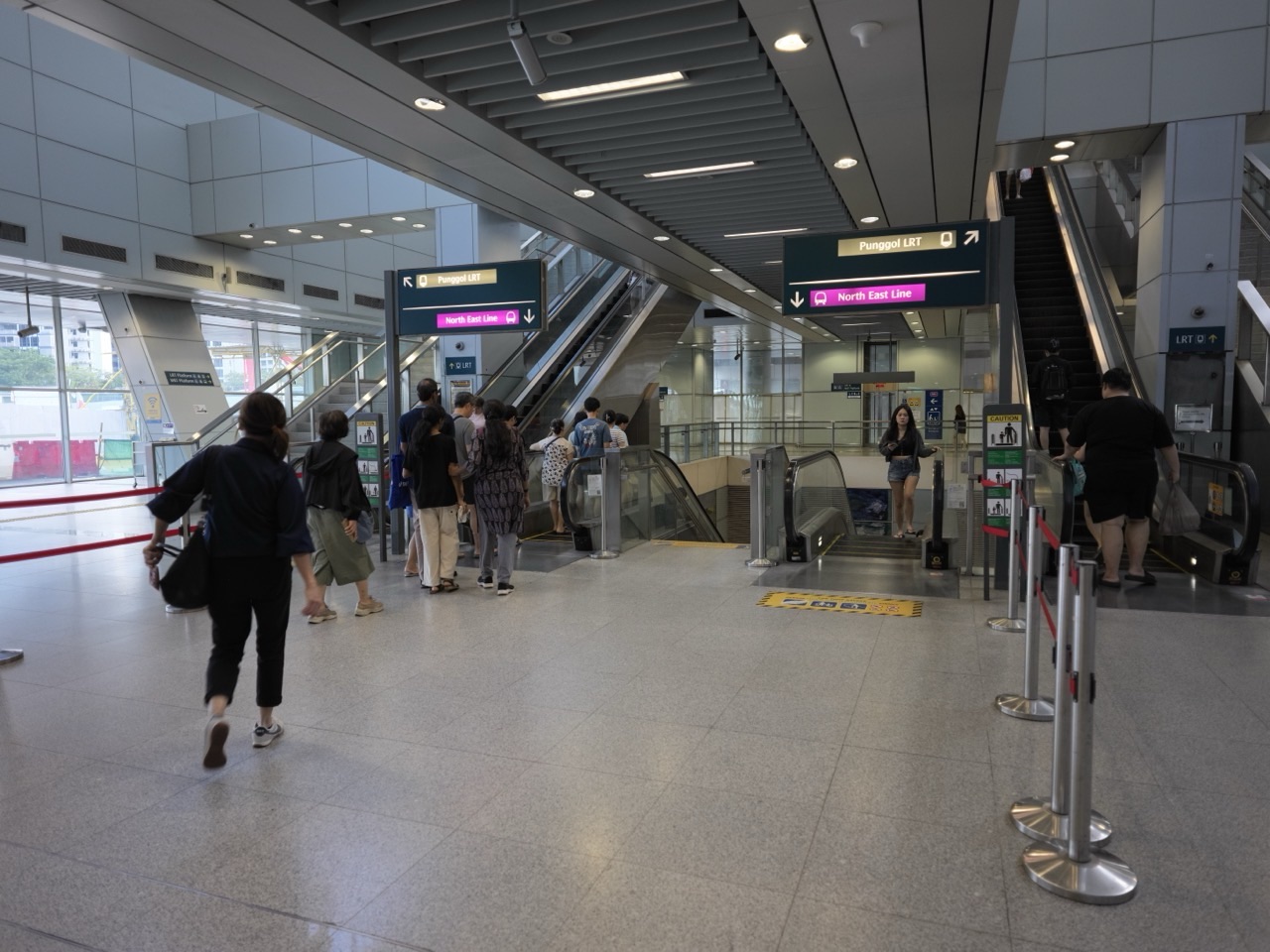
A Punggol family’s choice between IP, IB Diploma and mainstream G3 secondary education is partly a map problem. Four mainstream secondary schools are located within Punggol—Edgefield, Greendale, Punggol Secondary and Yusof Ishak Secondary—but the closest viable IP or IB route is outside the town. Parents should match a child’s PSLE eligibility and school programmes to actual weekday journeys, rather than assuming the nearest campus is always best or that a prominent school elsewhere is worth any commute.
For Secondary 1 entry in 2027, compare local Punggol schools with suitable Sengkang, Hougang, Serangoon, Bishan, Ang Mo Kio, Potong Pasir and east-side options only after checking the child’s confirmed posting eligibility. Score ranges on MOE SchoolFinder describe prior admissions, not guaranteed current cut-offs. A school offering IP may lead to A-Levels or the IB Diploma depending on its track; a mainstream G3/SEC route may lead later to JC, MI, polytechnic, ITE and, subject to qualifications, university.
- Punggol’s four local mainstream secondary schools: Edgefield Secondary, 36 Punggol Field; Greendale Secondary, 51 Edgedale Plains; Punggol Secondary, 51 Edgefield Plains; Yusof Ishak Secondary, 8 Sumang Walk.
- Historical 2026-entry PG3 references: Edgefield 14, Yusof Ishak 15, Greendale 16 and Punggol Secondary 19. Verify fresh MOE data and do not read them as promises or school rankings.
- Nearby mainstream expansion: Sengkang schools, followed by eligible Hougang and Serangoon schools, widen a parent’s realistic six-choice list.
- IP directions: Catholic High and CHIJ St. Nicholas lead through a joint programme to Eunoia JC; Cedar Girls’ and Victoria School link to Victoria JC; Raffles schools, SJI and ACS (Independent) warrant further programme and commute checks.
- IB destinations: SJI and ACS (Independent) offer IP paths to the IB Diploma but are not local Punggol campuses.
- Commute test: Measure door-to-gate arrival on an ordinary morning, return after CCA, weather exposure, transfers, adult logistics and lost recovery time.
- Admissions caution: Living close to a secondary school does not create the Primary 1-style home-distance priority in the ordinary S1 posting exercise.
Why Punggol is not one simple starting point
Two students can both live in Punggol yet have very different journey choices. A child in Northshore may start near Punggol Coast and need a different feeder arrangement from a child close to Punggol MRT. Families near Punggol Field and the eastern LRT loop may find a campus on that side of town much easier than a campus at the far western edge. Someone near Sumang Walk or the western LRT loop can see the daily map differently again.
That variation is easy to overlook when parents search ‘best schools near Punggol’ and receive a list sorted by reputation or straight-line distance. A map pin does not reveal the walk to the station, platform transfer, waiting at a road crossing, school-gate access, or whether the child can return home reliably after a late activity. It also does not tell you how a twelve-year-old experiences a crowded ride while carrying sports equipment or a heavy project.
The correct unit of comparison is an ordinary school week. Start with the actual block or building entrance; finish at the specific school gate. Repeat the estimate for the return trip after a normal lesson day and a CCA day. In this guide, every proposed direction is a route to test, not a timetable or a claim of a particular journey duration. Transport services and school reporting arrangements can change.
Punggol is well connected to the North East Line through Punggol and Punggol Coast MRT stations, and its LRT network serves different estate loops. These are helpful assets, not a guarantee that every school in central Singapore is convenient. A direct rail ride still has first-mile and last-mile costs. A transfer that feels trivial to an adult can be difficult on a wet afternoon when a pupil is tired.
The four secondary schools that are actually in Punggol
Edgefield Secondary School — 36 Punggol Field. This is a local mainland comparison for families whose daily route connects naturally to Punggol Field. The published Growing the Edgefield Mindset Applied Learning Programme is a starting point for questions about problem-solving, collaboration and student agency. A family should ask how those habits appear in lessons, what support looks like for a new Secondary 1 learner and whether the child enjoys the CCA culture. The historical 2026 intake PG3 cut-off reference was 14.
Greendale Secondary School — 51 Edgedale Plains. Its campus sits in another part of Punggol, and its published work has included engineering, design and outdoor-adventure learning. For a learner who likes trying out ideas and doing practical work, this is a reason to study the school’s official programmes, not a promise that every student takes identical modules. Ask to see ordinary students’ work and to understand how the school helps a child who is slower to settle. The historical PG3 reference was 16.
Punggol Secondary School — 51 Edgefield Plains. The name can create confusion among families who assume ‘Punggol Secondary’ is automatically every Punggol child’s neighbourhood school. Its actual gate and transport route matter. Its published environmental sustainability programme and technology-based projects make it relevant for children who enjoy community and environment problems. Historical PG3 reference: 19. Ask how the main academic timetable integrates with CCA and project commitments.
Yusof Ishak Secondary School — 8 Sumang Walk. This campus is a distinct west-side geographical option. Its school identity and published S4TEM@YI Applied Learning Programme provide a way to investigate practical STEM, smart-city and sustainability interests. Test routes from the family’s specific housing cluster. A Northshore or eastern Punggol pupil should not assume it is equally convenient just because it is inside the same planning area. Historical PG3 reference: 15.
These four are mainstream secondary institutions, not IP schools. This does not make them ‘lower’ than an IP school. It means that the eventual qualification and the Secondary 4 checkpoint follow another structure. All four must be considered by the child’s actual permitted posting route, current score ranges, subject and programme fit, and transport realities.
The previous figures above refer to the 2026 Secondary 1 intake and the relevant PG3 reference, not a guaranteed 2027 result. Parents eligible for PG2 or PG1 must check their own distinct historical score columns. Comparing a PG1 number with a PG3 number to declare one school ‘easier’ is a data error. Similarly, an affiliated and non-affiliated range should not be silently mixed.
Northshore and Punggol Coast: the northern starting line
Northshore and the Punggol Coast corridor introduce a useful question: what can the family reach easily before travelling toward an IP campus? The opening of Punggol Coast MRT has strengthened rail access to the district, but a child may still have to reach the station, ride toward Punggol or Sengkang, transfer and complete a final walk. Add the time taken to leave home, pass the school gate and reach the assembly point.
Do not choose a secondary school simply because the new station feels like proof that a commute will be easy. It provides a network connection; it does not eliminate all travel complexity. Visit the platform and street level on a weekday at the intended departure time. Ask whether the child will travel with peers or alone and what they will do after a service disruption.
For mainstream choices, test the four Punggol campuses first, then nearby Sengkang schools that fit the student’s eligibility. If the pupil is considering IP, the North East Line makes certain corridors worth examining. That still leaves transfers, last-mile walks and early starts, particularly for schools reached through other MRT lines.
For a family imagining a long educational journey, the Singapore Institute of Technology campus near Punggol Coast is a visible reminder that university routes also exist close to home. SIT’s presence does not make any local secondary school an automatic pathway to the university. It demonstrates that practical, industry-connected higher education sits in the same town and that admissions must be examined at the appropriate future stage.
Sumang, Matilda and western Punggol: watch the changeover
Families near Sumang Walk, Matilda and the western side of Punggol should start by mapping actual access to Yusof Ishak Secondary and the other local schools, rather than relying on which school name appears first in a search result. The school boundary and the family catchment for convenience are two different things: an institution can be easy to visit on a Saturday but awkward before 7.30 in the morning.
Western Punggol pupils travelling out of town may need to connect through the Punggol transport interchange or another practical network entry point. Check both directions. A parent’s morning drive may be possible but unavailable after CCA; a child who relies on a car for one journey is not automatically independent for the other.
The school day includes time beyond formal lessons. Leadership meetings, practice sessions, examinations, support classes and school projects affect arrival home. A family should test an ordinary week and a busy week rather than using one idealised journey estimate. Ask the school which activities commonly end later and whether any return-home options differ from what the map suggests.
Some families can sustain a longer commute because the pupil is older in disposition, takes public transport confidently, has reliable routines and enjoys the programme. Others need a closer school so the child can sleep, read, attend CCA and have time with family. A decision that protects daily energy is not less ambitious.
Punggol Field, Edgedale and the eastern neighbourhoods
In eastern and central Punggol, local schools near Punggol Field, Edgedale Plains and Edgefield Plains may be practical first comparisons. Here the temptation is to choose by a simplistic alphabetical or cut-off-point ranking. Resist it. A school at a familiar junction can be appealing, but the child might value the educational climate, CCA programme or support at a different campus enough to justify more travel.
The east-side families should compare the real routes to Edgefield, Greendale and Punggol Secondary and then assess Yusof Ishak without dismissing it simply because it is across the town. Children differ in readiness for independent travel; some become confident quickly with guided practice. Others need a school with a simpler journey while they adapt to secondary routines.
Do not invent an ‘East Punggol best school’ and a ‘West Punggol best school’. Neighbourhoods do not have personalities that accurately predict individual pupils. A school can be a strong fit for one learner and a less useful fit for another, even when both receive identical PSLE Scores.
Use school programmes as evidence of learning opportunities. Edgefield’s applied problem-solving, Greendale’s design and outdoor work, Punggol Secondary’s sustainability, and Yusof Ishak’s STEM application are useful discussion prompts. They do not replace independent checks of curriculum, teaching support, CCAs, student wellbeing and current admission rules.
The Sengkang extension: close enough to investigate, not identical to Punggol
Seven established mainstream Sengkang schools commonly appear in the 2026 comparison field: CHIJ St. Joseph’s Convent, Compassvale Secondary, Nan Chiau High, North Vista Secondary, Outram Secondary, Pei Hwa Secondary and Seng Kang Secondary. They offer different admissions conditions, traditions, programmes and school cultures. The child should first check which schools are eligible under the actual result and posting route, then decide whether the trip from Punggol makes sense.
Compassvale, North Vista and Seng Kang Secondary give families useful mainstream comparisons when their routes are convenient. Pei Hwa and Nan Chiau High require their own programme and score checks. CHIJ St. Joseph’s Convent is a girls’ school with its own institutional identity. Outram Secondary’s Sengkang arrangements show why historic school names are not reliable evidence of current campus location; confirm the precise reporting address before planning a route.
The most important parent question is not, ‘Can a Punggol student go to Sengkang?’ but, ‘Does this school offer a better fit for my child than an acceptable Punggol option, considering the extra journey?’ A child who becomes excited after visiting an Sengkang school’s CCA or teaching demonstration has supplied meaningful preference evidence. An adult who merely likes a lower numerical cut-off has not.
Be careful with parent-made cut-off tables. A school in a different planning area might have an affiliated track or additional language considerations. Some present a very different PSLE range for one programme. Without the correct column and year, the number may mislead families into pursuing choices that do not match eligibility.
Hougang and Serangoon: widening the map without losing the child
Punggol Cove Primary’s 2026 parent briefing advises families to look beyond Punggol and Sengkang, including Hougang and Serangoon, when suitable. The rationale is practical: the wider region contains more schools, programmes and possible score matches. More names are not automatically better. Families need a manageable shortlist with accurate current data.
Hougang includes schools such as Xinmin, Holy Innocents’ High, Bowen, Hougang Secondary, Serangoon Secondary, Montfort, Paya Lebar Methodist Girls’ School (Secondary) and Yuying. Each should be filtered for school type, gender policy where relevant, historical posting score category, CCAs and travel. A school nearer to a rail corridor may be easier than a theoretically closer school that requires several feeder changes.
Serangoon adds other established choices and useful interchange possibilities. The North East Line connects Punggol toward Serangoon; some onward journeys use other lines or buses. Be realistic about peak-hour transfers and the final walk. A ‘one interchange’ description is not a door-to-door travel measure.
This outward search works best when it begins with a concrete child need. Perhaps the child wants a particular sport, language or science programme. Perhaps a school offers a support arrangement the family has specifically verified. Perhaps a good morning transport connection outweighs a slightly longer geographic distance. ‘We wanted more options’ is a start, but not the end of the decision.
The IP and IB map: different tracks, different destinations
At Catholic High School, a dual-track structure offers the Joint IP, which proceeds to Eunoia Junior College, and a separate SEC programme. This is a useful model of why even one school name may represent different educational routes. A parent from Punggol must confirm the exact track and admissions requirements, not assume that any placement at Catholic High means the child is on the Eunoia IP route.
CHIJ St. Nicholas Girls’ School and Singapore Chinese Girls’ School participate with Catholic High in the Joint Integrated Programme to Eunoia JC. These institutions have different locations and school identities. For a Punggol family, the Ang Mo Kio/Bishan direction may be easier than a farther central or western school; only actual route tests can establish that.
Cedar Girls’ Secondary School and Victoria School participate in the Victoria–Cedar Alliance leading to Victoria Junior College. This is another six-year IP ending in A-Levels, not the IB Diploma. It may be relevant to families willing to consider Potong Pasir and eastern corridors. Check each institution’s current gender policy, programme intake, available tracks, and last-mile travel.
Raffles Institution and Raffles Girls’ School represent a further central IP option. They should be considered when the child is eligible and the school environment fits, not as an obligatory choice for anyone with a very strong PSLE Score. The secondary and pre-university stages may take place on particular campuses; parents must check current reporting locations at every stage rather than extrapolating from an old map.
For the IB Diploma, St. Joseph’s Institution and Anglo-Chinese School (Independent) offer six-year IP tracks leading to the IBDP. These campuses are farther from Punggol than the town’s four local schools. The family should compare the full programme, study culture, school fees and financial assistance, CCA demands, and practical commute. A recognised diploma is valuable, but a diploma label alone does not measure fit.
A commute test that parents can actually run
Run a two-day field test for each serious school. On the first day, travel with the child from the front door to the school gate at the expected weekday hour. Include shoes, bag, ticketing, station entry, transfers, crossings and a realistic buffer. Do not declare success simply because Google Maps has generated an attractive line.
On the second day, plan the return after CCA or another later school activity. Ask whether it will be dark, raining or hot. Consider whether the child has eaten, whether they can navigate independently, and whether they have an alternative if the usual connection is disrupted. A route can be tolerable in the morning but tiring in the afternoon.
Write three measures, not one: time, effort and reliability. Time is the observable door-to-gate journey; effort includes standing, walking, carrying materials and attention needed at transfers; reliability is how frequently a predictable disruption could cause a serious late arrival. A short but unpredictable commute can be worse than a slightly longer, direct one.
Then add the family cost. Does a parent need to leave work for a pickup twice a week? Does a younger sibling’s schedule conflict? Is a travel plan dependent on one adult always being available? Does it remain workable when the pupil is sick, when an exam timetable changes, or during a school holiday activity?
Ask the pupil to explain the route back to you. They should know where to seek help, how to contact a trusted adult, and what not to do when lost. Confidence can be taught, but the first term is usually a poor time to assume independence will arise instantly without preparation.
Why fifteen minutes may matter more than the school label
The educational cost of commuting is not confined to transport. A long journey affects sleep, homework start time, food, downtime, CCA participation and sometimes whether a child feels free to seek a teacher’s help after school. A pupil who leaves early and reaches home late may work less efficiently even when the school offers excellent opportunities.
Parents should calculate this across an ordinary five-day week, not one dramatic open-house visit. Consider an illustrative additional twenty minutes in each direction: that is forty extra minutes on a school day and more than three hours across five days. This is a hypothetical comparison, not a claim about any particular Punggol school. The hours can be worthwhile for a programme the child genuinely uses, but they should be counted.
Different pupils experience that time differently. One reads comfortably on trains; another becomes motion-sick; another worries about crowded transfers. One can fall asleep early; another struggles to decompress after a long day. The family is entitled to choose a nearer SEC school without believing it has sacrificed university potential.
A well-designed decision measures opportunity gained against opportunity lost. The more distant school may offer a rare language, sporting environment, research programme or school culture. The cost might be substantial but justified. Or its attraction may be mostly status, with little evidence of concrete benefit to the actual child. Parents should be willing to discover either answer.
School-choice scores and commuting must be evaluated in the same worksheet
Start a sheet with one row for every eligible school. Include programme/track, gender eligibility, historical cut-off year, score category, transport route, weekday time estimate, late-CCA return, relevant CCAs, learner support, and questions still unverified. Keep a separate column labelled ‘Child’s preference after investigating’. A score that qualifies a school for consideration does not establish educational preference.
Parents can create one shortlist for an actual PSLE Score of 14 and a very different shortlist for 19, but both should compare the child’s experience honestly. The four Punggol historical 2026 PG3 references—14, 15, 16 and 19—illustrate that local options had varied previous competitive positions. They are not predictions and do not prove that the lowest numerical cut-off school teaches more effectively.
For a PSLE Score of 21 or 22, the parent must first resolve the official PG2/PG3 eligibility choice. A mixture of school cut-off numbers from different Posting Groups is not a valid route plan. For PSLE 25, the potential PG1/PG2 choice requires the same care. Ask whether the group choice opens a set of schools and subject offerings the child can manage, then map those schools.
For pupils applying through DSA, do not confuse the DSA route with ordinary six-choice posting. Successful accepted DSA placement comes with school and programme commitments; the regular submission process may no longer apply in the same way. Read official instructions instead of relying on advice written for families who did not receive an offer.
Four Punggol family examples
A Northshore family comparing a local SEC school with Catholic High IP: The child is academically strong and likes self-directed projects. The parents are excited about the Joint IP, but a morning trial reveals a complex final approach at one end. The proper next step is not automatic rejection or acceptance; it is to compare the educational difference with a repeated, reliable journey and the child’s willingness to undertake it for four years.
A Sumang family drawn to Yusof Ishak and a Sengkang school: The pupil enjoys applied STEM work and a particular CCA. The local campus may offer a simpler day, but an Sengkang programme deserves a visit. Compare actual student activities, subject support, CCA schedule and routes. A school comparison should be evidence of how the learner spends time, not merely a score comparison.
An eastern Punggol pupil choosing among Edgefield, Greendale and Punggol Secondary: All three may be geographically practical to investigate, but their published learning emphases differ. If the child values design and engineering, ask Greendale about opportunities; if they like collaboration and problem-solving, inspect Edgefield’s work; if sustainability interests them, examine Punggol Secondary’s projects. Then test the same academic-support questions at all three.
A Punggol family considering SJI’s IB route: The pupil reads widely, enjoys long-form writing and wants a six-year programme. The family should review the actual IP/IB curriculum, admissions, fees and weekday route. If the child is not yet ready for the long journey or would prefer a Secondary 4 examination choice, the local SEC pathway remains legitimate and can still support later academic ambitions.
None of these examples describes a real applicant or predicts a posting result. They are deliberately constructed decision exercises to expose the information parents actually need.
Inspect the school day, not only the prospectus
An open house is most useful when it produces answers. Ask a teacher or current school representative to explain the Secondary 1 transition, the support available when a child struggles, and a typical timetable. Ask how the programme develops independent learning rather than merely repeating the phrase ‘independent learner’.
For IP schools, ask what six-year continuity means in practice and what happens when a pupil’s motivation, preferred subjects or learning needs change. For an SEC school, ask how it supports students offering different subject levels and how subject combination choices are handled later. For an IB destination, request clarity about the diploma years, subject groups and research components.
Ask the child to speak with students where the school permits. They may learn more from a concrete account of CCA afternoons, lunches, difficult assignments and teacher help than from a presentation about headline results. Listen for whether the young person imagines belonging there. A school choice is more sustainable when the child has reasons of their own.
Finally, consider the family’s capacity honestly. A school that requires regular adult transport or expensive arrangements may not be financially or logistically suitable. Independent schools may have different fees, bursary arrangements and scholarship routes; obtain current figures from official sources. A family’s decision should not rely on costs that are unknown.
The longer pathway map: JC, polytechnic, ITE and university
An A-Level IP offers a route through a six-year programme to a pre-university qualification. An IB Diploma IP follows a different terminal curriculum. A mainstream SEC route gives the child a recognised examination checkpoint at the end of Secondary 4 and access to post-secondary applications according to subject results and the relevant intake rules. From 2028, a new Post-Secondary Admissions Exercise coordinates application to JC, MI, polytechnics and ITE following the SEC examinations.
A child may progress from SEC to JC and then university, from SEC to a polytechnic diploma and then university, or through ITE and later qualifications toward a diploma and potentially a degree. These routes differ in timing, eligibility and course content. The existence of a route is not a guarantee of admission to any institution or a claim that all qualifications are interchangeable.
For a Primary 6 child, the most valuable long-term preparation is building English, mathematical reasoning, scientific habits, writing, independence and the ability to seek help. These support multiple pathways. A school that helps the pupil develop them reliably may be a stronger choice than one whose reputation cannot compensate for an unsustainable day.
Questions parents ask about the Punggol area
Are there any IP secondary schools in Punggol itself?
The four mainstream secondary schools in Punggol are not IP schools. Families seeking a six-year IP should inspect appropriate schools in other areas, verifying each specific track and travel burden.
Is the nearest school automatically the easiest to reach?
No. The relevant comparison is from the exact home entrance to the actual school gate using a realistic weekday timetable. Some homes are closer to one line or feeder connection than another, and return journeys after CCA can change the result.
Should I rule out a school because it is in another town?
No. A suitable Sengkang, Hougang, Serangoon or central-school option may be practical. Investigate programme fit, admission eligibility and daily travel before deciding. Geography helps shortlist; it should not replace the child’s educational priorities.
Does a lower PSLE cut-off point mean stronger teachers?
No. Historical admission cut-offs reflect applicants, preferences and the last posted pupil in a specific category. They do not measure classroom quality or predict an individual child’s achievement.
What if my child wants an IB Diploma but we cannot manage the commute?
Investigate whether a nearer SEC route followed by later pre-university options could fit the child’s development. Check actual Year 5 entry rules at institutions offering the IBDP; do not assume transfer is automatic. A sustainable four-year choice can be wise.
Does the child get priority because we live in the Punggol neighbourhood?
An ordinary Secondary 1 posting choice is not a Primary 1 home-distance registration exercise. Use the official admissions and tie-break rules. Distance matters strongly for wellbeing, but it does not create the home-distance admission priority parents may remember from P1.
What if our six choices are too competitive?
MOE recommends including two or three historically less restrictive choices and using all six slots meaningfully. Expand the eligible shortlist, check current SchoolFinder references and keep actual preference order. Do not rely on an assumed cut-off guarantee.
Should a family decide university before choosing Secondary 1?
It is reasonable to discuss interests and prerequisites, but university admission comes years later. Protect broad foundations and the child’s wellbeing. Keep the map of routes open without making an eleven- or twelve-year-old declare a permanent career.
Source trail and next reading
For school names, admission tracks, current addresses and last-posted score ranges, use MOE SchoolFinder. Compare the MOE guidance on choosing a suitable secondary school and the 2026 Punggol Cove Primary parents’ briefing. Verify IP examples through Catholic High, Cedar Girls’, St. Joseph’s Institution and ACS (Independent). For current post-secondary change, see MOE’s 2026 announcements. For local companion context, read eduKate’s Punggol schools comparison and the Sengkang comparison guide.
Information checked on 14 November 2026. School admission ranges, course programmes, campuses, transportation, fees and examination admission rules are subject to change. Verify the year and the institution before relying on any figure.
Continue with the connected guide: PSLE Scores 4–32 in Punggol | 2027 Secondary School Choice Hub. Use its linked index to compare the related questions and choose your next reading.


