
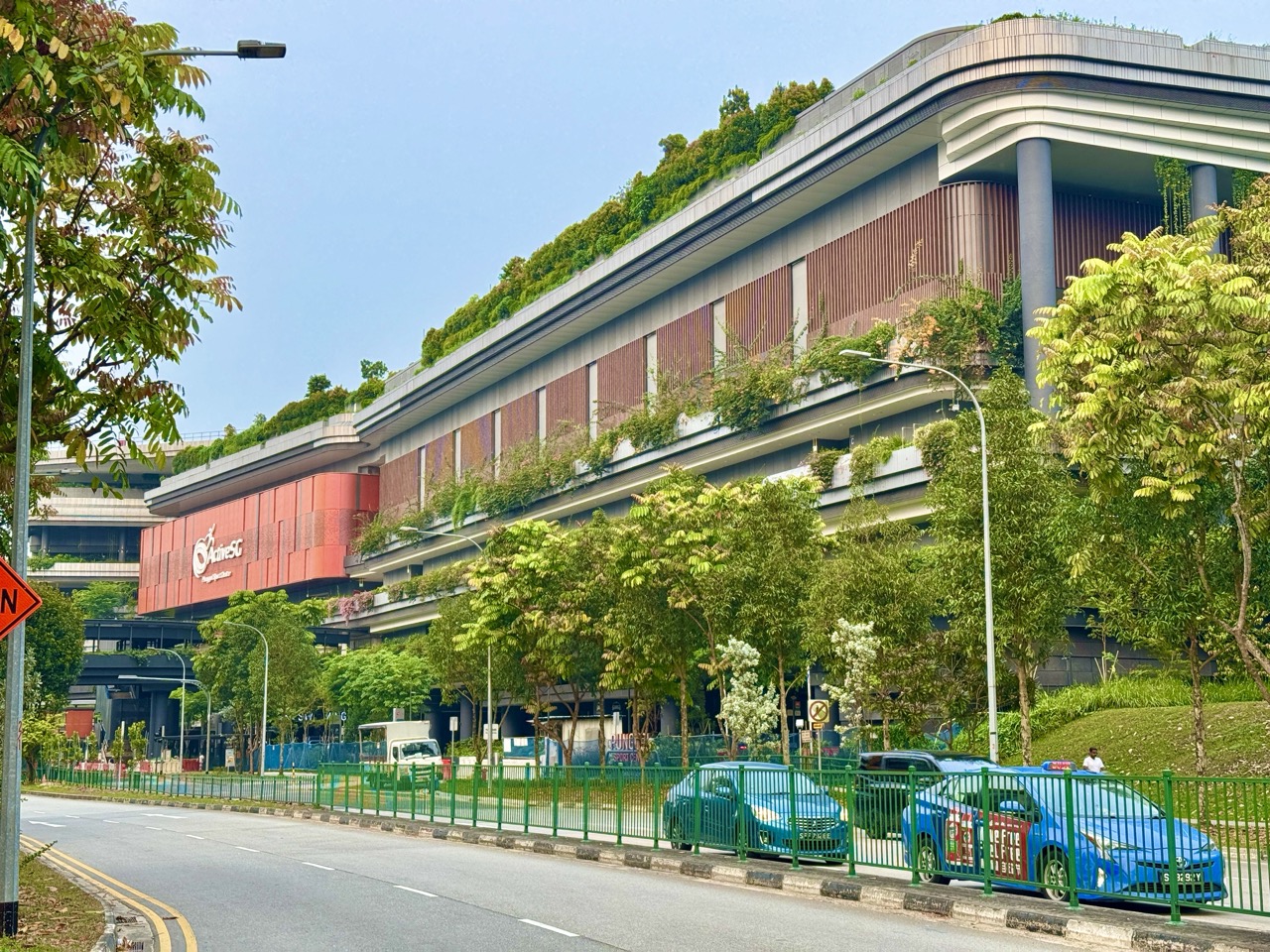
Punggol Sport Centre’s Indoor Sport Hall can accommodate 14 badminton courts alongside five pickleball courts, or be configured for up to 20 badminton courts. Sport Singapore confirmed these flexible arrangements in its 11 November 2026 venue guide. On Level 3, there are also six sheltered tennis courts, three of them marked for dual use with pickleball. The Team Sport Hall on Level 3 can be configured for two volleyball courts or one basketball court, while Level 5M has two sheltered futsal courts. These numbers describe facilities and flexible layouts, not proof that all court combinations are bookable simultaneously on a particular date. The address is 11 Sentul Crescent, Singapore 828656, near Sam Kee LRT.
A first-time visitor should choose the sport, confirm the correct named booking product and check whether the facility is actually available during Punggol’s phased opening. SportSG has announced a formal opening celebration on 22 November 2026, with sport tryouts, carnival games and special gym/pool entry for that day, but that is not automatic free access to badminton, pickleball or tennis courts. The new development also includes a 5,000-seat football stadium and indoor spectator halls, yet public pitch use and event attendance require specific permission. Read actual booking and closure information through MyActiveSG+ before inviting friends.
- Location: Punggol Sport Centre, 11 Sentul Crescent, Singapore 828656.
- Indoor Sport Hall: up to 14 badminton courts alongside five pickleball courts, in one described configuration.
- Alternative layout: up to 20 badminton courts, depending on conversion and actual scheduling.
- Spectator design: Indoor Sport Hall can accommodate up to 2,000 spectators for suitable events.
- Level 3 sheltered tennis: six courts in total, including three with dual-use pickleball markings.
- Level 3 Team Sport Hall: convertible for two volleyball courts or one basketball court, as described by SportSG.
- Team Sport Hall spectator capacity: up to 3,000 for suitable events.
- Level 5M: two sheltered futsal courts; book the specific facility rather than assuming walk-in access.
- Stadium: designed for 5,000 football spectators; a scheduled fixture is different from public pitch access.
- Important: markings, seating capacity and physical construction do not guarantee a live court reservation.
- Weather: sheltered outdoor courts may close during inclement conditions.
- Verified from SportSG’s 11 November 2026 article; recheck operations before every visit.
Why court numbers can mislead first-time visitors
A sports-centre development may advertise many courts, but it is easy to read a flexible layout as if every marked rectangle is permanently available at once. SportSG’s description of the Punggol Indoor Sport Hall is precise: it can accommodate five pickleball courts alongside fourteen badminton courts, or be arranged for up to twenty badminton courts. These are alternative configurations of a managed hall. The actual layout on a particular day can depend on bookings, programmes and events.
A visitor should not add twenty badminton courts and five pickleball courts together and assume that twenty-five separate spaces are open at the same time. Nor does a theoretical maximum number of badminton courts prove that every one is offered as a normal public booking. Official schedules and named booking products remain the decisive information.
The 14-badminton-plus-five-pickleball layout
In one configuration, the Indoor Sport Hall can accommodate fourteen badminton courts and five pickleball courts. That capacity is useful because both sports are popular and can share a large flexible facility while requiring distinct equipment, boundaries and bookings. A badminton player should identify the exact badminton court allocated by the system, while a pickleball player must select a pickleball product rather than merely using a visible portion of the hall.
Even when both sports are present, neighbouring play areas require courteous behaviour. Keep shuttlecocks and balls within the appropriate court as far as possible, retrieve them safely and avoid entering another booking. The purpose of flexible design is to increase useful capacity, not to encourage visitors to move between unreserved spaces whenever they see an empty court.
When the hall converts to twenty badminton courts
SportSG says the Indoor Sport Hall can be configured for up to twenty badminton courts. That is an upper layout capability, not an assertion that twenty courts are always available to casual users or that five pickleball courts remain simultaneously. The operator may convert the hall based on demand, competitions, organised programmes or other needs. A visitor should not rely on a single brochure photograph to know the configuration today.
If you want badminton, use the actual MyActiveSG+ product and date rather than counting court markings from a venue image. The booking system should identify what is genuinely reservable. A flexible venue can be valuable precisely because its use changes; the appropriate consumer information must follow the current arrangement rather than a static capacity headline.
Badminton singles: two players
A normal badminton singles game uses two participants, one on each side. That can be a practical first sport for a parent and child, two adults or a pair of friends. Both players need appropriate rackets, shuttlecocks, sportswear and suitable non-marking court footwear. The court must be legitimately booked for the intended slot. A badminton booking does not authorise using a tennis or pickleball area just because it is nearby.
For beginners, cooperative rallies can be more enjoyable than an immediate competitive match. Keep shots gentle, establish basic boundaries and allow time for a warm-up. The number of courts in the hall does not remove the need to start and finish within the actual reservation time. A good first visit leaves both players willing to return.
Badminton doubles: four players
Four people can organise conventional badminton doubles, with two players per side. Before paying, confirm that all four are attending and know the chosen venue. A family of mixed ability may prefer short games with fair partner rotation. A more experienced player should not repeatedly hit aggressive shots at a novice simply because the match is meant to be casual. Cooperation helps everyone enjoy the limited court time.
Bring enough suitable rackets and shuttlecocks. Do not crowd adjacent courts with waiting friends or leave sports bags across walking routes. An actual badminton court reservation provides the named playing area for the reserved period; it does not create private event rights for the whole hall.
Pickleball indoors: what is different?
Pickleball uses a paddle and a perforated ball, with court markings and rules distinct from badminton and tennis. The five indoor pickleball-court configuration described by SportSG should therefore be viewed as a particular managed sport offering, not an invitation to play with tennis rackets on any open rectangle. Choose the correct pickleball booking and prepare suitable equipment.
Two people can play singles, while normal doubles uses four participants. Beginners may begin with short controlled rallies and a simple introduction to the serve and non-volley zone. Do not use an ordinary badminton booking as a pickleball reservation. The sport’s rising popularity does not remove facility use rules.
Can pickleball and badminton run in the same hall?
SportSG explicitly describes a configuration with five pickleball courts alongside fourteen badminton courts. That is a physical design capability. However, the actual schedule may differ by date and activity, especially if a large event or competition uses the Indoor Sport Hall. A consumer guide should not state that both sports are available side by side on every day without checking current reservations.
If a player has already booked one sport, that confirmation is the relevant authority for their session. Do not assume you may switch to the other sport because it appears less crowded. Flexible hall management works when players respect the specific court and use authorised by the operator.
Why the Indoor Sport Hall has spectator seating
SportSG says the Indoor Sport Hall can accommodate up to two thousand spectators during suitable events. That design feature enables sporting competitions and potentially other approved activities. But ordinary badminton bookings do not automatically make every seat available to visitors. The presence of a spectator gallery is different from a publicly scheduled match with an admission arrangement.
A family interested in watching a competition should look for actual event information. Confirm the correct date, permitted viewing areas and any tickets or age requirements. Do not enter a closed stand to watch a private practice session. The venue can support both public recreation and organised sport without guaranteeing the same access every hour.
Six sheltered tennis courts on Level 3
SportSG’s new facility article identifies six sheltered tennis courts on Level 3, including three with dual-use markings for pickleball. This clarifies an important distinction for visitors who search for both sports: the tennis area is not simply one generic racket hall. The correct sport and reservation determine which court you may use and what equipment you need.
A sheltered roof can reduce exposure to ordinary rain but does not guarantee safe play during lightning, wind-driven water or official weather closures. Confirm the real slot before travelling, especially during Singapore’s changing weather. The appropriate court may also be reserved for another programme or competition.
Three dual-use tennis and pickleball courts
Of the six sheltered Level 3 tennis courts, three are marked for dual use with pickleball. That means the same physical courts have markings supporting more than one sport when the operator offers the appropriate configuration. It does not mean two groups may simultaneously occupy the same court or that a tennis reservation always permits a pickleball game. The live booking system and staff instructions govern actual use.
If your group is interested in pickleball, check whether an indoor pickleball slot or an outdoor sheltered dual-use slot is appropriate and available. Different environmental conditions may affect the choice. Avoid guessing from paint lines on the court; the sport product and reservation remain the permission to play.
Indoor pickleball versus sheltered pickleball
A pickleball enthusiast may notice that the sport is possible in the Indoor Sport Hall and on dual-use sheltered tennis courts. These can be different booking categories, locations and conditions. A player who wants an indoor experience should choose the actual indoor product, while someone using a sheltered outdoor court should expect the relevant weather restrictions and entry arrangements.
Do not assume the two locations have identical prices, availability or equipment facilities. Read each named listing. A visitor should arrive with the right paddle and balls, but more importantly with the correct reservation. Travelling to the wrong part of a six-storey development can cost valuable court minutes.
Choosing between tennis and pickleball
Tennis generally involves larger court movement with a strung racket and tennis ball, while pickleball uses a paddle and a lighter perforated ball. The sports also have different scoring and service rules. An inexperienced player may want to try one suitable sport at a time instead of bringing both sets of equipment and hoping to switch during the reservation.
A legitimate beginner programme can be an option if one is genuinely listed, but an ordinary court booking is not a promise of a coach. Choose based on what the players enjoy, their readiness and the available named court. The larger number of potential sports does not require anyone to master them in the same week.
The Level 3 Team Sport Hall
The Team Sport Hall is another Level 3 facility. SportSG says its flexible court arrangement can accommodate two volleyball courts or one basketball court. These are separate configurations within a managed sports hall, just as the indoor racket hall can change layouts. Do not assume that two volleyball games and a full basketball match can occupy the same configured space simultaneously.
Teams should look up an actual permitted booking or organised event. A group that wants a casual basketball game cannot enter simply because a previous match has ended. The hall may be scheduled for competitions, maintenance or other programmes. Its value lies in supporting different team sports under managed conditions.
Basketball: one court in the team hall
The official preview describes one basketball-court configuration in the Team Sport Hall. That makes the space potentially useful for training, community competition and other authorised basketball activity. A normal game uses specific participant numbers and rules, so visitors should confirm the activity’s actual format and the venue’s availability before inviting a large group.
Bringing a ball does not create entry permission. A person who wants to practise a shot or organise a casual game must find a legitimate appropriate court booking or a different authorised public facility. A full-size hall designed for organised sport is not an unrestricted indoor playground at all times.
Volleyball: two-court team hall arrangement
SportSG says the Team Sport Hall can accommodate two volleyball courts. A team interested in volleyball needs an appropriate booking or genuine programme that identifies the sport and facility. Do not assume a badminton reservation can be repurposed because the group prefers volleyball that day. Equipment and court markings are different, and a volleyball requires sufficient safe space above and around players.
A beginner group may find cooperative serving and passing drills more manageable than full competitive play. But those activities must still occur within the legitimately booked venue and in a way that respects neighbouring users. The operator’s configuration and schedule matter more than the number of friends who have gathered.
The team hall’s 3,000-spectator capability
SportSG describes the Team Sport Hall as able to accommodate up to three thousand spectators for suitable events. That is a substantial venue feature, but spectator capacity should not be confused with permanent daily public seating. An ordinary booked court may not allow the same access arrangements as a competition or performance.
Before travelling to watch an event, confirm the actual organiser, fixture, permitted entrance, ticket or registration conditions and any suitable seating. A large hall can be used for different purposes on different dates. Do not infer that a match is happening simply because the venue can accommodate one.
Two sheltered futsal courts on Level 5M
Football enthusiasts may be interested in the two sheltered futsal courts on Level 5M of the sport centre. The location is specifically identified in SportSG’s November 11 preview. But those courts remain managed facilities with real booking products and operational conditions. A group of ten who want to organise a five-a-side match should confirm the actual reservation, capacity and use rules first.
Sheltered does not mean immune from weather restrictions or available without payment. Players should bring appropriate equipment and footwear for the actual surface and respect staff directions. A recreational game should be planned around the people attending, not solely the fact that two futsal courts exist somewhere in the building.
Futsal is not the same as stadium football
The centre also features a 5,000-seat football stadium designed to meet Singapore Premier League match standards. That is a separate facility from the sheltered futsal courts. A pitch used for competition or training has different access arrangements from a small-sided recreational court. A paid futsal booking does not give the group a right to enter the stadium pitch.
A football fan may wish to watch an official match, but a match needs a real announced fixture and spectator admission procedure. Do not promise stadium entry based on the building’s appearance or seating capacity. Choosing the correct sport and venue prevents a wasted visit.
The stadium’s 5,000-seat design
SportSG says the stadium is designed to accommodate about five thousand spectators and meet Singapore Premier League match standards. The design supports the possibility of future live sporting action close to homes. It does not establish that any particular club is playing there tonight, that every seat is available or that tickets will be free. Those details belong to the actual fixture and organiser.
If watching football is your goal, verify the current event calendar and ticket information before travelling. If there is no public match, consider another legitimately accessible activity such as a booked racket game or the free Play Street. The stadium should be described accurately without inventing live availability.
What a first-time court visitor should bring
The basics depend on the sport. Badminton needs rackets, shuttlecocks and appropriate court shoes; pickleball needs paddles and suitable perforated balls; tennis needs the correct rackets and balls; volleyball and basketball need appropriate team equipment; futsal needs a suitable ball and footwear. Do not assume the centre rents or lends every item without a specific operator statement.
Bring water and personal essentials under the venue’s rules, but keep bags away from court boundaries and circulation areas. A person who books one sport should pack for that sport rather than arriving with equipment for six unconfirmed alternatives. The first-visit equipment checklist gives the broader practical detail.
How to book the correct court
Use MyActiveSG+ to select the correct sport, Punggol venue, date and available slot. Read the fee, participation terms and any relevant ballot process, then retain a valid confirmation. An attempted reservation is not the same as a completed booking, and a pending ballot does not guarantee a court. A popular venue can be fully booked even if its physical layout includes many courts.
Do not buy a slot from an unverified reseller or ask another user to give up their allocation. A flexible venue must remain fair to the people who booked it properly. If the preferred sport is unavailable, try another legitimate time or activity rather than occupying an apparently empty court.
Using ActiveSG Credits for eligible courts
SportSG’s November 11 guide says eligible ActiveSG Credits can offset the cost of gym and swimming passes, facility bookings and programmes. A member should check their actual balance and how much may be used for the named product. Credit limits and eligibility conditions can affect the final amount, and a personal credit balance is not general cash that can pay for any commercial activity.
Before completing a court booking, review the displayed charge after any eligible credit application. A family should not promise free badminton just because one member has Credits. The operator’s payment and account rules govern the transaction, while the court’s availability remains a separate question.
Can a group split the court fee?
Friends may agree to divide the actual court price among those who attend, subject to normal booking rules, but each group’s arrangement should be clear before someone pays. A two-person singles session and a four-person doubles match have different participant counts, so the informal cost per person may differ. The real price comes from the current MyActiveSG+ listing, not an invented universal rate for Punggol.
Do not assume the displayed court fee includes coaching, rackets, shoes or refreshments. Equipment and travel can affect the total. A realistic budget helps the group enjoy the sport without conflict after the game.
Which courts are most beginner-friendly?
No sport is universally easiest for every person. Some beginners enjoy table tennis’s smaller playing area, others find badminton more intuitive, and some prefer learning pickleball with friends. Tennis may appeal to someone who enjoys a more spacious court. The right choice depends on current ability, equipment, available partners and the particular booked facility. The newest court layout does not determine what a beginner should enjoy.
If friends have different skill levels, agree on cooperative rallies and fair rotations. A strong player should not dominate every point simply because they are more experienced. For a detailed comparison, read our beginner racket sport guide.
Choosing a sport for two, four or ten people
Two people can play ordinary singles badminton, tennis or pickleball, while four can organise doubles. Volleyball, basketball and futsal need larger teams and appropriate bookings to use the correct game format. A group should count confirmed participants and plan the activity accordingly. Do not treat a team sport hall as an unlimited recreation zone that admits every friend who turns up.
For mixed groups, a small racket court may support rotations only when the operator’s conditions and safe waiting arrangements allow them. A team facility may be more appropriate for a well-organised large game, but it still needs legitimate access. Our sport by group size explains those formats.
What if someone brings a young sibling?
A parent may book badminton for an older child while a preschooler accompanies the family. That does not mean the young sibling may roam the hall or enter the gym while adults play. A waiting space must be appropriate and permitted by the operator, and the family remains responsible for child supervision. The large number of courts cannot substitute for childcare.
If suitable waiting arrangements are not available, another responsible adult may need to accompany the sibling to a separate permitted area or the family may choose a different activity. Plan before paying rather than discovering the problem at the hall entrance. A positive sports outing works for every person who attends, not just the player.
Weather and the sheltered tennis and futsal areas
Punggol’s sheltered outdoor courts may reduce exposure to ordinary rain, but they can still close in inclement weather. SportSG’s official Punggol Sheltered Courts listing explicitly warns that outdoor facilities may close as a safety precaution. Do not assume a roof makes it safe to play during lightning or on slippery surfaces. The actual staff and safety instructions take priority.
If a booked outdoor facility closes, follow the official process for rescheduling or support. Do not claim an indoor badminton or team hall slot as a substitute unless it is actually offered. A group should keep a legitimate backup plan and accept that Singapore weather can change the schedule.
The difference between an event and a public court reservation
A venue configured for a major competition can have security, spectators, event staff and special access arrangements that do not apply to ordinary recreational bookings. The 2,000- and 3,000-spectator capacities of the indoor halls are design features for suitable events. They are not promises of permanent daily public seating or free admission to any activity.
A person who wants to watch an event should find an actual announced fixture. Someone who wants to play needs the correct sports product. Do not enter a reserved hall because you read that it can host basketball or volleyball. The building’s flexibility makes these different uses possible at different times.
The official 22 November opening celebration
SportSG has announced the formal opening of Punggol Sport Centre on Sunday 22 November 2026 with sport tryouts, carnival games and free gym and pool entry as a dated promotion. The event may be useful for people curious about different sports, but participation still follows the actual event programme and conditions. There is no official promise that every court is free for the entire day.
Visitors should not merge opening-day concessions with normal court bookings. If you want a full game of badminton, reserve the correct slot. If you want to explore and see the venue, check the public opening programme and the free Play Street. The appropriate activity depends on your purpose.
The free Play Street is not another sports court
SportSG’s new venue article also identifies a free 24-hour Play Street, with play tubes, slides, fitness stations and Waterway Plaza. It connects the sport centre with nearby community destinations. That is a public thoroughfare, not a badminton or futsal court. Families can enjoy the free public area without booking a racket sport, but must follow its specific conduct and safety rules.
A visitor who cannot secure a court may still choose a public walk or suitable play activity, depending on weather and current access. Do not use the free space for uncontrolled ball games or commercial coaching. Read our Play Street guide for the separate feature.
How to find Level 3 and Level 5M
The sport centre has multiple levels and facilities. SportSG identifies the sheltered tennis and Team Sport Hall on Level 3 and the two sheltered futsal courts on Level 5M. The Indoor Sport Hall is also located on Level 3 according to its venue description. Nevertheless, visitors should use current signs and the correct booking details rather than assuming every entrance or lift reaches every court.
Allow time to identify the named facility and floor. A short walking distance from Sam Kee does not eliminate check-in and wayfinding time inside a large complex. If the route is not clear, ask authorised staff rather than entering a restricted stairway or service area.
Travelling from Sam Kee LRT
Sam Kee PW1 is on the Punggol West LRT Loop near 11 Sentul Crescent. People coming on the North East Line typically change at Punggol MRT to the appropriate West Loop service. Follow the live station indicator and the actual walking route to the sports centre. Those with strollers or mobility aids should check current lifts, crossings and the particular court access.
A group arriving separately should agree on a precise public meeting point. Do not instruct everyone merely to meet at “Punggol courts”, because the complex includes indoor badminton, outdoor sheltered tennis, futsal and other facilities. The first step to a successful session is reaching the same booked court.
A four-week first-racket-sport plan
Week one: decide which racket sport actually interests the group and compare the legitimate venue listings. If the preferred time is fully booked, choose another date rather than trying to use an empty-looking court. Organise equipment for only the chosen activity.
Week two: attend one proper booking, learn the layout and play a modest friendly session. Keep the first experience cooperative, especially with beginners. Finish within the slot and collect belongings.
Week three: try a second session or a different legitimate sport if players wish. Compare indoor pickleball with sheltered dual-use court conditions where available, but do not assume the same reservation covers both.
Week four: review whether the sport fits the group, budget, travel and schedule. A regular game should be enjoyable and practical; there is no requirement to try every court configuration the building supports.
Frequently asked questions about Punggol’s courts
How many badminton courts are there? SportSG describes a configuration of fourteen alongside five pickleball courts, or up to twenty badminton courts in another layout.
Can twenty badminton and five pickleball courts all operate together? Do not assume so. SportSG describes alternative flexible configurations.
How many indoor pickleball courts are there? The Indoor Sport Hall can accommodate five in the described arrangement.
How many sheltered tennis courts are there? Six on Level 3.
How many tennis courts can also be used for pickleball? Three have dual-use markings, subject to actual booking conditions.
Where is the Team Sport Hall? Level 3.
How many volleyball courts fit in the Team Sport Hall? Two in the described volleyball configuration.
What about basketball? The same hall can be configured for one basketball court.
Where are the futsal courts? SportSG identifies two sheltered courts on Level 5M.
How many spectators can the indoor halls hold? Up to 2,000 in the Indoor Sport Hall and 3,000 in the Team Sport Hall for suitable events.
Does the football stadium have 5,000 seats? The stadium is designed for approximately five thousand spectators, subject to event access.
Can I simply walk into an empty court? No. Use the actual authorised booking or admission arrangement.
Is everything free on the official opening day? No such blanket promise. SportSG advertises free gym and pool entry for 22 November, alongside event activities under their own conditions.
Official information and related guides
The key new facts come from SportSG’s 11 November 2026 Punggol facilities guide. For current reservations use MyActiveSG+, for sheltered tennis and pickleball operating information consult the named Punggol Courts listing, and for weather or maintenance use SportSG’s closure page. The 22 November opening announcement explains the event-specific promotions.
For local planning, see sport by group size, what to do when courts are fully booked and first-time visitor mistakes. Reviewed 13 November 2026. This independent article does not guarantee any live booking or event admission and does not authorise changing a court’s intended sport.


