
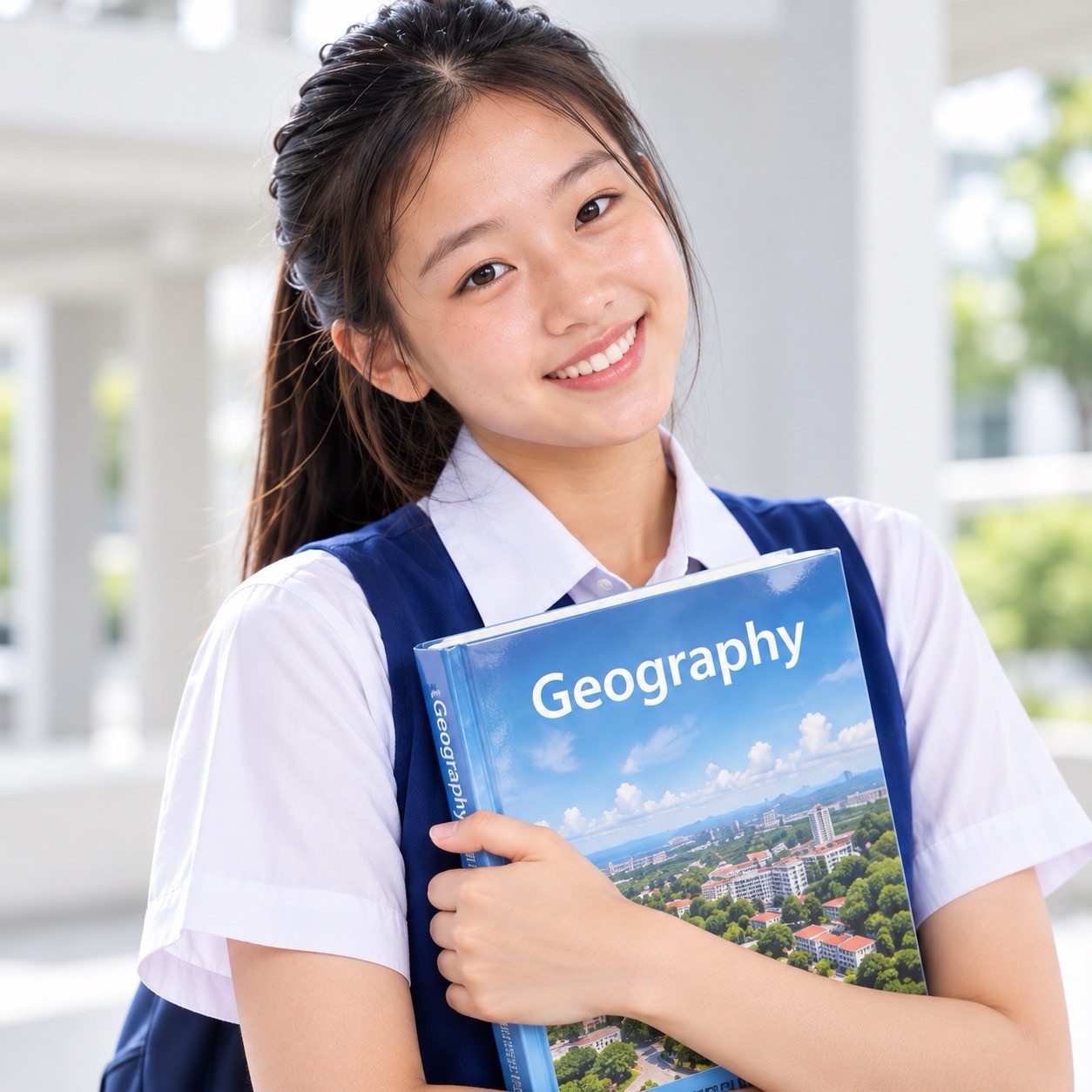
G1 Humanities in Singapore is the lower-secondary MOE learning programme that combines Social Studies with three Humanities Exposure Modules: Geography, History and Literature in English. It helps Secondary 1 and 2 students understand Singapore’s society, compare different people’s experiences, interpret places and sources, and respond thoughtfully to stories. Under Full Subject-Based Banding, G1 is the curriculum level, not a permanent label for the whole child. A parent whose teenager is starting secondary school should first ask what the school is teaching now and which source-reading or explanation skill needs help, rather than beginning with an upper-secondary national-examination workbook.
MOE’s Lower Secondary General 1 Humanities Teaching and Learning Syllabus was implemented from the 2024 Secondary 1 cohort. It is a school curriculum, not a separate 2027 national SEC G1 Humanities examination paper. The 2027 SEAB G1 examination directory does not list a standalone G1 Humanities national subject code, although Geography, History and combined Humanities appear at other General levels. Schools use appropriate learning activities and assessments to determine how well students understand G1 Social Studies and the exposure modules. The practical starting point is to find one real issue, read two relevant sources and explain what each actually supports.
- What the subject includes: Social Studies and Geography, History and Literature in English exposure modules.
- Source of the curriculum: MOE’s 2024 Lower Secondary G1 Humanities syllabus, applicable from the 2024 Secondary 1 cohort.
- Four Social Studies issues: multicultural society, migration, conflict and peace, and environmental protection.
- Geography exposure: people and the natural and built environments, and the relationships between them.
- History exposure: experiences and change in Singapore’s past, supported by historical sources and context.
- Literature exposure: stories, poems, interpretation and empathy through different viewpoints.
- Assessment: school-managed formative learning activities and appropriate Social Studies summative assessments, not a compulsory 2027 G1 SEC Humanities paper.
- What parents should do: check current school materials, learn the command words and ask what the source directly shows.
- Important distinction: Posting Group 1 concerns admission; a subject’s G1 level and future G2/G3 options are separate matters.
- Four-week home approach: evidence, place, timeline, then perspective—one idea at a time.

What happens during a Secondary 1 G1 Humanities lesson?
A teacher may start with an issue such as living together in a diverse society, a map of a changing neighbourhood, an account of a past event or a short literary passage. Students ask questions, examine photographs or written sources, identify facts, discuss how different people might respond and explain a conclusion. The work can include maps, diagrams, reading, writing, group discussion and inquiry. That is why Humanities is not merely an exercise in memorising dates. It is a way of making sense of human experiences and deciding what the evidence can reasonably tell us.
Schools have flexibility in how they sequence the exposure modules and learning experiences. One class might work on a Geography observation of nearby public spaces while another studies migration in Social Studies. Parents should not assume the subject is taught in exactly four consecutive blocks or that every chapter in a commercial textbook appears in the same term. The teacher’s current plan and school notices are the reliable guide. At home, a short discussion about one source can be useful without reproducing the whole curriculum or demanding upper-secondary essay writing prematurely.
Why PG1 and G1 are different
Posting Group 1 is used during secondary-school posting. General 1 is a subject level within the Full SBB curriculum. A child may be eligible to offer other subjects at different General levels through the school’s official arrangements, and the admission Posting Group is not a fixed identity. G1 Humanities is specifically a lower-secondary curriculum; it should not be confused with a future student’s upper-secondary examinable G2 Humanities combination, such as Social Studies with Geography or History. The word “Humanities” appears in both situations, but the curriculum scope and assessment are not identical.
A family planning Secondary 3 subjects should ask which Humanities choices are actually offered and what readiness criteria apply. The correct decision may depend on the student’s subject levels, reading ability, interests and the school’s combinations. It would be misleading to promise that a child who completes a G1 Humanities exposure module is automatically registered for an SEC Geography paper. Conversely, having no G1 national Humanities code does not mean lower-secondary Humanities is unimportant. The skills of reading evidence, reasoning about people and interpreting place remain useful in many later subjects.
The central theme: people, society and the environment
MOE connects the exposure modules through a broad theme about people’s relationships with themselves, society and the environment. A neighbourhood park illustrates the idea. Geography examines how the physical and built space supports different uses; History may ask how a place changed over time; Literature may show how different characters experience it; Social Studies may discuss shared public space and relationships in a diverse community. The same real place supports several kinds of reasoning without all four disciplines asking the same question.
This way of learning is especially suitable for students who are just beginning secondary school. They can start with familiar experience and gradually learn the terminology needed to explain it. A child who says “people of different ages use the park differently” has noticed an important social pattern. Ask what evidence would support the claim and whether any users have been overlooked. The child begins to move from personal impression to cautious explanation. That is a substantial thinking skill even when the final written answer is only a few sentences.
Social Studies: four big questions about living together
| Lower-secondary G1 issue | Question a student might explore | Everyday connection |
|---|---|---|
| Living in a Multicultural Society | How can people of different backgrounds live together respectfully? | Shared spaces, traditions and neighbourly interactions |
| Embracing Migration | Why do people move, and what helps people integrate? | Different family journeys and community contributions |
| Resolving Conflict and Building Peace | Why do conflicts arise and how can people address them responsibly? | Listening, negotiation and community trust |
| Protecting Our Environment | How do human activities affect the environment and what can we do? | Green spaces, waste and resource use |
Each issue invites inquiry rather than a memorised single-sentence opinion. Students may be asked to look at multiple sources and consider how people have different experiences, needs and values. A good conclusion explains what is supported and what remains uncertain. For example, one family’s positive experience of a community event does not prove that every participant felt the same. The learner can still appreciate the experience while recognising that wider evidence would be needed to describe the entire community. That is a respectful and accurate way to reason.
Multiculturalism: beyond listing festivals and food
Students often begin by recognising familiar cultural differences through language, celebrations and food. But living together in a multicultural society involves deeper questions about identity, belonging, mutual respect and shared responsibilities. Someone can value their own traditions while appreciating another person’s practices. A student should be able to explain that harmony does not require everybody to be identical. It involves social conditions that help people cooperate and treat one another fairly, even when they hold different views.
A useful home conversation might ask what makes a shared facility welcoming to people who have different needs. The student could think about clear signs in several languages where appropriate, accessible entrances, reasonable noise management and opportunities for interaction. They should distinguish possibilities from verified facts about any specific estate facility. In school, the teacher may use a source about a community event or a policy question. At home, parents can practise listening to another viewpoint before forming a response. This builds both comprehension and civic judgment without turning the discussion into a partisan debate.
Migration: understanding reasons without reducing people to stereotypes
Migration involves people moving between places for different reasons, including work, family, education or safety. The lower-secondary syllabus asks students to explore why people migrate and how citizens and migrants may experience integration. Explanations should consider context. One family might move because of an employment opportunity, while another might face a difficult decision about separation from loved ones. A claim about all immigrants cannot be supported by one interview. Students learn to distinguish patterns, individual experiences and value judgments.
The topic also connects to Singapore’s history and everyday neighbourhood life. People bring skills, traditions, labour and experiences to societies, but their integration can involve practical challenges. A thoughtful student asks what helps people participate while respecting shared rules and social trust. If a source describes one person’s experience, the child should say “this source suggests that this person…” rather than “every migrant…”. Such careful phrasing is not a technicality; it prevents unfair generalisation and develops empathy based on evidence.
Conflict and peace: a reasoned response is not the loudest response
Conflict can begin when people have competing goals, misunderstand one another or face unequal access to resources. In a classroom discussion, students might analyse a fictional disagreement over the use of a shared space. One group wants to play games there, while another needs quiet time. Before proposing rules, the learner should identify the needs and interests of both parties. The solution may involve a timetable, clear expectations or another location. That exercise demonstrates negotiation, perspective and consequences without requiring the child to accept every claim as equally supported.
At a broader scale, the syllabus connects conflict to questions about peace and security, including terrorism and its impact. Teachers handle these topics through relevant sources, civic understanding and responsible discussion. Parents can support the distinction between disagreement and harm. Students should avoid sensational speculation about people or groups and recognise that actions can have serious social consequences. The aim is to understand causes, responses and ways to protect community well-being, not to turn distressing events into entertainment or unverified claims.
Environmental protection: from worry to evidence and action
The environment can be discussed through the natural world and human decisions. Students ask how people depend on resources, what effects activities may have and which actions could help. In Punggol, a discussion might begin with park connectors, tree cover, water features and everyday waste. A photograph of litter on one afternoon can establish that litter was visible then, but not how much litter the entire estate produces in a month. To support a wider claim, a student would need a better method and more observations.
An effective learning activity is to compare two possible actions. A recycling sign might make information clearer, while a change in bin placement might improve access. Which is more likely to help depends on the actual problem. The child should consider both effectiveness and feasibility. Concern for the environment is valuable, but the educational step is moving from “someone should do something” to “what evidence do we have, what could be changed, and how would we know it helped?” This also introduces the foundations of inquiry and responsible action.
Geography exposure: thinking about place and connections
The Geography exposure module introduces the relationship between people and the natural and built environments. Students learn to notice how land, water, vegetation, buildings, roads and transport arrangements affect everyday life. A map provides an overview that a street-level photograph cannot; a photograph reveals detail that a map may simplify. The learner should practise using both appropriately. A map of Punggol can help illustrate the relative position of a transport interchange, school and community facility without telling us exactly how comfortable a journey feels to an individual.
The official module includes consideration of the natural environment, forests, environmental change, housing and infrastructure. Some activities invite students to observe their school or local setting. The key is to describe what is actually visible and connect it to a geographical question. For example, an open sheltered walkway is part of the built environment; nearby trees are part of the natural setting. The combination may affect how people use the space. A student can draw a labelled sketch, describe possible benefits and identify what further evidence would be needed to establish an impact.
History exposure: events have causes, contexts and different witnesses
History exposure invites students to examine changes in Singapore and the experiences of people living through them. Rather than memorise one list of dates, they can explore how housing, work, community organisations, conflict and political events affected daily life. Historical sources include photographs, oral accounts, documents and objects. A learner should ask who created the source, when and why. An account written years later may reveal a personal memory while also having limits. A photograph captures visible detail but may not explain the motivations of everyone pictured.
The module considers developments including colonial and post-war Singapore and the changes surrounding independence. Students should identify sequence and distinguish a cause from a consequence. If a new housing programme followed an earlier period of poor housing conditions, the learner can ask what social needs motivated change and how people experienced the transition. They should avoid judging the past only through assumptions about today’s conveniences. Historical empathy means taking context seriously, not pretending that every historical action was justified.
Literature exposure: a story can teach the value of perspective
Literature in English introduces students to interpreting stories and poems and understanding how different perspectives shape meaning. A story told by one character can emphasise details that another character overlooks. A poem’s structure, choice of words or viewpoint can invite the reader to question an assumption. A student learns to support an interpretation with something in the text, not simply say “this character is bad” or “the poem is sad.” Literature is especially useful for recognising that another person’s experience can be genuine even when it differs from our own.
A simple home exercise can use an original, short fictional scene: two siblings find the same lost umbrella. One feels pleased to help the owner; the other worries they will miss the bus. Ask the student to describe each perspective and point to the detail that supports it. Then discuss what would change if the story were narrated by the owner. This teaches viewpoint without needing to reproduce copyrighted course texts. The official module includes specific literature examples, and schools may assign reading according to their teaching plan.
The difference between a source, observation, inference and opinion
These four terms form a practical foundation across the Humanities. A source is the material being examined, such as a photograph or account. An observation describes something directly visible or stated. An inference is a conclusion drawn from evidence. An opinion expresses a judgment or belief, which may be supported or unsupported. Students who confuse these categories can give plausible answers that do not address the question. Ask what the source directly shows before discussing what it might mean.
Suppose a photograph shows three people sitting beside a playground. “Three people are seated” is an observation. “They may be resting after exercise” is a possible inference, but the photograph alone does not prove their earlier activities. “This is the best playground in Singapore” is a broad judgment unsupported by the image. The learner should practise matching the strength of the claim to the evidence. When a source offers one perspective, the student can appreciate it without treating it as the entire truth. This is valuable in history, social issues and online media literacy.
How to answer a Humanities question without writing an unnecessary essay
A useful lower-secondary answer identifies the demand of the question, states the relevant point, gives evidence and explains the connection. For “How does this facility encourage community interaction?”, a simple response might be: “It provides a shared space where residents can meet. The photograph shows seating beside an activity area, so people may have opportunities to spend time near one another.” The statement is careful: a photograph can show the seating but cannot guarantee meaningful interaction. A good answer distinguishes the opportunity created by design from actual measured social outcomes.
When a question asks “Describe,” provide relevant characteristics or observations. When it asks “Explain,” identify a reason or relationship. “Compare” requires a meaningful similarity or difference on a common basis. “Suggest” invites a defensible possibility, usually with reference to the scenario. If a student answers every command word with a memorised paragraph, they may know the topic but miss the task. Parents can practise these distinctions through short familiar examples, then ask for one unseen response without hints.
Why sources from social media need careful treatment
A video may be vivid, yet a short clip can omit what happened beforehand. A photograph may be genuine but posted with an incorrect date. An attractive infographic may use numbers without identifying their source. Humanities teaches a student to ask who created information, for what purpose and whether it is relevant to the question. This is not a command to distrust everyone. It is a habit of verifying important details and looking for independent support before passing a claim along to friends or family.
In 2026, digital and AI-generated material makes this skill even more valuable. A synthetic image may appear photographic, while a generated explanation may sound confident. For family practice, give two fictional social-media claims and ask which details could be checked through official sources. Focus on source provenance, dates and evidence. Avoid sharing personal or distressing content for practice. The child should learn to be constructively curious and careful, not frightened of every online message.
How G1 Humanities is assessed in school
MOE’s curriculum document describes formative assessment—observations, questioning, classroom discussion and other activities that give teachers feedback—and summative assessment for Social Studies. It does not establish a single national G1 Humanities examination in 2027 with a universal paper duration and code. A school’s particular weighted assessments may cover selected themes, interpretations and skills according to its teaching plan. Parents should review actual school notices and marked work instead of assuming that an online G2 Combined Humanities paper represents the child’s G1 school assessment.
Marks reveal something about performance, but not the complete cause. A lower mark might reflect vocabulary, difficulty selecting evidence, weak understanding of chronology or an answer that fails to respond to the command word. Ask the teacher where the first error occurs and what kind of response would demonstrate improvement. A student who accurately identifies the main issue but writes a very brief answer needs different help from one who writes at length without understanding the source. Good feedback should reduce uncertainty about the next learning step.
A four-week G1 Humanities plan for Punggol families
Week 1 — Start with one source and one truthful statement
Choose a safe, publicly available photograph of a neighbourhood feature or use a teacher-approved source. Ask who created it, what it shows directly and what remains unknown. Have the child write one observation and one possible inference, explaining the evidence used. Compare an unsupported statement with a careful one. The aim is to establish a baseline for source reading rather than ask for a long essay. If the child confuses observation and inference, repair that concept before adding more complex evidence tasks.
Week 2 — Explore place through a small Geography inquiry
Choose a familiar local setting such as a park connector, a library entrance or a sheltered walkway. Use an appropriate public map and one observational description. Ask how the place is arranged and which different users may benefit from its features. Distinguish actual physical details from predictions about how every resident behaves. Let the child sketch a simple layout with labels and answer one new question. The learning target is spatial description and a supported explanation, not memorising every street name in Punggol.
Week 3 — Make a timeline and consider historical perspective
Use three to five dated, reliable facts about a Singapore historical development that the school has introduced. Arrange them chronologically, then ask what changed and which people might have experienced the change differently. Explain the difference between an event, a cause and a consequence. Avoid assuming a photograph proves motives. The student can write a short paragraph with one evidence-based conclusion. This teaches sequence and context without requiring an adult to recite an entire history textbook.
Week 4 — Read a short story and bring the perspectives together
Use an original or school-approved short passage in which two characters interpret the same event differently. Ask for one evidence-based explanation of each viewpoint. Then return to the first Social Studies source and ask whether the child now recognises more than one reasonable question. Compare the Week 4 response with Week 1: is the evidence clearer, the claim more cautious and the explanation more independent? If progress is visible, maintain short practice. If a specific difficulty persists, ask the teacher for targeted feedback before adding outside lessons.
Three student examples: different difficulties, different remedies
Alicia remembers facts but cannot evaluate the evidence
Alicia has memorised several points about multiculturalism and can repeat them confidently. In class, however, she treats one interview as proof that everybody in the neighbourhood has the same opinion. Her tutor asks what the interview directly supports and how many perspectives it represents. Alicia learns to qualify her conclusion and look for another relevant source. Her improvement is not a longer list of facts; it is an understanding of how far a source can reasonably support a claim. That skill transfers to an unfamiliar passage.
Kai Kai enjoys Geography but skips the question asked
Kai Kai can identify the features of a map but responds to “How might a sheltered path help residents?” by listing every facility nearby. His teacher asks him to underline the word “How” and connect one feature to a practical benefit. The revised answer explains that shelter may make walking more comfortable in wet weather, while noting that a map alone cannot establish actual usage. Kai Kai learns to select relevant evidence instead of displaying everything he knows. His answer becomes shorter and more useful.
Mira understands a story but assumes there is only one viewpoint
Mira reads a fictional story about a family moving to a new town and quickly decides one character is ungrateful. Her teacher asks her to identify what the character fears and which detail in the story supports that feeling. Mira sees that the same move can feel exciting to one sibling and unsettling to another. She can still disagree with a character’s choice, but now explains it with evidence and context. Literature helps her interpret rather than rush to judgment.
What parents should ask about Secondary 3 Humanities choices
At the end of lower secondary, students may consider subject combinations at levels that differ from their initial Posting Group, subject to school criteria and availability. Geography, History and Literature at G2 or G3 have separate national SEC syllabuses or may appear in Combined Humanities combinations with Social Studies. The fact that G1 Humanities exposes a child to three disciplines does not guarantee a direct G1 national exam in any one of them. Ask the school exactly what the student may offer in Secondary 3, which outcomes demonstrate readiness and how the workload fits the broader subjects.
Some learners will be strongest when topics connect to places and people; others may discover an interest in historical evidence or literary storytelling. Parents should value that discovery without promising a specific subject route too early. Subject selection is best based on school performance, teacher feedback, relevant criteria and student interest. A child should not be forced to choose Geography simply because they like maps, or avoid History because they dislike memorising dates. Both disciplines involve explanation, evidence and interpretation beyond first impressions.
What G1 Humanities means outside school
Humanities is useful when people must interpret information, understand community decisions and see a problem from more than one position. A student who can verify an online claim, explain why a public space serves different residents or understand why a historical event affected groups differently is developing a practical civic capability. These skills matter in employment and everyday life, whether the learner later studies technology, commerce, design or other fields. The subject is not a luxury reserved for students who enjoy essays.
Punggol’s changing neighbourhood, transport, public spaces and natural environment can offer prompts for observation. However, a parent should not treat a family walk as permission to take intrusive photographs or interview strangers. Short, respectful discussions based on publicly available sources are sufficient. A child can learn how to ask a careful question about the world without needing to conduct a large research project every weekend. Good Humanities learning should increase curiosity, confidence and responsibility rather than turn ordinary life into an endless graded task.
When additional teaching may help—and when it will not
A small-group academic tutor can help when the child repeatedly misunderstands a command word, fails to select evidence, confuses chronology or cannot explain a link between place and human activity. eduKate has small-group tuition in Punggol for its available programmes; families should confirm subject and level availability before assuming a specialist Humanities class exists. The most useful tutorial begins with a marked school task, identifies the first incorrect step and checks whether the child can apply the repair to a new source. Rewriting a polished paragraph for the student is not the same as teaching independent reasoning.
If the child is progressing well through classroom discussion, school feedback and light home reading, extra tuition may be unnecessary. Ask what the student’s actual barrier is before increasing workload. A manageable practice routine might involve one photograph, a two-minute discussion and a short explanation. This is not a shortcut around learning; it is a way to make the underlying thinking visible. The goal is a student who can ask questions and evaluate evidence without needing an adult to supply every conclusion.
Frequently asked questions about G1 Humanities
Is G1 Humanities a national SEC subject in 2027?
The 2027 SEAB G1 examination directory does not list a separate G1 Humanities national subject. MOE’s lower-secondary G1 Humanities is a teaching-and-learning syllabus assessed through school arrangements.
What is included in G1 Humanities?
Social Studies plus the Geography, History and Literature in English Humanities Exposure Modules.
What year did the lower-secondary syllabus begin?
MOE specifies implementation from the 2024 Secondary 1 cohort.
Does a PG1 student have to take four separate Humanities exam papers?
No. The lower-secondary integrated learning arrangement should not be mistaken for four national examination subjects.
What are the four Social Studies issues?
Living in a multicultural society; embracing migration; resolving conflict and building peace; protecting our environment.
Does the Geography module teach the same content as G2 SEC Geography?
No. It provides lower-secondary exposure to geographical thinking; the G2 national subject has its own syllabus and examination requirements.
Does History only require memorising dates?
No. Students also examine context, chronology, evidence, causes, consequences and perspectives.
What can a parent practise using a photo?
Ask what the image directly shows, what it might suggest, what cannot be established and which further source would help.
Can a student offer G2 Humanities later?
Potentially, according to individual school criteria and subject combinations. The school decides actual eligibility and offerings.
What should I ask the Humanities teacher?
Which issue or module is being taught, what the current assessment looks for and what specific skill the child should improve next.
Is more practice always better?
Not automatically. Target one missing reasoning skill and check it on an unfamiliar task before increasing workload.
Official sources and useful follow-up reading
- MOE: official Lower Secondary G1 Humanities syllabus (Social Studies and exposure modules).
- SEAB: 2027 G1 national examination subjects.
- SEAB: 2027 G2 national subject and Humanities combinations.
- How PG1 Works at Punggol: Humanities and the three exposure modules.
- How PG1 Works: Social Studies, evidence and citizenship.
- How PG1 Works: Geography, maps and observation.
- Singapore Education 2027: understanding subject levels.
Where to begin: choose one source your child has actually been assigned. Ask what it shows, what the question wants and which explanation follows from the evidence. The child becomes more confident when Humanities is treated as a way of understanding real life, rather than an endless collection of facts to copy.


