
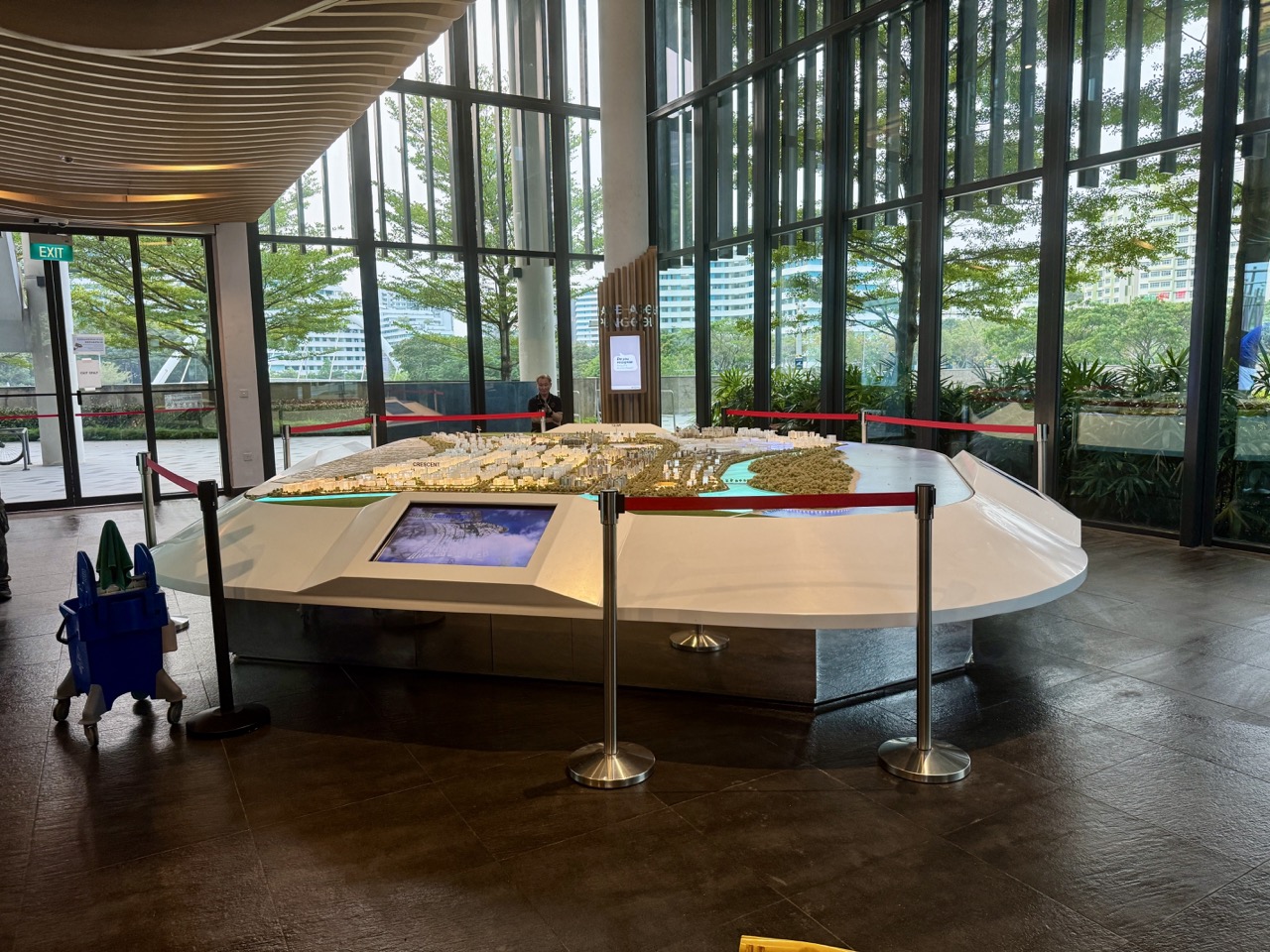
How PG1 works at Punggol for Humanities begins with a distinctive lower-secondary curriculum that many parents overlook. Under Full Subject-Based Banding (Full SBB), Posting Group 1 is used for admission and generally guides most starting academic subjects toward G1, subject to the child’s eligibility and school arrangements. MOE’s Lower Secondary G1 Humanities syllabus, implemented from the 2024 Secondary 1 cohort, combines Social Studies with three Humanities Exposure Modules in Geography, History and Literature in English. Rather than asking children only to memorise names or dates, it develops their ability to understand people, society, the environment and different perspectives through accessible inquiry.
For Punggol families, the practical starting point is to help a child distinguish evidence from opinion, describe a local place accurately, place events in a sensible sequence and explain why different people might see the same situation differently. The Social Studies component addresses multicultural society, migration, conflict and peace, and environmental protection. The three exposure modules introduce ways of thinking associated with Geography, History and Literature. Ask the receiving school how these experiences are timetabled and assessed; do not assume the lower-secondary G1 Humanities course is identical to a national SEC Humanities paper or that every school’s project sequence is the same.
- PG1 versus G1: Posting Group is an admission arrangement; G1 identifies the level of a subject.
- Lower-secondary G1 Humanities: Social Studies plus exposure modules in Geography, History and Literature in English under MOE’s 2024 teaching-and-learning syllabus.
- Four Social Studies issues: living in a multicultural society; embracing migration; resolving conflict and building peace; protecting our environment.
- Main skills: inquiry, source reading, perspective-taking, chronology, map and place interpretation, evidence-based explanation and responsible citizenship.
- Punggol learning opportunities: town models, public spaces, Waterway observations, community history and everyday decisions provide contexts for questions, not automatic proof of an answer.
- Home learning: ask one question, examine a trustworthy source, describe what it shows, consider another viewpoint and explain a careful conclusion.
- Assessment caution: school-based lower-secondary learning and the later SEC are not the same event; verify the child’s actual course and year.
- Next step: use a four-week inquiry portfolio instead of copying long notes without understanding.

Humanities is about people, place and choices
Families sometimes think Humanities is either a collection of old dates or a subject that rewards long opinions. Both descriptions are incomplete. Humanities asks how people live together, how places change, why events unfold and how stories communicate experience. It requires facts, but those facts must be organised into explanations. A child who can state that a neighbourhood has a library has given information. A child who explains how access to reading spaces can affect different residents has begun to make a human and social connection.
That is why G1 Humanities is valuable even for a learner whose strongest subjects are practical or technical. Workplaces, communities and public decisions all involve people with different needs. A future technician must understand user safety; a designer must consider whom a product serves; a citizen must interpret information before sharing it. Humanities education can build these capabilities through concrete experiences, short texts, visual sources and structured discussion. The aim is not to turn every child into a historian. It is to develop a more thoughtful participant in society.
The exact curriculum structure matters
The official MOE syllabus for Lower Secondary G1 Humanities identifies Social Studies and three Humanities Exposure Modules, commonly abbreviated HEMs. These modules introduce Geography, History and Literature in English in bite-sized experiences designed to help pupils see their relevance. This is different from assuming that a PG1 pupil simply studies four fully separate examinable Humanities subjects at the same depth as all other levels. Curriculum design and assessment need to be read from the correct level and year.
The modules are connected by a theme about understanding people’s relationships with themselves, society and the environment. That gives parents a helpful organising idea. When the pupil studies a place, ask how people use it. When learning an event, ask whose lives were changed. When reading a story, ask what the characters value and why. The same questions can connect different parts of the curriculum without reducing them to one generic worksheet. Ask teachers for the current topic sequence rather than predict it from an old book.
The difference between a source and a conclusion
A photograph, table, map, interview, historical record or published report may serve as a source. But a source does not automatically settle every question. A photograph can show the visible condition at a particular moment; it cannot by itself explain every cause. A map can show spatial arrangements while leaving out experiences and motivations. A person’s account may reveal how something felt to them without proving that everyone experienced it identically.
Teach the learner to ask: Who created this source? When? For what purpose? What does it directly show? What remains uncertain? Then encourage a conclusion proportionate to the evidence. This is especially useful in an age of short videos and forwarded messages. A student who learns to pause before declaring a claim true is practising a skill relevant to citizenship and everyday online safety. Critical thinking begins with specificity, not automatic suspicion of everything.
Social Studies issue one: living in a multicultural society
MOE’s lower-secondary G1 Social Studies syllabus includes an issue about life in a multicultural society. Students explore how culture shapes identity, what people experience when living among differences and how harmony can be built. These questions are closely related to everyday Singaporean life, including the languages, customs and shared spaces found in a town like Punggol. A child’s first response may focus only on visible celebrations or food; teaching should help them explore relationships, respect and shared responsibilities more carefully.
A useful home discussion asks how people can share a public space fairly when their needs or customs differ. Invite the student to name one concrete challenge, then consider how people might respond respectfully. Avoid turning individuals into stereotypes. A family member’s personal experience is useful as an account, but it should not be treated as proof that an entire community thinks the same way. Encourage language that distinguishes a particular person’s action from broad claims about a group.
What is cultural identity?
Identity includes parts of how a person understands themselves and is understood by others. Culture can influence language, celebrations, family routines and values, but people also have personal interests and experiences. The lesson becomes inaccurate when children are taught that every member of a cultural group behaves identically. Ask a student to describe several aspects of their own identity without requiring them to share private matters. They might mention family roles, hobbies, school community or a language used at home.
Then ask why another person may share one characteristic but differ in others. This simple exercise reveals that an individual belongs to several communities and cannot be fully described by one label. It helps when discussing Singapore’s multicultural society because respect requires curiosity about individuals rather than a catalogue of simplistic assumptions. The student can learn to express differences accurately without ranking them. Such conversation supports both humanities learning and friendship within mixed form classes.
How shared spaces can help or create tensions
Public housing estates, transport, schools, libraries and community centres bring people together. Shared spaces can encourage interaction, but they also require considerate behaviour. In Punggol, students encounter different users of playgrounds, footpaths, shops and public facilities. Ask what happens when people have competing needs, such as quiet study versus noisy recreation. A fair answer should identify who is affected and what constraints exist before declaring one group right.
A useful exercise is to imagine a shared open space near housing blocks. Some residents want more seating; others want room for exercise; families need safe movement for children. Ask the student to propose a compromise and justify it. Do not claim a fictional scenario is a real council dispute. Its educational value comes from exploring trade-offs. Humanities can teach children that an answer may need to account for several legitimate interests, not merely repeat the strongest speaker’s opinion.
Social Studies issue two: embracing migration
The MOE syllabus also examines migration and integration. People move for different reasons, including family, study, work or safety, and experiences can vary greatly. Students consider opportunities, challenges and the contributions people make in a society. The purpose is not to reduce the issue to a slogan for or against migration. It is to understand the circumstances, responsibilities and perspectives involved and to reason carefully about real-world complexity.
Parents can start with a hypothetical family moving to a new town. What information would help the child settle into school? What difficulties might the parents face? How could neighbours offer assistance while respecting privacy? Such a scenario encourages empathy without claiming to speak on behalf of any real migrant. When discussing official population or labour data, use government sources and note their date. Avoid repeating dramatic online statistics without checking what they measure. Responsible Social Studies is grounded in evidence.
The difference between integration and identical behaviour
People can participate in a shared society without being identical. Integration involves belonging, interaction and shared responsibilities while recognising individual backgrounds. A teenager may misunderstand it as requiring everyone to abandon their previous customs. A useful discussion asks what common rules make a community safe and fair, and where differences in language, food or family practice can be respected. The student should be encouraged to explain rather than merely agree.
Use an example involving a new classmate joining a school. The school has common rules about attendance and respectful conduct, but the student may have different experiences and interests. What could classmates do to include them without making assumptions? This practical situation turns an abstract concept into meaningful behaviour. It also shows why humanities learning supports mixed-class friendships under Full SBB. Understanding a social issue should lead to better judgment, not simply a correct sentence in a notebook.
Social Studies issue three: resolving conflict and building peace
Conflict is a serious subject, but it can be taught through age-appropriate reasoning. MOE’s G1 Social Studies syllabus examines causes, consequences, peaceful resolution, terrorism and Singapore’s peace and security. Parents should avoid graphic content or frightening speculation when helping a young learner understand these topics. Begin by distinguishing disagreement from violence and explaining how rules, communication and institutions can reduce harm. Use reputable sources and follow the school’s selected materials.
A classroom disagreement offers a limited analogy: two pupils want the same resource and need a fair method to decide how it is used. The analogy can introduce listening, negotiation and compromise, but it should not be presented as a complete explanation of international conflict. Larger conflicts involve histories, power, interests and institutions that require careful study. Teach children that the scale of a problem matters. Good reasoning begins by asking whose interests are involved, what evidence exists and which responses are proportionate and responsible.
Sources about conflict need special care
When students encounter dramatic news clips or photographs, they may react strongly before examining the source. Explain that emotionally powerful material can be genuine, misleadingly captioned, taken out of context or selectively edited. The correct approach is to check the publisher, date and location, then compare credible reports where needed. Never encourage a child to search for graphic material merely to complete a general humanities exercise. The school’s resources can provide safe, suitable sources for learning.
A student can practise with ordinary non-graphic examples, such as two differently worded accounts of a public meeting. Ask what both agree happened and where interpretations diverge. This teaches the difference between a factual claim and an opinion. It also prevents the simplistic habit of labelling every source “biased” and stopping there. The useful question is how the source’s purpose, perspective and evidence affect what it can reliably tell us.
Social Studies issue four: protecting our environment
Environmental questions are particularly accessible to Punggol families because the estate contains waterways, parks, housing, transport networks and public spaces. MOE’s fourth Social Studies issue asks how people depend on the environment, how human activities affect it and how protection can be achieved. This is not the same as a Science lesson about a specific physical process. Social Studies asks how people make decisions, distribute responsibilities and respond to environmental trade-offs.
For example, consider the challenge of keeping a popular public space clean. A student can identify users, their responsibilities, practical difficulties and possible actions. The family can examine an official public notice and ask what problem the rule is intended to address. Avoid declaring that one photograph proves a whole community behaves irresponsibly. A careful response considers the limits of the evidence. The lesson becomes stronger when the child moves from complaint to an informed, realistic proposal.
Use Punggol Waterway as an inquiry setting
A walk beside Punggol Waterway can prompt questions about paths, landscaping, recreation, shade and public access. Students can describe what they observe and consider how spaces support different users. A parent might ask who benefits from a shaded rest area and what makes a route accessible for people with varying mobility needs. These are humanities questions about people and place. They can complement Science learning without pretending a short family walk is a complete environmental research project.
Keep the exercise safe and respectful. Follow public signs, avoid disturbing wildlife and do not enter restricted areas. Do not collect private information about strangers or photograph identifiable people for a school presentation without appropriate consent. A simple sketch of a public layout and a paragraph of explanation can be enough. The key educational step is linking visible features to human needs while stating what cannot be concluded from the observation alone.
The Geography exposure module: seeing place as a relationship
Geography asks how places and environments are arranged and why location matters. MOE’s G1 Humanities Exposure Module provides an introduction to geographical thinking rather than assuming the student already knows advanced physical and human geography. A young learner can examine a simple map, identify patterns and think about how people use and change their surroundings. Ask what the map shows, what scale or symbols mean and what information is missing.
Punggol offers a familiar context. Students know that walking routes, public transport connections, housing and facilities affect everyday choices. A map might help explain where a facility is located, but it does not automatically tell us how long every individual takes to reach it. A student’s grandmother and a cyclist may have different experiences of the same route. Geography becomes more meaningful when the learner can connect spatial evidence to human needs and understand the limits of a map.
Distinguish location from accessibility
A place can be close on a map but difficult to reach. Distance does not always capture transfers, stairs, weather, road crossings or travel restrictions. This is a useful topic for introductory geographic reasoning. Ask the child to compare two hypothetical routes using a simple diagram. Which route requires fewer crossings? Which might be easier with heavy school materials? What information is missing before deciding?
The point is not to assert an invented travel time or tell a family which actual Punggol route is fastest. It is to teach students how physical arrangements interact with human experience. That idea can later support understanding of transport planning, settlement patterns and environmental accessibility. If using a real map, check the date and current conditions. A map is evidence of certain features, not a complete answer to every question about the place.
Reading photographs in Geography without inventing causes
Photographs can show features of a landscape, but students often jump to conclusions. A photo of a crowded walkway might show many users at one moment, not that the location is permanently overcrowded. A picture of trees beside housing shows vegetation, but not by itself whether planting was intended for shade, biodiversity or another purpose. Ask the child to write two observable facts and one question that would require additional evidence.
This approach builds careful visual literacy. It also applies to advertisements and social media posts, where images are commonly selected to shape an impression. The child learns to distinguish the visible from the inferred. A stronger geography response might combine a photograph with a map, official information or repeated observations. Even at an introductory level, evidence should be matched to the claim being made.
The History exposure module: placing events in time
History asks what happened, how people experienced events and what evidence can tell us about the past. MOE’s lower-secondary G1 History Exposure Module is designed to introduce aspects of historical thinking, including working with accounts and artefacts. A simple starting skill is chronology. Students should be able to arrange events in order and distinguish what happened before, during and after a change.
Try a hypothetical family history with three dated events and ask which came first and what might have influenced the later choices. Avoid assuming that sequence proves causation. If one event follows another, the first did not necessarily cause the second. This distinction is crucial. A student who understands chronology can begin asking stronger questions about why institutions, communities and places developed as they did.
Artefacts can tell stories, but not the whole story
An artefact is an object that can help us investigate a past society or event. An old school photograph, ticket, household tool or document may reveal certain features of daily life. But the object does not speak for itself. Historians ask when and where it was created, who used it and what other sources support an interpretation. A teenager may enjoy inventing a dramatic story about an unfamiliar object, yet a good history answer must distinguish imagination from evidence.
A safe home activity can compare photographs of a public place from different periods using clearly dated, properly sourced material. Ask what visibly changed and which explanations would need further investigation. Respect copyright and privacy when using images. Do not claim to know what every resident felt or why every building was constructed based solely on a picture. The aim is disciplined curiosity about the past.
Punggol’s changing landscape offers historical questions
Punggol has undergone considerable development, which makes local change an accessible theme. Families can examine reputable accounts, official planning information or archived photographs to consider how transport, housing and public facilities changed. A student might ask what daily life was like before particular developments and how residents’ experiences differed. The correct method is to establish dates and sources rather than repeat an appealing local legend.
It is easy for community storytelling to blend nostalgia with verified history. Both memories and official documents can be valuable, but they answer different questions. A memory tells us how one person recalls an experience; a dated planning document may establish an official proposal or decision. Students should practise comparing these types of information respectfully. A parent can encourage genuine interest while keeping the child’s explanation faithful to what the evidence actually supports.
The Literature exposure module: learning through characters and stories
The Literature in English exposure module introduces reading and responding to literary texts. Students can learn to see situations from different perspectives and connect a story with their own experiences and the wider world. This is not merely memorising the plot. A child should ask what a character wants, why they make a choice and which details in the text support an interpretation. Literature develops the ability to attend to language, motives and human complexity.
Use a brief age-appropriate story and ask the student to describe one character’s decision. Then ask what another character might have understood differently. Responses should be grounded in what the story reveals, rather than invented details presented as fact. A parent can disagree respectfully while pointing to evidence. The exercise shows that more than one interpretation may be reasonable, but not every interpretation is equally well supported. This is a valuable distinction for both literature and public discussion.
Perspective-taking is not automatic agreement
To understand another person’s perspective is not necessarily to accept it as correct. Students can acknowledge why a character or historical participant made a choice while still evaluating the consequences. Some children interpret “different viewpoints” as meaning every opinion is equally accurate. Others assume only one emotional response is legitimate. Humanities helps them separate empathy from endorsement and examine how beliefs, incentives and information influence behaviour.
Ask the child to explain what a person knows at a particular moment in a story and what the reader knows later. That difference may make an action more understandable without justifying it. The student can practise saying, “From this person’s point of view…” followed by a reason. Then they can evaluate the decision using the evidence. This language promotes nuance. It is useful in classrooms where pupils from different backgrounds learn together and need to discuss disagreements respectfully.
Social Studies and Literature both require evidence
The kinds of evidence differ. A Social Studies response may use official figures, news reporting or statements from different parties. A literary interpretation often uses a character’s words, actions or narrative detail. In both cases, the learner must connect evidence to a claim. A common error is to quote a sentence and assume the reader will understand why it matters. Teach students to explain the relationship.
A short answer can follow a simple sequence: make a point, identify a relevant detail and explain what the detail shows. Avoid teaching this as a rigid formula for every assessment; the school may use specific question formats. The underlying reasoning is broadly useful. A child who can identify and explain evidence develops more control over written answers, oral discussion and critical reading. The aim is thoughtfulness, not length for its own sake.
How to distinguish fact, opinion and inference
A fact is a claim that can be checked against evidence; an opinion expresses a judgment or viewpoint; an inference is a conclusion drawn from information. These categories are related but not interchangeable. A student might write, “The playground has two slides,” as an observable claim, “It is the best playground,” as an opinion, and “It may attract young families,” as an inference requiring support. Ask what evidence would make each claim more reliable.
Avoid oversimplifying by telling pupils that every sentence beginning with “I think” is an opinion without factual content, or that every confident sentence is a fact. Language can be complex. The objective is to make students ask what a statement means and how it could be justified. This small habit is powerful in Social Studies, History and everyday media use. It helps children engage with claims rather than be impressed by certainty.
Why source reliability depends on the question
A local resident may be an excellent source for their own experience of a neighbourhood event but not the final authority on national population statistics. A government report may provide reliable published figures but may not capture every person’s feelings. A map may show routes but not how a teenager experienced the commute. To evaluate a source, begin with the question it is being asked to answer. Different evidence is suitable for different purposes.
Teach the learner to identify the publisher, date and relevant expertise, then ask whether the source is direct or second-hand. Where a claim is significant, compare with another credible source. This is not an instruction to dismiss every source as biased. It is a method for understanding what can reasonably be learned. A good humanities student can state both the value and limitation of a source without becoming cynical about knowledge itself.
The role of questions in humanities learning
Children sometimes think that learning means waiting for a teacher’s answer. Humanities inquiry often begins with formulating an appropriate question. Instead of “Is Punggol good?”, ask “How do different facilities serve residents of different ages?” The second question is more specific, permits evidence and encourages comparison. A vague question can lead to vague opinions; a focused question makes research possible.
At home, practise turning a claim into a question. If the student says “Everybody likes this place,” ask how they could investigate that statement and whether everybody is a credible word. Would an observation, survey or interview help? What limitations might those methods have? This encourages humility and accuracy. Do not ask a young child to conduct public interviews without school guidance or safety arrangements; a paper-based discussion is enough to teach the principle.
Writing a short source-based paragraph
A useful paragraph makes a clear claim, includes relevant evidence and explains how that evidence supports the claim. For a lower-secondary learner, begin with a small question and one reliable source. The student might argue that a public facility serves different needs and cite two visible design features or a published programme description. They should avoid repeating a quotation as though it were an explanation. Ask what the reader should understand after the evidence is presented.
Then provide a new source and test the same method. If the child can write an independent paragraph without copying the original model, the skill is developing. Teachers may have different formats for particular assignments, so the school rubric remains the authority. This home technique is intended to support reasoning, not replace formal classroom instruction. The same approach also strengthens explanations in English and Science.
Organising a balanced discussion
Some humanities tasks ask students to consider more than one perspective. A weak answer may list two opinions and stop. A stronger response explains why each perspective exists and weighs the evidence relevant to the question. For example, in a hypothetical community discussion about more shaded seating, younger children, older residents and cyclists may have different priorities. The pupil can identify shared interests and possible trade-offs before proposing a response.
Avoid training the child to manufacture an opposing view when the evidence does not support it. Balance means understanding relevant perspectives, not treating every unsupported claim as equally valid. Some facts can be established, while choices about priorities may still require judgment. This distinction helps students think fairly without creating false equivalence. It is particularly useful when discussing social harmony and environmental decisions where several legitimate concerns need attention.
A four-week humanities inquiry plan
Week one can focus on source reading: distinguish what a photograph, map and short report actually show. Week two can study a question about multicultural community life or shared public space. Week three can introduce chronology and interpretation through a short historical source. Week four can compare perspectives in a literary text and produce a small reflection. This is a parent practice plan, not the exact sequence MOE requires every school to teach.
Keep the tasks modest. A pupil might produce four short entries rather than an elaborate research report. For each entry, include the question, source, observation, inference and one uncertainty. Ask the child to explain why they chose the evidence. If the work is copied wholesale from a website, it has little value as a learning portfolio. The student should be able to defend the explanation in ordinary language. This develops confidence and accountability without unnecessary workload.
Field observations should be safe and respectful
Punggol’s parks, waterway, public library and neighbourhood facilities can prompt useful questions, but a family activity must remain safe. Follow signs and respect private property. Do not approach strangers for information without appropriate guidance or photograph identifiable individuals for public posting without consent. A public-space observation can focus on layout, accessibility features, signage or the available facilities rather than private behaviour.
A child can draw a simple annotated map, record a public notice or describe a visible feature. Then ask what additional evidence would be needed before making a claim about effectiveness or public opinion. This keeps the exercise aligned with inquiry rather than gossip. It also demonstrates responsible citizenship in practice: the student learns about a community while respecting the people who live there.
A worked example: studying a community hub
Imagine a fictional student, Priya, exploring how a community hub serves Punggol residents. She first writes, “Everyone likes the hub because it has many facilities.” Her parent asks whether one visit can establish everyone’s opinion. Priya revises the claim to describe the facilities she directly observed, then checks official descriptions of available services. She considers how a library or public meeting area might serve different age groups but recognises that real usage would need evidence.
The improved response is not longer merely for appearance. It is more accurate. It identifies observation, available documentary information and a limitation. Priya can then compare how another community might have different needs. This small investigation draws on geography, citizenship and evidence-based writing. It also shows why meaningful local examples are useful: the pupil knows the place well enough to ask concrete questions but still learns not to confuse familiarity with complete knowledge.
A second example: two people remember the same event differently
Imagine two fictional residents describing a community celebration. One remembers it as crowded and difficult to navigate; another remembers meeting friends and enjoying the atmosphere. The accounts differ, but they need not be mutually exclusive. They may reflect different experiences, times or priorities. A student can ask when each person attended and what specifically happened. Without further evidence, it would be unreasonable to call either person a liar simply because their impressions differ.
This is a useful entry point into historical evidence and perspective-taking. Memory can reveal meaningful personal experience while remaining limited as a record of every aspect of an event. The child should learn to compare evidence fairly and state what is known. That skill matters when reading history and discussing present-day disagreements. It encourages care with conclusions without denying that facts can often be checked.
Assessment should measure understanding, not copied length
MOE’s G1 Humanities framework includes formative assessment and Social Studies summative assessment, while the exposure modules can use different learning activities and feedback. Families should not assume that the longest essay or thickest set of notes demonstrates the strongest understanding. A student who accurately identifies a source’s limitation or explains a character’s perspective may show important progress in a concise response. The school’s actual assessment task and rubric determine what is expected.
When reviewing work, ask what the student independently understood, where a claim lacked support and how the response could become more precise. Avoid writing answers on the child’s behalf. A tutor can model analysis and then invite a fresh attempt. If a student struggles with reading, explain essential vocabulary before demanding a complex argument. The goal is to build the thinking step that the student is missing, not to produce adult-quality prose under the child’s name.
Why lower-secondary G1 Humanities is not a single SEC paper
A common planning error is to treat every lower-secondary subject label as a promise of an identical national examination at Secondary 4. The G1 Humanities syllabus discussed here is a lower-secondary teaching-and-learning programme, including Social Studies and exposure modules. Later subject offerings, school arrangements and applicable national examination subjects must be checked separately. The 2027 SEC list should not be used to invent a future G1 Humanities paper where the official listings do not establish one.
A child entering Secondary 1 in 2027 would ordinarily reach Secondary 4 in 2030. Syllabuses and available subjects may be revised by that time. Parents should follow the current school’s teaching plan, ask about progression options where relevant and read the eventual official requirements when upper-secondary selection approaches. The immediate benefit of Humanities is not restricted to examination eligibility. It is becoming better able to interpret sources, understand other people and make informed decisions.
What to ask a Punggol secondary school
When researching Edgefield Secondary, Greendale Secondary, Punggol Secondary, Yusof Ishak Secondary or suitable neighbouring options, ask how lower-secondary G1 Humanities is organised, when the exposure modules are taught and how students receive feedback. Ask whether learning includes source comparison, field observations, role-play or other activities, while recognising that individual methods and schedules may differ. Use MOE SchoolFinder to verify relevant offerings and contact the school for current programme details.
If the child has difficulty reading longer sources, ask how teachers scaffold vocabulary and instructions. If the child enjoys discussion but struggles to write, ask what support is available to organise explanations. These questions are more informative than asking only for a grade prediction. A school should be considered in the context of the child’s full learning and daily experience, including travel, friendships and CCA participation.
Frequently asked questions about G1 Humanities
Is G1 Humanities just Social Studies? No. MOE’s lower-secondary G1 Humanities teaching syllabus combines Social Studies with exposure modules in Geography, History and Literature in English.
What four issues appear in the Social Studies component? The published framework covers multicultural society, migration, conflict and peace, and environmental protection. The school’s current teaching schedule determines how they are introduced.
Must a PG1 student memorise lengthy history essays? The goal includes understanding evidence, chronology, perspectives and accurate explanation. Follow the school’s actual tasks; excessive memorisation of model prose is not a substitute for understanding.
Can a local Punggol photograph be used as a source? Yes, where appropriately obtained and relevant. The student must state what it shows and avoid inferring unsupported causes, motives or the views of every resident.
Is the lower-secondary G1 Humanities syllabus an SEC examination paper? Do not assume that. It is a lower-secondary curriculum. Check actual upper-secondary subjects and the SEAB syllabus for the student’s examination year.
What is a good first home exercise? Compare a photograph and an official description of a local facility, identify what each establishes and write a cautious conclusion with one unanswered question.
Official resources and your next learning step
The primary reference is MOE’s Lower Secondary G1 Humanities teaching-and-learning syllabus, implemented from the 2024 Secondary 1 cohort. Check MOE Full Subject-Based Banding, MOE SchoolFinder and SEAB’s 2027 G1 national syllabus listing for the separate questions of subject level, school availability and examinations. Read the PG1 mixed form-class guide and PG1 learning portfolios for connected learning habits.
This guide reflects material available in November 2026. School teaching sequences, assessment methods and later subject combinations may differ. To begin today, choose one trustworthy public source about Punggol, ask what it actually establishes, identify one other reasonable perspective and let the child write a short, evidence-based explanation in their own words.


