
How do parents use MOE SchoolFinder to choose a secondary school for a PG1 child? Start with the child’s official PSLE Posting Group eligibility, then use MOE SchoolFinder to identify schools that actually admit students through PG1, review the previous cohort’s PG1 PSLE score range, and compare subjects, Co-Curricular Activities (CCAs), programmes, culture and travel. Under the ordinary Secondary 1 posting exercise, families may rank up to six schools. A school’s past cut-off point is historical evidence, not a guaranteed entry score for the coming year.
For a family living in Punggol, it is sensible to investigate nearby options as well as suitable schools in Sengkang, Hougang and surrounding towns, but only when the school offers the relevant Posting Group and is genuinely appropriate for the pupil. A PSLE Score of 25 ordinarily opens a choice between PG1 and PG2; that selected Posting Group applies to the full set of six school preferences in the standard posting process. Scores 26–30 generally qualify for PG1. SchoolFinder helps with research, but the official result slip and current MOE posting process govern the actual submission.
Quick parent checklist:
- First: confirm the pupil’s total PSLE Score and official eligible Posting Group(s).
- Find: search by location and individual school in MOE SchoolFinder.
- Verify: check that PG1 is available at each proposed school; a PG3 cut-off is not a PG1 cut-off.
- Compare: previous year’s PG1 score range, school programmes, subjects, CCAs, journey and learning support.
- Choose: rank up to six genuine school choices in the order the child and family prefer.
- Score 25: decide between eligible PG1 and PG2 before finalising one coherent list.
- Posting tie-breakers: citizenship, school-choice order and computerised balloting when applicants with the same PSLE Score compete for the last place.
- Historical COP: no guarantee; it varies with the new cohort’s demand and available places.
- DSA: successful DSA-Sec placements follow separate rules and generally do not submit six new ordinary school choices.
- Submission: use the official S1 process and retain the acknowledgement; a SchoolFinder shortlist alone is not an application.
1. The result slip comes before the school list
Parents often begin choosing a school by asking friends which campus is popular. That is an understandable social shortcut, but it reverses the right order. The pupil’s PSLE result and official Posting Group eligibility determine which entry route is open. If a school does not admit PG1 applicants under the relevant admissions arrangement, an appealing building or excellent CCA cannot change that fact.
Full Subject-Based Banding has changed the language of secondary education. PG1, PG2 and PG3 are posting routes; G1, G2 and G3 describe academic subject levels. These are related but not interchangeable. A child entering through PG1 usually begins most academic subjects at G1 and may offer certain subjects at more demanding levels when eligible. A school may admit more than one Posting Group, and the published score ranges must be read under the correct one.
For the mainstream PSLE mapping, Score 25 is a meaningful choice point between PG1 and PG2, while 26–30 typically corresponds to PG1. Do not use an old Express, N(A) and N(T) table as though it were the current admissions form. Read the actual result slip and current MOE instructions first.
The important first question is therefore not “Which is the most famous school near Punggol?” It is “Which schools are available for my child’s actual eligibility, and where is my child likely to learn and thrive?”
2. How to use MOE SchoolFinder without getting lost
SchoolFinder is intended to help families research real schools through a consistent official source. Begin at moe.gov.sg/schoolfinder. Enter a school name or search term, then use the available filters to narrow the results. The interface may change, but the underlying method is stable: identify the candidate schools, inspect each school profile, save credible options and compare them using the child’s own criteria.
The official SchoolFinder user guide describes a search bar, filters, school cards and a shortlist function. When an individual card is opened, parents can check details such as location, subjects, CCAs and contact information. These details are more useful than assuming every secondary school offers the same subject combinations or activities.
For PG1, make a habit of verifying the school’s admission group and the relevant prior PSLE score range before getting emotionally attached to it. A school profile can contain a score range for different Posting Groups, and a comparison made using the wrong row will produce a misleading conclusion.
Do not rely on your browser’s remembered shortlist as a completed posting submission. A research shortlist is a planning tool. The actual choices must still be submitted and confirmed through the official S1 posting system within the announced window.
3. Step one: record the actual school admission options
Create a simple working page with columns for the school’s name, whether PG1 entry is offered, the historical PG1 score range, current programme offerings and your family’s initial impression. A school belongs on the shortlist only when you have established that it is a credible option. “A relative recommended it” can prompt research, but it does not replace eligibility verification.
Suppose a family sees two schools in neighbouring estates. One offers PG1 and the child’s interests are well supported. Another has a sports programme the child loves but does not offer the applicable PG1 admission route. The first is a plausible school to compare. The second may still be interesting as a learning reference, but it is not a realistic ordinary S1 PG1 preference simply because the family hopes for an exception.
Parents should also distinguish mainstream secondary schools from specialised admission arrangements such as Crest or Spectra and from DSA offers. Admissions mechanisms vary. The school card and school website should direct the family to the correct process rather than lead them to mix separate forms.
When in doubt, use the school’s official contact details from the profile and ask a precise question about the particular entry cohort.
4. Step two: compare school programmes with the child in mind
A secondary school’s identity is more than its previous cut-off point. Some schools emphasise applied learning in science, technology, arts, sustainability or other fields. Others offer distinctive language, outdoor education, design or community leadership programmes. CCAs can differ significantly. Even when two schools both admit PG1 pupils, the day-to-day experience may be quite different.
Ask what the student actually enjoys. A child fascinated by building things may value practical projects. A pupil who enjoys speaking may appreciate debate, drama or student media opportunities. Someone who needs stronger academic confidence may benefit from reliable pastoral support and a manageable timetable. None of these observations can be inferred from a single numerical cut-off.
Check whether the programme is available to all students or subject to selection, timetable, grade, audition or group requirements. A school brochure may highlight an advanced opportunity that not every Secondary 1 pupil will join. Parents should ask what an incoming PG1 student can genuinely experience and what progression across the four school years looks like.
Use school websites and open houses as additional evidence. SchoolFinder helps identify the official programme; visiting and asking thoughtful questions help the family understand how it feels in practice.
5. What a previous cut-off point really tells you
The school cut-off point (COP) is commonly understood as the PSLE Score of the last pupil admitted through the relevant posting group in a previous exercise. SchoolFinder’s published score range therefore describes a past admission outcome, not an advance guarantee for the coming cohort. As students choose different schools, the competition for places changes and the final score can move.
In PSLE scoring, a lower total number represents a stronger examination result. This can reverse the intuition of parents accustomed to percentage marks. If one child’s total is 26 and another child’s is 28, the 26 is the better PSLE Score. In the ordinary posting process, academic merit is considered before the specified tie-breakers.
Here is a fictional example: School A displays a previous PG1 COP of 27. A pupil scoring 27 cannot demand a place on that basis. A pupil scoring 26 may have historically stronger numerical positioning, but still cannot be promised a seat because this year’s demand and vacancies are unknown. A pupil scoring 28 should not assume the previous result predicts guaranteed rejection or success; the actual posting outcome is not fixed until the cohort’s selections are processed.
The point of the example is to show uncertainty, not invent real scores for any Punggol school. For current figures, use the latest SchoolFinder information and confirm the year and Posting Group.
6. Why the displayed score range may not be the range you need
Schools may have different admissions routes, categories or Posting Groups. A parent might see a strong score range under PG3 and assume it describes every student in the school. That is incorrect. For a child eligible for PG1, the PG1 row is relevant where available. The presence of a PG3 score does not demonstrate PG1 eligibility or PG1 competition.
Similarly, special schemes, affiliation arrangements, DSA-Sec placements and other admissions conditions need to be read carefully. A public score range can be misunderstood if a screenshot crops off the column heading, asterisk or explanatory note. Always consult the full official school profile rather than a cropped image in a group chat.
Parents should also check how current the displayed information is. A previous posting year’s range may change after the new year’s exercise. A source published in 2024 may not describe the admissions opportunities available for 2027. The title of a web page is not a reliable date stamp unless you inspect its contents.
Where the school has been renamed, merged or changed programme, verify that the record is for the intended current school rather than an old campus or historical list.
7. Why MOE says cut-off points are not fixed in advance
School cut-offs depend on the distribution of PSLE scores among applicants, the order of choices and the places available. These conditions vary from year to year. A school cannot know the exact COP for an exercise before all valid applications are received and processed. Consequently, a parent who hears a confident prediction that a particular school “will definitely stop at 27 this year” should treat it as a guess unless it is explicitly labelled as historical information.
This makes a balanced preference list valuable. A family might include one or two attractive schools whose historical range makes admission uncertain, along with credible schools where the child has a stronger historical margin and which they would genuinely be willing to attend. A more conservative school on the list should not be treated as an unwanted punishment; if it is truly unacceptable, it does not belong on the list.
MOE’s guidance encourages families to consider several schools where the child’s PSLE Score is better than the past cut-off. That is a risk-management principle, not a statistical guarantee. A past score cannot account for an unexpectedly different cohort.
The child should know that schools are selected for educational fit, daily life and opportunity, not to demonstrate a parent’s skill at predicting a number.
8. Six choices must be ranked in genuine preference order
In the ordinary S1 posting exercise, families list up to six schools in order of preference. Academic merit is considered first under the relevant Posting Group. When several pupils with the same PSLE Score and citizenship status compete for a final place, the order in which a school was chosen helps resolve the tie. This is why the actual ranking matters.
A parent sometimes asks whether they should list an apparently easier school first to “improve chances”. That can be a mistake if it is not the child’s real preference. It is better to rank a school where the family genuinely wants the child to attend ahead of schools that are acceptable but less preferred, while ensuring the overall list is balanced and eligible.
However, preference order cannot override academic eligibility. Putting a school first is not a way for an ineligible pupil to leap ahead of a student with a better PSLE Score. The choice-order rule operates within the specified tie-break conditions; it is not a general reward for early enthusiasm.
Discuss the ranking with the pupil in plain language. “Which of these schools would you most like to attend, knowing the actual journey and programme?” is better than a rushed conversation about which relative is most impressed by a uniform.
9. Citizenship, choice order and balloting—what happens in a tie
Under the published S1 posting framework, when applicants with the same PSLE Score are competing for the last available place, MOE uses tie-breakers in this order: citizenship, school-choice order and computerised balloting. Singapore Citizens have higher priority in the relevant citizenship tie-breaker than Permanent Residents, who in turn precede International Students. The ranking of the school on the submitted list is then considered where applicable.
Computerised balloting is not the default decision method for every applicant. It is used after the preceding factors fail to distinguish otherwise tied candidates competing for the final place. A parent who hears “the school balloted places” should not imagine that academic merit was ignored.
A fictional example may help. Two eligible Singapore Citizen pupils receive the same PSLE Score and compete for one final vacancy. One ranked School B first while the other ranked it fourth. The published choice-order tie-breaker can favour the pupil with the higher preference. If both have the same relevant priority and ranking, computerised balloting may be used.
The exact official rules and current implementation should always be confirmed with MOE when submitting choices. This guide describes the public framework, not a way to calculate an individual admission probability.
10. Score 25: why choosing PG1 or PG2 changes the six-school plan
A PSLE Score of 25 is a particular decision boundary under the published mainstream mapping, with eligibility to choose PG1 or PG2. The decision influences which school posting route is used for the ordinary six choices. MOE’s S1 Internet System guidance states that the selected Posting Group applies to all schools on the submitted preference list when a pupil has eligibility for two groups.
This means parents should not construct a list by imagining School A as PG2, School B as PG1 and School C as PG2 under one standard S1 form. First decide which eligible Posting Group is being used, then build one coherent list of schools that accept that choice.
Compare the child’s readiness and the school options, not merely the social connotations of the labels. A pupil can take suitable subjects at more demanding levels after school entry if eligible, and a pupil with strong Mathematics but less secure reading may need a thoughtful learning plan regardless of the posting route selected.
For a detailed decision at the boundary, read eduKate Punggol’s PG1 PSLE Score 25–30 and school posting guide.
11. What should a six-school worksheet contain?
| Field | What to record | Why it matters |
|---|---|---|
| School name and actual address | Official name and campus location | Prevents wrong-school and old-campus mistakes |
| Posting Group | Confirmed PG1 availability or other eligible route | Establishes a valid candidate school |
| Prior score range | Previous PG1 range and its reference year | Provides historical competition context only |
| Learning programmes | Activities, subjects and support relevant to the child | Tests educational fit |
| CCA choices | Activities the child would genuinely participate in | Supports motivation and belonging |
| Journey | Actual school-day travel with walking and transfers | Protects attendance, sleep and safety |
| Child’s preference | Short explanation in the child’s own words | Ensures the ranking reflects the learner |
The worksheet is most valuable when it leads to an honest conversation. If two schools are similar in academic suitability, the child may strongly prefer the one with a shorter journey or a particular CCA. Those are valid considerations. A school choice is not an examination in which parents receive a prize for choosing the most competitive campus.
Use one sentence per school to describe its appeal and one sentence to record any uncertainty. This keeps the list manageable and directs follow-up research where it is most useful.
12. What Punggol families should compare beyond distance on a map
Families in Punggol often have transport options involving the Punggol LRT, North East Line, buses through Sengkang or longer cross-town journeys. The real commute depends on the child’s home, the school’s campus and the timetable. A route that looks short on a map may involve waiting for an LRT, walking to an interchange and transferring to a bus. A slightly longer distance might be simpler if there is a reliable direct service.
Test a school-day journey where possible. Notice the distance from home to the first stop, platform and bus interchange transfers, walking after alighting and time to enter school before assembly. Also test the journey home after a likely CCA dismissal. A student returning late can lose time for dinner, sleep and homework even when the academic programme is suitable.
Parents should check what happens on a rainy day, whether the child has a safe route across crossings and whom to contact if they miss a bus. A realistic travel plan is an educational consideration: a child with a manageable routine can devote more attention to learning.
Do not record invented travel times or assume a particular transport service will stay unchanged into 2027. Use current LTA and school transport information and practice the actual route after the posting is known.
13. Local school examples are research starting points, not automatic PG1 offers
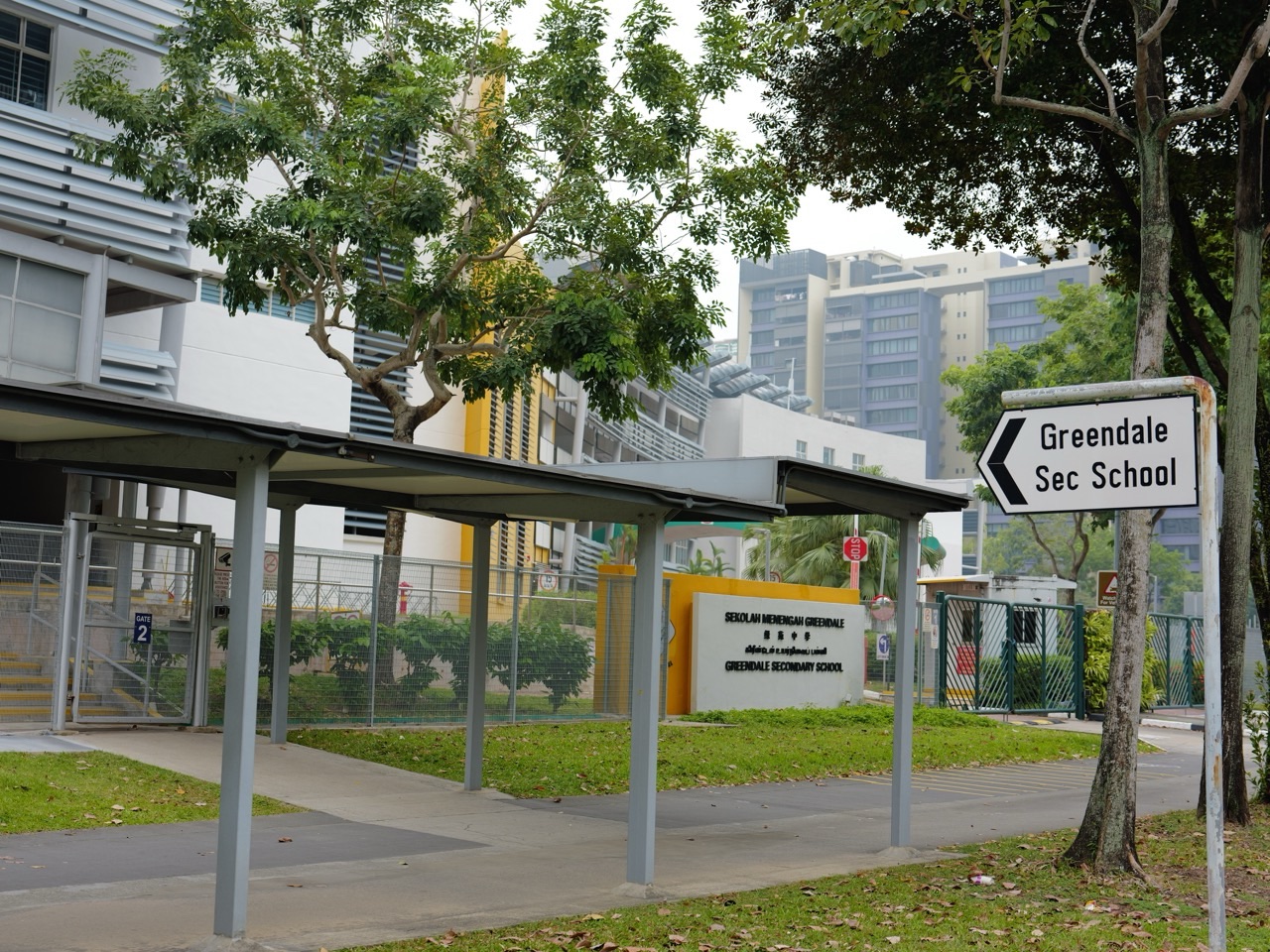
Families may investigate schools in and around Punggol, such as Edgefield Secondary, Greendale Secondary, Punggol Secondary, Yusof Ishak Secondary, or suitable schools in neighbouring areas. Each name is a prompt to inspect the current official SchoolFinder listing. It is not a declaration here that the school offers PG1 vacancies for the coming intake.
The school may have a distinctive learning programme, CCA offering or support approach that suits the child. But the family must confirm the correct admission route and score range for that school and year. An article written before the current cohort’s exercise cannot know the final PG1 cut-off or available places.
At an open house, ask what a pupil entering through PG1 can actually take part in. Are there mixed form classes? What subject-level options are offered at Secondary 1? How is academic support provided? Which CCAs have selection requirements? Does the school have particular conditions for practical subjects? These questions are more useful than asking only whether a school is “good”.
Read eduKate Punggol’s existing school guides as explanatory context, then verify the latest official arrangements before submitting an application.
14. School culture matters, but how can a parent assess it?
Culture is easy to mention and hard to measure. Parents can begin with observable details. Does the school explain its expectations clearly? How do staff respond when a pupil asks a question? Are students able to describe their learning honestly? Is there evidence of pastoral support, accessible communication and student participation? These observations are more grounded than a vague claim that a school has a superior atmosphere.
On a visit, ask what happens when a Secondary 1 pupil falls behind in a core subject. Does the school identify the difficulty early? Can the child ask a form teacher for help? Are there subject-level review processes under Full SBB? What happens when a student is unable to attend a CCA temporarily? Such questions reveal the everyday systems behind a school prospectus.
Parents should not expect a perfect institution. Every school has students with different needs and occasional problems. The important question is whether the school has clear, fair and useful ways to support learning, safety and communication.
Include the child’s response. A school may look impressive to adults yet leave a pupil feeling unable to see themselves participating. That feeling deserves exploration, though it should not be the only deciding factor.
15. What about affiliation, specialised programmes and DSA?
Affiliated schools and certain specialised arrangements may have additional published admission conditions. Families should read exactly which status is relevant and how it operates under the current Secondary 1 exercise. A child does not acquire an affiliation advantage merely because a family member attended the school years ago. Similarly, DSA-Sec is a separate talent-based arrangement with its own application timetable and commitment.
When researching a school, note whether it offers an ordinary PG1 route, a specialised school entry route, an affiliation category or a DSA talent programme. These categories should not be mixed. A strong audition does not automatically create ordinary PG1 eligibility, and a successful DSA allocation generally means the pupil no longer participates in the six-choice S1 posting exercise.
Some school profiles may highlight programmes that only selected pupils can enter. Confirm whether the programme is part of the standard curriculum or a separate audition or eligibility-based offering. Do not rank a school first solely because the brochure features an opportunity the child cannot actually access.
When the rules are unclear, contact the primary school or MOE for guidance. An official explanation is more valuable than a parent-group strategy based on several different admission schemes combined into one story.
16. Why school rankings are a weak substitute for fit
Parents may search for a single ranked list of “best secondary schools for PG1”. Such a ranking tends to compress different needs into one number. A pupil who enjoys technology and hands-on work may thrive in a school with a strong applied learning programme. Another may benefit more from a shorter commute and a supportive reading environment. A third may value performing arts, team sports or language opportunities.
These children do not have identical success criteria. A school that is an excellent fit for one may be exhausting or unsuitable for another. The PSLE result itself already communicates an academic starting position; the family does not need a second numerical hierarchy masquerading as a complete school-choice answer.
Look instead for evidence across several dimensions. Does the school offer the relevant Posting Group? Does its academic and pastoral support match the child? Are the available programmes meaningful? Can the student attend regularly? Do they have a credible reason for preferring it?
A parent who can answer those questions is making an informed decision even when another family chooses differently.
17. A fictional Punggol family with PSLE Score 27
Consider a fictional student, Ryan, with a total PSLE Score of 27 and the corresponding PG1 eligibility. His parents find several schools with plausible historical PG1 score ranges. Ryan is interested in design and computing, while the family needs an uncomplicated journey because a younger sibling also requires supervision.
The parents first filter for actual PG1 admission. They then compare programmes and conduct two trial journeys. One school is attractive but requires a difficult transfer and late CCA journey. Another has a suitable programme, school support and a manageable route. They place schools in genuine preference order and keep credible alternatives on the list.
The parents do not interpret a fictional previous cut-off point as a promise. They know that the actual outcome depends on the current cohort. They also ask Ryan to describe why he wants each school rather than deciding entirely without him.
Ryan is a fictional example. No school in this article is being assigned an invented real cut-off or admission probability.
18. A fictional family at the Score 25 boundary
A different pupil, Clara, receives a PSLE Score of 25 and is eligible for either PG1 or PG2 under the mainstream mapping. The family initially creates six school choices mixing assumptions about PG1 and PG2. When they read the official S1 guide, they realise that the selected Posting Group in the standard form applies to all six preferences.
They return to the beginning. Which school options are actually available under each eligible group? What subject-level flexibility can the child consider after posting? What programme and learning environment would be most suitable? They discuss the decision with the primary school and construct one coherent list rather than treating the groups as interchangeable for each separate school.
The revised approach reduces confusion. It also reminds the family that an entry route is not a permanent assessment of the child’s potential. The student may be eligible to take particular subjects at a higher level later according to the school and MOE rules.
19. How to use school open houses without feeling pressured
An open house is an information-gathering opportunity, not a sales event in which the family must make a decision immediately. Visit with a short set of questions. What does the school offer to students entering through PG1? Which learning and pastoral supports are available? What is a typical Secondary 1 day? How are CCAs selected? Can the school describe how Full SBB subject-level options are handled?
Give the child a chance to ask something independently. The response may reveal whether the school feels welcoming and whether the pupil can imagine participating. Collect only the information needed to make the choice. A bag full of brochures does not necessarily produce a better decision than a few accurate notes.
After the visit, compare observations while they are fresh. What was distinctive? What was unclear? Which claims need confirmation from the official school site? If the child and parent disagree, explore the reason rather than dismissing one perspective automatically.
Keep the final decision anchored to eligibility, actual programmes, travel and student fit—not the strongest impression created by a single performance on a stage.
20. What if the child is disappointed with the posted school?
Sometimes a family researches carefully and the posting result is still different from the first preference. The school allocation process is constrained by merit, availability and the valid rules of the exercise. A different outcome is not an official judgment that the pupil lacks character or potential.
Start with the receiving school’s registration instructions. Check the reporting arrangement, school attire, booklist, timetable and any subject-level offers. Practise the commute. Help the child identify at least one activity or opportunity they might genuinely enjoy. A disappointed pupil can still build friendships and meaningful learning at a school that was not the original first choice.
If the family has exceptional circumstances that justify asking about a transfer or appeal, use official school and MOE channels. Do not trust people who promise admission in exchange for money or private documents. A family may pursue a legitimate enquiry while preparing responsibly for the school already allocated.
See eduKate Punggol’s PG1 appeal and transfer guide for the separate administrative question.
21. Four-week school-choice preparation plan
Week 1 — Confirm eligibility and create a shortlist
Read the official result slip and Posting Group conditions. Visit SchoolFinder, search the relevant schools and verify PG1 availability. Record current contact information and the reference year of each published score range. Discuss basic interests with the child.
Week 2 — Compare programmes and journeys
Research CCAs, subjects, distinctive programmes and learning support. Conduct realistic travel checks for leading options and consider the school-day routine. Ask questions by email or at official open houses when information is unclear.
Week 3 — Rank six genuine preferences
Place the schools in the order the child and family would actually prefer, keeping eligibility and a sensible range of possibilities in view. For Score 25, complete the PG1/PG2 decision before the final list. Review the preference order with the child rather than rushing an adult-only ranking.
Week 4 — Submit and prepare for the result
Use the current MOE S1 system within the announced window. Verify the completed form and save the official acknowledgement securely. Watch for the official posting outcome and follow the receiving school’s registration and subject-level instructions. Do not publish the child’s personal results or portal details in open groups.
22. Common mistakes and their fixes
- Comparing a PG3 COP with PG1 eligibility: verify the correct Posting Group row.
- Assuming last year’s COP guarantees a place: treat it as historical evidence only.
- Using SchoolFinder favourites as the final application: submit through the official S1 system.
- Listing six schools solely by reputation: compare programmes, support, actual journey and student interests.
- Choosing PG1 for some schools and PG2 for others on the same ordinary form: a single eligible Posting Group applies to the standard list.
- Believing first choice beats all stronger PSLE Scores: choice order applies after academic merit within the appropriate tie-breaking framework.
- Treating a fictional or predicted COP as official: use current MOE records with dates.
- Assuming every programme is open to every incoming pupil: ask about selection and timetable conditions.
- Ignoring the late CCA journey: test the homeward route as well as morning arrival.
- Allowing an unexpected posting to stop preparation: organise the assigned school while considering any authorised enquiry.
Frequently asked questions about PG1 SchoolFinder and cut-offs
Does SchoolFinder show all PG1 schools?
It is MOE’s official tool for finding and comparing schools. Use current filters and individual profiles to verify which schools have the relevant Posting Group.
Can I choose a school whose last PG1 cut-off is better than my child’s Score?
You may consider valid choices, but the previous cut-off is not a promise. A balanced list should include credible options and an accurate understanding of the student’s eligibility.
Is a smaller PSLE Score better?
Yes. Under the PSLE scoring system, a lower total score reflects stronger overall performance.
Does a previous COP of 27 guarantee a place for Score 27?
No. The current cohort’s choices, results and vacancies determine the new outcome.
How many secondary schools may I list?
Up to six in the ordinary S1 posting process, in genuine preference order.
Does putting a school first guarantee a place?
No. Merit and eligibility remain fundamental. Choice order matters under the published tie-breaker rules.
What happens if students tie for the last vacancy?
The published tie-breakers are citizenship, school-choice order and computerised balloting when necessary.
Can Score 25 choose PG1 or PG2?
Under the published mainstream mapping, yes; verify the student’s actual official eligibility and use one selected Posting Group for all six standard choices.
Can I include a school that does not offer PG1?
Not as a valid ordinary PG1 choice merely because you like it. Confirm the school’s actual admission route and conditions.
Do DSA-Sec candidates also choose six schools?
Successfully allocated DSA-Sec candidates follow the DSA placement rules rather than the ordinary six-choice exercise.
Is the nearest school always best?
No. Distance is important for sleep and attendance, but educational fit, programmes, support and the student’s genuine interests also matter.
Should we visit a school before choosing?
Where practical, an official visit or open house can help the family evaluate daily school life. Always check current information and do not infer eligibility from a pleasant visit.
What if the preferred school doesn’t accept my child?
Follow the official posting outcome and receiving school’s instructions. Ask about any authorised review only through legitimate channels.
Official resources and further reading
- MOE SchoolFinder
- MOE Secondary 1 posting instructions
- MOE Full Subject-Based Banding resources
- MOE: How to use SchoolFinder
- eduKate Punggol: PG1 posting and Score 25–30
- eduKate Punggol: Choosing a secondary school by family fit
- eduKate Punggol: What happens after an unexpected posting
- eduKate Punggol: Crest, Spectra and specialised-school alternatives
Reviewed 6 November 2026. Individual school programmes and the previous score ranges should always be checked on current official sources. This is an independent guide, not an MOE admission calculator or a guarantee of a place. No real school’s future PG1 cut-off point has been predicted here.


