
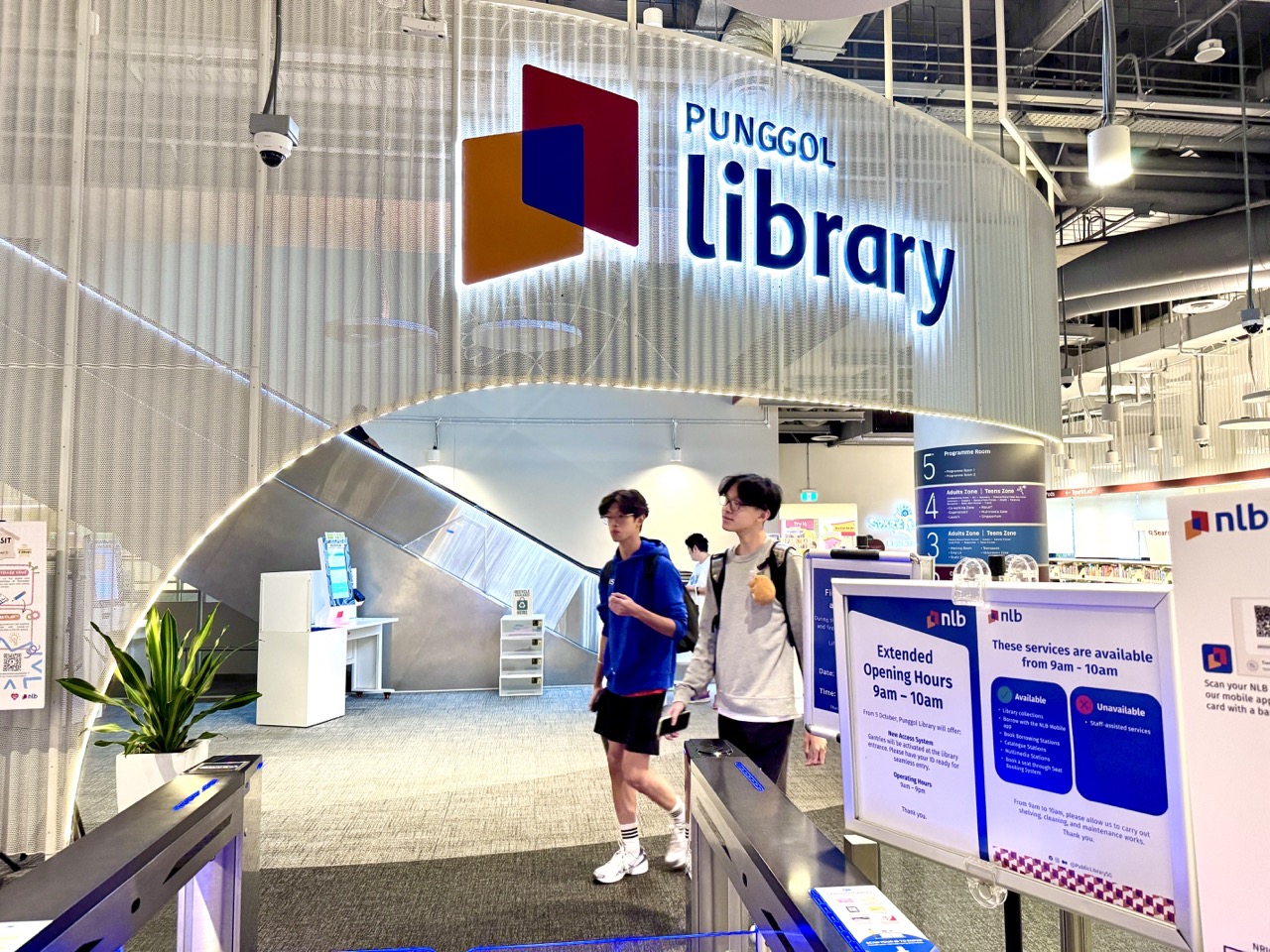
Where can you study, read or work quietly in Punggol? The most reliable purpose-built option is Punggol Library at One Punggol, 1 Punggol Drive #01-12. Its Level 3 Study Zone has bookable seating and published access from 9am to 10pm daily, including public holidays. The main library normally operates 10am–9pm, but from 5 October 2026 it also offers an early-access hour from 9am with ID-based entry and staff-assisted services beginning at 10am. For recreational reading and board games, Comics & Games Library at Punggol Coast Mall operates as a separate 10am–10pm self-service library. Your home, permitted café seating and suitable community spaces can be alternatives when the activity does not require silent study.
A good Punggol study spot depends on the task. Reading a novel, completing a Mathematics practice paper, holding a confidential work call, joining a group discussion and making a presentation need different environments. A busy café may work for a brief individual reading session but not for silent examination revision; a library Study Zone is intended for concentrated study but not for loud video meetings. This guide helps students, parents and working adults choose the right location without treating every empty table as a free coworking desk.
- Best for focused revision: Punggol Library Level 3 Study Zone; check NLB’s current seat booking and access rules.
- Best for broad collections and children: Punggol Library’s five-storey library at One Punggol.
- Best for comics and games: Comics & Games Library at Punggol Coast Mall, Tower 7, 88 Punggol Way #01-140.
- Main library hours: routine staffed service from 10am–9pm; early access 9am–10am since 5 October 2026, with accepted ID entry.
- Study Zone hours: 9am–10pm daily including public holidays; outside main library hours, use One Punggol Lift Lobby B instructions.
- Reading versus work calls: respect the activity rules of each space; quiet desks are not meeting rooms.
- Cafés: order appropriately and ask the operator about laptop/study policies, power sockets and permitted duration.
- Free does not mean reserved: verify actual seat availability, booking confirmation and no-show restrictions.
- Before travelling: choose your task, duration, transport and one sensible fallback.
Which quiet place suits the work you actually need to do?
A study location should support a specific activity rather than simply look attractive. For a student practising Mathematics under timed conditions, a quiet desk and uninterrupted session may be best. For a child discovering new books, browsing shelves and discussing a story with a parent may be more useful. For a remote worker making client calls, privacy, stable connection and permission to speak are necessary. These needs are not interchangeable.
| Purpose | Likely suitable location | Important check |
|---|---|---|
| Quiet independent study | Punggol Library Study Zone | Seat booking, quiet use, hours and access |
| Children’s books and family reading | Main Punggol Library | Age-appropriate section, rules and programme hours |
| Graphic novels and board games | Comics & Games Library | Self-service entry, games versus borrowing conditions |
| Small research-and-coffee break | A café that permits short laptop use | Operator policy, purchases and seat occupancy |
| Confidential online work meeting | Suitable private room or home workspace | Privacy, noise, connection and legitimate use |
| Family homework discussion aloud | Home or an appropriately permitted collaborative area | Ability to speak without disturbing others |
| Adult learning after normal work hours | Study Zone if open and bookable | Late access path and safe journey home |
Try to separate the task from the place’s reputation. The largest library in Singapore is not automatically the best location for every kind of work. A silent study space may be ideal for a student revising alone and unsuitable for two friends practising oral presentation at full voice. A comfortable café may allow relaxed reading but not provide free indefinite desk space.
Punggol Library: a five-storey public learning space
The National Library Board operates Punggol Library, commonly called Punggol Regional Library, at One Punggol, 1 Punggol Drive #01-12, Singapore 828629. NLB describes it as Singapore’s largest public library, with approximately 12,180 square metres over five levels. It opened in April 2023 and offers collections and areas aimed at different ages and interests.
The library includes facilities such as the Early Literacy and children’s collection, toy and play-related learning areas, TeenSpace, a Study Zone, Co-working Zone, MakeIT and spaces designed to support accessibility. These are distinctive zones with different purposes. A visitor should not assume that the opening hours or rules of one automatically apply to every other room.
A preschooler may benefit from a short reading experience where books are explored together. A teenager may want a focused independent study period. An adult may seek business or skills resources, while an older reader may enjoy local history and fiction. A family can visit together without forcing everyone to read the same book or use the same floor for the entire afternoon.
What changed in October 2026?
National Library Board announced earlier access at selected libraries from 5 October 2026, including Punggol. The updated arrangement permits entry from 9am rather than the previous general 10am opening, using an accepted identity or library credential through entry gantries. The 3 October 2026 report of NLB’s announcement explains that staff-assisted services still begin at the usual 10am time. Thus, early access and full staffed operation are different.
That distinction matters to a parent trying to borrow a specific item, a student seeking early study time or an older person needing help at a service counter. A visitor who needs assistance should not assume staff will be available during the early hour. Equally, an early-rising reader need not wait until 10am if they can use the approved early-access arrangement.
The usual main library closing time is 9pm, with public-holiday closures and specified early closure on major holiday eves. The separate Level 3 Study Zone has different access hours. Always check NLB’s latest notice rather than reusing a 2023 opening-hours image that predates the 2026 early-access change.
Level 3 Study Zone: the place for serious individual study
Within Punggol Library, the Level 3 Study Zone is a dedicated environment for concentrated work. NLB materials and the existing eduKate Punggol library guide describe more than 80 bookable study seats, with the extended access window 9am–10pm daily, including public holidays. This does not mean every seat is always available. Check the current seat booking system and the terms governing each reservation.
The Study Zone can support school assignments, examinations, reading, adult learning and suitable quiet laptop tasks. Respect the zone’s rules about noise, food, belongings, booking and use of shared space. It is not a venue for holding loud phone calls, tutoring groups or meetings that disturb other readers. A good study zone works because everyone follows the same expectations.
If the purpose is a long writing session, choose one clearly defined task and the resources needed. Bring an appropriate device or stationery, charger if permitted, headphones if allowed, water within the venue’s rules and a clear ending time. Booking a desk without a plan does not automatically create concentration. It can simply move distractions to another room.
How to enter before the main library opens or after it closes
NLB’s published directions identify Lift Lobby B of One Punggol for the Study Zone outside ordinary main library hours. Do not assume the main library’s doors will remain open until 10pm just because the Study Zone does. Follow current wayfinding, gantry access and reservation instructions. A user arriving at 9.30pm should have checked the correct entrance before leaving home.
For an adult studying after work, think about the return journey as well as the study slot. A quiet space can be useful, but the family may need the adult home at a reasonable time. A student should have an age-appropriate travel and communication plan, particularly if returning alone near closing time.
How to book and use a study seat responsibly
Use NLB’s live seat booking system or the entry method directed by NLB. Check the reservation start and end times, required credentials, check-in and cancellation rules. An empty-looking seat may still be reserved or temporarily unattended; do not simply move someone else’s belongings or claim a labelled desk.
When plans change, cancel according to the library’s process so that another person can use the resource. Respect time limits, avoid occupying space while out for a long meal and leave the seat clean. Public study facilities are valuable because they are shared fairly, not because one user can claim a table indefinitely.
How to use Punggol Library for Primary-school children
For younger children, reading is often easier when it feels like discovery rather than tuition. Begin by asking what the child is interested in: animals, machines, friendship, history or a particular kind of story. Browse appropriate collections together and choose a manageable book. A child who can select something meaningful is more likely to return voluntarily.
Parents should not expect a six-year-old to remain silent for several hours while adults use the library as a co-working space. Shorter visits with natural movement and breaks are often more effective. Where a library area is designed for children’s learning and interaction, follow its specific supervision and behaviour rules. Avoid taking a lively group into a designated silent study zone.
Library programmes, games and story sessions can add variety, but they may require booking and may fill up. The main library remains worthwhile even when a particular programme has no places. A child can leave with one new book and a positive memory without needing a packed weekend itinerary.
Secondary school, PSLE and JC revision: make the environment work for the task
Students under assessment pressure may assume that a library produces better results just because it is a serious place. The actual benefit comes from uninterrupted attention, suitable study tasks and honest review of errors. A quiet table is useful when the student knows what to practise. Without a plan, hours can pass while the student repeatedly scrolls between notes and messages.
Before travelling, select one or two specific learning targets. For a Mathematics revision session, this might involve attempting a small set of questions and marking them carefully. For English, it may mean reading a passage, explaining key ideas and checking unfamiliar vocabulary. For Science, it might involve reconstructing a process from memory, then comparing it with the correct explanation.
Use a reasonable study block and a brief break consistent with the library rules. The best length depends on the student. An exhausted Primary 6 student may benefit from a shorter focused session and a walk afterward rather than spending the entire day at a reserved desk. Sleep, exercise and family support remain part of academic preparation.
Study alone or with friends?
Study with friends only when the activity really requires collaboration. Discussing a difficult problem can help, but long conversation in a quiet public study area disrupts others. For a group project, find an approved collaborative setting or use a private space where talking is permitted. The purpose of a study venue is not to suppress necessary discussion; it is to match discussion with the correct room.
A useful pattern is to do independent preparation first, then discuss questions in an appropriate location. This stops the group session from becoming a long social gathering without learning. If a student’s main problem is procrastination, a clear task and agreed meeting time often help more than an impressive venue.
Comics & Games Library at Punggol Coast Mall
NLB’s official Nodes information describes the Comics & Games Library at Punggol Coast Mall, Tower 7, 88 Punggol Way #01-140, Singapore 829913. It contains over 7,000 comics, graphic novels, game-related reads and board games, with published hours of 10am–10pm daily including public holidays, subject to current changes. This venue serves a different purpose from the main Punggol Library Study Zone.
The pop-up is self-service, and NLB lists entry through a library-compliant identity document, NLB eCard or eligible QR day pass. Read the entry instructions before visiting, especially with a child or someone who rarely uses digital services. The fact that a library has public entry does not mean there is a staffed desk available for every question.
Comics and graphic novels can broaden reading habits. For someone who struggles to connect with long prose, visual storytelling may invite sustained attention to characters and narratives. Board games can support social interaction and learning rules, but a games area may be lively. Do not advertise it as a guaranteed silent revision room. A parent should choose it because the family wants this kind of reading and play, not because it has ‘library’ in the name.
Comics & Games versus Punggol Library: which one?
Choose the Comics & Games Library for the themes and shared play it offers. Choose Punggol Library for larger general collections, children and adult learning areas, and a dedicated bookable Study Zone. Either may make a good outing, but they are in separate locations. Punggol Coast MRT (NE18) serves the thematic library, while the Regional Library is in One Punggol near the Punggol town-centre area.
A family trying to visit both can do so on different days. There is no benefit in treating the two libraries as items that must be ticked off in a single afternoon. Repeat visits often allow deeper browsing and more comfortable travel.
Can you study or work at a café in Punggol?
Possibly, but not every café offers unlimited laptop seating. Some outlets have table time limits, no-laptop rules during busy periods, limited power sockets or policies about minimum purchases. A café is a business serving customers, not a public study facility. Check the actual operator’s current rules and choose a period when your use will not prevent other customers from being served.
Waterway Point, Punggol Coast Mall, Northshore Plaza, Oasis Terraces and other neighbourhood centres have food and beverage options, but shop turnover and seating arrangements change. Do not name a café as a guaranteed study venue without confirming that it currently welcomes such use. A promotional image showing someone with a laptop may not describe the current policy.
For a short informal reading session, a quiet café can be pleasant. For a three-hour exam revision block, a library study seat or home desk may be more appropriate. For a confidential video call, a public café may create privacy and data-security problems even if a table is available. Choose by task, not atmosphere alone.
Paying for a drink is not a lease on the table
A customer should respect queueing, seating and peak-hour needs. If the café asks patrons not to occupy tables for laptop work, follow that rule. Avoid placing heavy books and cables across walking routes, do not use sockets without permission and keep sound from calls or videos low. Good customer etiquette makes it more likely that a venue remains welcoming to ordinary readers.
Cost also matters. A student buying drinks every time they want to study may spend substantially more over a month than expected. The family can compare the price and transport of café visits against the public Study Zone. It is not necessary to buy a drink simply to create the feeling of productivity.
What about coworking spaces in Punggol?
Some private coworking providers and flexible-work facilities may serve people who need meeting rooms, hot desks or longer-term arrangements. Availability, location and terms change. A business should assess actual privacy, broadband, power, booking, access and cost before relying on a specific venue. A seat described as a lounge is not automatically licensed or suitable for handling confidential client information.
Punggol Library also has a Co-working Zone among its adult learning facilities. That does not mean every type of commercial activity, sales meeting or loud phone call is permitted. Check NLB’s current use conditions for each area. A remote worker needs to distinguish quiet individual laptop work from collaborative or confidential professional meetings.
For small-business owners, flexibility may matter more than prestige. If a home workstation is reliable most days, a dedicated paid room might be needed only for certain client meetings. Compare total monthly cost with actual utilisation. The right workspace supports work and personal boundaries, not the appearance of running a company.
Studying or working at home in a Punggol flat
Home is an important alternative because it requires no travel or table reservation. A simple desk with suitable light, ventilation and a reliable power connection can support many tasks. However, a shared HDB flat may involve children, television, cooking, shift workers and limited room. The goal is to make one realistic quiet area rather than assuming every family can build a separate office.
For a student, choose a place where needed materials can remain organised and distraction is manageable. A family can set a short quiet period around the student’s work, then return to ordinary conversation. The student may benefit from practising how to ask for help and how to take an appropriate break. This approach reduces repeated arguments about study time.
For a remote worker, privacy matters. Avoid discussing confidential client information where other family members or visitors can overhear, and use secure connections and authorised devices. Do not treat a public or shared home network as a substitute for the security controls required by the employer. If the household cannot provide a private environment for a particular meeting, seek a suitable authorised alternative.
A library is not childcare
Parents sometimes need an indoor space between school dismissal and evening activities. A library can be welcoming, but it is not a substitute for age-appropriate supervision. Young children should be accompanied according to library rules and their needs. Staff are not automatically responsible for watching a child while a parent shops or attends a long meeting.
For older students who travel independently, agree on arrival and return times, contact arrangements and what to do if the library is full or unexpectedly closed. The parent and child should understand that an unsupervised public study area requires sensible behaviour and personal safety. A student who is not yet ready to manage the journey may need an adult or an alternative place.
Adults returning to study after work
An adult enrolled in continuing education may need a quiet evening venue after work. Punggol Library’s Study Zone can offer longer hours than the main library, but access, booking and the trip home still need planning. Choose the day and study target based on energy and the next morning’s obligations. Staying until closing time is not automatically more productive.
Adult learning can include formal qualifications, job-related reading or language practice. Each activity benefits from a different plan. A reading assignment may suit a quiet hour; practising a spoken language may require a room where talking is permitted. A responsible learner chooses a place that allows the necessary method without disturbing others.
Retain enough rest and family time. Someone who works a full day and studies every evening may become exhausted. A small, consistent schedule can be more sustainable than an ambitious plan that breaks down after one week.
Older readers, accessibility and inclusive library services
NLB describes assistive technology, accessible collections, Borrow-n-Go features and Calm Pods among Punggol Library’s innovations. These are designed to make reading and learning more approachable to people with different needs. The exact equipment or service may have its own booking or availability conditions. Consult official instructions if a particular accessibility feature is essential to the visit.
A reader with low vision or difficulty navigating a large building may benefit from knowing the exact floor and route in advance. A person with hearing needs may require different communication support. Ask the visitor what would make the experience comfortable rather than assuming that a single accessible entrance solves every concern.
For grandparents reading with young children, a library visit can be about shared stories and conversation. The child can choose a book, and the older adult can contribute memories and interpretation. A meaningful visit does not require complicated technology or paid activities.
Internet, printing, charging and devices: confirm rather than assume
NLB libraries offer digital resources and various facilities, but the availability of particular multimedia stations, printers, scanners, computers and power sockets is governed by current rules. If printing or a device is essential, check NLB’s actual service before leaving home. A general library directory does not guarantee every piece of equipment will be available in the specific location at the exact time.
Keep devices secure. Do not leave a laptop unattended on a study desk while going out for a meal. Public Wi-Fi requires sensible security practices, particularly for sensitive work or personal information. Use approved access methods and avoid sharing banking credentials, work passwords or confidential documents on a shared screen.
School-holiday and exam-period crowding
Demand for Study Zone seats may rise during school examinations and holiday revision periods. A visitor should not assume a walk-in seat will be available just because a photograph shows empty desks. Book appropriately and prepare a fallback. A student who travels a long way and then cannot sit may lose valuable time and become frustrated.
One alternative is to use an ordinary reading or homework space at home for a shorter focused session, if suitable. Another is to adjust the visit to an available NLB booking window. Do not occupy a different library zone against its rules or ask a café to function as an overflow examination hall without permission.
Choosing between concentration, creativity and conversation
Different stages of learning require different environments. Initial discovery may be collaborative: children ask questions, browse pictures or discuss an idea. Concentration work may require reduced noise. Final review can involve explaining the material aloud to another person. A single table cannot always serve all three uses, and that is normal.
A practical plan may begin with reading at home, continue with quiet problem-solving in the Study Zone and end with a short discussion over a family meal. The venues support the process rather than replace it. This is particularly useful for students who mistake ‘spending time in the library’ for evidence that they have learned the material.
How to measure whether a study visit was useful
Choose an outcome that can be seen. Did the student complete and check a set of questions? Did the adult understand a chapter and write a brief summary? Did the child discover a book they wanted to finish? For professional work, did the person complete a deliverable without violating privacy or disrupting other users? These outcomes are more meaningful than the number of photographs taken at a desk.
A poor session is not necessarily wasted. If the venue was too noisy or crowded, record that and change the next plan. If a student repeatedly struggles to begin, reduce the first task and remove obvious distractions. The right environment is one the person can use effectively and return to without excessive stress.
Four-week plan for a Punggol study and reading routine
Week 1: decide the main purpose
Identify whether the person wants recreational reading, quiet revision, group discussion or professional work. Choose one realistic venue and verify its rules. Do not force an unsuitable space simply because it is nearby. Bring only what the task requires and keep the first visit manageable.
Week 2: test a reserved or familiar space
If independent study is the aim, check the NLB Study Zone reservation process and arrive prepared. For family reading, choose appropriate books and a comfortable schedule. Record any access, travel or noise problems, then adjust the next visit.
Week 3: improve the work method
Use a clear task list and a short reflection. A student can practise and mark answers; an adult can finish a reading or assignment section; a child can discuss a favourite story. Keep leisure reading enjoyable rather than turning every book into a comprehension test.
Week 4: make the routine sustainable
Compare the travel effort, costs, concentration and household impact. Keep the places and times that work. Use home when it is suitable, the library when a dedicated quiet venue helps, and a café only when its policies and cost fit the task. The ideal routine reduces stress and makes learning easier to repeat.
Frequently asked questions about study spots and libraries in Punggol
Where is Punggol Regional Library?
At One Punggol, 1 Punggol Drive #01-12, Singapore 828629.
Is Punggol Regional Library the same as Punggol Library?
Yes. NLB’s newer naming often uses Punggol Library for the same five-storey branch at One Punggol.
What time does Punggol Library open in November 2026?
Early access began at 9am on 5 October 2026, with normal staff-assisted services from 10am and main-library closing at 9pm, subject to notices.
Does early access require an ID?
Yes. NLB’s October 2026 arrangement requires accepted library or identity credentials at entry gantries.
Is Punggol Library’s Study Zone open until 10pm?
Yes. Its separate Level 3 Study Zone lists 9am–10pm daily, including public holidays.
Where do I enter the Study Zone outside main-library hours?
Follow NLB’s instructions for Lift Lobby B at One Punggol.
Can I reserve a study seat?
NLB provides a study-seat booking system. Check current windows, check-in and availability before the visit.
Is every empty Study Zone seat available?
No. It may be reserved or temporarily unattended. Respect labels and the booking system.
Can I make a video work call in the quiet Study Zone?
A silent study area is not a general meeting room. Use a permitted appropriate space for calls and privacy.
Where is the Comics & Games Library?
Punggol Coast Mall, Tower 7, 88 Punggol Way #01-140, near NE18.
What time does Comics & Games Library open?
NLB lists 10am–10pm daily including public holidays, subject to changes.
Can I study for PSLE at Punggol Library?
Yes, using an appropriate permitted quiet area and age-appropriate supervision, with seat booking where needed.
Does Punggol Library have children’s spaces?
Yes. NLB describes children’s collections, early literacy areas, toy-related facilities and other age-specific spaces.
Is the library a free childcare centre?
No. Children require appropriate supervision and caregivers must follow library rules.
Can I study in a Punggol café?
Only if the business permits the intended laptop or study use; respect current time limits, purchases and other customers.
Do Punggol cafés guarantee power sockets?
No. Check the particular outlet and ask permission before using electrical facilities.
Where should I take a confidential work call?
Use a suitable authorised private space rather than a public reading desk or busy café where information may be overheard.
What should I do when the Study Zone is fully booked?
Choose another permitted booking window or suitable home/alternative workspace. Do not take an occupied or reserved seat.
Can adults use Punggol Library for learning and upskilling?
Yes. NLB provides adult resources and specialist facilities, subject to current programme and space rules.
Is reading graphic novels useful for children?
Graphic novels can support reading enjoyment and narrative comprehension. Choose age-appropriate material and allow children to explore interests.
Official references and related eduKate Punggol guides
- NLB public libraries, branch information and services
- NLB Comics & Games Library hours and entry
- NLB early library access, effective 5 October 2026
- Punggol Library full-floor, Study Zone and accessibility guide
- Punggol Library early access and Study Zone hours explained
- Best study spots in Punggol: specialist guide
- Comics & Games Library visitor and entry guide
- Choosing library, home or café for school study
- Lifestyle in Punggol: public transport to destinations
- Lifestyle in Punggol: Punggol Coast public amenities
Library access was checked against NLB information and the October 2026 early-opening announcement. Seats, booking rules, special facilities, public holiday exceptions and individual café policies can change. Verify the specific service before travelling.


