
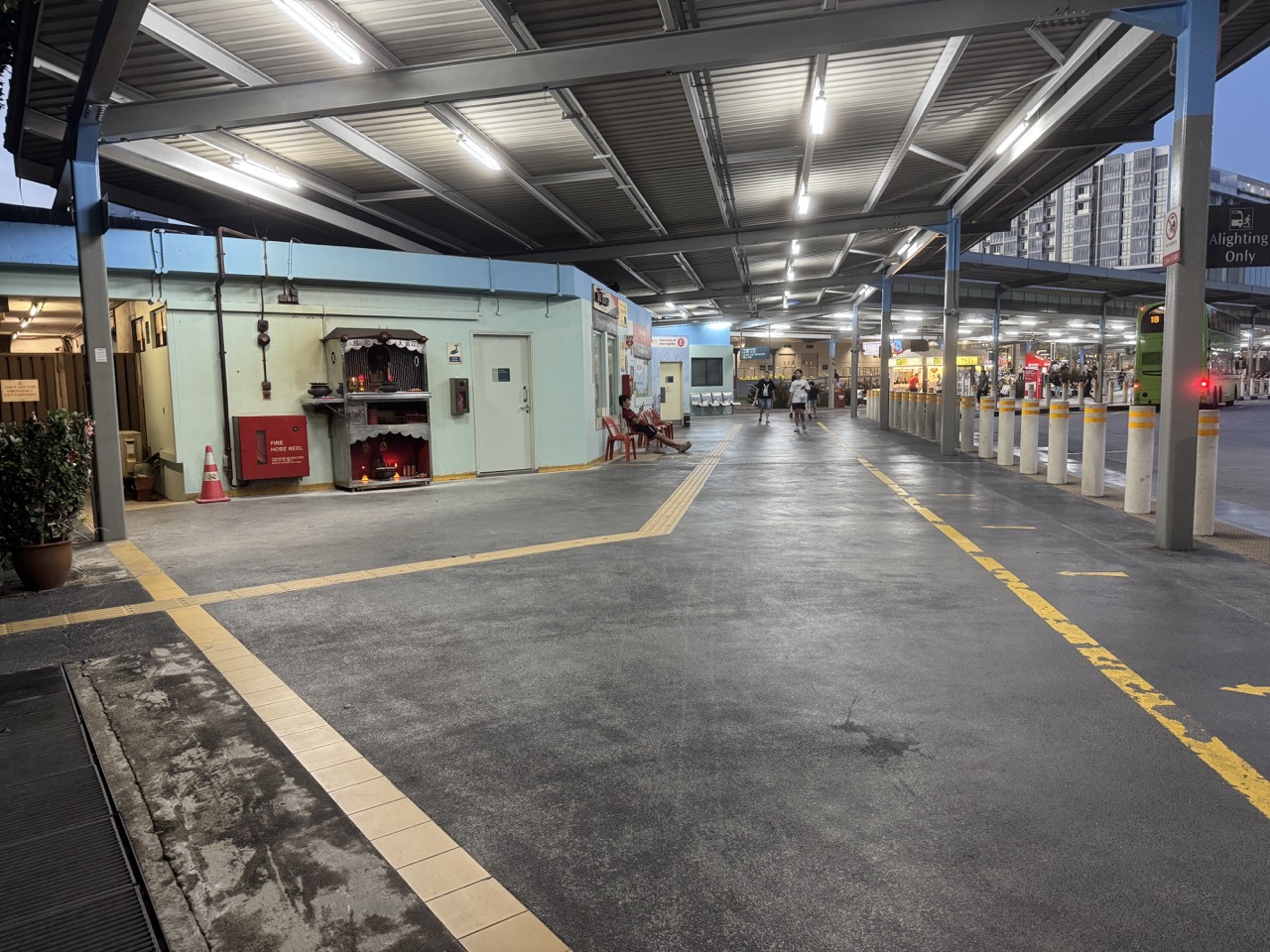
How do you get around Punggol without a car? The essential connections are Punggol MRT (NE17) and Punggol Coast MRT (NE18) on the North East Line, the East and West loops of Punggol LRT, and two different bus interchanges. Punggol Bus Interchange serves the established town-centre area, while Punggol Coast Bus Interchange began service on 29 June 2025 as part of the newer integrated transport hub. Your best route depends on the actual block, workplace and school—not simply the name of the estate.
One important 2026 change is already in place: LTA confirms that Bus Service 381 was extended from Punggol East to Punggol Coast from 13 September 2026. Punggol Coast also became the new interchange for Services 34 and 117/M from June 2025, while Punggol MRT remains a separate established interchange. The practical rule is to check today’s bus service and boarding point before following an older local guide. This article explains the daily decisions for residents, workers, students and families rather than reproducing every bus-stop list.
- Punggol MRT: NE17 on the North East Line and PTC interchange for Punggol LRT.
- Punggol Coast MRT: NE18, North East Line terminus, opened 10 December 2024.
- Punggol LRT: two loops serving residential precincts; check direction and destination display.
- Punggol Bus Interchange: established town-centre interchange; not identical to Punggol Coast.
- Punggol Coast Bus Interchange: integrated with NE18 and Punggol Coast Mall, operating since 29 June 2025.
- 2026 route update: Bus 381 extended to Punggol Coast on 13 September 2026.
- For fares and live schedules: use SimplyGo/LTA information, not an estimated time in an article.
- For prams, wheelchairs and older adults: confirm lifts, crossings, transfers and the complete route.
- For work or school: test door-to-door journeys and reserve a reliable late-return alternative.
The first decision: where are you going after the train?
Punggol is sometimes described as a single end-of-line town. In daily life, it is more complicated. An employee travelling to an office around Punggol Coast needs a different final approach from a parent reaching a preschool in Waterway East. A shopper going to Waterway Point can often use Punggol MRT directly. A person visiting Northshore Plaza may need an LRT or bus connection. The destination after the train determines the appropriate station.
Open a current map and identify the building entrance, not merely a district label. Then compare walking time, train or bus connections, the number of crossings and whether the route is sheltered. A path that appears short in a straight line may be inconvenient with a buggy or when carrying groceries. A route with one extra stop may be easier if it connects directly to a lift or covered walkway. Time and comfort both matter.
| Where you want to go | Rail / bus anchor | What can change the answer? |
|---|---|---|
| Waterway Point and town-centre interchange | Punggol MRT/LRT (NE17/PTC) | Specific mall wing and level |
| Punggol Digital District or SIT | Punggol Coast NE18, Teck Lee LRT, or local bus | Exact campus/office building and entry |
| One Punggol public hub | Sam Kee LRT / appropriate pedestrian route | Mobility needs and chosen entrance |
| Northshore residential area | Western LRT loop / relevant local bus | Block location and bus service direction |
| Oasis Terraces and Punggol Polyclinic | Oasis LRT or local bus | Clinic appointment time and building level |
| Punggol Point and coastal paths | Confirm nearest LRT/bus and final walk | Park and weather conditions |
This table identifies the first likely network to investigate rather than a guaranteed optimal itinerary. Your starting point, actual destination and current service frequency may change the result. Current official journey planners should decide today’s route, especially if an appointment cannot be missed.
How the Punggol LRT East and West loops work
LTA’s official Sengkang–Punggol LRT overview explains that the Punggol system serves residential neighbourhoods through two loops, connecting them with Punggol MRT and the bus interchange. The Punggol LRT began service in 2005. Its current network serves fourteen stations, including the interchange. For a newcomer, the important idea is that LRT is a local connector, not a second version of the North East Line.
The loops bring homes closer to rail, but route direction matters. Read the platform display to make sure the train travels along the side of the loop you intend. A first-time passenger may board the wrong direction simply because both displays contain ‘Punggol’. Station announcements, route diagrams and platform indicators should determine which train to take. Guessing by which train arrives first can turn a simple trip into a tour of the wrong side of the estate.
There is no need to memorise every station on the first day. Find the station nearest home, recognise the interchange, and learn the direction required for the two most frequent trips. Once those become familiar, add school, library and grocery destinations. This is more efficient than reading an entire transit map without having a destination in mind.
For an older relative or a child travelling with an adult, practise getting off at the correct stop. Identify a safe public meeting point and explain what to do if the passenger misses a station. Avoid telling a child to run across an interchange to catch the next train. Missing one train is inconvenient; unsafe movement around doors, escalators and crowds can be much more serious.
East Loop: use the exact station, not a vague neighbourhood name
On the eastern side, destinations include residential areas around stations such as Coral Edge, Riviera, Kadaloor, Oasis and Damai. They serve different blocks, shops and school routes. Do not assume that a person visiting the area around Punggol Plaza should use the same LRT stop as someone visiting Oasis Terraces and the polyclinic. Consult the present station map and complete street address to select the correct stop.
The path from the LRT station to the final building deserves attention. A caregiver who is late for preschool pickup may discover an exposed crossing, a lift or a longer pedestrian route than expected. Test the journey with the same belongings and mobility constraints the family normally has. A route is reliable when it works under ordinary conditions, not only on a dry Saturday afternoon.
West Loop: Northshore, Sumang and the coastal side
The western side connects residential areas around Sumang and Northshore as well as Sam Kee and other stops. It is particularly important for residents whose home is not within convenient walking distance of the main MRT station. The best station and route depend on the particular block and the current operating pattern. For a Northshore Plaza errand, for example, identify the desired building and current pedestrian approach rather than assuming every western-loop station is equally convenient.
When the family travels together, know which person is most sensitive to waiting, heat or steps. One adult may walk quickly, while a preschooler and grandparent need more time at the lift and crossing. If the trip involves two or more changes, build in a realistic buffer. The extra time is not wasted; it helps the journey remain calm and safe.
Do the newer two-car LRT trains change the commute?
The Ministry of Transport explained in February 2026 that new two-car light-rail vehicles were initially deployed on the Punggol loops in the second half of 2025, with additional deployment into 2026. The new vehicles were first placed in Punggol for operational reasons, and subsequent deployment considers crowding and operational needs. This is meaningful service context, but it does not mean every train or every service is always a two-car set.
For a daily passenger, the practical benefit is additional capacity when the upgraded vehicles operate. Actual crowding still changes by departure time, school schedules and local demand. It is sensible to leave slightly earlier for a critical appointment rather than promising that a capacity upgrade has eliminated peak-hour waits.
If an article claims the LRT was fully transformed on one date without distinguishing older and new trains, approach that claim carefully. System upgrades can proceed in phases, and the passenger’s immediate question is what service is operating on the day of travel. Check LTA and on-platform messages for changes.
Punggol MRT NE17 versus Punggol Coast MRT NE18
LTA confirms Punggol Coast MRT opened on 10 December 2024. This added a North East Line station beyond the established Punggol MRT interchange. Punggol Coast is not simply another exit of Punggol station. It has its own entrances and surroundings, linked to Punggol Digital District, SIT and the new commercial precinct.
Punggol MRT remains a key location for Waterway Point, the LRT interchange and central Punggol bus connections. For visitors heading to the main mall at Punggol Central, the newer coast station is usually not the appropriate default. For visitors heading to an SIT event or a digital-district office, NE18 may be the more logical starting point. Confirm the precise building and any private access conditions.
If you are choosing where to live, compare your actual commute rather than assuming the newer station is always better. A flat that requires a bus or long walk to NE18 may not be as convenient as a different flat with a short sheltered route to NE17. Housing advertisements often compress this distinction into ‘near MRT’. The family’s daily movement deserves more careful measurement.
When meeting friends, give the station code as well as the name. ‘Punggol’ and ‘Punggol Coast’ sound similar enough that a first-time visitor may confuse them. This is especially relevant for grandparents and relatives visiting from another part of Singapore. A clear station code prevents an unnecessary extra stop, return trip or missed appointment.
Punggol has two different bus interchanges
LTA’s integrated transport hub overview explains that Punggol Coast Bus Interchange is integrated with Punggol Coast MRT station and the mall. It began operating on 29 June 2025 as Singapore’s fifteenth integrated transport hub. Punggol Bus Interchange remains a distinct established hub in the town centre. The two should never be described as interchangeable.
LTA’s 20 May 2025 release says services 34 and 117/M moved from Punggol Bus Interchange to the new Punggol Coast Bus Interchange on opening, with route adjustments. That changes where some passengers should begin or end their journey. A 2024 map showing every relevant service at the older interchange is not automatically reliable in November 2026.
The practical method is to search for today’s specific service and stop using an official eGuide. A bus service number alone can be ambiguous if the route has a short-trip variant or direction-dependent stops. Confirm the destination display, correct boarding berth and five-digit stop code where applicable. A passenger who reaches the wrong interchange may not be able to board the same service from the location used several years earlier.
Punggol Coast’s integrated design supports workers and visitors moving between bus, train and retail. However, being inside one integrated hub does not guarantee zero walking or a seat on the next bus. For someone carrying groceries or with a mobility aid, follow accessible signs and take time to locate the correct lift or waiting area.
The Service 381 change in September 2026
LTA’s September 2026 bus-enhancement announcement states that from 13 September 2026, Service 381 was extended from Punggol East to Punggol Coast. The change improves internal town connections and gives additional access to the Punggol Coast Integrated Transport Hub. It is a concrete example of why current Punggol public-transport guides need dated facts.
A resident who used the service before the extension may have saved an outdated route or assumed it terminates at the older interchange. Check the current bus operator or SimplyGo eGuide. If an event, appointment or class starts at a fixed time, verify the current direction and approximate journey through a modern planning service rather than trusting a timetable screenshot without a date.
One Punggol, Oasis Terraces and Northshore: the last mile matters
A transport network gets you close to a destination; it does not necessarily get you through the correct door. One Punggol’s Regional Library and community facilities may require a different walking approach from the Waterway Point shops even though both are often described as near central Punggol. Likewise, Oasis Terraces contains Punggol Polyclinic above its neighbourhood shops, so the clinic’s proper entrance and level matter.
Northshore can be convenient for residents living there, but the correct last-mile route from an LRT station may depend on whether the destination is Northshore Plaza I, Plaza II, a residential block or a waterfront path. Use a current accessible map when the precise route matters. Do not promise a one-minute walk simply because two map pins appear close.
During the rainy season, sheltered links and legal crossings deserve attention. A parent with a small child may prefer a slightly longer but better-lit and more sheltered path. An older person may need a route with a lift rather than stairs. Those choices are part of travel efficiency, not signs of poor navigation.
School and childcare commutes: start from the pickup deadline
A family’s transport decisions often become most difficult after work, when a child needs collecting before a centre closes. Start with that fixed deadline and work backward: time to leave the office, walk to the station, wait, transfer, reach the centre and complete any authorised collection procedure. The common mistake is to calculate only train-running time and ignore the rest of the trip.
If the child attends student care, ask whether pickup is at a school gate, on the campus or at a separate community venue. School dismissals, CCA activities and centre operating hours can differ. A safe fallback adult should be authorised under the provider’s rules. Do not assume any relative can collect the child without notice or appropriate identification.
Secondary-school students may become capable of independent travel, but teach the real route first. Agree on what happens when the wrong train is boarded, the phone battery is low or a service is disrupted. The aim is confidence with clear safety boundaries, not simply shifting an adult’s transport burden onto a child.
Read our separate working-parent childcare and pickup guide for the full care arrangements. This article addresses the transport layer: choosing correct modes and recovering when the journey does not go to plan.
Travel with a stroller, wheelchair, walker or heavy bags
A route can be theoretically connected yet difficult for a particular person. Lift access, pavement width, ramp slopes, crossing time, crowds and seating all matter. For older people or visitors with mobility constraints, choose a complete step-free journey where possible. A station’s accessibility symbol does not prove every external link to every building is unobstructed.
For a stroller, check the lift route before deciding that a transit connection is convenient. Avoid using escalators with a stroller contrary to operator safety rules. A person carrying shopping or pushing a wheelchair should not be asked to hurry through crowds to recover an overly optimistic schedule.
If a lift or link is unexpectedly unavailable, contact station staff or use current notices for the safest alternative. Sometimes a different entrance or the next suitable bus will be better than trying to navigate an inaccessible shortcut. The right choice is a safe route, even if it is slower.
How much can a car-free Punggol household save?
There is no universal savings figure. Public-transport fares depend on distance, eligible concessions, transfer rules and the actual journeys. Car costs depend on ownership, financing, parking, insurance, maintenance, road charges and usage. A household that drives occasionally may make a different calculation from one that would have to buy a car solely to commute.
Use SimplyGo’s current fare guidance to determine actual fares for the riders in the household. Add regular trips rather than estimating the monthly total from one ticket. Include occasional taxis if they are genuinely part of the normal schedule. Then compare the full cost of having a car, not only fuel. A household with a reasonable walk to the MRT may find the car-free option viable without forcing every family member into difficult transfers.
Do not ignore time, especially for caregivers and shift workers. A cheaper journey that is too unreliable for childcare pickup may not be appropriate. The goal is to make a sustainable financial and daily-life choice. The fastest or cheapest route is not automatically the best if it creates persistent stress or unsafe behaviour.
Our Punggol household cost-of-living guide shows how to include transport with rent, groceries and care fees instead of treating fares as an isolated number.
Punggol Coast jobs, SIT and mixed-mode commuting
Punggol Digital District brings together working and studying destinations, but the district contains more than one building and access gate. A new employee or student should find the exact workplace or campus block before deciding which station or bus service to use. NE18, Teck Lee LRT and local bus links may each be appropriate for different locations.
For the first week of work, allow a buffer and record the actual journey. If the job involves frequent off-site appointments, a single outward commute figure may not capture daily travel needs. Hybrid workers can compare costs and time across different office days. Someone who works only two days on site may reasonably choose a different home or transport plan from a five-day commuter.
The wider public realm also offers food and errands near the workday. But a train station next to a mall does not reduce the time required inside a large commercial district. Workplace security, loading arrangements and building access remain separate from public transit. Follow the employer’s instructions rather than assuming the nearest public entrance leads to the right office.
What to do when your service is delayed
First, verify the issue through the operator’s current advisory rather than through an undated screenshot circulated in a neighbourhood chat. If the disruption affects school or childcare pickup, contact the provider and approved backup caregiver immediately according to the agreed plan. Do not make children leave the school alone simply because one route is unavailable.
Look for a recognised alternative that remains lawful and accessible: another bus route, an authorised taxi or a different train transfer. Compare time, money and the person’s mobility needs. When a severe storm is affecting the area, waiting in suitable shelter may be safer than trying to walk quickly along an exposed route.
Keep phone access, an appropriate payment method and key destination details available. A paper note with the child’s centre phone and meeting point can help when a device fails, provided it is stored privately. Do not place identifying child-travel information in public posts asking strangers for help.
A four-week plan for a new Punggol resident
Week 1: learn two essential journeys
Practise the commute to work or school and the trip to the main grocery or healthcare destination. Learn the actual platform, interchange, exit and final crossing. Write down one workable alternative. Avoid trying to memorise the entire public-transport system before the family has settled into its daily routine.
Week 2: test the evening and rain conditions
Repeat the return journey at a realistic time. Find out whether the last segment remains comfortable after sunset and during wet weather. Where necessary, adjust your preferred route to use a better-lit or more accessible path. Teach children the safe meeting point and who to call if delayed.
Week 3: check affordability and time cost
Total the fares and any recurring taxi trips for the household. Compare real travel time, not just a map estimate. A simple adjustment such as combining grocery shopping with the commute can improve both spending and family time.
Week 4: make the plan resilient
Revisit any routes that repeatedly cause problems. Agree on a backup transport or caregiver plan for disruptions. Keep the current transport-app information and important contact numbers accessible. A reliable routine is not one that never changes, but one that can change safely when needed.
Frequently asked questions about Punggol public transport
Is Punggol MRT the same as Punggol Coast MRT?
No. Punggol is NE17 and also connects to the LRT, while Punggol Coast is NE18, the North East Line terminus.
When did Punggol Coast MRT open?
10 December 2024, according to LTA.
Does Punggol have two bus interchanges?
Yes. The established Punggol Bus Interchange and Punggol Coast Bus Interchange serve different areas and services.
When did Punggol Coast Bus Interchange open?
29 June 2025, according to LTA’s official announcement.
Is Punggol Coast Bus Interchange linked to a mall?
Yes. LTA describes it as integrated with Punggol Coast MRT and Punggol Coast Mall.
Did Bus 381 change its route in 2026?
Yes. LTA confirmed an extension from Punggol East to Punggol Coast from 13 September 2026.
Which services moved to Punggol Coast in June 2025?
LTA’s opening release identifies Services 34 and 117/M as moving to the new hub with route changes.
How many Punggol LRT stations are operating?
LTA describes the Punggol LRT as a two-loop system serving fourteen stations, including the town-centre connection.
Are the East and West loops different?
Yes. They serve different residential precincts. Read the current platform direction and station map.
Are all Punggol LRT trains two-car?
Do not assume every arriving train is identical. LTA/MOT have described staged deployment of additional two-car vehicles.
Should I alight at NE18 for Waterway Point?
Waterway Point is directly linked to Punggol MRT NE17. NE18 primarily serves the coast and Digital District area.
What station should I use for Oasis Terraces?
Oasis LRT is the nearby station, but verify the specific entrance and your whole journey.
What about Northshore Plaza?
Use the present western LRT/bus network and the exact Plaza I or II address to choose a suitable stop.
Is Teck Lee on the North East Line?
No. Teck Lee is on the Punggol LRT network; Punggol Coast is on the North East Line.
Can a Punggol family live without a car?
Many can, but the answer depends on actual work, school, care and mobility needs. Test the full weekly travel pattern.
How do I find the newest bus route timetable?
Use the LTA operator announcements and the current SimplyGo travel guide, especially after service amendments.
What should I do if delayed during childcare pickup?
Notify the care provider and an approved backup caregiver under the existing safety plan. Do not rely on an unauthorised last-minute collector.
Are Punggol routes all wheelchair accessible?
Do not assume so. Check the specific stations, lifts, crossings and external walking routes and current disruptions.
Do concession fares apply to everyone?
No. Fares and concessions depend on current eligibility and rider category. Check SimplyGo.
Where can I learn every LRT stop?
Our separate Punggol LRT station-by-station guide covers the detailed east and west loops.
Using the transport network for three real Punggol errands
A medical appointment near Oasis Terraces
For Punggol Polyclinic, identify Oasis Terraces and the exact clinic level before setting off. Oasis LRT is the nearest rail connection according to SingHealth, but the best route may involve a bus or other suitable transport depending on where the patient starts. Someone who is ill or has reduced mobility may need a different travel plan from a regular commuter. Confirm the appointment first, allow time for registration and choose the safest accessible entrance. The Punggol family healthcare guide explains the clinic’s location and appointment arrangements.
An evening community event at One Punggol
An evening performance or workshop may end after the household’s usual dinner time. Check the event venue, exit route and last practical transport connection before attending. One Punggol Community Club at 1 Punggol Drive is not the same as Punggol Coast Mall or the separately named Punggol Community Club in Hougang. Read the full address, agree on a meeting point and leave enough time for a child or older relative to return comfortably. The November events and school holiday guide shows how to verify organisers and locations.
A dog walk followed by public transport
Pet owners should not assume every train, bus, park and mall has identical animal-entry rules. Before planning a walk or outing that requires public transport, check the operator’s actual pet carriage requirements and the property’s rules. A secure carrier or appropriate control arrangement may be necessary for a cat; a dog walk also needs leashing and public-space etiquette. The Punggol pet ownership and dog walking guide covers housing and welfare rules separately. When an animal cannot legally or safely use the intended service, choose a lawful alternative instead of assuming a friendly pet will be exempt.
These examples reveal why a useful transport guide must connect journeys with their real purpose. A fast station-to-station itinerary does not finish the family errand; the journey is complete when the patient reaches the clinic safely, the child returns home from an event or the owner and animal reach an appropriate destination under the relevant rules.
Official transport sources and more local reading
- LTA: Punggol LRT network
- LTA: opening of Punggol Coast NE18
- LTA: integrated transport hubs
- LTA: Punggol Coast Bus Interchange opening
- LTA: Service 381 extension in September 2026
- SimplyGo: travel guide and train information
- MOT: 2026 LRT fleet deployment explanation
- eduKate Punggol: LRT East and West Loop station guide
- eduKate: Punggol Coast lifestyle and Digital District
- eduKate: working parents, childcare and pickup
- eduKate: choosing a place to live in Punggol
Network and service changes checked against LTA and MOT information in November 2026. Bus routes, platform details, service patterns, fares and access can change. Confirm today’s journey using official live service information before travel.


