
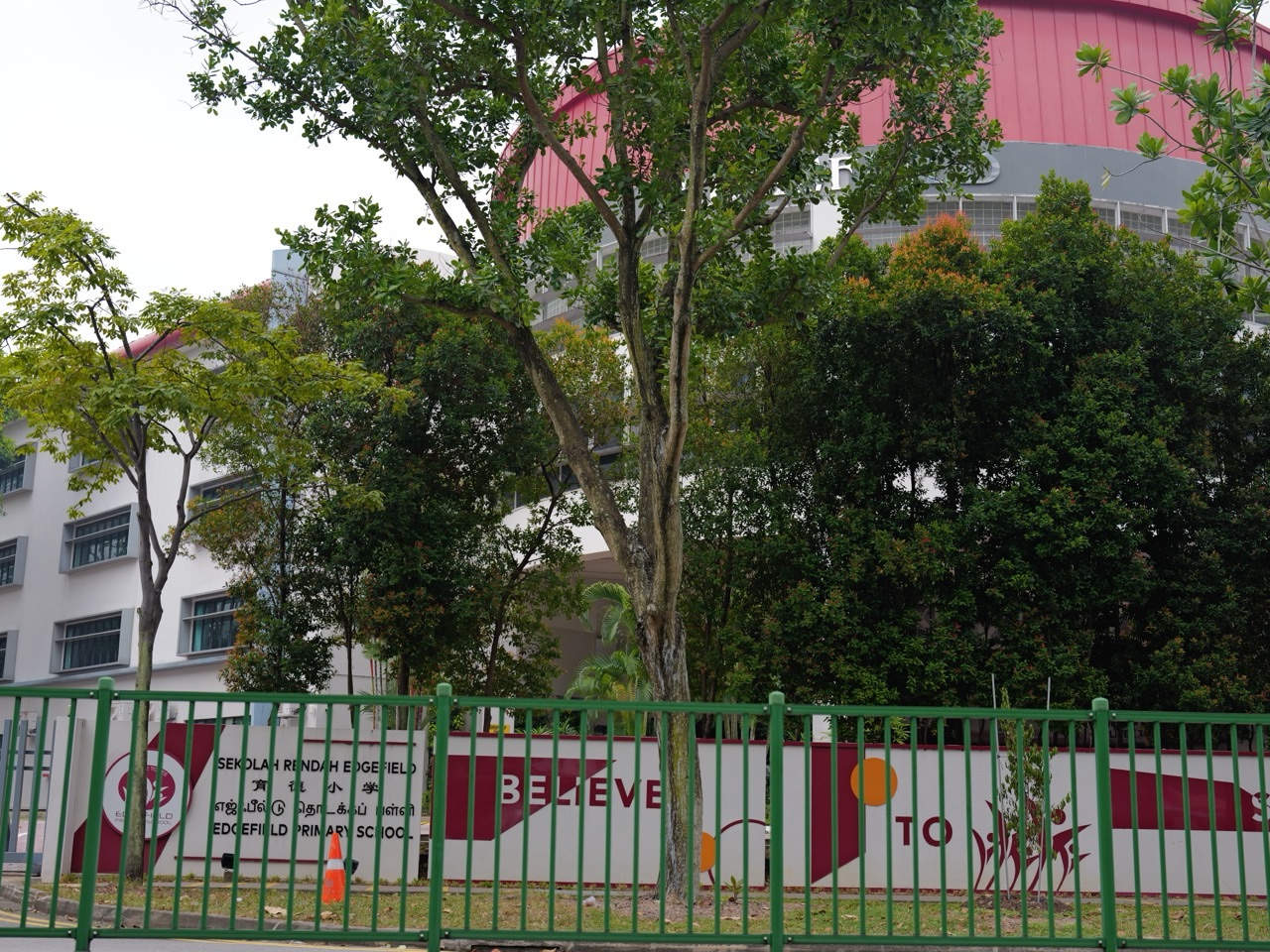
Schools and education at Punggol include daily recess choices that teach food literacy, pocket-money arithmetic and responsibility. HPB’s Healthy Meals in Schools Programme encourages school canteens to offer healthier sets with appropriate food groups, reduce excessive fat, sugar and sodium, and make water a preferred beverage. Parents can support children by helping them identify a suitable meal, use money accurately and ask for information when an ingredient is uncertain. No single menu or canteen photograph proves that every child can safely eat every item.
This guide explains the 2026 HPB programme, balanced meals, label-reading, allergies, hygiene, food waste and practical recess decisions. It differs from our MOE Financial Assistance article, which is about help paying school costs, and from our Primary 1 transition guide, which covers broader school routines. All menu prices and sample situations here are fictional. Individual medical dietary needs must be addressed through qualified healthcare advice and the school’s authorised process.
- HMSP promotes healthier food and beverages through schools and canteen vendors.
- Menus, prices and availability differ between Punggol primary schools.
- Food groups can include suitable grains, proteins, vegetables and fruit.
- Plain water is encouraged as the default drink.
- Read serving sizes and nutrient units, not only packaging claims.
- Allergies or prescribed diets require professional and school-specific guidance.
- Practise canteen budgeting with invented prices and correct change.
- Recess also teaches polite ordering, time use and respect for others.
- Reducing food waste should never involve shaming a child or ignoring health needs.
- Apply HPB policy carefully; do not infer a school’s compliance from one photograph.
Definition lock: HMSP, food literacy and balanced eating
The Healthy Meals in Schools Programme is an HPB initiative supporting healthier food-service practices in school canteens. Food literacy means using suitable information to make practical food choices and handle meals responsibly. A balanced meal is considered within a child’s overall needs and eating pattern rather than defined by one ingredient or an adult’s impression of the plate. A school canteen policy is not a personalised medical diet or a guarantee of academic performance.
Before recess: a seven-part child-friendly checklist
- Know the actual school’s available options and any approved dietary instructions.
- Choose an appropriate meal with useful food groups.
- Consider water where suitable.
- Read prices and check the pocket-money budget.
- Order and queue politely.
- Use school hygiene and waste arrangements.
- Ask an authorised adult when ingredients, payment or safety are unclear.

1. A school canteen is where nutrition meets real decisions
The school canteen is part of a pupil’s everyday learning environment. During recess a child must choose from available meals, understand prices, order politely, make payment, find a suitable place to eat and return for the next lesson. These are small decisions, but together they involve food literacy, language, arithmetic, responsibility and consideration for others. A canteen does not have to become an examination hall for these capabilities to develop. Parents can teach them naturally and without judging a child’s character by one lunch.
Singapore’s Health Promotion Board works with MOE through the Healthy Meals in Schools Programme, abbreviated HMSP. The aim is to encourage healthier food and beverage choices by collaborating with school staff, canteen vendors and pupils. HPB’s webpage updated in July 2026 outlines programme guidance and monitoring. This is a national effort to shape the school food environment; it does not establish a single menu or price for every primary school in Punggol.
A family teaching move
The immediate family question should be practical. Does the child understand what they can buy? Can they identify a suitable meal and know whom to approach about an allergy or an unavailable option? A child entering Primary 1 may need help managing the queue; an older pupil may benefit from a discussion of labels and portions. Different ages require different levels of independence. Adults should not expect a young learner to evaluate technical nutrition standards alone.
An appealing photo of school food cannot reveal all its ingredients, how it was prepared or whether it suits an individual child. A familiar Singapore dish may be available in several forms, so it is inaccurate to label every version automatically healthy or unhealthy from the name. Parents can use broad food-group guidance to begin a conversation and then check real circumstances with the school when a specific concern matters.
An independent changed-context check
A useful learning check changes the menu. Imagine two different acceptable sets, each with a grain, vegetables and a protein. Can the child name what information helps make a decision and what remains unknown, such as precise ingredients or cost? The pupil is developing judgement rather than memorising one approved lunch.
2. What HPB’s Healthy Meals in Schools Programme requires vendors to consider
The HMSP framework encourages school canteen vendors to cut excessive fat, sugar and sodium, provide suitable wholegrain options, fruit and vegetables, and offer healthier set meals. It also addresses ingredients and beverages through published guidelines. Parents should understand the broad policy and not imply that every stall serves the same food. A national programme creates a common direction while leaving practical menu choice and operation to schools and vendors under the relevant rules.
HPB’s official material refers to Healthier Choice Symbol ingredients and products meeting applicable nutrient requirements. A symbol must still be read in context: a product approved for one nutrient criterion does not guarantee its suitability for an individual allergy or medical diet. The aim is encouraging a healthier overall food environment, not granting one product a permanent label of perfection. Current guidelines and the actual item’s ingredients remain important.
A family teaching move
Participating schools can receive help from HPB and commissioned nutrition professionals who assess provision and give advice. That means programme implementation includes school and vendor decisions beyond the child’s own purchase. A pupil cannot be expected to verify the detailed recipe of every dish while standing in a recess queue. The family should bring a specific compliance question to the school through appropriate channels rather than accuse a vendor based only on an online photograph.
One introductory teaching activity lists the programme’s food-group ideas alongside a fictional set meal. The learner circles the grain, protein, vegetables or fruit and drink. They then underline information the menu does not supply, such as exact ingredient quantities. This combines observation with uncertainty. It prevents the common habit of treating a dish label as though it contains every relevant nutritional fact.
An independent changed-context check
Another misconception is that a healthier choice must look expensive or foreign to the family. The programme includes adaptations of familiar local food. Adults can recognise the underlying components across different cuisines rather than rank traditional dishes by prestige. Children benefit when nutrition education is accurate, culturally respectful and connected to what is realistically available.
3. Balance is a pattern of meals, not a morality test
A balanced meal is a combination of suitable food groups within the child’s overall needs, not a requirement that every plate look identical. HPB’s guidance commonly includes wholegrains, vegetables, fruit and suitable proteins. A family may encounter these groups through rice, noodles, bread, tofu, eggs, fish or other familiar ingredients. The correct interpretation depends on the actual item, portion and individual dietary circumstances, not merely its presentation.
Suppose a fictional pupil is choosing between a substantial set meal and a small standalone snack when they need lunch. The set may offer a more appropriate mixture of food groups, while the snack serves another purpose. Parents can ask what kind of nourishment the child needs at that moment without labelling the person good or bad. Flexibility is valuable because school days, appetites and health circumstances differ.
A family teaching move
Children sometimes ask whether one ingredient makes a food healthy. Wholegrain is useful information, but it does not erase everything else in the meal. Likewise, an unfamiliar dish should not be rejected because it lacks the layout of a popular nutrition diagram. The pupil can identify its relevant ingredients and ask an appropriate adult if something is unclear. Nutrition labels and food choices require interpretation, not magical shortcuts.
One problem with simplistic advice is that children can begin discussing classmates’ bodies or lunch choices publicly. That can be hurtful and may create anxiety. Teach pupils to respect what others eat while making responsible choices for themselves. A family’s medical or religious dietary needs are private; classmates do not need to know them to behave politely. The canteen is a shared social environment as well as a place to purchase food.
An independent changed-context check
For transfer, compare two hypothetical meals with the same advertised calories but different ingredients, portion size and food groups. Can the child explain why a single number cannot settle the entire question? That is a more useful lesson than memorising a slogan that one food is always best.
4. Water and drink labels deserve careful reading
HPB’s school programme emphasises plain drinking water as the preferred beverage. Drink choices can vary in sugar content, portion size and ingredients, and labels may refer to amounts per 100 millilitres or per package. The distinction matters because a child can interpret a small number incorrectly if they forget the unit. A colourful bottle or a familiar brand is not reliable evidence of low sugar or suitability for a medical restriction.
Consider an invented label with eight grams of sugar per 100 millilitres in a 250-millilitre bottle. Under those stated figures, the full bottle contains twenty grams. The pupil calculates eight multiplied by 2.5, then checks whether the answer still refers to grams. This is a Mathematics and label-reading exercise, not a statement about any real drink available in a Punggol canteen or a recommendation about an individual child’s intake.
A family teaching move
HPB’s current rules address beverages offered for sale, including sugar-sweetened products and ingredient criteria. Families should not infer that a drink is permitted in school merely because it has a Healthier Choice Symbol or appeared on an older vendor list. Product formulations can change, and different schemes can use different conditions. For a specific school’s offerings, consult the current canteen information and the official HPB guidance.
A refillable water bottle may help a child establish a reliable drinking routine. The practical questions include where the school permits refilling, how the bottle is kept clean and what the pupil should do if it is lost. Parents should follow the school’s hygiene and access rules instead of promising every classroom has a water station. Individual medical hydration needs require professional advice rather than a generic timetable.
An independent changed-context check
A transfer exercise gives a second invented label with a different package size. Ask which number is a concentration or per-100-millilitre amount and which describes total content. The child who reads the unit before calculating has learned something applicable to future labels without needing to memorise the original example.
5. Allergies and food restrictions require proper adult coordination
A child with a confirmed food allergy or medical dietary restriction needs arrangements based on healthcare advice and the school’s appropriate processes. The name of a dish cannot confirm every ingredient or possible cross-contact. Parents should communicate relevant guidance privately with authorised school staff and providers. A generic food guide should never tell a pupil to test whether an allergen is safe by trying a small amount or substitute an internet suggestion for a clinician’s plan.
An invented scenario involves a pupil being offered a snack by a classmate. The child knows that an authorised caregiver has asked them not to accept unfamiliar foods without checking. The appropriate response is to decline politely and ask the relevant adult. The pupil should not be expected to memorise a long ingredient list alone or investigate a vendor’s preparation area. Age-appropriate help-seeking can support a safer school day.
A family teaching move
Cultural and religious preferences also deserve respectful treatment, although the verification requirements may differ from medical allergies. A canteen may provide choices suited to different needs, but availability and preparation should not be assumed. Parents can ask what the real school offers and how questions should be raised. Children can learn to avoid mocking another person’s lunch without needing access to private family information.
Healthier is not the same as allergen-free. Vegetarian is not necessarily dairy-free, nut-free or soy-free. A label describing one attribute does not automatically establish another. This is a general lesson in how classifications work. Students should learn to ask which exact question a label answers and avoid filling missing information with confident guesses. Where safety is involved, seek professional confirmation.
An independent changed-context check
Families may feel embarrassed asking the school for information, but a precise confidential question can be necessary. The parent should explain the relevant need and ask about the authorised procedure. Public parent groups are not the right place for a child’s clinical records, photographs or names of other pupils with similar needs. Privacy and appropriate safeguarding are part of the school’s food environment.
6. Pocket money teaches arithmetic without encouraging children to skip meals
Recess purchases can help younger pupils practise counting coins, comparing prices and calculating change. The purpose is meeting ordinary food needs responsibly, not rewarding children for spending the least possible amount. A child may need a simple budget and an adult-approved purchasing plan. Making the calculation too complex while standing in a queue may create unnecessary pressure, so practice can begin at home with fictional prices.
Suppose a fictional meal costs S$2.20 and the pupil has S$3.00. The remaining change is S$0.80. If another imaginary item costs S$1.10, the pupil cannot buy it with only S$0.80 left. The child should explain what each amount represents and check the arithmetic. These figures are examples only; they are not current prices at Punggol Primary, Edgefield or another named canteen.
A family teaching move
Children should learn that different choices have different purposes. A snack and a full meal may not substitute for one another, and choosing to go hungry to save pocket money is not a sensible way to demonstrate budgeting. Parents can ask whether a pupil has enough for the appropriate food and whether financial assistance is available if cost is a barrier. The MOE FAS meal provisions are separate from HMSP nutritional standards.
A common mistake is presenting a high allowance as proof that a pupil will eat better. A child also needs knowledge of appropriate choices and a realistic school routine. Another pupil with a smaller allowance may make sensible decisions within the options available. Do not compare classmates’ spending or assume a family’s finances from what appears on one plate.
An independent changed-context check
For transfer, create a different fictional canteen menu with a suitable meal and several optional items. Ask the pupil to choose within an agreed budget, explain why their choice fits the purpose and calculate change. This combines Mathematics, communication and practical judgement rather than speed alone.
7. Recess is social and time-limited as well as nutritional
During recess, pupils need to queue, pay, find a place to eat and return to class when instructed. A child who focuses entirely on getting the quickest snack may miss the purpose of the meal. Another who spends too long deciding may feel rushed. Families can practise a simple order of actions without pretending every school has the same recess length or food-stall layout. Current school instructions remain authoritative.
Polite communication with canteen staff matters. Young children can practise asking what is available, stating a choice and seeking clarification when the first item is sold out. A memorised script may help initially, but the goal is responding to a changed situation. A pupil should be able to say they are unsure and ask an appropriate adult rather than select food impulsively to avoid embarrassment.
A family teaching move
Shared eating areas require consideration for other users. Pupils can learn to return trays or dispose of items under the school’s actual procedures, avoid blocking queues and respect the space of other children. These habits support the wider school community. The relevant practice may differ from a food court or public hawker centre, so parents should not impose one universal arrangement without checking the canteen.
Some pupils have difficulties with noise, waiting or unfamiliar social situations. Teachers and authorised support staff may need to consider appropriate strategies privately. A parent should not diagnose a child because they have one difficult recess, nor shame a pupil who needs assistance. A clear plan can help the child participate while learning gradually.
An independent changed-context check
For independent transfer, imagine the favourite stall is closed one morning. The pupil can ask which suitable alternatives are available, manage the budget and return to class on time. Flexibility under changed conditions is a stronger school-readiness skill than repeating one familiar purchase without thinking.
8. Food waste and sustainability should be taught without shame
Reducing unnecessary food waste is a valuable aim, but the lesson must account for children’s different appetites, health needs and family circumstances. A pupil who cannot finish a portion should not be publicly humiliated or pressured to eat beyond what is appropriate. Instead, families can discuss practical choices such as selecting a reasonable portion, checking whether a food is suitable before purchasing and learning from a mistaken order.
An invented class could examine the number of unused paper napkins after an activity, with suitable school permission. It might discover that clearer instructions could reduce unnecessary use. However, a one-day count does not prove a long-term environmental benefit. A careful student distinguishes what was measured from a broad sustainability claim. The educational value comes from a realistic improvement plan, not a photograph of bags filled with discarded material.
A family teaching move
Packaging also creates trade-offs. Reusable bottles or containers may be helpful where appropriate, but cleaning, carrying and hygiene conditions matter. The school or vendor may have rules about food service and containers. A child should not assume that every reusable item is accepted at every stall or that bringing one automatically makes the whole meal environmentally neutral.
Parents can support thoughtful consumption without turning every purchase into a lecture. Ask whether the amount chosen suited the child’s need and what might be done differently next time. Recognise the difference between an avoidable surplus and a health or safety reason not to eat something. Kindness and responsible resource use can coexist.
An independent changed-context check
For transfer, give a fictional choice between two portion sizes, one clearly larger than the child’s typical need. Ask what information would help choose, then discuss what to do if the appetite unexpectedly changes. A good answer is practical and flexible, not a rule that finishing everything is always required.
9. Canteen policy, personal healthcare and financial assistance are separate
Families encounter several official schemes connected to school meals, and their names can sound similar. HMSP concerns healthier food provision through vendors and schools. MOE financial assistance concerns eligible pupils’ ability to pay for approved school costs, including relevant meal subsidies. School health screening and Grow Well SG address other wellbeing matters. None of these schemes alone creates a personalised clinical meal plan for a particular child.
A child may receive an approved meal benefit and still need to choose suitable food from the actual canteen options. Another child may have no financial assistance but need an allergy-specific arrangement. The appropriate contact and evidence differ: school administration for assistance, canteen or school staff for actual offerings, and qualified healthcare professionals for medical advice. Families should avoid asking an informal chat group to make decisions that belong to those responsible parties.
A family teaching move
Some adults conclude that a school joining HMSP will automatically improve academic scores. Nutrition supports general wellbeing, but a single canteen scheme cannot establish an individual examination outcome. Learning is affected by instruction, practice, sleep, personal circumstances and many other factors. A responsible education article should not convert general health-promotion aims into unsupported promises of grades.
The family should also avoid making food a moral identity. A child can enjoy local dishes, choose a suitable canteen meal and occasionally make a less balanced choice without being labelled good or bad. The educational purpose is understanding how choices work and why certain patterns are encouraged. Shame and rigid rules can undermine that purpose.
An independent changed-context check
For a changed-context check, consider a fictional pupil with a government meal subsidy and a medically prescribed restriction. Which scheme pays for eligible food, which information determines safety and whom should the family contact? The child should see that funding and clinical suitability answer different questions.
10. A family can build a sustainable food-literacy conversation
An effective home routine is modest. Ask the child about one canteen choice and the reason behind it, then discuss one useful idea such as water, food groups or pocket-money arithmetic. An adult does not need a daily spreadsheet of every item eaten to support learning. For many pupils, a short conversation is enough to build vocabulary and awareness without making school lunch feel like a performance review.
Age matters. A Primary 1 pupil may need a pretend ordering exercise with simple coins, while an older child can interpret a serving-size label or compare a fictional menu. Parents should choose an appropriate level and not assume that technical nutrition calculation is necessary for every young learner. Medical dietary decisions should remain with qualified professionals and caregivers.
A family teaching move
Culture matters too. Family meals may include different grains, vegetables and proteins from the examples in a standard poster. The child can learn to recognise nutritional roles across familiar dishes rather than assume there is only one correct culinary pattern. Asking respectful questions about ingredients can broaden understanding without judging other households.
Parents should model the same thoughtful habits they teach. If adults constantly mock other people’s food choices or believe every promotional label, children may imitate those behaviours. A family can practise reading information, recognising uncertainty and making a reasonable choice under real constraints. Perfection is not required for meaningful learning.
An independent changed-context check
For the final transfer check, give the child a new imaginary recess menu and a budget, then ask them to select an appropriate option, calculate the cost and identify any missing information that would matter for safety. The child has gained food literacy when they can make a reasoned decision without memorising one approved meal.
A worked fictional budget and meal example
Suppose a fictitious primary pupil has S$3.50 for recess. A fictional meal with rice, vegetables and tofu costs S$2.40 and a separate drink costs S$1.30. Together the items would cost S$3.70, above the budget. The pupil can explain that S$1.10 would remain after the meal alone and consider an appropriate water option where available. Nothing in the imaginary dish name establishes that it is free of allergens. Real school prices, suitable portions and family dietary requirements must be checked rather than assumed.
A four-week family food-literacy cycle
Week one: recognise broad food groups in familiar meals. Week two: interpret the units on a fictional drink label. Week three: practise polite canteen ordering and calculating change with an invented price list. Week four: use an unfamiliar menu with missing ingredient details and ask what can be decided independently and what needs adult or professional guidance. Keep the exercises light, respectful and appropriate to age; never use them to prescribe weight loss or expose classmates’ eating habits.
Frequently asked questions
What is HPB HMSP?
The Healthy Meals in Schools Programme works with schools and canteen vendors to encourage healthier food and beverages, including wholegrains, fruit and vegetables and less excessive sugar, fat and sodium.
Does every Punggol canteen have identical menus and prices?
No. Check the actual school and vendor; national programme goals do not establish individual item availability or cost.
Is plain water encouraged?
Yes. HPB’s current guidance identifies water as the preferred beverage.
Do Healthier Choice products automatically suit children with allergies?
No. Product nutrition criteria and individual allergy safety are different questions. Follow healthcare guidance and verified ingredient information.
Can a young child learn Mathematics during recess?
Yes. Imaginary purchase exercises can teach addition, subtraction, money and change without creating pressure in a real queue.
Should children be forced to finish food to prevent waste?
No universal rule is appropriate. Consider portion, appetite and medical needs; avoid shame and seek qualified advice for health concerns.
Is MOE meal financial assistance part of HMSP?
No. FAS helps eligible families pay approved school costs, while HMSP concerns healthier food provision.
Do healthy canteen meals guarantee better examination grades?
No. Health and learning are complex; a meal or canteen programme alone cannot establish or guarantee results.
Your Next Step
Ask what your child chooses during recess, then discuss one useful decision without turning the meal into a test. Help them check the current school’s menu information, practise reasonable budgeting and understand why water and food variety matter. Bring specific dietary concerns to the school and qualified professionals, and keep other pupils’ choices out of public judgement.
Official sources and related Punggol reading
- HPB Healthy Meals in Schools Programme, updated 31 July 2026
- HealthHub: Eating Healthily at the School Canteen
- HealthHub: Healthy and Delicious Meals in Canteens
- HPB Primary School Health Programmes, updated October 2026
- MOE Primary Curriculum
- Schools and Education at Punggol | MOE Financial Assistance and School Costs
- Schools and Education at Punggol | Starting Primary 1
- Schools and Education at Punggol | Eco-Stewardship
Editorial reference: 4 November 2026. All sample menus and numerical examples are invented. This is general food literacy, not individual clinical nutrition, allergy or medical advice; confirm school-specific details directly.


