
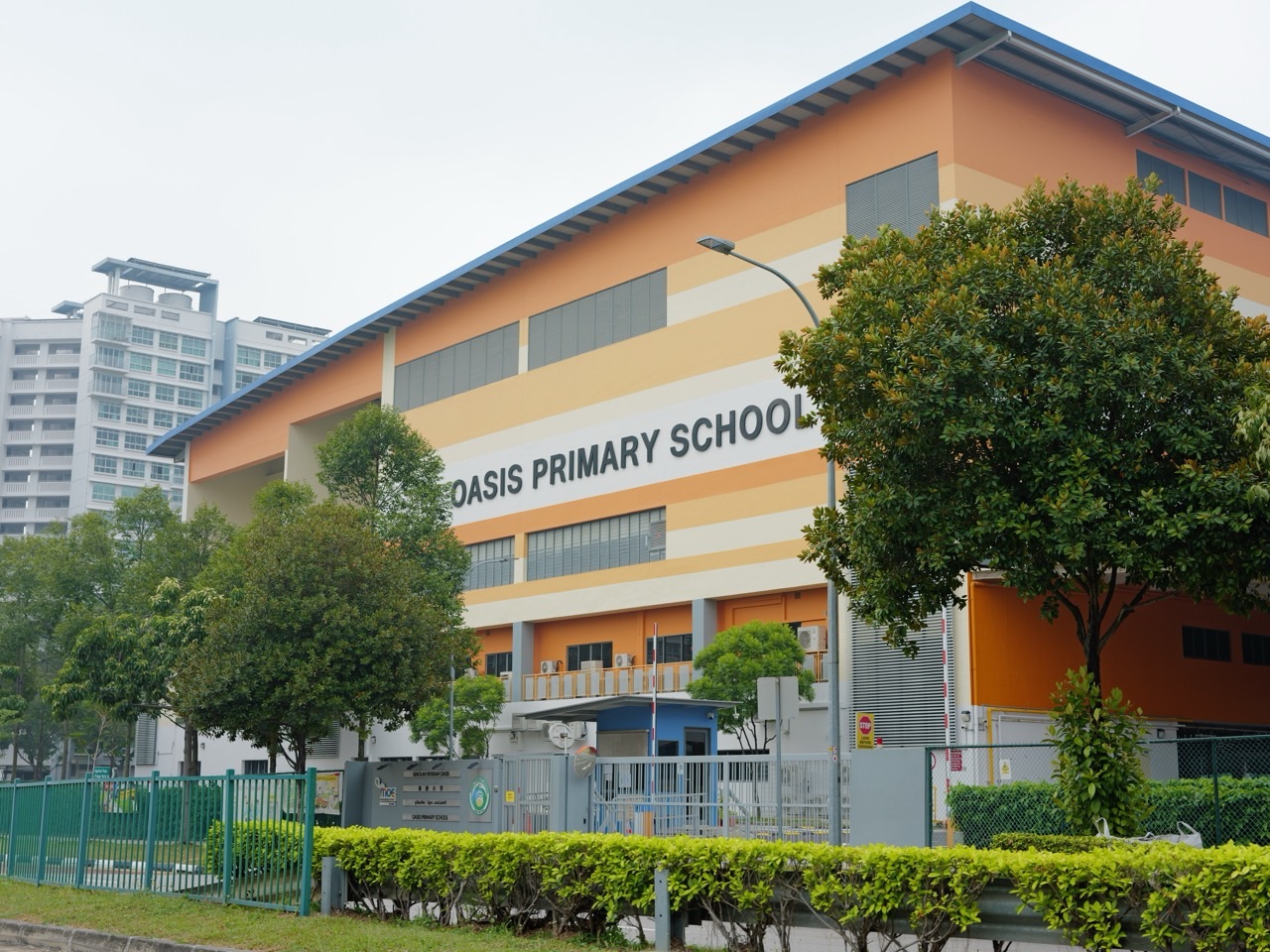
Schools and education at Punggol are supported by the MOE Financial Assistance Scheme (FAS) for eligible Singapore Citizen pupils in Government and Government-aided schools. Under the criteria effective January 2026, households may meet the income test with gross monthly household income of S$4,000 or below, or per-capita income of S$1,000 or below, subject to other conditions. The primary-school benefits include free textbooks and school attire, full subsidy of standard miscellaneous fees, meal support and qualifying transport assistance. An income calculation alone is not an approval.
This guide helps Punggol parents distinguish necessary school expenses from optional purchases, understand the 2026 FAS package, check their school-bus or public-transport arrangement and apply through official channels. It also explains the difference between MOE FAS, school-based support, Edusave and MSF Student Care Fee Assistance. Current benefits and eligibility must be verified again for future years; the guide does not promise that every 2026 rate automatically remains unchanged in 2027.
- Income test effective January 2026: GHI of S$4,000 or below, or PCI of S$1,000 or below.
- The pupil must meet citizenship, eligible school and other official conditions.
- Primary benefits: full miscellaneous-fee subsidy, textbooks, attire and school meals.
- Transport: 70% of qualifying school-bus fare, or public-transport assistance under the current scheme.
- The public-transport figure in the 2026 pamphlet is S$21 per month, up to S$252 yearly.
- Apply through the official MOE e-FAS or authorised school process.
- Application approval and effective month affect what support is actually available.
- School-based aid can be considered separately under school rules.
- MOE FAS, student-care subsidies and Edusave are different mechanisms.
- Protect household records and check 2027 terms rather than assuming automatic renewal.
Definition lock: MOE FAS, GHI, PCI and approved benefits
The MOE Financial Assistance Scheme is means-tested support for eligible students’ basic schooling expenses. Gross Household Income (GHI) is assessed under MOE’s income and household rules; Per-Capita Income (PCI) divides the relevant household income by the eligible household member count. An income threshold is a screening criterion, not a formal approval of a particular student’s assistance. Benefits are the specific fee, book, attire, meal or transport supports allowed by the scheme and its effective dates.
A seven-part parent cost-planning checklist
- Confirm the child’s school type, citizenship and current scheme year.
- Use the actual school’s booklist and uniform instructions.
- Check assessed household income using the official rules.
- Estimate necessary meals and transport costs separately.
- Apply through MOE’s official financial-assistance service.
- Keep application status and confirmed assistance distinct from estimates.
- Ask the school about additional need-based support where appropriate.

1. School costs should be mapped before the family decides what help is needed
Preparing a child for school can involve books, uniforms, shoes, meals, transport, materials and sometimes activities outside the normal timetable. The spending is not always evenly distributed through the year. A family may face large purchases before January and smaller recurring costs every week. A clear list helps parents distinguish what the school requires from what is optional, and what government or school assistance may already cover. This is more useful than assuming every household needs the same education budget.
Singapore’s Ministry of Education offers a Financial Assistance Scheme, usually abbreviated MOE FAS, for eligible Singapore Citizen students in Government and Government-aided schools. The scheme is designed to help with basic schooling expenses rather than to pay for every private educational purchase. The official eligibility thresholds and benefits apply according to the relevant year and school type. Parents should read the current MOE page and ask their child’s actual school how to apply.
A practical question and worked interpretation
Punggol families sometimes hear that another parent received free textbooks and assume that every book on an online shopping list will be covered. The school administers the relevant scheme and can clarify approved materials. A specialised workbook, optional enrichment course or device accessory may be outside the listed benefits. Ask what is necessary for the actual class and what can be supplied through the approved process before spending money.
Budgeting also involves timing. A child may need a uniform before the first school day, while assistance may not be approved until later. Parents should apply promptly through official channels and ask the school how eligible families can obtain required items. Borrowing money or paying a third party to ‘accelerate’ an official application is not automatically necessary or authorised. The relevant institution can explain the actual procedure.
What to verify before making a financial decision
Financial difficulty is not evidence that parents are less committed to education. A child can thrive through consistent school attendance, access to suitable materials and supportive learning without expensive branded equipment. Families should avoid discussing another household’s income publicly or comparing who receives assistance. School resources and aid are intended to meet legitimate needs with privacy and dignity.
For transfer, imagine two fictional school lists: one contains required textbooks and standard uniform, while another includes optional decorative stationery and a private class. Ask which costs need immediate official clarification and which purchases can be postponed. A practical family plan separates necessity, eligibility and choice instead of combining them into one frightening total.
2. MOE FAS in 2026: two alternative income tests
The MOE FAS pamphlet effective January 2026 states a gross monthly household income threshold of S$4,000 or below, or a monthly per-capita household income threshold of S$1,000 or below. The word or matters: a family may meet one route without meeting the other. Eligibility also depends on citizenship, school type and the other official conditions. A simple online calculation is useful for screening possible eligibility but does not itself approve an application.
Gross household income, commonly shortened to GHI, refers to the relevant combined income of household members under MOE’s definitions. Per-capita income, or PCI, divides the applicable gross monthly household income by the eligible household member count. For an illustrative family of five with assessed monthly GHI of S$4,500, the arithmetic PCI is S$900. That is below the 2026 S$1,000 threshold even though GHI is above S$4,000. The household would still need to satisfy all other conditions and the government’s official means test.
A practical question and worked interpretation
Parents should not assume that the income calculation uses only basic salary or excludes bonuses, CPF employee contributions and relevant other income. MOE’s application instructions describe its income assessment, including household composition and an averaging approach. Applicants should use the current form and official guidance rather than make ad hoc deductions based on what seems affordable. If the financial situation is unusual, ask the responsible school or MOE for clarification.
A school page may still display an older S$3,000 or S$750 threshold because it has not been updated. That does not override the central MOE 2026 threshold document. Check the source date and whether the amount refers to MOE FAS, a different school scheme or a previous year’s criteria. This is particularly important when making plans for January 2027: the official 2027 version should be checked when available rather than silently assuming every 2026 parameter remains unchanged.
What to verify before making a financial decision
Another misconception is that a household just under the threshold is guaranteed every listed benefit regardless of the student’s circumstances. The pupil must meet the citizenship and eligible school criteria, and the application must be assessed. Families should avoid declaring a result before approval. A scheme’s income limit is one part of an eligibility decision, not a personal letter granting assistance.
For transfer, give two fictional households: one of three with GHI S$3,900 and one of six with GHI S$5,400. Ask which income route each may meet and why the result remains provisional. The child can learn the difference between arithmetic eligibility screening and an official administrative decision without handling real family income records.
3. The primary benefits include books, attire, meals and transport
Under the MOE FAS benefits effective January 2026, primary pupils who qualify receive full subsidy of standard miscellaneous fees, free textbooks and school attire, meal subsidies paying for seven meals per school week, and transport assistance according to the relevant mode. This is a defined package rather than unlimited spending money. Families should understand what the categories mean in their actual school and how the benefits are delivered.
For pupils using an eligible school bus, the pamphlet lists a subsidy of seventy per cent of the monthly school-bus fare. For pupils using public transport, it describes S$21 per month, up to S$252 annually, subject to the applicable conditions and effective month. Parents should not claim both transport options simultaneously without an official entitlement; the scheme specifies alternatives according to the pupil’s actual travel arrangement.
A practical question and worked interpretation
A fictional child takes the school bus and the quoted monthly fare is S$100. Seventy per cent of that figure is S$70, but the family should still confirm the approved fare, start month and actual billing or reimbursement arrangement rather than assume the arithmetic becomes an immediate cash payment. A different family travelling on public transport may use the relevant monthly transport assistance instead. The school should explain the process.
Meal subsidies are designed around school-day needs. The 2026 primary benefit is described as covering seven meals per school week. That does not automatically mean every canteen stall, optional snack or food-delivery purchase can be paid through the scheme. Ask the school how the child accesses the benefit and how the entitlement is administered. This is particularly important for children with approved food restrictions or special arrangements.
What to verify before making a financial decision
Free school attire and textbooks refer to the applicable school items, not every brand of shoes, bag or optional practice material chosen by a parent. Before purchasing replacements, check how orders are handled and whether stock or size exchanges require a school-specific procedure. The family should retain relevant receipts where appropriate without posting purchase records containing personal details online.
For transfer, ask the learner to classify an invented list of school expenses into the official FAS categories, additional school-based aid possibilities and optional family choices. The exercise teaches the difference between a defined public benefit and a personal spending preference without assuming that the scheme pays for everything.
4. How and when to apply through official channels
MOE allows eligible families to apply online for the Financial Assistance Scheme. The official guidance also describes a downloadable application form or obtaining a copy through the child’s school. For families with children in different Government or Government-aided schools, MOE’s pamphlet states that one application may be submitted through one of those schools, with the receiving school informing the family of the outcome. The precise digital workflow should be checked through the current MOE Student Finance System or school instructions.
The Student Finance System supports online FAS applications and tracking. Parents may be directed through the official MOE financial-assistance page, a verified government short link or Parents Gateway’s Financial Assistance service. A legitimate route still requires the caregiver to check the domain and use the authorised Singpass process. Do not rely on a message from an unfamiliar account requesting banking details or a child’s identity documents through an unrelated website.
A practical question and worked interpretation
An application may need relevant household information and documents. MOE’s current instructions explain the circumstances in which income evidence must be provided and how family composition is assessed. Parents should prepare accurate information rather than guess. If a household member’s income is variable, the official form’s instructions are more reliable than simply multiplying one recent payslip by twelve. Unusual situations can be discussed privately with the school’s responsible staff.
Timing matters because assistance need not be retroactive. The 2026 application instructions describe the effective month of approved benefits and clarify that certain prior meal and transport costs are not reimbursed. A family should apply early when eligible, confirm approval and check how the start month affects expected bills. It would be misleading to promise that every fee paid before approval will automatically be returned later.
What to verify before making a financial decision
Parents should keep a private record of when they applied and which authorised channel supplied the outcome. A screenshot containing household income, children’s names and identifiers should not be posted into a parent chat. If the portal shows a problem, use its official help function or the school rather than grant a stranger access to the Singpass account. Administrative support should not become a privacy risk.
For transfer, imagine an applicant who has completed an online form but has not received approval before the school year begins. Which expenses can the family count as confirmed subsidies? The responsible answer is to treat the application as pending and seek clarification from the school, not assume automatic reimbursement.
5. School-based assistance can address needs beyond national thresholds
MOE’s FAS pamphlet advises families to approach their child’s school for information about additional school-based financial assistance, which is evaluated on a case-by-case basis. That matters when a family’s circumstances create genuine difficulty even though the household does not meet the national income threshold or faces a cost not fully covered by the standard benefits. A school may have specific resources, partner programmes or a process for reviewing needs.
Families should not infer the amount or availability of school-based aid from another campus’s publicity page. One school may publish an income band and another may assess circumstances differently. The programme’s funding, selection process and support categories can change. The correct step is to describe the actual need privately to the responsible school officer and ask what assistance routes exist.
A practical question and worked interpretation
A practical conversation can begin with a specific expense: required textbooks, transport to school or access to a suitable device for authorised learning. The parent can ask whether the expense falls under MOE FAS, a school-based scheme, another government initiative or a family responsibility. This is more helpful than requesting ‘all possible subsidies’ without identifying what the child needs to attend and learn.
Do not confuse financial assistance with a merit-based award. An Edusave award or scholarship may recognise particular academic, leadership or improvement criteria, while MOE FAS is means-tested support for schooling expenses. The two may coexist under relevant rules, but one does not automatically establish eligibility for the other. Parents should use each programme’s official description and application route.
What to verify before making a financial decision
Parents should avoid publicly sharing the child’s aid status or household income to prove the family’s dedication. The school can process sensitive matters through appropriate channels, and the child deserves the same dignity as classmates. Financial support should help the student participate, not create an identity that follows them into class discussions or social-media comparisons.
For transfer, give a fictional family with income slightly above the 2026 national threshold but a sudden necessary travel cost. Ask which questions they should bring to the school about case-by-case support. The answer should be a request for official evaluation, not a claim that the family has already qualified.
6. School meals and healthy participation are connected
Meal support has an educational purpose because children need to be able to participate through the school day. A pupil who is hungry or uncertain about buying food may find recess difficult. An approved meal subsidy can reduce a practical barrier, but parents still need to know how the canteen system works for the actual child. The school is the source for current administration, permitted uses and any process needed for dietary or medical considerations.
Teach the child age-appropriate food ordering and simple arithmetic without making them responsible for evaluating the family’s eligibility. A pupil can learn how to read the menu, recognise the approved purchasing method and ask the appropriate adult if a problem occurs. The caregiver can explain the process discreetly; a child should not be publicly identified as a recipient of assistance merely to demonstrate budgeting skills.
A practical question and worked interpretation
Some parents assume that all canteen prices or healthy-meal options are identical across Punggol primary schools. Menus, vendors and arrangements differ. The family’s school can explain the eligible items and how subsidy use is recorded or managed. For a child with an allergy or a special dietary requirement, use professional guidance and the school’s private support process rather than guess at ingredient safety from a photograph.
A useful paper example asks how a fictional pupil would divide a small approved meal budget across school days. The numbers should be clearly labelled as hypothetical and not presented as actual MOE allowances or fixed canteen prices. This supports financial literacy while protecting the accuracy of scheme information. A parent should not publish a made-up dollar value as a national subsidy rate.
What to verify before making a financial decision
Support must also be interpreted alongside ordinary family meals, appropriate rest and wellbeing. A school meal benefit may reduce one cost but cannot solve every nutrition need or household challenge. If the child consistently struggles to obtain suitable meals, ask the school about the practical arrangement. An official benefit only helps when the pupil can actually access it.
For transfer, present a fictional canteen message that changes the eligible items while the pupil’s general meal needs remain the same. Can the child identify which instructions should be checked with the school rather than rely on a neighbour’s old price list? The skill is accurate, discreet use of a support system.
7. Transport assistance depends on how the pupil actually travels
Transport is a recurring schooling cost that can make a substantial difference to household planning. The MOE 2026 FAS pamphlet distinguishes eligible school-bus subsidies from assistance for public transport. Parents should identify the actual mode used by their child before estimating support. Punggol’s LRT and bus network may offer several journey options, but a family should not change a safe school travel arrangement solely because a generic article appears to promise a larger benefit.
A school-bus fare may include operator-specific routes, pickup locations and billing arrangements. The published national subsidy percentage does not determine whether a place on a particular route is available. Contact the school or authorised transport provider for current terms, and then confirm how approved financial assistance is applied. A lower quoted fare from another campus does not establish a suitable service for a Punggol pupil.
A practical question and worked interpretation
Public-transport assistance is subject to the monthly amount and annual maximum under the applicable scheme. The family’s actual travel costs, school days and effective month matter. For a child who uses LRT or buses, adults must also consider safety, appropriate supervision and what happens if a service is disrupted. Financial efficiency should not override the child’s readiness to travel safely.
Parents should remember that an approved FAS application may begin after some transport charges have already been incurred. The official conditions determine whether any assistance applies retrospectively, and the 2026 guidance warns against assuming earlier costs are reimbursed. Build a cash-flow plan using confirmed dates rather than treating the full annual maximum as money available on the first day.
What to verify before making a financial decision
One mistake is double counting the same benefit as a public-transport subsidy, school-bus subsidy and student-care transport payment. These are different services with separate rules. The family should ask which programme pays for which cost, how it is disbursed and whether any restrictions apply. A neat spreadsheet is only useful if the underlying benefits have been correctly identified.
For transfer, compare two invented pupils: one uses a school bus and another travels by public transport with an adult. Ask which MOE FAS category is relevant and which independent facts, such as service availability and supervision, must still be verified. The child should learn that financial and safety decisions are connected but not interchangeable.
8. MOE FAS, student-care fee assistance and Edusave are not the same programme
Families may hear several education support names at once: MOE FAS, Student Care Fee Assistance, Edusave, school-based aid and an external pocket-money fund. It is understandable to confuse them, but each has a different purpose, funding source and decision process. MOE FAS is directed at basic schooling costs for eligible students. MSF’s Student Care Fee Assistance addresses qualifying care fees under its own rules. Edusave is an education account and awards framework, not an unrestricted replacement for a household budget.
Student-care eligibility may depend on working circumstances, registered provider status and a separate means test, with criteria that differ from MOE FAS. A family approved for textbook assistance is not automatically approved for a student-care subsidy or assured of an SCC place. Similarly, a child enrolled in a care centre does not automatically qualify for every MOE benefit. Parents should identify the exact decision needed and use the corresponding official application channel.
A practical question and worked interpretation
Edusave contributions and withdrawals have permitted uses and account conditions. The MOE Student Finance System allows authorised users to view or manage relevant Edusave information. This does not mean the family may use the balance to pay for any private tutoring, gadget or programme it chooses. Ask the school or the official service whether a proposed withdrawal is eligible under current rules rather than infer it from the account name.
Scholarships and awards require another distinction. A family may receive a recognition award based on performance, progress or service while also being eligible for certain assistance. The award’s exact criteria and effects on other benefits must be checked through the governing scheme. It is misleading to group every payment under the phrase ‘school subsidy’ and assume the same renewal or eligibility applies.
What to verify before making a financial decision
Parents can create a private comparison table with four columns: programme, purpose, responsible agency and confirmation received. This simple tool prevents double counting and reduces reliance on unverified parent-group advice. Avoid including detailed household financial records in a shared document unless all relevant parties are authorised and appropriate security is in place.
For transfer, give the parent a fictional bill containing school textbooks, school-bus fare, monthly SCC charges and an optional robotics camp. Ask which scheme might address each expense and which still requires official verification. A sound answer resists making up a universal benefit.
9. Budget for the next school year without treating estimates as approvals
The weeks before a new school year often involve booklists, attire, transport arrangements and administrative notices arriving at different times. Families can prepare a useful budget by listing known required costs, estimated recurring expenses and possible assistance, while keeping unapproved items separate. The official school booklist and FAS decision should be marked as verified before money is committed. A parent should not use a predicted scheme outcome as though cash has already been received.
Start with the actual child’s school and level, because requirements differ. Primary 1 materials may not match Primary 5 resources; secondary textbooks and uniforms introduce another set of costs. A family can compare the official lists and ask whether some items are supplied through an approved scheme. Do not purchase extra sets merely because an advertisement says that every future topic requires a different guidebook.
A practical question and worked interpretation
Cash flow matters more than one annual total. A household may have enough income over twelve months but face a difficult January because several costs arrive together. Applying early and checking the timing of approved benefits can be especially useful. Keep a small contingency for genuinely necessary purchases, while understanding that national aid may follow an effective month rather than a retrospective refund.
One common error is using another family’s actual financial assistance as a prediction of the user’s outcome. Household composition, citizenship, school type, income calculation and scheme year may differ. The FAS rules published for January 2026 are an evidence-based reference as of November 2026, but a family applying for a later year should verify the newest official criteria. Policy stability should not be assumed without checking.
What to verify before making a financial decision
Parents should also consider dignity and the child’s experience. A pupil may feel uncomfortable when other people discuss who receives subsidised meals or books. Explain that the school has systems to help families access education and that needing assistance is not something to publicise or hide dishonestly. The child’s learning deserves attention regardless of household financial arrangements.
For the final changed-context task, offer a fictional budget where a school-bus price has changed, FAS remains pending and a booklist includes one optional item. Ask the parent which decisions should wait, which must be confirmed and which choices can be made independently. Good financial planning is careful with uncertainty rather than pretending every future figure is fixed.
Worked 2026 income example: household and per-capita tests
Suppose an illustrative family has five household members under the applicable MOE definitions and assessed gross monthly income of S$4,500. The per-capita calculation is S$4,500 divided by five, or S$900. Under the published January 2026 thresholds, this is above the S$4,000 GHI limit but at or below the S$1,000 PCI limit. The example meets an income screening route, but actual eligibility still depends on MOE’s official household, income, citizenship, school and other conditions. The family should apply and wait for the decision rather than budget every benefit as already approved.
Four-week school-expense planning cycle
Week one: collect the current school booklist, uniform and fee notices and distinguish required from optional items. Week two: review the current MOE FAS eligibility and apply through an authorised route if appropriate. Week three: confirm the child’s real transport and meal arrangements and ask how the applicable benefits would be delivered. Week four: reconcile confirmed assistance with outstanding expenses and identify any school-based support questions. The exercise is a planning guide, not a promise of approval, reimbursement or exact 2027 benefits.
Frequently asked questions
What are the MOE FAS income limits effective January 2026?
Gross monthly household income of S$4,000 or below, or monthly per-capita household income of S$1,000 or below, with all other scheme conditions assessed officially.
What does the primary FAS package cover in 2026?
Full subsidy of standard miscellaneous fees, free textbooks and school attire, meal subsidies covering seven meals per week and qualifying transport assistance under MOE’s official rules.
How much is the school-bus subsidy?
MOE’s 2026 pamphlet lists 70% of the approved monthly school-bus fare for eligible primary students using school-bus transport, subject to the scheme’s conditions.
How much is the public-transport subsidy?
The 2026 MOE pamphlet lists S$21 per month, up to S$252 per year, with application effective-date and eligibility conditions.
Can siblings at different eligible schools use one application?
MOE’s pamphlet states that for children in different Government or Government-aided schools, one application can be submitted through any of their schools. Check the current process.
Will an approval backdate every earlier meal or transport expense?
Do not assume so. The 2026 terms specify effective dates and limitations on retrospective subsidies, so apply early and confirm the start month.
Is MOE FAS the same as MSF Student Care Fee Assistance?
No. They support different costs, with separate eligibility and administration. Eligibility for one does not automatically confirm the other.
Are the January 2026 thresholds guaranteed unchanged for January 2027?
No. The guide states the confirmed 2026 criteria. Families should verify the current year’s MOE FAS terms and school instructions when applying.
Your Next Step
Open the current MOE Financial Assistance page and your child’s school finance notice. Use the official criteria to check whether the household may be eligible, then apply through the authorised system with accurate records. Wait for confirmation before subtracting subsidies from bills, and ask the school about other assistance if the national threshold does not cover the family’s actual need. Protect household privacy and verify updated terms for the intended school year.
Official sources and related Punggol guides
- MOE Financial Assistance: current scheme information and application
- MOE FAS official pamphlet: January 2026 income and primary benefits
- MOE Student Finance System: FAS application and account services
- Methodist Girls School: 2026 primary FAS eligibility and application routes
- Nan Chiau High School: 2026 national and school-based financial assistance distinctions
- IMDA DigitalAccess@Home: suitable connectivity/device assistance
- MOE SchoolFinder
- Schools and Education at Punggol | Student Care and 2027 Fee Assistance
- Schools and Education at Punggol | Starting Primary 1 and Orientation
Editorial review: 1 November 2026. All household examples and costs are hypothetical. The January 2026 MOE FAS values are dated policy references, not a guarantee of the 2027 scheme, eligibility or approval for any actual student.


