
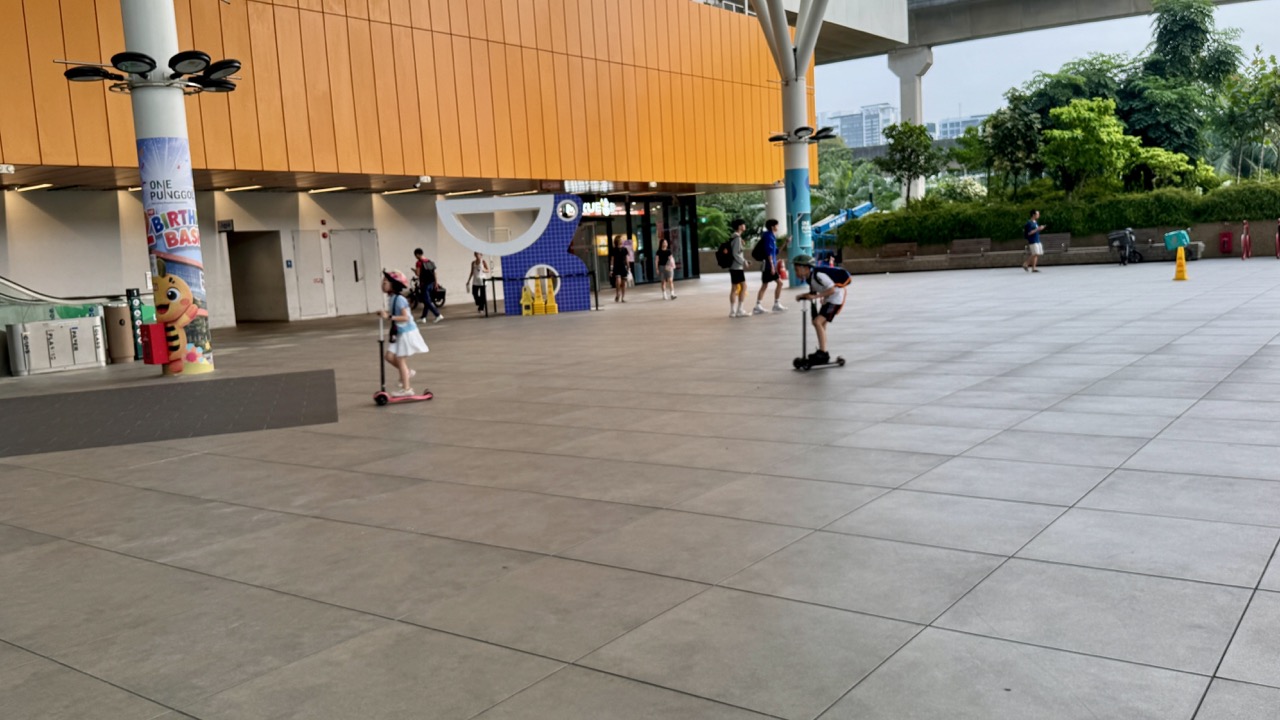
What to do in Punggol before bringing children or older relatives to a crowded community event, shopping centre or outdoor activity? Agree on what everyone should do if they briefly lose sight of one another, without deliberately separating anybody for practice. A useful family reunion plan identifies a safe, staffed help point where possible, makes it clear which adult remains responsible for each child and includes a way to contact the group. The goal is reducing confusion, not making a child navigate a crowded venue alone.
Singapore’s Families for Life guidance recommends speaking calmly with children about possible separation, teaching them a caregiver’s full name, considering an appropriate contact identifier and practising the steps through supervised role-play. It advises stopping, moving away from immediate hazards and using a pre-agreed safety plan. Singapore Police guidance separately says missing persons should be reported promptly after immediate efforts to locate them fail, and directs people to call 999 or visit a Neighbourhood Police Centre. There is no universal requirement to wait twenty-four hours before reporting a missing child.
At a glance: six parts of a safe family reunion plan
- Before entering, agree which adult is supervising each child or vulnerable family member.
- Identify a real permitted staffed help point or another safe visible location, not a traffic or water hazard.
- Teach an age-appropriate name and secure contact method without putting sensitive details online.
- Explain what the child should do if separated: stop, assess immediate safety and seek appropriate help.
- Agree how the adults will communicate and how a delay or phone failure changes the plan.
- Practise the words together at home, without actually leaving anyone alone in a crowded place.
This Punggol family activity is preparation, not a simulation in which anyone is deliberately lost. A venue’s security, organiser and present safety procedures take priority, and the safest reunion point can differ between a mall, park, school excursion and crowded transport hub. If a vulnerable person genuinely cannot be located, seek help from staff and Police without allowing an educational checklist to delay an urgent response.
Prevention begins before choosing a meeting point
Many separations begin with an ordinary change of attention. An adult pays, a sibling walks towards a display or a group follows different entrances. A reunion point is useful, but it cannot replace active supervision and communication during the event.
Before leaving home, decide who is responsible for each child and when that responsibility may be handed over. A crowded venue is not the place to assume that every adult is watching the youngest family member. A clear allocation of care reduces avoidable ambiguity.
Ask the actual family what would help
A seven-year-old who can read signs and recognise staff may need a different plan from a toddler or an older adult who is unfamiliar with the building. Some family members use mobility aids, prefer written instructions or become uncomfortable in loud environments.
Discuss needs respectfully without making somebody disclose a private diagnosis. A useful safety plan fits how the person actually communicates and moves. It should not depend on the entire group being able to run, read small text or operate a smartphone.
Families for Life offers a practical starting framework
The Families for Life getting-lost guidance recommends a positive, calm conversation, teaching a caregiver’s full name, providing suitable contact information and developing a specific plan for each outing.
Use the principles flexibly. The family is not required to follow a rigid sequence when the situation is dangerous or urgent. The most important idea is that a child knows a safe next action and that adults remain prepared to seek professional help.
A real venue has specific staff and rules
A shopping centre may have a customer-service counter or security officers, while a public park may not have staffed assistance at every entrance. A library can have a service point, and a school event will have an organiser and release procedures.
Choose the plan from the actual venue rather than invent a universal desk name. Do not claim that Waterway Point or One Punggol guarantees an open help counter at a specific spot and hour without current confirmation. Ask staff or read official visitor information when necessary.
A staffed help point may be better than a random landmark
A landmark can be easy to see, but it may lack a responsible adult to help a separated child. A legitimate information desk or organiser’s staffed point can provide a safer way to coordinate a search and verify who is responsible for the child.
However, a person should not be told to cross busy roads, leave the building or travel a long distance alone to reach that point. A safe nearby staff member or authorised security worker can be preferable when movement would create new risk.
The nearest safe place is not always the original meeting spot
Families for Life advises children to stop and evaluate their surroundings. If the location is dangerous—near traffic, heavy machinery, unstable areas or large bodies of water—the child should move to a safer nearby location rather than remain exposed to harm.
Teach that safety outranks literal obedience to the meeting plan. A designated point is only useful while it remains suitable. Do not tell a child to wait motionless beside a vehicle lane or water edge because that was the place chosen earlier.
Do not choose a road divider
A broad road, taxi queue, loading bay or vehicle exit can appear to be an easy-to-recognise landmark. But those places can expose a family member to moving traffic and prevent staff from assisting safely.
Choose a permitted pedestrian location away from road crossings and operational areas. If two family members find themselves on opposite sides of a street, use a legal controlled crossing with appropriate adult help instead of rushing through traffic to reunite quickly.
Avoid the edge of a waterway
Punggol’s waterways, promenades and parks are attractive outing spaces, but a reunion point should not require standing beside an unfenced water edge, entering a drain or approaching a restricted bank.
Use established safe public paths and any available staffed facility. A child should never be told to follow the water to find a parent. The correct response to separation is to obtain safe help, not to explore an uncertain route.
A busy escalator landing is unsuitable
An escalator entrance, lift doorway or narrow corridor may seem central and visible, but stopping there can obstruct people and create safety hazards. A reunion plan should allow a person to wait without blocking circulation.
Choose an appropriate nearby public waiting area or staff point. If the group becomes separated during an escalator or lift trip, avoid sudden reversing or crossing against the flow of people. Follow the venue’s safe movement arrangements.
The plan should be memorable
A child who is anxious may not remember a long list of numbered checkpoints and backup locations. One simple primary action and one fallback can be easier: stop in a safe place, call the caregiver by their proper name if nearby, and seek help from suitable authorised staff.
Tailor the wording to the child’s age. The point is not memorising a complicated emergency script. It is helping the person recognise a safe response without panic or long-distance wandering.
Teach the full name of a caregiver
Families for Life recommends teaching children the actual full name of their parent or responsible adult rather than relying only on ‘Mummy’ or ‘Daddy’. In a crowded setting, several adults may respond to generic family terms.
Practise the name privately and at an age-appropriate pace. Do not publish the full name together with the child’s exact routine or identity details on a public social-media card. The information is for genuine assistance when needed.
A contact card should protect privacy
A small contact note or appropriately designed identification band may be useful for a young child who cannot remember a phone number. Families for Life suggests this as one option. The design should include only information necessary for a responsible person to contact the caregiver.
Do not publicly display NRIC numbers, detailed home addresses, medical records or a child’s school timetable. A phone number held privately inside clothing or given to authorised helpers can serve a different purpose from a public online identity profile.
A phone is helpful but not sufficient
A child or adult may have no phone, a flat battery, poor reception or difficulty finding a contact while distressed. Families for Life explicitly advises planning for the possibility that phones cannot be used.
Agree on what happens without a device. This can involve asking a recognised venue worker for appropriate help or using a safe nearby point. Do not treat live location sharing as a substitute for supervision and a sensible fallback.
Keep communication methods age-appropriate
An older child may be able to make a phone call to a parent and state the name of the visible staffed point. A younger child may need to ask a nearby authorised adult for help. A person who uses communication aids may prefer written directions.
Do not require every person to use the same technology or speak aloud in a particular way. Practise how the person can communicate their need with an appropriate helper while protecting unnecessary personal information.
Help is not a reward for independence
The aim of a reunion plan is not to prove that a child can solve a difficult public-safety problem without adults. Asking for help is often the correct and mature action, especially for young children and people who feel vulnerable.
Adults should explain that an authorised staff member or Police officer is there to assist. The child need not hide a mistake or feel embarrassed by separation. A supportive response encourages early reporting and reduces unsafe wandering.
A recognised employee is a practical resource
A child in a managed building can seek assistance from a legitimate staff or security point if separated from caregivers. Staff can coordinate venue procedures more effectively than strangers who have no knowledge of the organiser’s arrangements.
However, uniforms and badges can be misunderstood or impersonated. The plan should focus on legitimate counters, nearby safe staff within the venue and asking for help without being led to a private or isolated place.
Do not go to an unknown person’s car
A person offering to help may suggest driving a separated child elsewhere to find family. A pre-agreed safety plan should not involve accepting a ride or following an unknown person to a secluded place.
Teach a child to seek support within a public, visible environment from suitable staff or authorities. The family should discuss boundaries calmly rather than make every stranger seem threatening. A responsible helper can contact venue security or Police without taking the child away.
An adult group needs a handover rule
At a family outing, one adult may go to order food while another watches the children. If the responsibility shifts, say so clearly instead of assuming the other adult has noticed. A simple verbal handover is more reliable than an unspoken expectation.
This is useful at One Punggol, Waterway Point and community gatherings but does not depend on a named venue. The parent or responsible caregiver remains accountable for the child under the appropriate family and programme arrangements.
A school outing has its own official plan
Teachers and programme organisers may use headcounts, designated staff, group assignments and reporting procedures. A family should not tell children to replace those instructions with an informal meeting spot chosen privately.
Ask the authorised organiser about the correct procedure where relevant. A child should follow appropriate school safeguarding instructions, while parents use their own plan only in a way compatible with that structured supervision.
The difference between a meetup and a missing-person incident
Adults meeting at slightly different entrances may usually resolve the confusion by contacting each other. A child or vulnerable person who cannot be located after appropriate immediate checks creates a more serious safety concern.
Do not continue a leisurely search through every shop while postponing professional help if a vulnerable person may be missing. Alert authorised venue staff and contact Police appropriately. The response should fit the actual urgency, not a rigid waiting period.
Singapore Police directs missing-person reports to 999 or an NPC
The Singapore Police reporting page identifies missing persons as a category for calling 999 or visiting a Neighbourhood Police Centre, rather than using the normal online report intended for crimes not requiring immediate action.
This distinction is important for residents. An online form’s availability does not mean it is the right channel for a child whose whereabouts are unknown. Use the proper emergency or Police assistance route when the situation warrants it.
Do not wait twenty-four hours
Singapore Police missing-person guidance says a report should be made immediately after efforts to locate the person have failed. It does not impose a universal twenty-four-hour waiting rule before missing children can be reported.
Do not let an internet rumour delay contact with Police when a vulnerable person cannot be found. A caregiver can supply the actual last-seen details and seek immediate assistance. Staff, Police and relevant authorities should direct the search.
What information Police may need
SPF’s Missing Person Report information and published reporting instructions identify useful details such as the missing person’s name, appearance, clothing, last-seen time and place, and other relevant circumstances. A recent photograph can also be helpful.
Keep accurate information ready without turning it into a public poster automatically. Do not invent a precise last-seen minute if the adult only knows an approximate period. A truthful description and clear location are more useful than exaggerated certainty.
Police may coordinate additional resources
The Ministry of Home Affairs said in October 2025 that Police follow up when vulnerable persons, including young children, are reported missing or at risk, and may review available CCTV or deploy appropriate operational resources. Family consent can matter before public appeals about a missing person are issued.
A caregiver should not conduct an unofficial investigation of private security cameras or demand access to other people’s recordings. Provide accurate information to the appropriate authority and follow its instructions rather than take over a professional search.
If the family member is found, tell the authority
SPF’s missing-person instructions say the reporting person should inform the investigating officer promptly if the missing person is located after a Police report was made. That prevents unnecessary continuation of a response and helps keep the official information correct.
Do not assume a family group message automatically updates Police or the venue security team. Contact the responsible officials through the appropriate channel. A successful reunion includes closing the information loop.
A reunion point is not a private holding area
Do not select a restroom, storeroom, staff corridor or isolated stairwell as a place for a child to wait. Even if it appears quiet, it may not provide safe visibility or authorised help.
Choose a publicly accessible, suitable spot near legitimate staff where possible. The exact choice depends on the venue’s current layout, traffic and event conditions. A plan should always be reviewed if entrances or crowd flows change.
An outdoor festival needs a different plan
An outdoor event can have multiple entrances, temporary stalls, movable barriers and few permanent buildings. A distinctive tent or stage may shift position between events, so a precise visual description based on an old poster can become unreliable.
Ask the actual organiser about its information or security point on the day. Do not assume an event at Punggol Point or One Punggol uses the same meeting location every time. Temporary operating arrangements matter.
A mall plan benefits from a staffed counter
In an ordinary managed shopping centre, customer service or security can be an important first point of help. The family can identify the legitimate desk or current help arrangement when entering, subject to operating conditions.
Do not promise that a particular counter is open every hour or on every floor. If the family cannot find it, approach suitable nearby authorised staff from a safe location. The specific public building’s current arrangements take priority.
A park plan should not require running to an exit
At a waterfront park, an exit may be far away or separated by roads. Telling a young child to run alone to an arbitrary entrance can make the search harder and expose them to additional risks.
Agree on a safe nearby help strategy and keep active adult supervision. If a vulnerable person becomes missing, alert appropriate authorities promptly rather than send other children to search isolated pathways or water edges.
A station or interchange has special hazards
Public transport areas include moving vehicles, fare gates, escalators and busy passenger streams. A child should not be told to cross barriers or follow a train to another station to search for a caregiver.
Use the operator’s authorised staff and safe passenger areas. The Punggol bus stop code guide helps coordinate an ordinary planned pickup, but a genuine separation may require staff and Police assistance instead.
Avoid unsafe role-play in public
Families for Life encourages role-play, but that does not require allowing a child to become genuinely lost in a mall or park. A parent can practise the words at home with fictional situations or discuss a visible help point while remaining together.
Do not hide behind a pillar, turn off the child’s phone or ask them to cross a public road to prove they know the plan. A real security response or distress is not an appropriate educational demonstration.
Role-play words that help a child ask for assistance
A younger child might practise a short statement such as ‘I cannot find my adult. Can you help me contact them?’ with an appropriate caregiver name or private contact identifier. The exact wording should suit the child’s language ability.
Do not require the child to memorise a long script with full home address, school and identity number. The essentials are recognising the problem, asking suitable help and sharing only the information necessary for safe reunion.
Teach a child to say where they are
An older child who has a phone can report a clear visible location to a caregiver. That may be a named shop or staffed counter, not simply ‘somewhere inside the mall’. Accurate simple location descriptions can reduce confusion.
If the child cannot read the sign or is in an unsafe place, the correct step is seeking appropriate help rather than walking far away to obtain a more impressive location name. Information should support safety, not create extra exposure.
A contact number can be written discreetly
Families for Life suggests a contact number in clothing or on an identification bracelet for children who cannot remember it, where appropriate. The purpose is helping a responsible person reach the caregiver if separation happens.
Think about visibility and privacy. Avoid writing the family’s full address, school name and routine in a form easily read by everyone. The parent should decide what limited information is appropriate for the child.
A child’s special communication needs should be respected
Some children may use sign language, visual cards or other communication aids, while others may not be comfortable speaking to an unfamiliar adult. The family can tailor its plan to a trusted support format, with input from the person and appropriate caregivers.
Do not assume a diagnosis or force a child into a rigid public performance. A simple picture or contact note may help when used appropriately. Staff should receive enough information to assist without requiring the child to reveal unnecessary private details.
A senior can become disoriented without a phone
An older relative may become confused by similar-looking entrances, loud crowds or last-minute route changes. The household can agree on a suitable visible help point and a private contact plan before entering.
Do not assume that age means incapacity or that every senior will need assistance. Ask about preferences and capabilities. A respectful plan supports the person’s agency while making appropriate help available if requested.
The meeting plan should include weather
Heavy rain, heat or lightning can make an outdoor reunion point unsafe. A park shelter may be crowded or closed, and a path may become slippery. The family should keep a fallback that respects current weather advisories and site instructions.
Do not ask a child to remain exposed during lightning to honour a prearranged point. Immediate safety and appropriate adult support are more important than staying on a mark on a map. A plan can change when conditions do.
Keep the plan short enough to remember
A child may forget a detailed itinerary under stress. Use a small number of dependable actions and repeat them calmly during routine conversations. A short plan can include stopping safely, contacting the caregiver if possible and seeking suitable staff.
Too many backup locations can create conflicting instructions. Adults should coordinate one common plan rather than give every child a different secret destination. Clarity is part of safety.
A child’s independence should grow appropriately
As a child becomes older, the family may gradually teach location names, transport signs and how to seek help. That development does not require prematurely sending them across a public venue alone. Practice can remain supervised and age-appropriate.
The Punggol supervised school-journey guide covers route familiarity as a different learning task. This article focuses on what happens when companions become separated and how to reduce that risk.
A real photo can help Police when necessary
Families may have a recent photograph of a child or vulnerable relative, which Police can use where relevant in a missing-person response. It should be kept privately and provided to the proper authority if needed.
Do not automatically post a child’s identifiable photograph and full daily routine online when a brief separation occurs. Public appeals and privacy considerations require appropriate coordination. Police can advise on legitimate public assistance.
Do not share a missing-person rumour
An unverified social-media message about a missing child can spread incorrect photographs, dates or locations. That may distress families and distract from the real response. A person reading a forwarded message should check the issuing authority before reposting personal details.
Do not invent a missing-person case for a school exercise or ask friends to circulate an imitation Police notice. Use fictional non-identifying classroom examples. Real safeguarding information should be accurate and professionally coordinated.
What if another child asks you for help?
An adult who finds a child who appears separated should respond calmly, avoid leading the child to a private area and seek the venue’s authorised staff or Police as appropriate. The child’s safety and privacy should be protected.
Do not post their photo or demand personal details in a public group. A concerned bystander should not take the child home or begin a personal online search. Legitimate venue personnel and authorities can coordinate with the caregiver.
A caregiver pickup arrangement differs from a missing-person plan
Some families use a fixed place after school or classes. That ordinary pickup needs accurate time, supervision and authorised release arrangements. A genuinely missing child raises different urgency and professional-response considerations.
Do not let the presence of a written pickup point become a reason to wait passively while a child cannot be located. The appropriate next step depends on immediate circumstances, and adults should act promptly when a vulnerable person may be in danger.
A clear two-adult handover example
Imagine one adult is leaving a Punggol community event to collect food while another remains with the children. The adults explicitly agree who is supervising each child and where they will reunite. The adult who leaves does not assume responsibility has shifted silently.
This fictional example teaches prevention rather than a missing-child scenario. The actual event may have different entrances or staffed points. The family should follow current site conditions rather than a fixed address invented in a guide.
A fictional library outing
A parent and child visit a public library. Before entering, the parent identifies the legitimate service counter and tells the child that if they cannot see the parent, they should stop in a safe nearby area and seek suitable staff help.
The child remains supervised for the visit. Nobody hides from them to test the plan. This is a low-pressure conversation about what to do, not a claim that any specific library counter serves as a permanent child-safeguarding office.
A fictional crowded market
A family visits a busy outdoor market with several children. They agree to stay together, allocate adults to supervise and identify the organiser’s staffed information point. They also discuss a safe way to call for assistance without crossing roads or approaching strangers’ cars.
No real Punggol market schedule or named security desk is asserted. The example shows that temporary venues need a current plan rather than a reused location from a previous festival.
A fictional phone battery failure
An older child has a phone but its battery becomes exhausted during a crowded outing. Instead of assuming the situation is hopeless, the child follows the family plan for seeking appropriate staff assistance from a safe location.
The adult has already ensured the child knows an appropriate contact method. This is why a safety plan cannot be reduced to live location tracking or a device notification. Actual supervision and venue support remain fundamental.
A fictional wrong exit
Two adults agree to meet ‘outside the mall’ but choose different exits. Each calls and they clarify the actual safe location. They do not cross vehicle lanes or leave a child alone to speed up the reunion.
The lesson is ordinary communication precision. A crowded-building misunderstanding can often be resolved calmly, but if a vulnerable family member cannot be found, the appropriate staff and Police response should not be delayed by treating it as merely a wrong-door problem.
A Primary English activity
Ask a child to practise a short explanation: ‘I am at the information desk. I cannot find my caregiver. Please help me call them.’ Then ask what words identify the situation and what information is needed next.
Use role-play at home with trusted adults. The goal is clear communication, not making a child present personal information to a stranger in the classroom. A correct sentence should be short enough to use under stress.
A Primary Mathematics and map-reading activity
Use a fictional simple map of a community room with an entrance, information desk, safe seating area and a vehicle zone. Ask the learner which point would be unsuitable for waiting and why a visually closer point may be less safe.
Do not use a real child’s school route or home location as public homework. The exercise tests spatial reasoning and safety priorities, not whether the child can cross busy roads alone.
A Secondary Social Studies activity
Students can examine why public venues have information desks, staff coordination and emergency response procedures. They can distinguish a private family plan from the role of venue operators and Police.
Use the official Families for Life and SPF guidance to explain the relevant institutions. A strong answer acknowledges that minor separation and missing-person cases differ in urgency and authority.
An emergency number has a purpose
The Singapore Police contact page lists 999 for immediate Police assistance, including situations that warrant an urgent response. SMS 70999 is available when it is not safe or possible to speak, rather than being the ordinary first choice for routine questions.
Do not call an emergency hotline for a pretend role-play. Explain when professional help becomes necessary, and use official contact details in a real incident. The family learning exercise should not consume live emergency resources.
A missing-person report should be factual
Police reporting guidance asks for identifying information, physical description, clothing, last-seen place and time and other relevant details. The person reporting should state what is known and what remains uncertain.
Do not guess the exact route a child took or claim a stranger abducted them without evidence. Clear accurate information helps staff and authorities coordinate their work. A worried family deserves support without rumours.
The reunited person’s wellbeing matters
After a separation, a child or older adult may feel upset or embarrassed. Check whether they need rest, reassurance or appropriate professional support rather than immediately demand that they explain every decision in public.
A calm conversation later can identify which part of the plan needs improvement. Do not treat the event as a competition or punish the person for failing to remember a complicated instruction. The long-term goal is safer, more confident outings.
Revise the plan after the outing
A family may discover that its chosen help point was too far from the event, an entrance was closed or the group could not hear calls in the crowd. Adjust the plan using actual experience and current venue information.
Do not assume a correct plan for one festival remains valid after building renovations or event layout changes. A small review before each crowded outing is more useful than one permanent laminated map that nobody checks.
The small private reunion card
Write the event or venue, responsible adults, one appropriate help strategy, a limited private contact method and what to do if communication fails. If a specific meeting point is identified, verify it is safe and currently accessible.
Do not publish the family’s exact outing schedule, full identity numbers or medical details in a group chat. The card belongs with authorised family members and caregivers. A short accurate plan should reduce confusion without creating a new privacy risk.
The most important completed result
A successful Punggol reunion plan is one that prevents avoidable confusion while respecting the needs and age of the people involved. Everyone knows who is supervising, where legitimate help can be found and how to respond if companions cannot be located.
The goal is not to test whether a child can survive being lost. It is to keep families together, avoid hazardous improvisation and obtain authorised help promptly when needed. A calm five-minute conversation before entering a busy place can make an outing more manageable for everyone.
Continue exploring Punggol
Explore three other practical Punggol activities from this batch. Follow the actual responsible provider, official information and current site conditions before acting.
- Use a Five-Digit Bus Stop Code to Choose the Correct Pickup Side
- Verify a Singapore Green Label on a Household Cleaner
- Read a Heritage Trail Sign Before Retelling Its History
Frequently asked questions
Should parents plan a reunion point before a crowded event?
A brief safety plan can help, especially when it identifies supervision, a suitable help point and what to do if people become separated.
Should we actually let a child become lost for practice?
No. Use supervised role-play at home or discuss an appropriate venue help point while remaining together.
What does Families for Life recommend?
Calm discussion, caregiver name and contact information where appropriate, a venue-specific plan and age-appropriate role-play.
Is a shopping mall exit always a good meeting point?
No. It may be near traffic or multiple similar exits. Choose a safe suitable visible or staffed location.
Can a child stay beside the road while waiting?
No. Immediate safety matters; move away from traffic and seek appropriate authorised help.
Is a waterway edge a suitable reunion place?
Do not choose a dangerous edge, drain or restricted area. Use a safe permitted public location and responsible staff where possible.
Must every child have a smartphone?
No. A family plan should work even if phones are absent, uncharged or without reception.
Is it useful to teach a caregiver’s full name?
Yes. Families for Life recommends this to improve clarity when a child needs to call for the adult.
Should a contact card contain the child’s full NRIC?
No routine need. Share only appropriate minimal contact information and protect private identity details.
What if the child has difficulty communicating?
Adapt the plan with their preferred communication method and suitable caregiver support; do not force disclosure of a diagnosis.
Can children leave a school excursion to follow a family meetup plan?
Follow the authorised school or event organiser’s supervision and release procedures.
Is there a twenty-four-hour waiting period for reporting missing children?
No. SPF guidance says make a report promptly after immediate efforts to locate a missing person have failed.
How do I report a missing person in Singapore?
Singapore Police directs missing-person reports to 999 or a Neighbourhood Police Centre, as appropriate.
Can I use an ordinary non-emergency online crime form?
That is not the specified channel for a missing-person situation requiring Police assistance.
What details help Police?
A factual name and description, clothing, last-seen time and place, relevant circumstances and a recent photo if available.
What if the missing person is found after a report?
Inform the investigating officer or responsible authority promptly so the response can be updated.
Should I publish a child’s photograph in a neighbourhood group?
Do not automatically do so. Coordinate genuine public appeals with relevant authorities and protect personal information.
What if an unknown adult offers to drive a lost child to family?
A child should seek suitable visible venue staff or Police help rather than travel alone with an unknown person.
Can a bystander assist a separated child?
Yes, by calmly seeking appropriate authorised venue or Police assistance without exposing private details or taking the child to an isolated place.
What happens if a venue’s chosen help point is closed?
Use current official staff instructions and a nearby safe alternative; do not force entry or cross hazards.
Is one family plan valid for every Punggol event?
No. Buildings, outdoor festivals and public transport require different venue-specific safe arrangements.
What is the enduring habit?
Assign supervision, identify safe help, practise calmly and seek appropriate urgent assistance promptly when a vulnerable person cannot be found.
Official safety sources and Punggol reading
- Families for Life: five steps for children who become separated
- SPF: missing-person reports, 999 and Neighbourhood Police Centre
- SPF: missing-person information and reporting instructions
- SPF: official emergency and contact details
- MHA: 2025 statement on Police response for missing minors
- SPF: emergency SMS 70999 is for situations where speaking is not possible
- NLB: Punggol Regional Library venue information
- NParks: Punggol Waterway Park visiting information
- eduKate Punggol: child supervised school journey preparation
- eduKate Punggol: identify the right bus stop for family pickup
- eduKate Punggol: earlier family scam-safety planning
Editorial verification: 1 November 2026. This is preventive family-safety education, not Police incident management, a guaranteed venue help-point map or a lost-child simulation. Do not deliberately leave a child alone to practise. If a vulnerable person cannot be located and the situation warrants Police assistance, follow SPF’s immediate missing-person reporting channels; there is no universal twenty-four-hour wait. The meeting-point scenarios are hypothetical and venue staff’s current procedures take priority.


