
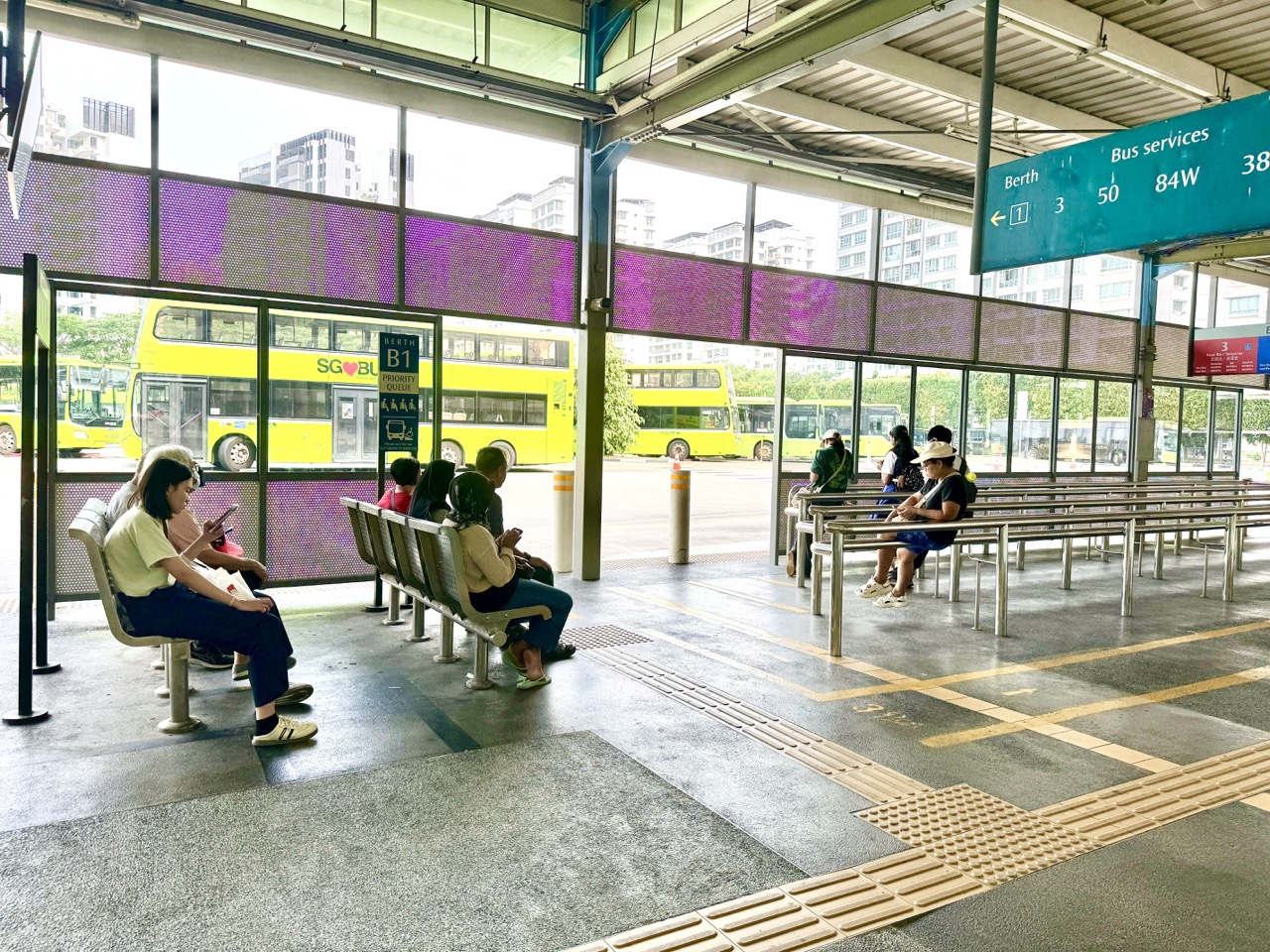
What to do in Punggol when two bus stops stand on opposite sides of a road and your family needs to agree on exactly where to meet? Check the five-digit bus stop code, not only the nearby mall, block name or bus service number. Singapore’s Land Transport Authority identifies bus stops individually using these codes. Two stops serving the same road or bearing similar descriptions can still serve different directions. A short location check prevents a caregiver and child from waiting on opposite sides of a busy street.
Singapore’s Ministry of Transport confirms that bus stop names, alphanumeric shelter identifiers and five-digit codes are displayed at bus stops. LTA’s bus route datasets use the five-digit BusStopCode to identify the physical stopping place and connect it with route and direction records. The official bus.gov.sg service and SimplyGo’s bus-stop-code eGuide provide useful ways to search a code, although a timetable or estimated arrival cannot guarantee where a particular person is standing.
At a glance: six checks for the correct pickup stop
- Find the actual five-digit bus stop code on the displayed stop sign or official bus information.
- Check that the bus stop name and road side match the intended destination.
- Verify which service and direction stop there, rather than matching the service number alone.
- Agree on a safe sheltered pickup position that does not block the boarding queue.
- Use current official arrival estimates as estimates, not guaranteed pickup times.
- Share only the necessary meeting details with the authorised family member or caregiver.
The family can complete this activity using the actual code seen on a permitted stop sign or a legitimate official journey-planning service. It is not a live bus arrival promise, a child-solo-travel test or a reason to cross an unsafe road. Keep the plan simple: verify the code, road side, service and meeting arrangement; choose a safe lawful walking route; and keep an adult responsible for younger travellers.
What five digits actually identify
A five-digit bus stop code identifies a particular physical stop in LTA’s route and stop records. It is not the bus service number, the address postal code, the bus’s vehicle plate or a fare amount. The difference is useful because many services can stop at the same location, while the same bus service can visit several stops in Punggol.
Check the code character by character. Numbers are identifiers, so leading zeros matter when the official service displays them. Do not shorten a code or replace it with a nearby HDB block number. A correct five-digit code reduces ambiguity only when it refers to the intended stop.
Bus service numbers answer another question
A route number tells a passenger which bus service they want. It does not identify a unique pickup position, because the service may travel in two directions and stop at several places along the route. A caregiver told only ‘meet at the 83 bus’ could still be waiting at another stop or in the opposite direction.
Pair the service with the specific stop and route direction. For a journey involving a loop service, check the service’s current route sequence rather than assume every outward and inward movement is interchangeable. The actual operator and LTA records govern the route.
Punggol is an environment with many similar stop descriptions
Punggol’s HDB estates, LRT stations, shopping areas and interchanges create plenty of landmarks that residents recognise. But a landmark can have more than one entrance or nearby stop. A public notice saying ‘at the stop near Punggol MRT’ may not be precise enough for a family pickup.
Ask which street, side and five-digit code are intended. Do not assume the first map pin or most familiar bus shelter is correct. Identifying the exact stop is more reliable than relying on a broad neighbourhood name.
Official signs carry several kinds of numbers
The Ministry of Transport’s 8 May 2023 parliamentary reply says bus stop names, alphanumeric identifiers and five-digit codes are displayed at Singapore bus stops. The different identifiers do not all have the same practical function.
Look for the proper five-digit code rather than a shelter’s B-series identifier or an advertisement number. If the sign is damaged or unclear, consult official stop information or transport staff. Do not guess from a similar nearby stop.
A shelter number is not necessarily the bus stop code
LTA’s public GIS specification distinguishes the five-digit bus-stop identification number from the alphanumeric roof or shelter identifier. A shelter can therefore display several labels. Mistaking one for another can lead to an unsuccessful search or a vague pickup message.
Tell a family member explicitly that you mean the five-digit bus stop code. If they cannot find one, describe the displayed bus stop name and road while verifying the code through an official information service. Accuracy matters more than using jargon.
The direction matters even when the name looks familiar
Opposite-side stops can share the same nearby landmark while serving different directions. Some names include conventions such as ‘Opp’ for opposite, ‘Bef’ for before and ‘Aft’ for after, but the shorthand should be interpreted in the context of the actual road and stop.
Do not infer safe crossing points from a short stop name. The family should identify a lawful crossing and take the route appropriate for the actual travellers. The two stopping places may be close visually but require a meaningful walk to cross safely.
LTA DataMall distinguishes stop from route
The LTA DataMall information describes a Bus Stops dataset with five-digit codes and locations and a Bus Routes dataset showing the relevant stop sequence and service directions. These fields answer distinct questions.
A beginner need not use the APIs. The underlying distinction is still valuable: one dataset tells where a stop exists, while another describes how a bus route uses it. Do not convert an API sample code into a claimed real stop in Punggol without checking the current record.
The code is a string identifier, not a quantity
A child might see five digits and assume they indicate a distance, fare or position in a numerical ranking. In reality the code functions like a label identifying a stop. Subtracting one bus stop code from another does not tell you how far apart the stops are.
This is a useful Primary Mathematics lesson about numbers used as identifiers. Postal codes, flat numbers and bus stop codes can all look like ordinary numbers while serving different purposes. Read them exactly rather than calculate with them.
The official bus.gov.sg offers a current lookup
The bus.gov.sg service lets users search using a bus stop code for real-time bus arrival information. Its site states that the service is a limited release, so features or availability may change.
Use it to support checking an actual stop, but do not promise that every existing stop QR or code will always provide the same result. A family plan should still depend on the on-site sign, current service details and a safe pickup arrangement.
Arrival predictions are not appointments
A bus arrival display estimates when a service may reach a particular stop. Traffic, route conditions and operational changes can affect the result. The time should not be treated as a guarantee that a child and caregiver will arrive simultaneously.
Arrange a realistic meeting buffer and an agreed response if the bus is late or someone misses it. A precise-looking minute count in an app should not become a reason for rushing across traffic or abandoning a young child.
SimplyGo’s code eGuide is another official route
The SimplyGo bus stop code eGuide offers a search by five-digit code. This helps travellers inspect the service information associated with a specific stopping place.
A household should use the current version rather than rely on a screenshot from last school term. Routes can change over time. An old code or destination list is not a verified present-day timetable without an updated official check.
A map pin and the boarding pole are not the same thing
A digital map can place a pin at a representative location, while the actual waiting area may be several metres away. At an interchange or a multi-bay terminal, the difference can be larger because the service may use a specific berth.
Follow current wayfinding and staff direction on arrival. Do not stand on a roadway or an inaccessible verge because a phone pin appears there. The safe physical passenger area takes precedence over the map’s visual precision.
An interchange has more than one stopping operation
Passengers may use boarding berths, alighting areas and waiting spaces within a bus interchange. A stop code associated with one service point does not automatically identify the correct boarding berth for every bus.
Check the actual interchange’s present signs and provider instructions. A family meeting at Punggol or Punggol Coast should not assume that a familiar bus bay has stayed unchanged after operational changes. The exact boarding area is an additional check.
The bus operator may vary across services
Several companies operate Singapore public buses under the Bus Contracting Model. Routes using Punggol’s interchanges may be provided by different operators, with customer service and lost-property channels tied to the actual bus and service.
Check the service details instead of assuming every Punggol bus belongs to the North East Line’s rail operator. This matters particularly if an item is lost, a service changes or specific accessibility information is needed.
Agree on a specific safe waiting position
A useful instruction might identify the five-digit stop, its road-side landmark and a permitted area beside the boarding queue. It should not direct somebody to wait at a road divider, cycle lane, taxi loading point or emergency exit.
Accessibility also matters. If a person uses a wheelchair or pram, choose a place with a suitable lawful approach rather than the nearest point on a map. The pickup plan should make the waiting experience safer for all users of the stop.
Separate a meeting point from a bus service
The family may agree to meet at a stop even if one person is walking and the other is arriving by bus. In that situation, the stop code identifies the common place; the route number may not matter to everyone.
Do not force an unnecessary bus journey simply because the meeting point is a bus shelter. Confirm that the intended person can reach the stop through a safe public path. An identifier is useful only if the physical meeting location is appropriate.
A child’s phone is not the only safety measure
Some younger travellers may carry a phone, while others do not. A correct bus stop code can help family communication, but it does not automatically make independent travel safe or age-appropriate.
An adult should remain responsible for planning and supervising the child’s journey at the appropriate level. A written pickup plan and an authorised caregiver can be more important than sending a map pin. No child should be required to travel alone for this activity.
Do not share children’s routines publicly
A pickup message can contain an exact stop and time. That may be necessary for a trusted caregiver but can also reveal a child’s regular routine if posted to a broad neighbourhood group.
Send details through an appropriate private channel and avoid including unnecessary school names, identity numbers or live personal location. The family should understand who legitimately needs the information and why.
A plan B should include a missed bus
Someone may miss the intended bus or board the right service in the wrong direction. A family can agree that the traveller should remain at a safe supervised place and contact the authorised adult rather than improvise a new route alone.
The earlier Punggol transport Plan B guide deals with broader service disruptions. This article focuses on identifying a specific bus stop for pickup; both skills can support a safer journey.
Changing routes require a current check
Roadworks, timetable revisions or interchange changes can alter which service calls at a stop. The printed route list and official app data should be checked for the date of travel, especially during a period of construction.
Do not assert that a route seen in an older blog post still stops at the same location. If signage and digital data differ, seek information from the operator or transport staff. Avoid inventing a reason for the inconsistency.
Nearby LRT stations are not substitutes for stop codes
A bus stop can be close to an LRT station without sharing its exact entrance or boarding arrangement. Punggol’s East and West LRT loops also have their own direction and interchange details.
Say ‘near the station’ only as supporting context. The exact bus stop code and suitable physical access remain important for a meeting. An LRT station name alone can be too broad for people approaching from different sides.
A family can practise the lookup without taking a bus
Choose an actual code from a legitimate public sign or current official page and ask the learner to locate its description and services. Then check whether the code belongs to the intended road and direction. No fare transaction is necessary.
Do not send a child to cross a road to photograph the opposite stop during the exercise. The family can examine official map information from a safe location. The lesson is distinguishing identifiers, not testing road-crossing confidence.
The first Punggol pickup scenario
Imagine an adult and teenager planning to meet after a community activity. They agree only on ‘the bus stop near the shops’. At the planned time they realise the road has stops on both sides and are unable to locate each other quickly.
Instead of blaming the teenager, they revise the plan to use the actual five-digit stop code, road side and safe waiting spot. This fictional example illustrates a communication error without claiming any particular Punggol stop has a specific code.
The caregiver scenario
A caregiver is collecting a child after a permitted supervised activity. Beforehand, the responsible adults identify the correct bus stop, agree who is supervising the child until pickup and decide how a delay will be communicated.
The code helps locate the meeting point but does not replace school or programme release procedures. An adult should not instruct a child to leave a supervised venue alone simply because a map says the stop is close.
The opposite-side scenario
A family member enters the stop name into an app and finds two nearby locations. Rather than choose the one that looks closest, they check the five-digit codes and the listed service direction.
They then identify a lawful crossing if movement between the two is necessary. This hypothetical example avoids using unverified real stop numbers. The safety lesson is to resolve ambiguity before travelling instead of making a last-minute dash across the road.
The bus interchange scenario
Two adults intend to meet at a Punggol interchange. One thinks they mean the boarding berth for a service, while the other waits near the alighting area. Both are inside the same general complex but not together.
A better plan identifies the specific permitted waiting area and current wayfinding. Do not treat one code or a general interchange name as an automatic berth reservation. Staff signs and access conditions take priority.
A road-side landmark can complement the code
A stop code is precise for a database search, but a person on foot may still benefit from a simple visual landmark such as a public sign or shelter near the stop. This description can make the meeting easier when reception or an app fails.
Keep landmarks grounded in what the family actually observed or an authoritative current source. Do not use a temporary market stall or an advertisement as a permanent reference. The code remains the principal identifier, and the landmark is supporting context.
Don’t use a shelter’s advertising panel as an anchor
Public advertisements rotate and may cover large portions of a shelter. A family who says ‘the bus stop with the blue drink advertisement’ can be confused if the panel changes before the meeting.
Choose stable official details such as road, stop name and code. A temporary advert can help only for a very short clearly observed context and should not be the sole description.
What if the sign is hard to read?
Signs can be obscured, weathered or poorly illuminated. A person should not step into traffic or climb on a railing to photograph the code. Use a nearby safe viewing position, an official bus information source or staff help.
If the physical sign appears damaged, the household may note that separately through an appropriate feedback channel. Do not improvise numbers from a partial label and claim the code has been confirmed.
Accessibility and visual information
Some people prefer large text, spoken directions or a written code they can keep. Others may need a step-free route to the stop. MOT has described tactile indicators, Braille signage, better wayfinding and the Passenger Information Display System as ways to support accessible travel.
Ask the actual traveller how they prefer the information. A code alone may be sufficient for one person and confusing for another. The goal is a shared understanding of the place, not insisting everybody use the same map app.
The next-stop announcement helps inside the bus
MOT explains that newer buses have passenger information displays and announcements giving upcoming stop information. That can help passengers prepare to alight, particularly when a stop name is unfamiliar.
However, the announcement does not tell a caregiver where to wait on the pavement or which stop an absent traveller chose. The family’s pickup message still needs a verified location. Announcements are one piece of the travel process.
A service number is not a road crossing instruction
Knowing that bus service 3 or another route travels past a neighbourhood does not tell a pedestrian which crossing to use to reach its stop. The legal walking route may involve a controlled crossing or overhead bridge away from the nearest straight line.
Use current official map and on-site signs for crossing decisions. Never instruct a child or older person to follow a direct path across moving traffic merely because it shortens the distance to a stop code.
Personal transport data should stay proportionate
A family group may want enough information to coordinate a pickup, but not everybody needs live location tracking or a continuous travel log. Share the exact stop and agreed communication method with those responsible for the journey.
Do not upload a child’s routine, account login or exact daily schedule to an unknown app merely to display arrival predictions. The core bus stop code can be used in a public official service without exposing private trip histories.
Bus.gov.sg is a limited release
Open Government Products describes bus.gov.sg as a limited-release service whose features or availability may change. Its official interface allows searching a code and examining bus arrivals.
Do not write a permanent instruction saying a particular screen, button or QR feature must always appear. If the service changes, LTA, SimplyGo and operator channels can provide alternate information. A clear printed stop code remains useful beyond one app interface.
SimplyGo and LTA have different roles
LTA plans and regulates Singapore’s public transport infrastructure, while SimplyGo offers ticketing and journey-related information services. A fare card problem and a bus stop location problem therefore may need different information sources.
Do not call a fare card helpdesk to ask it to guarantee the location of a temporary construction closure. Match the issue to the proper authority or operator. The household can learn this division through an ordinary planning exercise.
A five-digit code should keep its leading zero
Some codes begin with zero, which is part of the identifier. A spreadsheet set to numeric format may silently remove that initial zero and leave a four-digit value. This is a common data-literacy problem when families store transport details.
Write the code as text, not as a quantity requiring arithmetic. A teenager can practise entering a fictional code such as 01234 into a text field and observing why data types matter. Do not use that fictional example as an actual Punggol stop code.
A family note should not invent live times
Arrival times can vary from one moment to the next. A simple permanent pickup note can store the stop code, road side and contact procedure, while the actual service arrival can be checked shortly before travel.
Do not print a static ‘bus arrives at 4.05pm’ promise from a real-time app and expect it to remain true every day. Keep stable location information separate from dynamic travel conditions.
A Primary Mathematics activity
A child can sort sample numbers into bus service numbers, postal codes and five-digit stop codes, then explain what each identifies. They can also practise copying leading zeros correctly and matching two labels for the same location.
The activity uses fictional sample codes and requires no road crossing. The learning outcome is understanding that numbers can function as names rather than measurements. A correct five-digit number is meaningful only in the right system.
A Secondary Geography activity
An older learner can examine an official map and ask why bus stop pairs are placed along roads in opposite directions. They can compare how service routes use the network without claiming every nearby stop is interchangeable.
Use current LTA data or official journey-planning information for actual geography. A diagram can simplify the concept, but a real trip still requires checking crossings, road works and service direction at the time.
A family communication exercise
Ask one person to send a pickup instruction that includes only ‘near the LRT’. Ask another to explain what remains unclear. Then revise it to include a verified five-digit stop code, road-side landmark and an appropriate safe meeting method.
Do not use a live child’s location as an open class demonstration. The aim is learning what makes instructions specific enough for the recipient. A short precise message can be safer and clearer than a long narrative with no identifiable stop.
When somebody misses the meeting
A traveller may board another bus, arrive late or wait at the wrong stop. The agreed response should be to contact the responsible person from a safe place, not to wander across multiple roads independently looking for one another.
Younger children should follow the safeguarding arrangements set by their parent, school or programme. The bus stop code can aid communication, but supervision and appropriate official assistance remain essential.
The final pickup card
Write one verified five-digit stop code, stop name, road, side, current relevant service, permitted safe waiting position and the responsible adult’s contact method. Add a note that live arrival information must be rechecked and that changes in signage take priority.
Store the card privately where appropriate and review it if routes or meeting arrangements change. The most useful Punggol transport habit is identifying the exact physical place before leaving, while leaving room for current conditions and safe decisions.
Continue exploring Punggol
Explore three other practical Punggol activities from this batch. Follow the actual responsible provider, official information and current site conditions before acting.
- Verify a Singapore Green Label on a Household Cleaner
- Read a Heritage Trail Sign Before Retelling Its History
- Plan a Safe Reunion Point Before a Crowded Community Event
Frequently asked questions
What is a five-digit bus stop code?
LTA’s identifier for a particular physical public bus stop, distinct from the bus route number or postcode.
Is a bus service number enough to set a pickup point?
No. The service can stop at multiple locations and may travel in more than one direction.
Where is the code displayed?
MOT says bus stop names, alphanumeric identifiers and five-digit codes are shown on Singapore bus stop signs.
Can a stop on the opposite side use another code?
Yes. Check the actual code and road side rather than assume two nearby shelters are the same stop.
What is the alphanumeric shelter identifier?
A separate displayed reference. It should not automatically be substituted for the five-digit BusStopCode.
Can I enter a code into an official site?
Yes. Bus.gov.sg and SimplyGo’s bus stop code eGuide provide official code-based information.
Are bus.gov.sg arrival estimates guaranteed?
No. The service shows dynamic arrival information and is described as a limited release.
Do bus stop codes reveal the exact bus fare?
No. Fare calculations depend on separate ticketing and journey conditions.
Does a code tell me which side of the road to cross?
It identifies the stop; safe crossings must be checked using actual road and pedestrian information.
Can I send a child alone to verify a stop?
Not as part of this activity. Use appropriate adult supervision and safe official information.
What if my phone removes the leading zero?
Keep the code as text rather than a spreadsheet number; leading zeros can be part of the identifier.
Is an MRT station name enough for a bus pickup?
Often not. Several stops and station entrances may be nearby.
Does an interchange code always specify a boarding berth?
Not necessarily. Follow current interchange wayfinding and operator directions.
What if official app and physical sign differ?
Seek current operator or transport staff clarification rather than guessing or crossing unsafely.
Should I post the pickup card in a public group?
No. Share necessary details privately with authorised caregivers and avoid exposing children’s routines.
Can I practise without boarding a bus?
Yes. Use an authentic code from an official source and identify its stop, route and direction.
Is a shelter advertisement a good permanent landmark?
No. Advertisements change; stable road, name and code information is stronger.
What if the bus service changes?
Recheck official LTA, SimplyGo and operator information for the actual travel date.
How is this different from the transport Plan B guide?
This guide identifies the exact meeting place; the Plan B guide addresses disruptions and alternate journeys.
What is the main rule?
Verify the exact stop code and direction, choose a safe waiting position and keep current service information separate from stable location details.
Official sources and connected Punggol reading
- MOT: bus stop codes, names, shelter IDs and accessibility, 2023 reply
- Open Government Products: bus.gov.sg official stop-code arrival lookup
- LTA DataMall: current dynamic bus stop and route data
- LTA: bus stop geospatial dataset on data.gov.sg
- SimplyGo: search public services by five-digit bus stop code
- LTA: plan your public transport journey
- SBS Transit: current bus and train service information
- Go-Ahead Singapore: bus services in Punggol
- eduKate Punggol: family transport Plan B
- eduKate Punggol: check a child’s LRT fare card
Editorial check: 1 November 2026. This is not a current bus arrival quote, bus service availability promise, verified specific Punggol stop lookup or authorisation for unsupervised child travel. Bus stop numbers and route data must be matched to current LTA and operator information; no real code is invented for a local stop in the examples. Follow present road crossings, signage, staff instructions and safeguarding arrangements.


