
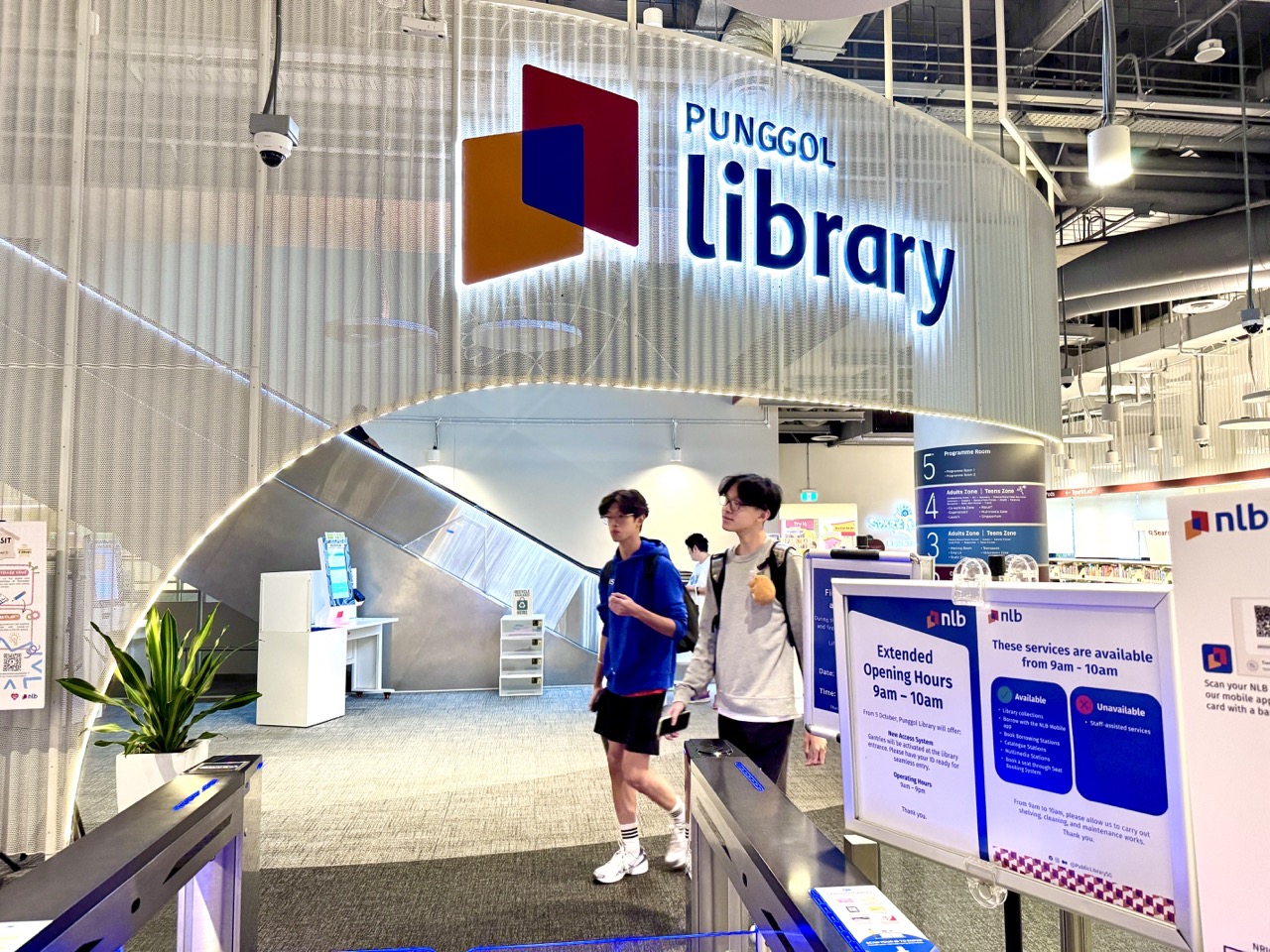
What to do in Punggol when a teacher requests a particular novel, a parent receives next year’s school booklist or a student finds a cheaper used textbook? Compare the exact title, author, publisher, edition, format and ISBN before buying or borrowing. Two books can share a familiar cover story yet differ in page numbers, illustrations, exercises or assigned passages. An ISBN is a publishing identifier that helps distinguish editions and formats; it is not a guarantee that any version with the right title meets a school’s current requirement.
The International ISBN Agency explains that modern ISBNs contain thirteen digits and identify a particular title, edition and product format, such as a paperback or digital edition. Singapore’s MOE Approved Textbook List identifies materials approved for schools, while individual schools select the materials used for their classes. The National Library Board’s OneSearch locates physical books, eBooks and other records. These sources answer different questions and should not be treated as interchangeable.
Six checks to match the school book edition
- Copy the exact school title, author, year or edition and any given ISBN.
- Check the school’s own current booklist or teacher’s instructions before using a general approved list.
- Match the complete thirteen-digit ISBN when one is supplied, preserving leading zeros.
- Compare paperback, hardcover, eBook and abridged versions rather than trusting the title alone.
- Check NLB’s catalogue or a reputable seller for that exact edition and current availability.
- Borrow or purchase only after confirming the required format, ownership, access period and legitimate price.
This is a Punggol family book-matching activity, not a live NLB borrowing reservation, a claim that every school uses the same textbook or permission to reproduce copyrighted books. Ask the actual school which edition is required; check the supplier or catalogue details; and read borrowing, ownership and exam-specific rules before spending money. A cheaper or freely available book is useful only if it suits the student’s genuine task.
Begin with the exact school requirement
A teacher may require a book for close reading, a particular workbook for class exercises or a novel for an examination. The student’s intended use should determine how strictly the edition must match. A general-interest reading recommendation may allow several versions, while a workbook whose questions are assigned by page can be much more specific.
Ask the school what is actually needed before searching shops or library shelves. Do not substitute an old family book automatically just because its title looks identical. A correct match may depend on edition, year, publisher, format and whether a separate workbook is included.
An ISBN identifies a publication product
The International ISBN Agency defines the International Standard Book Number as an identifier used by publishers, libraries, sellers and wholesalers to order and describe books. The number is not a quality score, edition ranking or price code.
Read the actual ISBN from the copyright page, back cover or authoritative bibliographic record. Do not infer that a bigger number means a newer or better book. The digits distinguish published products; they do not say which one a school has adopted.
Current ISBNs are thirteen digits
The International ISBN Agency says books assigned ISBNs since 1 January 2007 use thirteen-digit numbers. Earlier editions can carry ten-digit ISBNs, and legitimate records may display historic ten- and modern thirteen-digit forms where applicable.
A learner can practise recognising the length without trying to invent the missing digits. A ten-digit number should not be converted by simply putting 978 in front. Official conversion involves a check-digit calculation, so use a trusted publisher or library record for the correct corresponding identifier.
An ISBN is different from a barcode
The ISBN is the publication identifier, while a retail barcode is a machine-readable presentation that can incorporate relevant numbers and other information. A bookstore may also have its own stock-keeping code. Not every number printed beside a barcode is necessarily the ISBN.
Check for an explicit ISBN label or trustworthy catalogue field. A student’s school reference number, library call number and postal code serve entirely different purposes. Matching the wrong identifier can lead a parent to order an unrelated product.
The thirteen-digit number contains a check digit
The International ISBN Agency describes a mathematical final digit used to validate the ISBN’s structure. This helps detect some copying errors, but does not prove that the book is genuine, school-approved or currently available.
Copy the complete number exactly and avoid losing leading digits in a spreadsheet. Even a valid ISBN could describe the wrong edition for the student’s class. Numerical validity and suitability are separate decisions.
The same title can exist in several editions
A popular story may appear as a revised edition, anniversary edition, student edition or new printing. Publishers can add notes, exercises, introductions or changed pagination. A teacher’s reference to page forty may not match a different version.
Compare the edition statement and publisher, not merely the cover picture. When the exact requirement is unclear, ask the teacher rather than guess that all editions are interchangeable. A parent may save money by confirming before ordering.
A paperback and hardcover can have different ISBNs
The International ISBN Agency explains that different publication forms, including paperback and hardcover, normally need their own ISBNs. The text may be similar, but the format is a separately identifiable product.
Do not reject a format automatically if the teacher explicitly permits alternatives, and do not assume it is permitted without checking. A larger hardback edition may have different pages or be harder to carry. The school task determines whether format matters.
An eBook can be a different product
Digital editions may have ISBNs distinct from printed versions, including EPUB and PDF forms. A digital book can also have different features, lending restrictions or page presentation. The exact ebook product should be checked rather than treating one familiar title as sufficient.
Consider whether the student may use a device during lessons or an examination, whether the licence expires and whether the teacher assigns printed page numbers. Digital convenience cannot override a specific classroom requirement.
Abridged books can omit assigned passages
An abridged edition shortens or adapts the original. That may be suitable for recreational reading at one language level but unsuitable where a school requires the full literary text. A title on the cover is therefore not enough to establish equivalence.
Look for ‘abridged’, ‘retold’, ‘adapted’, ‘graded reader’ or related notes. Do not remove that descriptor when discussing the book with a teacher. The student should not study a shorter version and assume every required scene appears in it.
Translated versions answer another question
A translated novel can support bilingual reading, but it is a different language edition and generally has its own ISBN. A student required to analyse English wording may need the assigned English text rather than a translation.
Ask whether a parallel translation is an allowed supplementary aid or a replacement. The goal of a language activity may differ from an English Literature examination. Do not infer permission to substitute from the general educational value of translation.
The publisher’s name is important
Some familiar book titles have appeared under different publishers and imprints. Publishers can package material differently, and a school might specify an educational imprint or series that includes exercises or notes.
Use the actual school’s requested publisher if provided. An online seller’s listing might show a different imprint under the same headline. Ask for the copyright page or reliable product metadata before paying when the distinction matters.
School booklists are not identical across Singapore
MOE’s Approved Textbook List provides approved instructional resources, but schools can select which books meet their particular learning plans. A material appearing on a national approved list does not automatically mean the student’s Punggol school requires it.
Use the school’s current booklist as the purchasing instruction. The general approved list can support verification or understanding, but it does not replace the class’s actual selection or prescribed Literature texts.
School-year editions and updates matter
Publishers can revise materials to reflect changes in curriculum or examination requirements. A used book from an older sibling may be useful for additional practice but may contain different topics, page references or instructions.
Check the year and edition of the required school material. Do not claim every older book is obsolete, but do not buy an old version to save money without confirming that the school accepts it for the intended class.
Workbooks are often more edition-sensitive
A textbook may cover the same core concepts across versions, while a workbook contains page-specific tasks, answer spaces and assessment references. A new edition can rearrange or replace these exercises.
If the student must complete assigned workbook pages, matching the exact edition can matter. A second-hand workbook may also have answers written in or missing pages. Confirm condition and school use before treating it as a cost-saving purchase.
A set and a single volume have different identifiers
Publishers may sell a multi-volume set and individual volumes separately. The International ISBN Agency explains that a set can carry its own ISBN and each separately available volume should carry a distinct identifier.
A listing for Book One is not necessarily the two-book set the teacher requested. Check quantities and included components. A low online price may apply only to one volume. The household should compare the full required package.
A teacher might specify a Literature text
Some school Literature syllabuses and prescribed texts have particular requirements about which work or version is examined. A parent should check the relevant examination year and school instructions rather than assume the edition used by an older sibling is still correct.
Do not rely on an obsolete web article’s list for a future cohort. Where a prescribed text or unabridged version is required, consult the current official examination or school document. The student can still borrow another version for personal interest separately.
A school-approved textbook is not every school’s chosen textbook
An approved textbook list is a catalogue of materials that meet relevant approval conditions, not a nationwide instruction that all students must buy every title. Schools can have different adopted resources, levels and supporting materials.
Explain that distinction to a child before shopping. A product’s ‘MOE Approved’ claim, even when accurate, is not proof that the student’s teacher selected it. The household needs both legitimate approval context and the actual local requirement.
The NLB catalogue serves a different purpose
The NLB OneSearch portal finds books and other material from multiple collections. It can help a family identify an edition and explore borrowing options, but it does not decide what a school expects a student to own.
Treat catalogue results as discovery records. A book appearing in the search does not guarantee it is at Punggol Regional Library today, immediately reservable or suitable for every class. Check the item format and actual borrowing arrangements.
OneSearch covers print and digital records
NLB’s OneSearch FAQ says the Books category includes physical books, eBooks and digitised rare materials from multiple sources. This variety can be valuable but also creates confusion when users assume every search result represents an identical borrowable paperback.
Open the individual record and identify the format. A digital archival copy or research-library holding may require a different access method from a public library’s ordinary book loan.
Search by exact title and author
Start with the complete title and creator rather than a single broad keyword. NLB’s advanced search allows fields such as title, creator, publisher and subject. A precise query can help separate similarly titled novels or unrelated study guides.
Where the ISBN is available, use it as another identifier. Do not assume a search for an exact title guarantees the first result is the correct edition. A careful record comparison is still necessary.
Check publisher and year in the catalogue
A library record may list publication information that helps distinguish an older edition from a newer one. Compare the publisher, year and format with the actual school’s booklist or the ISBN printed on the cover.
If a detail does not match, do not assume the difference is irrelevant. Ask whether the school permits that edition. A short clarification can prevent a student from bringing the wrong text to a lesson.
Borrowing does not transfer ownership
A borrowed public library book has due dates, renewal rules and other lending conditions. A student who needs to write directly into a workbook or annotate an assigned text might need an owned copy or an authorised alternative.
Do not mark, cut, colour or permanently attach notes to a borrowed book. Use personal notebooks or permitted reversible study methods. If the teacher requires page annotations, confirm whether a library loan can meet the actual learning task.
A free eBook can still be unsuitable for class
A family might find a digital edition available immediately and assume it substitutes for the required print book. But a teacher may require a specific page layout or class set, and school device policies can differ.
Check whether the student can use the digital file in the intended lesson and whether it is an unabridged authorised edition. A book’s low or zero borrowing cost is only one factor in suitability.
A second-hand book can be a good choice
A used book in the correct edition and acceptable condition may save money and extend a product’s life. The family should inspect its binding, pages, workbook answers and supplements. A low price is not helpful if a required chapter is missing.
Ask the seller for the ISBN and edition statement rather than relying only on a cover photograph. A student should compare the booklist before meeting an unknown seller, with age-appropriate adult support for any transaction.
Avoid counterfeit and unauthorised copies
An unofficial scanned copy can seem inexpensive, but it may be incomplete, misleadingly labelled or distributed without the rights-holder’s permission. A printed cover carrying an ISBN does not by itself certify that a seller has legitimate rights to reproduce the book.
Use authorised booksellers, the publisher or NLB resources. Do not forward an entire copyrighted textbook PDF through class groups merely because other parents are doing so. Copyright and access conditions still apply.
The ISBN does not determine the price
Two shops can sell the same edition at different prices, while a promotion changes the cost without changing the book’s ISBN. The International ISBN Agency explicitly says a change in price does not require a new identifier.
Once the exact product is matched, compare legitimate offers including shipping and refund terms. Do not use price differences alone as evidence that two copies are different editions or counterfeit.
A reprint may retain its ISBN
The International ISBN Agency says an unchanged reprint ordinarily retains its ISBN, while a revised edition needs a new identifier. The printing year may therefore change without the book becoming a substantively different edition.
Look at the edition statement and content as well as printing information. A parent should not assume that every later manufacturing date means a new school curriculum. Ask the school when a difference may matter.
The check digit is not a book-quality certificate
An ISBN can be mathematically valid yet describe an abridged edition or an ebook unsuitable for the teacher’s task. It can also be copied onto a misleading marketplace listing. The number is an identifier, not a guarantee of teaching accuracy or authorised supply.
Teach students to distinguish technical validity from practical suitability. A correct thirteen-digit sequence helps the family identify a product, but they must still check publisher, edition, condition and current school requirements.
A library call number is not an ISBN
NLB’s shelf or call number helps locate a physical item within a collection. An ISBN identifies a published product form. A book could move between library branches without changing its ISBN, while copies of one edition may occupy different library locations.
Do not order a book by copying a shelf call number into an ISBN field. Use each identifier in the system it was designed for. This is a useful information-literacy lesson for children learning to navigate catalogues.
The school code may be another identifier
A school booklist can use vendor reference numbers, subject codes or internal package names. These can help its appointed supplier fulfil an order, but are not necessarily international ISBNs.
Look for explicit field labels rather than assuming all printed numbers are interchangeable. When the school’s order system requires a particular internal code, follow its actual instructions rather than substitute an ISBN without checking.
A 2027 booklist should not be replaced by a 2026 screenshot
School requirements can change with year level, subject combinations, syllabuses and school decisions. An older sibling’s saved list may be a useful historical reference but is not a confirmation of what the next cohort needs.
Use the latest legitimate list issued by the student’s school and verify uncertain entries. Do not publish a static ‘all Punggol schools use these books’ catalogue without school-specific evidence.
A used workbook may already contain answers
A second-hand copy can be complete as a physical book but unsuitable as a workbook if many exercises have been filled, pages removed or answer spaces damaged. Check the physical condition in light of the teacher’s actual tasks.
Do not erase another person’s markings with solvents that damage pages. If the workbook is intended for daily written work, a new or appropriately unused copy may be the better value despite a higher price.
A classic novel can have many printings
Suppose a teacher requests an unabridged novel, but a second-hand listing uses the same title with a shorter ‘retold’ edition intended for beginners. Both may be legitimate books, yet they do not contain the same text.
The parent compares the edition wording and ISBN and checks the school’s instruction. This fictional example does not name a real required school novel or assert that one edition is acceptable for every Literature syllabus.
A mother-tongue edition may be a separate choice
A family may wish to read a story in Chinese, Malay or Tamil as an enrichment activity, while the school has requested a particular English edition. Those can serve different educational purposes and have different language and ISBN identifiers.
Do not treat a translation as automatically incorrect; treat it as a different format of learning. The Punggol OneSearch mother-tongue guide covers finding language-specific reading. The present article focuses on matching a requested edition.
A booklist might specify a bundle
Some schools sell textbook and workbook packages through appointed suppliers. A cheaper retail listing may provide only the textbook without the required workbook, digital access or supplementary material.
Check the quantity and components of the official package before comparing prices. Avoid concluding that the school is charging more merely because a separate single item appears cheaper. Comparison must involve the same products.
An ISBN search does not guarantee stock
A retailer may list an edition but not have a copy ready to ship. NLB may catalogue it while all physical copies are on loan. Product identity and real-time availability are separate facts.
Check the actual supplier’s stock, delivery estimate or NLB borrowing status through the legitimate service. Do not tell a child a book is reserved because an ISBN search returned the right title.
Book reservation and edition checking are separate
The Punggol reservation guide explains the logistics of getting a library item. Before using those steps, the family should establish whether the listed edition suits the actual task.
Reserving the wrong book efficiently still creates a wasted trip. Conversely, locating the exact edition does not guarantee its reservation or collection window. Handle identity first and logistics second.
The actual publisher is a valuable check
A bookshop may supply a product photograph with an old cover while shipping a newer printing. Where edition matters, ask for the precise ISBN and publisher rather than rely on the visual design alone.
Use the product’s own published data and the school requirement. A changed cover does not always mean changed content, and an unchanged cover does not automatically prove identical exercises. The identifier and edition statement provide stronger evidence.
The one-page matching record
Create fields for school, subject, title, author, publisher, required edition, required ISBN if supplied, acceptable format, source date, proposed copy and outcome. Label any unresolved point rather than filling it with a guess.
Keep the student’s identity and account information private. A family does not need a public spreadsheet of pupils or school book orders to conduct this task. The record should make one purchasing decision easier.
Primary Mathematics: identifiers are not quantities
An ISBN is a sequence of digits, not an amount of money or a rank. A child can compare whether two thirteen-digit strings are identical and practise preserving leading zeros or grouping digits correctly.
Do not teach subtraction between ISBNs as a way to compare edition age. The mathematical check digit has a technical purpose, but the correct classroom task here is exact matching. A small coding exercise can use fictional identifiers without claiming they correspond to published books.
Primary English: explain why the version matters
A child can compare two fictional catalogue descriptions: one is an unabridged print edition; the other is a shortened retelling. Ask which is suited to a teacher’s instruction requesting the full text, and what question still needs clarification.
The learner should name the feature that matters rather than answer from the cover colour. This teaches evidence-based reading and a practical reason to examine publishers’ notes.
Secondary source evaluation
An older student can compare MOE’s approved materials information, a school-specific booklist and a retailer’s catalogue. Each has a different authority: general approval, local course selection and commercial availability.
A strong conclusion matches the right edition without treating one source as sufficient for every question. If the school list provides an ambiguous title, asking the teacher is a more responsible next step than inferring a requirement from an online bestseller ranking.
A fictional wrong-edition purchase
A parent buys an older revision of a mathematics workbook because the cover looks almost the same. On the first lesson, the child discovers that the assigned exercises are on different pages. The family uses the school booklist and edition information to determine the mismatch.
That is a fictional scenario. It demonstrates why saving a small amount may not help if the wrong material cannot be used. The right repair is checking the requirement before the next purchase, not assuming every publisher edition is inferior.
A fictional successful borrowing choice
A teacher recommends a novel for independent reading without requiring a specific edition. The student finds a legitimate NLB paperback with the same unabridged story and confirms that borrowing is acceptable for the task.
The result may be a successful low-cost choice. The same family would need a stricter check if the class later assigned page-specific annotations or an edition-dependent workbook. Requirement determines the level of matching.
A fictional eBook mismatch
A student finds a digital book in the catalogue while the school requires a printed workbook to be written in during class. The digital book has a legitimate ISBN but lacks a practical way to complete the intended written task.
The family does not blame the digital format or call the book a fake. It recognises that a different product form does not meet this particular requirement. The ISBN helps identify the mismatch rather than proving all versions equivalent.
A fictional set versus volume issue
An online listing says ‘Volume One’ while the school booklist requests a two-volume set. The shopper checks the actual product description and ISBN before paying. The low price was for a smaller package, not necessarily a discount on the full set.
The family can ask the supplier for the exact bundle components. A label such as Volume One should be treated as evidence about what is included rather than overlooked because the series title matches.
Used books and environmental responsibility
Reusing correctly specified books can save resources and money. NEA encourages reuse and donation of suitable educational materials and school goods. But a badly damaged copy or a workbook full of writing may not be useful for the next reader.
Check condition honestly. Do not pass an unsuitable edition to another family as though it were current. A successful reuse programme depends on accurate item descriptions, respectful exchange and actual educational usefulness.
The final parent decision
Before buying, ask: Is this the exact school’s requested title and edition? Is the ISBN correct where supplied? Is the format acceptable? Does the book include every required component? Can it be obtained legitimately, within the relevant time and budget?
A Punggol family that answers those questions can avoid buying an attractive but unsuitable copy. The enduring skill is treating book identity, school selection, borrowing and price as different decisions that must fit together.
Continue exploring Punggol
These companion articles tackle three different practical family decisions. Use current official sources and the actual school, shop or food-provider requirements before acting.
- Bring Chilled Groceries Home Safely Before the Cold Chain Breaks
- Compare Nutri-Grade and the Healthier Choice Symbol Before Choosing a Drink
- Repair One Loose School Uniform Button Before Buying a Replacement
Frequently asked questions
What is an ISBN?
An International Standard Book Number identifying a particular publication product, edition and format.
Are ISBNs always thirteen digits?
Current ISBNs assigned since 2007 are thirteen digits, while older books may carry ten-digit ISBNs.
Can I add 978 to an old ISBN-10?
Not without proper check-digit conversion. Use a trusted catalogue or publisher record.
Does the same book in hardcover and paperback have one ISBN?
Different formats are normally assigned separate identifiers.
Can an ebook have a different ISBN?
Yes. Digital formats are separately identified when appropriate.
Does an ISBN certify the book is MOE approved?
No. It identifies the publication, not its approval or suitability for a school.
Do all schools use the same approved book?
No. Schools select resources appropriate for their teaching, so check the individual school’s current booklist.
Is a book on MOE’s Approved Textbook List automatically required?
No. The national approved list and a school’s adopted materials serve different purposes.
Can I use an older sibling’s workbook?
Only if the edition and physical condition meet the actual school’s requirements.
Is an abridged novel acceptable for Literature?
Do not assume so. Check any requirement for the full prescribed text or a particular edition.
Can I borrow the required book from NLB?
Sometimes, depending on edition, availability, lending rules and the task’s need for permanent annotation.
Does OneSearch show physical books and eBooks?
Yes. Its Books category searches different physical and digital collections.
Does a OneSearch result guarantee the book is at Punggol?
No. Check the exact holding, format and actual borrowing availability.
Is a library call number an ISBN?
No. A call number locates an item in a library collection; an ISBN identifies a published product.
Can publishers use the same ISBN for an unchanged reprint?
Yes, generally an unchanged reprint retains its ISBN.
Does a new price mean a new ISBN?
No. Price changes alone do not require a new identifier.
Can I buy a used school textbook?
Yes when its correct edition, condition and required components suit the school’s task.
Do bundle and single-volume books have different identifiers?
They may. A complete set and separately available individual volumes can have distinct ISBNs.
Does a low marketplace price guarantee the same edition?
No. Match publisher, format, edition, ISBN and included material.
What is the simplest book-matching rule?
Use the actual school’s current requirement and match the precise publication product before ordering or borrowing.
Official book sources and related Punggol reading
- International ISBN Agency: what ISBNs identify
- International ISBN Agency: assignments for formats, reprints and editions
- MOE: Approved Textbook List and school use
- NIE Library: finding approved textbooks and older editions
- NLB: OneSearch official catalogue and advanced search
- NLB: OneSearch FAQ on records and book formats
- NEA: reuse of school materials and unwanted uniforms
- eduKate Punggol: reserve a library book correctly
- eduKate Punggol: choose a mother tongue book through OneSearch
- eduKate Punggol: library book catalogue and shelf location
Editorial verification: 1 November 2026. This article explains ISBN identification, current MOE and school booklists, and NLB catalogues, but does not certify a particular book required by a named school or promise stock, availability or reservations. The International ISBN Agency distinguishes editions and formats. Current individual school requirements take priority over general national book lists, and the user must follow rights and library-loan conditions.


