
PG3 means Posting Group 3, the Secondary 1 school-admission route under Full Subject-Based Banding that generally starts most academic subjects at G3. It does not mean pupils already know how to identify plants or animals, and a photograph of a bird is not automatically an accurate scientific classification. MOE’s G2/G3 Lower Secondary Science syllabus includes Diversity as a major theme, helping students understand the variety of living and non-living things, the purpose of classification and how scientific knowledge changes when better evidence becomes available.
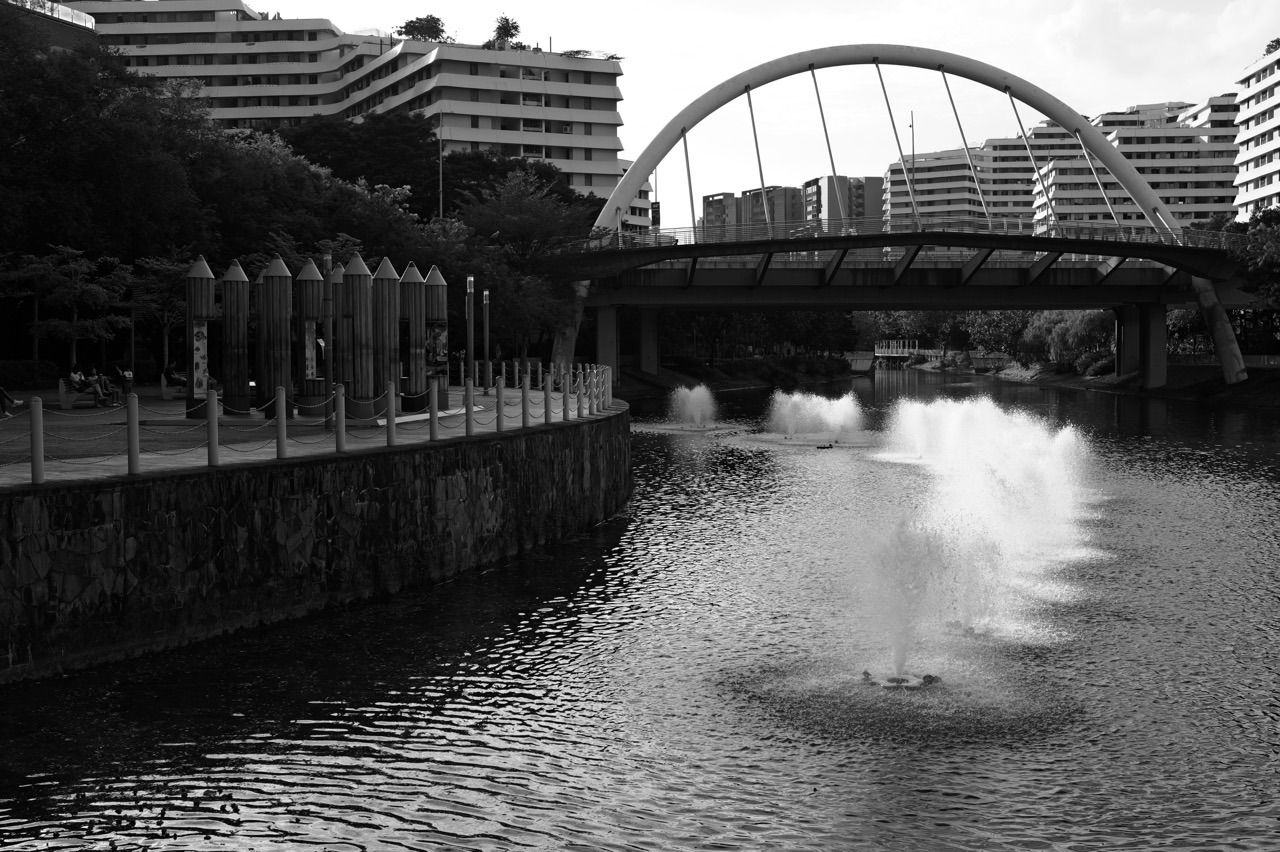
Punggol Waterway Park provides a familiar local example for discussing biological diversity. NParks lists birds including the Yellow-vented Bulbul, Black-naped Oriole and Long-tailed Parakeet, and describes aquatic plants such as Red Thalia, Bulrush and Swamp Cabbage along the waterway. These are species and plant groups associated with the park, not guarantees that a family will see them on any particular visit. Parents can use the official information to teach careful observation, distinguishing features, habitats and respectful conservation without disturbing animals or presenting a family nature walk as an official school field trip.
- PG3 concerns admission; G3 Science includes inquiry and a Diversity theme in the lower-secondary syllabus.
- Classify living things using observable evidence and appropriate characteristics, not just size or movement.
- Use a classification key carefully; one feature rarely establishes a confident species identification.
- Distinguish biodiversity, habitats, adaptations, populations and ecosystems before linking them.
- NParks names birds and aquatic plants associated with Punggol Waterway Park, but sightings vary by conditions.
- Observe wildlife from safe public areas; do not feed, capture, collect, chase or handle unfamiliar animals.
- Recognise that a photograph, short visit or one sample cannot establish a whole park’s biodiversity.
- Check current MOE Science and NParks materials; school practical and fieldwork activities follow separate instructions.
Definition lock: biological diversity and observation
| Term | Meaning | What a short visit cannot prove |
|---|---|---|
| Species | Biological classification unit | Definitive ID from insufficient features |
| Habitat | Environment in which an organism lives | Entire home range from one perch |
| Population | Individuals of one species in a defined area | Total population from one sighting |
| Biodiversity | Variation among living things at multiple levels | Whole-park diversity from one short walk |
| Adaptation | Inherited characteristic shaped over generations | Evolutionary cause from appearance alone |

Guide chapters
- Why the Diversity theme matters beyond a species list
- Posting Group 3 is not a biodiversity qualification
- Living things cannot be defined by movement alone
- Classification begins with a clearly stated criterion
- An identification key is a sequence of decisions
- A scientific name is not a magic label
- Biodiversity is broader than the number of birds seen
- A habitat is the setting in which an organism lives
- The idea of an adaptation needs careful wording
- NParks lists birds associated with the waterway
- Why the Long-tailed Parakeet deserves careful reporting
- A bird’s call is another kind of evidence
- Plants in a managed urban park can have several roles
- Phytoremediation is a concept, not a visible instant result
- Food chains should not be invented from proximity
- Population and community have different meanings
- Biodiversity observations depend on the method
- Different observations cannot be added carelessly
- Habitat quality is not measured by prettiness alone
- Conservation begins with respectful behaviour
- Punggol is an urban ecosystem, not an untouched forest
- Use a nature journal without collecting specimens
- Distinguish a fact, an inference and a hypothesis
- A four-week biodiversity learning sequence
- What a Punggol parent should ask the Science teacher
Why the Diversity theme matters beyond a species list
Children often begin biological learning by memorising names. A more useful question is how different living things can be grouped and why grouping helps scientists communicate. A classification can reveal patterns in structure or function, but it is not merely a storage system for vocabulary. It also makes questions about relationships, adaptations and changes in evidence easier to discuss.
MOE’s G2/G3 Lower Secondary Science syllabus presents Diversity as a theme connecting living and non-living things. It notes that classification helps organise a varied world and that scientific knowledge remains open to revision in light of new evidence. This is a valuable first lesson in the nature of science: categories are made using defensible criteria, not because a textbook diagram looks neat.
Ask the pupil to explain why two objects were grouped together and which observable feature justifies the decision. That reasoning transfers to materials, data and many future science topics.
Posting Group 3 is not a biodiversity qualification
PG3 is an admission pathway, while G3 describes the level of individual academic subjects. A new secondary pupil may begin most subjects at G3 and still need to learn how to use a simple biological classification key. The school decides when to introduce particular concepts, demonstrations and investigations under its curriculum programme. It would be misleading to promise that every Punggol school conducts the same nature walk.
A child’s prior experience varies. One may spend weekends reading about birds and recognise several species, while another has never observed a living animal closely. Neither should be embarrassed for their starting point. Science learning makes the observation method explicit and teaches the pupil how to investigate a claim.
Parents should treat curiosity as an asset but also model restraint. ‘I do not know which species this is; let’s check a reliable guide’ is a stronger answer than a confident guess.
Living things cannot be defined by movement alone
Primary learners sometimes remember that living things move, grow and reproduce, then assume every moving object is alive and every stationary object is not. That rule is too crude. A running toy car moves but is not living, while a tree is living even though it remains rooted in one place. Biological characteristics must be considered together with the nature of the system.
Living organisms exhibit organised processes that maintain life, such as using energy and responding to their environment. Some life processes may not be directly visible in a short observation. A seed can appear inactive while retaining the potential for growth under suitable conditions; a dormant organism can challenge simplistic visual rules.
Use safe photographs and ordinary examples to discuss what can be observed and what requires additional information. Avoid turning one feature into a universal test for life.
Classification begins with a clearly stated criterion
Suppose pupils sort photographs of several leaves. They might group them by shape, edge pattern or arrangement on a stem. Any chosen scheme can be discussed, provided the criterion is stated. A classification based on colour alone may be less useful for identifying related species because lighting, age and health can change colour. The method must fit the scientific question.
Ask the student to make two groups using one visible feature, then test whether the same feature still works with unfamiliar examples. If it fails, discuss why. The pupil learns that a category requires a consistent rule and that additional distinguishing features may be needed.
Scientific classification of organisms draws on a broader body of evidence than a casual photo-sorting activity. This introductory exercise teaches the logic of grouping without pretending to replace formal taxonomy.
An identification key is a sequence of decisions
A dichotomous key typically presents pairs of alternative characteristics that guide the observer toward a classification. The user must read each description precisely and choose based on evidence. Skipping ahead to a familiar animal name can produce an error even when the final guess happens to be correct. A good key makes its criteria clear and works for the organisms it covers.
Imagine an original paper key for drawings of fictional plants: first divide by whether leaves are needle-like or broad; within broad leaves, ask whether the edges are smooth or toothed. The task is not to memorise names but to apply each decision consistently. If a drawing lacks the required information, the honest response is that identification cannot yet be completed.
Parents can make simple keys at home using printed illustrations. The pupil should not handle unknown leaves or animals to collect details when safe photographs or published guides can answer the lesson.
A scientific name is not a magic label
Common names are useful in everyday conversation but may vary across regions or refer loosely to different organisms. Scientific naming aims to provide a consistent way to identify species. The pupil may encounter genus and species terminology in suitable resources, but should not assume they can assign a valid Latin name from one blurry image.
Species identification may depend on shape, colour patterns, behaviour, location or expert assessment. Different life stages and sexes can also look different. A bird that resembles an illustration is not necessarily the same species. Reputable reference pages may include multiple photographs and diagnostic descriptions for precisely this reason.
Encourage the child to write ‘possible identification’ and explain the evidence when certainty is lacking. Accuracy matters more than producing an impressive list of names.
Biodiversity is broader than the number of birds seen
Biodiversity describes variation among living organisms and can be discussed at different levels, including species, genetic and ecosystem diversity. A casual family visit usually provides only a small glimpse of this complexity. Seeing five birds does not mean the park has only five species, and observing one plant type repeatedly does not establish the full structure of its habitat.
A pupil might begin by recording the different kinds of visible plants and animals in a defined area, but a serious comparison would need a consistent observation method. Time of day, weather, season and observer experience all affect what can be seen. A single observation is useful as a starting point, not a comprehensive census.
Teaching this distinction protects against exaggerated claims in school reports. Scientific curiosity grows when students learn what data can and cannot establish.
A habitat is the setting in which an organism lives
Habitat refers to the environment in which an organism normally lives and meets its needs. Different kinds of organisms may use vegetation, water edges, open grass, trees or built structures in different ways. A pupil should not assume every animal in a park uses the entire park equally. Habitats can vary within a small area.
Punggol Waterway Park includes landscaped vegetation, water frontage and public paths. NParks describes features intended for recreation alongside green spaces and planted areas. This mixture makes it a useful setting for discussing possible habitats without claiming that each planting is a natural wilderness untouched by people.
Ask the child which visible features might provide food, shelter or space, then distinguish the hypothesis from verified ecological information. Observing a bird on a branch does not prove where it nests.
The idea of an adaptation needs careful wording
An adaptation is an inherited characteristic that can help organisms survive and reproduce in particular conditions over evolutionary time. It is not simply any behaviour that an individual chooses in the moment, and it should not be confused with a temporary response or a decision made with human intention.
A bird’s beak structure may relate to how it obtains food, but the connection needs appropriate evidence and species knowledge. Observing a bird once near a fruit tree does not establish the evolutionary history of its beak. Students should connect structural or behavioural examples to reputable biological explanations rather than inventing neat stories.
Parents can help by asking what the characteristic is, how it functions and what source supports that explanation. This replaces speculative ‘just-so’ narratives with disciplined scientific thinking.
NParks lists birds associated with the waterway
NParks identifies the Yellow-vented Bulbul, Black-naped Oriole and Long-tailed Parakeet among birdlife visitors may look out for at Punggol Waterway Park. Its descriptions include visible features and characteristic calls. These examples help students see that identification involves multiple clues rather than treating all birds as interchangeable shapes.
The park page describes the Yellow-vented Bulbul as having a white face and yellow undertail coverts, and the Black-naped Oriole as a conspicuous yellow bird with a dark band. Such descriptions are useful starting clues, not a guarantee that every bird of a similar colour is one of these species. Lighting, distance and movement can make identification difficult.
A child should observe from a respectful distance. If the bird flies away or is partly hidden, it is appropriate to leave the identification open rather than follow it into vegetation.
Why the Long-tailed Parakeet deserves careful reporting
NParks describes the Long-tailed Parakeet as a globally threatened species that may be encountered at the park. A threatened conservation status carries significance, but it should not be interpreted as proof that a specific parakeet sighting has occurred during the family’s visit. Nor should the pupil invent a current local population count from a species page.
Discuss the difference between global conservation status, local distribution and individual observation. Each answers a different question. A family may use authoritative conservation references to understand why habitat and responsible behaviour matter, while avoiding dramatic claims unsupported by current surveys.
Students should not approach nests, attempt to attract birds using food or publish sensitive location details if doing so could disturb wildlife. Respect comes before the desire to collect a photograph.
A bird’s call is another kind of evidence
Visual characteristics are not the only relevant observations. Bird calls can be useful for identification when matched with reliable recordings and contextual information. However, sounds can overlap among species, change with circumstances or be difficult to locate in a noisy environment. A student should not state a species name as certain solely because a call sounded familiar.
A simple listening exercise uses a published NParks description and asks what the child hears in an authorised recording. Compare rhythm, duration and repeated patterns. A family does not need to record every bird outdoors or play loud calls near wildlife to learn the idea.
Birdwatching develops patience and attention to evidence. It also teaches that a useful observation can be made without capturing or disturbing the organism.
Plants in a managed urban park can have several roles
Urban plantings may provide shade, aesthetic value, habitat or functions related to environmental management. Some are selected for tolerance of particular conditions. Students should not assume that every plant was naturally established or that every visible plant can be identified without examining key features. Public parks combine ecological and design considerations.
NParks names Red Thalia, Bulrush and Swamp Cabbage among aquatic plants planted along Punggol Waterway. It explains that such plants are used to remove pollutants from soil, water and air. This is a useful example of a stated environmental function, but the public description does not provide a precise pollutant-removal percentage for the family’s observation point.
Teach the pupil to separate the authority’s explanation from a measured result. They can describe the reported planting purpose without claiming that one visible patch has already removed a particular quantity of pollutants.
Phytoremediation is a concept, not a visible instant result
Phytoremediation broadly describes the use of plants and associated processes to manage certain contaminants in environmental media. The precise mechanisms and effectiveness depend on plant species, contaminants, conditions and management. Seeing vegetation beside a waterway does not prove that it has eliminated all pollutants or made water safe for drinking.
A student could use NParks’ description as a starting point for a Science question: What evidence would demonstrate a change in pollutant concentration? Answering would require suitable monitoring data and properly designed comparison, not taking an unsafe water sample. The learning target is to understand how a claim could be tested.
Parents should not permit children to collect water or soil from restricted areas as an independent experiment. Discussion of published evidence is safer and often better matched to the lower-secondary conceptual goal.
Food chains should not be invented from proximity
A food chain represents feeding relationships and energy transfer, while a food web depicts connected interactions. Pupils may learn about ecological relationships in Science, but they should not infer that one animal eats another simply because both appeared in a photo of the same park. Feeding relationships require relevant ecological evidence.
An original hypothetical example might show grass, a grass-eating insect and a small bird that eats that type of insect. The arrows in a feeding relationship diagram must have the direction defined correctly and should be backed by the scenario’s stated facts. It is a teaching model rather than a claim about actual diets of named Punggol species.
Ask the pupil what each arrow means and what information would be needed before using the model for a real ecosystem. A diagram is only as reliable as its assumptions.
Population and community have different meanings
A population refers to individuals of the same species in a specified area, while a community refers to the populations of different species living and interacting there. An ecosystem includes living communities and relevant non-living environmental factors. These concepts are related but not interchangeable, and students should be precise about the scale of the claim.
If a family observes several birds near one bridge, they have not established the total population of those species in Punggol. Estimating population size would require a scientifically appropriate method. A short visit might instead support a much narrower record: a number of individuals seen during a particular observation period.
Developing precision now helps students avoid using broad ecological vocabulary as decoration. The words should answer specific questions.
Biodiversity observations depend on the method
Time of day, duration, route, weather and observer experience can influence which organisms appear in a record. A student who walks one shaded route for ten minutes cannot fairly compare their list with a published multi-year survey and claim a decline. The methods cover different scales. A sensible report identifies how the observations were gathered.
At home, parents can design a paper-based comparison of two fictional observation sets. Ask which one has more sampling opportunities and whether a higher observed species count necessarily means higher actual biodiversity. The child should recognise that effort and detection conditions may explain part of the difference.
This is a reasoning activity, not an invitation to conduct unsupervised wildlife research or disturb habitats. School fieldwork should follow the teacher’s instructions.
Different observations cannot be added carelessly
NParks and other institutions may publish observations collected in different years, by different methods or from distinct sites. Combining them into a single total can double-count species or mix incompatible categories. Students should check whether lists refer to species present, individuals counted or sightings made, and whether the coverage overlaps.
Suppose one report lists ten bird species seen in a particular month and another lists eight in a different month. Adding ten and eight does not prove eighteen unique species occurred, because some may appear on both lists. A proper combined count requires knowing the overlap. The example illustrates elementary set reasoning within a biological question.
Parents can ask what exactly was counted and whether the units match. That habit prevents impressive but misleading biodiversity statistics.
Habitat quality is not measured by prettiness alone
A landscaped park can look beautiful while ecological outcomes depend on many factors such as vegetation structure, disturbance, food sources and management. Conversely, an untidy-looking natural patch may support organisms that are less visible to visitors. Aesthetic judgement is not a substitute for ecological evidence.
A student should distinguish ‘I like this landscape’ from ‘This place supports high biodiversity’. The first is a personal response. The second is a scientific claim requiring an appropriate survey or credible published information. Both can be discussed, but they are different types of statement.
This distinction connects Science with Art, Geography and responsible citizenship. It encourages curiosity without pretending every environmental question has an immediate answer from a photograph.
Conservation begins with respectful behaviour
Families can help protect urban wildlife by following NParks’ park regulations, staying on permitted paths and avoiding feeding, chasing or handling animals. Introducing pets or releasing unwanted organisms into a habitat can cause harm. A young observer should not attempt to ‘rescue’ unfamiliar wildlife without guidance from the appropriate authorities.
Talk about why feeding wild animals can change behaviour and why collecting plants removes material from the environment. A photograph or written observation is often sufficient for a learning discussion. If a genuine safety or wildlife concern arises, use official reporting channels rather than improvising a response.
Conservation education is stronger when the pupil understands the reason for restraint. Respecting an organism’s space is an active decision, not an absence of interest.
Punggol is an urban ecosystem, not an untouched forest
Punggol Waterway Park is a managed public space embedded in residential neighbourhoods, transport connections and recreational areas. Its planted green spaces and water features show that urban ecology intersects with landscape design and human use. The site can support wildlife while also serving families, cyclists and other park visitors.
Students should understand that biodiversity in a city is shaped by habitat connectivity, maintenance decisions, human disturbance and changing surroundings. A park’s public listing is not proof that every ecological issue has been solved. Scientific inquiry can ask how different design choices relate to observed conditions, using reliable data rather than certainty from appearance.
This perspective links biological diversity with wider questions about how people live with nature. It is a richer learning outcome than simply memorising three bird names.
Use a nature journal without collecting specimens
A simple journal can record date, general location, weather, observed features and an uncertainty. For example: ‘At a public path near the waterway, I saw a small yellow-and-dark bird for several seconds; identification unconfirmed.’ This is more honest than claiming a rare species based on an uncertain glimpse.
Ask the pupil to draw or describe what was observed before consulting an identification guide. Then compare visible features with credible sources and mark which clues fit. A careful observer can leave a record unresolved. The purpose is to develop precision and patience rather than accumulate the longest list.
Do not encourage children to photograph other visitors, reveal sensitive wildlife locations or leave public paths in pursuit of an observation. Safety and privacy are part of the method.
Distinguish a fact, an inference and a hypothesis
Science writing becomes much clearer when the student knows whether a sentence reports evidence, interprets evidence or proposes something to test. ‘A bird perched in this tree at 9 a.m.’ may be an observation. ‘The tree may provide shelter’ is an inference requiring support. ‘Birds prefer this tree to another species of tree’ is a comparative hypothesis that a single sighting cannot establish.
Ask the child to label sentences and rewrite overstrong claims. This practice can be done with published photographs and hypothetical data without conducting experiments. It also helps the pupil understand why scientific conclusions are qualified when evidence is incomplete.
These distinctions apply to later Biology, environmental research and ordinary online claims about nature. Accuracy is a transferable habit.
A four-week biodiversity learning sequence
In week one, practise classification using pictures of clearly different living things and describe the criteria. In week two, work with a simple illustrated key and identify what information is missing. In week three, read NParks descriptions of two park species and compare the evidence used for identification. In week four, evaluate a hypothetical biodiversity count and discuss its sampling limitations.
Each session can be short and age-appropriate. If the child enjoys a public nature walk, it can supplement the reading, but the school assignment remains the priority. Do not turn the activity into an unsafe mission to locate every species on a list.
Progress means the pupil can explain a classification, identify uncertainty and use a suitable source independently. It does not require owning an expensive camera or completing a large collection.
What a Punggol parent should ask the Science teacher
Ask which Diversity concepts are being taught this term, what forms of classification are expected and how pupils are assessed. Find out whether the learning issue concerns reading a key, understanding scientific terms, identifying distinguishing features or drawing overconfident conclusions. Different errors need different teaching. A student who misreads the key does not benefit from merely memorising more bird names.
The receiving school can clarify any actual class investigation or field visit, including supervision and safety requirements. A general online guide cannot authorise collection, confirm a school schedule or guarantee that a particular species will be encountered.
PG3 may identify how a pupil entered school. Scientific literacy grows when the child observes carefully, names the limits of evidence and becomes willing to refine an understanding of the living world.
Frequently asked questions
Is biodiversity a separate PG3 subject?
No. PG3 is the admission group; Diversity is a theme in the MOE G2/G3 Lower Secondary Science syllabus.
Can a plant be living even when it does not visibly move?
Yes. Movement alone is not a sufficient test for life.
What does a classification key do?
It guides identification using a structured sequence of distinguishing characteristics.
Is identifying a bird from one blurry photo reliable?
Not necessarily. More evidence may be needed, and uncertainty should be stated.
Which birds does NParks name for Punggol Waterway Park?
Its official page highlights examples including the Yellow-vented Bulbul, Black-naped Oriole and Long-tailed Parakeet.
Will families definitely see those species?
No. Sightings depend on conditions, time, movement and chance.
What aquatic plants does NParks describe?
Red Thalia, Bulrush and Swamp Cabbage are among those listed for the waterway.
Does seeing plants prove that the water is safe to drink?
No. Planting purpose and water-quality safety require distinct evidence and official assessment.
Can my child collect insects or leaves for homework?
Follow school and NParks rules. Do not collect, capture or disturb wildlife without appropriate authorisation.
Can two bird lists simply be added together?
Only if species overlap and methods are accounted for; otherwise the sum may double-count.
Is an attractive landscaped park automatically high in biodiversity?
No. Biodiversity claims require suitable ecological evidence, not appearance alone.
Where should parents verify species information and schoolwork?
Use the current MOE lower-secondary Science syllabus, official NParks information and the receiving teacher’s instructions.
Continue the PG3 Punggol learning series: PG3 Mathematics Geometry and Measurement | PG3 English Presentations and Listening | PG3 Computational Thinking and Coding
Official Science and Punggol nature sources
- MOE: G2/G3 Lower Secondary Science syllabus, updated April 2024
- NParks: Punggol Waterway Park, birds, aquatic plants and visitor rules
- NParks: nature walk at Punggol Waterway Park
- NParks: Punggol Waterway Park Connector and birdwatching
- PG3 Science laboratory measurements and practical reports
- PG3 Geography fieldwork and Punggol Waterway investigations
Your next step
Choose two species descriptions from the current NParks Punggol Waterway Park page. Ask your child which features distinguish them, what remains uncertain and how an identification key would help. If you visit the park, observe safely from public paths without feeding, touching or disturbing wildlife. Check the school’s actual G3 Science task before presenting a family observation as formal fieldwork.


