
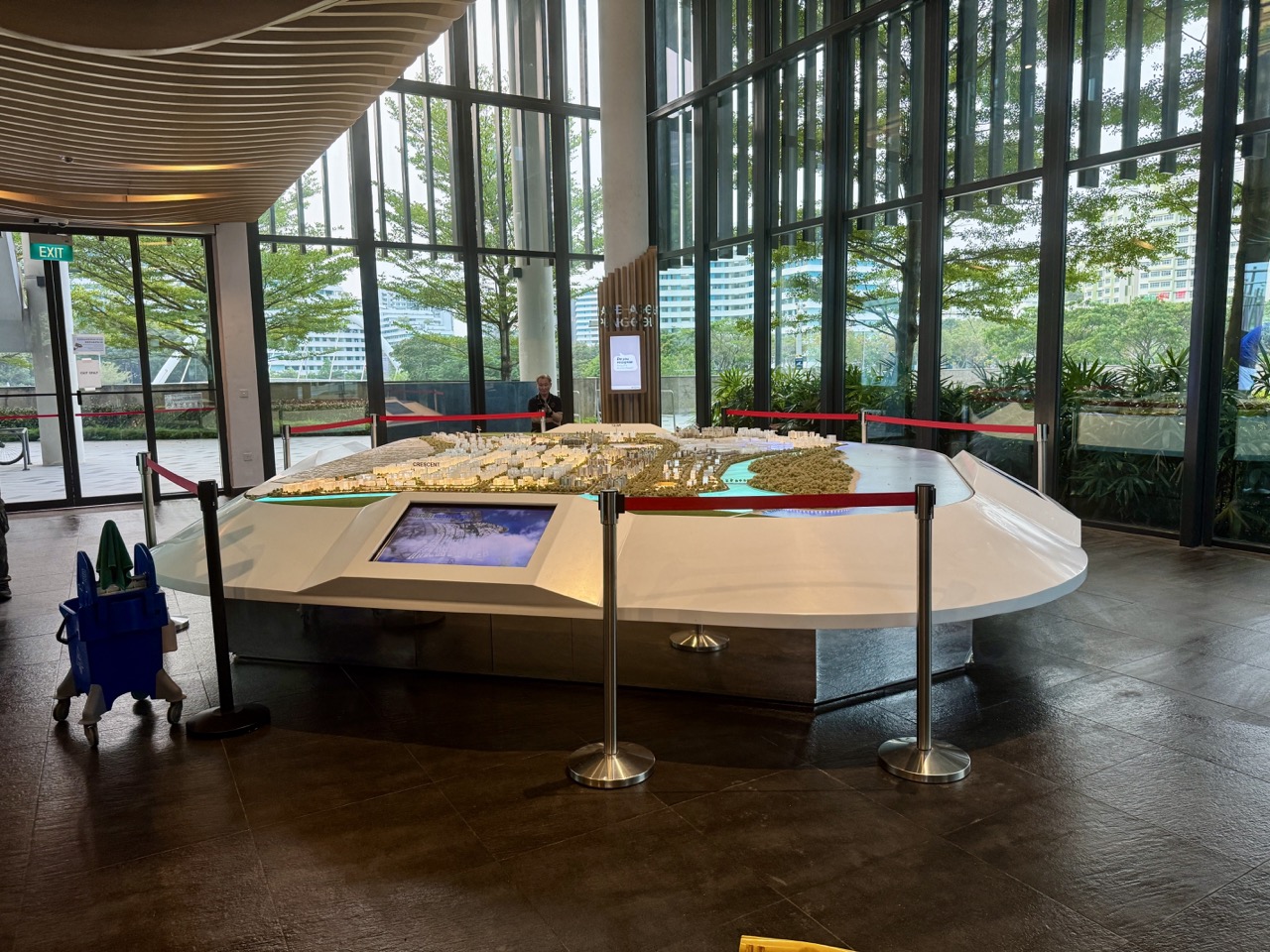
Schools and education at Punggol can help children learn how to solve practical problems through design thinking: identifying a real need, comparing possible solutions, making a small model, testing it and revising it with evidence. This is broader than producing an attractive craft project or using advanced software. A pupil can learn by redesigning a paper book stand or improving the clarity of a classroom notice, because the essential work is making decisions that serve a purpose. The educational value lies in the reasoning and revision, not the expense of the materials.
This guide separates everyday maker learning from formal Singapore school subjects, CCAs and Applied Learning Programmes, which vary by school. It offers original, safe projects for families around Punggol while explaining problem definition, constraints, fair testing, feedback, teamwork, responsible AI use and communication of results. MOE has announced that the updated Code for Fun programme to strengthen AI skills will be available to all schools in 2027; that policy does not mean every Punggol school will offer an identical design workshop or lesson schedule.
- Design thinking begins with a clearly understood problem and a person or purpose to serve.
- Observe safely and ask what evidence is still missing before choosing a solution.
- Write down constraints such as space, accessibility, material limits and time.
- Prototype cheaply with paper or cardboard before buying sophisticated equipment.
- Change one important feature at a time so testing can teach something.
- Record failures as evidence rather than hiding them behind a polished final display.
- Use feedback to revise, but do not let adults complete the student’s entire project.
- Computational thinking can involve steps, patterns and error checking even without coding.
- Verify AI-generated instructions and follow school rules for digital tools and personal information.
- Official subjects and optional school programmes are not interchangeable; check current school offerings.
Quick guide to the learning pathway
- 1. Start with the problem before designing the object
- 2. Observation requires evidence and respect
- 3. Constraints are not enemies of creativity
- 4. A prototype is a question made visible
- 5. Fair tests change one useful condition at a time
- 6. Iteration turns feedback into a better decision
- 7. Computational thinking can happen without a computer
- 8. AI tools need verification and clear rules
- 9. Group roles and documentation prevent invisible learning
- 10. A good final explanation includes limitations
Definition lock: what exactly is being learned?
Design thinking here is a learning approach in which someone understands a problem, generates possible ideas, makes a testable representation and iterates toward a solution. A prototype is an early model made to answer a question about a design, not necessarily a finished product. Iteration means a justified change made after learning from feedback or testing. This guide does not classify design thinking as a compulsory standalone primary-school subject.
Punggol is home to schools, public facilities and Singapore Institute of Technology’s campus, but their presence does not prove that a particular child has access to a specific engineering or maker programme. In primary education, a safe family project can support reasoning and communication; secondary subjects such as Design and Technology have their own official syllabus and assessment requirements. Do not mistake one for another. The examples here are intentionally low-cost and do not require public filming, soldering, power tools or unsupervised site measurements.
| Question | Evidence to seek | Avoid this mistaken inference |
|---|---|---|
| Is the problem real and clearly stated? | A defined user, need and observable constraint | Starting with a fashionable gadget and inventing a need |
| Does the prototype answer a question? | A model and a planned comparison | Making decorations with no testable purpose |
| Was the test fair and safe? | A controlled change, recorded outcome and boundaries | Claiming success from one dramatic demonstration |
| Did the learner improve the design? | An explained revision that survives a new test | An adult-built final object presented as student work |

1. Start with the problem before designing the object
Children often jump to building because it feels exciting. But the first design question is what needs improving and for whom. A paper organiser may look clever yet fail if it cannot hold a book or fit on a desk. Clear problem statements help a learner choose relevant criteria rather than chasing visual novelty. A problem can be humble: a card falls over, instructions are confusing or an item is difficult to locate.
The meaningful example
Imagine a pupil’s drawing materials repeatedly roll off a desk. Instead of buying a complicated storage box, ask what causes the difficulty: sloping surfaces, lack of compartments or an overcrowded work area? The child writes a specific statement: ‘I want an organiser that keeps five pencils within reach without taking up too much desk space.’ That statement gives the prototype a purpose and a way to test improvement.
How to guide a learner
Encourage a simple conversation about the user, task and setting. Ask ‘When does the problem happen?’ and ‘How would we know it was better?’ before offering materials. Let the child describe the need in one sentence and select two criteria. The adult can suggest safe boundaries without deciding the design for the learner.
The mistake and what it reveals
A frequent error is confusing an interesting object with a solved problem. A cardboard holder might be beautiful but tip over when used. Point to the original criterion rather than criticising creativity, and ask the pupil which feature fails the stated purpose.
An independent transfer check
Change the need from pencils to a bookmark holder. Can the pupil define the new problem without copying the earlier solution’s shape?
Start with problems that belong to the family, not invented claims about a school or public facility. Ask permission before redesigning anyone else’s belongings.
2. Observation requires evidence and respect
Designers need to understand how an object or process is actually used. Observing can reveal a mismatch between an imagined problem and a real one. Yet a primary pupil does not need to surveil strangers or record personal habits to learn this skill. Suitable evidence includes testing their own belongings, reading a public notice or trying an imaginary user scenario clearly labelled as hypothetical.
The meaningful example
A pupil looks at two paper signs: one has a small label hidden among pictures, while the other has a large clear direction. Ask which sign a first-time reader understands faster. The child can compare both with family members who agree to participate, without filming or asking random people at the mall to become research subjects.
How to guide a learner
Before collecting evidence, write what will be observed and why. If two signs are compared, keep the message the same and vary only layout or size. Explain that an observer may have personal preferences; those preferences should be recorded as feedback rather than declared universal truth.
The mistake and what it reveals
A weak investigation begins by asserting that ‘everyone finds this sign confusing’ after one person hesitates. Correct the claim to what the actual test showed. Another mistake is treating a photograph as permission to analyse identifiable strangers without consent.
An independent transfer check
Offer the learner a different sign or set of instructions and ask what evidence would be sufficient for a modest conclusion. The method transfers when they choose an ethical test independently.
Family surveys should remain voluntary, private and small. For school fieldwork, follow teacher instructions and consent procedures.
3. Constraints are not enemies of creativity
Every practical design has limits: material strength, size, cost, accessibility, safety and available time. Learning to respect these conditions helps pupils make more thoughtful choices. A limitless brainstorm may be fun, but a solution becomes educationally interesting when the student can explain which trade-offs shaped the design and which criteria could not all be maximised.
The meaningful example
Suppose a student has one sheet of A4 paper, two pieces of tape and five minutes to make a holder for a lightweight card. That constraint encourages folding, balance and support decisions. The pupil might fold a wide base or an A-shaped stand. The point is to test whether the card remains upright, not to make the tallest object.
How to guide a learner
Write the constraints before building and discuss which are fixed for safety and which are design choices. Ask the child to propose two alternatives using the same materials. A comparison becomes meaningful when both alternatives face the same basic conditions. Do not use sharp cutters, heat or adhesives that are unsuitable for the child’s age.
The mistake and what it reveals
Students sometimes abandon a promising idea because a material constraint makes it difficult. A better response is to ask what property is missing: stability, friction, clear visibility or enough support. The redesign can then target the property rather than start over blindly.
An independent transfer check
Change the requirement so that the holder must accommodate a wider card. Which features need adjustment, and which principles of a broad stable base still apply?
Adults should not create artificial scarcity that causes unsafe improvisation. Use clean, child-safe supplies and allow a paper-only model.
4. A prototype is a question made visible
A model is valuable when it helps the designer test an assumption. A beautifully coloured cardboard bridge that collapses under a small load can teach more than a flawless display assembled by an adult, provided it is tested safely. The prototype should be simple enough to change quickly. This lets a learner compare ideas without becoming attached to the first version’s appearance.
The meaningful example
Build two paper bridges that span the same short gap between sturdy supports. One is a flat strip, the other is folded into a simple corrugated pattern. Use a very light identical object for a safe demonstration and ask which bridge shows less bending. The result depends on the actual paper and method; it should be observed rather than claimed in advance.
How to guide a learner
Draw the concept, choose the simplest useful materials and state what the model should answer. Test at small scale, note the result and make one revision. An adult can supervise the setup but should not secretly reinforce the child’s bridge to ensure a happy outcome.
The mistake and what it reveals
Children may treat a prototype as a final display and refuse to change it. Explain that its job is to reveal an idea’s strengths and weaknesses. Another mistake is increasing test loads without regard to safety; there is no educational benefit in causing an avoidable accident.
An independent transfer check
Change from a bridge to a folded book marker or lightweight stand. Can the child explain how shape affects stiffness without relying on the exact first object?
No heavy loads, raised structures or unsafe material tests are needed. School engineering demonstrations should follow the teacher’s approved protocols.
5. Fair tests change one useful condition at a time
Testing does not simply mean trying a design and announcing whether it worked. A fair comparison identifies what changes, what remains the same and how the outcome will be described. Children may initially change paper type, size, folding pattern and load together, then be unable to explain which factor mattered. Clear variable control is a bridge between design, Mathematics and Science.
The meaningful example
A student compares two paper aeroplane designs. To examine one fold, they use the same paper type, similar launch position and an agreed safe open area. They test several times and note that results vary. The student should not assume that one longer flight proves a universal design law; air movement and launch technique can influence outcomes.
How to guide a learner
Set a modest question and record a simple table: design version, changed feature, observation and possible explanation. Ask the learner to repeat when results differ and to avoid claiming precision beyond what the setup can provide. Emphasise safe indoor alternatives when there is not enough clear space.
The mistake and what it reveals
A common error is redesigning many features after every failed attempt and then believing the final version’s success proves which feature worked. Teach the pupil to modify only one meaningful element at a time when a controlled comparison is possible.
An independent transfer check
Transfer to a paper book stand: test whether a wider base changes stability while keeping the same card and surface. Can the pupil identify what was controlled?
Do not throw objects toward other people, traffic or public property. A small tabletop comparison can be equally educational.
6. Iteration turns feedback into a better decision
Iteration is not endless decoration. It requires the student to identify a limitation, choose an improvement, explain why it should help and retest. A child may receive feedback that the sign is hard to read. Making its border more colourful does not necessarily solve that problem. Increasing text size or simplifying the message may be more relevant, depending on what the test actually showed.
The meaningful example
Consider a fictional notice directing visitors to a reading area. A family member cannot locate the key word quickly. The learner first tries moving the direction to the top, then tests the new version with another willing family reader. The child records whether the intended message was found more easily, while admitting that the tiny test cannot prove it would work for everyone.
How to guide a learner
Use the sequence observe, explain, choose, revise, retest. Ask the student to state the intended effect of the change before testing, then compare the actual result. Keep a dated sketch of version one and version two rather than collecting dozens of decorative photographs.
The mistake and what it reveals
Students sometimes modify a prototype simply because an adult dislikes its appearance. That can teach compliance rather than design reasoning. Return to the agreed purpose and ask whether the criticism refers to a real user need or personal taste.
An independent transfer check
Give the child a different communication task, such as a label for a book box. Can they choose a justified revision without repeating the identical sign layout?
Feedback should be specific, respectful and consent-based. Do not publish another person’s opinion or image without permission.
7. Computational thinking can happen without a computer
Computational thinking includes describing steps, recognising patterns, selecting relevant information and checking a process for errors. Coding can make these ideas executable, but younger children can understand them through paper sequences and everyday routines. The ability to describe a procedure precisely is useful before the pupil types a single programming command.
The meaningful example
Ask a child to write a sequence for sorting six imaginary library books by category. ‘Put them away nicely’ is too vague for someone else to follow. A clearer procedure says to read the category label, place each book in the matching pile and check any uncertain item. The process can be tested with paper cards rather than actual library materials.
How to guide a learner
Create simple instructions, let another person follow them literally and notice where an ambiguity causes a different result. Then repair the instructions and test again. This is an introduction to debugging as a reasoning habit, not a claim that the activity is the official syllabus for a particular coding class.
The mistake and what it reveals
An adult may fill in missing steps mentally and declare the procedure correct. Instead, ask where the instruction should tell the reader what to do. The student should make the correction. Another error is assuming that a successful paper algorithm proves mastery of programming syntax.
An independent transfer check
Change the procedure from book sorting to packing an imaginary school bag according to a checklist. Can the learner still identify inputs, sequence and a final check?
MOE’s 2026 announcements indicate that an updated Code for Fun programme strengthening AI skills will be available to all schools in 2027. Schools’ actual implementation details should be verified rather than presumed.
8. AI tools need verification and clear rules
Generative AI can produce plausible designs, code suggestions and explanations, but confident language does not establish correctness. A young learner who copies an AI-generated bridge design without understanding the load or materials has not demonstrated the design skill. Schools may have specific permitted-use rules, and families should follow them while teaching source checking, privacy and attribution.
The meaningful example
Imagine a chatbot suggests that a paper stand can support a heavy object. Instead of testing a risky claim, the pupil can evaluate the geometry at a safe small scale or ask the teacher what can legitimately be tested. The example shows that an automated suggestion is a hypothesis, not a safety certificate. Do not provide personal student information or school account details to unfamiliar tools.
How to guide a learner
Use AI only where permitted and age-appropriate. Ask the child to identify what a tool supplied, what they independently checked and what they changed. A paper sketch can often serve the learning goal better than a generated photorealistic image that hides physical feasibility.
The mistake and what it reveals
A common misconception is that a polished answer proves the learner researched it. A model may fabricate facts or cite nonexistent instructions. Teach verification from reliable sources and the difference between a simulated image and a built, tested prototype.
An independent transfer check
Give the student a new claim about materials and ask how they would check it without risking injury or pretending the claim is already verified. The educational outcome is responsible skepticism.
MOE announced stronger student AI literacy and Cyber Wellness teaching around generated information and deepfakes in 2026. This does not remove the need for local school rules about approved tools or independent work.
9. Group roles and documentation prevent invisible learning
Design projects can teach collaboration, but a group can complete a successful product while one pupil makes every decision. The purpose of rotating roles is not administrative neatness. It helps each learner experience observation, building, testing, evidence recording and explanation. Individual contributions should be visible without turning teammates into competitors.
The meaningful example
Three students work on a fictional paper organiser. One describes the user problem, one builds the first model and another conducts the test. After a short round, they exchange roles and make a second version. Every pupil is then asked to explain one design decision rather than merely holding the finished object for a photo.
How to guide a learner
Define roles with concrete decisions and a shared purpose. Give each student a safe way to participate, including drawing or verbal explanation where suitable. Record only enough evidence to explain the development. If the project is school-assessed, follow the teacher’s specific collaboration and attribution requirements.
The mistake and what it reveals
One child may be labelled the creative leader while another does only tidying and learns little about design. A rotation can reveal more capacity. Another issue is presenting an adult-made model as a pupil’s own work; that obscures the very learning being evaluated.
An independent transfer check
Change the team’s roles during a second task such as redesigning a book label. Can each learner still explain the need and test method without relying on one dominant member?
Protect the identity of children in pictures and group notes. Demonstrating teamwork does not require publishing classmates’ names or school information.
10. A good final explanation includes limitations
A design is not finished educationally when someone places it on a display table. The learner should explain the original problem, the constraints, the prototype, the test results, the revisions and what remains uncertain. Communicating limitations is a sign of mature reasoning. Even a clever idea may fail in an unfamiliar setting, with different users or over a longer period.
The meaningful example
A hypothetical pupil presents a cardboard stand that holds a lightweight notebook for five minutes on a flat surface. A responsible statement is that the stand worked under those conditions. It would be inaccurate to claim it can hold every book, survive water or be produced at commercial scale without additional testing.
How to guide a learner
Ask the child to create a one-page design record with a labelled sketch, a short evidence table and a sentence describing one remaining weakness. Encourage a clear explanation for an ordinary listener rather than an impressive sequence of technical terms that the student cannot define.
The mistake and what it reveals
Some learners believe that mentioning a weakness lowers the value of the project. Explain that the limitation defines the boundaries of the evidence and gives the next test a purpose. The student does not need to claim perfection to show thoughtful learning.
An independent transfer check
Change the surface or object size in a safe small-scale test. Does the child predict what might fail and update the explanation afterward?
Check school presentation rules, intellectual-property guidance and safety limits. A family design project is a learning exercise, not product certification or engineering advice.
Three worked examples from start to finish
1. A paper book stand that was beautiful but unstable
A pupil makes an ornate stand from folded paper. It looks appealing but falls backward when a light notebook is placed against it. The first response is not to add more decoration. The child revisits the purpose: the stand must remain upright on a flat table while holding the selected lightweight item. They test one wider base, leaving the notebook and surface unchanged.
The second version is recorded in a simple comparison table. If it holds the notebook under the agreed safe conditions, the pupil has evidence of an improvement. They should still not claim that the stand is structurally safe for heavier objects or prolonged use.
2. A community notice that confused its reader
A learner drafts an imaginary notice with five fonts, several arrows and a small central instruction. A family member struggles to find the purpose. The child creates two alternatives: one with fewer words, another with clearer hierarchy. Each version is tested informally with willing family members, while keeping the message the same.
The child learns that visual appeal, readability and audience needs are different criteria. Any conclusion is limited to the people and conditions involved. The design exercise is not a complaint about a real Punggol organisation’s signage.
3. An AI-generated design that could not be trusted
A chatbot produces a professional-looking image of a compact bridge. A student assumes that a photorealistic rendering proves the structure can carry weight. An educator explains that visual plausibility is not engineering validation. The learner sketches a small paper model, states a safe test question and asks how strength could be checked without hazardous loads.
The outcome is a better separation between idea generation and evidence. A teacher can discuss the design process while following school policy on approved tools, attribution and student privacy.
A four-week plan for families in Punggol
In week one, the family chooses a practical problem that a child can investigate safely and writes two success criteria. In week two, the child sketches alternatives and builds a simple paper prototype. In week three, they test one feature, record the result and revise with a reason. In week four, they repeat under a changed safe condition and present both an improvement and a limitation. The project can fit into short weekend sessions. It should not require expensive maker equipment, public filming or unnecessary interference with a school assignment.
| Week | Short task | What to notice | What to do next |
|---|---|---|---|
| 1 | Listen to or observe an unassisted first attempt | Which decision was independent and which required help? | Choose one target |
| 2 | Explain a principle and guide an improved attempt | Can the student describe why the method works? | Check a nearby example |
| 3 | Change the situation and remove the model | Does the student select the relevant principle without a cue? | Repair a specific gap |
| 4 | Retest after several days and reflect | Can the learner reconstruct a useful explanation? | Maintain, extend or ask the school for help |
How to work with the school without adding unnecessary pressure
Ask whether the learning is part of an ordinary subject, a CCA, an Applied Learning Programme or an optional external activity. These carry different objectives, timetables and participation conditions. If the child is using AI or digital materials, ask what the school’s current rules permit. Share evidence of a student’s decision-making rather than presenting an adult-built prototype as independent work. Where safety or access needs are involved, coordinate with qualified educators and responsible adults.
- What practical problem is the project intended to solve, and who is the user?
- What does the school expect the learner to decide independently?
- Which materials, tools and safety limits apply?
- How should pupils record testing and revision without overloading paperwork?
- What group-work expectations help each pupil contribute meaningfully?
- Are AI-generated materials or coding tools permitted for this activity?
- Does the school actually offer a related CCA or Applied Learning Programme?
- How should an interested pupil continue without assuming that a specialist programme is guaranteed?
Frequently asked questions
Is design thinking a compulsory primary school subject in Singapore?
This article treats design thinking as a learning approach, not as a standalone compulsory primary subject. Schools use various subject activities and programmes; check current curriculum and school offerings for specific details.
Do children need 3D printers or electronics to learn prototyping?
No. Paper, cardboard, pencils and simple models can teach problem definition, comparison, controlled testing and revision. Advanced tools have their own safety and training requirements.
Is a beautiful model proof of a good design?
Not necessarily. The model must be assessed against its purpose, stated constraints and appropriate safe tests. Appearance can be one criterion, but cannot stand in for function.
How can we tell whether a test was fair?
State what changed, what remained constant and how the outcome was observed. Repetition can help, but conclusions should still acknowledge the limits of small informal tests.
Should parents fix a child’s prototype when it fails?
They can help maintain safety and explain a principle, but the child should retain meaningful responsibility for choosing and testing the next change. Adult completion can hide the learning gap.
What is MOE’s 2027 Code for Fun change?
MOE announced in 2026 that the updated Code for Fun programme will strengthen AI skills and be available to all schools in 2027. The announcement does not guarantee identical sessions, venues or optional offerings at every Punggol school.
Can students copy AI-generated design instructions?
They should follow school rules, attribute assistance where required and verify all material claims. A generated image or confident answer is not proof of functionality or safety.
What makes a good group project?
Each learner should have a meaningful decision to make and be able to explain the problem, approach and evidence. Rotate suitable roles and protect the privacy of classmates.
Can a home design project improve examination marks automatically?
No. A project can develop problem solving and communication, but academic transfer requires explicit teaching and independent checks in each relevant subject.
Limits, privacy and responsible claims
No cardboard prototype, photograph or short home trial should be represented as a certified product or formal engineering test. Design thinking is not a shortcut to school selection, coding achievement or specialist admission. Programmes and access conditions change over time; ask the school what is currently offered and teach safe investigation without exaggerating results.
This is an independent learning guide. It does not claim any named Punggol school has performed the described exercise, offer a particular optional programme or guarantee admission or assessment outcomes. Official syllabuses govern curricular expectations, while real programme availability, access requirements, school assignments and permitted use of digital tools must be checked with the institution concerned.
Your Next Step
Give your child one safe everyday design problem, two measurable success criteria and a sheet of paper. Ask for two possible approaches, test one feature safely, and invite the child to explain what actually improved and what remains untested.
Official sources and related guides
- MOE Committee of Supply 2026: AI literacy, Code for Fun and Cyber Wellness
- MOE Education Conversations: learning, student projects and innovation
- MOE 21st Century Competencies
- Building a Reading Culture from School Library to Home
- School Feedback, Progress Reports and Learning Gaps
- Speaking, Listening and Classroom Discussion Skills
- Visual Art, Observation and Creative Confidence
- Mathematics Reasoning with Everyday Numbers and Shapes
- MOE SchoolFinder
Editorial review: 1 November 2026. Original hypothetical activities are separated from official MOE policy and published curricula. Names and photographs of Punggol facilities are geographical context, not endorsement or evidence of school practice.


