
A Punggol student admitted through Posting Group 2 (PG2) participates in school Physical Education (PE) as part of a broad secondary-school education, rather than being confined to a special PG2 sports pathway. Under Full Subject-Based Banding, PG2 is an admission grouping and G1, G2 and G3 describe levels of individual subjects; PE develops movement competence, safe participation, cooperation, health knowledge and enjoyment across student groups. The most useful family goal is not forcing an untrained teenager into harder workouts but helping them attend PE appropriately, understand safety instructions and find sustainable ways to remain active.
Singapore’s 2024 Physical Education syllabus was implemented from 2025 for secondary and pre-university levels. Its secondary learning areas include Physical Activity, Outdoor Education, and Physical Health and Safety. Singapore Physical Activity Guidelines recommend that school-aged children and youths aged 7–17 accumulate an average of 60 minutes of moderate-to-vigorous aerobic activity each day across the week, with varied strengthening activities on at least three days. These recommendations concern overall healthy activity, not the duration of a single PE lesson or an individual child’s medical prescription. Families at Edgefield, Greendale, Punggol Secondary or Yusof Ishak Secondary should follow the actual school’s PE requirements, sport-specific safety rules and relevant health guidance.
- PG2 definition: admission group, not a physical fitness ranking or separate PE stream.
- MOE PE syllabus: the 2024 curriculum applies to secondary schooling from 2025.
- Three learning areas: Physical Activity, Outdoor Education, and Physical Health and Safety.
- Physical literacy: develop movement skills, knowledge, confidence and motivation to participate.
- Activity guidance: youths 7–17 are advised to average 60 minutes of moderate-to-vigorous aerobic activity per day across the week.
- Safety: use appropriate instruction, footwear, hydration, breaks and weather precautions.
- Outdoor learning: follow school-approved routes, risk management and park rules.
- CCA difference: a chosen sports CCA is not the same as compulsory curriculum PE.
- Next action: check the school’s actual PE brief and plan one enjoyable safe activity suitable for the child.
Definition lock: PG2 does not determine a pupil’s sporting potential
Posting Group 2 is a secondary-school admission grouping. It should not be treated as a ranking of physical capability, interest or talent. A pupil may enter through PG2 and have excellent coordination, or enter through a different group and be new to organised games. Full Subject-Based Banding seeks a broader school environment where students can learn together. PE provides common opportunities to develop movement and safe participation beyond exam subjects.
Parents should avoid assuming that a child needs more sport because of their posting group or that a strong academic learner is automatically physically confident. Observe specific needs: does the teenager understand the game rules, feel safe during activity, know how to warm up appropriately and participate respectfully with peers? These are teachable skills. A parent who responds to actual experiences will be more helpful than one who uses the PSLE result as a prediction of athletic performance.

The current PE syllabus has a broader purpose
MOE’s Physical Education syllabus implemented for secondary schools from 2025 covers three learning areas: Physical Activity, Outdoor Education, and Physical Health and Safety. The curriculum promotes movement competence, safe physical participation, personal and social behaviour, health knowledge and lifelong enjoyment of activity. It is not simply a period to run until tired or compete for the fastest time. Learning should help students become capable of choosing suitable physical activities beyond school.
This matters to a PG2 entrant because secondary PE may introduce unfamiliar games, movement strategies or outdoor tasks. The teenager should understand why an activity is taught and what safe participation involves. A child who learns to work with teammates and recognise their own limits has achieved something educational, even if they are not selected for an elite sporting team. PE is about building capability for life, not only measuring existing talent.
School PE and sports CCA are different commitments
PE is part of the curriculum, while a sports CCA is a co-curricular programme with its own selection, training, participation and achievement arrangements. A pupil may enjoy PE but choose a non-sport CCA, or take part in a sports CCA while still learning additional activities during PE lessons. Parents should not assume that joining a sports CCA replaces compulsory PE or that every child must choose a competitive sport to demonstrate fitness.
Review the school’s current timetable and CCA commitments separately. If a pupil has late training days, the family should consider recovery, meals and homework when planning supplementary activity. If a student does not play competitive sport, they can still develop active habits through walking, cycling where safe or other appropriate recreation. The objective is a broad, sustainable relationship with movement.
Physical literacy includes more than speed
Physical literacy is often used to describe movement competence alongside the confidence, motivation and knowledge needed to participate in physical activity. A teenager may be able to sprint quickly yet struggle with balance, teamwork or game decisions. Another may move more slowly but demonstrate excellent understanding of strategies and safe conduct. These dimensions are not interchangeable.
Ask what the learner is practising in PE: spatial awareness, coordination, fundamental movement, an invasion-game tactic, dance or physical conditioning. The answer helps parents provide relevant encouragement. Do not reduce every lesson to the time taken to run a distance. A capable participant knows how to move, why a strategy works, when to stop and how to respect others’ safety. Those are enduring benefits.
Movement skills need deliberate, appropriate practice
Running, jumping, landing, changing direction, throwing and catching can be taught progressively. Students enter secondary school with different histories of practice and may feel uncomfortable if classmates appear more experienced. A supportive teacher adapts activities to the learning objective and safety conditions. Parents can encourage participation without instructing unfamiliar physical techniques that require professional supervision.
If the child struggles with a skill, ask what specific movement or decision is difficult. Perhaps they cannot judge the timing of a catch or feel unsure about the rules of a game. The correct improvement is targeted feedback and safe repetition at an appropriate level, not public comparison or an arbitrary punishment workout. Progress becomes visible when the student performs with more confidence and control.
Understanding game rules reduces fear
Some pupils dislike PE because they are uncertain what is allowed and fear embarrassment when they make mistakes. Before a class activity, ask the student what the goal of the game is, how scoring works and which actions are safe. A learner who understands rules can participate more intelligently even while developing physical skills. Good play also requires attention to the surrounding space and classmates.
Parents can encourage the teenager to ask the PE teacher for clarification rather than guess at an unfamiliar rule. A student should not imitate aggressive or unsafe behaviour seen in competitive entertainment. In school, participation involves respect and self-control. Understanding the rules gives the learner a framework for decisions and helps build confidence without forcing an instant performance.
Teamwork is a skill that can be observed
Team sports and group activities can help students practise communicating, sharing roles, responding to feedback and including classmates of different abilities. The educational value does not arise automatically from being assigned to a team. A student who monopolises the ball may demonstrate enthusiasm but limit everyone else’s learning. Another who remains silent may need support to participate.
Ask what the pupil contributed to a group activity beyond the final score. Did they give a useful instruction, provide space for a teammate, adjust a strategy or respond respectfully to a mistake? These behaviours can be improved with feedback. A teenager who learns to communicate calmly during a difficult game is also practising skills transferable to group projects and school life. PE can nurture social reasoning as well as movement.
Competition should remain proportionate
Trying to improve performance can be motivating, but constant ranking may discourage students who are developing at a different pace. PE is not a contest to prove which posting group is stronger. A child should learn to compete fairly where appropriate, respect rules and recognise when the primary objective is skill learning rather than winning. Parents should avoid comparing a teenager’s fitness to classmates whose training histories or circumstances are unknown.
Set personal goals based on genuine improvement: clearer technique, consistent participation, better understanding of a strategy or greater confidence. Celebrate effort and skill development without promising a medal. If the student enjoys competitive sport, the school can provide suitable pathways; if not, enjoyable recreational movement still has value. A healthy relationship with activity can last beyond one examination season.
Warm-ups prepare the body and attention
School PE teachers use activity-appropriate preparation to help students transition into movement. The content depends on the sport and lesson, and young people should follow the teacher’s instructions rather than improvise intense routines from social media. A warm-up may include gradually increasing movement and rehearsing relevant skills, but no universal sequence is guaranteed suitable for every student.
Parents can ask why the class warms up and what the teenager is expected to notice about readiness. The point is not a fixed ritual but preparing safely for the intended activity. A student who arrives tired or unwell should communicate that to the teacher rather than force participation to avoid embarrassment. Respect for one’s own condition is part of physical health literacy.
Hydration matters in Singapore’s climate
Punggol is warm and humid, and active students may lose fluid through sweating. Singapore’s HealthHub guidance emphasises appropriate hydration around physical activity and awareness of heat-related risks. A student should have access to drinking water according to school arrangements and understand that thirst, fatigue or unusual symptoms require attention. Exact fluid needs vary with activity, environment and individual conditions; one fixed drinking amount cannot serve everyone.
Parents can remind children to bring a suitable water bottle and follow the teacher’s scheduled breaks. Do not encourage teenagers to train without water as a test of toughness. Nor should a child be forced to drink an excessive volume rapidly. The practical goal is sensible hydration, appropriate pauses and prompt communication when feeling unwell. General advice should never replace individual medical guidance where needed.
Heat and humidity change safe decisions
Singapore health guidance recommends avoiding outdoor exercise during the hottest part of the day when feasible and paying attention to signs of heat exhaustion or heat stroke. Schools have their own safety procedures for weather and outdoor activities. A family should not assume that a planned lesson or weekend run will always proceed regardless of temperature, lightning or haze. Conditions must be evaluated on the day.
Teach the child to report dizziness, unusual weakness, confusion or other concerning symptoms promptly to the supervising adult and stop activity. Severe symptoms require urgent appropriate medical assistance. Do not tell the teenager to continue exercising merely to develop resilience. Genuine resilience includes knowing when a risk is unacceptable and seeking help quickly.
Haze and lightning are not challenges to defeat
Weather and air-quality conditions can change quickly. In Singapore, lightning risk, heavy rain, heat and haze can require outdoor activities to be modified, postponed or stopped under current school or agency guidance. Parents should follow the responsible instructor’s decisions rather than compare the situation to another school’s photographs or a past event. A teenage student should never attempt to outlast dangerous conditions to prove determination.
For home activity, choose an appropriate alternative when outdoor conditions are unsuitable. Some safe indoor movement may be possible according to available space and the child’s health, but avoid improvised equipment and unsafe obstacles. The lesson is that physical activity involves risk assessment, not reckless consistency. A well-chosen rest or replacement activity is often the responsible option.
Suitable footwear and equipment support participation
Different activities require appropriate clothing, footwear and, where relevant, protective equipment. A student should follow the school’s current PE uniform and footwear rules. Parents should check that shoes fit and are suitable for the movements involved. Oversized, damaged or inappropriate equipment can create avoidable hazards. The school or supervising coach should advise on specialised equipment when required.
Do not buy an expensive sports gadget before knowing whether the lesson calls for it. A brand name does not automatically improve technique or guarantee safety. If the family faces affordability difficulties, ask the school about available support rather than let the teenager hide a problem. Safe participation depends on using suitable, permitted equipment and following instruction, not on owning the most expensive items.
Fitness is developed gradually
A pupil returning to activity after a sedentary period may not be ready for the same workload as a trained athlete. Gradual progression and suitable movement choices are more sustainable than sudden intense challenges. The school’s PE programme and relevant coaches determine appropriate lesson activities. Parents can support regular movement in daily life without prescribing heavy training or punishing the child for struggling in a fitness task.
Ask the learner how the activity felt and whether they understood the purpose. If they experience recurring pain, unusual breathlessness or other health concerns, seek appropriate advice from school staff and qualified healthcare professionals as needed. Improving fitness is a long-term process. A safe habit that can be repeated is more valuable than an impressive workout followed by avoidable injury or fear.
The national activity guideline is an average, not an exam
Singapore Physical Activity Guidelines for children and youths aged 7–17 recommend an average of sixty minutes of moderate-to-vigorous aerobic activity per day across the week. The guidance also encourages varied vigorous, muscle-strengthening and bone-strengthening activities at least three days weekly. This is a population-level health recommendation, not an instruction that every individual child must complete one uninterrupted hour at maximum effort.
Activity can occur in different settings: school PE, games, active travel and appropriate recreation. Individual health conditions and abilities affect what is suitable. Parents should avoid turning the guideline into a daily punishment or an exact scorecard for personal worth. The goal is to support an active lifestyle the child can enjoy and maintain, while seeking tailored guidance when health circumstances require it.
Sedentary time and screen use affect the whole day
Homework, commuting and entertainment can result in long periods of sitting. The national guidance encourages limiting sedentary time, particularly recreational screen time, and incorporating movement in everyday routines. That does not mean every school digital lesson is harmful or that the family must eliminate all screen-based learning. It means balancing necessary seated activities with appropriate movement, sleep and social engagement.
A student might take a comfortable movement break after a concentrated study block or choose a safe walking route for a family errand. The activity should fit the child’s schedule and abilities. Parents can model an active lifestyle without demanding that the teenager constantly exercise between assignments. Long-term habits develop through realistic choices rather than strict slogans.
Sleep is part of physical wellbeing
The Singapore Physical Activity Guidelines also discuss sleep alongside movement and sedentary behaviour. For school children aged 7–13, the cited guidance recommends nine to twelve hours; for ages 14–17, eight to ten hours. These are general age-based recommendations, not an individual diagnosis. A secondary-school student’s age, timetable and health needs should be considered appropriately.
A teenager who stays awake late for homework and rises early for sport may accumulate fatigue. Parents should review the whole schedule rather than assume that extra training always improves health. Sleep supports learning, recovery and wellbeing. If the child’s obligations repeatedly prevent adequate rest, communicate with school staff about practical priorities. A sustainable physical activity plan should coexist with academic responsibilities rather than compete destructively with them.
PE lessons can teach decision-making under pressure
During a game, students must judge where to move, when to pass, how to protect space and what action remains within the rules. These are practical applications of observation and decision-making. A learner who cannot yet perform a complex skill may still contribute by understanding the situation and communicating appropriately. This is one reason the PE syllabus includes movement concepts and strategies rather than treating sport as pure physical output.
Ask the child what decision they made during an activity and why. A brief reflection can reveal whether the problem was awareness, technique or a misunderstanding of rules. A teacher can then give targeted feedback. These questions build learning without turning every family conversation into a post-game interrogation. The point is to connect action with understanding.
Outdoor Education is more than a nature walk
The 2024 PE syllabus includes Outdoor Education as a secondary learning area. It can involve learning to engage with outdoor environments, assess risks, make decisions and demonstrate personal and social responsibility. The actual activities, journeys and levels of challenge depend on the school’s programme and safety planning. A family should not assume that a public park visit automatically reproduces a teacher-led expedition or that every Secondary 1 class must undertake the same camp.
Ask what the school intends the learner to practise: navigation, environmental appreciation, cooperation or safe judgement. A well-designed outdoor experience teaches the teenager to observe surroundings and respond appropriately. The aim is not collecting scenic photographs; it is developing capability and respect for the environment. Follow the school’s brief and any parental consent requirements.
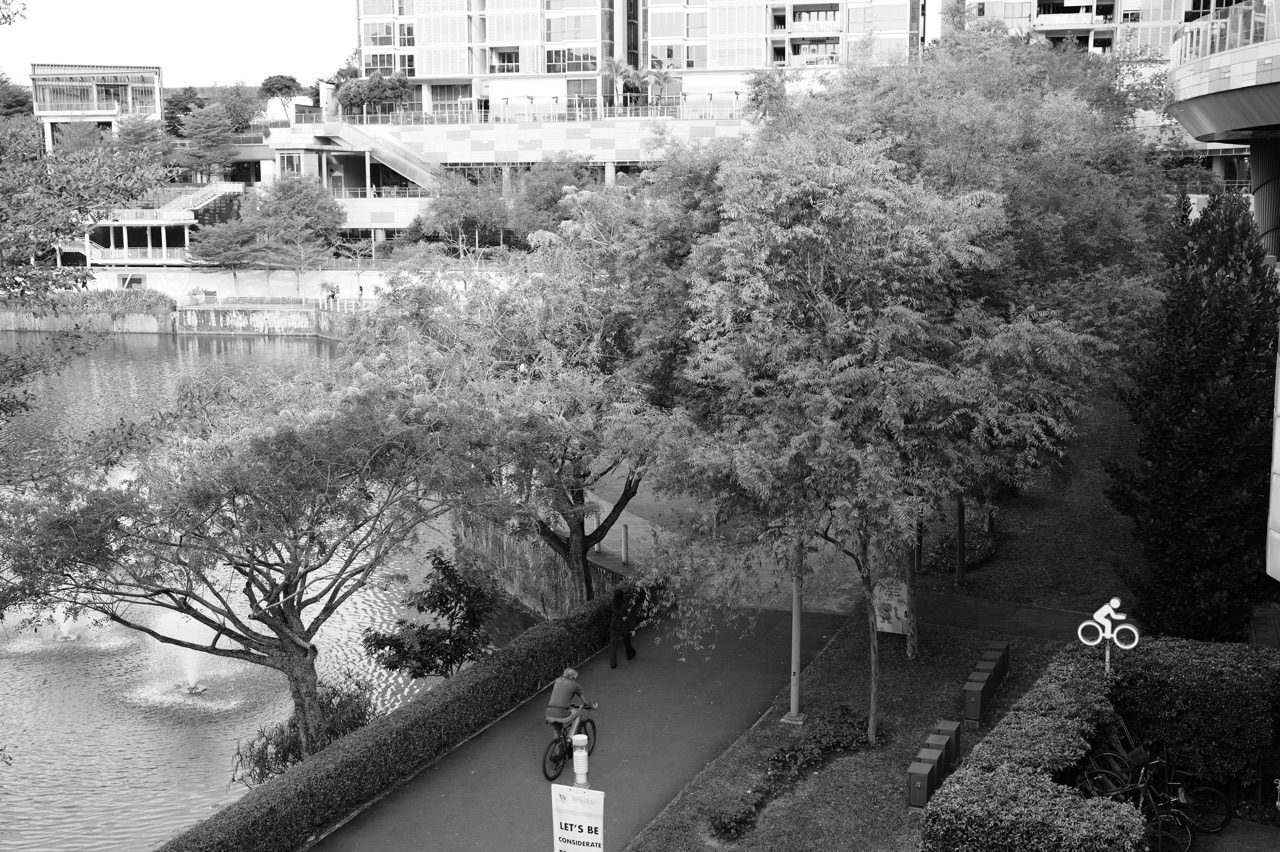
Punggol’s park connectors offer familiar visual examples
Punggol Waterway Park and connected neighbourhood paths provide visible examples of outdoor public space. Families may observe cyclists, walkers, vegetation and recreational areas while following normal public rules. These observations can inspire discussion about shared-path etiquette, risk awareness and respect for other users. But a park connector is not an unrestricted training circuit, and ordinary observations should not be presented as a formal school field study without approval.
Ask how walkers and cyclists can coexist safely and why attention to surroundings matters. Students should remain on permitted paths, avoid obstacles and follow relevant signage. If a child is not ready to travel independently, adult supervision may be necessary. Local familiarity can build confidence while recognising that different paths and times create different conditions. Safe behaviour comes before exercise targets.
Shared paths require considerate movement
A path used by pedestrians and cyclists is a shared environment. People may move at different speeds, need additional space or have mobility constraints. Students should learn to notice others, avoid sudden unsafe movement and follow relevant traffic and park rules. A teenager who treats every straight stretch as a sprint track may endanger other users even if they feel physically capable.
During a family walk, discuss where visibility is limited and how to give others room. This is a conceptual safety conversation, not a request to practise risky manoeuvres. If cycling, follow current LTA rules and use appropriate protective equipment. The aim is considerate participation in public space, an extension of the respect and self-control developed in school PE.
Waterway edges demand special caution
Water features can be attractive settings for recreation, but waterway edges and bridges require care. Students should remain behind barriers where provided, stay on authorised paths and avoid leaning dangerously over water or descending to restricted banks. There is no educational reason to collect specimens or enter the water during an ordinary family activity. School outdoor lessons near water require their own approved safety arrangements.
A parent can explain why a safe route matters and how to respond if someone suggests an unsafe shortcut. The appropriate action is to stay in permitted areas and notify a responsible adult when needed. Avoid turning these conversations into dramatic stories about accidents; focus on practical boundaries. Physical education includes respect for environments that cannot be treated like a classroom floor.
Personal safety and group accountability
In outdoor group activities, students may be expected to remain with designated groups, follow instructors and communicate promptly if uncertain or unwell. The school will specify the actual buddy, reporting and emergency arrangements. A teenager should not leave the group to obtain a better photograph or take an unauthorised shortcut. These rules protect both individuals and supervisors responsible for the group.
At home, ask the child what the real instructions are and how they would seek help. Do not invent a universal school emergency procedure. It is better to know the assigned school’s contact and reporting arrangements than memorise a generic script from another campus. Outdoor independence develops alongside accountability, not through ignoring supervision.
Inclusion matters when abilities differ
Students have different levels of mobility, fitness, confidence, prior sports experience and other needs. Inclusive PE aims to support meaningful participation, with appropriate school arrangements and adjustments where necessary. A classmate’s support requirement should not become public gossip. Parents should reinforce respect and avoid telling their child that a peer is lazy, weak or cheating because they participate differently.
If the teenager has a legitimate difficulty with a PE activity, the family can communicate privately through the school’s appropriate channel and follow qualified advice. The student may need clarification or an authorised adjustment. A responsible approach preserves safety, dignity and learning. The goal is participation suited to the individual, not forcing identical performance from everyone regardless of circumstances.
A student who dislikes team games may still enjoy movement
Not every teenager finds competitive ball sports enjoyable. Some prefer walking, cycling, dance, fitness activities or individual challenges. The PE curriculum provides opportunities to develop a range of competencies, while participation in school lessons remains governed by the assigned programme. Parents can help the child distinguish one disliked activity from physical activity as a whole. A disappointing game does not prove that the pupil will never enjoy movement.
Ask which parts felt difficult: physical skill, social interaction, rules or fear of embarrassment. Then consider what support would make school participation more manageable and what safe recreational activities might build confidence. The goal is not to excuse the student from every challenge, but to help them find meaningful ways to learn and remain active over time.
Peer comparison can damage motivation
A teenager may become discouraged when classmates can run faster, catch more accurately or perform a movement with ease. People develop at different rates and may have very different training backgrounds. Parents should avoid ranking a child against unknown peers or suggesting that athletic ability reflects moral value. Ask which skill has improved since the previous lesson instead.
A personal progress record might focus on completing an activity safely, understanding a tactical decision or gaining confidence participating. If formal fitness assessment is involved, the school will provide the applicable rules and criteria. Families should not invent a target grade or pressure the child with comparisons that ignore health and development. A positive learning environment supports continued participation after the assessment is over.
What school assessment in PE should mean to parents
PE may involve learning goals, observation of skills and understanding, safe participation and the school’s current assessment approach. It is not appropriate to invent a universal ‘PG2 PE mark’ or claim that the student’s posting group determines a separate sports test. The teacher can explain what is being assessed and how achievement is recognised. Some outcomes are qualitative or developmental rather than reducible to one race time.
Parents should ask what feedback the student received and which next skill would be most useful. A good teacher may identify poor spatial awareness, uncertain rules or incomplete risk assessment rather than lack of effort. Each issue calls for different support. Use the official assessment notice where available. The value of PE includes competence, safety and lasting wellbeing beyond any grade.
A fictional Punggol student learns safe pacing
Imagine a fictional Secondary 1 pupil, Zhen, who returns to PE after a period of inactivity and tries to match a highly trained classmate immediately. He becomes overly tired and mistakes the experience for evidence that he is unfit for every sport. His teacher explains appropriate progression and the importance of reporting concerning symptoms. At home, his family asks what safe, realistic participation looks like in the current programme.
Zhen gradually learns to focus on technique, rules and sensible effort rather than win a speed contest every lesson. This invented case is not personal medical advice or a promise about fitness changes. It illustrates a useful educational shift: the child learns to recognise limits and make responsible choices while building competence through teacher-supervised practice.
A fictional shared-path judgement exercise
Imagine a teenager, Farah, walking with family along a shared Punggol path. She notices a narrow section with pedestrians approaching and a cyclist further away. Rather than treating the space as a private running track, she considers visibility, speed and the relevant path rules. Her parent asks which decision would reduce the risk of startling others and why. The learner explains how to maintain awareness and give sufficient space.
This is a fictional discussion scenario, not a real-time direction for a specific route. Its purpose is to connect PE’s safety and social responsibility goals to everyday public spaces. Families should still follow current signage and applicable rules. Good outdoor judgement includes respecting other users and recognising that the safest choice may be to slow down or change the activity.
A seven-day family movement reflection
Over one week, the student can note which forms of activity occurred through school, travel and recreation, without treating the record as a judgement of body size or worth. Ask which activity felt enjoyable, which required an unfamiliar skill and what safety rule mattered. If the teenager is able to choose a suitable family activity, involve them in planning the time, weather check and appropriate equipment.
Keep any record private and age-appropriate. Do not demand exact calorie expenditure or publish a child’s movement data. The purpose is noticing habits and choices rather than monitoring every step. Activity should fit the student’s health, schedule and school responsibilities. A small reflection can reveal what supports sustainable participation, including companions, convenient locations and confidence in the rules.
When the family should seek specific guidance
Parents can encourage ordinary safe movement, but individual medical concerns, previous injuries or unexplained symptoms require appropriate professional advice. A school PE teacher should be informed through relevant channels when a legitimate condition affects participation. Families should not use a generic online workout schedule as a substitute for medical assessment or the school’s activity-specific safety plan.
If the child regularly feels distressed or unsafe in a lesson, ask which situation creates the problem and communicate respectfully with the relevant teacher. The answer may involve technique instruction, peer behaviour, appropriate adjustment or better information about rules. Solving the actual barrier is more effective than telling the student to try harder without understanding what is happening. Safety and wellbeing are legitimate educational goals.
How PE can complement academic learning without becoming tuition
Physical activity can provide a welcome change from prolonged seated study, and schools recognise its contribution to holistic development. However, parents should not justify every minute of movement solely by promising higher examination marks. PE teaches movement competence, safe decision-making and social responsibility in its own right. A teenager should be able to enjoy an active pastime without converting it into another academic performance target.
An appropriately balanced weekly schedule can include schoolwork, rest, CCA and activity. A family that treats PE as meaningful may be better able to protect time for movement instead of allowing every evening to become extra tuition. The practical decision concerns sustainability: what allows the student to learn, sleep, move and connect with others without overwhelming demands?
The right home question is ‘What did you learn?’
Rather than asking whether the child won or ran fastest, ask what skill the teacher explained, which safety rule mattered and what the student would do differently next time. One child may report learning how to receive a pass; another may explain a new way to navigate with a map or recognise when weather makes an activity unsuitable. These are genuine learning outcomes even when no trophy or photograph is involved.
Give space for an honest answer. If the lesson was difficult, ask which part and whether help is needed. If it was enjoyable, ask what made it rewarding. A few calm conversations can help parents understand the student’s development without turning PE into another high-pressure assessment. The goal is a young person who can participate safely and confidently throughout life.
Sources, related guides and your next step
MOE’s 2024 Physical Education syllabus, implemented for secondary schools from 2025, defines Physical Activity, Outdoor Education, and Physical Health and Safety learning areas. The Singapore Physical Activity Guidelines provide age-based activity, sedentary-behaviour and sleep recommendations. For safety, see HealthHub’s youth activity guidance and NParks visitor etiquette.
For the distinct task of selecting a co-curricular activity, read the PG2 CCA planning guide. For balanced meals and food safety, use the FCE guide. This article specifically covers school PE and safe physical participation. Your next step is to ask your child what the latest PE lesson was trying to teach, review the school’s relevant safety instructions and plan one enjoyable, appropriately supervised activity that fits the family’s real schedule.
Frequently asked questions about PG2 Physical Education and outdoor activity
Does PG2 mean my child is in a separate PE stream?
No. PG2 is an admission group, not a physical fitness category or separate PE ranking.
Which PE syllabus applies to secondary schools in 2026–2027?
MOE’s 2024 Physical Education syllabus, implemented for secondary and pre-university levels from 2025.
What are its three secondary learning areas?
Physical Activity, Outdoor Education, and Physical Health and Safety.
Does joining a sports CCA replace PE?
No. Curriculum PE and school co-curricular activities have distinct purposes and requirements.
What is the general activity guideline for ages 7–17?
An average of 60 minutes of moderate-to-vigorous aerobic activity per day across the week, alongside varied strengthening activities.
Is that guideline a compulsory one-hour PE class?
No. It is a broader population-level physical-activity recommendation, not the duration of one lesson.
How should students respond to severe heat or concerning symptoms?
Stop activity, alert the supervising adult promptly and follow school and appropriate medical or emergency guidance.
Can a family safely use Punggol Waterway Park?
Yes for suitable permitted recreation, following current park rules, shared-path etiquette, weather and individual safety needs.
Should every teenager be required to compete in a sports team?
No. Students can develop movement and health through varied suitable activities and school learning.
What is one useful parent question after PE?
Ask which movement, strategy or safety decision the student learned and how they would apply it independently.
Editorial note: Prepared 1 November 2026. Family exercise guidance is general educational information, not individual medical advice. Activities, risk assessments and assessment requirements follow each school’s current PE instructions. All named student situations are fictional and not testimonials.


