
A Punggol student posted to secondary school through Posting Group 2 (PG2) can take part in Co-Curricular Activities (CCAs), applied learning, leadership and school-life programmes alongside classmates from other posting groups. PG2 determines an admission route and guides initial subject levels; it is not a list of CCAs the student is allowed to join. To choose a suitable activity, families should examine the assigned school’s current CCA options, selection requirements, training days, the child’s interests and the journey home.
For families at Edgefield Secondary, Greendale Secondary, Punggol Secondary or Yusof Ishak Secondary, the best CCA is not automatically the activity with the most competitions or the strongest-sounding achievement record. It is an opportunity the child can attend consistently, learn from and enjoy while managing their subject lessons, sleep and friendships. This guide explains how to evaluate CCAs, understand LEAPS 2.0 in broad terms, use Punggol’s local transport and interests to plan a workable week, and avoid confusing a posting group with the child’s wider abilities.
- PG2: secondary school admission grouping, not a permanent CCA eligibility label.
- CCA participation: is part of Singapore’s secondary-school experience; use the assigned school’s current options and application procedures.
- Typical domains: sports, uniformed groups, clubs and societies, and visual or performing arts.
- Choose for fit: genuine interest, practice demands, access, opportunities to contribute and student wellbeing.
- LEAPS 2.0: recognises participation, achievement, leadership and service; do not treat it as a shortcut that makes academic requirements disappear.
- Check the schedule: training days and dismissal times can change, including for competitions or performances.
- Local travel: plan the route from the actual school gate to home after a late activity.
- Balanced week: protect sleep, meals, academic work, friends and recovery.
- Best next step: compare two or three genuinely interesting CCAs using current school information.
PG2 is not a club or sports category
Posting Group 2 facilitates Secondary 1 entry under Singapore’s Full Subject-Based Banding framework. It does not mean that a child has to join an activity labelled G2, nor that every form class must select a different type of CCA. Students can interact with peers of different strengths through common-curriculum subjects, their form class and school-wide activities. The actual CCA options, participation procedures and availability are determined by each school. Some activities may have selection trials or capacity constraints, but that is not the same as posting-group exclusion.
A parent should therefore ask the school what is available and what the individual activity requires. Avoid assuming that a more competitive academic posting group automatically has better access to performances or leadership. A student who is good at organisation, practical work, music or sport may show those abilities through the CCA even when an academic subject needs steady support. The purpose of broader school life is to develop more than the abilities measured by one examination score.

Why secondary schools regard CCAs as education
A CCA is not simply a place where the child waits until parents finish work. It provides sustained opportunities to learn skills, practise responsibility, cooperate with others and manage effort. A sports activity can teach how to respond to losses, while a performing-arts group can teach rehearsal discipline. A club can develop problem-solving and communication. A uniformed group can offer structured teamwork and service. The educational value depends on what the student does over time, not merely on the impressive appearance of a school brochure.
MOE has long treated CCAs as an integral part of secondary-school development. That helps explain why choosing an activity matters even for a student who is mainly worried about English or Mathematics. The child is building a life within the school, not attending a tuition centre with examination papers added. Families can support this by asking what the learner practised, how teammates cooperated and what challenge appeared. Those questions make the activity part of learning rather than a distraction from it.
Start with the child’s curiosity, not a parent’s preferred title
A child may want to try something that no adult in the family knows well. That unfamiliarity is not a reason to reject it immediately. Ask what interests the learner: the movements of a sport, the teamwork of a uniformed group, the creative challenge of music, or the possibility of building something in a technology club. Ask what they imagine doing in an ordinary weekly practice, not only during an exciting competition or annual performance.
A parent may be impressed by debate because it sounds academically useful, or by a uniformed group because it promises discipline. But if the child hates the daily activity, sustained participation may become a struggle. The best choice combines genuine interest with reasonable commitments and an environment where the child can improve. Help the learner distinguish curiosity that can grow through practice from an activity chosen only because friends happen to be joining it.
What to ask before the CCA choice exercise
Use the assigned school’s current official CCA pages, orientation briefings or selection instructions. Check which activities are offered to the relevant cohort, whether there are trials or auditions, how preferences are submitted, the expected schedule and the rules governing changes. Do not rely on an old CCA list from a relative’s school or a social-media post from a previous year. Availability, teachers, training venues and programmes can change.
Write down questions that affect your family directly. Is any activity conducted at an off-site venue? Will the student need special equipment or footwear? Are there late dismissals? What happens after a competition or performance? How are parents notified of schedule changes? The school may not be able to predict every event far in advance, but its current procedures will give you a more reliable starting point than assumptions.
A simple comparison matrix for two or three activities
Invite the child to shortlist two or three activities they would genuinely like to pursue. Make columns for the actual activity, what the student hopes to learn, known training days, location, preparation demands, cost considerations, entry procedure and one concern to clarify. Keep the matrix small enough that the child can discuss it. If an activity’s schedule is not yet confirmed, write ‘check with school’ instead of inventing a convenient time.
The final question is not ‘Which activity gets the most points?’ It is ‘If this activity becomes part of our ordinary week, can the child attend, participate and grow?’ A teenager may discover that a less glamorous club offers more satisfying everyday work, or that a beloved sport requires a time commitment the family must plan carefully. The matrix helps make trade-offs explicit while leaving the child’s interests at the centre.
Physical sports: look beyond winning
Sports CCAs can develop coordination, fitness, perseverance and teamwork, but the experience is not defined only by medals. A student who has never played a sport competitively may enjoy the process of learning a skill and becoming stronger. Another may already train outside school and want to develop further. The school determines selection arrangements and training expectations. Some activities can be competitive or physically demanding, so families should check current requirements rather than promise the child a place before any selection.
Ask what regular training looks like, how new participants are supported and how students learn safe technique. Think about recovery after strenuous sessions, especially when they fall on days with substantial homework. Sports can improve a teenager’s sense of belonging, but tiredness and scheduling need attention. Avoid assuming that a physically active child should automatically sacrifice academic support or that strong academic students should avoid sports. A balanced school week allows several kinds of growth.
Uniformed groups: consistency can be the main lesson
Uniformed groups may include structured training, outdoor activities, community service, teamwork and leadership practice. Their routines can appeal to students who enjoy clear expectations and a strong sense of group identity. Others may find the structure unfamiliar at first. Parents should ask the school what regular participation involves, including uniforms, events, training times and any special programme requirements. One school’s arrangements may differ from another’s.
Encourage the child to reflect on what appeals to them. Is it teamwork, outdoor learning, discipline or service? Do not describe a uniformed group as a punishment for a disorganised student. The aim is voluntary engagement in meaningful learning, within the school’s CCA framework. A teenager who takes responsibility for preparing their kit and attending consistently may acquire habits that support other subjects. That growth should be recognised without turning every activity into a test of obedience.
Performing arts: learning through repeated rehearsal
A choir, dance group, band or drama programme can teach the value of deliberate practice. A student learns a part, receives feedback, performs with others and discovers that improvement often comes from repetition with attention rather than repetition alone. The social dimension matters: timing, listening and coordination require awareness of other people. A child who is reserved in a classroom may enjoy contributing through music, movement or backstage production.
Parents should ask what beginner support is available, what instruments or materials are needed, how auditions work and whether rehearsals intensify before performances. Do not assume that all participation means appearing on stage; creative programmes may offer several roles. When attendance becomes demanding, plan homework and rest around the actual schedule. Performing arts should provide a sustained creative opportunity, not become an additional arena for constant comparison with other children.
Clubs and societies: curiosity needs practical work
Clubs and societies may cover interests such as robotics, technology, environmental work, art, entrepreneurship, media or intellectual activities depending on the school. Their value is clearest when students actually make, investigate, discuss or organise something. A child might discover that debugging a robot requires patience, that producing a school publication requires editing, or that an environmental project needs reliable data. These are transferable lessons that are not restricted to one examination subject.
Ask the school what students do during ordinary meetings and what skills newcomers are expected to have. A name such as ‘Innovation Club’ is not a sufficient explanation. What problems do members investigate? How do they learn basic tools safely? What is the balance between independent exploration and team work? Parents should also distinguish a school CCA from a specialised external enrichment class. A school activity has its own objectives, teachers and procedures; it does not need to replicate a paid course.
Edgefield Secondary: a concrete local example
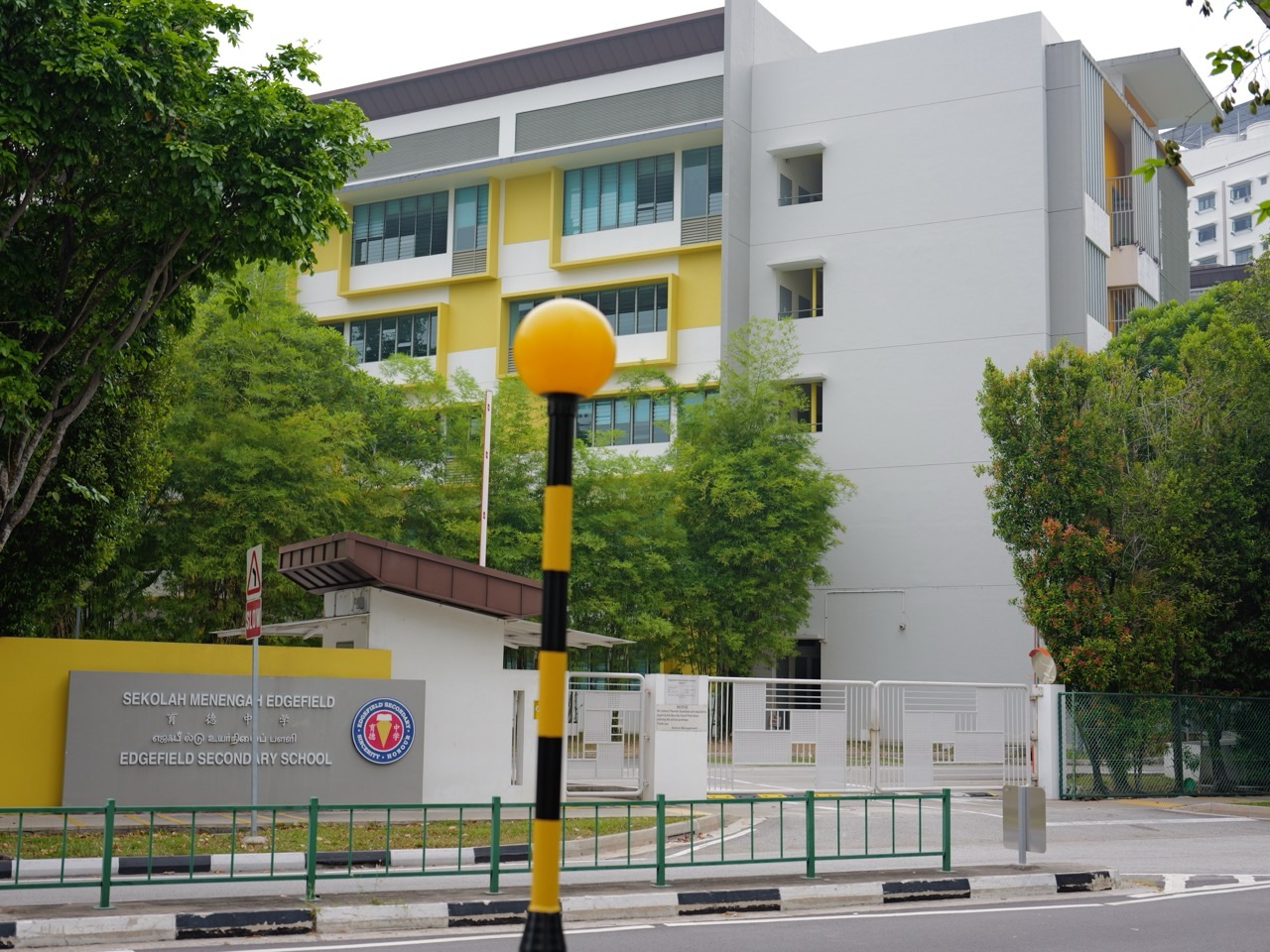
Edgefield Secondary School at 36 Punggol Field publishes CCA categories including clubs, performing arts, uniformed groups and sports. Its public pages describe activities such as Wushu and English Literary, Drama and Debating Society, alongside wider school themes of entrepreneurship and future-ready skills. These published examples are useful because parents can ask about actual experiences rather than imagine the school’s CCA life from a single ranking or marketing phrase.
A PG2 parent considering Edgefield should read the current CCA information and check whether a desired activity is available to the child’s intake. Ask how students select preferences, what training involves and whether an activity is suitable for beginners. The school’s published pages describe its programmes, but individual allocation and weekly schedules should be confirmed with current notices. The family’s real question is not whether Edgefield has impressive activities in general; it is which activities can help this particular child learn and belong.
Greendale Secondary: inspect the current CCA schedule
Greendale Secondary School at 51 Edgedale Plains publishes information about its co-curricular programme and a school CCA schedule. The school’s explanation emphasises interests, skills, values and friendship across different backgrounds. That makes it a useful example of why CCAs should not be treated simply as competitive decorations. A child can learn to contribute to a group even while still finding their feet in new Secondary 1 academic subjects.
Use the school’s published schedule as a starting point, but check that it is for the correct year and whether special sessions or events change the usual dismissal. A Punggol family also needs to plan the route home from the actual gate. A student who enjoys an activity but repeatedly arrives home exhausted may need a revised homework plan, food arrangement or travel route. The activity itself may be suitable; the supporting routine may need attention.
Punggol Secondary: connect environment and leadership to real action
Punggol Secondary School at 51 Edgefield Plains has published themes involving environmental education and youth leadership. Families can use these areas to discuss what a student actually wants from broader school life. A teenager might enjoy working on a project connected to the environment, leading a small group or learning to explain a community issue with evidence. Such interests can be explored through school programmes and applicable co-curricular opportunities, although families should not assume that every programme is itself a CCA or is open to every student.
Ask what the child will do, who supports the work and how participation is organised. An environmental theme could involve careful observation rather than just attractive posters. Leadership should involve responsibility to others rather than merely wearing a badge. The student’s developing interests can complement academic study without replacing it. A parent can help by asking the learner what changed because of their participation and what they would do differently next time.
Yusof Ishak Secondary: distinguish programmes from CCA allocations
Yusof Ishak Secondary School at 8 Sumang Walk publishes school themes involving STEM, sustainability and leadership. These are useful areas to explore when a student wants a practical connection between academic subjects and school life. However, a school-wide programme, an applied learning experience and a CCA may be different things with different arrangements. Parents should ask which activities are part of lessons, which are co-curricular commitments, and which depend on selection or special projects.
A family that understands the distinction will avoid promising the child access to an opportunity based only on a prospectus headline. Use current school communications to check the actual choice process and timetable. Ask whether the student enjoys the ordinary work involved, not just the name of a programme. The strongest outcome is a teenager who participates meaningfully, learns from feedback and still has enough energy to engage with the academic curriculum.
What LEAPS 2.0 is meant to recognise
MOE’s LEAPS 2.0 framework is designed to recognise students’ holistic development through Participation, Achievement, Leadership and Service. These are different domains. Participation concerns sustained CCA engagement; achievement relates to recognised representation or accomplishments; leadership can include responsibilities and contributions; service concerns giving back to school or community. Families should understand the framework in its current official form rather than rely on rumours about one activity guaranteeing a particular grade or bonus.
A practical way to explain LEAPS to a child is this: show up, learn the activity, contribute to others, accept responsibility and reflect on what you have done. The formal recognition is useful, but the daily learning is not reducible to accumulating a score. Check how the student’s own school records and communicates attainment. Do not assume that an award in a weekend activity automatically meets a school-recognised category without the relevant criteria.
Participation is valuable even without a trophy
A student who attends consistently, works with teammates and learns to handle setbacks can develop substantially without winning a regional competition. Participation provides repeated exposure to difficulty, correction and social responsibility. Those experiences resemble good academic learning: improvement requires practice, feedback and the willingness to try again. Parents should avoid describing a CCA as ‘useless’ because a child did not return with a medal or certificate.
Ask what skill the learner can now demonstrate that was unfamiliar three months ago. Did they learn a new technique, conduct a meeting, support a younger participant or manage equipment responsibly? Concrete examples show progress. If the activity is not enjoyable after a reasonable settling-in period, investigate why before demanding an immediate change. The child may dislike the actual activity, be dealing with a social problem or need more support as a beginner. Each situation suggests a different response.
Achievement is a learning record, not the entire point
Competitions, exhibitions and performances can be motivating because they give students an audience and a reason to prepare seriously. They can also create pressure. Not every child will be selected for every event, and selection depends on the school’s procedures and the activity’s requirements. A teenager who practises steadily but is not chosen for a team can still develop useful skills and character. Parents should celebrate that effort without pretending the disappointment is meaningless.
When a child is selected, help them plan for the additional demands rather than simply adding the event to an already full calendar. Ask about transport, equipment, reporting time, meals and recovery. A competition should not lead to chaotic missed homework that the family could have planned around. The educational goal is learning to pursue a challenging task responsibly, with support from teachers and a realistic understanding of what school and home can provide.
Leadership can begin before a title appears
A formal title can recognise responsibility, but leadership also occurs when a student helps teammates understand instructions, notices that someone is left out or takes care of shared equipment. Those contributions teach initiative and consideration. Families should not push a PG2 student to collect leadership positions merely to strengthen a future application. The child first needs experience cooperating well and following through on commitments.
Ask what the child did that made another person’s work easier. If they supervised a group, did they listen and divide tasks fairly? If they helped organise an event, what went wrong and how did they respond? These questions turn leadership into reflection rather than a prestige label. Over time, real contributions may lead to greater responsibilities. The school determines formal appointments, but character can develop through ordinary decisions long before any badge is awarded.
Service is more than recording hours
Service and Values in Action can teach students to notice needs in their community and respond responsibly. The educational value is not only the number of hours entered in a record. Planning, listening, practical contribution and reflection matter. A student might support a school initiative or take part in a community project under the appropriate arrangements. Adults should not arrange superficial photo opportunities and then describe them as meaningful service.
After a project, ask the child what the people involved actually needed, what went well and what they would change next time. Did the activity respect the people it aimed to help? Was there a lasting benefit or a useful lesson about limitations? Punggol’s residential environment may offer opportunities to think about accessibility, public spaces and intergenerational relationships. Any formal school service activity should follow the school’s guidelines and permissions rather than being invented by a parent for the sake of an achievement record.
Why the commute changes the right CCA decision
Punggol families live across different precincts and LRT loops, so the journey from school is not identical for everyone. A student attending Edgefield, Greendale, Punggol Secondary or Yusof Ishak Secondary may have a straightforward trip after normal dismissal but a longer or less familiar route after CCA. Some activities may also be held off-site. Parents should test the actual later-day journey, identify a safe route and confirm how schedule changes are communicated.
Include time for walking, waiting, meals and rest. A child who finishes a physically demanding activity may not be ready to begin algebra immediately on reaching home. A realistic plan can preserve enthusiasm for the CCA while making academic work manageable. Use current transport information and school notices rather than assuming a fixed arrival time from a route measured once on a weekend.
A balanced week starts with non-negotiables
Begin with school hours, homework deadlines, CCA sessions, travel, meals and sufficient sleep. Those commitments determine how much optional study or outside enrichment can be added. A family that fills every remaining hour before understanding the secondary-school rhythm risks creating a schedule in which the student is permanently tired. Ambition is important, but it must be sustainable across months rather than one exceptionally busy week.
Make a small weekly chart that shows late-dismissal days and lighter days. Reserve demanding academic tasks for periods when the child is reasonably alert. Short retrieval practice may suit a CCA evening, while a longer writing session can take place on a less crowded day. The timetable should also allow time for friends and quiet recovery. The question is not whether the child can survive the schedule once; it is whether they can participate, learn and remain well throughout the term.
How to make a CCA day academically useful
A CCA day may not provide enough time for a full practice paper, but it can still support learning. The student might review one Mathematics misconception, read a few pages of an assigned English text or explain a Science concept in their own words. Choose one small task connected to actual schoolwork. Then stop when the task is complete, rather than treating the short session as a failure because it did not last an hour.
The following day may offer more time for extended work. Alternating short retrieval with longer practice can be productive when the tasks are carefully chosen. Parents should avoid a rigid system that punishes the child for an unavoidable competition or rehearsal. A schedule that adapts intelligently teaches planning and prioritisation. Those skills themselves are a useful part of secondary education.
The four kinds of fatigue parents should notice
A student can be physically tired after sport, mentally tired after demanding lessons, socially tired after managing many new relationships, or frustrated by repeated academic difficulty. These experiences may overlap but can require different responses. Food, rest and sleep may help physical fatigue. A quiet break may help cognitive overload. A gentle conversation may help social strain. Targeted teaching may be needed when the same academic misconception continues despite rest.
Ask what the child finds draining rather than assuming the CCA is always responsible. Perhaps the late journey is difficult, while the activity itself makes school enjoyable. Perhaps the child is anxious about performing, or perhaps homework is being started too late because there is no clear evening routine. If fatigue is persistent or concerning, seek appropriate professional or school advice. A parent’s role is to observe accurately and support the child, not force a simplistic explanation.
When a child chooses the same CCA as a friend
Friends can make an unfamiliar activity less intimidating. That is a legitimate consideration, but it should not be the only reason for a choice. Ask whether the student would still find the activity interesting if the friend later selected something else or moved to a different group. School schedules and selection results may not keep friends together. A teenager who has no interest in the activity may struggle to remain engaged once the initial social attraction fades.
At the same time, do not dismiss the importance of belonging. A shy learner may genuinely benefit from trying something new alongside a trusted friend. Discuss both the social comfort and the actual work. The student can learn that friendship and independent interests need not always be identical. A thoughtful CCA choice can help develop both.
What to do if the first choice is unavailable
Not every student will necessarily be allocated their first preferred CCA. Some activities have trials, auditions or limited places, and schools manage their own procedures. If the child is disappointed, acknowledge the feeling before trying to explain that the second choice is just as good. Ask what feature of the first activity mattered most: movement, teamwork, creativity, a particular skill or time with friends. That can guide a meaningful alternative.
Read the school’s current instructions for any allowed appeal or later change rather than assuming a family can insist on a switch. Help the child enter the allocated activity with an open mind when appropriate, while maintaining a respectful path for genuine concerns. The broader skill is adapting without losing curiosity. A good school experience is not determined entirely by winning the first preference in one selection exercise.
When the child wants to leave a CCA
Begin by understanding why. Is the activity genuinely unsuitable, are the training demands excessive, has the child experienced conflict, or are they simply frustrated by the slow pace of improvement? A student who feels unsafe or bullied needs an appropriate and timely response, not a lecture about perseverance. A student who finds a new skill difficult may benefit from encouragement and clearer feedback. The correct action depends on the actual problem.
Consult the school’s rules for CCA changes and discuss the child’s circumstances with the relevant teacher. Do not promise an immediate transfer before understanding the procedure. Help the teenager express the concern factually and respectfully. Sustained commitment matters, but it should not be used to ignore wellbeing or a serious mismatch. The goal is for the student to learn responsibility alongside the ability to seek appropriate help.
Why school programmes and CCAs must not be confused
A school’s Applied Learning Programme, Learning for Life Programme, common curriculum and CCA may all contribute to student development, but they are not interchangeable. An Applied Learning Programme may connect knowledge with real-world challenges, while a CCA involves sustained co-curricular participation under the school’s specific arrangements. A student should not assume that interest in a school-wide programme automatically secures a place in a particular club, competition or specialist training activity.
Ask what is compulsory, what is optional and what requires selection. The answers can change how the week is planned. If the student is particularly interested in a school’s signature programme, ask how ordinary pupils experience it, what projects they complete and whether there are further opportunities to participate. Clear definitions allow parents to value both curriculum and extracurricular learning without misunderstanding administrative requirements.
A fictional student balancing Mathematics and badminton
Imagine a fictional PG2 entrant, Marcus, who enjoys badminton but struggles with algebra. His parents worry that the CCA is causing poor grades and consider stopping his participation immediately. They inspect his weekly routine and discover that he attempts long Mathematics worksheets very late on training days. They also find that his recurring algebra mistake concerns negative signs, not a shortage of study hours. The problem therefore has two parts: an inefficient schedule and a specific mathematical misconception.
The family moves demanding practice to a more suitable day and keeps a short retrieval task for training evenings. Marcus reviews negative-number reasoning with his teacher’s guidance and retries unfamiliar problems independently. Badminton remains part of his school life if the school’s participation rules and his wellbeing permit it. This invented example illustrates why a CCA should not automatically be blamed for academic difficulty. Sometimes the learning method and timetable need repair.
A fictional student discovering confidence through drama
Consider a fictional learner, Aisha, who is quiet during English lessons but enjoys writing stories. She considers drama because she is curious about how scenes are performed, yet worries she is not confident enough to act. Her parents explore the actual nature of the activity, including rehearsal, teamwork and possible backstage roles. They ask the school about the entry process and let Aisha decide whether the experience is something she wants to try.
Over time, she might learn to speak more clearly, listen carefully or organise a performance task. None of those outcomes is guaranteed, and participating in drama is not an official method of being promoted to G3 English. The example shows how broader learning can strengthen a child’s confidence and interests without being reduced to an examination strategy. A teenager is allowed to develop abilities that have value in their own right.
How parents can recognise CCA progress
Ask the child to describe one skill, one challenge and one contribution after several weeks. A sport participant might demonstrate a new movement safely. A music student might explain how repeated practice improved timing. A club member might show an experiment or a carefully revised design. A uniformed group participant might describe how a team solved a practical problem. These concrete examples tell parents more about development than attendance alone.
Do not demand a performance every time the child returns home. Instead, create occasional opportunities to reflect, perhaps after an important event or at the end of a term. Invite the student to identify what they would improve next. Progress also includes respecting teammates, attending reliably and learning to respond to setbacks. The family’s interest communicates that school life matters beyond academic marks.
Using Punggol as a wider learning environment
Community spaces, waterways, transport systems and neighbourhood events can provide natural connections to interests developed through school activities. A student interested in environmental work may notice how public spaces are maintained. One interested in design may ask why a path, sign or bus interchange works as it does. A young writer may record observations for a story. These activities can enrich curiosity without pretending that a local visit is an official school programme.
Parents should keep such exploration safe, respectful and age-appropriate. Do not approach strangers for identifiable information, enter restricted locations or disrupt wildlife in the name of a school-style project. Encourage accurate observation, thoughtful questions and reflection. The best connections between school and community are ordinary: the child notices something, uses knowledge to interpret it and becomes more interested in learning.
A seven-day CCA decision exercise
On the first day, list activities the child is curious about without ranking them. On the second, read the assigned school’s current information. On the third, ask the learner to describe what an ordinary practice would involve. On the fourth, check the timetable and travel demands. On the fifth, list any unanswered questions about trials, fees, equipment or selection. On the sixth, talk about how the activity might fit with academic and family commitments. On the seventh, write an honest preference list using the school’s submission rules.
This exercise is a planning aid, not the school’s official CCA application process. The real selection dates may be much shorter or organised differently. Adapt the sequence to the actual notice. The important habit is to combine interest, evidence and logistics before making a decision. A student who can explain the reasons behind a choice is learning more than how to fill a form.
Official sources and the next step
Use MOE for national guidance about secondary education and co-curricular development. For current local options, see Edgefield Secondary’s CCA pages and Greendale Secondary’s co-curricular information, as well as the assigned school’s current notices. For the national reason behind mixed form classes and different subject levels, consult the Full SBB framework. School-specific activity allocations and training details require current confirmation.
For related Punggol planning, read the mixed form-class guide and the weekly academic study plan. Your next step is to shortlist two or three activities your child genuinely likes, verify current school conditions and plan the late-day journey home. A good CCA should help the student become more capable and connected, while leaving room to learn well in every subject.
Frequently asked questions about PG2 students choosing CCAs
Does PG2 restrict a student to a particular CCA?
PG2 is for Secondary 1 admission and does not itself define a fixed list of co-curricular activities. Individual school CCA selection criteria, capacity and procedures still apply.
Are CCAs part of Singapore secondary education?
Yes. They are an integral part of the secondary-school experience and support skill, character, friendship and broader development.
Which CCA categories are common in secondary schools?
Common categories include sports, uniformed groups, clubs and societies, and visual or performing arts. Actual activities differ by school and year.
Can a PG2 student join the same club as a PG3 student?
Co-curricular participation is not simply separated according to posting group. Check the school’s actual activity allocation and selection requirements.
Should I choose a CCA only for LEAPS 2.0 points?
No. LEAPS 2.0 formally recognises several developmental domains, but sustainable interest and meaningful contribution should guide the decision.
What are LEAPS 2.0’s main domains?
Participation, Achievement, Leadership and Service. Refer to MOE’s current framework for how attainment is recognised.
Does a school’s Applied Learning Programme equal a CCA?
No. School programmes and CCA participation may connect but have distinct structures and entry arrangements. Clarify the actual activity with the school.
What if the child gets the second-choice CCA?
Discuss why the first choice mattered, learn about the assigned activity and follow the school’s rules for any permissible review or change.
How can a late CCA day affect homework?
It changes travel and recovery time. Plan a short, focused task on late days and schedule demanding work for a more suitable period.
Does CCA achievement guarantee a post-secondary course?
No. Course and institution admissions have their own qualifications and criteria. CCA experience can support development and relevant applications, but does not remove academic prerequisites.
Editorial note: 1 November 2026. Local school programme examples come from public school information, but activity options and schedules can change. Fictional student stories illustrate decision methods rather than real outcomes. The official school notice governs CCA allocation and participation.


