
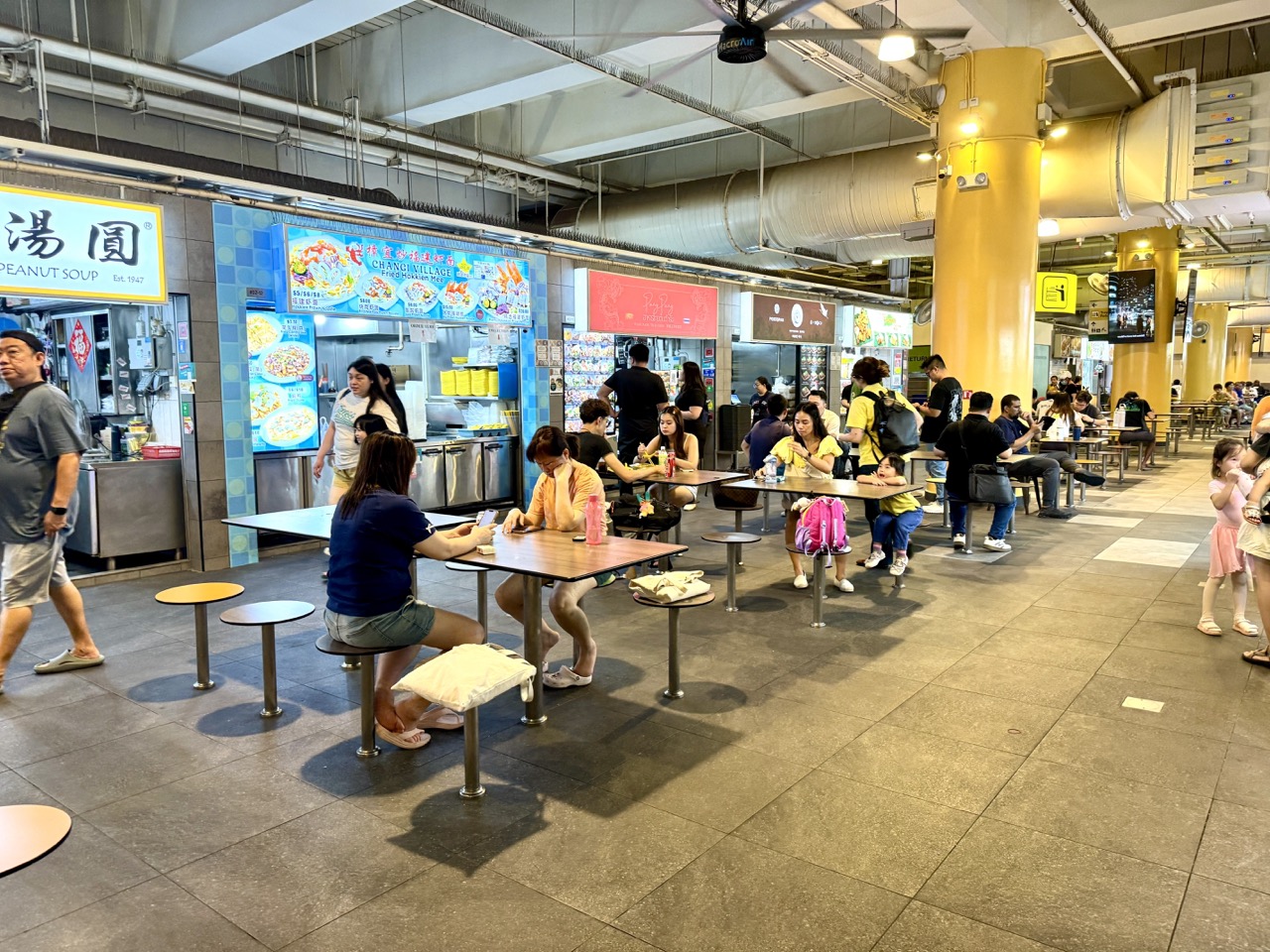
A Punggol secondary-school student admitted through Posting Group 2 (PG2) learns Food and Consumer Education (FCE) as part of the lower-secondary common curriculum under Full Subject-Based Banding. PG2 is the admission grouping, not a separate G2 FCE examination course. FCE helps students understand balanced eating, safe food handling, meal planning, personal money management and thoughtful consumer choices. It is useful to every teenager, including those whose English, Mathematics and Science subjects are taught at different G levels.
MOE’s updated lower-secondary FCE teaching syllabus covers Food Studies and Consumer Studies, including My Healthy Plate guidelines, nutritional needs, food safety, safe culinary practice and budgeting. For a family at Edgefield, Greendale, Punggol Secondary or Yusof Ishak Secondary, the assigned school’s teacher determines the actual practical tasks, equipment and assessment instructions. The most useful home support is to practise reading a label, comparing a hypothetical budget or explaining a balanced meal without performing unauthorised cooking or handling risky equipment. This guide focuses on how a PG2-entry student can turn FCE knowledge into safe and responsible everyday decisions.
- PG2 definition: admission group, not a separate FCE level.
- FCE setting: part of the lower-secondary common curriculum in mixed form classes under Full SBB.
- Food Studies: nutrition, healthy meal planning, food safety, culinary skills and food culture.
- Consumer Studies: needs versus wants, money management, purchasing choices and resources.
- My Healthy Plate: use the official HPB proportions as guidance for a balanced meal, adapted appropriately.
- Safety: keep raw and ready-to-eat food separate; follow school teacher instructions for practical work.
- Budgeting: compare prices, units, value, waste and genuine family needs.
- Assessment: the school’s current FCE project, practical and grading notices control.
- Next step: read one real product label and explain a safer, healthier or more economical choice.
Definition lock: Posting Group 2 is not a separate food syllabus
Posting Group 2 is used to facilitate secondary-school admission. G1, G2 and G3 describe the levels of individual academic subjects. Under Full Subject-Based Banding, students belong to mixed form classes and take a set of common-curriculum subjects together, including Food and Consumer Education. A PG2-entry pupil therefore does not need to join a supposed ‘G2 cooking stream’ in order to learn basic nutrition and consumer skills. This distinction matters when parents search online and encounter the separate upper-secondary subject Nutrition and Food Science.
Lower-secondary FCE has a practical everyday purpose. A teenager should gradually become more capable of recognising a balanced meal, understanding hygiene, managing a simple budget and considering how consumption affects other people and the environment. The teaching can draw on common experiences even when pupils have different academic strengths. Parents should use the school’s actual FCE timetable and task brief rather than assume every child across Punggol receives identical kitchen assignments.

What the updated 2024 FCE syllabus emphasises
The Ministry of Education’s lower-secondary Food and Consumer Education syllabus has two core areas: Food Studies and Consumer Studies. It describes nutrition and diet, meal planning, food management, food culture, basic resource management and making discerning consumer choices. It also has an applied learning component intended to integrate knowledge and practical skills. The official document is a teaching and learning framework, not a fixed recipe that every school must prepare on the same day.
This breadth is one reason FCE deserves attention. A child who learns to read food information critically may also become better at interpreting commercial claims. A pupil who plans a meal within a budget is practising numerical reasoning and decision-making. Someone who follows food-hygiene rules is learning to consider other people’s safety. FCE connects knowledge with conduct in a way that can remain useful long after lower-secondary assessments are completed.
Start with what a balanced diet means
A balanced diet provides the body with a suitable variety and quantity of nutrients for its needs. The idea should not be reduced to one fashionable ingredient or a rule that all meals must look identical. MOE’s FCE syllabus introduces carbohydrates, proteins, fats, vitamins, minerals, water and dietary fibre, together with food sources and the relationship between diet and health. Students need to understand the functions and contributions of food groups rather than memorise a list of foods labelled good or bad.
A useful conversation begins with an ordinary meal: what components provide energy, support growth or contribute fibre and micronutrients? The teenager can explain how the parts fit together. Avoid demanding precise personal calorie calculations or using the lesson to judge another person’s weight. Health needs differ, and medical or dietary conditions warrant appropriate professional advice. The educational objective is a sound general understanding of nutrition and responsible choice.
Read My Healthy Plate as a guide, not a ritual
Singapore’s Health Promotion Board promotes My Healthy Plate, showing approximately half a plate of fruit and vegetables, one quarter of wholegrains and one quarter of protein-rich food, alongside water and healthier choices. It is a visual guide for balanced eating, not a rule that every cultural dish must be taken apart and arranged into three geometric regions. Students should be able to explain the relative contributions of food groups and think about a meal as a whole.
For a fictional lunch example, imagine a meal containing rice, a vegetable dish and a suitable protein source. Ask which components correspond to the plate guidance and how the meal could be adjusted if one group is underrepresented. The point is thoughtful composition, not guilt over food. Families should remember that individual dietary needs and restrictions can differ; the school can teach general principles without giving personalised medical nutrition advice.
Wholegrains and fibre need practical explanations
Students may learn that wholegrains and fibre are important, yet fail to recognise them during shopping. Encourage the child to identify wholegrain information on product packaging and compare it with the actual ingredient list rather than trusting a brown colour or an attractive picture of wheat. The availability of an item and the appropriate portion will depend on the household’s needs and preferences.
A useful FCE task is to compare two hypothetical food labels: which one actually indicates wholegrain content and which relies mainly on a marketing name? Students should state what the label establishes and what it does not. One product being labelled wholegrain does not prove the entire meal is balanced. The broader lesson is to interpret evidence critically instead of letting packaging design decide what is healthy.
Nutrients have different functions
Carbohydrates, proteins and fats contribute to the body’s energy and functions in different ways, while vitamins and minerals support many essential processes. Water and fibre also matter for healthy daily living. The exact teaching detail follows the MOE syllabus and school resources, but the conceptual lesson is that nutrition cannot be evaluated from one number on a packet alone. A food item may provide one beneficial nutrient while containing other components that should be considered.
Ask the teenager to compare a meal’s variety rather than classify the whole person by a dietary choice. A protein-rich ingredient does not replace vegetables; fruit does not automatically provide every nutrient required. Students should be encouraged to explain the role of different components and the value of balance over time. This is educational understanding, not a prescriptive diet plan or a reason to pressure a child about body size.
Eating out is a real consumer decision
Punggol families may eat at school canteens, hawker centres, restaurants or home. FCE asks students to consider how choices made while eating out affect diet and budgets. A hawker meal cannot be assessed from its name alone; actual ingredients, portions and preparation differ. Similarly, a menu item described as light may still be unsuitable for someone’s individual dietary needs. Students should avoid claiming to know nutritional values that have not been supplied.
A practical exercise uses an imaginary menu listing several complete meal options and clearly defined criteria, such as vegetable variety, beverage choice and a spending limit. Ask the child to select a reasonable option and explain the trade-offs. Do not turn an ordinary family meal into a public judgement of strangers’ plates. The purpose is developing informed personal choices and an appreciation of different cuisines.
Food culture belongs within the learning
Food in Singapore is connected to family traditions, religious practices, celebrations, availability and cultural identity. MOE’s FCE syllabus includes Food and Culture, acknowledging that meals are more than their nutrient composition. A respectful student should learn about different food practices without stereotyping every Chinese, Malay, Indian or other household as though it serves one fixed menu. The most useful discussions ask how different ingredients and cooking methods meet practical and cultural needs.
A family might describe a meal enjoyed during a celebration and explain why it is meaningful. Then the teenager can examine how its components relate to general balanced-meal principles, without dismissing its cultural value. If a project requires a special diet, check the teacher’s actual instructions and avoid guessing another person’s religious or medical restrictions. Food literacy combines practical knowledge with respect.
Kitchen safety is not optional decoration
School FCE practical lessons may involve heat, blades, appliances and perishable ingredients. The supervising teacher provides safety instructions, determines permitted equipment and oversees practical work. A parent should not encourage the child to recreate a complex lesson at home without appropriate supervision and competence. A safe student knows when to stop, how to follow the approved procedure and when to report a hazard or accident immediately.
Discuss safety using the child’s actual school guidance. Why is a cluttered work area risky? Why should a student avoid rushing with a sharp tool? Why does hygiene matter for others who will eat the prepared food? These questions can be answered conceptually without handling hazardous equipment. Following safety directions is a form of responsibility and good judgement, not a barrier to creativity.
Separate raw food from ready-to-eat food
The Singapore Food Agency explains that cross-contamination can occur when microorganisms from raw foods move to cooked or ready-to-eat foods through hands, utensils, surfaces or contact. Its consumer guidance recommends keeping raw and cooked foods separate, washing hands at appropriate times and cleaning utensils and cutting boards after handling raw items. Students should understand why separation matters rather than memorise a slogan without knowing the risk.
Parents can discuss a fictional kitchen scenario on paper. A person prepares raw meat and then reaches for ready-to-eat salad ingredients without cleaning their hands or tools. The student should identify the unsafe step and explain the route by which contamination could occur. The aim is a safer decision, not a detailed unsupervised cooking demonstration. The school’s teacher should control practical safety procedures.
Hand hygiene has a reason and a timing
Washing hands before food preparation and after handling raw ingredients helps prevent contamination. The point is not merely checking off a hygiene rule: hands can transfer microorganisms between food, surfaces and equipment. Students should learn when washing is necessary and why it protects the people who will eat the food. School instructions may specify additional procedures for practical lessons.
A parent can ask the child to trace a hypothetical sequence of activities and identify when clean hands are needed. For example, using a phone, touching raw food and arranging ready-to-eat food represent different risks. The teenager should explain the appropriate hygiene step in each case. This develops situational awareness that can transfer to everyday meals without assigning the child unsafe or age-inappropriate cooking tasks.
Food storage belongs to the safety discussion
Perishable foods need appropriate storage, and the Singapore Food Agency provides guidance on refrigerating cooked foods promptly and separating raw items to prevent drips onto ready-to-eat foods. A learner should not assume that food is safe indefinitely simply because it is chilled or looks normal. The relevant date markings, storage instructions and handling conditions matter. Household circumstances can vary, so use current official guidance when making real safety decisions.
For learning, inspect a product label and ask what storage condition it states before opening and after opening. Does the package provide a use-by date? Is refrigeration required? The teenager should not decide to taste questionable food as an experiment. If an item may be unsafe, ask an appropriate adult. FCE teaches judgement that protects health, not a dare to test the limits of spoilage.
Cooked food needs sensible time and temperature control
SFA explains that cooked food held improperly can permit food-borne bacteria to multiply, and recommends timely consumption, safe refrigeration or appropriate hot holding. The family should rely on current official consumer advice and food-specific instructions rather than a social-media rule that every dish stays safe for the same number of hours. A school practical session has its own procedures under teacher supervision.
A useful conceptual task asks why a large quantity of prepared food should not be left at room temperature for an extended period. The student can explain the importance of controlled storage without carrying out a risky test. Do not encourage tasting food to detect invisible contamination or using smell as the only safety check. Scientific evidence and preventive habits are more reliable than guesses.
Food allergy and dietary restrictions require respect
Some people need to avoid particular ingredients for allergy, medical, religious or personal reasons. Students should not assume these restrictions from appearance or require someone to disclose private health information during a class activity. Follow the teacher’s instructions for ingredient selection, allergen handling and any school arrangements. If a student has a relevant health requirement, the family should communicate it through the school’s appropriate confidential process.
A useful FCE discussion distinguishes general healthy eating from specific individual needs. A meal recommended in a general chart may be unsuitable for someone with an allergy. A culturally appropriate option may require a different ingredient or preparation method. Respectful planning begins by understanding the actual requirements rather than stereotyping people. In practical lessons, the supervising teacher and school policies determine safe adjustments.
Needs and wants are different consumer concepts
Consumer Studies includes basic resource management, such as recognising needs, wants and financial limits. A need is something essential in the given context; a want may be desirable without being necessary. The boundary is not always identical for every household. A replacement pair of school shoes may be necessary when the old pair no longer fits, while buying a premium brand may be optional. Students should learn to justify classifications rather than treat them as moral judgements.
Try a hypothetical budget discussion in which the teenager must choose between required school materials, transport, meals and an entertainment item. Ask what can be delayed, compared or avoided and why. Do not shame the family for limited resources or use the exercise to disclose private household finances. Budgeting is about planning within real constraints and respecting priorities.
A budget is a plan, not a restriction for its own sake
An age-appropriate budget estimates available resources and planned spending so a student can make informed choices. It should include essentials first and allow room for ordinary enjoyment where possible. The 2024 FCE syllabus links Consumer Studies to basic money management, saving and responsible payment choices. A family can practise those principles with fictional values without exposing actual household income or bank details.
Imagine a fictional weekly allowance of S$25 and planned essentials of S$18. The remaining S$7 could be allocated according to the scenario’s priorities, but the student should check whether costs are genuinely weekly and whether occasional expenses require saving. The arithmetic is simple; the reasoning concerns trade-offs. A thoughtful plan is more valuable than a calculation that ignores the student’s actual needs.
Unit prices show value more clearly than package size
A larger package may have a lower price per unit, but it is not always better for the household. Suppose a fictional 500-gram package costs S$4 and a 750-gram package costs S$5.25. The unit rates are S$8 and S$7 per kilogram respectively. On unit price alone, the larger package is cheaper. Yet if much of the product would be wasted before use, the saving may disappear.
These figures are invented teaching numbers, not current shop prices in Punggol. Ask the child to calculate carefully and then discuss quality, storage and expected consumption. Students should distinguish an arithmetic comparison from a complete purchasing decision. FCE uses Mathematics to support judgement. A correct calculation that ignores waste or shelf life may still lead to an unsuitable choice.
Promotions can obscure the actual cost
Advertisements may use phrases such as ‘special price’, ‘buy more and save’ or ‘limited offer’. These can be legitimate promotions, but they do not prove that the product is the best value for the shopper. Students should look at the actual amount payable, quantity received and conditions. If the promotion requires buying items the family does not need, its value may be limited. An advertised discount should be checked against the relevant base price where possible.
Give a fictional promotion with clearly stated quantities and ask the learner to compare total cost and unit rate. Then ask whether purchasing extra items is necessary. The decision should consider both the numbers and the household’s practical use. Consumer literacy means asking good questions, not treating every advertisement as dishonest or every discount as a bargain.
Reading a food label requires several checks
A food label can include ingredient information, nutrition facts, quantity, allergens, storage conditions and date markings, depending on the product and applicable rules. No single impressive claim on the front of a pack replaces the full label. The student should identify which question is being asked: nutritional contribution, safety, quantity or whether the product suits a particular need. Then consult the relevant information rather than collecting unrelated numbers.
For a class exercise, compare two hypothetical labels and discuss what they actually establish. If sodium content differs, note the units and serving size before drawing conclusions. If a package contains multiple servings, the printed per-serving value may not equal the amount eaten. FCE connects numerical literacy to informed everyday decisions. The goal is correct interpretation, not anxiety about every ingredient.
Digital payments still require money awareness
The 2024 FCE syllabus includes age-appropriate understanding of money management and modern payment methods. A transaction made by card or phone can feel less tangible than handing over cash, but it still uses real money. Students should be able to identify what was purchased, the price and the available balance without sharing private payment details. A digital receipt can help confirm what was charged when appropriate.
A parent can use fictional examples to discuss spending decisions without giving a teenager unrestricted access to accounts. Ask how the learner would notice an unintended duplicate purchase or a price that differs from the display. Teach them to seek adult help and use authorised merchant channels for genuine problems. Consumer responsibility includes privacy and security as well as calculation.
Food waste is also a resource-management issue
Buying more than a household can use may increase cost and waste. Students can consider planning quantities, storing food correctly and using supplies responsibly. The lesson is not to eat questionable leftovers to avoid waste; food safety always remains essential. A product that has been stored unsafely should not be consumed merely to meet a waste-reduction goal. Responsible management balances environmental considerations with health.
In an FCE task, the teenager might estimate how much of a fictional ingredient a recipe requires and compare that with package sizes. Then ask whether another safe use is realistic for the remainder. The scenario can be solved on paper without cooking. This develops numeracy and environmental awareness together. A sound recommendation considers amount, suitability, storage and safety, not only the lowest sticker price.
The practical task begins with the teacher’s brief
FCE may involve teacher-supervised practical preparation and applied assignments, but the exact recipes, ingredients, equipment and assessment tasks vary. Students should read the school-issued brief carefully, including safety instructions and required materials. Do not assume the child must buy a particular utensil or cook a specified dish because another school published that activity. The teacher determines what is appropriate for the class.
Parents can help with preparation by asking the teenager to explain the learning objective and what must be organised before the lesson. If there is an ingredient requirement, check the official list and any relevant dietary restrictions through the appropriate channel. The parent should not secretly complete the assessed practical work. Competence develops through safe supervised practice and honest reflection.
A fictional One Punggol meal-planning exercise
Imagine a fictional student, Sarah, asked to plan a balanced lunch for a teenager using an invented menu and a fixed fictional budget. She first chooses the cheapest combination without considering vegetables or an appropriate drink. Her teacher asks her to apply My Healthy Plate guidance and explain the trade-off between price and meal balance. Sarah revises the selection using the options supplied, keeping within the stated budget.
The example does not describe a real vendor’s nutritional information at One Punggol Hawker Centre. It is a paper task for reasoning about food groups and consumer decisions. The meaningful achievement is explaining why the final combination better matches the criteria. If the menu lacks nutritional information, the student should acknowledge the limitation instead of inventing quantities.
Another fictional task: a suspicious discount
Consider a fictional learner, Daniel, comparing two products under an advertisement claiming a large saving. He initially chooses the product with the loudest discount label. His parent asks him to write down the original stated price, promotional price and quantity. Daniel calculates the effective unit price and notices that the supposedly better offer requires buying more than his imaginary household can use before the product’s date marking.
He concludes that the promotion is not necessarily the best choice for the defined household. This is a fictional exercise, not a judgement of any real Punggol shop. It shows that consumer education is about applying criteria, checking claims and understanding consequences. A correct price calculation matters, but so do need, safety and practicality.
Avoid turning healthy-eating lessons into body criticism
Teenagers can become self-conscious about food and body image. A balanced-diet lesson should not be used to shame the child, compare body shapes or demand restrictive eating. FCE teaches general nutrition and responsible planning, not personal medical treatment. Parents should discuss health in supportive, practical language and consult qualified professionals for individual medical or dietary questions.
Ask about variety, hydration and food safety without attaching moral worth to a meal. A family can learn from an imperfect lunch and make a different choice next time. If food-related distress or restrictive behaviours appear, approach the matter sensitively and seek appropriate help rather than intensifying calorie-counting exercises. Education should help teenagers make informed decisions while maintaining a healthy relationship with food.
A two-week FCE home-learning cycle
During the first few days, identify general nutrient functions and examine a sample balanced-meal plan. Next, practise interpreting packaging labels and safe-storage instructions using genuine authorised information. In the following week, compare hypothetical budgets, unit prices and promotions, then review one safe food-hygiene scenario on paper. End by asking the learner to explain which criteria mattered in the decision and what information was missing.
This is optional home practice, not a required school practical schedule. The student should still follow the actual FCE lesson sequence and safety rules. If the class is preparing a supervised cooking activity, focus at home on reading the brief and understanding the safety concepts. The goal is lasting judgement, not performing an unapproved experiment or generating a large folder of decorative meal photographs.
Articulate an evidence-based FCE conclusion
An FCE response should explain why the proposed choice meets its criteria. A balanced-meal recommendation might refer to food-group variety and an appropriate beverage. A purchasing recommendation might compare unit cost, storage and actual need. A safety explanation should identify the hazard and why the preventive action matters. Students should avoid vague endings such as ‘this is good and everyone should do it’ when the evidence supports a narrower claim.
Ask the child to separate factual information from assumptions. If a label does not supply sodium data, do not invent it. If the shopper’s budget is fictional, state that. If an individual has a dietary restriction, do not assume what it is. Clear evidence and honest limits make the recommendation useful. The educational quality lies in the reasoning, not in the number of adjectives.
How to interpret feedback from an FCE project
A teacher might note that the learner selected sensible ingredients but did not justify the choice, followed the recipe accurately but failed to record a safety consideration, or calculated the budget correctly without checking practical quantity. These are different weaknesses. Ask which part of the work needs improvement and request an appropriate example of what stronger reasoning would involve. Then let the teenager independently revise the explanation or try another paper scenario.
Do not equate every FCE task with an academic stream examination. Common-curriculum subjects have school-specific assessments under MOE policy, and the real brief controls the expected evidence. A student who can explain a safer food-handling decision or a better budget shows progress that extends beyond a grade. Home feedback should make the learner more capable of deciding and explaining, not merely more compliant with a model answer.
How FCE relates to future elective subjects
The 2027 SEC G2 syllabus index lists Nutrition and Food Science K235, a separate upper-secondary examination subject. That does not mean every PG2-entry Secondary 1 student is already taking K235 or will be allocated that elective. Schools decide their actual upper-secondary combinations, eligibility and offerings under the applicable framework. Lower-secondary FCE builds broad everyday literacy and may introduce interests that later influence choices, but is not itself a promise of an elective place.
If a student enjoys nutritional science or food entrepreneurship, encourage the curiosity and later read the school’s current Secondary 2 subject-option booklet. Ask what the elective covers and whether the student is prepared for its coursework and academic demands. The best decision involves genuine interest, current learning evidence and the whole subject load, not a misunderstanding of the original PG2 admission label.
Sources, related guides and your next step
MOE’s updated lower-secondary FCE syllabus provides the authoritative topics. The Singapore Food Agency food-safety glossary and SFA cooked-food temperature guidance explain current hygiene and storage principles. SEAB identifies the separate upper-secondary Nutrition and Food Science K235 course for the 2027 graduating cohort.
For a related but different practical subject, see the PG2 Design and Technology guide. Your next step is to ask the teenager to read the current FCE task, examine one legitimate product label and explain a balanced, safe or value-conscious decision using accurate information. A good decision is a stronger learning outcome than a spectacular photograph of a meal.
Frequently asked questions about PG2 and Food and Consumer Education
Does PG2 mean FCE is studied at G2 for every child?
No. PG2 is the Secondary 1 posting group. Lower-secondary FCE is part of the shared common curriculum under Full SBB.
What are FCE’s two core areas?
Food Studies and Consumer Studies in the MOE lower-secondary syllabus.
What does My Healthy Plate illustrate?
General proportions for fruit and vegetables, wholegrains and protein-rich foods, with water and other healthy choices.
Is a brown-coloured bread automatically wholegrain?
No. Check accurate product information, ingredients and nutrition labels rather than relying on colour.
What is cross-contamination?
The movement of harmful microorganisms from one food, utensil, hand or surface to another, especially from raw to ready-to-eat food.
Can a Secondary 1 student repeat school cooking experiments alone at home?
Do not assume so. Follow the school’s supervision and safety instructions; paper-based reasoning can support the concepts.
How can parents teach unit-price comparison?
Use clearly fictional prices with consistent quantities, then discuss waste, storage and real household needs.
Are all food discounts good value?
Not necessarily. Consider actual payment, quantity, planned use and conditions.
Does FCE guarantee access to upper-secondary G2 Nutrition and Food Science?
No. That is a separate subject, and later offerings and eligibility depend on the school.
What should a student do first this week?
Read the school brief and explain one label, balanced-meal choice or safe handling principle in the student’s own words.
Editorial note: Prepared 1 November 2026. Fictional meal prices, student scenarios and budgets are teaching examples. Actual FCE practical tasks, kitchen supervision and assessment requirements follow the assigned school’s current instructions. Nutrition information is general education, not personalised dietary advice.


