
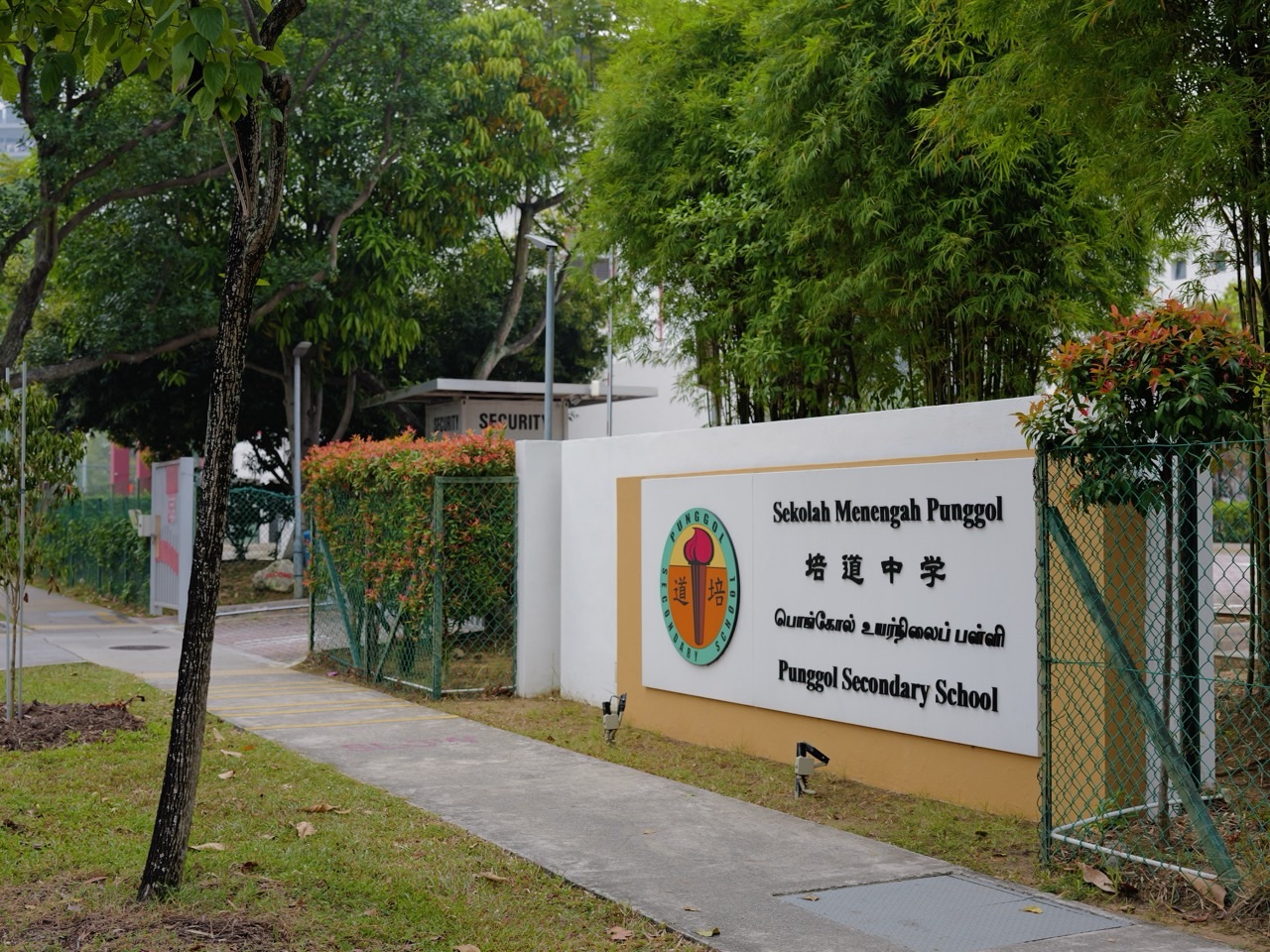
How PG1 works at Punggol when a student moves from Secondary 2 to Secondary 3 is about choosing an actual upper-secondary subject combination, not simply keeping the Posting Group label received after PSLE. Under Full Subject-Based Banding (Full SBB), Posting Group 1 is used to facilitate admission to Secondary 1; G1, G2 and G3 identify the levels of individual subjects. At the end of Secondary 2, schools conduct a subject-option or subject-allocation exercise so students can indicate suitable upper-secondary choices. The subjects offered, qualification criteria, ranking procedure and available places depend on the receiving school and cohort. The student’s school—not an old online list—determines the actual options.
For Punggol families, start by obtaining the current Secondary 3 subject-combination booklet, reviewing each subject’s year-end performance and discussing the child’s strengths and aspirations. Check the compulsory learning requirements and the electives actually available at the school. A student may take some subjects at more demanding levels where they qualify, but a desire for one subject does not guarantee a place if the school has capacity, timetable or prerequisite restrictions. The new Singapore-Cambridge Secondary Education Certificate (SEC) begins for the 2027 graduating cohort; a pupil entering Secondary 1 in 2027 would ordinarily approach Secondary 3 in 2029 and Secondary 4 in 2030, so the family must not present a 2027 combination sheet as a guaranteed 2029 offer.
- What PG1 does: PG1 facilitates admission; it is not a permanent whole-student stream or a complete record of every subject level.
- When choices matter: Secondary 2 is a key point for selecting the Secondary 3 combination and understanding future SEC subjects.
- The actual decision: choose from the school’s published and eligible subject combinations, then submit preferences through its stated process.
- Subject levels: G1, G2 and G3 apply to individual subjects. School-guided level changes depend on criteria, performance, holistic readiness and timetabling.
- Compulsory subjects: expect requirements involving English, Mother Tongue, Mathematics, Science and Humanities; the exact level, grouping and possible exemptions must be verified.
- Electives: offerings such as Computing, Art, Design and Technology, Nutrition and Food Science or Elements of Business Skills must be checked against the school’s actual options.
- Selection: preferences may be considered alongside academic merit, subject-specific prerequisites, class capacity and timetable constraints.
- 2027–2030 distinction: SEC starts in 2027 for that year’s graduates, whereas a 2027 Secondary 1 entrant would normally be in Secondary 3 in 2029.
- Best parent action: build a decision sheet showing current levels, achieved results, student interests, eligible combinations, outstanding questions and final school deadlines.

The first rule: Posting Group and subject combination are not the same thing
Parents sometimes imagine a single road from PG1 to a fixed upper-secondary package. Full SBB is intended to be more flexible. A student’s original Posting Group helps determine entry into secondary school and the usual starting subject levels. It does not mean that every later subject is necessarily offered at one identical level. A teenager might progress differently in Mathematics, English or a language because learning profiles are not uniform.
The practical implication is that the family should read the child’s actual subjects and levels before looking at combinations. A parent who says “My child is PG1, so every subject must be G1 forever” may miss relevant options. A parent who says “We can choose any G3 subject if we want” is making the opposite mistake. The school has to consider current eligibility, subjects on offer and the student’s ability to manage the increased demand. The useful conversation is subject-specific and grounded in evidence.
The difference between Secondary 2 progression and Secondary 3 allocation
Progression to the next school year and allocation to a particular subject combination are related but different decisions. A student might be able to progress to Secondary 3 yet not meet the criteria for a preferred elective or more demanding level. Likewise, a strong academic result may make a pupil eligible to be considered for a combination without guaranteeing it if demand exceeds class capacity.
Schools can publish an exercise with a briefing, a preference form, parent acknowledgement, an allocation announcement and a stated appeal period. These are school administrative processes, not national dates shared by every campus. An actual example is Assumption English School’s 2026 Secondary 2 allocation exercise for 2027 Secondary 3 students; its timetable and selection basis apply to that school, not automatically to Punggol. Families should retrieve their own school’s circular.
Begin with the official subject-option booklet
A school booklet is more useful than a third-party article because it contains the combinations the school intends to offer, any qualification criteria and the method of selection. Some options may be tentative pending demand, staffing or scheduling. Read every footnote. The subject that looks attractive in a broad national list may not appear at the student’s school, or it may have an eligibility condition attached.
Create a working table with the published combination code, subjects included, relevant levels, prerequisites, interest rating and unanswered questions. A parent should not copy a brochure from a previous year and assume the code numbers remain stable. Date the information and record whether it is provisional or final. A good worksheet prevents a family from discussing an imaginary combination that the school never actually offered to that intake.
Compulsory subjects still need planning
Singapore’s secondary curriculum includes core learning in English Language, Mother Tongue Language, Mathematics, Science and Humanities, with the exact subject arrangements determined by school and student eligibility. Schools may use different packages or combinations to meet those requirements. Students with approved exemptions or other special arrangements need individual guidance. A generic parent article should not invent a single package that must fit every child.
When comparing options, begin with these continuing subjects. Does the pupil offer Mathematics at G1 or at a different approved level? What language arrangement applies? How does the Humanities pathway connect with previous learning? What does the school specify about Science? Parents should check the child’s actual timetable and year-end record instead of assuming that the broad subject names tell the complete story. Meaningful option planning begins with an accurate baseline.
Why the final Secondary 2 result matters
The student may spend two years growing into secondary-school learning. Results from Primary 6 no longer tell the whole story by the time a combination exercise arrives. School-based assessments, classwork, independent problem-solving and teacher feedback can show whether the pupil understands the subjects they currently offer. Some schools use overall academic performance and subject-specific grades to decide eligibility for combinations or more demanding levels.
Do not assume that every school uses one identical threshold. A particular school’s published information may give a numerical condition, but its scope must be read carefully. It may apply only to a particular subject, level or cohort. A thoughtful parent asks which actual criteria govern the available option and what evidence the school considers beyond one mark. A score is important information, not a substitute for reading the rule.
A more demanding level is a learning decision, not a trophy
Full SBB creates opportunities for a student to offer certain subjects at higher demand where the criteria are met. The appeal is understandable: a stronger subject may challenge the student and preserve relevant options. But increasing demand should produce better learning, not continual confusion and late-night remediation. The family should consider genuine mastery, independent work, reading load, confidence and the requirements of all other subjects together.
An appropriate discussion might ask whether a pupil can solve unfamiliar Mathematics questions, explain the underlying ideas and manage the pace of the proposed level. For English, the question might concern comprehension and communication under more demanding tasks. For Science, it may involve accurate concepts and explanation from evidence. The school guides the formal decision. Private tuition can support readiness, but it cannot award an official subject level.
What if the preferred option requires a subject the school does not offer?
This is a real constraint, and it should be investigated early. A national SEC catalogue lists examinable subjects, but it does not mean every secondary school offers every one. Some require equipment, specialist staffing or sufficient enrolment. Parents should ask the school whether the desired subject is available for the student’s intake and whether any approved alternative is possible. Do not promise an external arrangement that the school has not confirmed.
A child who enjoys computing, visual design or food-related learning may need to compare nearby pathways rather than insist on one subject title. Ask what underlying capability interests them: programming, problem-solving, design, nutrition, business operations or another area. Then explore eligible school subjects and school-approved enrichment. The aim is to preserve an authentic interest without pretending that a preferred timetable can always be created on request.
Competing preferences must be ranked honestly
A subject-option form may ask students to rank several combinations. The family should understand what ranking means and how allocation decisions are made. A school may use academic merit, subject prerequisites, student choice, class capacity and available resources. Another school may describe its procedure differently. Do not copy a supposed ranking “hack” from social media, and do not assume putting an unrealistic option first automatically guarantees consideration for it.
Ask the child which combination they actually prefer if all are available. Then check feasibility. A balanced preference list reflects genuine interests and eligible alternatives rather than placing all hopes on one highly constrained choice. If a family cannot explain why an option is preferred, research it again. The student will study the assigned combination for an extended period, not merely enjoy the excitement of an announcement.
Academic merit is more than a rumour about popularity
Parents sometimes hear that a subject is popular and assume places are awarded informally. A responsible school should publish or explain the criteria used in its own process. For example, a public 2026 school notice from Assumption English School says allocation considers student-ranked choices, academic merit including subject grades, demand and class capacity. That example illustrates the importance of evidence; it is not a claim about the procedure at any one Punggol school.
A family should read the actual school’s statement before interpreting an allocation result. If the student does not receive a preferred option, ask what review or appeal process exists and whether the criteria were satisfied. Avoid making unverified accusations about another child’s placement. Students deserve decisions handled according to published procedures and confidential student records. Parents can advocate appropriately without treating peer information as public property.
Humanities combinations need special care
Lower-secondary G1 Humanities introduces Social Studies and exposure to Geography, History and Literature in English. That experience can reveal a student’s interest or aptitude, but it should not be confused with offering every Humanities subject at the same level later. At Secondary 2 and the upper-secondary decision point, the school may evaluate relevant results and eligibility for more demanding Geography, History or Literature options.
Ask which Humanities route the school actually offers, what prior subjects or levels are relevant and how the child’s English skills affect readiness. A student who enjoys local history may still need practice interpreting sources and constructing evidence-based explanations. Another may enjoy geography but be less confident with maps or data. The right preparation is targeted, not memorising adult-written essays about every subject in the catalogue.
Computing is a distinct upper-secondary possibility
Computing deserves to be distinguished from everyday digital literacy. Every pupil should learn safe and responsible technology use, but a Computing subject has its own defined syllabus and assessment. SEAB’s 2027 G1 list includes Computing K127 as a new examinable subject, with coverage of computer fundamentals, networks, applications, media and programming. The existence of the syllabus is not proof that every Punggol secondary school offers it.
When a child expresses interest, ask whether they enjoy solving logical problems and creating digital work or merely enjoy playing games. Neither interest is shameful, but the distinction matters. A pupil who enjoys programming can try appropriate school-approved activities and learn to debug a simple task. The family should verify the actual subject offer and any prerequisites before ranking a combination. Interest is the beginning of investigation, not an admission entitlement.
Design and Technology remains more than making things
A Secondary 3 D&T option may attract students who enjoyed lower-secondary design activities. Upper-secondary examinable D&T and common-curriculum D&T are not identical experiences. Greater demand can involve design process evidence, technical reasoning, practical work and specific assessment rules. Parents should use the relevant official syllabus and school information rather than promise that a child can reuse a lower-secondary project as national examination coursework.
Ask the student which part they enjoy: investigating user needs, sketching alternatives, evaluating materials or solving physical design problems. Then examine what the upper-secondary course actually expects. Safety arrangements are essential; home experiments with sharp tools or exposed electrical systems are not substitutes for authorised school practical work. A suitable option builds on genuine strengths and supports responsible design thinking.
Nutrition and Food Science can connect learning to life
A learner who enjoys Food and Consumer Education may later investigate an upper-secondary Nutrition and Food Science subject where offered. But an enjoyable lower-secondary cooking task does not automatically establish readiness or guarantee a place. The later syllabus has different knowledge and assessment requirements, and the school decides what is available. The family should discuss both scientific understanding and practical interests.
Useful preparatory skills include reading food information accurately, reasoning about nutrition without making unsafe dietary claims and following approved food-safety instructions. Parents can support these with suitable general resources, not hazardous unsupervised cooking projects. Academic literacy and numeracy remain important. A student interested in food may discover related opportunities in science, hospitality, product design or business, and the family should keep exploration broad enough to remain useful.
Art and Music can become deeper commitments
A teenager who enjoys common-curriculum Art or Music might be interested in an examinable elective, if the school offers it and the student meets the relevant requirements. Some programmes require particular preparation, portfolios or auditions. Parents should not assume every such route can be selected through the normal combination form or that a high common-curriculum mark guarantees entry.
Ask the child to show authentic work and describe what they enjoy about creating or performing. Sustained interest matters because later study can involve demanding practice and feedback. Keep the portfolio honest: it should demonstrate the student’s own decisions rather than an adult or AI-generated final product passed off as independent work. Then verify the actual school options, workload and relevant prerequisites.
Elements of Business Skills is another specific subject
SEAB’s 2027 G1 school-candidate list contains Elements of Business Skills, K129, a refined syllabus. It is not the same thing as studying every part of business administration or becoming qualified to manage a company. A parent should inspect the published curriculum and ask whether the child’s school offers the subject in the relevant upper-secondary combination.
A teenager may enjoy retail, customer needs, workplace communication or practical business operations. Encourage them to learn what a business problem is and how a responsible decision can be explained. Avoid promising that taking the subject guarantees a future course or employment outcome. Its educational value lies in developing relevant understanding. Eligibility for post-secondary institutions is determined separately by actual results and programme rules.
The MOE–ITE Applied Subjects require a date check
SEAB’s 2027 G1 list includes Mobile Robotics K130, Smart Electrical Technology K131 and Retail Operations K132 under MOE–ITE Applied Subjects. It explicitly says these apply only to candidates at approved schools and that 2027 is the final year of examinations for this group. This is highly relevant when a parent finds an appealing subject from an older brochure or an archive of 2027 articles.
A student entering Secondary 1 in 2027 would ordinarily reach the upper-secondary years after that final examination date. Parents should therefore not promise that a 2027 entrant will be able to sit those exact applied-subject examinations in 2030. Instead, ask the school about current and future approved offerings and alternative subject routes. This is an example of why a dated official source is essential: a genuine syllabus can be historically accurate and still be inapplicable to a younger child.
Subject combinations are not career contracts
A parent may worry that the wrong Secondary 3 combination will determine everything that follows. Subject choices can affect eligibility for particular future programmes, and that is why they deserve care. But they do not provide an automatic or complete prediction of occupation or lifelong success. The student will continue learning, developing interests and encountering new opportunities.
Ask which prerequisites genuinely matter for a potential future course and which interests are still exploratory. Use official institution websites as the student approaches the relevant decision. A child who likes engineering may need particular Mathematics or Science foundations, but the requirements vary by course and institution. Do not invent a universal formula or tell a teenager that one missed elective makes every worthwhile pathway impossible. Accurate pathways guidance combines realism with openness to development.
How the SEC changes the language of qualifications
From 2027, graduating students take the Singapore-Cambridge Secondary Education Certificate examinations at the individual G1, G2 or G3 subject levels they offer. They receive one certificate recording their subjects and levels. This simplifies the description of mixed combinations compared with the old separate N(T), N(A) and O-Level certificates, but it does not mean everyone takes identical papers or receives identical grades.
SEAB publishes level-specific grading and mappings used for specified progression calculations. Those mappings should not be applied casually to every subject or every course. A student planning a future programme must check the relevant admission framework. For a Secondary 2 family, the immediate step is to understand how the selected combination prepares the child for the subjects they will actually study, not to calculate a hypothetical aggregate based on unsupported future results.
The 2027 date is especially easy to misunderstand
A Secondary 2 student in 2026 may be choosing Secondary 3 subjects for 2027. That student belongs to a cohort approaching the first SEC examinations in 2027 only if they are actually graduating then; a normal Secondary 3 student in 2027 would ordinarily graduate later. Parents should separate the year of an options exercise, the year of Secondary 3 and the year of the national examination. They are not interchangeable.
For a pupil entering Secondary 1 in 2027, the usual sequence would be Secondary 2 in 2028, Secondary 3 in 2029 and Secondary 4 in 2030. These are planning assumptions for a typical four-year journey, not a promise of an individual student’s progression. The official information applicable in 2029 and 2030 may differ from the catalogue published in 2026. Use current policy for understanding and future school notices for action.
A three-column readiness conversation
Before making preferences, create three columns: “What I can do independently,” “What I enjoy and want to explore,” and “What the school requires.” The first captures evidence; the second captures motivation; the third captures eligibility. A good subject choice requires them to align reasonably well. Strong interest without the prerequisite may point to a learning target or an alternative. A high mark without interest may justify a conversation about why a course would be worthwhile.
Do not fill in the table solely from adult assumptions. Ask the teenager for examples. What tasks did they enjoy? Which concepts were still confusing? How did they respond when an assignment became difficult? The school can contribute a perspective on readiness and available options. This shared process encourages responsible decision-making without forcing a child to take on administrative details they cannot yet verify.
The workload of the entire combination matters
Parents sometimes evaluate each subject independently and choose the most demanding eligible option in every row. But upper-secondary work occurs in one actual week, alongside CCA, travel, meals, sleep and other responsibilities. A combination with several challenging subjects may be appropriate for some pupils and overwhelming for others. Eligibility does not replace judgment about the total load.
Ask the student how they currently manage assignments and revision. Do they seek help appropriately? Can they learn from corrections without constant prompting? Do they cope with longer reading or multistep problems? A stronger subject can be valuable when it stretches the pupil constructively. When the whole timetable becomes a continual crisis, the family should discuss suitable options with school staff. Educational ambition should be sustainable enough to support understanding over time.
School resources and demand can change the final allocation
Even where an elective appears in a provisional booklet, the school may need to confirm sufficient enrolment, staffing and a workable timetable. A combination may be subject to resources and capacity. Parents should read the school’s exact disclaimer and not treat a tentative option as a guaranteed class. Some schools also rank applicants by relevant performance when demand exceeds places.
A respectful response to uncertainty is to prepare alternatives the child would genuinely accept. If the first choice becomes unavailable, the pupil should understand why the second option has educational value. Do not wait until the last day to invent a fallback. A good preference list is both aspirational and operational: it includes desired options and choices the student could realistically study if the first is not allocated.
A fair appeal begins with the published procedure
A school may provide a period for appealing an allocation result. That does not guarantee that any preferred combination can be granted. An appeal may be limited by eligibility, capacity and timetable constraints. Read the current circular and submit through the authorised channel, with relevant evidence and within the actual deadline. An older school’s timetable cannot establish the window for Punggol.
If an appeal is unsuccessful, ask what learning plan will help the student make the most of the assigned combination. The pupil’s education does not stop because one preferred subject was unavailable. They can still develop related interests through CCAs, independent reading or appropriate approved programmes, without assuming those activities count as a replacement qualification. Calm, accurate advice helps teenagers respond constructively to an outcome.
Students should not borrow another pupil’s results
In parent chats, people may share detailed information about classmates’ scores, subject choices and allocation. Treat this cautiously. Individual records are private, and comparisons may omit relevant eligibility criteria or special arrangements. A family should not infer unfairness from an incomplete account of another child’s case. Ask the school to explain its published process for your own child’s result without demanding confidential information about others.
This is also a lesson in digital citizenship. A student making an important education decision should learn to distinguish verified rules from unconfirmed rumours. The parent can model the same care by preserving privacy and communicating respectfully. Administrative fairness matters, but accusations based on fragments of a group chat can harm people without solving the original question.
How to prepare a realistic subject-choice calendar
Start with the school’s actual briefing and submission dates. Work backwards to set time for reading the booklet, meeting relevant teachers, discussing preferences with the child and confirming the final submission. If parent acknowledgement is required, include that step. Keep a copy of the official instructions and confirmation where permitted. Avoid waiting until the final hours to discover a password, eligibility or timetable issue.
A calendar does not need many alarms. One clear deadline and a few sensible preparation points may be enough. Encourage the student to take part in organising the information and understanding why the choices matter. Adults remain responsible for verifying official procedures. The goal is a calm decision based on evidence, not an urgent scramble shaped by whichever relative speaks most confidently.
Worked example: the student who loves Computing
Imagine a fictional Punggol pupil, Ray, who enjoys building simple Scratch projects and organising spreadsheets. He wants to take an upper-secondary Computing subject. His parent finds SEAB’s 2027 K127 syllabus and assumes Ray can take it at any school. But the national syllabus is not an inventory of his school’s actual timetable.
The family obtains the subject-combination booklet and asks whether Computing is offered for his cohort and what criteria apply. If the school offers it and Ray qualifies, they discuss the workload and expectations. If it is not available, they investigate suitable alternatives and ways to develop the underlying interest through school-approved activities. This is a useful model: honour the interest, verify the option and avoid promising what the school has not offered.
Worked example: good practical work but uncertain reading
Imagine Aisyah, a fictional student who enjoys Design and Technology and produces careful prototypes, but struggles to interpret long instructions. Her parents want to place her into every available practical subject. A teacher points out that the upper-secondary combination still includes important language and other core requirements. The family therefore examines her entire learning profile, not only the subject she enjoys most.
They select appropriate options and build a targeted plan for reading task requirements and explaining design decisions. Aisyah’s practical strength is recognised without becoming an excuse to ignore other foundations. She can now approach upper-secondary learning with a more realistic understanding of both her interests and responsibilities. The lesson is that fit involves the whole timetable and the student’s capacity to learn.
Worked example: the family that confuses two admission dates
Imagine a parent reading a 2027 SEC subject catalogue for a child who is entering Secondary 1 in 2027. The parent assumes every listed subject will necessarily be available when the pupil reaches Secondary 3. They overlook that some listed MOE–ITE Applied Subjects have a final examination year in 2027. An official dated note changes the planning conversation completely.
The family corrects the timeline and asks the secondary school what the younger cohort will actually be offered. They keep the child’s technical interest alive while avoiding outdated assumptions. This example demonstrates why editorial accuracy matters: the presence of an authentic national examination page is not enough. The applicable year must match the pupil’s actual educational stage.
What a teacher can tell you that a website cannot
A website can describe an elective and publish criteria. A teacher can help interpret the learner’s independent work, motivation, pace and classroom response to challenge. Those observations are useful when deciding between two eligible options. Parents should not expect a teacher to predict the child’s entire future, but a specific discussion about academic readiness can reveal important considerations.
Ask which strengths are stable, which gaps recur and what the proposed course demands. Bring the student into the conversation where appropriate. If one option is not recommended, ask what evidence would be needed for future reconsideration or what alternative route develops similar skills. The aim is partnership, not persuading the teacher to endorse a previously fixed family decision.
The role of a tutor during subject selection
A tutor can provide an independent view of a student’s understanding and help repair gaps, but should not claim to control official school allocation. Good tutoring during this period targets skills relevant to the actual subjects and levels, such as reading complex instructions, algebraic reasoning, scientific explanation or the preparation of authentic project work. It can also help the child learn to study independently.
A poor approach is to sell an advanced course as a guaranteed route into a prestigious combination. Ask the tutor how they will demonstrate learning through new, unassisted tasks and whether their materials match the current school syllabus. The school remains the source of official eligibility and subject offerings. Extra lessons should strengthen the student’s capacity to cope, not create misleading confidence from memorised answers.
Your six-step family decision worksheet
The process can be made manageable. First, list current subjects and levels. Second, record actual results and independent strengths. Third, copy the school’s current eligible combinations and conditions. Fourth, discuss the student’s interests and longer-term curiosity without making a career promise. Fifth, rank genuine preferences with a reasonable alternative. Sixth, submit and verify through the school’s actual system.
This worksheet makes hidden assumptions visible. If a desired combination requires a subject the school does not offer, the problem is immediately obvious. If a student is eligible but overloaded, the family can discuss the trade-off. If the pupil is uncertain about an interest, a teacher or Education and Career Guidance resource may help. A simple transparent method is more useful than an elaborate spreadsheet with invented admission probabilities.
Frequently asked questions about PG1 Secondary 3 choices
Does a PG1 student automatically keep all subjects at G1? Not necessarily. Full SBB allows subject-level variation where applicable criteria and school arrangements permit. The student’s actual levels should be checked subject by subject.
Can a family choose any subject listed on SEAB’s SEC website? No. A national syllabus listing does not mean every school offers the subject or that the pupil qualifies for it. Check the school’s current subject-combination booklet.
Is a 75% condition universal? Do not assume so. Some schools publish particular thresholds for specific subject-level options. The current school and MOE guidance govern the actual decision, including holistic criteria.
Are Mobile Robotics, Smart Electrical Technology and Retail Operations available to a 2027 Secondary 1 entrant in 2030? Do not promise that. SEAB identifies 2027 as the last examination year for the listed MOE–ITE Applied Subjects. Ask the receiving school about future approved alternatives.
What happens if the first combination is unavailable? Follow the school’s allocation and any appeal procedures. Consider the next genuine eligible preference and ask for guidance about related learning opportunities.
Does the subject combination guarantee ITE, polytechnic or JC admission? No. Later programmes have their own entry requirements, results criteria and available places. Check official guidance for the actual application year.
Official references and connected Punggol education guides
Use MOE Full Subject-Based Banding, SEAB’s 2027 G1 subject catalogue, SEAB’s SEC examination explanation, Assumption English School’s dated 2026 subject-allocation example and MOE SchoolFinder. For related local reading, see How PG1 subject-level reviews work, G1 Humanities in Punggol and Building a PG1 learning portfolio.
This guide reflects official information available in November 2026. It is not the actual 2029 subject-combination schedule of any Punggol school, nor a guarantee of SEC admission or the availability of an elective after a syllabus is withdrawn. Your next useful step is to ask the receiving school for its current combination booklet and make the decision using the child’s own evidence, official criteria and genuine interests.


