
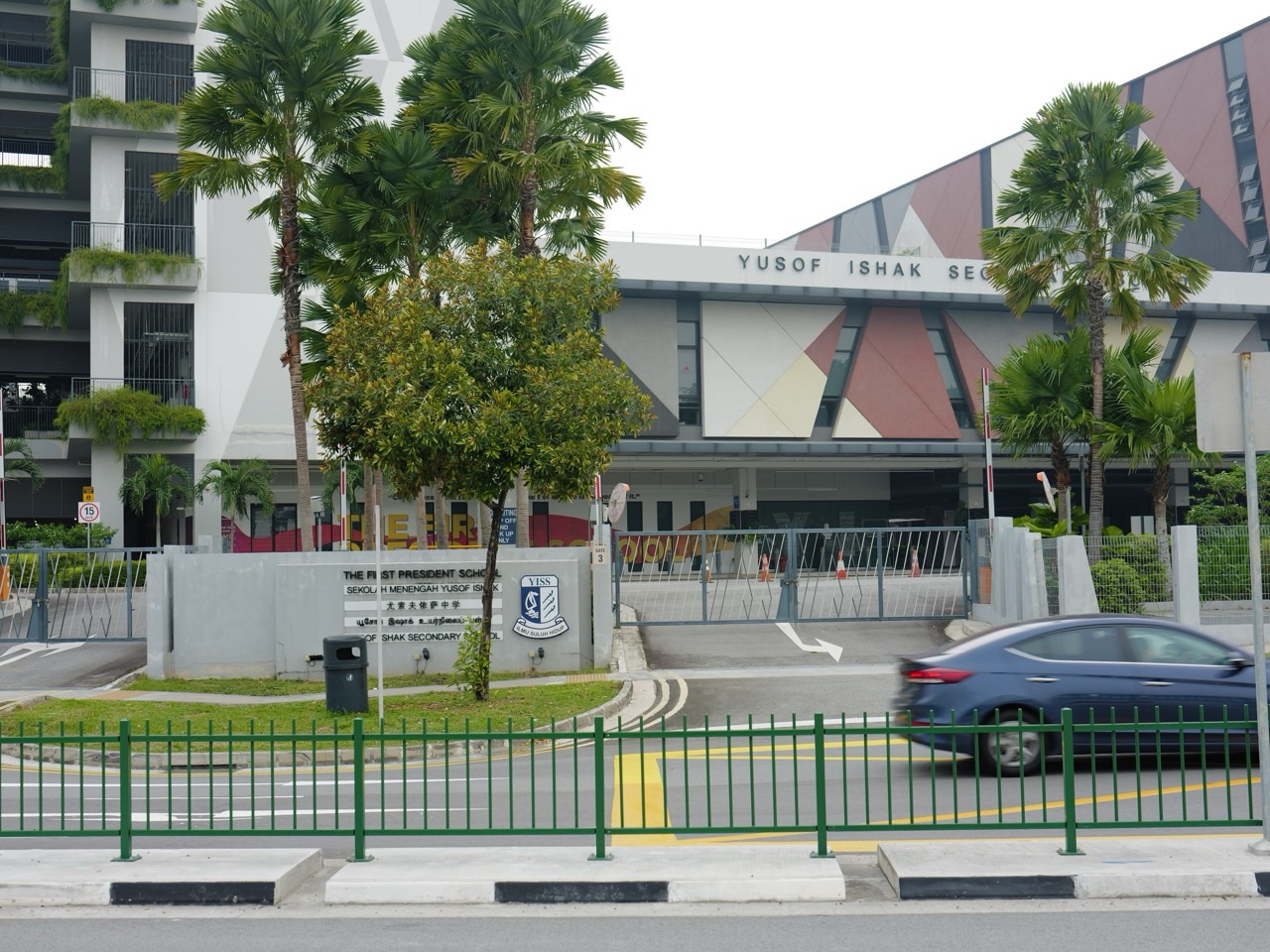
How PG1 works at Punggol is best understood as the start of a learning journey, not as a final judgment of a student’s potential. Posting Group 1 is an admission arrangement under Full Subject-Based Banding (Full SBB), and it generally guides the starting level of most academic subjects toward G1. What matters next is the evidence a child builds: correct understanding, stronger reading and numeracy, good practical skills, reliable work habits and the ability to progress in subjects where readiness improves. A small, honest learning portfolio can help the student, family and school discuss that progress over time.
For Punggol parents looking ahead to 2027 and beyond, two dates must be kept separate. The Singapore-Cambridge Secondary Education Certificate (SEC) begins in 2027 for that year’s graduating students, with subjects examined at G1, G2 or G3 levels. A child who enters Secondary 1 in 2027 would ordinarily reach Secondary 4 in 2030, so the 2027 examination details are an official reference for the new system, not a guaranteed 2030 syllabus. MOE is also introducing the Post-Secondary Admissions Exercise in 2028, meaning future admission planning should follow current rules when the child actually reaches that stage.
- PG1: the school-admission Posting Group; it is not an examination grade, student identity or permanent stream.
- G1: a subject level; G2 and G3 are more academically demanding levels for particular subjects under Full SBB.
- Portfolio purpose: preserve dated examples of independent work, corrections, teacher feedback, projects and self-management, rather than merely collect marks.
- Progression: discuss more demanding subject levels using sustained evidence and the school’s current eligibility criteria; changes are not automatic.
- SEC: introduced from 2027; the certificate reflects the subjects and levels candidates actually sit.
- Post-secondary: ITE, polytechnic and other routes depend on actual subject results, combinations, requirements and changing admission arrangements, not a student’s first Posting Group alone.
- Local action: ask the Punggol secondary school about its review process, learning supports and available subjects; verify national exam information with SEAB and MOE.
- Time horizon: for a 2027 Secondary 1 entrant, build foundations first, then review updated syllabuses and admission requirements as the student approaches graduation.

A Posting Group is a starting point, not a life sentence
Families sometimes speak about PG1 as though it is a prediction of every examination, institution and career a child will encounter. That is not how Full SBB is intended to work. Posting Groups are used for Secondary 1 admission and to guide the initial demand of most subjects. Subject levels describe what the child is actually studying, and combinations may change where the student meets the applicable conditions. The distinction creates space for different talents to develop at different speeds.
This matters in Punggol just as much as anywhere else in Singapore. One student may become highly capable in digital design, another in practical problem-solving, another in communication or leadership. Some pupils may grow academically after receiving more precise instruction and building reliable foundations. Others will discover meaningful opportunities through applied learning and later technical education. The important question is not whether every student reaches the same destination. It is whether each child gains capabilities and understands the requirements for the opportunities they want to pursue.
What G1 means without the old stream assumptions
The G1 curriculum standard is broadly mapped to the former Normal (Technical) level, while G2 and G3 are mapped to the former Normal (Academic) and Express standards respectively. This historical mapping helps adults understand academic demand, but it can mislead when used to recreate the old social hierarchy. Full SBB includes mixed form classes and opportunities for students to offer subjects at different levels. The student is not simply a representative of a single academic stream.
Explain the system to a young teenager using a practical example. A student might currently offer Mathematics at G1 and another subject at an appropriate different level where eligibility and the school allow it. The student also participates in schoolwide experiences, character education and a CCA. Their future decisions depend on actual subject outcomes and requirements. No parent should promise a particular level change just because the framework is more flexible, but no parent should treat the initial level as proof that change is impossible. Both mistakes replace evidence with assumptions.
Why a learning portfolio is more useful than a trophy file
A trophy file contains certificates, competition photographs and perhaps a few impressive marks. A learning portfolio has a different job. It shows how the student thinks, where they made an error, what explanation repaired it and what they can now do independently. It can include a dated first attempt, a corrected version, a new problem, short teacher feedback and the student’s own reflection. It can also include a practical project, a presentation outline or evidence of a reliable study routine.
The portfolio should not become a huge homework archive. Select representative samples rather than saving every worksheet. A folder with five carefully chosen items can tell a clearer story than a stack of two hundred pages. Let the child participate in choosing the evidence and explaining why it matters. The student should be able to say, “I used to confuse the discount with the final price; now I can explain the difference in an unfamiliar question.” That sentence describes learning more precisely than simply announcing a higher mark.
The first portfolio page should be a starting baseline
Before measuring progress, record a fair starting point. Choose one recent task from English, one from Mathematics and perhaps a subject or practical area the child enjoys. Ask the student to attempt an appropriate problem independently and explain the method. Note what happens without prompts. A baseline is not a diagnostic label. It is a dated observation that can be compared with later work to see whether understanding has improved.
A useful baseline page has four fields: “What I attempted,” “What I could do,” “Where I needed help” and “What I will practise.” The language should be neutral. “Needs guidance identifying the main idea” is better than “weak in English.” “Confuses equivalent fractions during comparison” is better than “bad at Mathematics.” Specific descriptions allow specific instruction. They also make it easier for a school to respond constructively if parents request a discussion. The portfolio becomes a map of teachable steps rather than a record of disappointment.
Build evidence of independent reading, not only reading speed
At G1, functional literacy remains foundational to success in many subjects. A student might read words fluently yet struggle to identify the main idea, distinguish an example from an explanation or follow a multi-step instruction. To build a reading entry, give the child a suitable passage and ask three questions: What is it mainly about? Which detail supports that idea? What does an important word mean in this context? Record the first answers without coaching, then work through a correction.
After practice, use a different short passage to test whether the skill transfers. If the child can succeed only with the original example, the understanding may still be fragile. Add a brief student reflection: “I looked at the first and last sentences, then checked which idea most details supported.” The method is more important than a decorative score. Reading is a transferable ability. It supports school notices, Science explanations, online safety, project briefs and the later demands of almost any education or workplace pathway.
Build a writing entry around one clear idea
Many children are told to “write more” when their writing is unclear. A better portfolio entry isolates the actual problem. Begin with one sentence that communicates an idea. Add an explanation, a relevant example and a conclusion where appropriate. If the child writes, “Our project helped the environment,” ask how it helped, what was changed and what evidence supports the claim. Rewrite with greater precision rather than immediately demanding a page of elaborate vocabulary.
Compare the original and revised versions. The improvement might be that the student now names the specific action, gives a reason and uses punctuation to show the relationship between ideas. That is worth recording. Later, try a new topic to check independence. A portfolio should demonstrate that the student can use the method beyond one teacher’s example. The same skill helps with factual reports, personal responses, presentations and communications in applied subjects. Clear writing is an instrument for thinking, not merely an English examination requirement.
Build Mathematics evidence from the first wrong step
A Maths portfolio is particularly useful when it records reasoning. Suppose a student sees a $60 item discounted by 20%, calculates $12 correctly and then labels $12 as the new price. The calculation is not the main problem. The child has confused the amount of the discount with the amount remaining. Save the first solution, explain the distinction and solve a fresh example: a $75 item discounted by 20% gives a $15 reduction and a final price of $60.
This evidence reveals a transferable repair. It also shows a teacher which idea was missing. Other entries might concern unit conversion, comparing quantities, reading a graph or selecting the right operation in a word problem. Each should identify a concept and show independent use after correction. Avoid turning the portfolio into a competition for the longest worksheet. A small number of well-chosen errors and repairs helps parents target practice, tutors choose explanations and students see improvement they might otherwise overlook.
Build Science evidence by separating observation from explanation
A useful Science entry has three parts: what was observed, what the learner thinks caused it and what evidence would test the explanation. For instance, condensation may appear on the outside of a cold container. A student who simply says “the cup is wet” has made an observation. A fuller explanation connects the water droplets to moisture in the surrounding air cooling and condensing on the surface. The precise concept should be checked against the actual school syllabus and lesson.
Parents can ask the child to explain in their own words before teaching vocabulary. Then check whether key terms are used correctly. If the student repeats a sentence without understanding it, use a safer, simpler example or ask the teacher for guidance. Record the student’s improved explanation and what they would expect in a changed situation. This approach values evidence, cause and prediction. Those are important scientific habits at all levels and can transfer into technical, environmental and practical problem-solving later in life.
Applied learning and practical projects deserve serious attention
For some students, a project provides the clearest evidence of planning, collaboration and problem-solving. A portfolio could contain a sketch of an object, a list of design requirements, a photograph of a permitted project, feedback from testing and a short explanation of what changed. In digital work, it might show how a spreadsheet was organised or how a simple programme was tested. The evidence should reflect the child’s actual contribution and respect the school’s privacy and project rules.
Avoid assuming that every G1 student must offer a particular applied subject or that all Punggol schools run the same technical programmes. SEAB’s 2027 G1 syllabus information includes subjects such as Computing, Design and Technology and other options, but eligibility and school offerings vary. The published 2027 list is also not a guarantee of future combinations for a student graduating later. Parents should ask the actual school what is offered, what students do and how practical work is assessed. Authentic skills matter more than borrowed project photographs.
Use a simple three-part evidence rule
An effective learning portfolio can use three repeating sections: attempt, correction and transfer. The attempt shows the student’s original work without adult rewriting. The correction identifies the precise missing idea and the appropriate method. The transfer demonstrates success on a new task. This structure keeps the portfolio honest. If a child only has the corrected sheet, adults cannot tell whether learning was independent. If there is no new application, improvement may be tied to memorising one worked example.
For example, in English the attempt might misunderstand a paragraph’s main point; the correction explains the clue; the transfer identifies the main point in an unrelated passage. In Mathematics it might be an operation error; the transfer uses the principle with different numbers and wording. In a project it might be a design that failed a test; the transfer shows an informed revision. This is a constructive method because mistakes become useful information. The student’s identity is not defined by the first attempt.
Create a monthly review that does not overwhelm the child
A monthly portfolio review can be short. Let the student select one piece of work showing progress, one task still requiring help and one next goal. Parents can ask what strategy made the improvement possible and whether it would work again. Use teacher feedback as a reference, but do not confuse every school mark with a complete measure of capability. A student may improve in explaining a method before the gain becomes visible in formal assessment, particularly when new content is arriving at the same time.
Keep the review within a predictable duration and stop before it becomes an argument. Record the next action as something observable: “Explain percentage reductions in two unfamiliar contexts,” rather than “be better at Maths.” Where a concern persists, share specific evidence through the appropriate school channel. The family should not try to replace school assessment systems with a private scoring scheme. The portfolio supports communication and reflection. It does not grant official eligibility or change subject levels by itself.
When does a discussion about G2 become appropriate?
Full SBB allows more flexible subject-level combinations, but movement to a more demanding level depends on the applicable criteria, readiness, available arrangements and school guidance. A PG1 student might show marked improvement in one subject while continuing to learn others at G1. That possibility is why parents should keep evidence by subject rather than insist on treating the entire student as one level. However, there is no automatic promotion merely because a portfolio looks impressive or a family requests it.
A useful discussion with a subject teacher should cover sustained independent performance, strengths and gaps, the demand of the proposed level, the child’s motivation and the workload across all subjects. Ask which review point and eligibility rules apply to that cohort. A teacher may recommend further consolidation, targeted extension or a level review. Treat the answer as educational feedback rather than a contest. The goal is a more suitable learning experience, and sometimes remaining at the present level while mastering it thoroughly is the better immediate step.
What subject-level flexibility does not mean
Flexibility does not mean that every student may choose any combination at any time, that a high grade in one subject changes all subjects, or that a more demanding level automatically improves later admissions prospects. Subject combinations, school timetables, prerequisite knowledge and later institution requirements all matter. Nor does flexibility erase the value of the applied strengths and practical accomplishments a student may develop while studying at G1. An educational path can be demanding, worthwhile and different from another person’s.
Parents should also avoid describing a level change as “escaping” G1. Such language suggests that the original learning was embarrassing rather than useful. A stronger conversation acknowledges what the student mastered, what new challenges are appropriate and what support will be needed. If a change is made, monitor whether it improves genuine learning. If a change is deferred, identify the exact readiness evidence to build. In both cases, the child learns that improvement comes from deliberate work and informed decisions.
What the SEC actually changes
From 2027, Singapore’s SEC replaces the separate GCE N(T), N(A) and O-Level examination certificates for the graduating cohort. SEAB states that candidates sit subjects at the levels they offer—G1, G2 or G3—and receive one certificate reflecting those subjects and levels. The overall examination standards remain aligned to the relevant previous levels rather than becoming one identical paper for everyone. This is important: one common certificate does not mean one uniform syllabus or difficulty for every subject.
A parent can therefore think of the SEC as a clearer record of a student’s actual mix of subjects. But the certificate alone does not tell the family which post-secondary course a pupil will enter. Admissions depend on the requirements of particular programmes and any relevant grade mappings or subject prerequisites. For a student who has not yet reached the national examination stage, the most responsible planning is to build the current year’s skills and consult official details as they are updated. Predicting distant cut-offs from a 2027 example would be misleading.
How G1, G2 and G3 grading differs in the SEC
SEAB’s published 2027 SEC information explains that G1 subjects use grades A, B, C, D and E; G2 subjects use grades 1 through 6; and G3 subjects use grades A1 through 9 in the established grading pattern. This variation reflects the different academic levels. It is not correct to assume that a letter grade in G1 is directly identical to a numerical grade in G2 or G3. Families should read the relevant assessment framework rather than compare unlike labels casually.
When admissions calculations require subjects at different levels to be considered together, official grade-mapping rules may apply for specified purposes. SEAB publishes those mappings and explains their contexts. Parents should not invent their own conversion formula or assume that every post-secondary programme uses the same calculation. The student should concentrate on meeting the learning outcomes for each subject and developing a combination appropriate to their evolving goals. As graduation approaches, check the programme-specific requirements for the actual admission year.
The 2027 examination year is not the 2027 Secondary 1 year
This timing issue deserves separate attention. The first SEC examination year is 2027 for the cohort graduating in that year. A Punggol pupil starting Secondary 1 in January 2027 would not ordinarily sit the national SEC in the same year. Following a normal four-year trajectory, that pupil would be in Secondary 4 in 2030. Families should not use a headline about the “2027 SEC” as if it were a command for a new Secondary 1 student to begin national-exam drilling immediately.
The curriculum and available syllabuses may evolve before 2030. For example, SEAB has published specific 2027 G1 subject lists and noted that the MOE-ITE Applied Subjects listed for that examination year are limited to approved schools and that 2027 is their final examination year. That is a concrete reason to avoid promising a four-year course based solely on a 2027 subject listing. The right practice is to use the student’s current school plan, confirm options each year and read the official syllabus for the actual examination cohort when available.
What changes in post-secondary admissions from 2028?
MOE has announced a new Post-Secondary Admissions Exercise, or PSE, starting in 2028 for students using their SEC results to apply for various post-secondary education institutions. The objective includes allowing applicants to consider relevant pathways within a coordinated exercise. The institutions named in the announcement include junior colleges, Millennia Institute, polytechnics and ITE courses. This does not mean every student becomes eligible for every institution or that admission requirements disappear.
The important distinction is between being able to apply within a system and satisfying the prerequisites for a particular course. Those are different matters. Academic subjects, levels, results, programme-specific conditions and available places will continue to shape outcomes. Because a current Secondary 1 pupil will encounter later admissions rules years from now, the family should avoid building a rigid future plan around one article or chart. Use the 2028 announcement to understand the direction of reform, then check up-to-date MOE and institution requirements closer to the decision.
ITE is a serious education pathway, not a consolation prize
For many students, technical and applied education can provide a structured route into valuable skills, further study and work. The Institute of Technical Education offers programmes that develop professional and practical competencies, and admission depends on the relevant qualification and course requirements. Families should investigate actual course content, learning environment, progression opportunities and student interests rather than describe ITE as a fallback for pupils deemed unsuccessful by a narrow academic comparison.
A Punggol teenager interested in electronics, hospitality, design, logistics or digital operations may benefit from exploring how skills are used in those fields. The family can read official course pages, attend relevant education events and learn about the qualifications needed. This is not an instruction to decide a child’s career at age twelve. It is an invitation to treat applied strengths with the same seriousness given to traditional academic subjects. A good portfolio of school learning may reveal interests worth investigating later, even though it is not an admissions substitute for formal qualifications.
Polytechnic aspirations require precise subject planning
Polytechnic pathways involve specific eligibility criteria, course entry requirements and sometimes important prerequisite subjects. A pupil interested in engineering, media, business or health-related programmes should not assume that the name of a broad industry alone settles the admission route. As the pupil develops, parents and teachers can discuss the academic and practical foundations required and which subject combinations preserve suitable options under current rules. The details should be checked directly with MOE and the relevant polytechnic when the decision becomes timely.
For now, use interests to guide learning rather than create pressure. A child who enjoys building a robot can be encouraged to understand measurement, clear instructions, simple coding and debugging. One who likes design can practise observation, communication and explaining choices. These capabilities are valuable whether or not the pupil eventually applies to a particular diploma. It would be misleading to promise that a PG1 student can enter a specific polytechnic programme solely because a subject-level change is theoretically possible. Eligibility must be earned and verified at the proper stage.
JC and other routes should be discussed without false promises
Junior college and other academically demanding pathways have their own entry conditions, and the precise rules can change. A parent should not imply that beginning at PG1 makes such routes automatic or impossible regardless of later learning. Full SBB is designed to allow subject-level variation and more porous education journeys, but actual admissions still require the necessary qualifications and results. The child’s current school can advise about realistic learning goals, while MOE and institution sites provide the rules that matter when the application year arrives.
This helps families avoid two equally unhelpful extremes. The first says, “Your future is already fixed by PSLE.” The second says, “Every door is equally open without conditions.” Neither is accurate. A better statement is that learning develops options, and options have requirements. If a student becomes stronger in particular subjects, ask how to pursue that strength. If applied learning suits them better, investigate the serious routes available. Honest information encourages effort while respecting the reality of admissions standards.
How an interest portfolio can complement academic work
Alongside the core learning portfolio, a student may keep a small record of interests: drawings, experiments, writing, community service, performances, club projects or personal design work. This is not a demand to manufacture an impressive CV. It is a way to notice what the child voluntarily returns to and what kinds of problems they enjoy solving. Record dates, the student’s own role and a short explanation of the challenge. Avoid presenting teacher-led or adult-completed work as the student’s independent achievement.
As the child grows older, these records may help with conversations about electives, CCAs, DSA-related interests for later stages where relevant, or post-secondary course exploration. They can also show a child that a difficult test does not erase competence in other domains. The records do not replace formal assessments or guarantee placement in selective programmes. Their value is reflective: they help a family ask better questions about motivation, strengths and the kind of learning environment in which the student thrives.
A worked portfolio: Mei learns to explain rather than guess
Imagine Mei, a fictional Punggol student studying Mathematics at G1. On her first attempt, she chooses an operation based on a keyword and gets a percentage word problem wrong. Her parent asks her to underline the quantity being changed, identify the original amount and explain what the question wants. They practise with a smaller concrete example and then return to the original method. Mei revises the answer and writes one sentence describing the error.
Two weeks later, she solves a new problem with different wording independently. Her portfolio includes the first error, the corrected explanation and the independent transfer question. This is genuine learning evidence. If future results remain secure, the family can discuss appropriate extension or a subject-level review with the school, but they should not declare automatic eligibility from this one episode. The example demonstrates how a portfolio makes the next instructional decision clearer while preventing a child from believing a mistaken first answer defines their ability.
A second worked portfolio: Arjun discovers a practical strength
Imagine Arjun, a fictional student who finds extended written explanations difficult but enjoys planning a simple mechanism. He sketches a device, lists requirements, tests whether the parts fit and records what went wrong. The first design does not work reliably. Instead of hiding the failure, he explains the problem, changes a component and tests it again. His portfolio shows the sequence of reasoning rather than merely a polished final object.
At school, Arjun still needs support with reading, Mathematics and clear writing, because those foundations help him explain and improve the design. His practical confidence is not an excuse to ignore essential academic learning, nor should his academic gaps erase the value of the project. A parent can share relevant observations with teachers while asking about suitable enrichment or CCA opportunities. The story illustrates a richer view of progress: education connects understanding, action, reflection and the confidence to revise a failed idea.
Avoid building a portfolio that belongs to the parent
A common mistake is to make the portfolio so polished that the child cannot explain it. Adults rewrite reflections, choose sophisticated words, correct designs and arrange impressive photographs. The final folder may look professional, but it no longer provides trustworthy evidence of the student’s learning. A useful portfolio should include rough drafts and genuine mistakes. A clear, simple student explanation is more valuable than a perfect adult-produced paragraph that the pupil does not understand.
Parents can support without taking ownership. Help the child organise pages, date work, check that private information is protected and ask clarifying questions. Then let the student choose and explain the evidence. If the child is unwilling to maintain a large portfolio, make it smaller. One good entry per month can be enough to support a meaningful conversation. The portfolio is a tool for learning, not a public showcase of family prestige. Its usefulness depends on authenticity.
The annual review: foundations, flexibility and future direction
At the end of each school year, review three domains: the foundations the student has mastered, the flexibility that may be appropriate in individual subjects, and the interests the student wants to explore. Foundations include reading comprehension, numeracy, clear explanation and self-management. Flexibility means asking the school about current subject-level options, not assigning levels privately. Future direction can be as modest as choosing a CCA project or researching an educational field.
Keep the annual review realistic. A Secondary 1 student does not need a complete career map. A Secondary 2 student may begin to understand which subjects feel natural and which require extra effort. Later years bring more consequential subject choices and post-secondary planning. At each stage, use current school and MOE information. What should remain stable is the learning method: attempt an appropriate task, identify the gap, practise with feedback, demonstrate independent transfer and make the next decision with evidence.
When a portfolio reveals a problem that needs more than revision
Sometimes the evidence shows more than an ordinary content gap. The student may repeatedly misunderstand instructions across subjects, avoid school, struggle to sustain attention or show signs of emotional distress. These patterns should not be casually diagnosed by a parent or tutor. Record concrete observations and seek a discussion with the school or appropriate professionals where warranted. A portfolio can help explain what has happened, but it is not a clinical assessment and cannot identify the cause of a condition.
It is equally important to recognise practical problems: missed submissions, sleep disruption, lost materials or a commute that leaves the child exhausted. The remedy may involve organisational support or wellbeing intervention rather than more challenging worksheets. A responsible education plan separates the skill to be taught from the conditions required for learning. A child who feels safe, rested and supported is better placed to use instruction effectively. The portfolio should direct attention to the right next step, not turn every difficulty into a demand for academic acceleration.
How to keep ambitions alive without making guarantees
Parents are right to want a wide future for their children. The way to preserve possibilities is to build genuine abilities and understand the requirements for different routes. Encourage the child to learn seriously, to revise mistakes, to ask for help, to contribute to a school community and to investigate interests. Celebrate a reliable habit as well as an improved grade. Growth is cumulative, and the route is rarely perfectly straight.
At the same time, speak accurately. A PG1 student may have opportunities to offer subjects at other levels where eligible, but no specific promotion can be promised. The SEC reports actual subjects and levels, and later pathways have real conditions. Admission rules can change by the time today’s younger students graduate. Families should be optimistic about development while checking the facts. That combination of ambition and honesty is more motivating than either fatalism or empty reassurance.
Frequently asked questions about PG1, portfolios and SEC
Does a PG1 child sit a separate PG1 national examination?
No. PG1 is an admission Posting Group. Under the SEC system, students take the examination in the subjects and at the subject levels they actually offer, where eligible. The examination certificate reflects those subjects and levels.
Can a strong G1 portfolio automatically secure G2?
No. A portfolio can support a conversation about readiness, but the school’s current criteria and subject arrangements determine whether a level change can be offered. Sustained independent achievement matters more than a single carefully chosen sample.
When does the SEC begin?
The first SEC examination year is 2027 for graduating students. A child entering Secondary 1 in 2027 would ordinarily reach Secondary 4 in 2030. Families should use the syllabus and rules applicable to the child’s actual examination year.
Does one SEC certificate mean all subjects use the same grading scale?
No. SEAB publishes different grading structures for G1, G2 and G3 subjects, with mappings used where specified for certain progression calculations. Consult the official requirements rather than comparing grades informally.
Does PG1 automatically restrict students to ITE?
No Posting Group should be treated as a complete career verdict. However, actual post-secondary admission depends on the student’s subjects, levels, results and the programmes’ eligibility rules. Parents must distinguish possible long-term development from guaranteed entry.
How much portfolio evidence is enough?
Start with one meaningful entry for a major learning need, plus occasional authentic project or interest examples. A short portfolio that demonstrates attempt, correction and independent transfer is more useful than a large folder of copied solutions.
Official sources and connected Punggol guides
Read SEAB’s SEC overview, 2027 G1 syllabuses for school candidates, MOE Full SBB and MOE’s 2026 announcement of the 2028 Post-Secondary Admissions Exercise. Use MOE SchoolFinder to verify the current school’s options. For local, practical next reading, see Punggol Secondary 1 posting, PG1 versus PG2 at PSLE Score 25 and the first 90 days under Full SBB.
This article is based on information available in November 2026. Published 2027 SEC syllabuses and 2028 admission announcements are not promises about the exact rules applying in 2030 or later. The most useful next step is to start a small, honest learning portfolio, share relevant evidence with teachers and let the child’s demonstrated growth—not an old stream stereotype—guide the next educational decision.


