
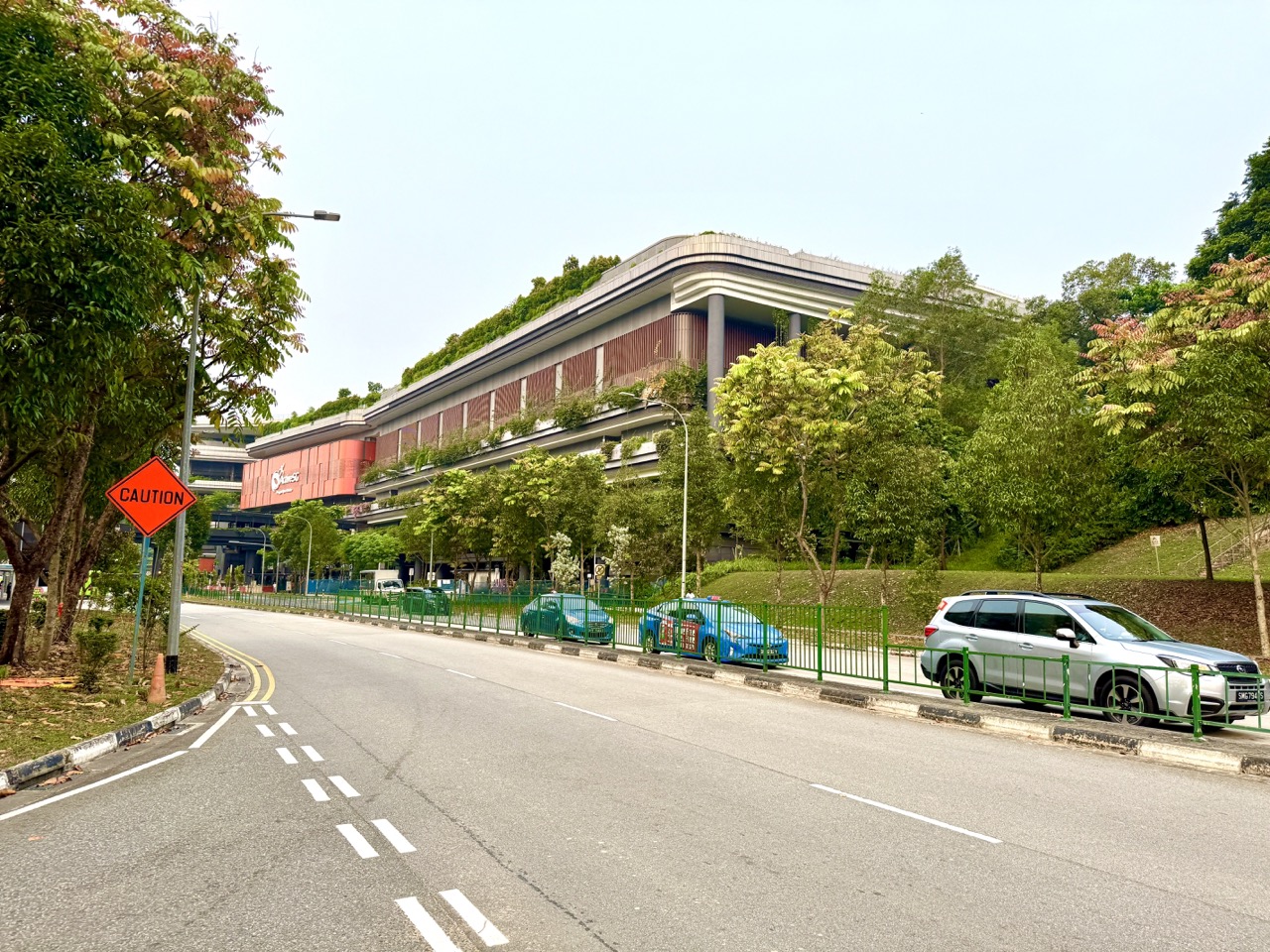
If someone offers you a sold-out badminton court at ActiveSG Punggol through a private message, asks you to “renew” SG60 Credits through an unfamiliar link, or demands a deposit for a coaching class that is not listed by the claimed operator, do not pay or disclose your login details before checking independently. Punggol Sport Centre at 11 Sentul Crescent began soft-launch operations on 27 October 2026, with a formal opening announced for 22 November. For actual ActiveSG facility bookings, programme registration and gym or swim passes, start from the official browser-based MyActiveSG+ service. Its homepage warns about government-impersonation scams, and SportSG separately prohibits reselling, subletting and assigning booked court slots. A stranger’s booking screenshot is not proof of a legitimate transferable reservation.
A suspicious sports message does not establish that fraud has occurred; it is a reason to verify the claim before acting. Singapore’s official ScamShield phishing guidance says not to follow unsolicited payment links, reveal one-time passwords or enter bank credentials on unfamiliar sites. Residents can check suspicious messages through the ScamShield app or call its 1799 helpline, which the official service describes as available 24 hours daily. If money or credentials have already been compromised, contact the bank immediately and use the relevant official reporting channels. This article explains how to distinguish legitimate bookings, private coaching, sports promotions and impersonation attempts without labelling every unfamiliar seller a criminal.
- Official sports portal: activesg.gov.sg/home; type or open the known address independently.
- Official warning: MyActiveSG+ alerts visitors to government-impersonation scams.
- Court-slot rule: ActiveSG prohibits bots, onselling, subletting, assignment and, from 15 July 2026, social-media advertising or inducement linked to onselling.
- Do not buy: somebody’s claimed court slot or a screenshot that promises to transfer the reservation for a fee.
- Check the booking: venue, sport, date, time, authenticated account record and official payment status.
- Verify private coaching: real provider identity, current qualifications, proper facility permission, written class details and secure payment.
- Do not disclose: Singpass or banking credentials, one-time passwords, full card details, identity-document images or other sensitive data to a stranger.
- Check suspicious links: ScamShield app or 1799; verify through independently opened official channels.
- If compromised: contact the bank immediately, secure accounts and make an appropriate police report.
- This guide: precise red flags, legal-versus-suspicious distinctions, parent examples, safe dispute responses and a four-week digital-safety routine.
Definition lock: suspicious, prohibited and fraudulent are different
A suspicious message is one whose source, payment instruction or promise cannot yet be verified. A prohibited transaction may involve a real court reservation being resold or transferred against ActiveSG rules. A fraudulent representation involves deception, such as collecting money for a court that does not exist. These categories can overlap, but they should not be used interchangeably or applied to a named person without evidence.
This precision matters for Punggol residents because a popular new facility can generate legitimate questions and rumours. A friend who misunderstands the booking rules is not necessarily a scammer; a social-media account showing a plausible court screenshot is not automatically trustworthy either. Verify what is being offered, whether the operator permits it and where payment would actually go.
A useful first response is calm and specific: “I will confirm this through MyActiveSG+ and the operator before sending money.” You do not need to argue with the sender to make a safe decision.
Why a new sport centre creates opportunities for confusion

Punggol Sport Centre’s October 2026 soft launch attracted attention because it brought a gym and selected racket-sport access closer to residents. Popular facilities can have limited peak-hour slots. That scarcity creates a temptation to believe someone offering a “guaranteed” court at the exact preferred time, especially if a family has been unsuccessful in a ballot.
Scammers in many consumer settings exploit urgency, although a specific fraud involving Punggol Sport Centre should not be asserted without evidence. A person might imitate the colour or wording of an ActiveSG page, reuse photographs of the building or send a payment request that looks official. The existence of real facilities and genuine opening coverage does not authenticate an unrelated private transaction.
The appropriate approach is to separate the public facts—venue, operating stage and official booking rules—from the private claim. The former can be checked; the latter needs independent verification.
Find the legitimate booking service without trusting a link
The official MyActiveSG+ homepage is at activesg.gov.sg/home. It provides categories for buying gym or swim passes, booking facilities and joining programmes. Use a known bookmark or type the domain carefully rather than clicking a link sent by an unknown account. The old ActiveSG mobile app’s historical interface is not a reliable guide to present-day transactions.
ScamShield describes phishing pages that imitate legitimate organisations. They can use convincing graphics and text while sending the visitor to a different internet address. Look at the entire domain, not just the page’s logo or the first word in a long URL. A small difference in spelling or a suspicious extra domain can change where your credentials are sent.
If a message claims that an urgent payment must be made through a different platform, close it and independently inspect the real booking service. Do not allow a countdown to replace verification.
The ActiveSG prohibition on resold court bookings
Sport Singapore’s No Onselling campaign explicitly prohibits using bots to secure facilities, selling bookings to other parties, subletting part or all of slots, or assigning their use. The campaign says that from 15 July 2026, social-media advertising or inducement linked to onselling also constitutes a terms-of-use infringement. This is important even if the proposed seller actually holds a valid booking.
A buyer who pays a stranger for court time may not obtain the rights they expect. Operator rules generally require the original booking holder to be present and part of the playing group. A screenshot cannot quietly turn a non-transferable booking into an authorised one.
Do not respond to slot scarcity by purchasing from a reseller. Check the official ballot or instant-release window, choose another legitimate date or use an authorised alternative facility.
Why a screenshot does not prove transferability
A screenshot can show a real booking at one point in time without proving it is still valid, belongs to the sender or may be sold to someone else. Images can be edited, cropped or reused. Even a genuine booking confirmation may contain private account or QR information that should not be freely distributed.
A booking record belongs in the authenticated operator system. If you are arranging a friendly game with a known booking holder, the holder should remain responsible for the reservation and obey the terms. Do not pay an unknown intermediary who claims to have taken over somebody else’s slot. The fact that a court is shown in the screenshot does not establish permission for that arrangement.
For a family, the safe rule is simple: coordinate directly with a legitimate booking holder or make your own permitted reservation through MyActiveSG+. Never treat a digital picture as a substitute for the operator’s access conditions.
A fake SG60 expiry message and the real deadline
ActiveSG’s published FAQ describes a one-off credit-expiry extension to 31 December 2026, with qualifying transaction rules for rollover into 2027. A criminal could imitate this real deadline to create urgency—“Your account will be deleted in ten minutes unless you pay a verification fee”—but the existence of the deadline does not authenticate the message.
The operator’s rules do not make a random bank transfer or unfamiliar form the way to preserve credits. Read the actual balance in the authenticated account and the latest official FAQ. A legitimate transaction means purchasing an eligible sports product according to the service, not sending money to a stranger to “unlock” a government benefit.
Avoid posting complete wallet screenshots in public groups. They may expose personal information or help an impersonator make a later message appear more convincing.
The difference between gym entry and a booking deposit
The Punggol gym’s opening promotion from 27–31 October 2026 has ended. Current admission and valid passes should be checked through the official system. If a person approaches you saying that they can secure a “lifetime free gym membership” in exchange for a payment to a personal account, do not infer that the proposal is official merely because the gym genuinely opened.
Different services have different purchase methods: gym passes, court reservations and structured programmes are not interchangeable. Ask what product is being sold, who operates it and where the purchase is recorded. A private instructor’s legitimate class fee may be separate from public facility admission; that still needs a verifiable provider and lawful venue use.
Do not buy a product that cannot be identified in writing. A clear receipt and genuine programme details are basic safeguards, not unreasonable demands.
Private coaching can be real without being an ActiveSG programme
A qualified independent coach may offer lessons in Punggol or a neighbouring estate. That does not mean every private coach is employed by Sport Singapore or every lesson is an official ActiveSG programme. Public facility rules may require prior written permission for commercial coaching or personal training. The correct question is where the class actually occurs and under what authorisation.
Ask for the operator or business name, a written description of the lesson, the exact venue, applicable age group, start date, coach qualifications and safeguarding arrangements. If a coach claims specific NROC registration, use the official CoachSG resources to verify that claim where possible. A missing public profile by itself is not conclusive evidence of wrongdoing, but a provider should explain credentials honestly.

Avoid paying a deposit solely because a coach uses the word ActiveSG in a profile. Distinguish an approved programme from a private class near a public facility.
The problem with counterfeit coach certificates
Certificates are useful when they can be verified, but a digital image can be out of date, belong to a different person or be modified. Ask which organisation issued the credential and whether it is current for the sport and age group involved. CoachSG’s NROC framework and Sport Singapore’s exercise-professional registry can help where relevant.
Do not post a coach’s private identity document online to crowdsource a verdict. Use respectful, legitimate verification channels. If a provider makes a false claim, record what was said and seek appropriate official clarification. Avoid escalating uncertainty into an unsupported public allegation.
For parents, qualifications are only one part of a suitable class. Teaching behaviour, class size, safety arrangements and clear refund terms still matter. A genuine certificate is not permission to conduct an unapproved paid lesson inside any public court.
Why strangers ask for one-time passwords
A scammer who acquires a username or phone number may still need a one-time password to enter an account or authorise a transaction. They may claim the code is necessary to prove that you own a sports booking, release a refund or verify a child’s class. Do not share the code. Legitimate support should not need you to reveal confidential login credentials through a casual chat.
ScamShield’s phishing guidance identifies requests for passwords, OTPs, bank credentials and unusual payment links as warning signs. The safest approach is to stop interacting with the sender and verify directly through known official contact methods.
Parents should also teach older children not to share a guardian’s Singpass code or banking verification details to “finish a booking.” Family scheduling should use the official linked-account features instead of exchanging secret credentials.
The bank-transfer trap
A legitimate private provider may offer several payment methods, but payment instructions should be consistent with the actual provider and written terms. A sudden request to transfer to a different personal account, especially under a tight deadline or with excuses for why the official website does not work, deserves independent checking. Do not assume that every personal PayNow payment is fraudulent, but do not regard it as proof of authenticity either.
Verify the intended payee through a known contact and ensure that the service itself exists. For official ActiveSG bookings, use MyActiveSG+ rather than an off-platform agent. If the transaction is already made and you suspect fraud, call your bank immediately using an independently known contact number.
A small deposit may be used as a trial by a scammer before larger requests follow. The amount is less important than whether the underlying claim can be verified.
What suspicious urgency sounds like
Pressure can take many forms: “Only one court left—pay in five minutes,” “Your credits expire before sunrise,” “A government officer will fine you if you do not verify,” or “Your child’s spot disappears unless you send an OTP.” Real booking systems do have legitimate deadlines, but an unsolicited message is not authoritative just because its wording sounds urgent.
The correct response is to open the official service and inspect the actual account state or programme listing. If you cannot verify, stop. A genuine opportunity that requires unsafe credential sharing is not worth accepting.
Help children understand that urgency is a feeling created by a message, not proof of a legal obligation. The same reasoning helps them evaluate dubious tuition offers, shopping advertisements and future financial requests.
The current government SMS sender guidance
ScamShield’s June 2026 guidance says official government SMS messages ordinarily use the gov.sg sender ID, with listed exceptions for certain situations. It also warns that scammers may know personal details and use them to seem legitimate. A familiar name or correct NRIC fragment is not reliable proof that a message truly came from an agency.
The prudent action is not to rely on sender appearance alone. Open the official website independently, inspect the account and verify unfamiliar instructions using known official contacts. Do not call a number contained only in the suspicious message, because it may connect to the same impersonator.
Even legitimate system notifications should not encourage people to reveal passwords or transfer money to a “safe account.” Protecting the account takes priority over answering an unexpected request immediately.
ScamShield 1799: when to use it
Singapore’s ScamShield service offers a tool to check suspicious messages, numbers and links, and a 24/7 helpline at 1799. It can help residents evaluate warning signs when an unfamiliar sports booking or government message arrives. The service is not the operator that can confirm whether a particular Punggol badminton court is available, so it should not replace MyActiveSG+ for actual reservations.
Use both sources for their proper purposes: the real sports portal to validate the product and the anti-scam service to assess potentially malicious contact. Do not send a complete bank statement or private identity document to a random volunteer asking to “help with ScamShield.”
Verification is strongest when the channels are independent of the suspicious message. If the caller supplies every link and number, you have not really checked the source.
A message about a child’s class requires particular care
Parents may be vulnerable to pressure when a sender claims that a child’s sports place will disappear or that an instructor needs urgent identification documents. A proper programme should provide a clear operator, venue, schedule, eligibility and payment terms. Verify those independently before sending sensitive data.
A family should not have to disclose a child’s full identity information in a neighbourhood group chat to reserve a public badminton court. Where linked-child accounts are legitimately required, use the operator’s official process rather than forwarding Singpass credentials. Check who actually holds the registration and where the course takes place.
A real class may genuinely fill up, but scarcity does not remove the need for safeguarding. If important facts cannot be confirmed, it is appropriate to decline or ask further questions.
Avoid fake WhatsApp or Telegram “support staff”
Someone may create a profile with an ActiveSG-looking logo and claim to be an official helper who can recover an account or reassign a court booking. Logos and display names are easy to copy. The person’s ability to mention real Punggol facilities does not prove affiliation.
If the message asks for a password, bank login, OTP or a transfer to a private account, stop. Open the official Sport Singapore or MyActiveSG+ contact page independently and ask the real service whether the requested action exists. Do not send identity documents or payment screenshots to an unverified social-media account.
A legitimate unresolved booking issue may require support, but support should be requested through an official known route. Convenience is not worth losing control of a bank or government login.
An unexpected QR code can also be risky
QR codes may be convenient for accessing a web page, but an unknown code can direct a phone to a counterfeit site. A printed-looking sticker on a poster or a QR image sent in chat is not automatically official. ScamShield explicitly advises caution with unsolicited QR and payment links.
Before entering credentials, inspect the destination shown by the device and independently verify it through a known operator website. If the code leads to a payment platform that does not match the claimed service, stop. For ActiveSG sports bookings, return to the official MyActiveSG+ route rather than relying on a random poster.
Avoid scanning codes simply to discover what a stranger claims is “hidden access” to sold-out courts. A genuine public booking product should have an identifiable official record and applicable terms.
Refund scams use a genuine disappointment
A family whose court is cancelled due to rain may be understandably eager for a refund. A criminal could imitate an official customer-service message saying that a payment-card number and OTP are required to “release” the refund. The fact that the family really experienced a cancellation makes the false message more persuasive.
Use the authenticated booking history and current ActiveSG refund guidance to check what procedure applies. Some operator-cancelled bookings have specific processes, while voluntary cancellations are treated differently. Do not assume that a stranger who knows the date of a game is entitled to collect confidential payment details.
If a refund message arrives unexpectedly, verify the source independently before acting. Legitimate impatience does not remove the need for financial security.
How to respond if you already clicked
Clicking a suspicious link does not necessarily mean money has been stolen, but it is a reason to stop entering information and assess what happened. If you entered a password, OTP, banking details or card information, act promptly through the relevant official bank and account-security channels. Do not continue interacting with the sender in the hope that they will “undo” the problem.
ScamShield advises contacting the bank immediately and making a police report if you have fallen victim to a scam. Use the bank’s known app or hotline and relevant official reporting service; do not rely on the number in the suspicious message.
Keep copies of relevant transaction details and communications securely for the report, without redistributing them publicly. It is possible to act urgently while remaining precise and calm.
What to do if the bank account is affected
If an unauthorised transfer or suspicious transaction appears, call the issuing bank immediately using verified channels. Ask about measures appropriate to the account, such as restricting transactions or safeguarding payment instruments. The exact steps depend on the bank and what has happened. Do not delay while waiting for a coach or court seller to respond.
Report suspected fraud through appropriate police channels and preserve evidence of the actual communications and payments. Avoid sending your full bank statement to a neighbourhood group to warn others. A safer warning describes the method without disclosing sensitive information.
Recovery outcomes cannot be guaranteed by an independent local guide. The useful objective is to protect remaining funds and accounts promptly while official processes examine the incident.
The difference between a scam report and a venue complaint
A court staff member who applies a rule you dislike is not automatically involved in a scam. Conversely, a phishing link that asks for bank credentials is not merely a customer-service problem. Route the issue correctly. ActiveSG can help with legitimate facility bookings, payments and operator policies; ScamShield and police channels address suspected scams and crime.
When contacting the sports operator, describe the exact booking status, date, venue and where a supposed support message came from. Do not accuse a named employee without evidence. If a private coaching dispute concerns contract performance rather than deception, the appropriate next steps may differ from criminal reporting.
Correct classification prevents both overreaction and underreaction. The goal is to get the problem to the people able to address it.
A real booking holder versus an intermediary
Suppose a family friend holds a confirmed badminton reservation and invites you to play. That is different from a stranger selling the booking itself. SportSG’s rules generally require the actual booking holder to attend and participate, and prohibit onselling, subletting and assignment. Check current conditions before sharing costs or joining a session.
If someone claims to be an “agent” who can guarantee court allocations through private channels, ask how that fits the operator’s official process. A booking system with ballots and quotas does not become optional because an intermediary promises a shortcut.
A legitimate social sports group can organise participation without becoming a resale business. Keep the arrangement transparent, comply with the booking rules and avoid sending money to unrelated parties.
Case study: a sold-out badminton court offered in a group chat
Four friends cannot obtain a Saturday evening court. A new account posts a screenshot and offers to sell them a Punggol Sport Hall slot at a markup, with payment required within ten minutes. The group is disappointed enough to consider it. But ActiveSG’s onselling prohibition means buying the offered slot is not a proper solution even if the screenshot were genuine.
They decline the transaction, check the live portal and consider a different lawful booking date. One friend reports the suspicious advertisement through appropriate operator channels without posting the seller’s personal information as an unsupported criminal accusation.
The lesson is that scarcity should change the timetable, not the standard of verification. Paying more does not make an unauthorised transfer valid.
Case study: an unsolicited credit-expiry warning
A Punggol resident receives a message claiming that S$100 in SG60 sports credits will disappear within the hour unless they pay a “reactivation” charge. The message contains the ActiveSG logo and a link. The resident checks the official SG60 FAQ and the authenticated wallet instead of opening the link or sending a bank OTP.
The genuine policy has its own defined expiry and rollover conditions. The stranger’s urgent payment instruction is not evidence of an official requirement. The resident can also check the suspicious message with ScamShield.
This example does not claim a particular Punggol resident has been targeted by such a real incident. It demonstrates how a credible public deadline can be borrowed as a pretext for phishing.
Case study: a convincing private coach advertisement
A social-media account advertises “official ActiveSG Punggol elite tennis lessons” with a glamorous photo of the new Sport Centre. The family asks for the actual provider, coach, venue permission, dates and written terms. The account replies only with demands for a deposit to a personal payee. That is not enough to establish a legitimate programme.
The family checks the official ActiveSG programme listing and relevant coaching credentials, and contacts the claimed operator independently. If the provider is a genuine private coach rather than an ActiveSG class, the advertisement should make that distinction clear. If facts cannot be verified, the family declines.
A real photo of a public building is easy to obtain. It is not proof that the advertiser works for Sport Singapore or has permission to run paid lessons there.
Case study: a fake refund after rain
A visitor with a court booking receives an unexpected text stating that heavy rain has cancelled the session and a refund is available only through a new payment page. Instead of entering card details, the visitor checks the actual booking and cancellation status in the official account and follows the operator’s published refund process.
If the venue is indeed closed, staff or official service records can clarify the applicable remedy. If the text was false, no legitimate refund was due. In either case, the unfamiliar link was unnecessary.
A well-designed safety routine separates real-world facts from messages claiming to report them. Verify the cancellation itself before responding to any financial instruction.
Case study: a parent asked for an OTP
A parent coordinating a school-holiday sports class receives a message from an unfamiliar “enrolment assistant” asking for the parent’s Singpass OTP to register a child. The parent refuses and opens the legitimate programme or provider contact independently. Official linked-child features exist for appropriate accounts; sharing a login secret through WhatsApp is not necessary for ordinary family sport planning.
If the provider cannot explain how registration works without collecting the secret, the parent should stop the transaction and consider reporting the suspicious contact. They can also remind the child never to pass on codes received on the parent’s phone.
This example highlights a powerful distinction: a person may need your consent to enrol a child, but that does not make them entitled to take control of your identity credentials.
How to warn neighbours without spreading unverified accusations
Residents often want to help when they encounter a suspicious sports offer. The safe approach is to describe the red flags and link to official guidance without publishing unnecessary personal details or making categorical claims about someone whose conduct has not been established. Share the correct MyActiveSG+ address and the ScamShield 1799 route.
If a specific advertisement appears to violate ActiveSG’s no-onselling rules, report it through the operator’s designated channel with the relevant evidence. Let the authorities assess the facts. Do not encourage online harassment or doxxing of a seller.
Useful community warnings teach a repeatable verification method. Panic, personal accusations and forwarded screenshots can make a neighbourhood group less reliable, not more.
A four-week family digital-safety routine
In week one, bookmark the official sports portal and teach family members how to inspect a web domain. In week two, explain the difference between a real booking, a ballot result, a private class and a prohibited resale. In week three, rehearse what to do when a message demands urgency, confidential codes or off-platform payment. In week four, check that each adult knows how to reach their bank, the sport operator and ScamShield independently.
The routine need not involve frightening children with dramatic scenarios. Show one simple example: an unknown link promising a sold-out court. Ask what the child would check before replying. Reward careful reasoning rather than memorising only one scam slogan.
A good safety habit transfers to purchases, job offers, school communications and online services beyond sport.
Frequently asked questions
Where is the official ActiveSG booking service?
Use activesg.gov.sg/home through your own browser or known bookmark.
Can I pay someone to transfer an ActiveSG Punggol court slot?
SportSG prohibits onselling, subletting and assignment of bookings. Use the official booking system.
Is every private coach a scammer?
No. Legitimate private providers exist, but their identity, qualifications, venue permissions and terms should be verified.
Can an official-looking logo prove a message is real?
No. Images and logos can be copied. Check the actual source and independent operator records.
Is a successful court-ballot screenshot proof I may enter?
No. It does not prove payment, current validity, account ownership or transfer permission.
Should I share an OTP to receive a sports refund?
No. Do not disclose confidential banking or Singpass verification codes through an unsolicited message.
What if I am unsure whether a link is a scam?
Use ScamShield’s official app or its 1799 helpline and independently verify the claimed service.
Is the ScamShield helpline open overnight?
The official ScamShield service states that 1799 is available 24 hours a day.
What should I do after sending money to a suspected scammer?
Contact your bank promptly using a trusted channel, secure relevant accounts and make an appropriate police report.
Can a real SG60 expiry date be used in a fake warning?
Yes. An accurate public fact does not authenticate an unrelated demand for payment or credentials.
Is a cancelled court necessarily eligible for any advertised refund?
No. Check the actual operator cancellation record and current official refund rules.
Sources and your next step
Start with MyActiveSG+, the official No Onselling policy and the ActiveSG help centre. ScamShield explains phishing red flags, government impersonation and the 1799 verification service. For distinct Punggol information, see our credit rollover guide and our booking troubleshooting guide.
Your next step: before paying anyone for a sport opportunity, identify the exact product, verify it independently, confirm the legitimate payment channel and read the venue rules. When a message demands an OTP or bank login, stop. A safe sports booking should not put a family’s digital identity or finances at risk.
Editorial note: Prepared 1 November 2026. Examples illustrate possible deceptive approaches; this article does not allege that a named Punggol provider has committed fraud. Current official rules and case-specific reporting procedures govern.


