
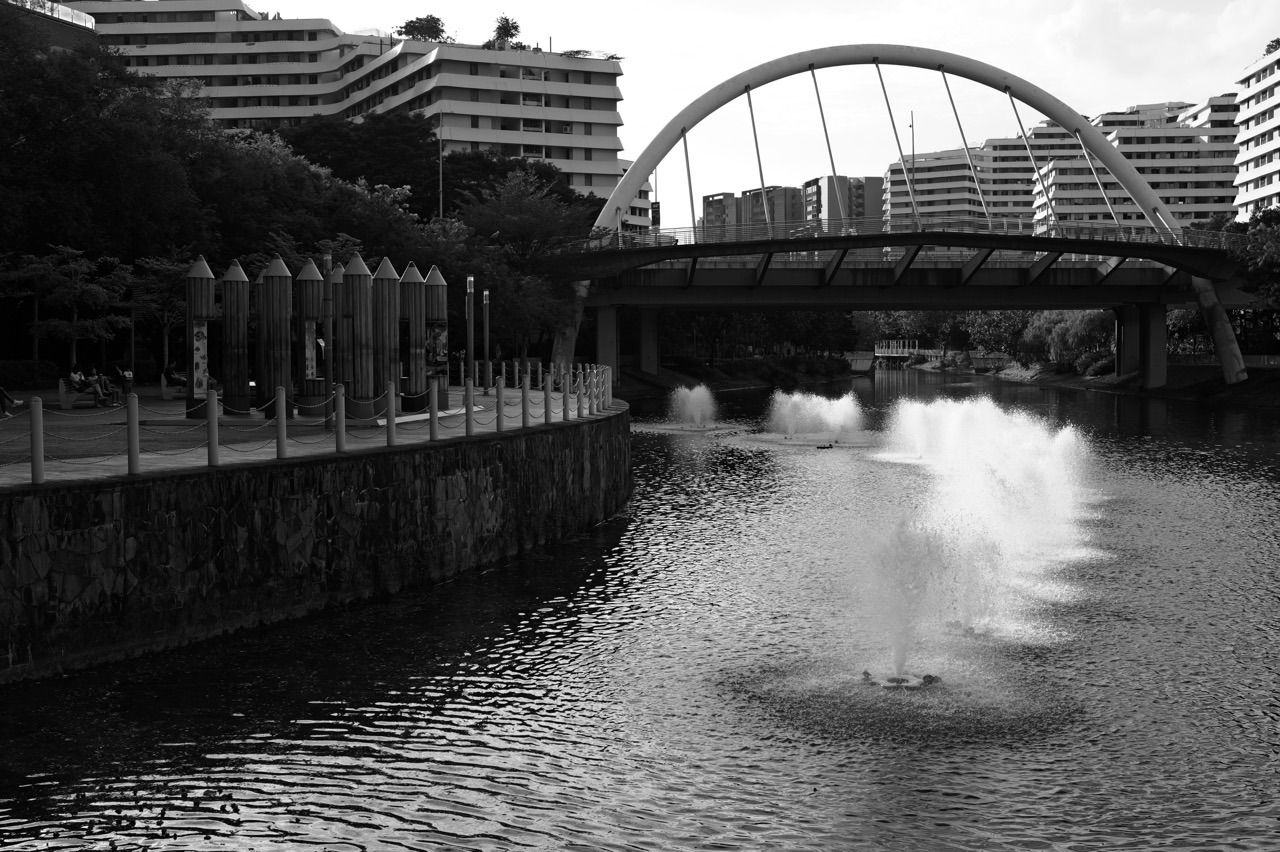
When rain falls on a Punggol walkway, the water moves towards roadside drains. When a family washes dishes, showers or flushes a toilet, that water also has to leave the home. Why does Singapore use two separate underground networks instead of sending all this water down one big pipe?
The answer matters especially in Punggol because the town sits within Singapore’s local water-catchment system. Rainwater moving through appropriately designed surface drains, canals and rivers can eventually reach reservoirs. Used water from kitchens, bathrooms, toilets and businesses takes another route through an underground sewer network towards water reclamation plants. Both streams have value, but they require different handling.
PUB, Singapore’s National Water Agency, explains this clearly: Singapore has separate systems to collect rainwater and used water. The rainwater network helps support the First National Tap, local catchment water, while the used-water network safely transports wastewater for professional treatment and possible reclamation as NEWater. This separation helps protect waterways from sewage pollution.
This article explains why Punggol’s rain drains and used-water sewers must stay separate, what actually travels in each network, why a street drain is not a rubbish-disposal pipe and why a blocked household floor trap is not the same problem as a flooded public road. It is an environmental-engineering guide, not a detailed map of underground pipes at a particular block or advice to enter hazardous drainage infrastructure.
The answer in 50 seconds
Singapore uses two collection networks. The stormwater system collects rainfall runoff from appropriately connected surfaces through drains, canals and rivers and conveys it towards reservoirs. The used-water system collects wastewater through underground sewers, pumping stations and gravity pipes and carries it to water reclamation plants.
Rainwater is generally a source of relatively clean catchment runoff, although it can pick up pollutants and therefore still requires protection and later treatment before drinking. Used water may contain sewage, food residues, grease, cleaning substances and other contaminants that require professional treatment.
PUB’s local catchment information says rain falling on about two-thirds of Singapore’s land area is channelled to the country’s 17 reservoirs. Its used-water information explains that wastewater is treated at reclamation plants, with some of the treated stream undergoing further processing to become NEWater.
The core principle is: do not contaminate the water intended for the catchment by mixing it with wastewater that belongs in the sanitary sewer system.
Why a raindrop and a used-water stream are not the same thing
A raindrop falling on a rooftop begins as part of the weather system. It may flow across surfaces and enter a drain. A toilet flush or kitchen wastewater starts as water already used for a household or commercial purpose.
Those starting conditions differ. Used water may carry human waste, grease, soap, food residues or other substances. Rainwater runoff can also be polluted, but it is not inherently the same mixture as sewage.
Because the sources are different, engineers can design appropriate systems for their collection and treatment. Combining everything would change what enters the stormwater network and complicate the water-quality objectives of a catchment.
The important question is where the water came from and what it has encountered, not simply whether it looks clear after travelling through a pipe.
Why Punggol’s location makes this important
Punggol and Serangoon Reservoirs contribute to Singapore’s local catchment water supply. PUB explains that water from the wider urban catchment reaches reservoirs through the drainage network.
This does not mean every drain in Punggol empties into the nearest visible reservoir or that household wastewater goes directly into Punggol Waterway. Actual pipe routes and catchment boundaries require technical maps.
But the broad principle is clear: urban rainwater has value as a water resource, so its collection pathways deserve protection from inappropriate discharges.
A resident who pours detergent, cooking oil or paint into a storm drain is not simply making a nearby pavement dirty. The act can affect a public drainage system connected with the environment.
What counts as stormwater
Stormwater is rainwater that runs off roofs, roads, paved surfaces, soil and other parts of the environment. Some rain infiltrates the ground or evaporates; the rest may move as surface runoff.
Drains and canals help collect and convey the runoff. Their design also contributes to managing flooding during ordinary and heavy rainfall.
Stormwater can carry sediment, leaves, litter and other material from the surfaces it crosses. This is why it should not be described as guaranteed sterile water.
The distinction is that stormwater is managed through the catchment and drainage system, while used water from sanitary facilities follows the sewerage network.
What counts as used water
PUB defines used water to include domestic sewage and other wastewater from daily activities in homes and commercial premises. It can come from toilets, showers, basins, kitchens and laundry.
Industrial used water, known as trade effluent, comes from manufacturing and other commercial processes and is subject to additional rules and discharge conditions.
The sanitary sewer network is designed to collect used water and move it towards professional treatment. It is not simply a large underground drain that residents may access or modify.
This is a useful vocabulary distinction: stormwater drainage and sewerage describe different public systems with different functions.
Why the word sewer is not the same as drain
In everyday conversation, residents may call any water channel a drain. But engineering uses more precise terms.
A storm drain conveys rainwater runoff. A sewer carries used water. Both may be underground; both need maintenance; both can experience blockages or operational problems.
The visible cover over a pipe does not automatically identify which network lies underneath. Underground utilities also include electrical cables, telecommunications and water-supply pipes.
That is why residents must never open a manhole or enter a chamber to find out. Only authorised professionals should investigate underground utility infrastructure.
Why rainwater is part of Singapore’s First National Tap
PUB calls local catchment water the First National Tap. The national system captures rain through drains, canals and rivers and stores it in reservoirs before treatment at waterworks.
With suitable catchment controls, rainfall can help provide a local water resource without every litre having to be imported or desalinated.
But reservoir water is still raw water. It undergoes treatment, disinfection and monitoring before becoming safe drinking water.
A child should learn the complete chain: rain → catchment → reservoir → waterworks → treated water supply. Skipping the waterworks would give a dangerously incomplete explanation.
Why wastewater is also a resource
Used water may contain contaminants, but after suitable reclamation treatment it can become a valuable resource rather than simply a waste stream.
PUB describes a water loop in which collected used water goes to water reclamation plants. Some of the treated effluent then undergoes advanced treatment at NEWater plants.
NEWater provides high-grade reclaimed water, mainly serving non-potable industrial purposes, and can support reservoir replenishment under the national water strategy.
The distinction is that used water needs specific treatment pathways before being reused. It is not suitable for direct mixing with stormwater drains just because some of it can eventually be reclaimed.
Why NEWater begins with used water, not ordinary rainwater
NEWater is produced through advanced treatment of used water after upstream reclamation processes. PUB explains that it uses technologies such as membrane filtration and ultraviolet disinfection.
Rainwater, by contrast, enters the local catchment system and reservoirs before undergoing conventional drinking-water treatment.
Both streams may contribute to the country’s broader supply resilience, but their origins and treatment steps are different.
A student who says “all water in a Punggol drain becomes NEWater” has mixed up the two routes. The proper explanation follows where the water actually enters and what processes it undergoes.
Why the sewer network uses gravity
Water naturally tends to flow from higher elevations to lower ones under gravity. Sewer pipes are often designed with appropriate gradients so used water can move towards collection points without requiring a pump at every location.
But a large urban network cannot always descend continuously across the entire city. Depending on terrain and system geometry, pumping stations may be needed to lift water to suitable levels or move it to another part of the network.
PUB describes the used-water network as a combination of gravity sewers and pumping stations.
This is a simple physics lesson: gravity can move water downhill, while pumps add energy when the route requires it.
Why pumping stations do not mean water is travelling to a reservoir
A pump is a piece of machinery, not the name of a destination. It may move water through different systems for different purposes.
A used-water pumping station handles wastewater under the sewerage network’s requirements. A separate reservoir or drainage system may have different pumps and controls.
The presence of a pump does not turn wastewater into rainwater or remove the need for appropriate treatment.
Students should identify which system the pump belongs to before describing its job.
Why underground routes should not be guessed from surface landmarks
A drain cover outside a building and a sewer access point may be close together. Their locations do not prove that the two systems are directly connected.
Underground utilities are designed according to engineering plans, ground levels, corridors and existing infrastructure. A resident cannot reconstruct the full network by looking at nearby covers.
This matters especially when describing Punggol’s reservoirs. A blog should not invent a direct pipe linking one named flat to a specific water reclamation plant.
The useful explanation is system-level: rainwater and used water follow separate managed collection networks, and their exact routes are determined by the approved infrastructure.
Why sewage should not enter a stormwater drain
Used water can contain pathogens, organic substances and other contaminants. If such material enters a stormwater drain, it may pollute the environment and undermine catchment-water quality.
PUB states that separating the systems helps keep Singapore’s waterways free of pollution. That is a central reason for having two networks.
The precaution is not merely about bad smells. Some pollutants cannot be detected by appearance alone and may require testing or treatment.
A stormwater drain is therefore not an acceptable disposal route for wastewater, household chemicals or other inappropriate liquids.
Why household sinks are not storm drains
A kitchen sink or bathroom drain belongs to the home’s sanitary plumbing arrangement when properly designed. Used water from these fixtures flows towards the sewerage system.
But being connected to the sewer does not mean everything can safely be poured into a sink. Grease, large food particles, unsuitable chemicals and other material can cause blockages or create treatment problems.
PUB publishes advice about maintaining a choke-free sanitary system, including appropriate disposal of oil and solids.
This is another distinction: the correct network for used water is not permission to treat it as an unrestricted waste-disposal channel.
Why cooking oil can cause trouble
Cooking oil and grease may cool or accumulate in sanitary pipes and contribute to obstructions. Other solids can catch and worsen the blockage.
A household should collect cooled used cooking oil appropriately and follow the current disposal advice rather than deliberately pour large amounts down a kitchen drain.
The consequences can extend beyond the unit if shared sanitary lines are affected.
This is why PUB promotes proper household disposal habits. Protecting a network begins long before the water reaches a public treatment plant.
Why wet wipes can be a problem
Some products marketed as wipes do not disintegrate rapidly in the same way as toilet tissue. Flushing unsuitable materials can create sanitary-system blockages.
Residents should follow PUB’s guidance on what may be flushed and place other items in suitable bins. The exact product label should not be treated as a guarantee that it is appropriate for Singapore’s sewer network.
A small object can create a larger problem if it combines with grease, hair or other material inside a pipe.
The lesson is that a convenient toilet is not a general rubbish chute.
Why a toilet floor trap is a different issue from a road drain
A household floor trap is part of the sanitary plumbing environment. It may collect water from the bathroom floor and help manage drainage under the designed arrangement.
If it becomes blocked or wastewater backs up, the problem may involve the unit’s internal pipes, shared sanitary infrastructure or another sanitary-system component.
A public roadside drain, by contrast, handles stormwater. Its blockage may cause water to pond on a walkway or road after rain.
Because the systems differ, the appropriate troubleshooting and responsible party can differ too. A resident should not assume one problem is caused by another without professional assessment.
Why sewer backflow needs urgent attention
Backflow occurs when wastewater does not flow in its intended direction and may rise into fixtures or other areas. The causes and appropriate response depend on the actual system.
Sewage-contaminated water can present health and electrical hazards. Residents should avoid contact, protect people from exposure and seek suitable qualified assistance and official guidance.
Do not pour strong chemicals into an overflowing floor trap in the hope of clearing a main sewer. That can expose people to additional hazards and may not address the blockage.
The general lesson is to stop unsafe exposure and determine the source through the appropriate professional process.
Why a flooded road is not proof of sewer failure
When heavy rain overwhelms local drainage capacity or the water cannot flow away quickly enough, surface flooding or ponding may occur.
That does not automatically mean the sanitary sewer has failed. Stormwater drainage and used-water sewerage are separate systems.
A resident should report the actual location and observed condition rather than assert a technical cause from appearance. PUB and other relevant agencies can investigate according to their responsibilities.
This distinction makes reporting more useful and avoids unnecessary confusion during heavy weather.
Why drains need to be kept clear
Leaves, litter and other material can obstruct drainage channels and reduce their effective capacity. That can contribute to local ponding and create maintenance needs.
Keeping litter out of drains helps both the environment and the physical system. But residents should not enter drains or attempt to clear dangerous blockages themselves.
The responsible action is to dispose of rubbish appropriately and report significant hazards with a clear location.
A drain’s purpose is to move stormwater under designed conditions, not to function as free storage for unwanted objects.
Why construction sites need runoff controls
Building work can expose soil and create sediment runoff. Without suitable controls, rain can carry silt into drains and waterways.
Construction projects are therefore subject to environmental, drainage and sediment-control requirements under the relevant agencies. The purpose is to prevent inappropriate contamination and protect drainage capacity.
Punggol has undergone substantial development, so these principles are relevant to residents observing construction near new housing or transport infrastructure.
But a muddy puddle outside a construction site does not by itself establish a regulatory breach. Evidence and professional assessment are needed before making such claims.
Why a rain garden belongs to the stormwater side
A rain garden can receive and manage some surface runoff using suitable planting and engineered media. It may slow water and filter some substances under its design conditions.
That is different from the sanitary sewer collecting used water from toilets and kitchens.
HDB and PUB have applied rain-garden and bioswale concepts in green developments. Their primary role is not to accept untreated household sewage.
A student should classify the feature according to the water it is designed to manage. Similar-looking planted systems can have different purposes and rules.
Why even clean-looking roof water is not automatically potable
Rain falling on a roof may appear clean, but the roof can carry dust, bird droppings and other material. Harvested water needs proper management and suitable treatment according to its intended use.
PUB’s rainwater-harvesting guidance says collected rainwater in relevant systems is for approved non-potable uses, such as suitable washing, toilet flushing or landscape irrigation, and must be labelled accordingly.
This is different from raw rainwater entering the national reservoir system and later going through professional drinking-water treatment.
For families, the safety rule is simple: water collected in an informal bucket or drain should not be treated as drinking water.
Why the public water loop is circular in a useful sense
Singapore’s national water strategy includes both local catchment collection and reclamation of used water. After treated water is supplied and used, some of it can eventually be reclaimed and treated again through regulated processes.
This creates a broad water loop: supply, use, sewer collection, reclamation and reuse.
But the loop does not require rain drains and sanitary sewers to merge at the household level. The separation allows different flows to receive suitable treatment and management before any carefully controlled reuse.
The lesson is that a circular resource system can contain separate channels with different stages, rather than one undifferentiated pipe.
Why cross-connections are a problem
A cross-connection occurs when a pipe or connection links systems that should remain separate. Improper connections can contaminate a stream or interfere with its intended operation.
Engineers and approved contractors must ensure that plumbing and drainage arrangements follow the applicable requirements. Residents should not connect household wastewater outlets to stormwater channels as a shortcut.
The seriousness of a cross-connection depends on the actual installation, but the general risk is that material reaches the wrong place.
This illustrates why building services need permits, approved plans and competent inspection—not only pipes that appear to fit together.
Why a renovation may affect more than one household
In an HDB block, sanitary services can involve shared stacks or building infrastructure. An alteration within one flat may affect the operation of related systems.
HDB and PUB have requirements for particular plumbing and renovation works. A homeowner should verify the applicable permissions and engage authorised professionals where necessary.
The presence of a private contractor does not allow changes to public sewers or shared building pipes without the proper approval.
This is a civic lesson about interdependence: private work in a high-rise building can create consequences for other residents and public infrastructure.
Why the Deep Tunnel Sewerage System is not a storm drain
PUB’s Deep Tunnel Sewerage System is part of Singapore’s long-term used-water management strategy. It involves deep sewer tunnels and associated infrastructure conveying wastewater towards major reclamation facilities.
Its purpose is different from surface drainage that carries rainwater to reservoirs.
A reader may see the word tunnel and imagine an enormous flood drain. That would confuse two engineering systems with different sources and destinations.
For students, the correct classification is based on the material transported: used water belongs to the sewerage system.
Why the exact water reclamation plant should not be guessed
PUB operates several water reclamation facilities and a complex used-water network. The route serving a particular location depends on the actual sewerage infrastructure.
It would be misleading to declare that a Punggol flat’s wastewater definitely goes to one named plant unless an authoritative source confirms the relevant catchment and connection.
A general teaching diagram can show used water reaching a water reclamation plant without inventing a precise operational route.
This is good technical writing: explain the system accurately at the level supported by evidence.
Why industrial used water needs special controls
Commercial and industrial activities can produce wastewater containing different substances from ordinary domestic used water.
PUB regulates trade effluent discharges, including requirements for particular substances and pre-treatment where necessary.
This matters to an urban district containing businesses and industrial facilities, although the precise waste streams of any particular Punggol tenant should not be guessed.
The broad principle is that every user of a shared sewer system must meet the conditions appropriate to its discharge, because the downstream network and treatment plants serve many others.
Why public cleanliness supports water security
Litter discarded on a pavement may be carried into drains by rain or wind. Appropriate waste management reduces that risk.
A clean-looking neighbourhood is beneficial aesthetically, but the more important water-system reason is to prevent unsuitable material entering public catchment channels.
This does not mean every piece of litter ultimately reaches a reservoir; drainage routes and interception measures vary. The risk principle still matters.
Residents can protect the system by using bins, disposing of chemicals and oil correctly, and reporting serious illegal dumping.
Why residents should not open drain covers
Underground chambers can contain hazards, including confined spaces, contaminated water, moving flows or other infrastructure risks.
People should never lift public covers, enter drains or try to trace a pipe themselves to decide whether it is a sewer.
Qualified agencies and contractors have the equipment and procedures to inspect the system safely.
A child can learn the water-flow principles from maps and diagrams without touching the actual network.
Why this is a Science lesson about mixtures
Primary learners can compare rainwater with used water conceptually and discuss what materials water may carry.
Secondary students can examine dissolved substances, suspended particles, microorganisms and why different treatment methods are appropriate for different mixtures.
However, a classroom should use safe substitute materials rather than raw sewage or unknown storm-drain water.
The educational point is not to make children afraid of all water. It is to understand that water quality depends on its history and contents, not only on the word water.
Why the two systems are a Geography lesson
A Geography learner can trace surface catchments, reservoirs and urban drainage separately from underground sewerage networks.
The learner should recognise that landform and engineered infrastructure influence where rainwater moves. Sewers may use gravity and pumping to reach reclamation facilities without following the exact same route.
The relationship between Punggol’s reservoirs and the national water story becomes clearer when those pathways are not merged into one diagram.
This is a practical example of networks performing complementary functions within a dense city.
A hypothetical rainwater calculation
Imagine a fictional paved area measuring 2,000 square metres receiving 15 millimetres of rain. The total rain falling on it is \(2,000 \times 0.015 = 30\) cubic metres.
That does not mean exactly 30 cubic metres enters a particular drain. Some water may be stored, evaporate, infiltrate or follow other pathways.
The calculation illustrates why rainwater volumes can become significant across large urban catchments.
Students should state both the units and the assumptions before claiming a drainage quantity.
A hypothetical used-water exercise
Imagine a household using 300 litres of water across several activities in one day. Some becomes wastewater entering sanitary plumbing; the exact volume depends on the activities and other factors.
The class draws that used-water stream towards an underground sewer and reclamation plant rather than a storm drain.
They then discuss why another household’s rainwater runoff follows a different network.
These are invented values for teaching, not actual Punggol household consumption statistics.
A hypothetical mistake involving a floor trap
A resident notices a bathroom floor trap draining slowly and assumes the roadside drain must be blocked.
The correct response is to investigate the sanitary plumbing problem through an appropriate licensed or qualified service route, because the bathroom floor trap and stormwater drain are different systems.
If sewage backs up or there is a serious hazard, the resident should protect people and seek suitable assistance.
The lesson is that a similar symptom—water not draining properly—can arise in different networks and need different responses.
A hypothetical pollution incident
A person proposes pouring leftover paint into an outdoor drain because rain will wash it away.
A child explains that the rainwater system leads into the public environment and, in suitable catchments, reservoirs. Paint and other inappropriate materials should follow proper disposal guidance instead.
The class identifies why dilution by rain is not proof that a contaminant becomes harmless.
The lesson is that correct disposal begins before a substance enters a drain.
Why cleaning chemicals require care
Some cleaning products are used appropriately in households and enter sanitary plumbing under ordinary conditions. Others may require special disposal because of their composition or quantity.
A resident should follow product labels and official local waste guidance instead of assuming all chemicals may be emptied into a toilet or storm drain.
The main point is to avoid introducing inappropriate substances into either system. A sewer is designed for specified wastewater, not unrestricted chemical disposal.
This protects workers, equipment, treatment processes and the environment.
Why residents should report the correct location
If water ponds on a footpath after rain, the report should identify the location, timing and observed condition. If a toilet is overflowing, the immediate concern is a different sanitary and possibly urgent household problem.
Different managing bodies and contractors may need to respond. OneService can assist with appropriate municipal reporting when responsibility is unclear, while PUB and HDB publish guidance for water and building issues.
Avoid guessing at a specific underground fault from a photograph. A precise observation helps professionals identify the right investigation.
The lesson is that clear location and symptom are often more useful than an unsupported diagnosis.
Why a water system needs regular maintenance
Drains can collect litter or sediment. Sewers can experience blockages or deterioration. Pumps and other equipment require inspection and servicing.
Maintenance helps each network continue performing its intended task. It cannot be replaced by simply asking residents to use the system carefully, although good behaviour reduces avoidable problems.
PUB manages its assets through specialised programmes, and responsibilities for private plumbing and other facilities are allocated through applicable rules.
The broader principle is that public infrastructure remains useful only when design, operation and maintenance work together.
Why not every flood is a drainage design failure
Heavy rainfall may exceed the effective capacity of a particular drainage arrangement under some conditions. Flood resilience also involves catchment design, upstream detention and protection of vulnerable areas.
A single photograph of ponding does not establish the cause. It may involve unusually intense rain, local blockage, surrounding works or other factors.
PUB’s flood resilience framework addresses multiple causes and safeguards, not simply enlarging every roadside drain indefinitely.
This article’s specific focus remains the separation of rainwater and used-water networks, which is related to flood management but not identical to it.
Why having two systems costs money but matters
Building and maintaining separate networks involves pipes, access points, pumping equipment, treatment works and professional operation.
It might seem simpler to construct one combined channel. But the public-health and catchment-water objectives in Singapore make the separation valuable.
A combined system would require different operating and treatment arrangements, and inappropriate mixing could undermine the quality of water collected for reservoirs.
This is a general systems trade-off: the cheapest-looking network on a drawing is not necessarily the best when the quality and destination of its contents matter.
Why a Punggol family should understand this even without plumbing expertise
Residents interact with the system through ordinary behaviour: flushing toilets, washing dishes, disposing of rubbish and walking past roadside drains.
They do not need to memorise sewer pipe diameters or engineering drawings. They do need to know that a storm drain is connected with environmental water management and that household wastewater belongs in proper sanitary plumbing.
This understanding helps people avoid harmful disposal habits and report issues correctly.
It also turns everyday infrastructure into a meaningful local Science lesson.
Common misunderstandings
One mistake is saying all water from a Punggol HDB block enters Punggol Reservoir. Used water takes a different route.
A second is assuming that water inside a storm drain is safe to drink. Rainwater runoff still requires proper collection and treatment.
A third is treating kitchen sinks and toilets as unrestricted rubbish disposal. A fourth is confusing a flooded public road with a blocked household sewer.
Another mistake is assuming that NEWater is made by directly collecting dirty water from open drains. Finally, do not open utility covers or pour unsuitable chemicals into any public drainage system.
The correction is to identify the water’s source, pathway and treatment destination.
Frequently asked questions
Does Singapore really have separate rainwater and sewage systems?
Yes. PUB explicitly describes separate collection networks for stormwater and used water.
Where does Punggol rainwater go?
Depending on the actual catchment, rainfall runoff can enter drains, canals and rivers that feed managed reservoirs. Exact routes vary.
Where does used water from homes go?
It enters sanitary plumbing and sewerage systems leading towards water reclamation plants, subject to the actual network arrangement.
Is Punggol Waterway connected to household toilets?
Household sewage should follow the separate sanitary sewer system, not be discharged untreated into the public waterway.
Does all used water become NEWater?
No. PUB says some treated used water receives further processing as NEWater, while other treated streams follow their appropriate discharge pathways.
May I pour oil into a sink because it connects to the sewer?
No. Improper oil and grease disposal can cause sanitary-system problems. Use suitable disposal practices.
Can a public drain carry sewage?
It is not intended as an ordinary sewage-disposal route. Improper connections or illegal discharge can create pollution problems.
Is a blocked floor trap the same as a blocked storm drain?
No. They belong to different plumbing and drainage contexts and require appropriate assessment.
Are manholes safe for inspection by residents?
No. Public and private utility chambers can be hazardous and should be handled by authorised professionals.
How can children learn about the two systems?
Use safe diagrams and official PUB learning materials rather than collecting unknown water or entering drainage areas.
A practical Punggol household checklist
- Keep ordinary rubbish out of public storm drains.
- Use the correct sanitary plumbing for normal household wastewater.
- Dispose of cooking oil and unsuitable chemicals through appropriate routes.
- Do not flush wipes, bulky objects or other prohibited materials.
- Treat raw rainwater and reservoir water as non-potable unless properly treated.
- Never open public manholes or enter drains.
- Describe the exact problem and location when reporting a fault.
- Seek qualified help for blocked sanitary plumbing and backflow.
- Follow PUB and other responsible agencies’ instructions during heavy rain.
- Teach children that drainage and sewerage are separate public systems.
Teaching Guide: two pipes, two journeys
Learning goal. Students explain why Singapore collects rainwater and used water separately, trace their different treatment pathways and avoid inappropriate disposal actions.
Stage one: identify sources. Draw rain falling on a Punggol roof and water draining from a bathroom. Label each source.
Stage two: create two routes. Draw a stormwater drain leading towards a reservoir and a sewer leading to a reclamation plant. Explain that the diagram is illustrative, not an actual underground map.
Stage three: add treatment. Show reservoir water going to waterworks and reclaimed wastewater potentially undergoing further NEWater treatment. Ask why both need professional processes.
Stage four: introduce pollution. Give the child leftover cooking oil and household litter as examples. Ask why neither belongs in a storm drain, and why oil also should not be poured into ordinary sanitary plumbing.
Stage five: introduce maintenance. A drain is blocked by litter, while a bathroom floor trap drains slowly. Ask why the symptoms suggest different networks.
Stage six: calculate rainfall. Use an invented catchment area and rainfall depth to practise multiplying area by depth, with correct units and stated limitations.
Stage seven: review a claim. A fictional post says “all water beneath Punggol’s streets is sewage”. Ask the learner to rewrite it accurately.
Transfer test. Compare a school laboratory sink and an outdoor rain drain. Ask which liquids require special disposal rather than either pipe.
Parent checkpoint. A strong explanation is: “Rainwater goes through the stormwater network to reservoirs in relevant catchments. Used household water goes through sewers to reclamation plants. Keeping them separate protects water quality and public health.”
Where this explanation fits in eduKatePunggol
The Why Punggol | The Reservoirs Keep Rain for Singapore’s Water Supply article explains collection and storage. Understanding Punggol | Used Water, Sewers, Treatment and NEWater follows the sanitary-water system. What to Worry About | Sewer Backflow and Floor-Trap Chokes covers household emergency and repair decisions.
This article owns a different question: why are the two water streams collected separately from the outset, and what goes wrong when residents confuse their functions? It explains the system boundary rather than duplicating either a reservoir travel guide or a plumbing fault checklist.
Official sources and further reading
- PUB: Water from Local Catchment and Two Separate Collection Systems
- PUB: Used Water Network and Reclamation
- PUB: Singapore’s Water Story
- PUB: Rainwater Collection Guidance
- PUB: Used Water FAQs
- eduKatePunggol: Reservoirs Store Rain
The one idea to remember
The water beneath Punggol streets does not all travel through one pipe. Rainwater belongs in the stormwater catchment system; household and commercial used water belongs in the sewerage network. Keeping those streams separate protects the environment, supports water-supply management and makes it possible to treat each type of water appropriately.


