
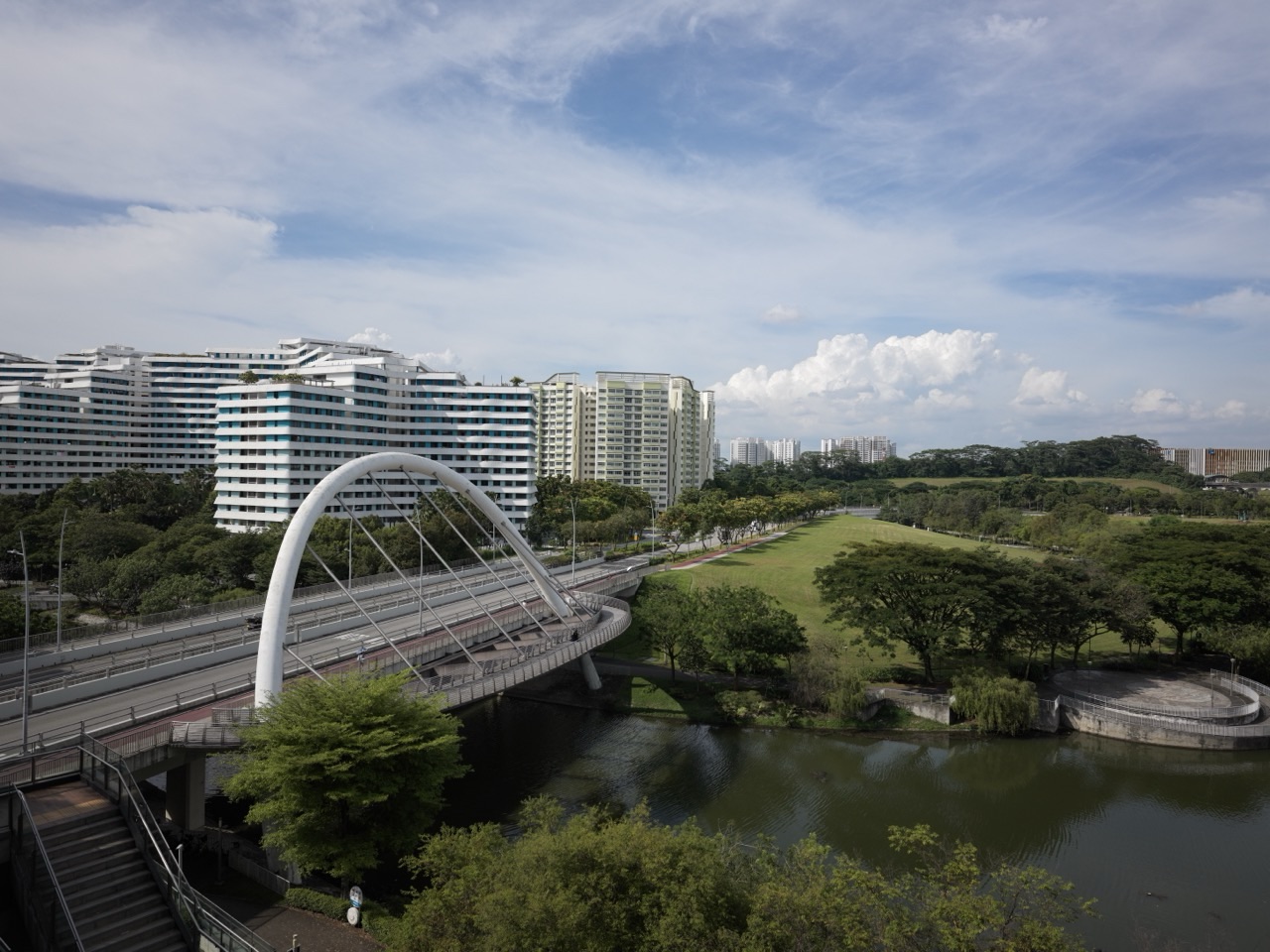
When you flush a toilet or empty a kitchen sink in Punggol, that used water should travel through sanitary pipes and the public sewerage network for treatment—not flow into the scenic Punggol Waterway. This is one of the most important distinctions in understanding the town’s hidden infrastructure. Stormwater drains collect rainwater and contribute to Singapore’s catchment and flood-management systems. Sanitary sewers carry wastewater from toilets, showers, sinks and relevant business activities to water reclamation plants.
PUB, Singapore’s national water agency, oversees the public used-water system. PUB states that modern sanitation serves all of Singapore, with used water collected and treated at water reclamation plants. A portion of treated used water undergoes advanced purification into NEWater. The Deep Tunnel Sewerage System (DTSS) provides large, gravity-based underground conveyance to centralised treatment facilities. Phase 1 was completed in 2008; the Phase 2 network and Tuas plant have separate phased commissioning plans from 2027, so no writer should describe every later facility as already operational in October 2026.
Punggol has a real connection to the broader story: PUB’s historic private sewer rehabilitation work includes the Punggol and Serangoon Reservoir Catchment (2010–2013). That does not mean untreated toilet water goes into those reservoirs. The project addressed leakage risks in private sewer networks, protecting catchments from contamination. Residents and businesses still need to dispose of cooking oil, chemicals and solid waste appropriately, and engage the right professional when sanitary systems are blocked.
This is a practical Understanding Punggol guide checked against official PUB information in October 2026. It explains the journey from your flat to treatment, who maintains which pipes, why blockages occur and how water recycling supports Singapore. It is not a map of the precise underground route from an individual unit; that requires actual approved infrastructure records.
Fast answers and the right contact
- Rainwater: collected by surface drains, canals and other stormwater infrastructure; not meant for toilet sewage.
- Used water: discharged through sanitary pipes and sewers to appropriate treatment.
- NEWater: high-grade reclaimed water produced from treated used water through advanced purification.
- DTSS: deep gravity sewer tunnels for the national used-water network, not an open Punggol canal.
- Private premises sewer lines: owners have maintenance responsibilities under PUB’s rules.
- HDB internal sanitary problems: contact the correct owner, managing body or qualified plumber according to the source.
- Regulated plumbing works: use PUB Licensed Plumbers, subject to the specified handyman exceptions.
- PUB 24-hour contact: 1800-2255-782 or 6521-6470 for appropriate agency enquiries and urgent infrastructure reports.
- Never: pour oil, paint, solvents or hazardous waste into a sink or drain.
1. A Punggol apartment has two different paths for water
Drinking water enters through a supply system and reaches taps and fittings. After use, water leaves through sanitary fixtures and pipes. Rainfall falling on the roofs, roads and public spaces has a different pathway through stormwater drainage and catchment infrastructure. These channels have distinct purposes, maintenance responsibilities and protections.
A household may see all three at once: a tap running clean water, a shower drain carrying used water and a roadside gutter carrying rain. Confusing them makes it harder to report a fault or understand why chemical disposal is dangerous. The separation helps protect public health and water sources.
2. The Waterway is not a sanitary sewer
Punggol Waterway is a publicly visible landscaped freshwater connection associated with reservoir and town infrastructure. It must not be treated as a channel for raw wastewater from housing toilets. The sanitary system is designed to carry used water for treatment away from normal public access.
A visitor walking by a bridge may see murky storm runoff after heavy rainfall, but appearance alone cannot identify sewage contamination. If an unusual discharge or odour is suspected, preserve safe observations and report it through an appropriate authority rather than declaring the canal a sewer on social media.
3. What PUB calls used water
PUB defines domestic used water as sewage and sullage from households and commercial premises. Toilets contribute sewage; activities such as bathing, washing and food preparation contribute other wastewater. Industrial activities can generate trade effluent that requires more specialised regulation.
The term ‘used water’ is deliberate: it is a resource that can be treated and reclaimed. That does not mean untreated wastewater is safe for people to touch or use. Public health relies on correct collection and treatment before any reuse.
4. What happens inside a building
Water leaving sinks, toilets and showers enters the building’s sanitary drainage system. Pipes are designed with suitable slope, venting, fittings and traps to carry waste efficiently and reduce odours. Large developments may have a complex internal layout before used water reaches an external connection.
Owners should not improvise new toilet connections based on visual convenience. A change can affect other units, waterproofing and the integrity of shared services. Qualified plumbing advice and applicable building rules are needed for regulated work.
5. Why the trap below a sink is important
A water seal in an appropriate trap helps keep sewer gases out of occupied spaces. A foul smell near a floor trap may reflect a dry seal, faulty connection, blockage or another issue. Odour alone does not establish a particular defect.
Do not pour random powerful chemicals into the pipe to suppress smells. A qualified professional can identify whether a safe simple step is sufficient or a more serious repair is needed. If the smell accompanies overflow or severe symptoms, treat safety as the priority.
6. The role of public sewers
The national sewer network collects wastewater from buildings and carries it towards treatment facilities. PUB describes gravity sewers and pumping stations serving current systems; the DTSS expands the use of deep gravity tunnels to improve long-term efficiency.
Most residents do not see the network, but it is essential infrastructure like electrical distribution. Blockage or leakage can affect more than one flat or business. The public-private responsibility boundary matters when deciding whom to call.
7. Gravity transport saves pumping energy
In the deep-tunnel concept, gravity moves used water through suitably sloped underground conveyance. This can reduce the need for numerous intermediate pumping stations and the associated energy and land demands. The system still requires careful engineering, inspection and operational management.
A steep hill or sloping street is not a simple map of the sewer gradient below it. Engineers design underground alignments based on flow, terrain and connection requirements. Residents should avoid inferring pipe depth from a surface photograph.
8. DTSS is a national long-term investment
PUB describes the Deep Tunnel Sewerage System as a roughly 206-kilometre overall network in its planned configuration, directing used water to centralised treatment plants. Its two phases address different geographical parts of Singapore, with major infrastructure designed for long service life.
Phase 1 was completed in 2008. Phase 2 tunnelling reached significant milestones, but the completed network and Tuas Water Reclamation Plant have phased commissioning from 2027. In October 2026, it would be inaccurate to claim that every Phase 2 component is already running.
9. Why sewage treatment plants matter
At a water reclamation plant, used water undergoes processes designed to remove solids, organic pollutants and other contaminants. Treated effluent can meet appropriate discharge standards, while some receives additional advanced purification for NEWater.
The existence of treatment capacity does not authorise dumping harmful chemicals into sewers. Some substances can endanger workers, damage infrastructure or disrupt the biological processes on which treatment depends. Source control remains necessary.
10. The difference between treatment and NEWater purification
Wastewater treatment and NEWater production are separate treatment stages. PUB describes advanced membrane technologies and disinfection for converting suitable treated used water into high-grade reclaimed water. NEWater has important industrial and water-security uses.
A visitor should not conclude that one household pipe connects directly to a potable tap. The national water loop incorporates multiple collection, treatment and quality-control steps. Reuse is possible because the treated water is purified and tested, not because dirty water is inherently harmless.
11. NEWater supports Singapore’s Four National Taps
Singapore’s water strategy combines local catchment water, imported water, desalinated water and NEWater. PUB and the Ministry of Sustainability and the Environment describe this diversification as a way to improve supply security in a land-scarce, water-stressed country.
NEWater is weather-resilient because its supply does not depend solely on rain falling during a particular week. It helps industries that need very high-quality process water, while reservoir top-ups can later be treated through conventional waterworks.
12. Industrial demand is different from household use
Advanced manufacturing and cooling facilities may require water quality and supply arrangements different from a normal apartment’s tap. PUB explains that NEWater is primarily used by non-domestic sectors, including industrial and commercial processes, with other uses within the national water loop.
A Punggol resident may hear that NEWater is used by technology industries and assume their home’s taps deliver untreated recycled effluent. This is incorrect. Water supplied for human consumption is governed by its own quality and distribution safeguards.
13. Why Punggol and Serangoon reservoirs are mentioned in sewer work
PUB’s private-sewer rehabilitation programme history includes a project within the Punggol and Serangoon Reservoir Catchment between 2010 and 2013. The purpose was to address or reduce leakage from private sewers that might threaten catchment quality. This is evidence of water-source protection, not evidence of deliberate wastewater discharge into reservoirs.
The distinction matters in a waterfront town. A drainage catchment and a sanitary sewer may share a geographical area while serving different water flows. Good infrastructure seeks to keep them appropriately separated.
14. Private sewer lines have private responsibilities
PUB says private sewers, sometimes called sanitary drain-lines, belong to the owners of private premises and those owners are responsible for maintenance. This includes relevant condominium, commercial or industrial infrastructure connecting to public sewers.
A management corporation may need to engage professionals for a shared private sewer issue. A resident should not assume that PUB will maintain every sanitary pipe beneath privately owned land at no cost simply because it connects to the national network.
15. HDB unit repairs require identifying the component
Inside an HDB unit, a blocked basin outlet might concern a private fixture; a fault in shared pipework can involve other residents or managing responsibilities. The actual part and location determine the appropriate owner, professional or public agency. An insurance policy may cover some damage but does not itself repair a blockage.
Before calling several parties, record which fixtures are affected, whether adjacent units report a similar problem and when the problem began. Avoid removing structural enclosures or interfering with common vertical stacks to investigate.
16. When a licensed plumber is required
PUB distinguishes regulated water service and sanitary plumbing works from defined simple tasks that may be done by a handyman. Laying or modifying prescribed sanitary drainage and fixtures requires proper licencing and compliance. The exact classification of the work determines the requirement.
A homeowner should describe the proposed alteration to a qualified provider and verify the licence where relevant. A contractor being excellent at painting or cabinetry is not evidence that they may lawfully redesign wastewater pipe connections.
17. Why toilets are not solid-waste bins
Sanitary plumbing is designed for human waste and toilet paper, not nappies, wet wipes, sanitary products or bulky rubbish. Objects that do not disintegrate can snag at joints, collect other material and eventually obstruct flows.
Even a product marketed as flushable can create practical problems if it does not break down appropriately in the real network. A small bathroom bin for hygiene items protects the home and shared infrastructure.
18. Cooking oil can form serious blockages
Warm cooking oil can move through a sink but cool and adhere to pipe walls. PUB emphasises that fats, oil and grease from food premises are major causes of sewer blockages. A restaurant produces much larger quantities, yet households should also avoid tipping accumulated cooking grease into a drain.
Let used cooking oil cool and handle it according to appropriate waste disposal guidance. Scrape grease and food solids into the correct waste stream before rinsing plates. Diluting fat with hot water is not a long-term solution.
19. Grease traps protect food businesses and the public network
PUB says food establishments handling food need suitable grease traps or interceptors and proper maintenance under applicable requirements. These devices separate grease and solids from used water before it enters pipes. Poor maintenance can result in odours, overflows and environmental or public-health problems.
A Punggol hawker stall and a domestic kitchen have different regulatory responsibilities and equipment needs. The business should arrange the required inspections and lawful waste collection rather than treating grease interception as a one-time installation.
20. Chemicals and solvents require special disposal
PUB warns businesses not to discharge spent solvents, paints, industrial oils and regulated chemicals into sewers or drains. These substances can create explosive atmospheres, harm workers, interfere with water treatment or reach the environment. Commercial premises may need written approval to discharge trade effluent and suitable pre-treatment.
At home, avoid pouring strong paint, pesticides or motor oil into floor traps. Follow appropriate waste-handling instructions and seek the correct licensed collector for hazardous quantities. ‘It will be diluted’ is not a safety plan.
21. Trade effluent must meet standards
Factories and other non-domestic operations can generate used water with different composition from ordinary household flows. PUB administers trade-effluent discharge conditions, including permitted concentrations and requirements for written approval in qualifying cases.
A Punggol business in a commercial or industrial environment should check the actual activity and discharge point before starting operations. A valid ACRA registration or tenancy agreement does not grant unlimited permission to release any liquid into the public sewer.
22. Storm drains are not substitute chemical-disposal routes
Because rainwater drains may connect to catchment waterways, disposing of chemicals into a roadside drain can directly threaten environmental water quality. A resident who knows that household sewage receives treatment should not assume a rainwater gutter offers an equivalent treatment path.
The safe approach is to keep solid waste, oil and hazardous material out of both systems, using correct collection methods. If a serious spill occurs, provide the location and safe observations to the appropriate authority rather than attempting an unsafe cleanup.
23. What a sewer blockage looks like
Common warning signs include slow drainage, water backing up from another sanitary fixture, repeated gurgling or odours, and overflow at an appropriate inspection point. Several simultaneous failures may indicate a different problem from a single blocked basin.
Do not infer the exact source from one symptom. Stop using affected fixtures where necessary, keep electricity and children away from wastewater and contact the correct authorised plumber or managing party.
24. A single slow sink need not be a public sewer failure
Food debris or hair can obstruct an individual trap near a fixture. A problem confined to one basin may be local, while multiple units reporting backflow can signal a shared-system fault. This is a diagnostic distinction, not a DIY repair instruction.
Describe which fittings work, when the issue began and any recent renovation. Professional assessment can then target the right component rather than replacing unrelated pipes.
25. Sewage overflow is a hygiene problem
Raw used water can contain disease-causing organisms and contaminants. If overflow is suspected, minimise contact, keep vulnerable people away and seek appropriate professional cleanup. Do not use the affected water for washing food or allow children to play near it.
Use a factual report: exact block or unit, location, timing, visible material and whether others are affected. Avoid opening inspection covers or entering confined spaces, which can be dangerous without specialist training.
26. Who should receive a report?
For a fault within private plumbing, contact the owner or estate management and a suitable licensed professional. For suspected public sewer infrastructure problems, PUB provides online feedback and a 24-hour call centre at 1800-2255-782 (international/alternative 6521-6470). For relevant HDB common-property maintenance, the Town Council may assist with routing.
Select the responsible authority based on the actual physical component, not merely which logo is most familiar. Immediate hazards require urgent safety action first.
27. Sewage and floodwater can be confused
After very heavy rainfall, puddles in a low point can be stormwater rather than wastewater. A blocked sanitary pipe can also cause backflow unrelated to the rain. Colour and smell can suggest a problem but are not decisive without a safe technical investigation.
A clear incident record notes whether overflow comes from a toilet, floor trap, manhole or open road drain. That detail helps identify the system and avoid incorrect accusations about a neighbour or public contractor.
28. How residents can prevent repeated blockages
Provide bathroom bins, clear food solids before washing dishes, avoid drain disposal of oils, and keep unsafe items away from sanitary fixtures. A resident can also report recurring defects promptly rather than repeatedly using corrosive chemicals with uncertain effects.
These habits benefit more than one flat: shared pipes can accumulate material over years. A maintenance culture is an everyday contribution to the town’s water-security system.
29. Sewer pipe leakage can be hidden
Underground private sewers can leak without a clear surface break. PUB advises private premises owners to inspect their private sewer networks and repair defects, including by engaging appropriate contractors for leak tests or other checks. Periodic inspection protects catchments and reduces structural or environmental problems.
A condominium MCST can plan such work through its maintenance budget and professional assessment. A household should not try to inspect underground confined infrastructure without training or authority.
30. Why PUB has a sewer rehabilitation programme
PUB’s rehabilitation work addresses ageing or defective private sewer connections in appropriate catchment areas. Earlier efforts around Punggol and Serangoon reservoirs demonstrate that protection of the water loop includes what happens within private premises, not solely publicly owned pipes.
The existence of a past programme does not mean any specific Punggol condominium is defective in 2026. A property owner should use current engineering evidence and responsibility records instead of making assumptions from the area name.
31. NEWater is produced only after treatment
It is misleading to say that household wastewater is immediately drinking water. The proper path includes collection, treatment at a water reclamation plant, and further high-grade purification using membrane and disinfection technologies for NEWater.
Explaining the stages accurately helps reduce anxiety and improves scientific literacy. The product is high-grade water because the engineering process removes contaminants and verifies quality, not because sewage has magically become clean by moving through a long pipe.
32. One water system supports the whole city
A town’s daily comfort depends on clean water supply, sewage collection, storm drainage and safe disposal working together. Punggol’s waterway may be the most visible part, but underground sanitary facilities protect health every time a resident cooks, washes or uses the toilet.
The system is a useful example of public infrastructure: private habits, professional compliance and national capital investment all affect a service that most people rarely notice when it works well.
33. Worked household example: cooking and washing
A hypothetical family prepares dinner and sends 30 litres of used water through ordinary washing and cleaning over an evening. This number is illustrative rather than a measured average. The water entering sanitary fixtures belongs in the used-water system. Leftover oil, packaging and food solids should be separated from that water before disposal.
The family keeps waste bins near the sink and avoids flushing household rubbish. Over time, these habits can help prevent blockages within their own and shared sanitary pipes.
34. Worked food-establishment example
A fictional Punggol eatery washes pans containing oil and food particles. It must use appropriate grease management and lawful trade-effluent arrangements under the business’s actual conditions. Its daily wastewater volume and grease load can far exceed an ordinary household’s.
The operator tracks grease-trap cleaning, retains maintenance records and uses authorised collectors. If the trap overflows, the immediate priority is hygiene and safe containment; the business then works with a qualified contractor rather than releasing waste into a storm drain.
35. Worked condo example: a leaking underground sewer
A fictional management corporation notices unexplained ground seepage near a service chamber. The manager restricts unsafe access, obtains a professional inspection and determines whether a private sewer leak exists. It records findings and discusses repair funding through the appropriate MCST process.
The visual location alone does not identify the responsible lot or prove deliberate misuse. A proper technical and governance response is better than circulating unverified accusations about one unit.
36. Why a sewer map does not determine public access
Public sewer alignments, manholes and treatment facilities serve infrastructure operations. They are not tourist attractions that individuals may enter to inspect. Opening manholes or exploring deep tunnels carries serious confined-space, gas and flood risks.
Residents should leave inspection and maintenance to trained personnel. The right way to learn about the system is through PUB’s published educational material and appropriate organised programmes, not unauthorized entry.
37. A school science project can use the water loop
A Punggol student can draw separate arrows for potable water, used water and stormwater, then annotate treatment and NEWater. The project should cite PUB for factual pathways and avoid guessing the exact sewer alignment under the student’s flat.
Such a model teaches systems thinking: water quantity, contamination, human behaviour and engineering are connected. It also demonstrates how an invisible service can be explained using authoritative diagrams rather than invented physical observations.
38. Common myths worth removing
Myth: Toilet water flows into Punggol Waterway. Correction: household used water is collected by sanitary pipes and sewers for treatment. Myth: Any water entering a drain receives the same processing. Correction: storm drainage and sanitary sewerage have different purposes. Myth: NEWater is just filtered tap water. Correction: it is high-grade reclaimed water produced through further purification of treated used water.
Myth: Everything marketed as flushable is harmless to pipes. Correction: solid debris can cause blockages. Myth: PUB owns every pipe within a private condominium. Correction: owners have responsibilities for private sewer networks. Myth: DTSS Phase 2 is already fully operating in October 2026. Correction: commissioning is phased from 2027 under current PUB plans.
39. Household and property-manager checklist
- Keep rainwater and sanitary drainage concepts distinct.
- Put grease, hygiene products and solids in the appropriate waste stream.
- Never pour solvents or hazardous chemicals into household or public drains.
- Report recurrent blockage early, especially when several units are affected.
- Engage a PUB Licensed Plumber for regulated sanitary works.
- Confirm which sewer components are private or common property.
- Where private sewers exist, plan suitable professional inspections.
- Keep the exact location, dates and photos for safe incident reports.
- Use PUB’s official website and hotline for relevant public infrastructure concerns.
- Read current operator information; do not infer an entire project’s completion from an old announcement.
Frequently asked questions
Does wastewater from Punggol HDB flats go into the Waterway?
No. The ordinary sanitary system collects used water for treatment. The Waterway and stormwater system have different functions.
What is the difference between a sewer and a storm drain?
A sanitary sewer carries wastewater from buildings for treatment; a storm drain conveys rainwater under drainage and catchment arrangements.
What is NEWater?
High-grade reclaimed water made by further purifying suitable treated used water using advanced technologies under PUB’s system.
Is all used water turned into NEWater?
No. PUB says part is further purified into NEWater and treated effluent may also be discharged according to environmental standards.
Is DTSS Phase 2 already fully running in October 2026?
No. PUB’s current plan says full relevant components, including the Tuas plant, are commissioned in phases from 2027.
Who maintains private condominium sewers?
PUB says private premises owners are responsible for maintaining their private sewer networks, with the relevant MCST or owners managing actual obligations.
Must I hire a licensed plumber for a sanitary alteration?
Regulated sanitary plumbing works require PUB Licensed Plumbers except for explicitly defined simple tasks.
Can cooking oil go down a Punggol sink?
Avoid it. Oil and grease can accumulate, obstruct pipes and contribute to sewer overflows. Use appropriate disposal.
What should I do if several toilets overflow?
Avoid exposure, stop using affected fixtures, protect safety and contact the appropriate owner, estate manager or qualified professional; report relevant public sewer problems to PUB.
What is PUB’s contact number?
PUB’s official contact page lists 1800-2255-782 and 6521-6470 for its 24-hour contact centre.
Does Punggol Reservoir contain raw sewage?
It is a reservoir/catchment system, not an intended raw sanitary sewage outlet. Suspected pollution should be investigated by the responsible authority.
Why did PUB rehabilitate Punggol’s private sewers?
PUB records a 2010–2013 Punggol/Serangoon Reservoir Catchment private-sewer programme to address leakage and protect catchments.
Official evidence and related Punggol guides
- PUB — Used Water network and reclamation
- PUB — Deep Tunnel Sewerage System
- PUB — Private Sewers and Punggol rehabilitation history
- PUB — Licensed Plumbing Works
- PUB — Grease Traps and blockages
- PUB — Trade Effluent and harmful discharges
- PUB — Contact and 24-hour phone numbers
- PUB — Five Things about NEWater
- MSE — Four National Taps
- Understanding Punggol — Waterway, Reservoir and Drainage
- Understanding Punggol — Utilities and Water Bills
- Understanding Punggol — HDB Renovation and Sanitary Works
- Understanding Punggol — Condominium MCST
Bottom line: Water disappearing down a Punggol household drain enters an engineered chain of sanitary collection, treatment and sometimes advanced reclamation, separate from the Waterway’s stormwater function. Respecting the correct disposal and maintenance rules protects homes, workers, catchments and Singapore’s water security.


