
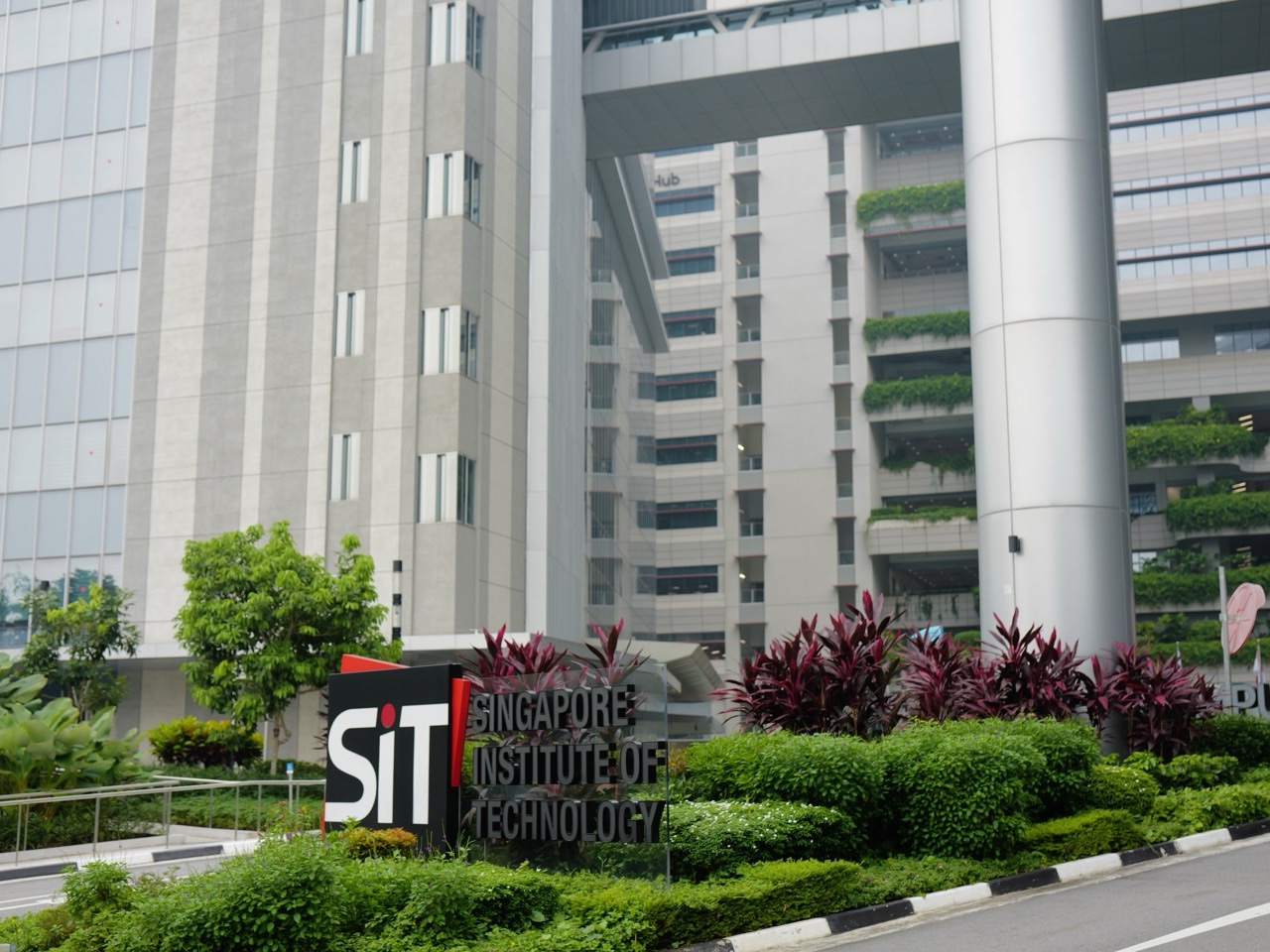
A major Punggol Events 2027 professional-learning opportunity starts in December 2027 and continues into the first week of January 2028. Singapore Institute of Technology lists FEP6600 Fire Safety Engineering Design, delivered in person at SIT Punggol Campus, 1 Punggol Coast Road, Singapore 828608, for 8 December 2027–7 January 2028. The published duration is five day-equivalents, and the official application deadline is 17 November 2027 at 11.59pm. SIT’s current Fire Safety Engineering Design course page.
Did you know? SIT’s detailed Schedule subsection currently gives individual workshop dates for December 2026–January 2027, while the live Course Runs panel separately identifies December 2027–January 2028. Those are two distinct course runs, not duplicate descriptions of one event. A working professional must not copy the older half-day and full-day workshop dates into the 2027 intake without confirmation from SIT. The available 2027 source confirms the 8 December–7 January window and five-day duration; the exact workshop days and start times need an updated organiser timetable.
This module teaches performance-based fire safety engineering, the design of evacuation strategies, relevant Singapore regulatory workflows and the interpretation of Pathfinder occupant-movement simulations. The university lists a S$4,905 full fee including GST, with conditional funded examples of S$1,471.50 and S$571.50. The training is part of SIT’s Graduate Certificate in Fire Engineering Practice, developed with SCDF. This guide was verified 29 October 2026 and explains which details are confirmed, how the course differs from Fire Regulations and Codes, and why a simulation does not automatically prove a real building is safe.
Official December 2027–January 2028 schedule and fees
- Module: FEP6600 Fire Safety Engineering Design
- University: Singapore Institute of Technology, SITLEARN
- 2027–2028 run: 8 December 2027–7 January 2028
- Published duration: Five day-equivalents
- Detailed daily 2027 workshop dates: Not separately published in the current old-style schedule table
- Location: SIT Punggol Campus, 1 Punggol Coast Road, Singapore 828608
- 2027 run application deadline: 17 November 2027, 11.59pm
- Earlier separate run: 9 December 2026–8 January 2027; distinct registration
- Full price: S$4,905, including GST
- Published eligible 70% fee: S$1,471.50
- Published eligible enhanced-funded fee: S$571.50
- Learning topics: Performance-based design, fire engineering workflows, human behaviour, evacuation modelling, Pathfinder
- Documentation topics: Fire Engineering Design Brief (FEDB), Fire Safety Engineering Report (FSER), Fire Engineering Guidelines
- Audience: Fire engineers, consultants, safety and facility professionals, regulatory personnel, researchers
- Prerequisite: No formal minimum; related technical education/experience recommended
- Assessment: Credit-bearing written assessment
- Certificate: 75% attendance and passing assessment
- Pathway: One of three modules in the Graduate Certificate in Fire Engineering Practice
- Official individual listing: SIT FEP6600
- Programme structure: SIT Fire Engineering Practice
The 50-second summary: exact dates and what to verify
SIT Punggol Campus advertises FEP6600 from 8 December 2027 to 7 January 2028. Apply by 17 November 2027 according to the active course-run entry. Its full price is S$4,905, with conditional subsidies for eligible learners. The module covers performance-based fire-safety design and Pathfinder evacuation modelling for qualified professionals. The active listing says five days, but its detailed workshop calendar is for an earlier 2026–2027 intake. Request the correct 2027–2028 daily schedule before arranging leave. Course completion does not itself authorise a person to sign off regulated building designs.
Why a December 2027 event extends into 2028
Many academic and professional courses cross calendar years. This programme begins in December and finishes in January, much like SIT’s earlier 2026–2027 FEP6600 run. The correct title should state both years so that readers do not treat the January end as an opening date. The published 17 November 2027 deadline comes before the first December workshop. This is a genuine future 2027 intake, not a repetition of the older December 2026 class. Exact attendance and assessment dates still require the organiser’s joining instructions.
Why two years of FEP6600 dates appear online
The SIT website currently lists two separate Course Runs: 9 December 2026–8 January 2027, and 8 December 2027–7 January 2028. The detailed workshop table displays the former intake’s half-day and full-day breakdown. A person reading quickly could accidentally apply the older schedule to the later run. The year in a search result matters. A current 2027 application should use the later course-run entry and its 17 November 2027 closing date, not the earlier 18 November 2026 deadline.
Five day-equivalents do not guarantee five calendar dates
The earlier detailed timetable shows how a module can combine afternoon workshops and full days. The active 2027 run summarises a five-day duration without giving its own full breakdown in the same subsection. That means the course may require more than five separate attendance dates, as in the earlier teaching pattern, but the correct number and dates cannot be confirmed from the current 2027 run summary. Ask SIT for each full-day and half-day reporting time. Do not convert the older timetable by adding one year and present the result as official.
What is fire safety engineering design?
Fire safety engineering concerns how buildings and related environments can meet life-safety objectives under appropriate technical and regulatory requirements. A design may need to consider how people reach suitable exits, how safety systems interact and how evidence supports the proposed approach. FEP6600 focuses on the design process, particularly performance-based solutions, rather than merely repeating a list of generic home fire-safety tips. It is specialist education, not a public permission to inspect or modify building safety systems.
Why performance-based design appears in the syllabus
SIT explains that complex modern buildings may need sophisticated analysis beyond a straightforward prescriptive checklist, within Singapore’s regulatory regime. Performance-based engineering seeks to demonstrate that applicable safety objectives can be met with suitable evidence. It does not exempt an innovative design from SCDF approval or applicable laws. Designers must use the correct framework, defensible assumptions and qualified review. A simulation that appears impressive is not automatically proof of compliance, and this blog article does not replace professional design services.
What is the prescriptive approach?
A prescriptive approach uses specific relevant requirements in a code or standard, applied to a project whose type and scope have been properly identified. A person cannot select one isolated clause and declare an entire building safe. Fire-safety compliance may require coordinated consideration of many features and applicable circumstances. FEP6600’s purpose is to develop informed design decisions within the law. The exact requirements belong to the current authorities, and a general public article should not publish universal exit dimensions or formulas as if they applied to every building.
How this differs from FEP6400 Fire Regulations and Codes
The SIT FEP6400 Fire Regulations and Codes guide covers the 4–20 August 2027 course focused on interpreting statutory fire-safety requirements and compliance approaches. FEP6600 is a later design-focused module, including evacuation modelling, human behaviour and project documentation. The two may contribute to the same three-module graduate pathway, but a place in one does not automatically create admission to the other. Both require their own fee and actual booking.
What does egress mean?
Egress refers to the process of occupants moving out of a building or area by an appropriate route. Professionals must consider the actual use of the building, its occupants and the applicable safety requirements. A classroom may illustrate egress with a simple plan, but a real project can involve complex interactions. FEP6600 addresses how movement and evacuation strategies are modelled and evaluated. This description is conceptual, not a recommendation for any specific building’s exit layout or crowd limit.
Why human behaviour matters in emergencies
People do not always react at the same speed or move in identical ways. Familiarity with a building, physical ability, understanding of instructions and the social environment can affect responses. A competent design needs suitable evidence and assumptions for the relevant occupant population. The course explicitly covers human behaviour during fire emergencies. That does not mean a simulation predicts the actions of every individual or eliminates uncertainty. Good designers disclose limitations and avoid generalising from one simplified crowd model.
Pathfinder: what the course actually teaches
SIT names Pathfinder as a digital simulation tool used to model occupant movement and egress scenarios. Participants learn to interpret results and evaluate fire-safety design options. The software can help professionals explore assumptions under controlled study conditions; it is not a certification authority and does not automatically establish that a real building is safe. Its outputs should be examined by appropriately qualified people in the context of the current regulatory framework. The listing does not promise every attendee a permanent commercial software licence.
What a simulation can and cannot demonstrate
A model represents selected features of the real world. It may help compare hypothetical movement scenarios under explicit assumptions. But its results depend on input data, building representations, movement characteristics and the validity of the modelling approach. An attractive animated sequence is not equivalent to an independent fire-safety approval. A competent professional should explain what was tested, what remains uncertain and which further assessments are needed. This is the evidence-minded way to use a modelling tool.
An illustrative bottleneck scenario
Imagine a fictional public building in which two approved routes have different characteristics and a professional team wants to examine how occupants might move through them. A suitable model could compare scenarios under documented assumptions. The general aim would be to investigate possible bottlenecks and test whether the design meets relevant objectives. This paragraph does not specify route dimensions, occupant speeds or modelling settings, because those need case-specific expert analysis. It is a conceptual illustration, not a design instruction.
Why accessibility affects evacuation planning
Buildings serve children, older people, people with disabilities and others whose movement or communication needs differ. A design should be evaluated against the correct regulations and with suitable consideration of its occupants. Some people may require arrangements that cannot be represented adequately by one average walking speed. Responsible engineering includes recognising those differences and testing relevant scenarios. Course content may address human behaviour, but the exact legal and design requirements for a real project must still be determined by authorised professionals.
What is a Fire Engineering Design Brief?
SIT identifies the Fire Engineering Design Brief (FEDB) as a key deliverable in its learning outcomes. At a general level, a design brief helps set out objectives, context, assumptions, methodology and the approach proposed for a fire-engineering project. The exact content and approval process are governed by the relevant authorities and professional requirements. A classroom introduction to FEDB should not be mistaken for permission to prepare or submit one as an unqualified person. Understanding documentation can make professional communication more precise.
What is a Fire Safety Engineering Report?
The course also discusses the Fire Safety Engineering Report (FSER). A report may present design analysis, evidence and conclusions under the applicable regulatory pathway. A credible report must be consistent with the actual project and available technical evidence. A generic report template or impressive graphics cannot substitute for qualified engineering judgement. Learners should ask how the university teaches the relationship between design assumptions, simulation outputs, documentation and responsible review, rather than treating the report as paperwork to complete at the end.
What are the Fire Engineering Guidelines?
Singapore’s fire-engineering regulatory framework includes guidance and approval processes relevant to performance-based solutions. The course explicitly mentions Fire Engineering Guidelines. These should be read with the applicable current law, code and official SCDF requirements, rather than with an outdated internet summary. For authoritative material consult SCDF’s Acts, Codes and Regulations. The rules and relevant editions may evolve by the December 2027 course date, so learners and project teams should verify them again when needed.
Why the prevailing Fire Code edition matters
SCDF’s official directory includes Fire Code 2023 and its amendment history, alongside older editions for historical reference. A project should not be designed on the assumption that Fire Code 2018 remains universally current or that all new amendments apply identically to every existing project. Applicability can involve submission and transition conditions. The purpose of professional study is to learn how to identify and interpret the correct requirements for a real project, not memorise one edition without checking later circulars.
Human judgement remains essential
An engineer may be assisted by software that calculates or visualises complex scenarios, but professional accountability remains with people and institutions authorised under the applicable framework. A model may have data limitations, and a regulatory pathway may demand separate approval. The expert’s role includes questioning assumptions, communicating uncertainty and documenting why a proposal is appropriate. FEP6600’s combination of human behaviour, simulation and regulatory documents is relevant because none of these elements alone establishes a complete safety argument.
Why a model needs independent challenge
Engineers can become attached to a design after spending time developing it. A reviewer should be prepared to ask what would happen if assumptions changed or if the model omitted relevant conditions. That does not require rejecting all simulation; it means treating simulation as evidence to be examined. Appropriate review protects people who may eventually occupy the building. The course’s stated goal of interpreting modelling results supports such reasoning, though no universal external-review arrangement is promised by an individual course certificate.
What real applications might involve
Professionals in commercial buildings, industrial premises and infrastructure can encounter fire-safety design decisions. Punggol Digital District includes complex built environments, but this course is not an announced inspection of any particular Punggol building or a promise that students will access restricted district infrastructure. It is a university training programme with general professional applications. Local readers can understand why the skills matter without confusing classroom simulations with the findings of a real site audit.
The intended participants
SIT names fire-safety engineers, fire modellers, design consultants, safety officers, facility managers, civil-defence and regulatory staff, and researchers. Those are people who may need to understand or evaluate technical fire-safety designs. A resident seeking ordinary home fire-prevention guidance would be better served by suitable public information rather than a specialist S$4,905 course. The participant should have a genuine educational or professional use for the subject.
No formal minimum does not mean easy
The university states there are no formal minimum prerequisites, but relevant technical or educational experience is preferred. Fire-safety design can require understanding of engineering analysis, regulation and modelling assumptions. Someone new to these subjects should ask about expected preparation and whether another foundational module is appropriate. Admission eligibility is not identical to readiness for credit-bearing assessment. A learner should make an informed choice rather than assume that a course is introductory simply because it has no fixed degree requirement.
Who teaches the module?
The official page names Ruth Wong, a fire engineering consultant with experience in major developments, and Siva Kanagalingam, a SIT professional officer specialising in modelling and relevant engineering research. Those profiles illustrate the technical orientation of the programme. They do not guarantee that every named trainer personally teaches every date, or that a participant receives a consultancy report for their employer. SIT reserves the right to amend instructors, timing and arrangements. Questions about exact teaching and assessment should go to the university.
Written assessment is not the same as a design licence
The published assessment type for FEP6600 is written assessment. A Certificate of Attainment requires at least 75% attendance and a pass in the relevant credit-bearing assessment. A person meeting attendance but failing the assessment may obtain a Certificate of Participation under the terms. Neither certificate automatically entitles someone to submit regulated design plans or certify a building. Professional authority is determined by the applicable registration and regulatory systems, not merely attendance in a university module.
How the graduate-certificate pathway works
SIT identifies FEP6600 as one of the modules in the Graduate Certificate in Fire Engineering Practice. The university’s programme description says successful completion of all three required modules, totalling eighteen credits, leads to the graduate certificate. Completing one module does not grant the entire credential. A prospective learner should ask which other modules are required, how the courses are sequenced and whether previous study is recognised under current academic rules. A pathway is useful when its actual completion conditions are understood.
The difference from Fire Engineering Science
The SIT FDM6100 Fire Engineering Science March 2027 guide covers underlying science and technical concepts. FEP6600 applies engineering reasoning to design, evacuation and documentation. A learner may need both scientific foundations and design practice, but the course descriptions should not be treated as identical. The correct route depends on prior experience and professional goals, with SIT controlling eligibility and credit rules.
The difference from Computational Fire Modelling
The FDM6300 Computational Fire Modelling article describes a different module in the Fire Dynamics and Fire Modelling pathway. FEP6600’s emphasis includes the human evacuation process, performance-based fire design and documentation. Both can use modelling concepts, but the academic pathways and intended outputs differ. Choosing the wrong course based solely on the word *simulation* may leave a learner studying skills less relevant to their work.
Why the November 17 deadline belongs at the top
The later SIT course run states Apply By: 17 November 2027 at 23:59. That is before December holiday schedules begin. A professional who needs employer sponsorship, leave or funding approval should verify the arrangement early. A published application deadline is not a guarantee of remaining places or automatic acceptance. The exact after-funding invoice depends on the learner’s eligibility and the university’s current rules. Use the actual 2027 intake, not the separate 2026 application record.
The S$4,905 full course fee
The university publishes S$4,905 including GST. Its fee table lists S$1,471.50 for certain eligible 70% funding categories and S$571.50 for the stated enhanced subsidy category. A person should not assume that living in Punggol creates additional entitlement or that all Credits can be combined without conditions. Ask SIT for the individual fee and approved funding. Employer reimbursement may be governed by separate workplace rules. The displayed amounts are not proof of a subsidy already awarded to the reader.
A conditional cash-budget example
Suppose a working engineer is approved for S$1,471.50 and hypothetically expects S$100 in transport and meals across the training dates. Their simple planning figure would be S$1,571.50 before other personal or workplace expenses. The extra S$100 is invented and not an official SIT charge. If the actual funded fee differs, the total changes. A real plan should include the verified invoice, attendance days and any written-assessment preparation time.
An employer’s value question
An employer sponsoring training might ask the learner to review how its project team records modelling assumptions, obtains appropriate expert review and checks current regulatory requirements. That is a professional-development objective rather than a promise that a learner can independently approve designs. The value of training can be observed in clearer questions and better documentation, not simply possession of a certificate. Any real project still needs authorised review and compliance procedures.
Why the course may affect a family’s holiday plans
The published course begins 8 December 2027 and continues through 7 January 2028, a period when some families travel or take leave. The exact attendance days are not itemised for that run in the detailed schedule reviewed. A household should therefore obtain the full five-day-equivalent timetable before booking conflicting holidays. Someone may also need to budget time for the written assessment. The date span should not be mistaken for a requirement to attend campus every day, but neither should the learner assume complete flexibility.
A Punggol parent’s explanation to a student
The topic offers a safe educational way to connect Mathematics, Science and real buildings. Professionals use models to understand complex situations, but must test assumptions and respect evidence. Students can explore this idea through ordinary classroom reasoning and public safety information. They should not attempt risky fire demonstrations, inspect restricted systems or replicate evacuation-engineering procedures independently. Specialist work belongs to authorised professionals and supervised facilities. The lesson is that technical creativity carries responsibility.
Where the actual classroom will be
The confirmed university venue is SIT Punggol Campus, 1 Punggol Coast Road, Singapore 828608. The 2027 course-run summary does not specify the teaching block or room. It is distinct from One Punggol Community Club on Punggol Drive. Once accepted, request the exact joining details, including the workshop days, start times and any appropriate equipment or software requirements. The university’s general campus information can assist with routing; a campus address does not prove any reserved parking or transport benefit.
Frequently asked questions
When? 8 December 2027–7 January 2028. How many days? Five day-equivalents, with the precise 2027–2028 workshop dates to be confirmed. Apply by? 17 November 2027, 11.59pm. Full fee? S$4,905, with conditional eligible S$1,471.50 or S$571.50. Where? SIT Punggol Campus. Is Pathfinder included? Yes, in the learning outcomes on evacuation modelling. What assessment? Written, plus attendance. Does passing authorise design submissions? No automatic professional licence. Why does the website show December 2026 dates? Those refer to an earlier separate run.
Applicant checklist before committing
Open the official SIT FEP6600 course page and choose the correct December 2027 course run. Confirm the actual five-day-equivalent attendance timetable rather than copying the 2026–2027 workshop table. Check your technical readiness, appropriate funding category and 17 November 2027 deadline. Ask about the assessment, use of Pathfinder, classroom and any degree or graduate-certificate pathway you intend to follow. Make work and holiday arrangements after acceptance. For real engineering, use the applicable prevailing laws and qualified authorities.
Primary sources and connected Punggol coverage
University course: SIT FEP6600 Fire Safety Engineering Design, establishing both separate December intakes, the 2027–2028 date range, deadline, fee, campus, Pathfinder learning and written assessment. Programme: SIT Fire Engineering Practice graduate-certificate pathway. Regulatory reference: SCDF Acts, Codes and Regulations. Related Punggol guides: FEP6400 Fire Regulations and Codes, Fire Dynamics, and Punggol Events. Verified 29 October 2026; SIT controls any subsequent change.
Final thought: safety requires defensible design and clear human responsibility
FEP6600 from 8 December 2027 through 7 January 2028 is a specific SIT Punggol course with a published registration deadline, professional learning objectives and credit-bearing assessment. Its essential practical caveat is that the detailed day-by-day table currently belongs to the earlier 2026–2027 run. Obtain the correct dates before arranging leave. Its larger lesson is that modelling software, regulatory documents and expert judgement must work together. A credible design is supported by evidence and authorised review—not by a convincing animation or a training certificate alone.


