
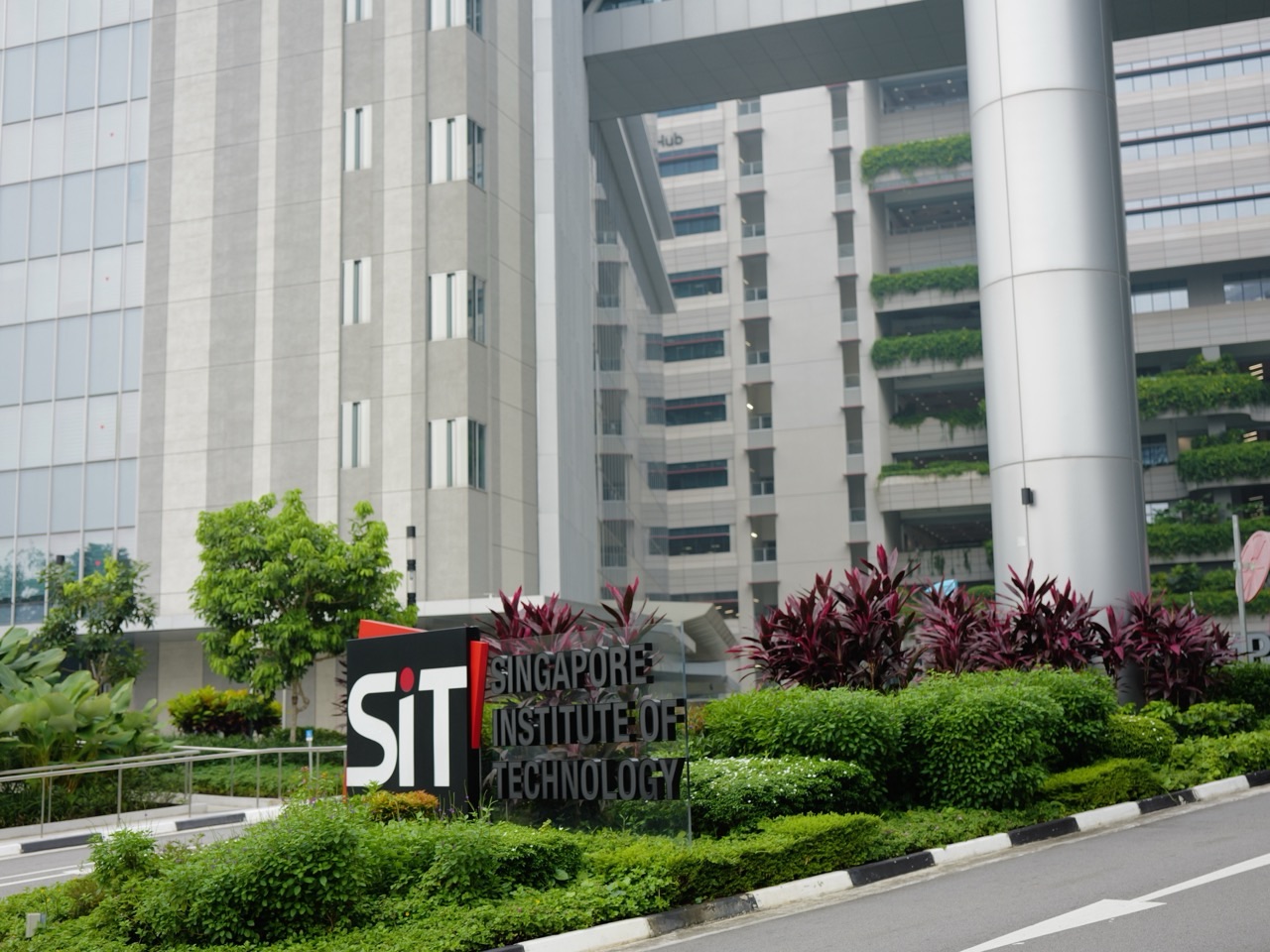
Singapore Institute of Technology has an official professional course at Punggol Campus that is particularly relevant to Singapore’s built environment. Its FEP6400 Fire Regulations and Codes programme is listed for 4–20 August 2027, as a five-day-equivalent in-person course at 1 Punggol Coast Road, Singapore 828608. The published registration deadline is 14 July 2027 at 11.59pm. SIT’s official FEP6400 course page.
Did you know? The detailed classroom schedule on the page currently shows August 2026 workshop dates, while the active 2027 Course Runs panel advertises 4–20 August 2027. It would be incorrect to copy the old 2026 afternoon and full-day dates into the 2027 calendar. The valid 2027 detail is the overall published window and five-day duration; the exact individual attendance dates and times should be obtained from SIT before taking leave.
The course is part of the Graduate Certificate in Fire Engineering Practice, developed with the Singapore Civil Defence Force (SCDF). Its full price is S$4,905 including GST, with conditional published after-funding amounts of S$1,471.50 and S$571.50 for relevant eligible learners. Students learn to interpret fire safety regulations and codes for different building types and compare prescriptive with performance-based compliance approaches. This Punggol Events 2027 guide was fact-checked 29 October 2026, including the current SCDF Fire Code 2023 reference and the fact that legal requirements may be amended before the August course.
Official August 2027 course facts, fees and code references
- Course: FEP6400 Fire Regulations and Codes
- Provider: Singapore Institute of Technology, SITLEARN
- Published 2027 window: 4–20 August 2027
- Advertised training duration: Five day-equivalents
- Exact 2027 workshop-day timetable: Not detailed on the individual syllabus table, which still shows 2026 dates
- Location: In person at SIT Punggol Campus, 1 Punggol Coast Road
- Application deadline: 14 July 2027 at 11.59pm
- Full fee: S$4,905 including GST
- Published eligible 70% payable amount: S$1,471.50
- Published eligible enhanced funding amount: S$571.50
- Field: Fire safety engineering, building design and compliance
- Audience: Architects, engineers, consultants, auditors, regulators and relevant building professionals
- Prerequisite: No formal minimum; relevant technical/educational background recommended
- Assessment: Two written assignments and one project
- Attainment: 75% attendance and passing credit-bearing assessment
- Pathway: One of three modules for Graduate Certificate in Fire Engineering Practice
- Partner: Singapore Civil Defence Force
- University source: SIT FEP6400
- Fire safety authority: SCDF Acts, Codes and Regulations
The 50-second answer for a Punggol professional
SIT is advertising FEP6400 Fire Regulations and Codes from 4–20 August 2027 at Punggol Campus. Apply by 14 July 2027 according to the active 2027 listing. The full price is S$4,905, with conditional eligible funding. The course focuses on interpreting laws and codes and preparing appropriate fire-safety compliance approaches for buildings. The active run says five days, but the individual syllabus table currently describes 2026, not 2027, workshop dates. Do not copy the 2026 daily schedule. Obtain the exact new classroom dates from SIT, and use the latest SCDF publications for actual professional compliance decisions.
Why this course is a real Punggol 2027 event
The university’s Course Runs section explicitly identifies the August 2027 programme as an in-person offering at SIT Punggol Campus, 1 Punggol Coast Road. That is more concrete than a broad prediction that Punggol Digital District will create new engineering jobs. It gives a provider, topic, campus venue, application deadline and fee. The course is intended for professionals, not for the public to enter construction sites or obtain informal fire-safety approvals. Punggol residents may benefit because specialist learning is available locally, even if their employment is elsewhere.
The precise issue with the 2026 and 2027 timetable
The detailed syllabus’s Schedule subsection describes Workshop 1 on 5–7 August 2026 and Workshop 2 on 19–21 August 2026, with afternoon and full-day sessions. The separately displayed Course Runs panel lists 4–20 August 2027, five days. These are different years. A working adult should not automatically convert the 2026 dates by adding one calendar year or assume the same rooms and reporting hours. The page establishes the 2027 window and total; SIT must confirm the actual five day-equivalents and whether they span six separate dates.
What five day-equivalents might mean
The previous year’s workshop layout illustrates how half days and full days can combine to a five-day learning duration. That background can help a learner understand why a course lasting part of August is not necessarily a daily two-week commitment. However, the organiser has not publicly itemised the equivalent 2027 days in the detailed subsection reviewed. Do not use a speculative set of dates to apply for annual leave. Ask for the official 2027 attendance calendar, including any afternoons, the start and end times and final assessment arrangements.
Why the 14 July 2027 deadline matters
The active SIT listing states Apply By: 14 July 2027, 23:59. That is before the August course window. Engineers often need employer approval, funding confirmation or leave coordination, so starting the application process at the last minute can create unnecessary risk. A deadline does not guarantee a place remains available until the final minute. The university’s current application process determines actual admission. Only treat a seat as confirmed once SIT accepts it and provides joining information.
A legal requirement versus a course description
A course may teach how professionals interpret regulations, but its syllabus is not itself the law. Actual fire-safety obligations come from the applicable legislation, codes, circulars and decisions of relevant authorities. Singapore’s SCDF Acts, Codes and Regulations page is an authoritative starting point. If a building project involves a specific design, qualified professionals should determine the current legally applicable provisions and obtain required approvals. A blog article and even course attendance do not provide an unrestricted right to approve construction.
The current Fire Code is not simply Fire Code 2018
A point that can be misunderstood is the code edition. SCDF’s current official listings include Fire Code 2023, as well as archived and historically relevant Fire Code 2018 materials. SCDF has issued later amendments to the 2023 edition, so professionals should use the applicable current code and circulars rather than copy a 2018 screenshot without version control. Whether a transitional arrangement affects a particular project depends on relevant effective dates and facts. The course’s module name is timeless; the compliance materials themselves must be checked as rules evolve.
What changed after Fire Code 2023?
The SCDF official codes page lists the 2023 code and amendment circulars, including amendments published during 2025. The exact applicability of a change can depend on the nature and timing of a project. It would be irresponsible to summarise all clauses as though they universally bind every existing building on the same day. The valuable professional habit is recording the code edition, relevant amendment and actual project submission conditions. A participant can learn how to trace such rules rather than simply memorise a clause number.
Why building occupancy matters
Different buildings have different uses and risks. A residence, school, office, industrial premise or transport facility may face different relevant fire-safety provisions. The official course specifically focuses on regulations across building types and occupancies. An architect should not assume one generic requirement applies identically to every site. Correct evaluation begins with accurate classification, existing conditions, applicable law and a suitable design process. The specific answer needs qualified review rather than a one-line internet calculation.
Prescriptive requirements in everyday language
A prescriptive approach identifies specific requirements that an applicable rule expects a project to satisfy. Compliance is not simply a matter of choosing the cheapest-looking layout; the actual code and its scope control the design. A competent professional needs to identify which provisions apply and how the design demonstrates them. This article deliberately does not give specific exit dimensions or spacing numbers, because those depend on current regulations and a real design’s facts. The purpose is to explain the regulatory reasoning SIT teaches, not replace it.
What performance-based fire engineering adds
For innovative or complex projects, a performance-based approach may be used within the applicable regulatory framework to demonstrate that relevant safety objectives are met through supported engineering analysis. This is not permission to ignore the Fire Code or invent an alternative safety standard. Evidence, assumptions, modelling, peer review and regulatory acceptance may be needed depending on the project. SIT’s course asks learners to compare prescriptive and performance-based pathways and the documentation each requires. That is a sophisticated professional task, not a shortcut for bypassing compliance.
How the two approaches differ conceptually
A prescriptive design may be evaluated against specified provisions, while a performance-based proposal may require a justified demonstration that safety objectives are achieved under appropriate scenarios and evidence. Both approaches demand care. A performance-based model that appears detailed can still fail if its assumptions are unrealistic. A design that follows isolated clauses may still need coordinated review of the whole building. The correct procedure is determined by the applicable regulatory framework and qualified professionals.
Why a fire safety submission needs documentation
A regulator or reviewer must be able to understand what is proposed and why it meets relevant requirements. That may involve drawings, reports, calculations, project information and evidence of suitable review. The course explicitly teaches how to analyse regulatory pathways and compliance documentation. A technically attractive idea with incomplete records can be difficult to verify. Documentation should communicate assumptions, applicable code versions, design decisions and unresolved issues clearly, rather than rely on informal promises that the design is safe.
Fire safety is not a decoration added at the end
Buildings bring together architecture, structure, mechanical services, electrical systems, human movement and emergency considerations. Fire safety often depends on coordination across those systems. If it is considered only after the main layout is finalised, changes may become more difficult. The training helps professionals think about compliance throughout design and professional practice. That does not imply every Punggol building is deficient or that the August course will inspect local housing blocks. It is general specialist education in the university setting.
An example of version control in a project
Imagine a fictional project team using a design checklist prepared two years ago. Before submitting revised plans, a member checks the regulator’s current publication and finds that relevant rules or administrative conditions have changed. The appropriate next step is not to assume the old checklist remains valid, nor to treat the updated website as automatically retroactive. The team needs to confirm applicable transitional provisions and coordinate with qualified persons. This hypothetical example demonstrates why regulatory version control matters; it is not a claim about a named Punggol development.
Why human behaviour matters to building safety
A design is used by people with different needs, familiarity with the building and ability to move or receive instructions. Regulatory planning can therefore involve more than equipment diagrams. Professionals should consider the actual occupants and the requirements relevant to their environment. This does not allow a brief course to predict every emergency response, and a generic population model should not replace suitable assessment. The aim is to support defensible design with an understanding that buildings serve people.
How innovation creates new compliance questions
New materials, automated building systems and unusual layouts may create questions that standard assumptions do not fully resolve. Engineers and architects need to identify the relevant requirements and demonstrate why a proposed design approach is appropriate. The course specifically mentions complex and innovative architectural or infrastructural projects. Innovative does not mean exempt from statutory responsibilities. A responsible designer uses qualified review and evidence rather than marketing the building as “smart” and inferring that it must therefore be safe.
Where the Singapore Fire Safety Act fits
SCDF’s official page identifies the Fire Safety Act among the key sources for building fire safety. The Act and relevant regulations establish responsibilities that cannot be rewritten by a commercial training provider. Actual applicability depends on the premises, activity and circumstances. A qualified person should consult the official SCDF Acts and Regulations directory and current subsidiary legislation before acting. This educational article does not determine any building’s legal status or substitute for authorised professional advice.
The teaching team and practical experience
SIT names Christopher Tan Eng Kiong as the programme lead, with substantial former SCDF leadership experience and work in fire safety regulation, and LTC Choh Choon Jin as a senior SCDF practitioner on the teaching team. Such profiles help explain the professional orientation of the course. They are not guarantees that every staff member will personally supervise every class or that the participant receives privileged access to SCDF systems. The university controls instructors and may revise assignments.
Who is the module designed for?
SIT identifies architects, engineers, consultants and other built-environment designers, along with regulators and people auditing or inspecting fire safety provisions. These professionals may need to interpret code requirements or assess the credibility of compliance strategies. An ordinary household wanting basic fire-prevention advice should not assume this S$4,905 specialist module is necessary. A resident interested in the field can first understand relevant career routes and find education suited to their current qualifications.
No formal entry minimum does not mean the course is elementary
The page says there are no minimum formal prerequisites, but a relevant educational or technical background is preferred and advantageous. Interpreting statutory rules and complex design documentation requires substantial professional reasoning. Someone new to engineering or architecture should ask SIT about expected preparation rather than simply enrol because no diploma is expressly compulsory. The module is part of a credit-bearing graduate-certificate structure, not a basic guided public tour.
The assessment has three components
SIT states a combination of two written assignments and one project assessment. A Certificate of Attainment requires at least 75% attendance and passing the relevant credit-bearing assessments. Someone meeting attendance but not passing may receive a Certificate of Participation. This is more demanding than a community lecture where attendance alone is the main requirement. Ask how the written work relates to the August timetable and whether project submissions require time after the classroom sessions.
Three modules make a separate graduate pathway
FEP6400 forms part of the Graduate Certificate in Fire Engineering Practice. SIT says completing the required Certificates of Attainment across three modules leads to the full graduate certificate. That does not mean passing FEP6400 alone confers the entire qualification. The programme also lists Fire Protection Systems and Fire Safety Engineering Design as related subjects. An applicant considering the whole pathway should ask about the current academic sequence, module credits, future runs and total costs.
A certificate is not a statutory professional licence
Even a credit-bearing university module does not automatically grant the legal authority to certify designs, sign regulated fire-safety submissions or perform independent inspections. Such activities may require separate qualifications, registrations and approvals. A professional should check the applicable SCDF and other regulatory requirements for the intended role. The module develops knowledge; it does not replace an employer’s authorisation or the legal limits of professional practice. This distinction protects both learners and the public.
The full S$4,905 fee
SIT publishes S$4,905 including GST as the full price. Its funding table gives S$1,471.50 for specified eligible 70% categories and S$571.50 for the enhanced-funding category. These are not automatic fees for every Singapore resident or all employees in a particular industry. Eligibility and the current approval process determine the actual amount payable. A Punggol residential address does not confer a separate local discount.
A financial comparison with conditional assumptions
Suppose an eligible learner is approved at the published S$1,471.50 fee. If they personally spend an illustrative S$120 on travel and meals across training days, the planning amount would be S$1,591.50. The S$120 is an invented example, not a quoted course or transport charge. An unfunded learner could face the full S$4,905. Compare real employer sponsorship, available funding and the total time commitment rather than basing the decision solely on the lowest displayed subsidy.
Why an employer should consider the learning outcome
A consultancy sponsoring an engineer could ask them to prepare an internal guide to checking current code editions, submission requirements and regulatory questions after the course. That is a more useful objective than simply adding one certificate to a list. However, a general classroom assignment cannot be substituted for a formal signed project analysis. The employer must give staff appropriate supervision and professional responsibility when they return. Training improves the questions people can ask; it does not make every conclusion automatically correct.
The difference from the March FDM6100 course
The SIT Fire Engineering Science March 2027 guide concerns scientific foundations relevant to fire behaviour and engineering analysis. FEP6400 focuses on the regulatory code and compliance framework. Both can be relevant to building safety, but they address different professional tasks. A learner should select based on whether the immediate need is understanding physical fire science or interpreting code obligations and documentation.
The difference from Fire Dynamics and Fire Modelling
The FDM6200 Fire Dynamics guide and FDM6300 Computational Fire Modelling guide address fire behaviour and modelling tools within a different graduate-certificate pathway. FEP6400 examines the legal and regulatory lens for actual built-environment projects. An architect or consultant may need both science and code understanding, but enrolment and credit recognition belong to the separate university module rules.
How this compares with December Fire Safety Design
SIT also lists FEP6600 Fire Safety Engineering Design for a later December 2027–January 2028 run. That course covers design workflow and evacuation modelling, while FEP6400 emphasises regulations and codes. The relationship does not mean one ticket pays for both. A participant aiming for the three-module Fire Engineering Practice certificate should ask about the module sequence and whether the published 2027 dates suit a realistic study plan.
Why the current SCDF code should remain the authority
The SCDF fire safety services page identifies Fire Code 2023 and its amendment history as key professional references, alongside older versions for historical or transitional cases. A fire-safety project should use the edition and circulars that actually apply to it. Course slides may be an aid to learning, but the relevant legal and regulatory materials and authorised project approvals govern compliance. Keep a record of the source version used for each actual decision.
A Punggol architecture student can learn from the topic
A student who notices features of a library, university building or covered public space can ask why safety planning includes exits, access, signage and different users. That is an appropriate educational question without attempting to inspect or approve a building. The current course is intended for qualified or technically prepared professionals, not for unsupervised student experiments or entry into restricted building systems. Young learners can build understanding through public information and safe classroom activities.
Travel to the actual Punggol campus
The university lists SIT Punggol Campus, 1 Punggol Coast Road, Singapore 828608. This should not be confused with One Punggol CC on Punggol Drive. After admission, ask for the exact classroom, building and individual attendance dates. The current public 2027 course-run summary does not provide a complete workshop-day itinerary. A campus address alone is insufficient for someone deciding which days to take leave, so obtain the official joining notice.
Frequently asked questions
When? SIT lists 4–20 August 2027, five training day-equivalents. Exactly which August dates? The detailed session breakdown is currently for 2026; ask SIT for 2027 details. Apply by? 14 July 2027 at 11.59pm. Where? SIT Punggol Campus. Fee? S$4,905 full, with conditional S$1,471.50 or S$571.50 amounts. What is taught? Interpreting fire regulations and code-compliance approaches. Are there formal prerequisites? None stated, but relevant technical preparation is strongly recommended. Does the certificate authorise design sign-off? No automatic professional licence is conferred.
Before applying
Read SIT FEP6400 and obtain the actual 2027 five-day-equivalent workshop calendar. Confirm the deadline, your appropriate course-fee category, the academic workload and full graduate-certificate requirements if relevant. Ask what code edition and amendments will be taught. Arrange employer approval and travel once the university confirms the place. Keep professional work on real buildings within authorised responsibilities; training should improve judgement, not encourage independent sign-off without qualification.
Sources and local reading
Primary published course: SIT FEP6400 Fire Regulations and Codes, supporting the 4–20 August 2027 run, 14 July deadline, fee, venue, credit-bearing assessment and 2026-versus-2027 schedule distinction. Regulator: SCDF Acts, Codes and Regulations and SCDF Fire Safety Services, with the prevailing Fire Code and amendments. Local connections: Punggol Events, March FDM6100 and May FDM6200. Checked 29 October 2026. The organiser and regulator control subsequent changes.
Final thought: a code is only useful when correctly applied
FEP6400 is a genuine professional-learning opportunity 4–20 August 2027 at SIT Punggol Campus with an official 14 July application deadline. Its importance is the ability to identify the right regulatory framework, understand a project’s use and scope, and demonstrate compliance with defensible evidence. The first practical step is confirming the actual 2027 workshop days rather than copying the detailed 2026 schedule. The long-term principle is to keep current SCDF requirements and qualified professional judgement ahead of old checklists, assumptions or promotional claims.


