
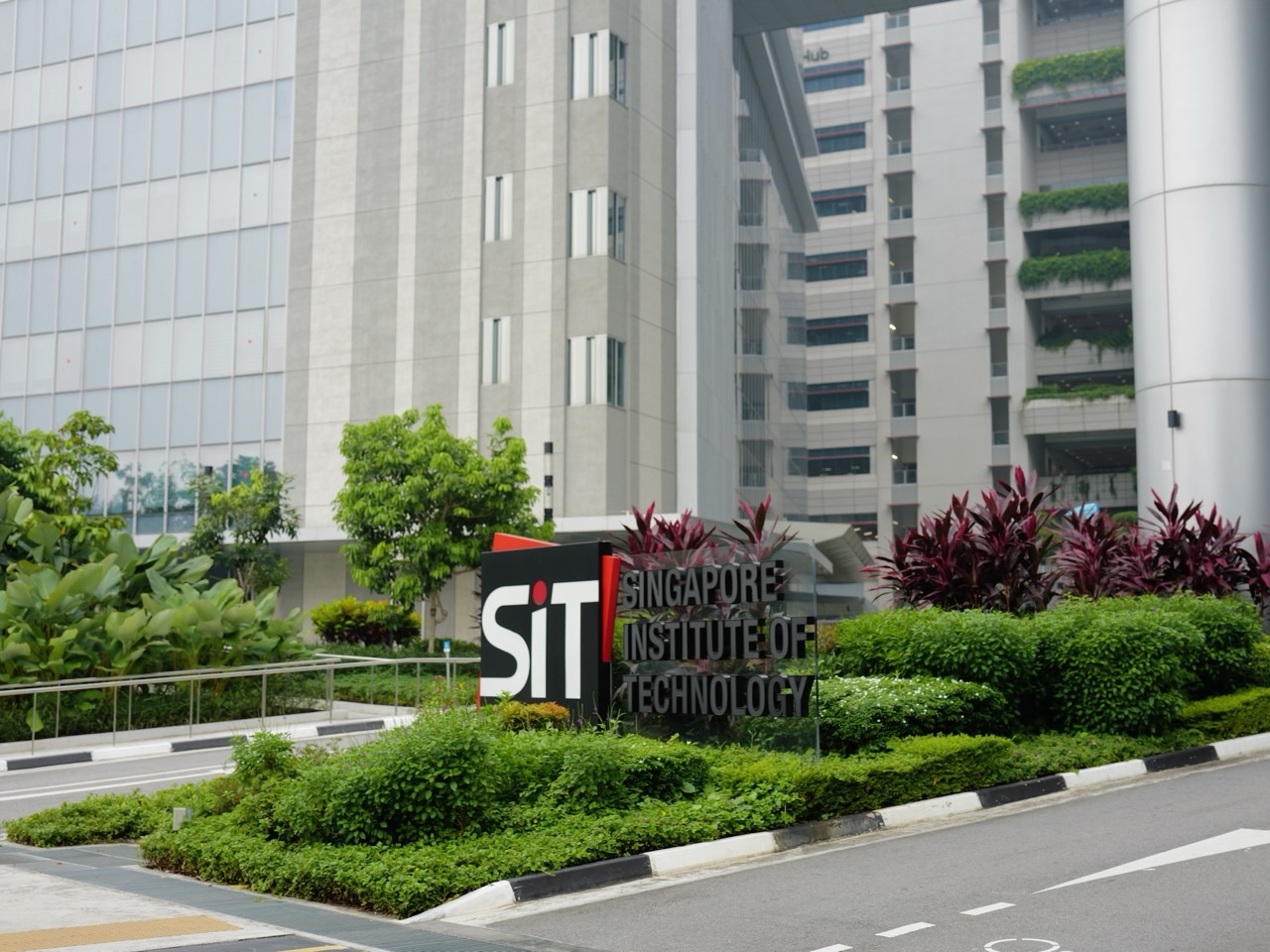
Singapore Institute of Technology has officially published a 2027 Computational Fire Modelling programme at SIT Punggol Campus. The course, FDM6300, runs under SITLEARN and is advertised for 30 June–20 August 2027, with hands-on learning about how professionals use computer simulations to assess fire and smoke behaviour in built environments.
Did you know? The official FDM6300 course page uses more than one date label. The detailed schedule describes a July 2027 course, but the actual first workshop begins 30 June 2027 in the afternoon. It then names full-day sessions on 1–2 July, a second afternoon on 14 July, and full-day sessions on 15–16 July. A presentation is tentatively placed in the second or third week of August, without a confirmed calendar day in the published table.
The public course-runs panel lists 5.5 days, 30 June–20 August 2027, and an application deadline of 9 June 2027 at 11.59pm. The full course fee is S$4,905 including GST, with conditional published after-funding amounts of S$1,471.50 and S$571.50 for qualifying categories.
This Punggol Events 2027 article, fact-checked 28 October 2026, helps engineers, architects, safety professionals and interested residents understand what is actually scheduled, what must still be confirmed, what simulation can and cannot prove, and how the university module fits a larger formal learning pathway. This is specialist professional training, not a public fire demonstration, an unrestricted software-laboratory visit, or an automatic licence to approve building designs.
Official SIT FDM6300 2027 dates and fees
- Programme: FDM6300 Computational Fire Modelling, SIT SITLEARN
- Location: SIT Punggol Campus, 1 Punggol Coast Road, Singapore 828608
- Advertised overall run: 30 June–20 August 2027
- Workshop 1: 30 June 2027 afternoon; 1–2 July full days
- Workshop 2: 14 July 2027 afternoon; 15–16 July full days
- Presentation: Tentatively second or third week of August; exact date unconfirmed
- Full-day time shown: 9am–6pm; ask SIT for actual afternoon reporting times
- Course-run duration: 5.5 days
- Application cut-off: 9 June 2027, 11.59pm
- Full GST-inclusive fee: S$4,905
- Published eligible 70% funded fee: S$1,471.50
- Published eligible enhanced-funding fee: S$571.50
- Preferred entry: Relevant educational background or IT-software literacy; no prior programming knowledge required
- Target audience: Fire-safety professionals, building-related engineers, architects, safety and risk professionals, and advanced learners
- Assessment and certificate: At least 75% attendance and passing the credit-bearing assessment for a Certificate of Attainment
- Larger pathway: Graduate Certificate in Fire Dynamics and Fire Modelling, requiring attainment across three relevant modules
- Primary course source: SIT FDM6300 Computational Fire Modelling
Why this belongs in the Punggol 2027 pipeline
Punggol is becoming an important place for university education and specialist workforce learning. The FDM6300 announcement matters because it provides a dated opportunity for people working on building and life-safety questions. It shows that the campus offers more than conventional degree programmes. However, the presence of a course does not prove a local Punggol building has a particular safety problem or that the university is recruiting for jobs in the field. This is a published training opportunity with eligibility, fees and assessments.
The three different time references explained
The course table labels a July 2027 workshop sequence, beginning on 30 June. The booking panel lists 30 June–20 August as the broader run. The teaching outline also says a presentation will occur tentatively in August’s second or third week. These references are not necessarily mutually exclusive: they may describe the opening date, instructional workshops and wider assessment period. But families and employers must not turn 20 August into a guaranteed presentation day. Ask SIT for the final dated timetable.
Exactly which workshop dates are named?
There are six specified workshop calendar dates: Wednesday 30 June in the afternoon; Thursday 1 July and Friday 2 July as full days; Wednesday 14 July in the afternoon; and Thursday 15 July and Friday 16 July as full days. The official table gives 9am–6pm for full-day teaching, but does not supply a precise start time for the two afternoon workshops. This detail matters when arranging professional leave and campus travel.
Why does SIT call it a 5.5-day module?
Four full workshop days plus two half-day workshops are equivalent to five training days on a straightforward count. SIT’s broader course-runs panel says 5.5 days, and the detailed programme includes an additional tentative presentation component. The public data therefore suggests time beyond the five workshop-day equivalents, but does not precisely explain every fraction in the duration. Rather than invent a presentation time, ask the course organiser what the 5.5-day figure includes and what attendance is required.
The application deadline comes early
The published application closing time is 9 June 2027 at 11.59pm, weeks before the first afternoon workshop. Someone who searches for a July course on 1 July may already have missed the authorised application window. A professional may also need employer approval or an individual funding assessment. Begin those conversations before the deadline rather than assuming onePA-style walk-in booking or a same-day enrolment is possible. The deadline itself does not guarantee remaining places.
What is computational fire modelling?
Computational fire modelling uses mathematical representations and software to examine specified fire-related physical behaviour under defined assumptions. Professionals may study heat transfer, airflow, smoke movement and how a particular environment could behave in a modelled scenario. The value is not that a computer shows a convincing animation. It is that assumptions, calculations and outputs can be studied critically as part of a responsible engineering process. A model is a tool for analysis, not a universal substitute for testing or qualified judgement.
How this differs from ordinary 3D animation
A three-dimensional animation may be designed primarily to look realistic. An engineering simulation is intended to represent selected physical relationships using a mathematical model and defined inputs. It can still produce colourful visualisations, but their accuracy depends on the model’s appropriateness and the quality of the data. A picture of smoke moving through a virtual building is not proof that the actual smoke would follow exactly that path in an emergency. SIT’s course teaches learners to interpret such evidence with proper caution.
What is computational fluid dynamics?
Computational fluid dynamics, or CFD, concerns numerical modelling of how fluids and gases move. In a fire-safety context, professional applications may consider airflow and smoke movement. The programme introduces CFD concepts and their role in building and safety analysis. This article deliberately avoids instructions for constructing dangerous fire scenarios or operating hazardous experiments. For residents, the broad insight is that buildings contain interacting physical systems, and meaningful predictions require appropriate assumptions and expert evaluation.
The two software examples in the syllabus
SIT names Fire Dynamics Simulator (FDS) and OpenFOAM as examples of simulation software used in the wider field. These names help applicants recognise the technical nature of the module. The public page does not guarantee unlimited commercial licences, ownership of particular software, professional accreditation in either platform or access beyond the course’s training arrangements. Ask what devices, accounts and preparation are required. Software skill and the legal authority to approve a building design are separate issues.
Do you need programming experience?
The official prerequisites say no prior programming knowledge is required, while a relevant educational background or IT-software literacy is preferred. That does not mean the subject is effortless or designed as a casual family activity. Learners still need to reason about physical processes, modelling assumptions and technical outputs. A person without coding experience but with a good engineering foundation may be prepared; another may need more introductory study. Ask SIT about readiness before paying a significant fee.
What does the fire-science foundation cover?
The published learning outcomes introduce fire behaviour, ignition, growth and suppression, together with heat-transfer mechanisms. These are professional concepts to understand in a supervised academic setting. They should not be treated as prompts for independent experiments with real fire or combustible materials. The purpose of training is safer design and evaluation, not instruction for producing hazardous conditions. Applicants who studied the earlier modules may recognise the scientific language, but this course develops the computational side of the pathway.
Why smoke dynamics matters
In an actual building, smoke and heated gases can create serious hazards. Engineers therefore study how those effects may develop under specified physical and environmental conditions. SIT includes smoke production, spread, stratification and buoyancy in its learning outcomes. A general article cannot certify the smoke-control system of a particular building or predict the conditions during an incident. Those questions require approved methods, verified data and appropriately qualified professionals. Residents should follow emergency-service instructions in real emergencies.
What is smoke stratification?
Stratification describes the formation of layers under some conditions, which may be relevant to professional analysis of smoke in a structure. It is not a simple assurance that a particular level of a building will always remain safe or unsafe. The behaviour depends on many factors that an engineer must evaluate. The significance for learners is understanding why assumptions about air and gas movement deserve careful testing. A generic diagram cannot replace building-specific evidence or an authorised safety assessment.
Ventilation and smoke-control questions
SIT’s syllabus includes mechanical and natural ventilation in the context of smoke control. These systems may interact with building geometry, operating conditions and other safety arrangements. An applicant can expect high-level instruction in analysing relevant flows, not a licence to modify smoke exhaust or ventilation equipment after completing the module. A professional decision must follow the relevant requirements and competent assessment. The public should not change a building’s safety systems based on an online explanation of ventilation.
Boundary conditions and why they matter
A simulation represents a chosen domain and needs assumptions describing its boundaries and operating conditions. If those assumptions are incorrect, the computed result may be misleading even when the software runs successfully. A meaningful technical review asks what was included, what was excluded and how uncertainties affect the conclusion. SIT includes the setup of simple scenarios in its authorised teaching context. This guide does not provide model-building parameter recipes or fire-source configurations for unsupervised use.
The danger of treating model output as truth
A computer may produce figures with many decimal places and detailed images, but precision in presentation does not prove predictive validity. Engineers must consider whether the underlying model is appropriate, whether input data reflects the actual problem and how results are tested against accepted evidence. A simulation can help compare hypotheses, but it cannot make an uncertain assumption disappear. This is one of the most important transferable lessons in technical education: a believable result still needs verification.
An illustrative uncertainty example
Imagine a fictional analytical model estimating that a process will take a certain amount of time. If the model’s input conditions differ materially from reality, its output can be wrong even if the arithmetic is internally consistent. In a safety-related application, that mismatch could have serious consequences. The sensible response is to document assumptions, assess sensitivity and seek appropriate evidence. This illustration contains no operational fire calculations; it explains the general reasoning needed to use simulations responsibly.
Why data visualisation is in the course
SIT lists interpreting and visualising simulation outputs among its learning outcomes. Visualisations can help people understand patterns, compare scenarios and communicate findings to colleagues. But a colourful plot can hide omissions or uncertainty just as easily as a table. A learner should be prepared to ask what a displayed value represents, its units, when it was measured or calculated, and what limitations apply. Communication quality depends on accurate interpretation, not only attractive graphics.
What is an introductory project?
The official page describes a supervised project involving a simplified fire-and-smoke modelling situation and presentation of findings. That is a university learning activity, not permission for people to reproduce hazardous tests at home. The project gives learners an opportunity to relate modelling choices to interpretation and professional judgement. Ask SIT about expected software access, assessment criteria and work beyond workshop hours. Do not present the completed academic project as a certified assessment of an actual building.
The August presentation is a real scheduling issue
The detailed schedule places the presentation tentatively in the second or third week of August. A working professional must not assume they are entirely free after 16 July or that 20 August is definitely the presentation date. The final confirmed assessment appointment may affect travel, leave and other obligations. Ask SIT when it expects to announce the actual day, whether attendance is compulsory and how the presentation contributes to assessment. That answer can materially change a learner’s calendar.
Certificate of Attainment versus Participation
SIT states that a Certificate of Attainment requires at least 75% attendance and passing its credit-bearing assessment. Learners meeting the attendance condition but not passing may receive a Certificate of Participation. These outcomes should not be described as identical. A course fee does not guarantee either result independently of the actual rules. Anyone taking the module for professional development should understand the assessment and attendance obligations before enrolling.
One module is not a complete graduate certificate
FDM6300 is part of SIT’s Graduate Certificate in Fire Dynamics and Fire Modelling. The page says learners must achieve all three Certificates of Attainment in the relevant series for the larger graduate certificate. FDM6300 alone does not automatically award that full qualification. A learner planning the series should check which other modules are required, how the credit-bearing assessments relate and whether earlier completed study can count. SIT is the authority on formal academic progression.
How the course relates to FDM6100 and FDM6200
Previous Punggol Events guides cover FDM6100 Fire Engineering Science in March and FDM6200 Fire Dynamics in May. The July Computational Fire Modelling module develops a more explicit software-and-simulation emphasis. These are different course records with different application deadlines, teaching dates and assessments. They belong to a related pathway, but one booking does not imply automatic admission to the others.
Collaboration with SCDF is educational context
SIT says its Fire Dynamics and Fire Modelling graduate-certificate programme was developed in collaboration with the Singapore Civil Defence Force to strengthen professionalism in the built environment. This describes the course’s institutional background. It does not make learners SCDF employees, create permission to enter restricted facilities or confer authority to approve fire-safety plans. Those activities have separate rules. The course should be evaluated on its actual syllabus and credential outcomes, not claims of access or authority the organiser has not made.
Who should attend?
SIT identifies fire-safety professionals, mechanical, electrical and civil engineers involved in design, risk-assessment and safety-compliance practitioners, and academics or students undertaking advanced fire-safety study. A resident working in facilities or design may find the subject relevant, but must still assess readiness. Someone seeking general household fire-safety advice should use suitable public resources rather than buy specialist graduate-level education simply because the course is offered locally.
Why no coding prerequisite does not mean no difficulty
Software interfaces can make complex calculations accessible, but learners still need to know what their calculations represent. Without an understanding of the underlying physical and engineering context, a person may generate attractive results that lack useful meaning. A technically prepared participant should be willing to question assumptions and read outputs critically. The relevant academic background or IT literacy preferred by SIT is a signal of the module’s expected level, even though prior programming knowledge is not compulsory.
The full S$4,905 fee
The published full fee is S$4,905 including GST. SIT’s table separately shows conditional after-funding amounts of S$1,471.50 for stated eligible 70% categories and S$571.50 for the specified enhanced-funding category. There is also a non-funded category shown at the full price. A person must not treat the lowest number as a universal promotional price. Ask SIT for an individual eligibility assessment and actual payable figure before making financial arrangements.
Understanding funding categories
SIT’s table distinguishes eligible Singapore citizens by age and certain PR/LTVP+ participants, together with those without applicable funding. The enhanced category on the course page uses the phrase “Above 40”. Anyone whose age is at the boundary should seek an official decision rather than infer the precise rule from shorthand text. Other credits or employer arrangements may have different eligibility conditions. A Punggol residential address does not independently qualify a learner for additional fee support.
A fictional personal budget
Imagine an applicant who receives confirmation that their course fee is S$1,471.50. If they hypothetically spend another S$90 on travel and meals across the workshops and presentation, their planning outlay would be S$1,561.50. The S$90 is an invented household example, not an SIT charge or fare quotation. A self-funding learner without subsidies might face the full S$4,905 plus their own expenses. These scenarios show why applicants need actual quotations, not assumptions.
Time away from work
The programme spans six named workshop dates plus a tentative August presentation. A working adult may need four full days, two afternoon periods and further time for assessment, subject to final organiser instructions. This is different from marking the entire 30 June–20 August period as paid leave. Employer policies and individual work arrangements vary. Discuss the schedule early and ask the university which sessions require physical attendance. Planning time honestly is part of the course’s true cost.
Protect confidential building information
Professionals may be tempted to bring real building plans, security diagrams or client records to make a classroom project more relevant. Do not disclose confidential or sensitive material without the necessary authority and safeguards. Use approved synthetic cases or materials provided by the university when appropriate. Technical education does not override confidentiality obligations or allow unrestricted sharing of facility information. Ask about data-handling requirements before preparing coursework.
Models and safety compliance are separate matters
Completing an academic fire-modelling course does not automatically authorise the learner to certify a building, sign statutory plans, run unsupervised hazardous tests or change fire-safety systems. Actual professional roles and approvals depend on relevant qualification, experience, law and institutional responsibilities. This is an important distinction for career changers and employers. A Certificate of Attainment can evidence learning without being a substitute for professional registration or regulatory authorisation.
What career paths relate to the module?
Computational modelling may be relevant to safety engineering, design consultancy, building-performance analysis, risk assessment and research. SIT’s stated audience includes practitioners in several of those fields. But the course does not promise a job, a salary increase or a vacancy at Punggol Digital District. For local context, the Punggol engineering and smart-buildings careers guide explores related possibilities. Actual employer requirements must always be checked separately.
Why university location matters but does not decide admission
SIT Punggol Campus is at 1 Punggol Coast Road, Singapore 828608, giving residents a local professional-education location. Nevertheless, someone who lives nearby is not automatically eligible or guaranteed a place. The course is intended for technically prepared learners and has fees and assessments. A short journey may make attendance more practical, but should not substitute for evaluating educational readiness and career relevance. Only university enrolment confirmation establishes a seat.
Getting to the correct SIT teaching room
The public course-runs panel states SIT Punggol Campus but does not supply a specific building and classroom in the excerpt reviewed. Ask for final joining directions after acceptance. Do not navigate to One Punggol CC at Punggol Drive or Punggol 21 CC at Punggol Field; they are separate locations. Allow time to reach the appropriate campus block, especially for the afternoon sessions with unspecified reporting times. Any accessibility or parking requirement should be addressed directly through university information.
How to evaluate a simulation course before paying
Begin by identifying what capability you need: understanding output, reviewing models, communicating findings or working within a professional engineering team. Compare those goals with the published learning outcomes. Ask what software is actually used, whether project support is provided and how assessment works. Do not infer that the course teaches all functions of FDS or OpenFOAM at an expert level. A university module can establish useful foundations without promising complete mastery of every software package.
Common misunderstandings
“The course begins in July.” Its first workshop actually starts 30 June. “It runs every day until 20 August.” The detailed timetable names particular June/July workshops and a later tentative presentation. “5.5 days means six full weekdays.” The workshops include afternoons and full days, with a presentation component to confirm. “S$571.50 is the price for everyone.” That amount is conditional. “Finishing a simulation certifies a building.” It does not. Accurate distinctions help residents plan and avoid overclaiming.
Frequently asked questions
What is the application deadline? 9 June 2027, 11.59pm. First class? 30 June afternoon. Full workshop dates? 1–2 and 15–16 July, plus the two afternoon dates. August assessment? Presentation tentatively in the second or third week; exact date needs SIT confirmation. Full fee? S$4,905 including GST. Coding required? No prior programming knowledge according to SIT, though technical readiness matters. Certificate? Attendance and passing credit-bearing assessment required. Professional licence? None automatically granted.
Ten decisions to make before enrolling
Read the official FDM6300 page; note the 9 June deadline; clarify afternoon reporting times; request the exact August presentation date when available; compare your background with recommended preparation; ask about FDS/OpenFOAM and device requirements; verify the actual fee after funding; arrange work and family time; understand assessment and the three-module pathway; obtain precise campus joining instructions; and keep all confidential employer material properly protected.
Sources and verification date
Primary source: SITLEARN FDM6300 Computational Fire Modelling. It supports the workshop days, tentative August presentation, 30 June–20 August course-run period, application deadline, fee structure, intended audience and assessment. Related learning: March FDM6100, May FDM6200 and Punggol Events. Fact-checked 28 October 2026. SIT controls later schedule updates and admission.
Final thought
Computational Fire Modelling is an example of sophisticated professional education taking place within Punggol. Its value is learning to question models, interpret evidence and support responsible engineering decisions—not producing a convincing animation or claiming authority a certificate does not grant. The actual 2027 opportunity has a clear university source and application deadline, six workshop dates and a tentative August presentation. Confirm the final calendar, personal fee and assessment expectations before committing.


