
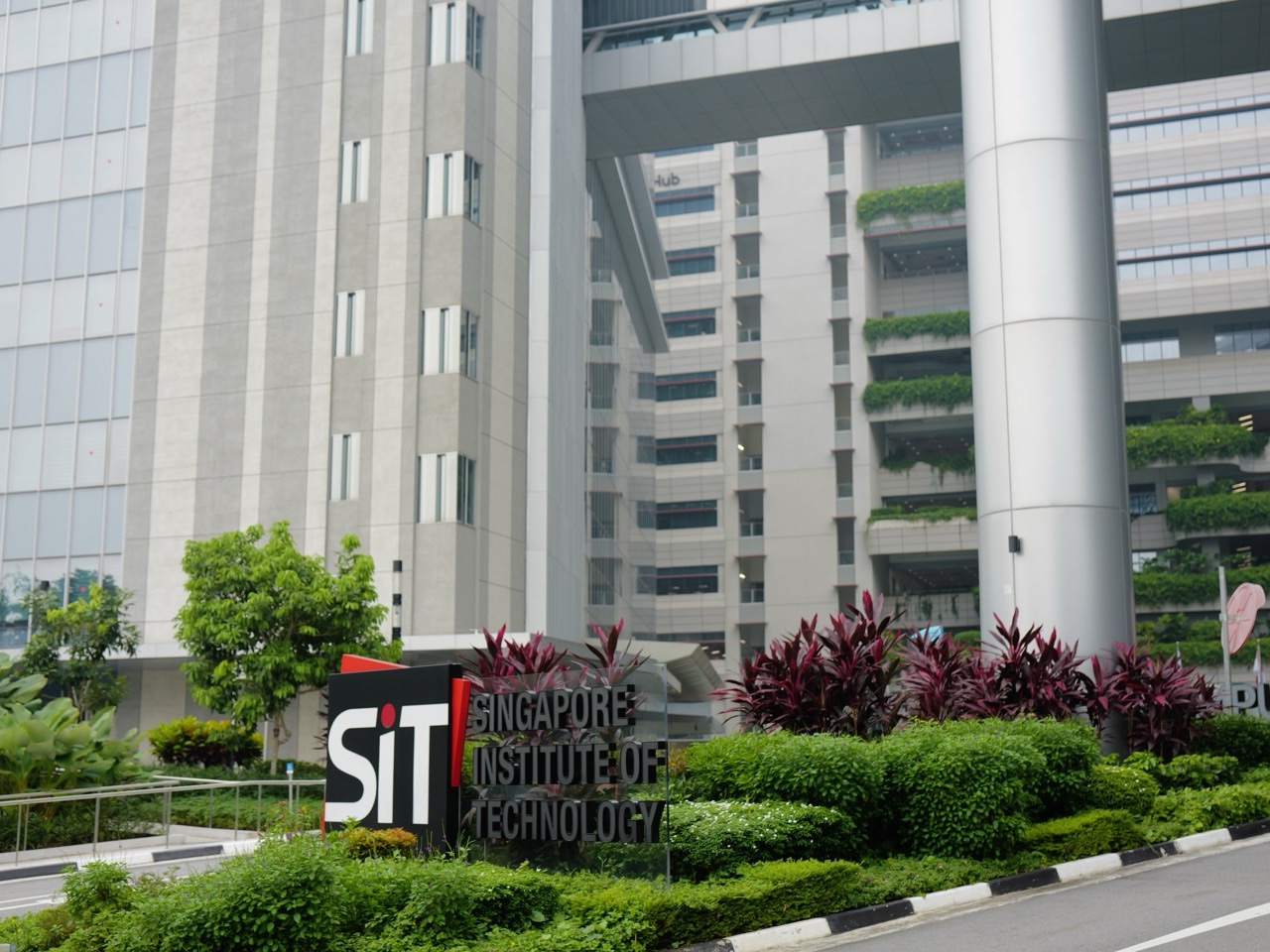
Punggol residents working in engineering, building services, construction, safety or technical operations have a specifically dated 2027 professional course at SIT Punggol Campus to investigate. The Singapore Institute of Technology’s SITLEARN programme advertises FDM6100 Fire Engineering Science, delivered across two workshops from 3 to 19 March 2027. The official page describes five training days in total, with two afternoon sessions and four full-day sessions, and sets an application deadline of 10 February 2027 at 11.59pm.
Did you know? The detailed schedule is more specific than the broad “3–19 March” line: Workshop 1 is 3 March (afternoon) and 4–5 March (full days); Workshop 2 is 17 March (afternoon) and 18–19 March (full days). The general course table gives 9am–6pm for full-day training. It does not establish the exact reporting hour for each half-day, so accepted learners need final joining instructions from SIT. The course is associated with a Graduate Certificate in Fire Dynamics and Fire Modelling and was developed in collaboration with the Singapore Civil Defence Force (SCDF).
The published full course fee is S$4,905 including GST, while SIT lists conditional eligible after-funding amounts of S$1,471.50 and S$571.50 for specified funding categories. The lower figure is not available automatically to every Punggol resident, and an application is not proof of acceptance. The authoritative record is SITLEARN FDM6100 Fire Engineering Science. This guide was checked 27 October 2026 and separates the official programme from general fire-safety advice.
Quick answer: official course details
| Item | Published information |
|---|---|
| Programme | FDM6100 Fire Engineering Science |
| Organiser | Singapore Institute of Technology, SITLEARN |
| Venue | SIT Punggol Campus, 1 Punggol Coast Road, Singapore 828608 |
| Workshop 1 | 3 March afternoon; 4 and 5 March full days |
| Workshop 2 | 17 March afternoon; 18 and 19 March full days |
| Overall advertised time | 9am–6pm for full-day format; clarify half-day reporting |
| Training-day count | Five equivalent days, across six calendar dates |
| Application deadline | 10 February 2027, 11.59pm |
| Full course fee | S$4,905 including GST |
| Eligible published 70% category | S$1,471.50 payable |
| Eligible published higher-funding category | S$571.50 payable |
| Assessment | Two written assignments and one project assessment |
| Certificate of Attainment | At least 75% attendance and passing credit-bearing assessment |
| Larger qualification | One module in the Graduate Certificate in Fire Dynamics and Fire Modelling pathway |
This is specialist professional education, not a public emergency-responder demonstration, a consumer fire-extinguisher workshop or a promise of employment with SCDF. SIT can amend dates, fees, venue arrangements and instructors.
Why Fire Engineering Science matters in a growing town
Punggol is a place where homes, transport facilities, commercial premises, university buildings and public spaces are developing together. Fire safety is part of how such buildings and infrastructure are designed, assessed and managed.
But a university course held in Punggol should not be confused with a local emergency facility. The separate planned Punggol Northshore Marine Fire Post is a different public-safety development discussed elsewhere on eduKatePunggol. The March university programme is training for learners, with a fee and assessment, not a new fire-station opening.
The local connection matters because professional learning can take place close to where a resident lives, but it does not change the national scope of building safety. Engineers may apply relevant principles to many types of structures across Singapore and beyond.
A useful 2027 events guide distinguishes these projects rather than grouping everything containing the word fire under a single event.
What is Fire Engineering Science?
Fire engineering science studies the physical and chemical behaviour of fire and the way it interacts with buildings, materials, air movement and people. The official SIT description identifies thermodynamics, fire chemistry and physics, heat transfer, flame spread, gases and fluid flows, including fire plumes.
These are academic and professional topics. The aim is to understand hazards and design or evaluate safety measures, not to teach members of the public how to create dangerous conditions or carry out fire experiments at home.
For a beginner outside the field, the central idea is that fire safety does not depend on a single device. A building’s shape, material properties, ventilation, detection, compartmentation, escape arrangements and management all affect how risk is understood.
Fire engineering draws from multiple disciplines because a complex structure cannot be evaluated accurately by considering one isolated component.
Why thermodynamics is involved
Thermodynamics concerns energy, heat and their transformations. When a fire occurs, the thermal behaviour of materials and surrounding air influences temperatures, movement and potential exposure within an environment.
Engineers study such processes through accepted scientific methods and appropriate models. This can help them understand why building configurations, ventilation arrangements and material choices matter to performance-based design.
The public course page does not publish an experimental procedure for students to perform at home. Nobody should attempt to recreate hazardous demonstrations outside approved facilities with qualified oversight.
For a Punggol student considering engineering as a future career, thermodynamics is an example of how school physics can eventually connect to public safety and design decisions.
Chemistry has a role too
Fire behaviour involves chemical reactions as well as heat transfer. Professional study examines the mechanisms of combustion in the context of materials, environments and safety analysis.
A learner needs to understand the relevant science sufficiently to interpret hazards and communicate findings. But the course’s existence should not be used to suggest that an untrained person can evaluate an unfamiliar substance’s fire risk from a brief online explanation.
The right approach to an actual dangerous material or suspected fire hazard is to follow established safety requirements and obtain appropriately qualified help. Do not rely on simplified classroom concepts to justify unsafe experiments.
In a professional setting, theory can inform responsible design, testing and regulatory decisions when it is applied with the proper expertise and evidence.
How heat transfer affects buildings
Heat can move through different mechanisms, and professional building-safety analysis examines how that influences exposure and materials. The official course includes heat transfer and flame spread as learning outcomes.
A building component that looks solid to a casual observer may have performance characteristics that require proper testing and engineering judgement. Fire safety decisions depend on approved standards, relevant evidence and the particular building context.
A training programme can help engineers understand the underlying science, but it does not mean an attendee is immediately authorised to certify any building element or sign off a fire-safety design.
For residents, the everyday lesson is to respect building-safety systems, keep exits usable and report credible concerns through appropriate channels rather than improvising changes to the premises.
What is a fire plume?
The official module names fire plumes among its gas-flow topics. In simple terms, a plume describes the movement of gases and heat associated with a fire. Such movement can have important implications for conditions inside or near a built environment.
Understanding those patterns professionally involves more than noticing that hot air tends to rise. Geometry, conditions, materials and other factors can influence behaviour. Accurate analysis may require specialist models and appropriate inputs.
This article deliberately avoids procedural or numerical instructions that could be mistaken for safe do-it-yourself experiments. SIT’s course is intended to teach the scientific foundations within a supervised professional-learning environment.
The purpose of studying a plume is to support safer engineering decisions, not to encourage people to approach a fire to observe it.
What does fluid flow have to do with safety?
Gases and fluids move through spaces according to physical laws. In fire-safety engineering, understanding air and gas movement can support the evaluation of potential smoke movement and other fire-related behaviour in buildings.
Modern structures contain ducts, doors, atriums, stairwells, open spaces and mechanical systems. These features can influence the movement of air and smoke, depending on a specific situation and design.
A general public guide cannot judge whether a particular building’s ventilation or smoke-control approach is adequate. That requires qualified assessment, current standards and verified details.
The SIT course teaches foundational principles to specialists or technically prepared learners. It does not create an automatic licence to alter smoke-control systems after attendance.
The architecture connection
SIT’s description refers to complex structures in Singapore, including the Esplanade, Gardens by the Bay, Marina Bay Sands, rail networks and large integrated developments, as examples of where fire engineering is relevant.
That is an illustration of the profession’s scope, not a claim that students will tour those landmarks during the March module or that SIT has disclosed confidential engineering details for each one.
Design teams must balance architectural intent, use of space, structural systems, services, safety and operational needs. Fire engineering is one of the disciplines that contributes evidence to those decisions.
A parent discussing engineering careers with a teenager can use this example: technical subjects are not only about calculations on paper. They can shape how real buildings are designed and how people use them safely.
Who should consider applying?
SIT lists fire safety engineers, mechanical and systems engineers, chemical engineers and process engineers among the intended audiences. It also states no formal minimum entry requirements, while noting that a relevant education or technical background would be advantageous.
Those two statements should be read together. No formal minimum does not mean that the science is suitable for every beginner without preparation. A person unfamiliar with basic physics or engineering concepts may find a specialist credit-bearing module challenging.
If you are exploring a career transition, ask SIT what prior knowledge would make participation realistic and what support is available. Do not book simply because the subject sounds exciting.
For somebody already working in the built environment, the module may offer formal grounding in concepts used around design, safety or technical analysis.
What the course does not promise
The public SIT page does not promise SCDF recruitment, a professional fire engineer’s licence, registration with a regulator, a guaranteed salary increase, or access to live firefighting operations.
It identifies a professional module, a university setting, subject matter, instructors, written and project assessment, and a route within a larger graduate-certificate programme.
A learner should evaluate those actual outcomes. If a job advertisement requires a specific qualification or regulated status, check the employer’s requirements and the relevant authority’s rules separately.
An officially advertised programme is valuable information, but its name cannot stand in for a qualification it has not been stated to award.
How does the timetable actually work?
The official table lists two workshop blocks. The first starts with an afternoon on 3 March, continues with full days on 4 and 5 March, and is followed by a break before the second block.
The second begins with an afternoon on 17 March, then full days on 18 and 19 March. That is six distinct calendar attendance dates, consisting of four full-day dates and two half-day dates. SIT summarises the run as five days because those segments amount to five day-equivalents.
The general schedule column says 9am–6pm, but the exact half-day start time is not specified in the excerpt. Ask SIT whether the afternoon sessions start at a particular hour and whether any additional preparation or assessment deadlines fall between the workshops.
Do not book workplace leave based only on “3–19 March” as though the course occupies every weekday.
The 10 February application deadline
The official run says Apply By: 10 February 2027 at 23:59. That is several weeks before the first workshop. Applicants may need time to confirm funding, course suitability, work leave and the assessment workload.
A deadline is not a guarantee of remaining course places. It is also not proof that a late application will automatically be accepted if somebody contacts the organiser after the displayed date.
If you are self-funding, establish the correct payable amount before committing. If an employer is sponsoring you, start the approval process early enough to avoid rushed decisions.
Keep the application confirmation and any official joining letter. Submitting a form alone does not constitute acceptance.
The full price and funding table
SIT publishes S$4,905 inclusive of GST as the full fee. The page lists S$1,471.50 payable for eligible learners under stated 70% funding categories, S$571.50 for the described higher-funding older-citizen category, and S$4,905 for the published non-funded category.
These are conditional course-page amounts. Applicants must meet the applicable citizenship, residency, age and scheme conditions, and SIT must confirm how funding applies to their actual enrolment.
The enhanced category heading uses the wording “Above 40”. If somebody is at a boundary age or has a complex eligibility situation, obtain a specific decision rather than infer it from a short description.
Do not assume that all learning credits, employer schemes and advertised percentage subsidies can be combined without restrictions.
How to compare the three published prices
A resident seeing the S$571.50 figure may think the module is inexpensive. Another resident looking at S$4,905 may decide it is impossible. Both reactions overlook the importance of personal eligibility.
A proper decision begins with a confirmed quote. For a potentially eligible learner, ask what documents are needed and when funding approval is determined. For a self-funding learner, compare the full fee with the career relevance and time commitment.
The course also has assessment work outside scheduled hours. Nobody should judge value only by dividing the fee by five training days without considering the module’s credit-bearing responsibilities.
All the amounts in this section are published possibilities, not a claim that any reader’s subsidy has already been approved.
The credit-bearing assessment is more substantial than a quiz
SIT states that learners will complete two written assignments and one project assessment. The module requires at least 75% attendance and passing the credit-bearing assessment for its Certificate of Attainment.
This is not the same structure as SIT’s two-day non-credit Agentic AI for Human Resource course, which uses oral questioning. The Fire Engineering Science module is part of a graduate-certificate academic pathway with a distinct assessment approach.
Participants who meet attendance requirements but do not pass are described as eligible for a Certificate of Participation instead. The organiser’s current assessment rules govern the actual result.
If you are taking the module for a formal credential, ask how the assignments are graded, what submission dates apply and whether any prior knowledge is recommended.
One module is not the entire Graduate Certificate
The course page says that learners who obtain all three Certificates of Attainment in the Fire Dynamics and Fire Modelling series receive the Graduate Certificate in Fire Dynamics and Fire Modelling.
That is an important distinction. Completing FDM6100 is part of a broader route; it is not proof that the learner has completed all components. Do not advertise one course as a whole postgraduate qualification.
If you already hold a related credential, ask how the module fits your pathway. If you are beginning from scratch, compare the total study, assessment and funding commitments across the entire series rather than only this March class.
The provider should be able to explain progression and recognition. A local events article cannot confer academic credits on its own authority.
Why SCDF collaboration is meaningful
SIT’s module description states that the Fire Dynamics and Fire Modelling programme was developed in collaboration with the Singapore Civil Defence Force to strengthen professionalism in fire-safety engineering.
That indicates an industry and public-safety connection, but it does not mean that the training event is an open SCDF public education session, that participants become SCDF officers, or that any particular operational activity will be demonstrated.
The collaboration belongs to the programme’s academic background. Applicants should evaluate the module according to its published syllabus, assessment and intended professional outcomes.
For actual emergencies in Singapore, residents should follow the appropriate emergency services and official safety instructions, not attempt to apply academic fire-science concepts on site.
Who teaches the course?
The SIT page identifies Christopher Tan Eng Kiong as programme lead and describes his long experience in fire-safety engineering and the Singapore Civil Defence Force. It also lists Siva Kanagalingam, a Senior Professional Officer whose work includes fire dynamics, evacuation modelling and computational fluid dynamics.
These are published professional backgrounds, not a guarantee that a named instructor will conduct every session personally. SIT reserves the right to modify instructors and course details.
For a learner, the teaching team’s relevant experience can be useful context when deciding whether a module aligns with professional interests. Still, the decisive questions are the syllabus, assessment and suitability.
Do not infer special access to regulatory decision-makers or privileged consultancy services merely because the programme names experienced specialists.
How this differs from basic home fire-safety education
A parent may see a Fire Engineering Science course and think it teaches household extinguisher use or HDB evacuation. Those are useful public topics, but the official FDM6100 syllabus is more technical.
Home fire-safety education focuses on prevention, early warning, safe response and following emergency instructions. Fire engineering science examines physical and chemical principles relevant to building analysis and professional design.
For everyday household information, see Understanding Punggol: SCDF home fire safety, smoke alarms and evacuation. That is a different kind of guide from a specialist university module.
Do not pay thousands of dollars for a graduate-level technical subject if your only goal is to learn ordinary home emergency basics. Choose the appropriate source and level.
Science education and career pathways
For secondary-school or junior-college students living in Punggol, the course is an example of how Physics, Chemistry and Mathematics can contribute to engineering specialisations. It is not itself an MOE school syllabus or an automatic choice available to every student.
A prospective engineer may study thermodynamics, fluid mechanics, materials and modelling in tertiary education before specialising. Real professional pathways depend on admissions requirements, programme structures, employers and relevant registration conditions.
The existence of a short continuing-education module should not be interpreted as permission for a school student to bypass necessary academic foundations.
Parents can use the listing to show that subjects become tools for public problems—but should not promise their child a professional safety role on the basis of this one announcement.
A simple example of why assumptions matter
Imagine two fictional buildings with different layouts and occupancy patterns. It would be irresponsible to declare that identical safety designs necessarily produce identical outcomes merely because the floor area is similar.
Engineers need accurate information about the relevant building, materials, systems, intended use and applicable safety requirements. A model is only as reliable as its assumptions and inputs.
This is a high-level explanation of professional reasoning, not a substitute for building-fire analysis. We do not calculate heat release, simulate ignition or prescribe ventilation modifications in a local event guide.
The practical lesson is that safety-related design claims need qualified assessment, not plausible-looking diagrams alone.
When does simulation help?
SIT’s broader graduate-certificate pathway includes fire dynamics and fire modelling. Computational approaches may support the evaluation of scenarios, but a model does not become truthful simply because it generates a detailed visual.
A professional must select appropriate inputs, understand what the model represents, consider uncertainty and compare predictions with valid evidence where possible. The particular FDM6100 course is described as a foundational science module rather than a guarantee of advanced simulation-software proficiency.
If access to a specific software package matters to your job, ask SIT what is actually taught and assessed in this module.
A responsible applicant distinguishes between the scope of one course and the scope of an entire qualification series.
What about regulations and professional sign-off?
Building fire safety operates within applicable legislation, codes, approvals and qualified professional responsibilities. FDM6100 is a learning opportunity; the public course page does not claim it creates a new statutory authorisation to approve designs.
A professional changing role should ask which qualifications, registrations and experience an employer or relevant authority requires for the tasks they intend to perform. Do not rely on a completion certificate as a universal replacement for those requirements.
The course may improve understanding that supports good engineering work, but the authority to certify or approve something is a different question.
This article does not provide legal or engineering compliance advice for a particular building.
The safety culture behind technical learning
Technical knowledge is valuable when paired with responsible practice. In building safety, that includes documenting assumptions, checking evidence, communicating limitations and escalating issues to qualified people.
A culture of safety avoids exaggerated certainty. If an analysis does not cover a specific condition, a practitioner should say so rather than stretch a conclusion beyond the evidence.
In an educational setting, this can be reinforced through assignments requiring clear reasoning and defensible conclusions. The SIT page confirms written and project assessment, but does not publish the exact assignment briefs.
The broader goal is competence that can be checked, challenged and improved.
What should a learner prepare?
Review the official learning outcomes and honestly assess readiness for thermodynamics, fire physics, chemistry and fluid-flow concepts. The page says technical background is preferred even though it lists no formal minimum requirement.
Ask whether the module requires a laptop, particular software or preparatory reading. The public listing does not supply a complete equipment checklist in the excerpt reviewed.
If you wish to use real workplace information for assignments, check the rules and protect confidential information. A training course does not override an employer’s data-handling restrictions or a building owner’s security concerns.
Plan for writing and project time outside the workshop dates. A credit-bearing assessment can demand more than physical attendance.
A time-budget example for a working adult
Suppose an engineer works standard weekdays. The March programme includes 4–5 March and 18–19 March as full training days, plus the afternoon sessions on 3 and 17 March. That may require different leave arrangements depending on employer policies and travel.
The full amount of approved absence might not match SIT’s five-day academic count precisely because half-day leave and travel practices vary. Confirm the actual session hours and speak with the employer before fixing a personal schedule.
Also consider the writing assignments. If a learner plans to complete them outside working hours, family and rest commitments matter.
No employer policy or paid-leave entitlement is asserted by the course page, so residents should avoid assumptions and obtain the necessary approvals.
Cost budgeting beyond the fee
The direct course fee may be S$4,905, S$1,471.50 or S$571.50 according to the published relevant categories, but a participant’s overall budget can include transport, meals, time away from work and required study materials.
Imagine a fictional learner receiving a confirmed S$1,471.50 payable fee and setting aside a personal S$80 transport and meal budget. That would be an illustrative S$1,551.50 cash plan. The S$80 is invented for explanation, not an SIT charge.
Another learner may receive employer sponsorship and have different out-of-pocket costs. The university has not promised any specific employer benefit.
For a major professional course, a clear budget is a prerequisite to a responsible application, particularly when funding has not yet been confirmed.
Compare with other SIT professional learning in 2027
SIT also advertises SDE5405 Sustainability Roadmapping on 5, 12 and 19 March 2027. That module is concerned with sustainability strategy and implementation rather than fire engineering science.
A professional working in built-environment operations may find both themes interesting, but interest alone does not mean both are required. Their prerequisites, assessments, funding categories and course objectives differ.
A learner should choose based on work responsibilities and a specific capability gap. A person concerned mainly with organisational environmental strategy may not need thermodynamics and fire-plume analysis. A fire-safety engineer may need the opposite.
Do not purchase multiple courses simply because they are on the same campus in the same month.
What jobs could this subject relate to?
The official audience includes fire safety engineering, mechanical and systems engineering, chemical engineering and process engineering. Wider work in building design, infrastructure and safety analysis may involve related knowledge depending on the role.
This list identifies relevant professional areas, not current vacancies. The March training programme does not guarantee that a Punggol employer has open jobs in each specialisation or that graduates will be hired by a particular organisation.
For local career context, Punggol green engineering and smart buildings careers offers a broader perspective. Job requirements still need to be checked with employers.
Evidence of competence, suitable qualifications and professional responsibilities matter more than course completion alone.
Why five training days can still involve a significant assessment
A participant might compare this module with a short public workshop and think that five days is a small commitment. But SIT explicitly links it to a larger academic pathway and requires two written assignments and a project.
That changes the nature of the decision. A learner may need time to read technical material, understand models, write explanations and produce defensible work. The official webpage does not publish the full expected outside-class study hours.
Ask the organiser about assessment deadlines and academic expectations. A person who can attend the workshops but cannot realistically complete assignments may not achieve the intended Certificate of Attainment.
The quality of learning should be considered over the entire module, not only the hours spent on campus.
What if you cannot attend every date?
SIT says at least 75% attendance is required for Certificate of Attainment. But it is not safe to assume you can skip any particular half-day and remain eligible: the precise attendance calculation, compulsory assessment components and any additional rules are controlled by SIT.
A prospective participant with a known schedule conflict should ask before applying. Do not make a personal arithmetic guess and treat it as an approved absence.
If a trainer changes a session, follow direct organiser notifications. The published March schedule is a planning baseline, not an unchangeable contract.
A professional qualification deserves careful attendance planning.
Why the campus address alone is not enough
1 Punggol Coast Road, Singapore 828608 identifies SIT Punggol Campus. It does not say which block, teaching room or laboratory participants use.
After acceptance, refer to the joining instructions and SIT’s official campus directions. There is no guarantee of reserved parking or a particular entrance stated on the public course page.
Punggol has multiple similarly named educational and community venues. SIT Punggol Campus is distinct from One Punggol CC, Punggol 21 CC and the various Residents’ Network centres.
Allow realistic travel time before the morning sessions and obtain the half-day reporting time in advance.
Frequently asked questions
Is FDM6100 happening in Punggol? SIT lists the March 2027 run at SIT Punggol Campus, 1 Punggol Coast Road.
Is it a continuous 3–19 March class? No. The detailed schedule specifies 3, 4, 5, 17, 18 and 19 March, with two afternoon segments and four full days.
Why does SIT call it a five-day course? The schedule contains four full days plus two half-day sessions, equivalent to five days of training, across six calendar dates.
What is the application deadline? 10 February 2027 at 11.59pm, according to the official course-run field.
How much is the full fee? S$4,905 including GST, before any individually applicable approved funding.
Is the S$571.50 funding price available to anyone? No. It is a conditional amount within SIT’s published enhanced-subsidy table.
Is a technical degree compulsory? The public module says no formal minimum requirements, but a relevant education or technical background is strongly advantageous for readiness.
What assessment is required? Two written assignments and one project, with an attendance-and-pass condition for Certificate of Attainment.
Does FDM6100 alone award the Graduate Certificate? No. SIT describes the larger qualification as requiring attainment across three modules in the Fire Dynamics and Fire Modelling series.
Does it qualify someone to work as a firefighter? The listing does not offer or guarantee SCDF recruitment. It is a technical professional education module.
Checklist before applying
- Open SIT’s official FDM6100 Fire Engineering Science page.
- Record the exact dates 3, 4, 5, 17, 18 and 19 March 2027.
- Verify the afternoon start times directly with SIT.
- Do not miss the 10 February 2027 application deadline.
- Assess readiness for engineering physics, chemistry and fluid concepts.
- Check your specific funding eligibility and confirmed amount payable.
- Plan time for two written assignments and a project.
- Understand the 75% attendance and assessment conditions.
- Confirm the specific teaching room at 1 Punggol Coast Road.
- Distinguish a course certificate from regulatory qualifications or job placement.
Official sources and relevant local guides
Primary organiser: Singapore Institute of Technology — FDM6100 Fire Engineering Science. SIT supplies the March timetable, two workshop structure, application deadline, fee table, intended audience, academic context and assessment requirements.
Related Punggol context: Planned Punggol Marine Fire Post, SCDF home fire-safety information for Punggol residents, SIT Sustainability Roadmapping 2027 and the Punggol Events hub.
Checked 27 October 2026. Current vacancies, assessment scheduling, funding approval, detailed room instructions and later course changes are the responsibility of SIT. This article does not certify a building, approve engineering work or provide hazardous experimental instructions.
Final thought: public safety depends on professional competence
A growing estate needs many kinds of knowledge: teachers, technicians, engineers, healthcare workers and people able to evaluate complicated risks. Fire Engineering Science is one example of specialist knowledge with a direct connection to how buildings and infrastructure are understood.
The March 2027 SIT programme is concrete enough for a professional to plan around: it has two workshop blocks, an application deadline, a published fee structure and credit-bearing assessments. The next step is not to assume that a short course confers unlimited professional authority. It is to confirm your eligibility, understand the scientific and assessment demands, and decide whether this module contributes to the genuine work you want to do.
Use the official SIT course record to verify every practical detail. The strongest local event reporting makes opportunities understandable while respecting the expertise and safeguards that protect real communities.


