
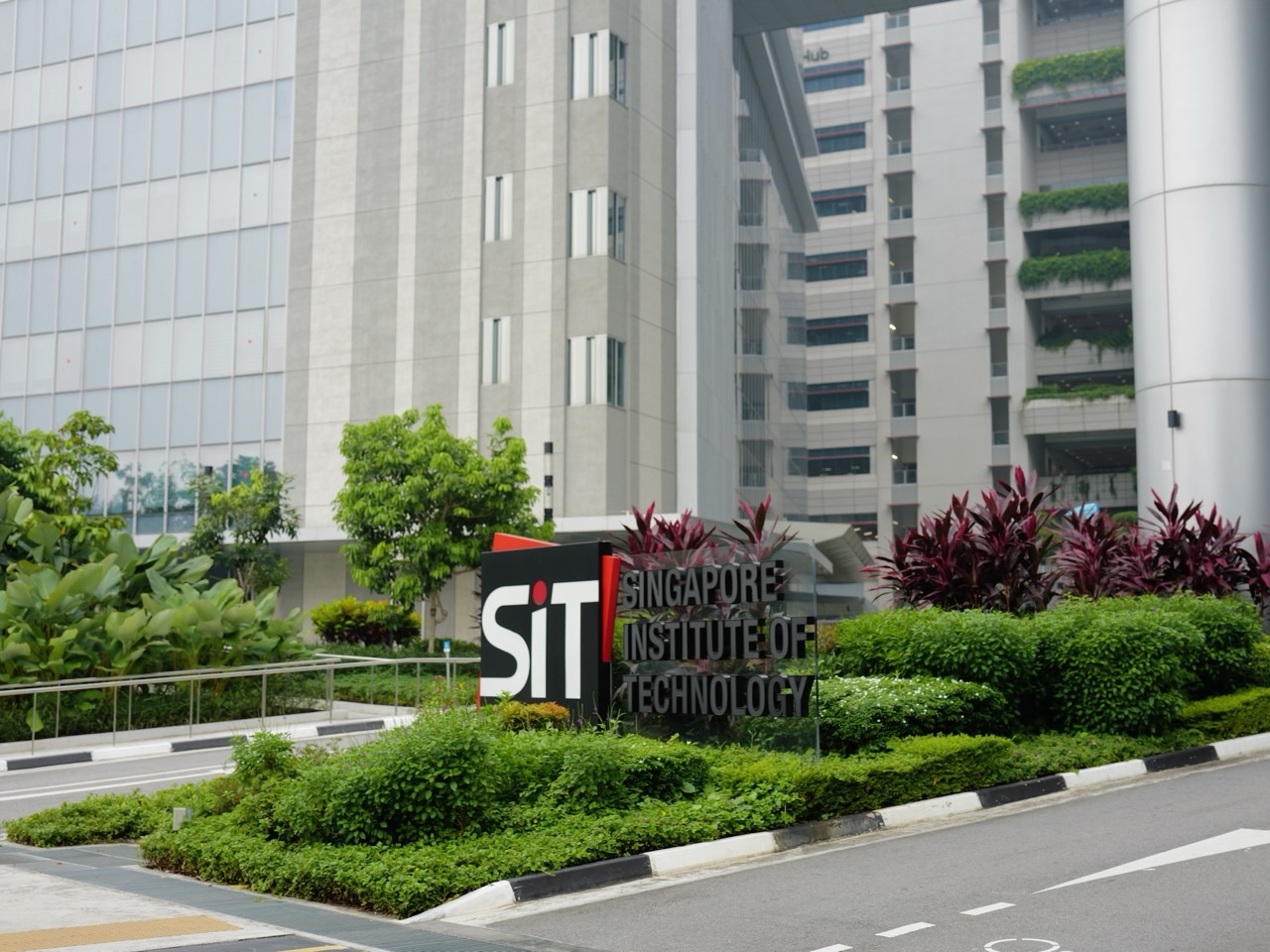
One of the more unusual official professional-learning programmes in Punggol’s 2027 calendar is not about teaching a machine to become more powerful. It is about teaching people to judge when a machine should be trusted. Singapore Institute of Technology’s SITLEARN course Psychology of Trust and Human–AI Interaction publishes a 22–23 February 2027 classroom schedule at SIT Punggol Campus, running 9am–6pm on both days.
The module is the third of six courses in SIT’s Psychology of AI series and may be taken independently. The organisers describe practical case analysis and the use of the Capabara AI Factory platform, in partnership with Straits Interactive. Topics include overtrust, undertrust, automation bias, algorithm aversion, anthropomorphism, emotional validation and the effect that an AI interface’s tone and confidence can have on human judgement.
Booking status is the essential distinction. Although SIT publishes February, June and October 2027 dates in its schedule table, the separate Course Runs section says “There are no upcoming course runs at the moment.” That means the scheduled dates are useful for advance planning, but this guide cannot confirm that a February place is available for immediate booking. There is no verified February application deadline. Residents should consult the official SITLEARN course page for updated admission arrangements.
The full published course fee is S$2,616 including GST. SIT’s table gives conditional fees of S$784.80 for eligible learners in its 70% funding categories and S$304.80 for eligible Singapore citizens aged 40 and above under its enhanced-funding category. Those are published eligibility examples, not personalised subsidies.
This Punggol Events 2027 guide was researched on 27 October 2026. It explains the official course and, more importantly, the real-world problem: how parents, teachers, professionals and organisations can avoid blindly obeying confident-sounding AI while still benefiting from useful assistance.
Official 2027 programme facts
- Course: Psychology of Trust and Human–AI Interaction
- Organiser: Singapore Institute of Technology, SITLEARN
- Programme partner: Straits Interactive
- Advertised February schedule: 22–23 February 2027
- Advertised hours: 9am–6pm on both days
- Venue: In-person sessions at SIT Punggol Campus, 1 Punggol Coast Road, Singapore 828608
- Other schedule entries: 28–29 June 2027, 19–20 October 2027 and 10–11 February 2028
- Current booking warning: The Course Runs section lists no upcoming course runs
- Full fee: S$2,616 including GST
- Published eligible 70% payable amount: S$784.80
- Published eligible enhanced-funding payable amount: S$304.80
- Intended learners: Leaders, managers, HR, L&D, compliance, designers, product teams, educators, consultants and professionals who work with AI systems
- Entry guidance: Preferably diploma or degree holders with at least three years of relevant work experience
- Assessment: Non-credit-bearing assignment
- Certificate of Attainment: At least 75% attendance and a passing assessment
- Official source: SIT Psychology of Trust and Human–AI Interaction
The event is a professional education course, not an open technology fair or a promise that an AI assistant has been certified as trustworthy. SIT may amend the schedule, fees or instructors.
Why a psychology-of-AI class belongs in Punggol
Many residents already use AI tools at work or while studying. A person can ask for help summarising a report, drafting a message or exploring a difficult idea without realising how much trust they have placed in the result.
That trust is not inherently bad. When a tool is helpful and its output can be checked, it may save time and broaden the options a person considers. The problem arises when an attractive interface, fluent writing or a confident tone causes the user to stop evaluating evidence.
The university’s February course gives this problem a formal learning context at Punggol Campus. It is relevant to local residents who work with technology and to people interested in the future of education.
But the course listing does not establish that every Punggol school or employer is participating. It is an opportunity for eligible professional learners, with its own fee and registration arrangements.
What does “calibrated trust” mean?
Calibrated trust means relying on a tool to the extent justified by its demonstrated ability, limitations and the stakes of the particular task.
A person may be comfortable using an AI system to generate alternative headings for a newsletter. The same person should demand stronger evidence before using AI-generated statements about tax, safety, legal obligations or a child’s educational placement.
The question is not simply “Do you trust AI?” It is “Which part of this task is it reliable enough to support, what evidence do we have, and who checks the outcome?”
The SIT syllabus contrasts overtrust and undertrust. Both can be unhelpful. Too much trust allows serious errors to pass; too little trust can prevent a person from using useful assistance at all.
Overtrust: when fluency is mistaken for correctness
An AI response may look organised, authoritative and complete even when it contains invented details. A reader who feels reassured by the presentation may fail to check the relevant facts.
For example, an AI-generated list of Punggol events might contain realistic-looking dates, prices and venues. Unless those details can be traced to an official organiser, the answer does not establish that the events exist.
This is why eduKatePunggol’s event guides link directly to onePA, SIT or another original source. The purpose of a good source link is not decoration; it allows readers to inspect the claim that affects their decisions.
A confident style should never substitute for actual verification.
Undertrust: when useful technology is rejected without evidence
A person can also make poor decisions by rejecting a reliable tool simply because it uses AI. The appropriate response to risk is not always to avoid all technology.
Suppose a legitimate workplace application helps organise internal documents and has been evaluated for accuracy under the intended use. If staff refuse even to consider its output, they may lose opportunities to improve how they work.
SIT includes algorithm aversion among the themes, alongside automation bias. The point is to examine when acceptance or rejection is driven by evidence and when it may reflect a psychological tendency.
Neither extreme is a substitute for informed judgement. A balanced user asks what the system actually does well.
What is automation bias?
Automation bias is a tendency to give excessive weight to recommendations from an automated system. The system may appear consistent or sophisticated, leading users to accept its conclusions even when they have reasons to question them.
In a fictional workplace, an employee might accept an AI-created spreadsheet summary without noticing that a figure came from the wrong reporting period. The mistake could then be repeated in a management presentation.
A practical safeguard is to establish checks that fit the stakes: compare important numbers to original records, review assumptions and keep a responsible human involved in decisions.
This is a general example, not a claim about a failure that occurred at SIT or in a particular Punggol organisation.
Why algorithm aversion is different
Algorithm aversion describes reluctance to rely on a system’s output even where it may be useful, sometimes because the person has observed an error or distrusts the process.
A manager may react to one visibly wrong AI response by declaring that every possible AI-assisted task is worthless. That conclusion ignores the possibility that some tasks are more suitable or that controls could reduce errors.
But it would be equally misguided to tell the manager to trust every future response. The better approach is to identify which limitations matter and evaluate performance in context.
SIT’s course is designed to help professionals think through these behaviours rather than choose a simplistic pro- or anti-AI position.
Why the system’s tone can change human judgement
A response delivered in confident language can feel more reliable than a cautious response, even when both are based on the same uncertain evidence.
Similarly, a system that uses warm, flattering or highly personal language may encourage users to feel it understands them deeply. That is not the same as showing factual accuracy or genuine professional judgement.
The SIT description explicitly identifies tone, explanation, confidence, transparency and conversational style as features that affect user perceptions.
For a professional designing an AI interface, the ethical question is whether those features help people understand the system or subtly pressure them to rely on it.
Anthropomorphism: giving software human-like qualities
Anthropomorphism means attributing human characteristics to something that is not human. In an AI interface, users may talk as though the system has personal intentions, relationships or feelings.
This can make interaction easier, but it can also obscure limitations. An AI assistant may generate a convincing sympathetic sentence without possessing an independent personal understanding of a user’s circumstances.
SIT’s course discusses anthropomorphism as a potential human–AI interaction risk. Professionals should understand how design choices can encourage it and when that might distort decisions.
Children and adults alike can benefit from recognising the difference between a tool that imitates conversational behaviour and a human who can be held personally and professionally accountable.
When emotional validation becomes misleading
An AI system may repeatedly agree with a user’s interpretation because its style favours friendly responses. Sometimes agreement is appropriate. But uncritical validation can strengthen a mistaken assumption.
Imagine someone asking an AI tool whether a particular investment is certain to succeed. A reply that praises the person’s judgement while skipping risks would be more dangerous than one that identifies unknowns.
The same applies when discussing education or workplace relationships. A person needs accurate information and appropriate uncertainty, not simply a machine’s repeated encouragement.
SIT places emotional validation within its discussion of misplaced authority and ethical influence. Trustworthy interaction requires the ability to disagree when evidence calls for it.
Persuasive AI and the boundary of ethical design
Digital products often seek to influence behaviour. An AI system can adapt its language, timing and explanations in ways that make persuasion feel more personal.
That creates questions about autonomy and transparency. Is the interface helping the person understand an option, or is it exploiting the person’s vulnerabilities to push a particular action?
A business can design clear prompts, explain choices and make important conditions visible without manipulating the user. The same principle applies to marketing, healthcare information, financial products and school services.
SIT’s human-centred framing is relevant because trust should be earned through understandable evidence and responsible design, not engineered through artificial familiarity.
A Punggol parent’s example: school choices
Imagine a parent asking AI which secondary school would be best for their child. The system might produce a detailed comparison that sounds conclusive.
A responsible parent still needs to check official eligibility, current school information and the child’s interests. Some parts of the answer may help generate questions, but an AI tool cannot determine the entire family decision from a small prompt.
A calibrated approach uses technology for exploration and organisation while retaining human judgement and primary-source verification.
This is a hypothetical scenario and not a claim that any particular school uses the SIT course.
A student’s example: homework explanations
A student may ask AI to explain a Mathematics concept. The answer can be helpful when it offers a clear worked example and the student checks each step.
But if the student copies a solution without understanding, the tool may reduce the very effort needed to learn. The student may finish the assignment while remaining unable to answer a similar question independently.
SIT’s broader Psychology of AI series also discusses cognitive offloading and human decision-making. The trust module focuses more specifically on reliance, transparency and influence.
Parents can ask children to explain the reasoning in their own words before accepting an AI-generated solution.
Trust in an educational setting
Trust between students, teachers and families depends on consistent expectations and evidence of learning. Introducing AI can help certain tasks while also raising questions about the source of feedback and how progress is measured.
An educator should know whether an AI-produced explanation is appropriate for the child’s level. The student should know when AI assistance is permitted, when independent work is expected and how to question a doubtful answer.
The existence of a university course on AI trust does not establish that all schools have adopted a common policy. Families should follow the current instructions from their own institutions.
For wider context, see Punggol AI literacy in schools.
A workplace scenario: AI-generated performance summaries
Suppose an HR manager receives an automated employee performance summary. The language sounds precise, but important contextual information may be missing.
The manager needs to understand how the summary was created, which evidence was included, what limitations apply and how the employee can correct factual errors.
A professional should not assume the system’s polished explanation establishes fairness. A human decision-maker remains responsible for the legitimate process.
That example connects AI trust with governance, transparency and contestability—issues that occur when technology influences people’s opportunities.
What is contestability?
Contestability means an affected person has a meaningful way to question, challenge or seek review of a decision, especially when it relied on automated recommendations.
If an AI-assisted service provides an incorrect outcome, a user needs more than an apology generated by the same system. There should be an appropriate procedure for checking evidence and escalating the issue to accountable people.
The SIT learning outcomes mention contestability as part of responsible human–AI interaction. It is a useful design principle because transparency alone is not always enough.
Knowing how to challenge a conclusion is part of trusting a system appropriately rather than obeying it passively.
A practical three-step verification habit
For ordinary low-stakes work, begin by identifying what the AI is helping with. Is it brainstorming, summarising, comparing or recommending an action?
Next, check the parts of the output that would materially affect a decision. Important numbers, deadlines, quotations and eligibility conditions should be traced to reliable sources.
Finally, preserve human responsibility. If the decision is consequential, someone with appropriate knowledge should evaluate the recommendation before action is taken.
This is a general decision-making habit, not a claim about an exact assessment worksheet used by SIT.
The Capabara AI Factory component
SIT says classroom learning will include hands-on interaction with the Capabara AI Factory platform, developed in partnership with Straits Interactive.
The official programme description identifies simulations and case analysis about trust and reliance. It does not promise each participant ownership of the software, a lifetime subscription or access to confidential corporate systems.
A prospective learner should ask what equipment or accounts are required and what information may be used during exercises.
Never upload confidential student, employee, client or customer data into a training platform without the necessary authorisation and suitable safeguards.
Who should attend?
The published target group includes managers, leaders, HR and L&D professionals, compliance teams, designers, product managers, developers, consultants, educators and researchers working with AI-enabled services.
Those roles involve different responsibilities but share a problem: helping people make sound decisions when technology contributes information or recommendations.
A product designer may need to consider how interface wording affects users. An HR professional may need to judge how employees rely on automated outputs. An educator may want to understand how students respond to AI-generated explanations.
The programme is not a compulsory course for every adult in Punggol. Its professional-level entry guidance matters.
The entry guidance: diploma, degree and experience
SIT says learners should preferably hold a diploma or degree and have at least three years of relevant work experience.
The word preferably should not be silently rewritten into either an absolute legal requirement or a promise that anybody without those credentials will be accepted.
If your background differs, ask SIT whether the programme is suitable and how admission is assessed. Someone with extensive relevant work might be a reasonable enquirer; a school student with no professional experience should not assume this is a general coding camp.
Understanding the expected audience prevents families from confusing the course with youth enrichment at a community club.
The two-day February timetable
The first advertised run in 2027 is 22–23 February, 9am–6pm. The same schedule table lists 28–29 June and 19–20 October 2027, along with 10–11 February 2028.
These are valuable planning dates, but the current course-runs panel says there are no upcoming course runs. The scheduling table and booking panel must be read together.
A resident considering February should contact the organiser before submitting payment details, applying for leave or promising that the course will proceed.
No specific application deadline has been verified for February, so it would be misleading to invent one based on the usual gap between registration and attendance.
What is the real full fee?
The official table gives S$2,616 including GST, with conditional after-funding amounts of S$784.80 and S$304.80 for specified categories. It lists the full amount for a category without applicable funding.
The enhanced figure is not simply 10% of the GST-inclusive S$2,616 headline. SIT’s fee table reflects its own funding and tax treatment. Readers should use the actual published payable number rather than applying an oversimplified percentage to the gross fee.
Individual eligibility depends on current citizenship, residency, age and scheme conditions. A resident should ask SIT for the payable amount that applies to their own case.
A course being taught in Punggol does not create a neighbourhood-specific subsidy.
Budget for time, not only money
Two scheduled 9am–6pm training days involve time away from ordinary duties. A working parent may need leave or employer approval and arrangements for child pickup.
An organisation sponsoring staff may also need to cover their responsibilities while they attend. Those costs are not shown in the SITLEARN public price table.
Ask whether the course’s assignment requires preparation outside the classroom and what devices or materials learners should bring.
The best professional-learning decision accounts for the entire commitment rather than only the most attractive funded figure.
How does assessment work?
SIT says a Certificate of Attainment requires at least 75% attendance and passing a non-credit-bearing assignment.
Participants who meet the attendance threshold but do not pass may instead receive a Certificate of Participation under the stated terms.
That is not a university degree, a research qualification or proof that a person is licensed to approve all AI systems.
The outcome worth pursuing is a more reliable ability to design and assess interactions, alongside whatever formal evidence of participation the learner earns.
The course is one part of a larger series
SIT labels this the third of six Psychology of AI courses and explicitly says it may be taken independently.
That matters because applicants do not need to assume they must pay for all six courses before this module can be useful. Conversely, completion of this one module should not be described as completing the entire series.
Other courses may address decision-making, cognition or different aspects of AI psychology. Choose based on your actual work or learning goal.
A person wanting to analyse user trust should not confuse this with SIT’s separate Agentic AI Risk and Security course, which has a more technical organisational-control focus.
Trust is not a substitute for security
A user may trust a tool because it is polite and explains itself, yet the organisation still needs proper information security and access controls.
Conversely, a technically secure system could present misleading advice or poor explanations. These are different issues.
The trust course addresses psychological reliance and human-centred design. It should not be advertised as a comprehensive cybersecurity engineer’s qualification or a security audit of a particular organisation.
Good AI governance requires attention to technical, legal, organisational and human factors rather than treating any one module as sufficient.
How this differs from Agentic AI for Human Resource
The SIT Agentic AI for HR guide concerns recruitment, workforce redesign, bias in employee processes and organisational reskilling.
Psychology of Trust and Human–AI Interaction is more concerned with how users perceive an AI interface and decide whether to rely on it.
There is overlap because human behaviour matters in HR and technology governance. But the syllabuses, training partners, fees and scheduled dates are distinct.
A professional should choose the module closest to their responsibilities rather than enrol in everything marketed under AI.
Getting to SIT Punggol Campus
SITLEARN describes the course as delivered in-person at SIT Punggol Campus, with the university’s campus address at 1 Punggol Coast Road, Singapore 828608.
That is different from One Punggol Community Club at Punggol Drive and Punggol 21 Community Club at Punggol Field. The precise teaching room is not given in the public summary, so ask for joining instructions if accepted.
Plan the real journey, especially if attending from elsewhere in Singapore. No reserved parking, travel allowance or family-care support is guaranteed by the course page.
For parents, the total 9am–6pm commitment may require planning even when the campus is relatively close to home.
A responsible applicant checklist
1. Open the official Psychology of Trust and Human–AI Interaction page. 2. Notice the 22–23 February 2027 dates and the separate no upcoming course runs message. 3. Ask SIT whether that intake is actually open, and request the current application deadline if one exists. 4. Check whether your diploma, degree and work experience meet the preferred professional background. 5. Verify your actual eligible fee rather than assuming S$304.80 applies. 6. Ask what the Capabara-based classroom exercises involve and what preparation is required. 7. Plan employer approval, childcare and the two full-day schedule if the intake is confirmed. 8. Understand the 75% attendance and assignment conditions. 9. Keep private organisational data out of unapproved training tools. 10. Decide what actual work problem—trust, overreliance, interface design or user accountability—you want to address.
Frequently asked questions
Has SIT published a February 2027 date? Yes. The schedule lists 22–23 February 2027, 9am–6pm.
Can I book it now? The reviewed course-runs section says no upcoming course runs at the moment. Ask SIT to verify enrolment before relying on the schedule.
Is this at SIT Punggol Campus? The organiser explicitly describes in-person classroom delivery at the Punggol Campus.
What is the full fee? S$2,616 including GST, with separate eligible after-funding amounts described in the official table.
Does the lower S$304.80 rate apply to everyone? No. It is a conditional amount for the eligible enhanced-funding category.
Is coding required? The module concerns human-AI trust and interaction, not software engineering. SIT’s stated entry guidance instead emphasises a diploma or degree and relevant professional experience.
Does attending certify that an AI product is safe? No. The training addresses professional understanding and assessment, not certification of a particular deployed product.
What assessment is used? A non-credit-bearing assignment, with attendance and pass conditions for Certificate of Attainment.
Are other 2027 dates listed? Yes: 28–29 June and 19–20 October 2027, but their actual booking status must also be checked.
Official sources and local context
Primary programme: SITLEARN — Psychology of Trust and Human–AI Interaction. The university publishes the February, June and October 2027 dates, partner, learning outcomes, target group, funding table, assessment and current booking message.
Related Punggol reading: Punggol Events, Punggol AI literacy and education and SIT Agentic AI Risk and Security 2027.
Verified 27 October 2026. No live seat, application deadline, personalised fee approval, guaranteed certificate or software licence has been invented.
Final thought
The most important question about AI trust is not whether a chatbot sounds intelligent. It is whether the person using it has good reasons to rely on it for the particular task, understands its limits and remains able to challenge its answer.
SIT Punggol Campus has published 22–23 February 2027 as a Psychology of Trust and Human–AI Interaction course date, but the current course-runs section does not confirm active registration. Readers should verify the booking status with SIT, then evaluate whether the module fits their professional needs. The valuable outcome is better human judgement in a world of increasingly persuasive technology.


