
Educate Punggol 2027: Did you know that Singapore’s National Youth Council supported about 11,000 job-taster opportunities in 2025, and that approximately 80% were taken up? In a parliamentary reply dated 7 July 2026, the Ministry of Culture, Community and Youth (MCCY) said 78% of participants reported greater awareness of pathways to their career goals. For teenagers and young adults in Punggol, a short firsthand exposure could answer a question that weeks of scrolling through course brochures cannot: what do people in this job actually do?
Quick answer: Use the government’s Discover NYC events finder to check current career-exploration and job-taster activities. Read the specific event’s eligibility, venue, booking status, dates, capacity and cost before planning travel. If you are in Secondary school, a JC, ITE or polytechnic, speak with your school’s Education and Career Guidance (ECG) staff about whether an experience fits your age and course goals. A taster is not a guaranteed internship, job offer, future salary or course-admission advantage.
A genuine local example appears in the official Discover NYC listings: GovTech Unlocked Session 6 at 82 Punggol Way on 30 October 2026, offered as a free, limited-capacity job taster with discussions about technology work and AI. That establishes a 2026 event in Punggol; it does not prove that the same session, free capacity or registration will recur in 2027. This article tells families what to check and what to learn if another suitable opportunity is announced.
What the government’s job-taster figures actually say
MCCY’s 7 July 2026 parliamentary response reports 11,000 job-taster opportunities in 2025, about 80% take-up and a self-reported 78% improvement in awareness of career pathways. NYC worked with 35 public, corporate and youth-sector partners covering 14 sectors, including financial services, manufacturing, hospitality and information and communications.
These numbers describe programme reach and participant perceptions, not scientific proof that taking a taster raises future wages or guarantees a job. ‘80% of opportunities taken up’ is not the same as ‘80% of all Singapore teenagers participated’, and ‘78% reported more awareness’ is not a school examination score. Interpreting an official statistic accurately is itself an important educational habit.
The government explicitly says job-taster opportunities are available to youths studying in JCs, polytechnics and ITE. But each individual event can have its own age requirements, selection rules and capacity. ‘Available to youths’ must never be read as ‘every student gets a place at every activity’.
A practical distinction: four ways to explore work
- Job taster: a brief, guided introduction to a role, sometimes including observation, a hands-on simulation and conversation with professionals
- Company tour: a look at an organisation’s workplace and functions, which may provide context without allowing actual task participation
- Internship or formal work attachment: usually longer and governed by specific school, employer, supervision or employment conditions
- Career talk or panel: useful for asking questions and hearing several pathways, but not necessarily a direct experience of everyday work
None is automatically superior. A student who does not yet know what a clinical research coordinator does might learn enough from a three-hour taster to ask better questions. A final-year diploma student may later need a structured internship to practise and be assessed on real tasks. Choosing the right form depends on the learner’s stage and objective.
The real Punggol example: GovTech Unlocked on 30 October 2026
The official Discover NYC event listing identifies GovTech Unlocked — Session 6, in person at 82 Punggol Way, Level 8, Singapore 829910, on Friday 30 October 2026, 1.30 pm–5 pm. It describes conversations with GovTech professionals about public-sector technology, AI and career journeys. The listing states free and a capacity of 90. All these details concern this particular historic schedule.
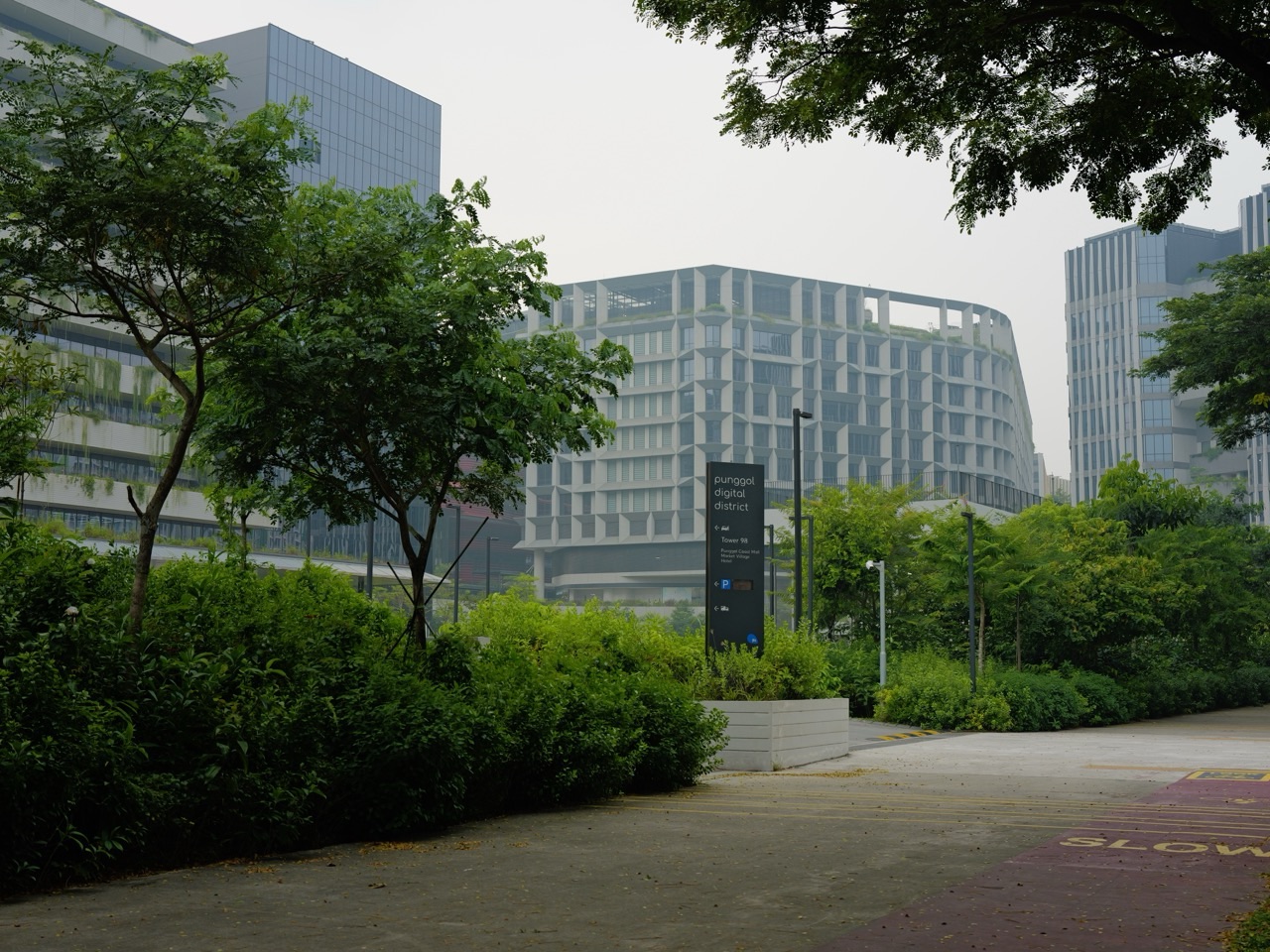
The address connects career exploration to Punggol Digital District, making the idea tangible for residents. But a site being in Punggol does not give nearby school pupils priority or grant permission to turn up without a booking. Check the event’s current status and organiser requirements. Do not re-label a 2026 listing as a 2027 opportunity in a WhatsApp group.
A youth who cannot attend this session can still study the underlying career questions: What problem does a government technology team solve? Which tasks involve cybersecurity, user research, product management or software? What must be checked before a system is released for public use? These topics can be explored with reputable material even without access to a particular office.
Other documented examples show how varied job tasters can be
The government Discover NYC portal lists different sectors, not only software. For instance, a 4 December 2026 micro-job taster in clinical research coordination describes how trial coordinators work with patients, research procedures and ethical protocols. Another 25 November 2026 performance-industry taster explains backstage and creative roles.
These are examples from late 2026, not blanket claims about 2027 booking availability. A student interested in healthcare may discover that working around clinical trials includes organisation and communication as well as science. A student attracted to performance may discover technical and production careers as well as acting. Career exploration is valuable precisely because the first imagined job title may be incomplete.
Why this can help a Secondary 3 student
Imagine a Punggol Secondary 3 pupil interested in computing, but unable to decide whether programming is the right long-term direction. The child might know algebra, enjoy games and have tried block-based coding. That does not yet reveal how a technology team handles system failures, accessibility, data protection or deadlines.
Before any relevant job taster, the learner can write three hypotheses: ‘Most technology jobs require writing code all day’, ‘every worker has the same computing qualification’ and ‘a working prototype is ready for public use’. After a suitable experience or a verified professional conversation, the student revises these statements in light of evidence.
The outcome may be a stronger interest in technology, a preference for design or an understanding that further mathematics matters for a particular course. Discovering that a presumed career is not a good fit is also an informative result.
Why this can help JC, ITE and polytechnic learners differently
Junior college: connect subjects to real problems
A JC learner taking Mathematics, Chemistry or Humanities may know academic material but have little sense of how a workplace combines disciplines. A taster can reveal the questions that engineers, researchers, public officers or entrepreneurs need to answer. It should not determine university choice from a single exciting afternoon; it provides one useful perspective.
ITE: see technical and operational roles clearly
An ITE learner may want to compare hands-on technical work, customer-facing roles and supervised training environments. Ask about safety, workflows, qualifications and realistic entry routes. Respect the worker’s expertise rather than assuming that practical roles lack intellectual demands.
Polytechnic: compare course content with the work itself
A diploma student planning internship or further study can ask which modules transfer directly to the work, which gaps exist and how professionals evaluate quality. A meaningful taster can inform internship choices, but it is not identical to assessed Industrial Attachment or formal internship requirements.
An original decision example: a student comparing AI and clinical research
Suppose an older Punggol teenager likes Biology and computer analysis. They assume the only relevant choices are doctor or software engineer. Reading the official clinical research taster description introduces another role: coordinating ethical clinical studies with attention to participants, data and process quality.
The student can now ask: Which qualifications support the role? How much time is spent with patients versus managing information? How are errors handled? What safeguarding responsibilities exist? A new career option is discovered not through a prediction of labour-market demand, but through better questions.
Do not promise the role will be hiring in 2027 or that attending a taster makes the learner eligible. Course requirements, industry hiring and professional registration must be checked separately.
A six-question sheet to bring to a job taster
- What actual problem does this role solve for people or organisations?
- Which part of the day is routine, and which requires judgment?
- What mistakes would be particularly costly, unsafe or hard to reverse?
- Which technical knowledge and human skills are genuinely important?
- What legitimate qualifications or learning pathways are relevant at entry?
- What is one mistaken belief students commonly have about this role?
These questions are usable across finance, technology, healthcare, manufacturing and creative work. A teenager should not ask about confidential customer records or demand access to restricted systems. A professional’s willingness to explain boundaries is itself a learning opportunity.
A realistic two-page reflection after the event
Page one should record the observed activities: what the student actually saw or was told, with the source and date. Page two should contain interpretations and questions: what surprised them, what they now think, what remains unverified and one action to take next.
For example: Observation: a presenter described testing a government app for accessibility. Inference: user needs are important in technology work. Question: what courses teach usability research? This prevents a student from treating one person’s career story as a universal rule.
A good reflection need not be posted publicly or turned into a stylised admissions portfolio. Its primary purpose is helping the student make the next education decision more intelligently.
2027: how to find genuine upcoming listings
- Open the official Discover NYC event finder and filter by career exploration, date, topic, venue or format.
- Check the organiser name, programme date, registration status, age or eligibility rules, capacity and actual fees.
- Read the description of what participants will do. A panel, tour, workshop and job taster are different commitments.
- Verify transport and supervision arrangements from Punggol, especially for school-age minors.
- Where relevant, seek your school’s ECG counsellor or form teacher’s advice before signing up.
- Keep the original event link and watch for changes directly rather than relying on forwarded posters.
- After the activity, compare your reflections with real course requirements rather than making an immediate irreversible choice.
Is a 2027 job taster automatically free?
No. Some documented Discover NYC events are free, including the named 2026 GovTech session, but that does not establish a universal price. The listing for the particular event controls its current cost and any required registration. ‘Free’ can also coexist with limited capacity or eligibility restrictions.
If a provider claims ‘government job taster’ but demands an unexpected cash deposit or bank login, verify the organiser independently through the official portal. Do not send a student’s identity documents or private records to an unverified contact.
How this differs from the SG Youth Plan’s Curiosity Credits
The separate S$500 Curiosity Credits pilot is for a narrower initial target group of youths aged 13–17 receiving support from Self-Help Groups. MCCY’s July job-taster reply described job-taster opportunities available to youths more broadly. The two initiatives both support exploration, but their eligibility, funding and delivery are distinct.
See our Curiosity Credits pilot guide for that separate programme. A youth can seek legitimate career information without assuming that receiving hobby credits is a prerequisite.
How Punggol Digital District fits, without making hiring promises
Punggol Digital District and the Singapore Institute of Technology make technology and industry learning visible in the neighbourhood. They are helpful real-world contexts when discussing careers, and there may be future public or student events. But the existence of offices and campuses does not prove that every resident has walk-in access or a job offer.
A career explorer should distinguish a published event invitation from an organisation’s private working environment. Any company tour or workplace experience needs explicit organiser approval and appropriate safeguarding, accessibility and confidentiality arrangements.
A six-week career exploration routine
Week 1: identify assumptions
Write three occupations of interest and what the student believes workers do. Label the points ‘known’, ‘guessed’ or ‘needs confirmation’.
Week 2: research real responsibilities
Use an official course or professional description to identify typical tasks and required capabilities. Look beyond job titles.
Week 3: compare pathways
Check at least two legitimate education routes and entry requirements. If the student is approaching the 2027 SEC, remember that 2028 post-secondary admissions rules should be checked separately.
Week 4: seek first-hand exposure
Look for a current suitable job taster, tour or school ECG activity. If none fits, arrange an authorised career discussion with a professional through an appropriate channel.
Week 5: test an associated learning task
Try a safe, age-appropriate project: a simple data summary, service design brief or communication challenge. Do not attempt restricted workplace tasks.
Week 6: reflect and keep options open
Ask what changed, what did not and what to learn next. The student may have refined their interests without choosing a final career, which is a useful outcome.
Frequently asked questions
Were there 11,000 job-taster opportunities in 2025?
MCCY’s 7 July 2026 reply reported around 11,000 opportunities, with approximately 80% take-up. This is the number of opportunities, not the entire youth population.
Did 78% get jobs after attending?
No. The 78% figure refers to participants self-reporting greater awareness of pathways towards career goals. It is not a job-placement rate.
Can an ITE or polytechnic student use the events finder?
Yes. MCCY says job-taster opportunities are available to youths including JC, polytechnic and ITE students; individual events may impose their own conditions.
Will GovTech Unlocked at 82 Punggol Way recur in 2027?
The verified listing is for 30 October 2026. A 2027 session has not been established by this source; check the official finder for a newly dated event.
Does attending a job taster replace an internship?
No. Duration, responsibility, assessment and institutional requirements differ.
Can a student attend without their parents?
The relevant event organiser’s age, registration and safeguarding rules govern attendance. For minors, a parent or school should check suitable supervision and consent.
Official sources and related Punggol guidance
MCCY, 7 July 2026 job-taster statistics and sector coverage; official Discover NYC events; GovTech Unlocked Session 6, Punggol, 30 October 2026; SG Youth Plan. For course and school advice, see Punggol ECG, counselling and course decisions.
Fact-check date: 27 October 2026. Specific job-taster event listings are historical 2026 records unless newly updated by organisers. Family cases and the six-week routine are original guidance, not official participation requirements.


