
Punggol Education 2027 semiconductor and microelectronics courses are not just about how a computer chip looks. A microelectronics manufacturing worker may maintain highly sensitive equipment or investigate process variation; an integrated-circuit designer uses mathematical and electronic models; a quality engineer interprets test data; a systems engineer coordinates factory reliability, automation and people. All connect to chips, but the technical demands and qualifications differ.
Did you know? ITE lists a Microelectronics specialisation inside its 24-month Higher Nitec in Electronics Engineering, offered at College Central, as well as a separate 36-month Higher Nitec structure. Singapore Polytechnic’s Diploma in Electrical & Electronic Engineering offers Microelectronics among seven technical specialisations. SIT Punggol has a three-year BEng (Honours) in Engineering Systems with a Microelectronics Manufacturing track. For eligible workers, ITE’s 30-month Work-Study Diploma in Microelectronics trains process and equipment competencies, and SP published a 900-hour adult Microelectronics & Semiconductor Technology diploma that began in October 2026.
This Punggol Education 2027 guide compares each route from Primary and Secondary Science to ITE, Polytechnic, JC, University and adult learning. It explains the current facts, actual 2027 listed courses, practical safety, selection rules, qualifications and what Punggol families should do instead of following glamorous technology forecasts.
Quick answer: semiconductor jobs come from different skill families
| Field | Typical work | Learning foundation |
|---|---|---|
| Microelectronics equipment | Maintain, monitor and troubleshoot precision production equipment | Mechanics, electrical systems, reliability, safety |
| Semiconductor process | Monitor manufacturing steps and process consistency | Chemistry, Physics, statistics, process control |
| IC or electronics design | Design and test circuits and components | Electronics, Mathematics, modelling, computing |
| Testing and quality | Check devices, investigate defects and report results | Measurement, data, traceability, disciplined reasoning |
| Factory automation | Integrate sensors, robotics and controls | Mechatronics, programming, systems |
| Technical operations | Plan maintenance, manage changes and coordinate work | Communication, risk management, applied technical knowledge |
The description ‘work in semiconductors’ is therefore too broad for an education decision. A teenager should investigate what an assistant equipment engineer actually does compared with a process specialist, design engineer or software developer.
Punggol Digital District: nearby training does not guarantee a job
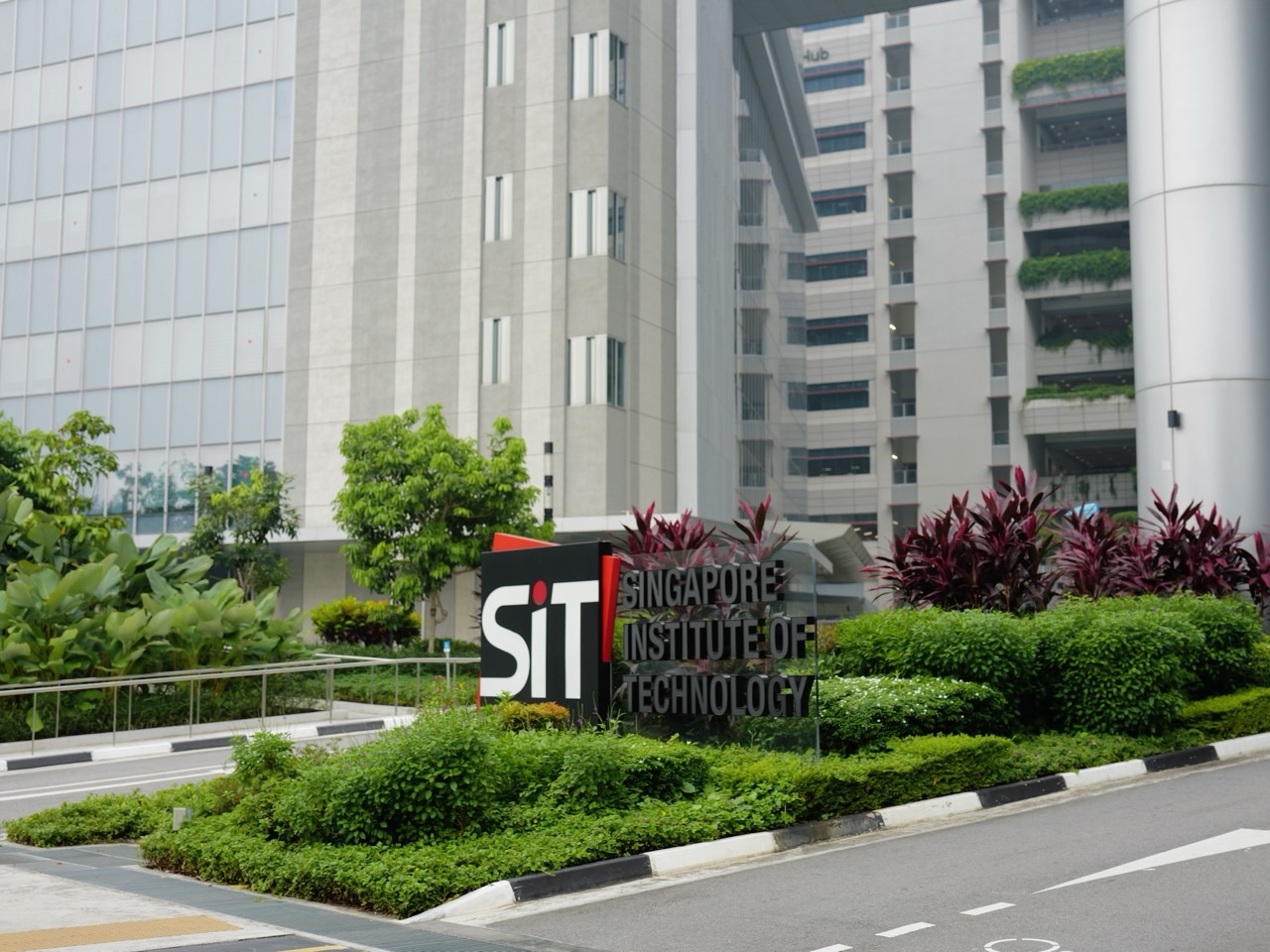
SIT’s Punggol Campus is part of Punggol Digital District, where University learning and industry collaborations are physically closer to residents. This gives families a concrete place to explore applied technology education. But the semiconductor fabrication and testing workplaces associated with a degree or diploma can be elsewhere in Singapore. Being a Punggol resident does not create a specific employer hiring entitlement.
A reliable decision should evaluate the campus, actual industrial placement locations, shift expectations, cleanroom requirements and cost of commuting. The student must understand the workplace environment, not simply select a course because the University is near their HDB estate.
Primary 3–6: electronics starts with first principles, not a fabrication plant
Children can build Mathematics and Science reasoning through quantities, fractions, graphs, circuits as taught at school, measurement and cause-and-effect. English allows them to explain why a circuit behaves in a simple model and to describe a test accurately. They do not need expensive chip-manufacturing simulators before mastering these foundations.
A safe project uses a paper flowchart for a fictional production process: accept material, perform an approved check, record the result and refer any unexpected observation to a supervisor. Ask the child why skipping a check could make the later result unreliable. No hazardous chemical steps, equipment controls or real fabrication instructions are needed.
For numeracy, imagine a classroom box containing 100 non-electrical sample tokens, with 92 passing an imaginary inspection. The observed sample pass rate is 92%. This is not a semiconductor fab’s yield. A real engineer would ask whether the sample represents the whole process, how ‘pass’ is defined, whether testing is consistent and what happens to defective items.
Secondary G1/G2/G3 and the 2027–2028 transition
Full Subject-Based Banding permits differentiated subject levels. The first SEC graduating cohort completes examinations in 2027 and progresses to the 2028 post-secondary admission framework. Pupils who sat GCE O-Levels in 2026 and enter a 2027 ITE or Polytechnic course use a different earlier set of admissions arrangements.
Mathematics supports ratios, equations, rates, variability and electrical models. Physics helps explain energy, electricity and semiconductor behaviour. Chemistry helps with materials and industrial processes. English is essential to read instructions, maintain accurate quality records and communicate between shifts. Computing can be useful, but course entry conditions must be checked: some accept various approved Science or technical subjects rather than require one specific Computing elective.
Our Punggol subject-prerequisites guide gives a method for comparing realistic options, but the official institution’s exact 2027 or 2028 course page remains the admission authority.
ITE: two-year Higher Nitec in Electronics Engineering
ITE’s Higher Nitec in Electronics Engineering is listed as a 24-month full-time programme with specialisations offered across its three colleges. The Microelectronics specialisation is at College Central. AI & Automation is listed at Colleges East and West, and IoT & Communications at all three. A student wanting chip-related learning should not assume a different electronics specialisation is equivalent.
The course’s published competencies include setting up and troubleshooting electronic systems, testing reliability, adjusting and calibrating circuitry, and reporting performance. For its O-Level entry route, ITE specifies English, Mathematics and an approved Science or technical subject, together with grade conditions. The applicant should check the right year, qualifications and whether any occupational suitability questions require discussion with the institution.
This technical course is different from a degree in semiconductor device research. It can suit learners who enjoy practical testing, instrumentation and systematic fault-finding. It is a real applied qualification with its own learning outcomes and later educational opportunities.
ITE also publishes a 36-month Electronics Engineering route
A three-year Higher Nitec Electronics Engineering serves applicants with other published prior qualifications. It lists the same main specialisation families with a longer route and different entry criteria. Families must not assume that a child can choose between two or three years solely by preference without regard to qualification.
ITE says that from the AY2027 Polytechnic intake, eligible Higher Nitec Electronics Engineering graduates with a net GPA of at least 2.5 may apply to a related first-year Polytechnic diploma. Programme mapping, merit, vacancies and other conditions remain important. A threshold to apply is not a guaranteed place.
SP Diploma in Electrical & Electronic Engineering
Singapore Polytechnic’s Diploma in Electrical & Electronic Engineering offers Microelectronics among its seven specialisations, alongside Biomedical, IoT & Communication, Power, Rapid Transit Technology, Robotics Intelligence and Sustainable Energy. This gives pupils room to build an engineering foundation while investigating different applications.
The Diploma’s published curriculum includes engineering Mathematics, electronics, industry learning and specialisation modules. SP describes internship possibilities of 22 weeks or a year depending on programme arrangements. A student interested specifically in chip manufacturing should inspect which Microelectronics modules and practical activities are available for the cohort rather than infer it is an identical course to a standalone semiconductor diploma.
SP’s O-Level admissions page displays a 2026 JAE historical net aggregate range of 5–15 and specific English, Mathematics and an approved Science or technical subject requirement. The previous aggregate range is not a forecast for 2027 and cannot be used to guarantee a place for the first SEC cohort in 2028.
SIT Punggol: Engineering Systems with Microelectronics Manufacturing
SIT’s BEng (Honours) in Engineering Systems is a three-year direct honours degree at SIT Punggol Campus. Its current curriculum offers a Microelectronics Manufacturing specialisation as distinct from a Land Transport specialisation. Modules in the microelectronics track include Semiconductor Processing, Semiconductor Process Control, Fabrication Engineering and Semiconductor Technology.
The degree’s foundations include Engineering Mathematics, programming, engineering materials, electrical circuits, fluid systems, manufacturing technology, data engineering and maintenance. SIT lists an eight-month Integrated Work Study Programme and industry partners associated with both transport and semiconductor systems. Work-study is part of the course structure; it is not a guarantee of a particular employer or job.
SIT’s displayed application period is 8 January–19 March 2026 for its August 2026 intake, not the confirmed 2027 window. Applicants must check the next official exercise and acceptable prior qualifications before planning admission, fees or scholarship deadlines.
ITE Work-Study Diploma in Microelectronics: an employer-based qualification
ITE’s Work-Study Diploma in Microelectronics is listed as a 30-month course at College Central. ITE describes work such as equipment maintenance, monitoring process performance, analysing trend charts, assisting with manufacturing improvement and protecting reliability. It has its own prior qualification and employer-screening requirements.
The programme can suit a candidate who wants work-based learning rather than another purely classroom qualification. ITE’s 2027 Work-Study Diploma course list includes Microelectronics with specialisation code DPUEN. This is a concrete listed 2027 course, but the applicant still needs to verify live registration and an employer place.
ITE’s course description separately discusses equipment and process job tasks. A course listing might group those under a common 2027 specialisation code; applicants should follow the actual admission portal rather than invent two application codes or assume that an equipment role and process role involve identical work.
A 2026–2029 adult Diploma at SP: do not confuse teaching dates with registration
Singapore Polytechnic’s Diploma in Engineering (Microelectronics & Semiconductor Technology) lists a course run from 19 October 2026 to 31 March 2029, with 900 hours across about 2.5 years, generally three evenings a week. It teaches IC technologies, wafer fabrication, semiconductor testing, quality engineering and process knowledge.
Its published registration period was 1 June–13 September 2026. On 27 October 2026, the advertised run had begun and that registration window had passed. An adult should not assume that a course running into 2027 is available for fresh enrolment in 2027. Ask SP about later intakes, suitable qualifications and any available funding before leaving work or paying for training.
Why microelectronics is not only about AI
Chips are used in computing, communication, vehicles, equipment, consumer devices and many industrial systems. Some semiconductor jobs relate to making and testing components rather than training AI models. A pupil excited about AI may prefer programming or data analytics, while a learner who enjoys electronics and physical process control may prefer microelectronics manufacturing.
Work can involve detailed routine checks, documentation, quality targets, safety rules, cleanroom procedures and teamwork. A production improvement is only useful when supported by reliable evidence. Treat technology salary predictions with caution; wages and opportunities depend on qualifications, individual skill, employer needs and actual hiring conditions.
Worked numerical exercise: good production data needs definitions
Imagine a fictional training exercise that reports 600 inspected components and 570 items meeting a defined classroom specification. The simple observed pass proportion is 570 ÷ 600 = 95%. That does not prove 95% factory yield in a real plant. A manufacturing engineer must know whether the sample is representative, how defects are defined and whether measurements are valid.
A careful student could graph several invented batches and investigate variation without sharing proprietary manufacturing data. They should not attempt chemical etching, cleanroom fabrication, hazardous handling or equipment repair at home. Industrial semiconductor work belongs in authorised laboratories and trained workplaces.
A six-week student learning project
- Week 1: compare an electronic component, a semiconductor device, a chip and a finished product.
- Week 2: explain the difference between production processing, equipment maintenance and device design.
- Week 3: use invented data to calculate a basic pass percentage, showing units and definitions.
- Week 4: read an official course description and list each subject or prior qualification requirement.
- Week 5: create a diagram of a fictional quality workflow without proprietary or hazardous processes.
- Week 6: revise a one-page report after questions about measurement errors, ethics and safety.
What parents should do, avoid and think about
Do
- Distinguish chip design, fabrication processes, equipment maintenance and testing.
- Read ITE’s Microelectronics specialisation location and exact 24/36-month admission route.
- Compare SP’s full-time Electrical & Electronic Engineering with its part-time adult Diploma.
- Check the specific SIT Engineering Systems microelectronics modules and 2027 admissions.
- Treat the ITE 2027 Work-Study Microelectronics listing as a course prospect subject to employer selection.
- Protect strong Mathematics, Physics, Chemistry, data quality and technical English foundations.
- Plan for course equipment, industrial practical conditions and family time.
Do not
- Claim that a chipmaking course is identical to a software or AI coding course.
- Use SP’s 2026 admission range to promise a future Polytechnic place.
- Assume a 2.5 net Higher Nitec GPA guarantees first-year Polytechnic admission.
- Call the 2026–2029 SP adult course registration open after the September 2026 closing date.
- Claim a Punggol address guarantees a SIT or semiconductor employer place.
- Conduct semiconductor manufacturing or hazardous materials experiments outside authorised facilities.
- Confuse an employer-linked Work-Study Diploma with a conventional full-time classroom course.
Think about
Does the learner enjoy patiently investigating why a small technical problem occurred, measuring accurately and checking assumptions? Are they drawn to physical circuits and production equipment or to purely software-based work? The right programme builds skill the student will still want to use when industry fashion changes.
Frequently asked questions
Is ITE Microelectronics available at every college?
The current Electronics Engineering programme lists Microelectronics at College Central. Other electronics specialisations have different college availability.
Does SIT Punggol offer a standalone degree called Semiconductor Engineering?
The verified programme in this guide is the BEng (Honours) in Engineering Systems with a Microelectronics Manufacturing specialisation. Use the exact official award instead of inventing a separate degree title.
Is ITE’s Microelectronics Work-Study Diploma listed for the 2027 intake?
Yes. ITE’s published 2027 list includes Microelectronics with specialisation code DPUEN. Specific registration and employer acceptance must still be verified.
Can a student enter SP Engineering with a relevant Higher Nitec?
SP’s published entry route includes specified related Higher Nitec qualifications and a minimum GPA, with selection and vacancies still applicable. No automatic place is guaranteed.
Is the adult SP Microelectronics Diploma still accepting applicants for the October 2026 run?
Its published 1 June–13 September 2026 registration period has passed. Ask SP whether a later intake is planned rather than assume ongoing classes mean registration remains open.
Do semiconductor engineers need programming?
Some roles use software, process analytics and automation while others emphasise physics, chemical processes, electronics and equipment. The particular programme and employer determine the required level.
Official sources and Punggol education guides
- ITE Electronics Engineering: 24 months — Microelectronics specialisation.
- ITE Electronics Engineering: 36 months — applicant routes.
- SP Electrical & Electronic Engineering — Microelectronics diploma specialisation.
- SIT Engineering Systems — Punggol microelectronics and land transport tracks.
- ITE Microelectronics Work-Study Diploma.
- ITE 2027 WSDip official course list — DPUEN.
- SP adult Microelectronics & Semiconductor Technology Diploma — 2026–2029 run and closed registration window.
- Punggol Cybersecurity, AI and Data courses — contrasting software-oriented routes.
- Punggol Mechatronics and Robotics courses — automation comparison.
- Punggol Education & Town-Life Article Index.
Research cut-off: 27 October 2026. Course listings, specialisation names, admission rules, internships, fees and application dates can change. Illustrative process data is fictional, not a real fab’s confidential or verified performance.


