
Punggol is growing along both the land and the water. A planned marine fire post at Northshore Crescent is part of the public safety infrastructure needed for that change. The key is to understand what is planned without confusing a projected response improvement with personal rescue advice.

Punggol’s future Northshore emergency base: confirmed information first
Updated 23 October 2026. The Singapore Civil Defence Force is developing a new Marine Fire Post along Northshore Crescent in Punggol. A Ministry of Home Affairs speech in June 2025 described its construction by 2028. Reporting from the January 2026 groundbreaking gave a more specific end-2027 completion target. That places the project in a 2027–2028 planning horizon; it does not establish the actual commissioning date, public visitor access or the date that a particular vehicle will enter service.
The facility has been described as combining land and marine response assets. At sea, a Rapid Response Fire Vessel is planned to strengthen coverage of the East Johor Strait. On land, the announced mix includes a Light Fire Attack Vehicle, fire bike and ambulance. The planned location is intended to complement existing SCDF facilities rather than replace the national response system. Emergency calls still go to 995, where SCDF decides which appropriate resources to dispatch.
This matters because Punggol is no longer merely a waterfront residential town at the edge of a map. It has growing workplaces, a university, major transport infrastructure, increasingly used recreation routes and working maritime activity. Rescue resources must suit that combination. Residents can learn from the project without assuming it changes their duty to prevent fires, observe water safety or provide an accurate emergency location.
Why the northeast coast needs a marine component
Look beyond the HDB blocks and promenades. The waters off Punggol form part of a working maritime landscape with boats, fish farms and connections to offshore islands. An emergency at sea can happen far from any road or fire-engine access point. A nearby boat capable of rapid deployment is therefore a different kind of infrastructure from a fire engine based in a housing estate.
Marine incidents are complicated by wind, waves, visibility, the type of vessel involved and possible fuel or electrical hazards. Crews may need to evacuate injured people, coordinate with other vessels and deal with a fire while the platform beneath them moves. These difficulties explain why professional training and specialist equipment matter. A fast craft can help with access, but its speed alone does not settle a complex emergency.
The future post should be understood as part of a network, not as the only responder protecting the coast. Other SCDF marine and land facilities remain involved according to operational need. The new location may improve coverage, but calls can occur simultaneously, conditions change and different incidents demand different combinations of personnel and equipment.
What the reported 45-minute marine coverage target really means
News coverage of the 2026 groundbreaking described a goal for SCDF to cover the full East Johor Strait within 45 minutes. Previously, only parts of those waters were inside that response coverage. The significant change is geographical: placing a marine asset nearer the northeast coast may reduce the journey needed to reach some locations. That is a planning achievement, not a guarantee that everyone at sea will be rescued within 45 minutes.
The distinction is important. “Coverage” concerns an operational capability over an area. Rescue may still require locating people, moving safely alongside a vessel, fighting fire, providing medical assistance or arranging an evacuation. Completing those tasks is not identical to reaching a location. Weather, simultaneous incidents, vessel readiness and the complexity of an emergency all influence the outcome.
For boaters and waterfront visitors, this news should encourage responsible behaviour rather than risk taking. Never assume the existence of an emergency vessel makes poor weather harmless. Use authorised transport, observe relevant maritime safety requirements and report serious incidents promptly. When calling for help, provide the location and nature of the problem as accurately as possible and follow operator instructions.
The 11-to-8-minute Northshore response projection
The groundbreaking coverage also described a reduction in local emergency-response travel time from approximately eleven minutes to eight minutes in parts of Punggol Northshore. Some reports summarised that as around thirty per cent. It is a projected benefit of the new facility’s geography and available resources, not a universal contractual service level for every emergency.
A figure is only useful when readers understand what it measures. Does it begin when a call is answered or when a vehicle is dispatched? Does it refer to average road travel or a particular service pledge? Do the figures cover every incident type or a modelled Northshore scenario? Without those details, comparing numbers from unrelated sources can produce confident but misleading claims. A responsible guide identifies the status of the number as a projection.
The practical promise is more modest but important: shorter geographical access to some parts of Northshore may improve initial response. A household should nevertheless act as if assistance always takes time. Keep exits clear, teach family members how to call 995 and reduce everyday fire hazards. The arrival of a new facility can strengthen the response system; prevention remains irreplaceable.
Why a fire post differs from a public fire station
An emergency fire post is a smaller strategically placed base designed to support coverage. It may house particular appliances rather than every vehicle associated with a full station. Punggol’s marine post is planned around the requirements of local land incidents and marine deployments. It should not be portrayed as a walk-in clinic, a neighbourhood community centre or a permanent public exhibition.
A resident witnessing an emergency should use the 995 system rather than travelling to the future building. The dispatcher can direct the nearest appropriate available crew and communicate the incident details. Driving or running to a station may waste time and could put the caller in the way of responding vehicles. The correct entrance and operational procedures of the new post will be managed by SCDF.
The location also needs access controls. An operational jetty and vehicle driveway must remain clear, while adjacent recreation paths need safe separation. People exploring the waterfront should not enter restricted areas to photograph rescue boats or use a jetty for leisure simply because it appears on a map. Emergency facilities have a duty to protect the public, and the public can help by protecting those facilities’ readiness.
The Rapid Response Fire Vessel and its role
The new post is expected to support a Rapid Response Fire Vessel. SCDF’s wider Marine Division has multiple vessel types designed for distinct emergency requirements. A fast-response craft can be suited to reaching a developing marine incident, while larger marine platforms may be required for particular complex rescue or firefighting operations. It would be inaccurate to assign the capabilities of the entire SCDF fleet to one vessel based on an illustration.
SCDF has described rapid-response craft in its existing fleet as capable of swift deployment. The actual technical configuration and routine deployment of Punggol’s future vessel should be verified through official operational information. Even if a vessel has significant speed, crews must navigate conditions, approach a hazard safely and protect rescuers as well as casualties. A fast arrival is one component of successful emergency management.
For students, this provides a useful systems-engineering lesson. The best tool depends on the task. A smaller fast vessel, a large evacuation vessel and a land ambulance solve different problems. Design begins by identifying requirements, constraints and failure modes. Evaluating technology solely by its top speed misses the human and operational decisions that make it useful.
The ambulance and other land-response vehicles
The planned land assets include an ambulance, a light fire-attack vehicle and a fire bike, according to reporting on the groundbreaking. Their combined purpose is to strengthen initial coverage of Northshore’s dense residential and community environment. Smaller vehicles can have advantages in certain access situations, while other incidents still require additional SCDF appliances or specialist teams.
Residents should not regard this equipment list as an assurance that a particular kind of vehicle will always be available at the post. Emergency vehicles are allocated to calls across a network, may be supporting incidents elsewhere and require maintenance. Operational readiness is more complex than the number of appliances shown at a ceremony. Specific dispatch choices belong to trained call takers and commanders.
The best community response is to preserve access. Park lawfully, do not block emergency vehicle routes, keep common corridors clear and obey temporary traffic arrangements. A small local improvement in response distance can be undermined by an obstructed access road or unclear incident location. These responsibilities apply today, before the new post is commissioned.
What the shared jetty means for Outward Bound Singapore
The new development includes a jetty described as being jointly developed by SCDF, Outward Bound Singapore and the National Youth Council. OBS has outdoor-education operations requiring transport to its island facilities. Sharing suitable infrastructure can make better use of limited coastal space, but each organisation’s operational responsibilities and access rights remain distinct.
The jetty’s planned use by rescue and authorised programme vessels does not make it a public ferry terminal. Residents should not assume they can board a boat to Pulau Ubin there, fish off its edge or take photographs inside the operational compound. An emergency jetty must be able to support deployment without obstruction from casual users. Where an outdoor-adventure programme uses authorised transport, its staff and published instructions control the journey.
For parents, this is an opportunity to discuss why public infrastructure sometimes has restricted access even when it is funded or managed through public bodies. Some spaces need to be open and welcoming; others must remain secured so essential services can function. Good urban planning does not erase that difference.
How the project fits the North Eastern Riverine Loop
Reporting on the fire post refers to integration with the North Eastern Riverine Loop and neighbouring park-connector network. Many Punggol residents use these spaces to cycle, jog, walk with family or reach waterfront destinations. The future building will therefore sit in a landscape that mixes emergency operations with ordinary leisure travel.
That mix requires thoughtful separation. Emergency vehicle entrances should be visible and kept clear. Pedestrian routes should have understandable signage, and cyclists should know where a public connector continues without entering an operational zone. During construction, some access arrangements may change. Follow the actual signs and notices rather than attempting to complete a route exactly as an older map shows it.
A family with a stroller or mobility aid should plan a journey using open, step-free access. A short distance on a diagram may involve a temporary diversion or an unsuitable crossing. The site’s integration into the eventual network is positive in principle, but the actual accessibility of a journey should be verified after construction and again when commissioning is announced.
Why working fish farms matter to a residential town
The East Johor Strait includes fish farms and other working marine activities. These are easy to overlook if a resident mainly sees sunset photographs from the waterfront. Yet fish farms involve people, equipment, electrical installations, transport and exposure to weather. Emergency planning must account for those livelihoods as well as waterfront recreation and high-rise homes.
A reported fish-farm fire in 2024 required emergency evacuation and a marine firefighting response. Such examples help explain why a northeast marine base is useful, without supporting the claim that every future marine incident will be similar. Hazards vary widely, and one type of fire cannot be used to predict another. The correct response depends on assessment and trained operations.
For Geography classes, this illustrates competing uses of the same coastline. Singapore needs food production, environmental protection, housing, transport and recreation. Placing emergency infrastructure is part of managing that shared space responsibly. Students can mark these land and sea uses on a map and debate what the public authority must balance.
Green features: solar panels and efficient water use
The new post has been described as including solar photovoltaic panels and water-efficient fittings. Those features can contribute to everyday operational efficiency. But a photo of panels or a claim of sustainable design is not enough to calculate actual energy savings. Installed capacity, orientation, weather, demand and the operating schedule all matter.
An emergency facility also has resilience requirements that differ from an ordinary commercial building. Critical communications, lighting and response operations cannot simply stop during a power failure. Sustainability should therefore be assessed alongside continuity of essential services, not instead of it. A building can reduce routine consumption while maintaining backup systems and safe operations.
This makes an excellent lower-secondary Science exercise. Students can compare the difference between a solar panel’s rated output and its measured generation under varying conditions. They should also discuss why safety-critical systems often need redundancy. These are real engineering questions inspired by the project, but a classroom model should never be presented as an audit of the new station itself.
What a family should know before a real emergency
The simplest preparation is to know your own address, including block number, street, postal code and unit. Ensure adults and responsible older children understand when to call 995. Identify how to reach safe exits and where to meet if separation occurs. Keep contact information accessible, and pay attention to building-specific emergency notices. A basic plan reduces confusion during stressful moments.
Emergency planning is not about encouraging children to tackle fires or perform advanced rescue. It is about recognising danger, moving away from immediate hazards, raising the alarm and following instructions from responsible adults or authorities. Children should not return to a dangerous area to recover belongings. The presence of a future emergency post nearby does not change these fundamentals.
A family can review the plan during an ordinary weekend without making it frightening. Discuss where to find an exit, what information an emergency caller needs and who would assist someone with limited mobility. Adjust the plan when the household changes. This is more practical than memorising the address of a fire post that has not yet been commissioned.
A 995 caller’s location is often the most useful detail
SCDF advises callers to describe an emergency clearly and provide the best available location. At home, the address may be straightforward. On the waterfront, a person may be between named facilities with no visible building number. Look for park signs, nearby road names, lamppost numbers or other clear landmarks, and be prepared to describe how responders can reach the scene.
The SCDF myResponder app includes ways to contact 995 and can assist with location information. It also supports trained community first responders in relevant situations. However, no app replaces the need to communicate honestly with an emergency operator. A location estimate should be identified as an estimate when uncertain; guessing confidently can cause avoidable confusion.
Stay on the line and follow instructions. Where safe, a companion may meet responding personnel at an accessible entrance. Do not all leave a casualty unattended to look for the ambulance. The objective is to make professional help easier to direct to the incident, not to improvise a rescue operation beyond one’s capabilities.
Home fire prevention remains crucial
Most households can reduce risk through everyday habits. Avoid unattended cooking, overloaded sockets, damaged chargers and combustible materials near heat sources. Keep escape routes and common corridors unobstructed. SCDF provides official guidance on household fire safety and what to do when smoke or flames are discovered. Use that guidance rather than relying on improvised online demonstrations.
Advice during a high-rise fire must be precise. The correct action can depend on whether the fire is inside one’s home, on the same floor or elsewhere in the building. People should follow current official guidance and directions from responders rather than assuming that everyone must rush into a smoke-filled corridor. Do not use a lift during a fire unless specifically directed under an authorised emergency procedure.
These precautions are not diminished by a projected improvement in response time. Even an eight-minute travel estimate can be too long to tolerate dangerous smoke exposure. Prevention, early reporting and a safe response plan are the parts of fire safety that residents can influence directly.
Water safety for children near Punggol
Coastal parks and promenades are popular family destinations, but the water can be dangerous even when the surface looks calm. Children need close adult supervision near exposed edges, steep embankments, intertidal areas and places with moving boats. Keep to designated paths and observe restrictions. A family should not let a child climb a railing to obtain a better view or recover an object.
If someone enters the water unexpectedly, call for emergency help and follow appropriate rescue instructions from a safe position. An untrained person jumping into hazardous water may create a second casualty. Use lifesaving equipment only where appropriate and within one’s ability; do not attempt dangerous approaches to a person or vessel. The safest intervention is often prompt communication and coordinated professional assistance.
A marine fire post adds capacity to the emergency system, but it must never be used to justify taking greater risks. Adults should teach children that rescue services are for emergencies, not a safety net for reckless exploration. A calm, realistic explanation can make outdoor activities both more enjoyable and safer.
A fictional apartment-fire scenario
Suppose a resident smells smoke outside the family flat. The household must decide whether the immediate environment is safe without entering a dangerous corridor to investigate. A proper response follows alarms, current SCDF guidance and any instructions from authorities. If a fire threatens the home or someone is in danger, contact 995 with the exact location. The family should not drive to the future Northshore post or search online for individual appliance availability.
After reaching safety, a responsible adult can account for household members at the designated meeting location. If someone has a disability or limited mobility, advance planning can be particularly important. That includes knowing the building’s procedures and what assistance might be required. A child’s role should remain age-appropriate, focused on moving away from danger and communicating.
The scenario is fictional, but it demonstrates why fire protection cannot depend on a single building. The new post may shorten some response journeys, while household awareness and correct dispatch information influence the period before responders arrive.
A fictional medical emergency on a cycling path
Imagine an older walker collapsing on a park connector where the nearest address is not obvious. A companion calls 995, describes the person’s condition and identifies nearby signs or a path entrance. If the situation involves suspected cardiac arrest, trained and willing bystanders can follow the 995 operator’s guidance on CPR and locating an AED. Others may help guide arriving crews without crowding the patient.
At a long park connector, responders may need more than the name “Punggol”. Landmarks and the most accessible entrance help. The myResponder app may assist callers with location information. People should not move a person unnecessarily or attempt untrained medical procedures merely because an ambulance could be nearby. Professional instructions and immediate safety take priority.
The eventual new Northshore ambulance capability may improve the geographic response for some areas, but the life-saving chain starts with recognition, accurate reporting and appropriate help at the scene. Learning accredited first-aid and CPR-AED skills can be valuable regardless of the new project’s schedule.
A fictional fish-farm fire offshore
Consider a working offshore facility reporting a fire and injured crew member. Its operators need to communicate the location and incident details through appropriate channels while protecting their people. Marine responders may have to navigate towards the installation, establish a safe approach, fight fire and coordinate evacuation. Those activities are specialised and can be affected by weather and the design of the facility.
A spectator on the promenade may see smoke but should not attempt to approach by private boat or drone. Unauthorised traffic can obstruct rescue and create new hazards. If the public has relevant information, report it to the emergency services and follow directions. Professional response may involve multiple agencies and vessels, not only the fast craft planned for Punggol.
Students can use the scenario to understand the value of coordination. A single vessel cannot solve every problem: communication, training, medical support, logistics and route planning all contribute. The lesson is how systems work under pressure, not a cinematic image of an exciting rescue.
A fictional school outdoor-learning trip
A school group participating in an approved outdoor-adventure programme might travel through the northeast coastal area under an organiser’s supervision. The new jetty is intended for designated operational use, including arrangements involving OBS, not an open boarding point for anyone who arrives. Teachers and parents must rely on the programme’s actual transport instructions, permissions and safety briefing.
Before departure, organisers should know the emergency contact chain, the intended activities, transport plan, student support needs and weather procedures. Students should be taught to follow instructors and report concerns early. A visit to coastal environments can develop confidence and responsibility without encouraging unsupervised risk.
After the programme, the group can examine how the same stretch of waterfront supports outdoor education, fisheries, emergency services, residents and conservation. This turns an excursion into a lesson in public decision-making and land-use trade-offs.
What future emergency infrastructure can teach in Mathematics
The published response-time figures allow a responsible numeracy lesson. The difference between eleven and eight minutes is three minutes. Compared with eleven minutes, the reduction is around 27 per cent, commonly rounded in coverage to about thirty per cent. But a percentage is not a guarantee. Students should label the numbers as the source described them and avoid claiming that every future call will follow the projection.
Another lesson involves data interpretation. A response-time distribution may contain a typical range and occasional outliers. Averages, medians and service thresholds answer different questions. An eight-minute average does not mean every journey is eight minutes or less. This is an opportunity to teach precise language and the limitations of statistics without inventing SCDF performance datasets.
Students can also model travel on a map using hypothetical distances and speeds, but their calculation should be explicitly labelled as a classroom example. Real marine operations involve navigation constraints and deployment decisions that a school map cannot reproduce. Good mathematics includes knowing where an assumption stops being reliable.
What the post can teach in Science and Geography
Marine firefighting offers real-world applications of heat transfer, combustion, buoyancy, materials and weather. Teachers can explore these through safe models and verified instructional resources, not dangerous demonstrations with fuels or uncontrolled flames. An engineering system is judged by its safe performance under varying conditions, not simply by how impressive it looks in a presentation.
In Geography, the project shows how land and sea uses overlap. Punggol’s shoreline has housing, park connectors, recreation, fish farms and transport functions. Responders need a location from which they can reach the relevant areas without obstructing normal urban life. There are also environmental considerations such as how buildings use land, water and energy.
A good classroom question is: “Why here?” Students can propose criteria such as access distance, water depth, vehicle routes, surrounding users and environmental effects. They should then distinguish their own reasoning from the actual engineering criteria used by SCDF. That separation between inquiry and verified planning facts is itself an important skill.
Learning about careers without promising recruitment
Emergency services depend on firefighters, paramedics, marine specialists, engineers, technicians, logisticians and communication teams. The new post may help students appreciate those professions, but it does not by itself advertise a fixed number of new local jobs. Recruitment and deployment are national organisational processes governed by actual vacancies, eligibility and training requirements.
A student interested in paramedicine can explore the relevant training and career routes and consider supervised first-aid education. A student drawn to marine engineering may study mechanics, navigation, maintenance and safe system design. Another might discover a future in public policy or urban planning, where emergency infrastructure is part of deciding how towns grow.
These career routes share useful foundations: careful communication, problem-solving, disciplined documentation, teamwork and ethical judgement. Schools can nurture those habits without implying that a particular course guarantees employment at Punggol Marine Fire Post. The project is a window into professional work, not an automatic placement programme.
Construction works and safe access near Northshore
During development, the surrounding waterfront may experience changes to hoarding, access, delivery traffic or adjoining walking routes. Residents should follow official signs and current notices. A new route shown in a future design need not be available in the current stage. If a barrier blocks the familiar connector, use the designated diversion rather than entering the worksite or moving around fencing.
For cyclists, the safest choice is a route that is legal, signed and appropriate to current conditions. For older adults and people with mobility aids, a diversion needs to be assessed for kerbs, gradients, safe crossings and shelter. A familiar area can change week to week while a project is under construction.
The public should avoid obstructing construction access or future emergency vehicle entrances. Such ordinary cooperation has a direct practical purpose: essential vehicles must be able to move promptly when required. The best civic infrastructure is not only well engineered but also understood and respected by people who use the neighbouring public spaces.
Environmental features and emergency resilience
The planned post includes green features such as solar panels and water-efficient systems. These may reduce routine environmental impact, but emergency services need resilient power and communications. A sustainable emergency building has to balance efficiency with continuity. It is not credible to claim the whole station will operate entirely on solar power unless the operator publishes such evidence.
The site will also sit near a coastline where nature and industry interact. Visitors should respect any planting, shoreline protection and operational boundaries. A landscape photograph can illustrate why the environment matters, but it cannot establish the detailed environmental impact of the facility. That would require the relevant planning and technical records.
For families, the lesson is simple: infrastructure designed to save lives should also manage resources responsibly. Evaluating a public project involves more than one objective. Safety, reliability, accessibility, environmental impact and value for money must be considered together.
How to judge the project after commissioning
Once SCDF confirms the start of operations, readers can look for official information about the resources based at the post, changes in neighbouring access and any public safety programmes. A ceremonial opening should be understood as one milestone; ongoing readiness is the longer-term goal. Some operational details may properly remain restricted for security reasons.
An individual resident’s quick response experience can be encouraging, but it cannot establish the general performance of the new facility. Similarly, a difficult incident does not automatically mean the post was ineffective. Meaningful analysis requires comparable data, consistent definitions and a suitable observation period. Avoid drawing strong conclusions from one anecdote.
The new site might also provide a useful case study in how towns adapt services to population growth. Residents can compare the pre-development and post-development public environment, identifying what is visibly different while avoiding unsupported claims about concealed operational systems.
The timeline to remember: 2025, 2026, 2027 and 2028
25 June 2025: the Ministry of Home Affairs outlined expansion of SCDF marine capabilities and identified a Punggol Northshore Crescent post to be built by 2028. 16 January 2026: the groundbreaking was reported, with end-2027 presented as the targeted completion window. After construction: an actual operational date and any public access arrangements should come from SCDF or MHA.
These statements can be read together rather than treated as a conflict. One describes a broad policy horizon; the other gives a more specific project target. Neither guarantees that every planned asset starts operating on the last day of 2027 or the first day of 2028. Technical testing, staffing and operational commissioning may have their own timelines.
As new notices appear, prefer the latest relevant official source over an old description. Do not import the opening dates of unrelated Punggol projects such as a hotel, rail station or park. Each facility has separate approval, construction and operational milestones.
Practical checklist for a Northshore household
Keep the home’s address and emergency contacts visible to responsible members of the household. Make sure access routes are not blocked by bulky items. Learn the building’s own fire-safety procedures and review them when the family composition changes. Know which adults can assist young children or a person who needs mobility support in an emergency.
For outdoor recreation, plan a safe return route and observe closure signs. Teach children to remain away from hazardous water edges and to alert an adult when something goes wrong. Adults should avoid overestimating what they could safely do in a rescue attempt. In a serious emergency, prompt reporting and adherence to professional instructions are essential.
Do not treat the new marine fire post as somewhere to drop by for a medical consultation. Use appropriate health services for non-emergency needs, and call 995 for emergencies. These habits are the same whether the post is still under construction or already commissioned.
Frequently asked questions
Where is the future Punggol Marine Fire Post? It is planned along Northshore Crescent in Punggol. Is it open on 23 October 2026? No official operational commencement has been established in the sources used here. When is it expected? The end-2027 construction target and MHA’s by-2028 horizon should both be read as planning information.
Will it have an ambulance? Reporting from the January 2026 groundbreaking lists an ambulance among the planned land assets. What is the 45-minute claim? It refers to the planned response coverage of the East Johor Strait, not a guaranteed time for rescuing each casualty. What does the eight-minute figure mean? It is a projected improvement for some Northshore responses, not a promise applying to all calls.
Can members of the public use the jetty? The shared jetty is intended for authorised operational use; no general public ferry or fishing access is established. Who should I call for an emergency? Call 995 and provide clear location information. Can my child tour the fire post? Only if SCDF publicly offers an appropriate programme or authorises a visit.
Will the park connector change? It may have construction arrangements and later route integration; refer to on-site signs and notices. Does a marine post replace the existing Punggol Fire Station? The plan describes complementary emergency coverage, not a replacement of the whole response network.
Official sources and related Punggol coverage
The first-party policy source is the Ministry of Home Affairs speech of 25 June 2025. The more specific 2026 project reporting appears in CNA’s 16 January 2026 Punggol Marine Fire Post report and The Straits Times’ groundbreaking coverage.
For action in current emergencies, use SCDF’s Emergency Medical Services guide and the myResponder resource. The short project status guide on this site is SCDF Punggol Marine Fire Post | End-2027 Target and 2028 Horizon.
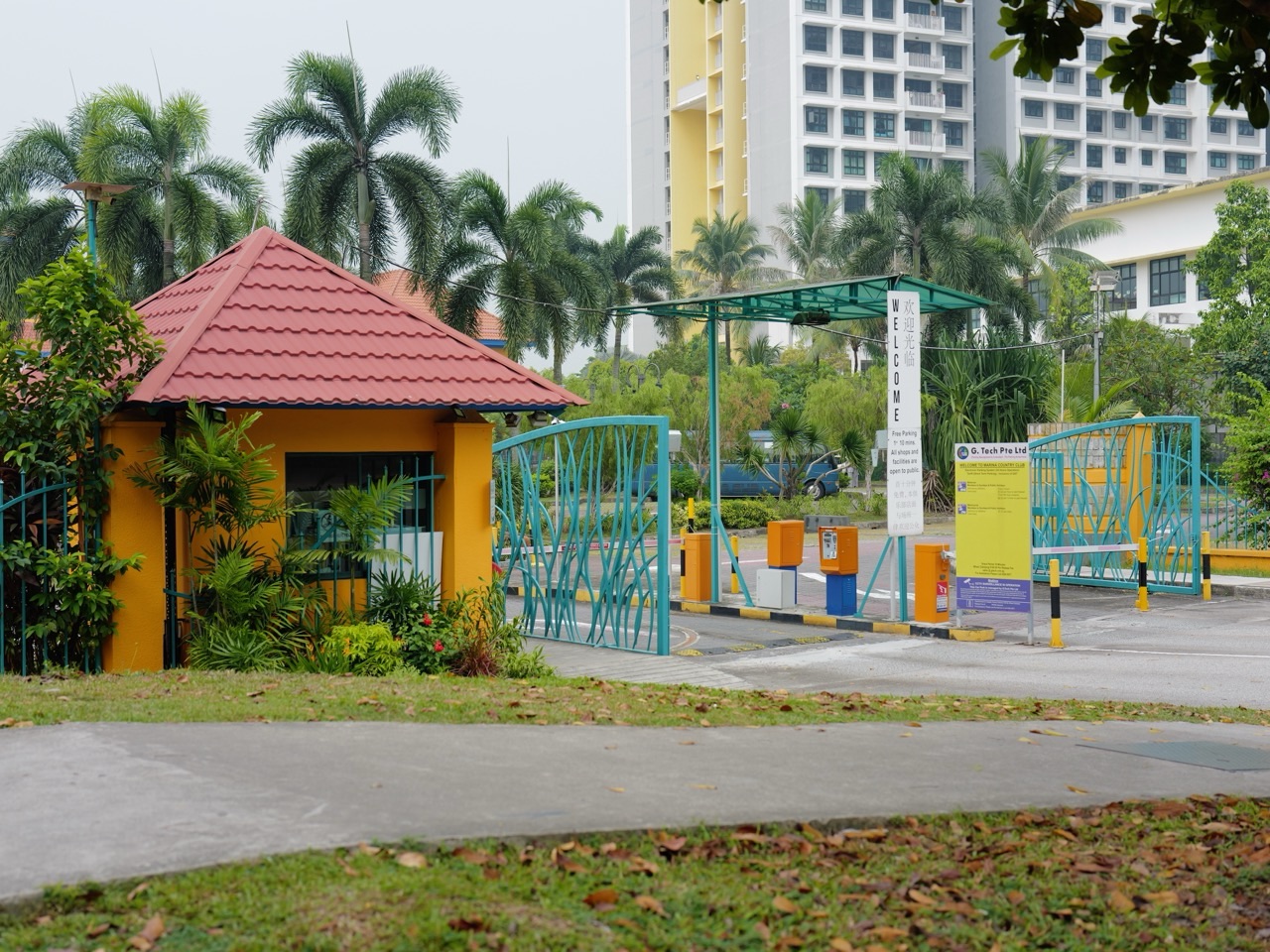
Editorial note: Emergency-response estimates cited here are reported planning claims. The example incidents are illustrative teaching scenarios, not reports of actual emergencies. Our featured photograph documents the existing Northshore waterfront near Marina Country Club, not an operating SCDF post.


