
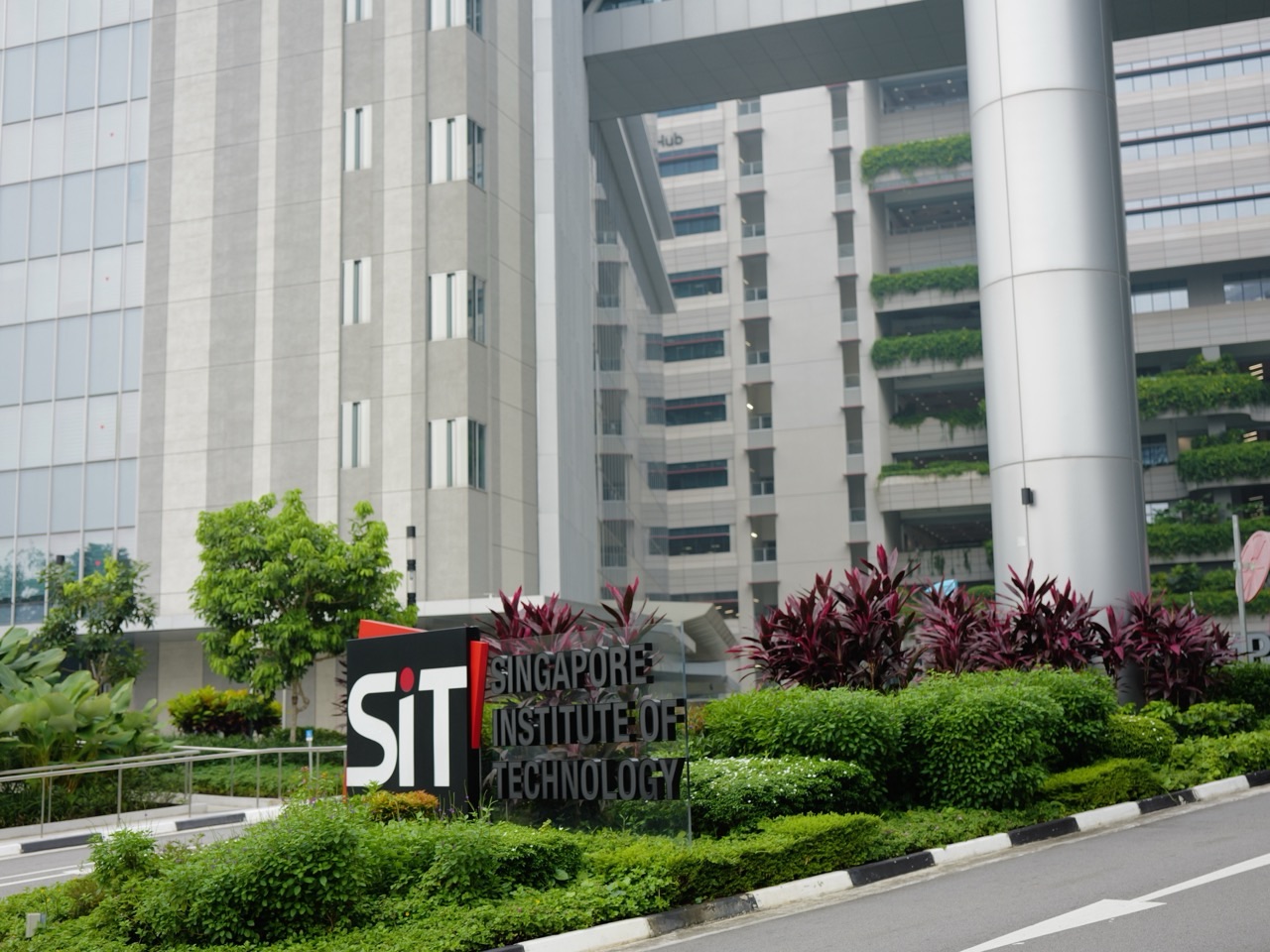
Punggol Education 2027 cybersecurity, artificial intelligence and data courses need a careful comparison. A Secondary student who says ‘I want to study AI’ may enjoy Mathematics and prediction, but not writing software. Another may be fascinated by cybersecurity investigations but dislike maintaining networks. An adult working near Punggol Digital District may need one targeted certificate rather than another full degree. ITE, Polytechnic and SIT offer real and different training routes, and they have different admission requirements.
Did you know that ITE’s Higher Nitec in Cyber & Network Security comes in published two-year and three-year full-time structures, while Nanyang Polytechnic’s Diploma in Cybersecurity & Digital Forensics includes AI-powered security operations, digital forensics and a structured internship? SIT Punggol’s published stackable Applied Computing specialist certificates include 2027 modules such as Ethical Computing and Data Analysis, Machine Learning, Cloud Architecting and Security, and Cybersecurity. Those qualifications do not confer the same award or level of expertise.
This Punggol Education 2027 guide helps residents move from Primary Science and Mathematics into Secondary G1/G2/G3 subjects, 2027/2028 SEC and admissions decisions, ITE Higher Nitec, Polytechnic diplomas, University computing pathways and adult micro-credentials. It explains what the courses teach, how to prepare safely, what not to buy or believe, and what to check before an application. Technology forecasts are not job offers, and a certificate is not evidence of mastery without applied work.
Quick comparison: do you actually mean software, data, AI, networking or cybersecurity?
| Field | The daily work | Useful foundations |
|---|---|---|
| Software development | Design, build, test, document and maintain applications | Logical reasoning, programming, mathematics, language |
| Data analytics | Clean, check, interpret and communicate data | Statistics, spreadsheets, data quality, communication |
| Machine learning and AI | Define learning tasks, prepare datasets, evaluate predictive systems | Programming, mathematics, probability, responsible testing |
| Cybersecurity operations | Monitor logs, investigate alerts and respond to incidents | Networks, operating systems, careful evidence-handling |
| Digital forensics | Preserve, examine and document authorised digital evidence | Technical procedure, chain of custody, ethics, law |
| Cloud and network infrastructure | Configure, protect and maintain interconnected systems | Networking, systems knowledge, reliability and security |
There is overlap, but the distinctions affect what a student learns and enjoys. A teenager who likes testing website layouts may be better suited to software development than threat monitoring. Someone who loves interpreting graphs may enjoy data analytics, while a person who enjoys fault finding may prefer network support.
Primary 3–6: build digital literacy before purchasing an expensive ‘AI camp’
For a Primary student, the essentials remain strong English, Mathematics and age-appropriate Science. Programming or data projects can be enjoyable, but the child also needs to explain what a computer result means. A pupil who can reason about percentages, organise measurements and detect a misleading statement has a useful foundation for many technology roles.
One safe project is to create a small spreadsheet of hypothetical library-book loans. Calculate totals and averages, and ask whether a bar chart is misleading when its axis starts above zero. Have the child explain their working in sentences. Another is to describe a simple paper-based algorithm for sorting a list: how would you know it always works?
The goal is not to give children unrestricted access to real user data or teach them to break into accounts. Keep demonstrations within authorised learning platforms, fictional datasets and school-approved settings. Understanding consent and privacy is part of learning to use technology responsibly.
Secondary school: G1, G2 and G3 are subject levels, not permanent career identities
Full Subject-Based Banding allows different subject levels across the student’s programme. A pupil may take Mathematics or Science at a different level from English, and their actual subject portfolio will matter for the relevant progression route. The first Singapore-Cambridge SEC graduating cohort is in 2027, and MOE has announced a new Post-Secondary Admissions Exercise from 2028. A 2026 O-Level student applying for the 2027 Polytechnic intake uses the applicable earlier admissions rules, not an imagined 2028 score formula.
Mathematics supports programming, probability, data analysis, encryption and optimisation. English supports documentation, incident reporting, stakeholder communication and understanding instructions. Science encourages testable explanations. A school Computing elective can be valuable where offered, but do not assume every post-secondary computing programme requires that particular Secondary elective.
A practical school-stage audit asks whether the learner can handle algebraic notation, percentages, sequences, logical conditions and a written explanation. If code works only after copying a tutorial, ask the student to modify one feature independently and explain why the new behaviour is correct. This distinguishes familiarity from transferable understanding.
Worked example: the difference between a data error and a model error
Imagine a fictional dataset showing daily visits to a community event. It contains 12, 15, 14, 150 and 13 visits across five days. Before forecasting demand, a careful student asks whether 150 is a genuine exceptional day or an accidental extra zero. A machine-learning system cannot correct an unexamined source simply by sounding confident.
This example is invented for teaching; it makes no statement about an actual Punggol event. Students can practise checking the original source, recording corrections and describing uncertainty. Those habits matter as much as writing a sophisticated formula.
ITE Cyber & Network Security: two different structures
ITE’s official two-year Higher Nitec in Cyber & Network Security is listed as a 24-month full-time programme at Colleges Central, East and West. It includes network management, server support, virtualisation, security infrastructure, vulnerability assessment and cybersecurity operations. Its three-year version covers related practical competencies through a different admissions route.
Read both pages before saying that the learner is ‘eligible for ITE Cyber’. The previous qualification and exact applicant category determine which course structure is relevant. Some routes use O-Level grade criteria while others are designed for N-Level applicants; course equipment requirements can also differ.
ITE explicitly states that learners are required to purchase a laptop for the course in addition to tuition fees, with applicable assistance for eligible students. The household budget should include the laptop specification, commuting to the actual ITE college, transport for practical activities and any additional software or assessment obligations.
Progression is possible, but not automatic
The current ITE course information says that from the AY2027 Polytechnic intake, relevant Higher Nitec Cyber & Network Security graduates with a net GPA of at least 2.5 may apply for a related Polytechnic diploma, subject to programme matching and admissions rules. That is not a guaranteed Polytechnic seat or permission to enter every Cybersecurity diploma.
ITE also identifies possible Work-Study Diploma routes including Cyber Security & Forensics, Cloud Management & Operations and IT System Integration. The learner should verify live course availability, employment requirements and eligibility for the particular intake before making a long-term assumption.
Polytechnic option: Nanyang Polytechnic Cybersecurity & Digital Forensics
Nanyang Polytechnic lists Diploma in Cybersecurity & Digital Forensics (C54). Its published curriculum describes enterprise security assessment, AI-assisted security operations, secure software development, digital forensics, ethics and governance. NYP also describes competency units, workplace-integrated projects, an internship and a final-year project.
The published NYP page gives a 2026 O-Level JAE net ELR2B2-C range of 3–11 as historical guidance, with specific minimum subject grades. It is not a promise that a student with a given score enters the 2027 intake. Read the course’s actual 2027 entry requirements and check which qualifications the applicant holds.
The Diploma’s EAE guidance asks applicants to demonstrate genuine interest and evidence of work—such as a coding or networking project, relevant CCA, supervised competition or discussion of secure computing. A claimed ‘passion for hacking’ without ethics, knowledge of safe boundaries or independent evidence is not sufficient proof of readiness.
Comparing NYP’s other technology diplomas
NYP’s School of Information Technology also lists Applied AI & Analytics, Computing, Business & Financial Technology and a Common ICT Programme. These serve different early specialisation decisions. Applied AI is not the same as cyber incident response; business technology introduces finance-related systems; a common programme may offer a way to explore before selecting a more focused diploma.
For each diploma, ask for the actual first-year modules and assessment examples. Compare mandatory Mathematics, coding languages, networks, statistics, team projects, internships and approved specialisations. An attractive title is not enough.
At SIT Punggol: degree pathways and what ‘applied computing’ means
SIT lists a BSc (Honours) Applied Computing (Fintech) at its Punggol campus, combining software engineering, machine learning and financial-domain knowledge. Its published programme page specifies a three-year qualification, with 2026 application dates. Those 2026 dates must not be represented as an already-confirmed 2027 intake window.
Students can also examine SIT’s wider ICT degree catalogue, including programmes in Information Security, Software Engineering and Applied Artificial Intelligence, subject to each course’s own admissions and campus information. A Diploma may support an application to a related degree, but the University decides eligibility, academic standing and selection; it is not automatic.
A Cybersecurity student should ask whether they want more formal systems theory, secure software, penetration testing within authorised boundaries, digital forensics, governance, financial technology or research. A general word such as ‘technology’ conceals large differences in mathematical demands and career work.
SITLEARN 2027 adult courses: real examples and exact intake distinctions
SIT’s Applied Computing Specialist Certificates page lists Ethical Computing and Data Analysis, Machine Learning and Modern Software Engineering Practices among January–April 2027 modules. It separately lists Cloud Architecting and Security, Cybersecurity and Computer Networking and Network Security for May–August 2027.
The examples have blended learning with online work, Zoom sessions and certain in-person sessions at SIT Punggol Campus. The page mentions SkillsFuture funding of up to 90% and an applicable $300 monthly part-time training allowance, but this is not an automatic personal grant. An adult must check course eligibility, age, citizenship, funded status, attendance, valid application steps and actual payable fees.
The listed modules are intended for assessed skills development, and the institution explains the degree-stacking conditions for its approved pathway. One completed micro-credential is not automatically a degree. If the worker needs a professional Bachelor’s qualification, confirm the entire course sequence, entry criteria, maximum applicable credits and credit validity before paying for the first module.
How do real jobs compare?
| Role | Core responsibilities | Evidence a student could build |
|---|---|---|
| SOC analyst | Examine alerts, escalate incidents, document findings | Authorised log-analysis exercise with a written incident summary |
| Data analyst | Validate tables, calculate metrics, explain decisions | Reproducible spreadsheet or Python project using synthetic data |
| Software developer | Design, write, test and maintain functionality | Versioned small application with tests and a README |
| Network technician | Diagnose connectivity and document infrastructure changes | Simulated network topology and troubleshooting plan |
| AI developer | Prepare data, build and evaluate models responsibly | Model comparison with clear error analysis and limitations |
| Security governance practitioner | Assess risk, policies and control evidence | Structured risk register for a fictional organisation |
Employers and courses may use different names for related roles. The examples above are practice tasks, not substitutes for formal qualifications or claims of local vacancies. Never publish employer secrets or personal records as portfolio work.
A safe four-week portfolio exercise for a Punggol teenager
- Week 1 — understand: choose one authorised dataset or offline computing task. Write a one-paragraph problem statement and list possible risks.
- Week 2 — build: make a simple analysis, program or simulated network. Keep versions and document the intended behaviour.
- Week 3 — test: try edge cases, find errors, verify the data source and seek supervised feedback.
- Week 4 — communicate: explain the final result, the mistakes corrected, what remains uncertain and which course skills the project seems to demand.
Do not equate cybersecurity learning with accessing a stranger’s system. Permission must be explicit, and exercises should use sanctioned platforms, simulated scenarios or the student’s own resources. Ethical judgement is a fundamental job competence, not an optional footnote.
Punggol Digital District is an opportunity to observe, not a job guarantee
The growing university-and-industry environment at Punggol Digital District makes computing, urban services and digital skills visible. However, residence in Punggol does not grant priority for a SIT place, an internship or employment. A job opening depends on employer hiring, qualifications, performance, timing and market demand.
Parents should also distinguish a published research collaboration from a course requirement, and a course showcase from a guaranteed student project. The student’s own preparation, willingness to learn and evidence of honest work matter more than the proximity of a building to the family’s HDB block.
What to do, what not to do and what to think about
Do
- Compare actual course modules, qualifications and applicant categories instead of relying on the words ‘AI’ or ‘Cyber’.
- Protect Mathematics, English and data reasoning through the Primary and Secondary years.
- Check which ITE Higher Nitec duration matches the student’s qualifications.
- Read the correct-year NYP diploma entry requirements, not a historic cut-off as a guarantee.
- Confirm whether a 2027 SIT adult module is listed for January–April or May–August.
- Include devices, commutes, assessments and clinical or employer-specific obligations in costs.
- Use authorised, privacy-conscious projects to demonstrate skill.
Do not
- Use live third-party computer systems for experiments without permission.
- Confuse the 2027 SEC examination with the O-Level-based 2027 post-secondary intake.
- Present the AY2027 Higher Nitec net GPA of 2.5 as a guaranteed Polytechnic posting.
- Assume a short AI certificate makes someone a professionally qualified AI engineer.
- Copy an institution’s 2026 university application dates into a claimed 2027 deadline.
- Promise local Digital District employment on the basis of a course enrolment.
- Treat SkillsFuture ‘up to’ subsidy figures as a personal fee quotation.
Think about
Which actual work energises the student: writing code, checking numbers, preventing incidents, managing systems or investigating digital evidence? What do they do when their first attempt fails? Are they willing to explain assumptions, communicate responsibly and test their output? Those questions are more useful than forecasting that one fashionable job title will be highly paid in every future year.
Frequently asked questions
Does a Punggol student need Secondary Computing to enter every Polytechnic cyber course?
Not universally. Courses can specify English, Mathematics and other subject requirements, and some have different qualification routes. Check the particular diploma’s current admissions page.
Is ITE Cyber & Network Security a single two-year programme?
No. ITE lists both 24-month and 36-month full-time structures with distinct entry requirements. Compare the course and applicant category.
Is a Polytechnic cyber diploma the same as a Computer Science degree?
No. The academic awards, breadth, depth and requirements differ. Graduates may pursue further study where they meet University admissions rules.
Can an adult take SIT’s May 2027 Cybersecurity micro-credential without entering a degree?
The published specialist-certificate pathway permits assessed individual module study subject to eligibility. Check the live course page and certificate outcome, and do not assume the course guarantees degree admission.
Will every successful ITE student with GPA 2.5 get a related diploma?
No. Minimum application eligibility, relevant prior qualification, actual course matching, competitive selection and vacancies still apply.
Is there a safe way for a child to practise cybersecurity?
Yes. School-approved or expressly authorised simulated environments, offline log exercises, secure-coding examples and privacy-literacy projects are appropriate starting points.
Official sources and related Punggol education guides
- ITE two-year Cyber & Network Security — modules and entry.
- ITE three-year Cyber & Network Security — separate qualification route.
- NYP Cybersecurity & Digital Forensics C54 — course competencies and 2026 admissions reference.
- NYP IT diploma directory — compare Cybersecurity, Computing and AI courses.
- SIT Applied Computing (Fintech) — degree details.
- SIT SITLEARN Applied Computing 2027 — published courses and delivery.
- SEAB SEC — subject levels and examination transition.
- Punggol 2027 subject prerequisites — school-to-course decisions.
- Punggol adult work-study courses — qualification choices.
- Punggol Education & Town-Life Article Index — local education hub.
Research checked 27 October 2026. All 2027 course availability, subsidies, qualifications and admissions should be reconfirmed from the live official provider. Student project examples use fictional or authorised data and are not instructions to access third-party systems.


