
Punggol Education 2027 robotics, mechatronics and automation courses can turn a child’s fascination with moving machines into purposeful engineering, but not every course described as ‘robotics’ teaches the same abilities. A technician maintaining factory equipment, a Polytechnic graduate integrating sensors and controllers, a software engineer programming autonomous movement and an engineering researcher studying robot behaviour have different daily responsibilities and different qualification routes.
Did you know that ITE offers separate 24-month and 36-month Higher Nitec structures in Mechatronics Engineering at Colleges Central and West? Singapore Polytechnic’s Diploma in Mechatronics & Robotics includes mechanics, electronics, C++ programming, industrial automation, robotics projects and industry exposure. SIT Punggol publishes a four-year Bachelor of Engineering with Honours in Robotics Systems, whose curriculum integrates hardware, software, AI and systems engineering with substantial workplace learning. The name of the course alone cannot tell a family which route fits.
This guide is for Punggol Primary and Secondary families, 2027 post-secondary applicants, ITE and Polytechnic students, JC students and working adults. It explains what to study, why Mathematics and English matter, how to compare qualifications, what is confirmed for 2027, and how to avoid unsafe projects or expensive courses that teach less than they promise.
Quick answer: robotics, mechatronics, automation and AI are related—but different
| Field | Typical work | What matters most |
|---|---|---|
| Mechanical engineering | Design moving parts, structures, mechanisms and physical assemblies | Forces, geometry, material behaviour, manufacturing |
| Electronics engineering | Connect sensors, power and circuit elements | Circuits, measurement, safe testing |
| Mechatronics | Integrate mechanics, sensors, controllers and software into one functioning system | Interfaces, troubleshooting and multidisciplinary thinking |
| Industrial automation | Design and maintain repeatable, controlled industrial processes | Programmable logic controllers, reliability and safety |
| Robotics systems | Plan, implement, test and coordinate intelligent physical machines | Control, sensing, programming, systems integration |
| AI software | Train or evaluate computational models that may assist a robot | Data, algorithms, validation and computing ethics |
Not every robot needs an advanced AI model. A simple controlled conveyor can use sensors and programmed instructions without learning from data. Conversely, a software model that generates text is not automatically a physical robot. Distinguishing the two is a useful first lesson.
Why this topic matters to Punggol residents
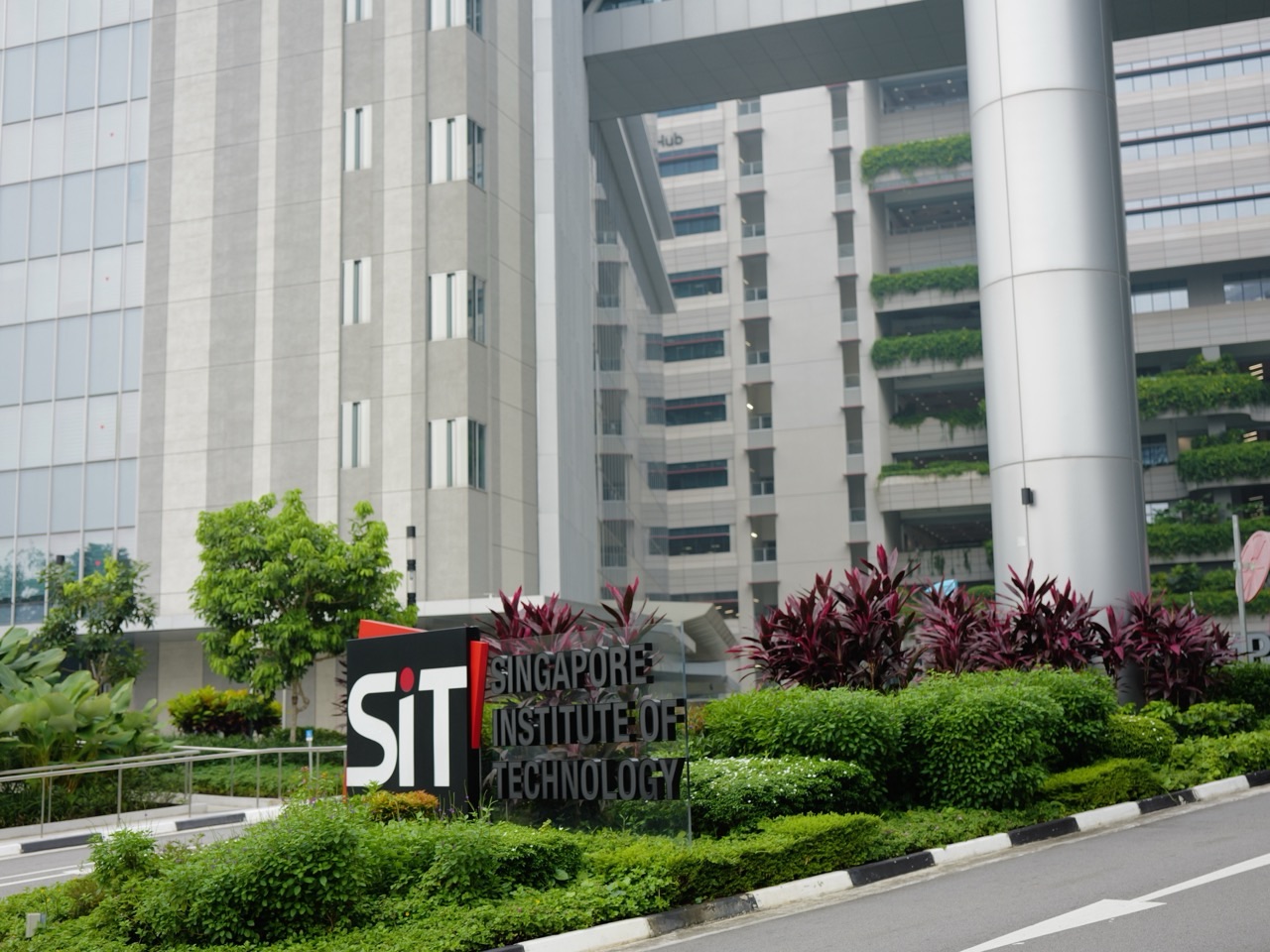
Punggol Digital District brings applied university learning and organisations into one neighbourhood. SIT’s official Punggol campus description explains its living-lab approach, with research, industry and study co-located. Those facilities can make digital engineering more visible to residents, but they do not guarantee public access to labs or employment for local school-leavers.
Parents should distinguish three things: a campus near home, a course that is available to an eligible applicant, and a job that an employer will actually offer. A family can appreciate the innovation happening nearby without promising its child automatic university admission or a robotics career simply by living in Punggol.
Primary 3–6: teach the foundations of robotics without buying an industrial machine
Primary Mathematics develops number sense, patterns, measurement, spatial reasoning, fractions and problem solving. Science encourages observing what changes and explaining why. English gives the child words to describe a method precisely. Those are the foundations for technical collaboration and debugging much later.
A low-cost project uses a paper grid. Ask a child to write instructions moving a fictional robot three squares east and two squares north, checking whether the instructions lead to the correct square. Then deliberately change the starting position. Will the instructions still work? This teaches algorithmic thinking, assumptions and a need for clear instructions.
Another activity uses an approved, low-voltage classroom kit with adult supervision to investigate a sensor-controlled light. The pupil should first predict the behaviour, record observations, explain the control rule and identify an error. They do not need live mains wiring, power tools, industrial robots, or access to restricted university facilities.
Secondary G1/G2/G3: why Algebra and Physics often become the bottleneck
Under Full Subject-Based Banding, students can study subjects at G1, G2 and G3 levels. The first Singapore-Cambridge Secondary Education Certificate graduating cohort completes its examinations in 2027, followed by the new Post-Secondary Admissions Exercise from 2028. Students taking GCE O-Levels in 2026 and entering Polytechnic in 2027 use the corresponding earlier rules. The student’s actual subjects and levels matter more than an old stream label.
Robotics uses ratios, angles, distance, time, rates of change, coordinate systems, algebraic relationships and eventually more advanced Mathematics. Physics helps explain forces, friction, power and electrical systems. Computing can be relevant, but not every Polytechnic route requires a Secondary Computing elective. English is necessary to read instructions, write safe procedures and communicate what went wrong.
If a pupil can copy a programme but cannot explain how a change in sensor input changes the machine’s output, the foundation is incomplete. Start by asking for a flowchart and a sentence explaining the control decision. Repair prerequisites before jumping into a more advanced robotics kit.
Worked example: why gear ratios need careful units
Suppose a fictional robot wheel turns 120 revolutions per minute and the wheel circumference is 0.30 metres. Assuming no slip, the theoretical distance travelled in one minute is 120 × 0.30 = 36 metres, giving an ideal speed of 0.6 metres per second. These are arithmetic illustrations, not the performance of a named commercial robot.
A real engineer would ask whether the motor maintains the required torque, whether the wheel slips, how speed varies during acceleration, whether the sensor measures rotation correctly, and whether the machine can stop safely. The arithmetic is the beginning of design reasoning, not proof that a robot is fit to use.
ITE Higher Nitec in Mechatronics Engineering: 24 months
ITE’s official Higher Nitec in Mechatronics Engineering is listed at Colleges Central and West, with a 24-month full-time structure. Students learn engineering drawing, mechanical assemblies, pneumatic systems, microcontrollers, Programmable Logic Controllers (PLC), automatic systems and robotics. The programme describes Industry 4.0 and industrial Internet of Things applications.
For its listed GCE O-Level route, English, Mathematics and an approved Science or technical subject have explicit grade requirements. A distinct N(A) direct entry route can include preparatory training. Candidates should read the live requirements for their particular qualification instead of assuming all Higher Nitec applicants enter through one common route.
The course warns about colour appreciation deficiency as an occupational consideration and specifies a student laptop in addition to course fees, with possible eligible assistance. Families with accessibility questions should seek institution-specific advice rather than infer admission from a generic description.
The three-year ITE route is not merely the two-year course with an extra tuition invoice
ITE also lists a 36-month Higher Nitec in Mechatronics Engineering with different entry profiles. The course builds related practical competencies but begins with a different academic foundation. A child holding a certain N-Level qualification may face a different choice from an O-Level applicant.
ITE further identifies a Technical Engineer Diploma in Machine Technology as a possible pathway for eligible relevant Higher Nitec graduates meeting its stated GPA and citizenship criteria. This is a distinct qualification from a Polytechnic diploma.
What actually happens at the ITE-to-Polytechnic transition in AY2027?
ITE states that, starting with the AY2027 Polytechnic intake, relevant Higher Nitec Mechatronics graduates with net GPA 2.5 and above may apply to related first-year Polytechnic diplomas. But the receiving diploma still considers course matching, its own prerequisites, merit and vacancies. A GPA application threshold does not guarantee a place.
Singapore Polytechnic Diploma in Mechatronics & Robotics
The SP Diploma in Mechatronics & Robotics combines mechanical engineering, electrical and electronic engineering, programming, industrial control and robotics. Its current course information includes Engineering Mathematics, C++ programming, CAD, electronics, Programmable Logic Controllers, robotic integration and a design-and-fabrication project involving an automated guided vehicle.
SP also describes training in autonomous mobile robotics, collaborative robotics and industrial automation, and exposure to industry through projects and internships. Students should consider whether they enjoy debugging integrated systems where a failure can come from a mechanical, electrical or software cause.
The SP page lists minimum GCE O-Level subject conditions and a 2026 JAE historical net ELR2B2 range of 5–13. That is evidence of a previous intake, not a predicted 2027 cut-off or a 2028 SEC posting outcome. A student with an ITE qualification must check the exact relevant feeder course and rules for their application year.
SIT Punggol: Robotics Systems versus Mechatronics Systems
Robotics Systems degree
SIT’s Bachelor of Engineering with Honours in Robotics Systems is listed as a four-year SIT degree at the Punggol Campus. Its curriculum integrates foundational engineering, C and C++ programming, Robotics Systems, Engineering Mathematics, AI-enabled integration and deployed physical systems. SIT discusses an applied approach involving projects and systems-engineering methods.
The page’s displayed application period of 8 January to 19 March 2026 and next intake of 31 August 2026 belong to the 2026 cycle. A family planning a 2027 application should look for the University to publish the new dates instead of simply shifting them forward by one year.
Mechatronics Systems degree
SIT also publishes Mechatronics Systems, an interdisciplinary programme whose curriculum spans electro-mechanical design, embedded systems, software engineering, control systems, Robotics, Mathematics, systems requirements and risk analysis. The published structure describes a substantial Integrated Work Study Programme, and highlights system-level integration rather than treating mechanical and electrical subjects in isolation.
The two degrees overlap but are not identical. The prospective student should compare their actual current award, partner arrangements, modules, placement schedule and entry conditions rather than infer from names that one is the shorter version of the other.
Adult retraining: choose the smallest credible qualification that closes the actual gap
A working adult responsible for maintenance might need training in PLCs and troubleshooting rather than an entire new engineering degree. Another seeking to lead complex Robotics Systems development may need formal degree-level mathematics, software and engineering preparation. An eligible ITE technical diploma, part-time course or SIT continuing education module can be a better first step depending on the role.
ITE’s part-time Nitec in Technology – Mechatronics & Robotics page explicitly states that the course is being phased out and offered to ongoing students only. This is exactly why adults must not rely on the existence of a course page as proof that a 2027 intake is available.
Before applying, ask the institution which programmes currently accept new learners, whether the credential is a full qualification or an individual competency certificate, how practical laboratory access works, what funding is approved and whether the new skill is relevant to a real employer’s requirement.
The 2027 reality: safe robotics is about human decisions as much as machines
An engineer must know how a robot will behave when sensors fail, a route is blocked or the required part is unavailable. Students should develop a safety-first mindset from the beginning: simulated work, authorised facilities, documented assumptions and professional supervision. A clever demo is not evidence of safe industrial deployment.
In Punggol, a useful student project might compare two fictional automated parcel-delivery systems on paper. Explain their energy use, accessibility, expected error cases and human override. The assignment can explore safety, ethics, community needs and engineering without operating devices on public walkways or handling live electrical equipment.
A six-stage education pathway decision
- Primary: observe, explain simple mechanisms, calculate ratios and follow clear instructions.
- Lower Secondary: build Mathematics and Science foundations, troubleshoot in safe supervised settings and explore approved activities.
- Upper Secondary: check subject choices and the actual course’s GCE O-Level or SEC-based intake requirements.
- ITE: choose a two-year or three-year Higher Nitec route suited to the applicant’s qualification and practical interest.
- Polytechnic: compare SP or other actual Mechatronics/Robotics diplomas by curriculum, internship and academic conditions.
- University or adult education: check SIT programme modules, degree eligibility, professional goals, tuition, work-study and currently open course intakes.
What to do, what not to do, what to think about
Do
- Compare mechanics, electronics, programming, control and safety as separate skills that must be integrated.
- Repair algebra, units, ratio and written technical explanation before accelerating blindly.
- Read the correct ITE Mechatronics course structure and entry route.
- Check SP’s current modules and 2027 admission instructions, not only historical cut-offs.
- Investigate SIT Robotics Systems and Mechatronics Systems as distinct University programmes.
- Verify whether an adult training course is still accepting new entrants.
- Choose safe, documented projects that show independent reasoning and corrected errors.
Do not
- Assume a robot requires the same AI as a chatbot.
- Confuse an ITE Higher Nitec net GPA threshold with a guaranteed Polytechnic offer.
- Use the 2026 SIT application dates as a fictional 2027 deadline.
- Buy an expensive robotics kit before the learner has a sound foundational learning plan.
- Use industrial equipment, live mains power or public spaces without supervision or authorisation.
- Present a school prototype as a professionally certified, safe autonomous machine.
- Assume living near Punggol Digital District entitles the student to a university or employer place.
Think about
Does the student enjoy understanding why an object moves, diagnosing faults and revising methods when the first solution fails? Are they comfortable documenting a system and communicating with people who know a different discipline? Those habits are often better predictors of meaningful learning than the excitement generated by a futuristic video.
Frequently asked questions
Are ITE’s Mechatronics Higher Nitec programmes all two years?
No. ITE publishes 24-month and 36-month structures with different entry routes. The applicant’s specific qualification matters.
Does SP’s Mechatronics & Robotics diploma require Secondary Computing?
Its currently published O-Level route requires English, Mathematics and one of several approved Science or technical subjects. Computing is among possible approved subjects but is not the only option.
Does a robotics diploma make the graduate a professional engineering registrant?
A diploma is an educational award, not an automatic professional registration or a certificate that every robot the graduate builds is safe. Regulated professional practice follows separate standards where applicable.
Can I use a 2026 SP cut-off to guarantee my 2027 place?
No. Previous net aggregate ranges are historical references; the actual intake depends on eligibility, cohort preferences and vacancies.
Is SIT Robotics Systems at the Punggol Campus?
The published SIT course information identifies the Punggol Campus. Individual work-study placements and other activities may occur elsewhere.
Is an ITE part-time Nitec Mechatronics course open to new 2027 applicants?
The cited ITE part-time Mechatronics & Robotics listing states that the course is being phased out and offered to continuing students only. Check available alternatives before applying.
Official resources and related Punggol reading
- ITE Mechatronics Higher Nitec, 24 months.
- ITE Mechatronics Higher Nitec, 36 months.
- ITE Technical Engineer Diploma in Machine Technology.
- SP Mechatronics & Robotics Diploma — detailed curriculum and entry.
- SIT Robotics Systems — Punggol degree.
- SIT Mechatronics Systems — degree and systems study.
- ITE part-time Nitec course status — phase-out note.
- Punggol Education 2027: Secondary G1/G2/G3 and SEC.
- Punggol ITE, JC and Polytechnic pathways.
- Punggol Education & Town-Life Article Index.
Research verified 27 October 2026 against current official programme descriptions. Course offerings, cut-offs, qualifications and 2027 application windows require confirmation for the student’s actual intake.


