
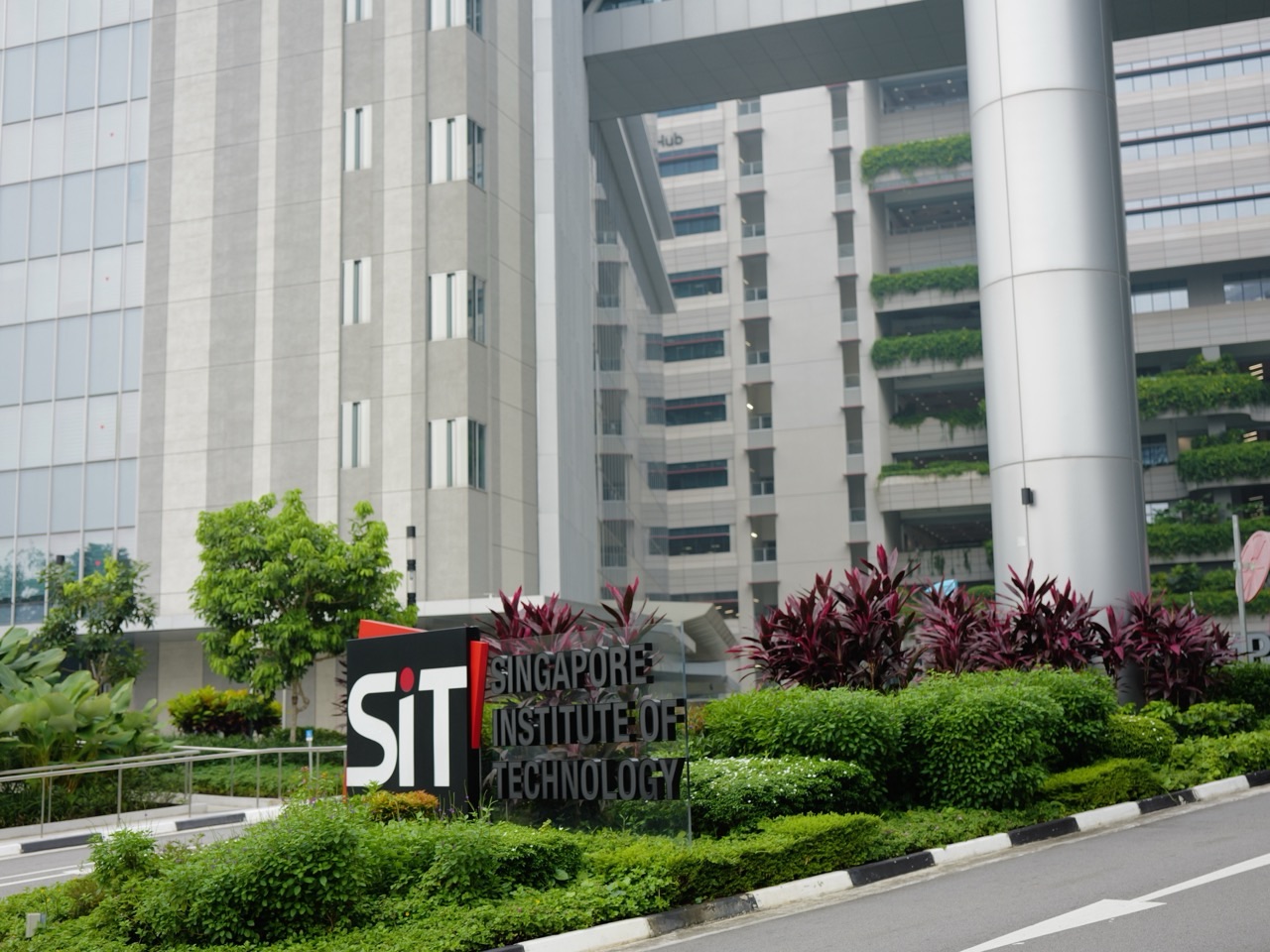
Quick answer, 27 October 2026: Punggol residents exploring semiconductor careers in 2027 and 2028 have a concrete local learning connection: SIT’s Punggol Campus lists a Semiconductor Manufacturing and Process Control engineering micro-credential for January–April 2027. Singapore’s national semiconductor industry already employs more than 35,000 people, according to EDB. However, a training course in Punggol is not proof that a wafer fabrication plant, 1,000 new jobs or guaranteed salaries are arriving in Punggol.
Did you know that making a computer chip requires far more occupations than designing a circuit? There are process technicians, equipment engineers, manufacturing planners, quality specialists, safety professionals, metrology staff, test and packaging engineers, industrial software specialists and people who trace the cause of a defect. That is why the semiconductor economy can be relevant to an ITE graduate, polytechnic student, university learner or experienced technician without requiring everyone to become a chip designer.
For a family deciding whether a 2027 training offer makes sense, the useful question is not ‘Is semiconductor hot?’ It is ‘Which exact job, in which Singapore location, needs which skills and working arrangement—and what evidence will show I can do that work?’ This guide separates verifiable 2026 facts from 2027–2028 possibilities, explains realistic routes and flags the risks of making decisions based on industry hype.
What is confirmed, and what is only a forecast?
| Statement | Evidence as of 27 October 2026 | How to interpret it |
| Singapore has a substantial chip industry | EDB cites more than 35,000 semiconductor workers nationally and a value chain from design through fabrication, packaging and testing | This is Singapore-wide scale, not a Punggol employer count |
| There were almost 1,000 openings at an industry career fair | ITE, SSIA and e2i reported nearly 1,000 technical openings at a 29 January 2026 fair | Historic event vacancies cannot be carried forward as 2027–2028 vacancies |
| Punggol has a semiconductor learning connection | SIT lists January–April 2027 semiconductor manufacturing and process-control training | Course dates and fee/subsidy terms must be reconfirmed; no job guarantee |
| The wider industry is cyclical | Demand depends on global electronics, capital investment, product cycles and company decisions | No reliable site-specific hiring or pay figure for 2028 follows from a single fair |
| The safest preparation | Mathematics, science, equipment safety, troubleshooting, precise documentation and work examples | Portable competence matters in both strong and weak hiring markets |
Primary references: EDB: Singapore’s semiconductor sector, EDB/ITE/SSIA/e2i: 29 January 2026 fair and SIT: Engineering Specialist Certificates. These sources serve different purposes: workforce scale, a dated recruitment event and an educational opportunity.

What a semiconductor actually does
A semiconductor device controls the flow of electricity. Integrated circuits combine enormous numbers of tiny components into useful systems for phones, computers, medical equipment, vehicles, industrial machines and communications infrastructure. The chip is physical: it must be patterned, fabricated, measured, packaged, tested and made reliably enough for its intended application.
At school, a student sees electricity as voltage, current, resistance and energy. In manufacturing, those ideas join chemistry, materials, optics, temperature control, contamination management and statistics. The plant cannot simply switch from one ‘correct answer’ to another; it must keep thousands of process variables within controlled limits.
The manufacturing journey and who works on it
| Stage | What happens conceptually | Roles to investigate |
| Design and specification | Engineers define what the circuit must achieve and how its functions interact | IC design, design verification, product engineering |
| Wafer fabrication | Layered materials are formed, patterned, treated and inspected under tightly controlled processes | Process technicians, process engineers, equipment engineers |
| Metrology and inspection | Measurements test dimensions, electrical performance and defects | Metrology, yield, inspection, data analysts |
| Packaging and assembly | Devices are connected, protected and prepared for real-world operation | Packaging, assembly, materials, quality engineering |
| Testing and reliability | Parts are tested against performance and failure requirements | Test engineering, reliability, quality and failure analysis |
| Operations and support | Equipment, scheduling, safety, facilities and records keep work consistent | Maintenance, planning, occupational safety, logistics, IT and controls |
These are job families, not a promise that every employer divides work into the same departments. A small supplier and a large manufacturing organisation may use different job titles for comparable tasks.
Forecast 1: equipment maintenance can matter as much as design
An advanced facility depends on machines producing repeatable results. If a critical tool becomes unreliable, production may stop or produce devices that fail later. Technicians and engineers therefore diagnose abnormal readings, document faults, arrange safe maintenance and verify recovery.
A plausible 2027–2028 trend is greater use of sensor data, predictive-maintenance tools and automated alarms. The human competence is not just reading a dashboard: it is deciding whether a measurement is credible, isolating causes and coordinating maintenance according to authorised procedures. This skill also transfers to facilities engineering, manufacturing and transport systems outside semiconductors.
Forecast 2: quality control will remain evidence-based
A good wafer or packaged chip must meet specifications, but not every production run behaves identically. Workers investigate variation, defects, instrument errors and unexpected test results. Students should know the difference between a measurement, a calculated statistic, a likely hypothesis and a confirmed cause.
For example, if simulated test results show a sudden increase in failed units, a careful analyst checks whether the measuring instrument changed, whether the units were drawn from comparable batches, whether the product specification changed and whether the pattern survives replication. Inventing an explanation from a single chart is not quality engineering.
Forecast 3: packaging, testing and integration create diverse tasks
Packaging connects the electronic device to the physical world. Testing confirms it behaves as intended and identifies defects before wider deployment. Singapore’s ecosystem includes companies across design, fabrication, packaging and testing, so residents can look beyond the narrow stereotype that every role is inside a cleanroom.
A 2028 role could involve process improvement, equipment integration, automation software, test fixtures or supplier quality, depending on the employer. These scenarios are technically plausible, but their actual availability depends on investments and recruitment decisions that are not confirmed in this article.
What exactly is available to learn at SIT Punggol in 2027?
SIT’s Engineering Specialist Certificates page lists Semiconductor Manufacturing and Process Control, with a January–April 2027 intake and a blend of online and in-person learning at SIT Punggol Campus. The course description covers CMOS technology and advanced fabrication concepts. The same page lists Smart Maintenance, which is relevant to equipment reliability but is a separate learning choice.
The page advertises possible SkillsFuture funding and allowances for eligible learners. Eligibility is not automatic: nationality, age, programme status, previous subsidies and current scheme rules can matter. Check the live SIT listing for admissions, registration, credit recognition and current fees before committing.
A micro-credential is not equivalent to a complete degree, a professional licence or guaranteed recruitment. Ask how credits stack, which degree pathways are available, how long credits remain valid, which modules are compulsory and whether an employer recognises the specific learning outcome.
Which educational route fits which learner?
| Starting point | Useful strengths to develop | Next investigation |
| Secondary G1/G2/G3 learner | Mathematics, science concepts, accurate units, careful procedural reading, teamwork | Explore ITE, polytechnic and JC requirements without assuming a single stream determines lifelong options |
| ITE student | Electrical/electronic foundations, safe workshop habits, calibration and maintenance records | Industry attachments and employer-recognised technical competencies |
| Polytechnic student | Electronics, engineering mathematics, statistics, process control, fault diagnosis | Diploma specialisations and industrial placements in manufacturing or technology |
| University student | Physics, electronics, materials, design, statistics, experimental methods | Research, process development, system integration and appropriate specialist roles |
| Experienced worker | Existing operational, quality, electrical or mechanical skill, disciplined records | Targeted conversion pathways and employer-sponsored learning when available |
For a Punggol Secondary student: why English matters in a semiconductor career
A factory does not run only on equations. Operators read instructions, engineers write incident reports, technicians hand over unresolved faults and managers explain decisions to teams. A misplaced unit or an ambiguous statement can cause expensive misunderstandings. Strong English is a safety and collaboration skill, not a decorative subject.
Mathematics matters for rates, proportional change, graph reading, measurement uncertainty and pattern recognition. Science explains energy, material properties, electricity and chemical processes. These foundations support multiple future careers even if the student later decides a manufacturing environment is not for them.
One safe portfolio project for a beginner
Worked example: Use a fictional set of component test results—say, twenty hypothetical batches of fifty components each. For each batch, record the number that passes and calculate its yield as passed ÷ tested × 100%. Compare the pattern using a graph and identify batches needing additional investigation. Explicitly label all values as simulated educational data.
Suppose batch A has 48 passes out of 50, or a 96% pass rate, while batch B has 43 passes, or 86%. It is tempting to conclude that an engineer or machine caused the second result. That conclusion is not supported. The difference could arise from product, measurement, sample variability or an actual defect. A stronger project adds a checklist of information needed to distinguish the hypotheses.
Write a short report with sections headed ‘Observation’, ‘Calculation’, ‘Possible causes’, ‘Missing evidence’ and ‘Next authorised checks’. Do not claim industrial validation or use data belonging to an employer without permission. The purpose is to show reasoning, not pretend a school exercise is a fab qualification.
Workplace reality: shifts, cleanrooms and safety
Some semiconductor manufacturing jobs involve cleanroom protocols, protective garments, standing, strict contamination rules, equipment maintenance and shift schedules. Others are office-based engineering, data or design roles. Ask for the exact working pattern rather than relying on what a promotional video shows.
- Shifts: Are nights, weekends or rotating shifts required, and how far ahead is the roster given?
- Physical demands: Will the role involve cleanroom dress, prolonged standing, inspection or equipment tasks?
- Safety: What site training, authorisations and protective measures are mandatory?
- Location: Is the job at an actual manufacturing site elsewhere in Singapore, not SIT Punggol?
- Pay: Which elements are basic pay, fixed allowances, shift premiums or variable incentives?
- Progression: Are there recognised pathways toward higher responsibility, specialisation or supervisory roles?
Why geography is the most important caveat
Punggol houses a university campus and companies working in digital and engineering fields. Singapore’s wafer fabrication parks and industrial manufacturing sites are situated in other industrial locations. SIT training in Punggol should never be mistaken for proof of a chip factory at Punggol Coast. A resident may learn locally and work elsewhere, or support the industry through software, supplier, procurement and R&D functions.
Calculate the commute before enrolling in a pathway tied to a worksite. Late shifts and early handovers can change travel options. A smaller salary premium may not be worth long or unpredictable travel if the family has school collection or caregiving duties.
A 2027–2028 scenarios table
| Scenario | What would support it | What might invalidate it | Response |
| Selective hiring expansion | Repeated verified job advertisements across several companies | Weak electronics demand, postponed investment or role consolidation | Apply with targeted evidence; do not assume a national boom |
| Training demand rises faster than vacancies | More short courses, events and promotion without matched job adverts | Oversupply in particular entry roles | Ask employers what skills are genuinely scarce before paying |
| Operations become more automated | Job postings increasingly request sensors, programming and fault analysis | Different plants adopt tools at different speeds | Combine physical understanding with data literacy |
| Experienced hires preferred | Vacancy descriptions ask for practical fault-response history | Some employers still run entry pathways | Seek legitimate supervised attachments and build transparent project evidence |
Before paying for a course, use this seven-question test
- Which precise job title am I targeting, and can I find three recently advertised examples?
- What part of my present education or work already meets the employer’s requirements?
- Is the course officially delivered, accredited and recognised for that purpose?
- Does the programme include appropriate practical or supervised work?
- What is the full nett fee and time cost after confirmed—not assumed—support?
- Does the resulting skill transfer to other engineering or operations careers if semiconductor hiring slows?
- Can my household manage the actual working location, shift pattern and any income change?
Frequently asked questions
Will semiconductor factories open in Punggol in 2027 or 2028?
No official announcement cited here confirms a wafer fabrication plant opening in Punggol. The documented Punggol connection is education and the wider technology ecosystem; verify actual workplaces individually.
Does the nearly 1,000-job figure mean 1,000 jobs remain vacant?
No. The figure describes a specific career fair in January 2026. Openings may have been filled, withdrawn or changed. It is not a standing count for 2027 or 2028.
Can an ITE graduate build a rewarding career?
Yes, depending on role, competence, training and employer progression. Technical pathways can be meaningful. Do not assume only degree holders work in advanced manufacturing or that a degree always makes someone ready to troubleshoot equipment.
Should I take the SIT course if I have no background?
Review the published prerequisite knowledge, entry rules and assessment requirements. A specialised course may be better suited to people who already have relevant fundamentals; seek guidance rather than assuming a short credential replaces them.
Will AI replace semiconductor technicians?
Automation may change repetitive work and raise expectations for digital skills, but maintenance, safe physical systems, quality judgement and operational accountability remain complex. Do not make a study decision from sweeping job-loss predictions.
Official sources and connected articles
- Singapore Economic Development Board: semiconductor industry and workforce
- EDB: 29 January 2026 semiconductor fair and technical hiring
- SIT: Semiconductor Manufacturing and Process Control, January–April 2027 listing
- eduKatePunggol: the January 2027 SIT course and learning decision
- Punggol Career 2027/2028: robotics and smart buildings
- Punggol Career 2027/2028: cost and risk of retraining
The important career lesson
Semiconductors are a real national industry, and SIT gives Punggol residents a nearby opportunity to explore specific manufacturing knowledge. A sensible 2027–2028 career plan turns that proximity into careful questions, observable skills and realistic applications. Learn what you can prove; verify where you will work; distinguish a forecast from a confirmed vacancy.


