
Quick answer: the January 2027 listing has a status discrepancy
Last checked 23 October 2026. SIT’s Engineering Specialist Certificates overview promotes Smart Maintenance as a January–April 2027 intake. Its separate SITLEARN registration catalogue displays a 4 January to 11 April 2027 entry. Yet the individual Smart Maintenance page says there are no upcoming course runs. These statements are not equivalent. The appropriate reader action is to ask SIT whether the January intake is accepting applications, and what exact deadline, schedule and course code apply, before committing to leave, fees or travel.
The programme covers maintenance engineering, sensor-based condition monitoring and analysis of machine health. It comprises three six-credit modules totalling 18 credits. The target audience is technically prepared adults, including engineers and relevant polytechnic graduates. For Punggol families, its broader importance is that the campus offers a visible link between school Mathematics, Science and Computing and the skills used to keep modern services operating. That does not make it a Primary or Secondary course, a guaranteed job pathway or access to a private building’s controls.
Why the difference between a catalogue and a live run matters
A university catalogue can announce the period in which an offering is planned, while the dedicated registration page may show whether an individual cohort is currently open. A course can be described in detail before final arrangements are published. Conversely, a run can be entered in a registration system while an information page has not been updated. Without direct confirmation, a reader cannot know which explanation applies. This article deliberately does not invent a deadline or promise available seats.
This verification habit helps parents understand many Punggol education developments. A planned preschool, a school-campus move, a proposed university hub and an open application are different stages. A dated article should describe what the evidence supports, then identify what remains conditional. Keep the actual provider’s email or acceptance message once received, and do not share personal registration details on public forums in the hope of obtaining faster clarification.
What is smart maintenance?
Maintenance seeks to keep equipment performing its required function safely and reliably while managing operating costs and asset life. Reactive work responds after a fault has occurred. Time-based maintenance involves checks or tasks scheduled at particular intervals. Condition-based approaches use measurements and observations to help decide when action is appropriate. Predictive methods may estimate emerging problems through validated analysis, but no model can predict every failure.
The ‘smart’ element is useful when data lead to a better maintenance decision. A hundred measurements that nobody can interpret may add complexity without improving outcomes. The organisation needs the right sensors, clear units and time stamps, reliable acquisition, suitable analytics, access controls and trained people who follow approved procedures. The engineering course teaches connected capabilities, not a magical software product that repairs physical equipment on its own.
Who is this course intended to serve?
SIT names learners with relevant polytechnic backgrounds seeking smart-maintenance capability, as well as maintenance, production and process engineers in manufacturing or critical facilities. The provider assumes a foundation in programming, engineering Mathematics and data analytics. That means a person with no technical preparation should first ask whether introductory study is needed rather than interpreting ‘smart’ as a signal that the programme starts with basic consumer technology.
A learner may already understand machine operation but need to read sensor records more confidently. Another may be comfortable with programming but lack reliability-engineering knowledge. A third may manage a critical facility and need to understand how condition monitoring fits its safety and maintenance processes. Their gaps differ. The best course choice starts with a real responsibility and the knowledge needed to perform it competently, not with the desire to add a fashionable credential to a résumé.
The three six-credit modules
SIT’s public module list includes ENG2400C Maintenance Engineering, ENG3400C Smart Sensing for Condition Monitoring and ENG3401C Condition-based Maintenance. Each has six credits; together they form an 18-credit micro-credential. The modules build a useful reasoning chain: what can fail and why, which signals may reveal the equipment’s condition, and how an analyst can interpret the evidence to support a safe decision.
It would be misleading to reduce all three to ‘learning AI’. Sensor selection and engineering reliability have their own requirements that do not disappear when algorithms are introduced. A learner who can explain why a measurement matters, when it is trustworthy and which action is authorised has acquired something more durable than an ability to recognise a buzzword. The precise laboratory and assessment experience should still be confirmed with SIT for the accepted run.
Maintenance Engineering and root-cause analysis
Repeated faults may indicate more than a worn component. Depending on the equipment, contributors can include operating conditions, incorrect use, calibration problems or interactions with other processes. Replacing the same part repeatedly might relieve a symptom while leaving the underlying mechanism unchanged. Root-cause analysis aims to identify plausible causes and test them using suitable evidence. SIT lists tools such as fault-tree analysis and Failure Mode, Effects and Criticality Analysis among relevant learning outcomes.
A schoolchild can understand the method through a safe fictional problem: a classroom projector stops displaying a picture. The class can list possible explanations without opening any electrical equipment. Was the correct input selected? Was a signal available? Was the cable connection appropriate? The exercise teaches that observing a failure is not the same as knowing its cause. Real machinery needs professional procedures and permissions, and the classroom analogy must not become a do-it-yourself repair instruction.
Smart sensing means choosing measurements with a purpose
Sensors can record temperature, vibration, pressure, movement, electrical quantities and other conditions. The useful variable depends on the machine and the concern. An instrument can accurately measure something that is irrelevant to the failure mode being studied. Similarly, a technically suitable sensor may give misleading results if installed poorly, not calibrated, or interpreted without understanding the workload at the time of measurement.
A sound learning question is therefore, ‘What physical condition would we need to observe, and why?’ A maintenance engineer should also ask how the reading enters the data system, which unit is used, what sampling frequency applies, and who is authorised to act. Reliable data handling is part of engineering integrity. It is not enough to install a sensor and hope an attractive dashboard will supply the answer.
Condition-based maintenance and decisions
Condition-based maintenance uses observations of machine health to inform the need for attention. A trend outside a validated operating pattern may justify further investigation. But one unusual point is not by itself a reason to shut down a system or replace a component. The operator must check context, safety requirements, approved thresholds and maintenance procedures. A monitoring tool supports decisions; it does not cancel professional responsibility.
SIT identifies data cleaning, noise filtering, feature extraction, fault detection, diagnosis and prediction as part of the learning content. Those activities differ. An alert may identify that a variable changed, while diagnosis requires enough evidence to determine why. A prediction may indicate risk under assumptions that still need verification. Responsible training makes these boundaries clear rather than describing all analytics as the same form of intelligence.
A worked example: how to read five measurements
Imagine five invented readings of 10, 11, 10, 12 and 17 arbitrary units. Their mean is (10 + 11 + 10 + 12 + 17) ÷ 5 = 12 units. The last value appears high in comparison with the others. However, the question has not provided the measured quantity, normal range, equipment load or sensor accuracy. Calling it a serious fault would go beyond the evidence.
A student can calculate the mean of the first four readings as 10.75, and the final reading exceeds that mean by 6.25 units. This is mathematically correct. The important next step is to recognise what the calculation cannot establish: the reason for the difference. Better data could reveal a change in operating conditions, instrumentation or equipment. This distinction between observation and explanation is useful across Science, Geography and workplace analysis.
A worked example: three-reading moving average
Suppose an invented sensor series is 10, 12, 11, 13 and 19. Averaging the first three values gives 11; the next three give 12; the final three give approximately 14.33. The moving average suggests an upward trend across the windows. This can help a learner understand why monitoring software sometimes displays smoothed data rather than every raw value.
But smoothing may conceal a brief spike or delay the visibility of a rapid change. In a safety-critical context, the cost of overlooking a transient event may be significant. The correct method depends on the physical quantity and validated detection need, not on which graph looks smoothest. The exercise is intended to strengthen numeracy, not to specify a universal alarm-setting procedure.
Data quality before sophisticated prediction
A monitoring model can be misled by missing readings, duplicate records, inconsistent time zones or a sudden change of units. Imagine a table in which half the temperatures are measured in Celsius and the others in Fahrenheit. A graph may show abrupt changes that were created by the data pipeline, not by the physical system. Likewise, a missing reading should not automatically be treated as zero. Cleaning and documenting data is part of the analytical work.
For a Secondary-school project, give learners a fictional spreadsheet containing one duplicated row, one blank value and a column without units. Ask which facts must be established before calculating a trend. They should explain why guessing can distort the result. A student who flags missing information has demonstrated scientific maturity. No access to real Punggol sensors or private corporate logs is needed for the exercise.
Detection, diagnosis and prediction are different
A fault-detection method may flag an unusual pattern. Fault diagnosis investigates what caused it. Prediction estimates what might happen under specified conditions. A machine vibration increase could be caused by a defect, a different workload, a sensor problem or other circumstances. Without comparison data and approved inspection, a monitoring signal alone cannot identify the cause with certainty.
The practical implication is that alerts need a response process. Who investigates? Which records can they consult? How is the decision documented? What conditions require urgent escalation? A technically clever algorithm that produces unreviewed messages has not automatically improved the organisation. Training should connect evidence to authorised action, and should help staff explain why a conclusion is justified.
False alarms and missed faults
Imagine an educational simulation in which a monitoring system raises twenty alerts, and later investigation confirms five important events. The fraction of alerts confirmed important is 5 ÷ 20, or 25%. That does not mean the system detects only 25% of faults. We have not examined the cases that generated no alert, so the number of important missed events is unknown.
A good model evaluation considers both false alarms and missed detections, as well as the consequences of each. In some systems, excessive alerts waste time and create fatigue; in others, missing a serious event may carry a much greater cost. Students should learn that one headline accuracy number is seldom enough to judge a classifier. The correct comparison depends on the full dataset and defined outcome.
FMECA and the importance of criticality
Failure Mode, Effects and Criticality Analysis helps organise possible failures, their consequences and which deserve greater attention. Engineers must understand the actual asset and follow appropriate assessment criteria. A speculative classroom score cannot authorise maintenance work on a lift, electrical system or industrial process. Nor is every fault equally dangerous simply because it occurs at the same frequency.
Use a harmless analogy: a fictional school exhibition might experience a missing decoration or an unsafe display support. Both could disrupt the event, but they have different consequences. The class can discuss who should be consulted and why safety concerns deserve prompt action. The lesson is proportional judgment, not an attempt to reproduce a professional safety-analysis scheme from memory.
Reliability, availability and maintainability
Reliability concerns whether a system performs its required function over a defined period under stated conditions. Availability concerns whether the service is usable when needed. Maintainability concerns how effectively it can be restored or maintained through appropriate procedures. A service that can be repaired quickly may still fail too often, while a rarely failing machine may be unusually costly or hazardous to service.
For a fictional service scheduled for 1,000 operating hours and unavailable for 20, availability under a simplified uptime definition is (1,000 − 20) ÷ 1,000 = 98%. This is not a measured rate for a Punggol building. Nor does it tell us whether the equipment delivered adequate performance when technically ‘running’. Definitions, time period and service expectations must be disclosed before comparing availability reports.
What real equipment maintenance adds to a mathematical model
A classroom model can calculate a percentage in seconds. Real maintenance must address hazard controls, spare parts, safe access, equipment specifications, the effects of repairs on other systems and the needs of service users. An intervention intended to lower downtime may introduce a new safety or operational risk if it is implemented without proper checks. Engineers need systems awareness as well as numerical skill.
For working adults this is a reason to assess an entire process rather than buy software in isolation. Reliable maintenance involves people, procedures, instruments and management decisions. A sensor may help identify evidence, but the organisation still needs competent workers and a clear approach to learning from errors. That principle applies to transport, manufacturing and facilities management in Singapore.
What the Punggol Digital District connection really establishes
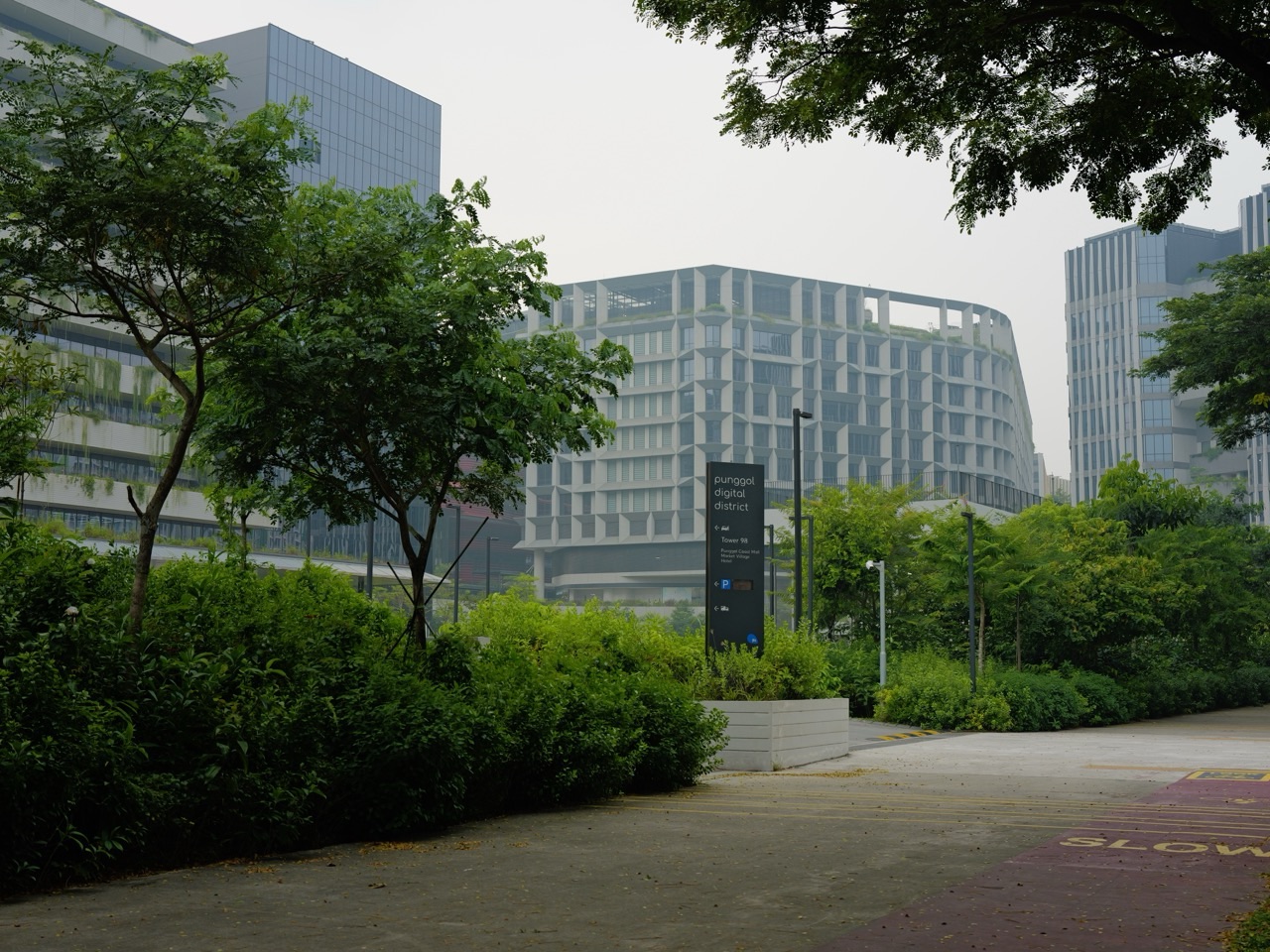
JTC describes Punggol Digital District as an environment combining the Singapore Institute of Technology with businesses and smart infrastructure. This makes the district a useful setting for discussing the role of sensors and engineering data in modern buildings. It does not prove that every local asset has a particular sensor count, that the data are open to the public, or that the January Smart Maintenance class includes private building tours.
The difference between a technology demonstration, a campus learning project and a fully deployed service matters. Students can learn from official public descriptions and authorised educational examples without accessing control panels or operating infrastructure. A modern-looking façade says little about the actual maintenance practices of its systems. Good local reporting should maintain that boundary instead of inferring details from a photograph.
January–April 2027: understanding the blended schedule
SIT’s dedicated programme page describes self-directed online learning and discussion across weeks one to twelve, synchronous integration sessions, and in-person assessments during selected weeks, including weeks three, five, eight, eleven, twelve and thirteen. Some times are still to be confirmed. This is not necessarily a programme that a worker can complete entirely after midnight with no scheduled obligations.
Because the dedicated page currently shows no upcoming course run, applicants should ask for the exact January timetable before arranging leave. A broad catalogue can communicate an intended intake without settling every course-run detail. A person working shifts or sharing childcare needs a confirmed schedule, not an assumption. Count study and assessment preparation as part of the workload, in addition to campus travel and live sessions.
Fees and different presentation of amounts
SIT’s dedicated Smart Maintenance page lists a full fee of S$10,006.20 inclusive of GST. Its category-based after-funding illustrations are S$3,001.86 for eligible Singapore Citizens under 40 and eligible PR/LTVP+ holders, and S$1,165.86 for eligible Singapore Citizens aged 40 and above under the relevant enhanced funding. A separate S$54.50 non-refundable matriculation charge is also stated.
The general SITLEARN course catalogue may display S$9,180 for the forthcoming intake, a different basis from the detailed tax-inclusive figure. Do not substitute that figure for an actual invoice without clarification. Funding depends on eligibility, approval and compliance with conditions. The sensible financial step is to obtain a current provider quotation, check which scheme applies and avoid assuming a maximum subsidy is automatic.
S$300 training allowance: not guaranteed income
The official programme information describes a potential part-time SkillsFuture Mid-Career Training Allowance of S$300 monthly for eligible Singapore Citizens aged 40 and above with qualifying recent employment, subject to approval and attendance conditions. That allowance is separate from the tuition subsidy and from personal SkillsFuture Credit. Readers must not simply subtract all advertised amounts from the course fee and assume the balance will be paid to them.
An adult planning study can prepare separate budget lines for the full fee, approved funded fee, available personal credit, matriculation charge, transport and any allowance once approved. Some items may not apply to the individual. The actual provider invoice and government determination should be the source of the final numbers, not this neighbourhood explanation.
The Specialist Certificate and degree progression
Smart Maintenance contains three six-credit modules and can lead to an 18-credit Specialist Certificate when the learner attends at least 75% and passes all credit-bearing assessments. SIT describes quizzes and projects as part of assessment. The credential documents completion of specified learning outcomes; it does not itself license the graduate to work on every machine or guarantee a promotion.
SIT also identifies possible stacking towards selected Electrical and Electronic Engineering, Infrastructure and Systems Engineering, and Technology and Management routes, subject to the pathways’ formal rules. A micro-credential is not the same as a degree, and fee subsidies for a standalone credential do not necessarily continue after conversion into a degree programme. Confirm current credit validity, admissions cycles and costs before committing to a long-term plan.
A family learning exercise using invented data
Make a short fictional table containing ten measurements, time stamps and clearly labelled units. Ask a Secondary pupil to find a mean, build a line graph and explain whether any value looks unusual. Insert a missing value and ask whether it means zero. The correct answer is that missing does not automatically mean zero. Then ask which additional evidence would be needed before concluding that the fictional equipment is failing.
This exercise supports Mathematics, Science and careful explanatory writing without handling live machinery. If a pupil confuses an average with a diagnosis, repair that reasoning gap before moving to more complicated datasets. The eduKate Secondary 1 Mathematics small-group teaching exemplar provides a useful foundation: identify the exact misunderstanding, explain it, and check whether the learner can apply the concept to an unfamiliar example.
How adults should choose a technical training path
Start with a specific job-related problem: perhaps inconsistent machine-health data, unclear downtime analysis or poor communication between technicians and analysts. Identify the missing competence, then match it against the modules. If the learner has little programming knowledge, that prerequisite may need attention first. If they already have strong analytics but lack mechanical reliability foundations, Maintenance Engineering might be the key part to investigate.
The right qualification is not always the course with the most attractive name. Compare the intended audience, assessment, financial commitment, time on campus and the evidence of practical competence after completion. A mid-career learner should also consider how the new knowledge will be applied under existing workplace permissions. A provider can teach concepts, but professional experience and supervised responsibility remain important.
An ethical technical portfolio
A learner can prepare a case study using synthetic data rather than sharing confidential industrial records. Explain the fictional asset’s required function, what was measured, how data were cleaned, and why a particular observation would call for investigation. State the limits of the model and describe what would need further testing by authorised personnel. This demonstrates technical reasoning while respecting privacy and business security.
Never publish access credentials, production-control settings, sensitive building diagrams or private maintenance logs to illustrate a school or university assignment without permission. If an employer cannot authorise real data use, seek guidance about synthetic or anonymised examples. Professional quality means producing credible evidence without endangering the systems or people an engineer is supposed to protect.
Frequently asked parent and applicant questions
Is there definitely a January 2027 Smart Maintenance class? The broad SIT catalogue advertises January–April, and the registration catalogue lists a January start, but the dedicated page currently has no upcoming run. Confirmation of an open place and deadline must come from SIT. Is this for secondary pupils? No, it is technical continuing education for appropriately prepared adult learners. Schoolchildren can study the underlying numeracy safely.
Does the course guarantee employment in Punggol? No. It may develop skills relevant to engineering roles, subject to admissions and real hiring decisions. Will every applicant over 40 pay S$1,165.86? No, that is a conditional funded-category illustration. Does earning the Specialist Certificate grant a full degree? No, a later degree requires separate progression and academic requirements.
Measurement frequency and sampling
A sensor that records a value once an hour may miss an important event that lasts a few seconds. On the other hand, recording everything at extremely high frequency can create large amounts of data that require storage and interpretation. Sampling decisions should follow the physical behaviour and operating requirements of the equipment. A learner ought to ask what events the system must detect and what duration matters. The resulting design needs professional validation, not only a convenient spreadsheet interval.
A baseline must be relevant
Before claiming that a machine has changed, an analyst should understand its normal behaviour under comparable operating conditions. A motor at a different speed or load may produce different readings without being damaged. A maintenance model trained only on one narrow condition could be unreliable when usage changes. Comparing readings fairly is closely related to controlling variables in Science. It is a simple idea with substantial practical consequences.
The danger of an attractive dashboard
A dashboard may have polished charts and bright status indicators while concealing unreliable input data. User interface design can also influence how operators prioritise alerts. A sensible review checks the origin of measurements, the meaning of each indicator, how recently information was updated and what action is expected. Visual sophistication is not proof that a monitoring system improves maintenance outcomes. That conclusion requires evidence from an appropriate evaluation.
Human expertise stays in the loop
Maintenance work can affect worker safety, building users and continuity of essential services. Models can support judgement, but important decisions need appropriate authorisation, context and professional accountability. A warning generated by software should not instruct a pupil or unqualified operator to interfere with equipment. A technician can use data, manuals, approved testing and supervisory escalation together. Good technical education explains how tools support people, rather than presenting technology as a substitute for responsibility.
Lifecycle decisions shape maintenance costs
A machine’s whole-life cost can include purchasing, installation, energy, maintenance, downtime, spare parts and end-of-life management. An intervention that seems cheaper today may create later expense if equipment becomes difficult to access or service. Conversely, replacing components unnecessarily can waste resources. A responsible analysis must compare alternatives over a defined period and state the assumptions. The same habit helps students evaluate costs in ordinary household planning without pretending a toy calculation is an industrial financial model.
How to recognise meaningful progress in learning
An adult may be able to recite the phrase ‘predictive maintenance’ without explaining when a prediction is trustworthy. A stronger test asks them to analyse a new fictional dataset, identify missing context, calculate a relevant measure and propose what evidence should be checked next. The explanation should be comprehensible to a colleague who does not know the course jargon. Durable learning changes how a person reasons, not simply which terms appear on a certificate.
Why professional training should be applied gradually
A new method may perform well on a practice dataset yet behave differently in an operating facility. Before changing a workflow, an organisation should evaluate whether the model generalises, whether relevant safety rules are met, and how staff will be trained and supported. Small authorised pilots with clear success and failure criteria can provide evidence while managing risk. A course graduate should not assume that an attractive project result confers authority to implement it across an entire organisation.
A parent’s discussion about future careers
A professional course in Punggol can prompt a teenager to ask what engineers actually do. The answer goes beyond building new devices. Engineers also maintain services, test evidence, manage uncertainty and explain decisions. Those abilities begin with Mathematics, Science and communication, but many other professions use them too. The family should regard the course as one illustration of lifelong learning, not as a command that the child must enter a particular industry. Curiosity and genuine readiness should guide future study.
Sources, future status and more Punggol reading
- SIT — Smart Maintenance micro-credential, curriculum, fee details and current course-run status
- SIT — Engineering Specialist Certificates, including January–April 2027 listings
- SITLEARN — official course-run and registration catalogue
- SIT — Infrastructure and Systems Engineering CSM pathway
- eduKatePunggol — smart-building sensor testbed and education context
- eduKatePunggol — January 2027 Operations Excellence micro-credential
Editorial note, 23 October 2026. The difference between SIT’s January catalogue listing and its dedicated page’s ‘no upcoming runs’ statement is intentional, not omitted. All example measurements are fictitious and unsuitable for maintaining real safety-critical equipment.


