
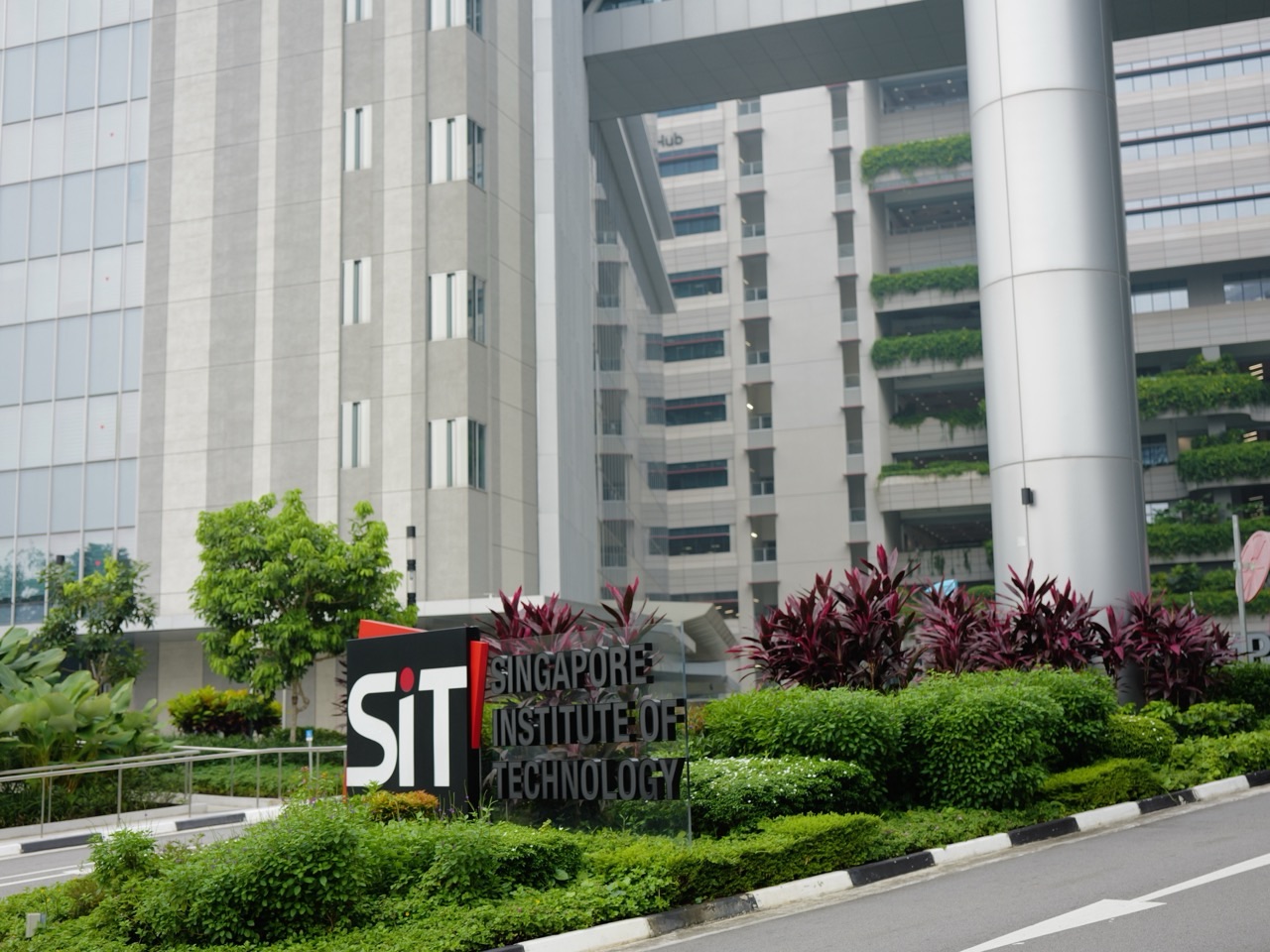
Quick answer — checked on 23 October 2026. The Singapore Institute of Technology (SIT) lists a five-day advanced Grid-Connected Solar Photovoltaic Systems course at its Punggol Campus, 1 Punggol Coast Road. The detailed course page shows a run spanning 19–25 November 2026 and an application deadline of 29 October 2026, 11.59 pm. The published full fee is S$5,450 including GST, with funding illustrations for eligible learners. This is specialist continuing education for electrical and renewable-energy professionals, not a general public tour or a Primary or secondary-school class.
The official SITLEARN course page is the primary reference for dates, prerequisites, funding and the syllabus. SIT describes learning that begins with photovoltaic technology and grid requirements, advances to site assessment, design, safe installation and performance assessment, and includes a course-organised site visit followed by maintenance and lifecycle analysis. Successful participants need to satisfy attendance and non-credit-bearing assessment conditions to obtain a Certificate of Attainment. These details are published plans, not proof of individual admission, an electrician’s licence or an employment offer.
What makes this news meaningful for Punggol is the visible link between a new university campus, applied engineering and future skills. Children may learn basic circuits, percentages and graphs in school, while working adults study the systems that turn physical sunlight into measurable electricity for real buildings. The connection is educational, not a promise that every nearby school has a solar project or that every course participant can inspect restricted infrastructure. This article separates what SIT has announced from original learning examples and practical questions worth asking before making any commitment.
The dated course facts in one place
- Course and location: Grid-Connected Solar Photovoltaic Systems, SIT Punggol Campus, 1 Punggol Coast Road, Singapore 828608.
- Published run: 19–25 November 2026, a five-day in-person course. Confirm the exact attendance dates in the joining instructions.
- Application deadline: 29 October 2026 at 23:59, according to the specific detailed run.
- Audience: electrical and renewable-energy engineers, project professionals and consultants; SIT asks for a relevant engineering diploma or degree and two years of relevant experience.
- Full fee: S$5,450 inclusive of GST; eligible funded categories on the course page show S$1,635 or S$635 after relevant funding.
- Assessment: in-class quizzes, sizing/design exercises and case studies; Certificate of Attainment requires at least 75% attendance and a pass.
- Source and application: official SITLEARN programme details and Apply Now route.
A separate SIT energy-course calendar also lists a later November solar entry, 23–27 November, while the detailed page accessed for this guide lists 19–25 November. These may be different registrations or a changing schedule; they should not be conflated into one invented timetable. A professional intending to attend should check the exact run identifier on the portal and acceptance email. In education reporting, publishing the source of a date and openly identifying a discrepancy is more useful than silently treating a preliminary calendar as a guarantee.
Why Punggol Digital District is relevant
JTC presents Punggol Digital District as an integrated university and business setting with smart infrastructure and room for applied learning. Solar technology fits the broader themes of energy efficiency, local generation and how new districts manage electrical demand. A professional course held in this environment offers a concrete example of lifelong education: someone who studied electrical engineering years ago can return to examine current equipment, regulations, monitoring methods and economic questions. The setting is real, but the specific training arrangements still belong to SIT.
Families should not assume that the campus’s location makes every nearby photovoltaic installation available for school projects. A solar array on a building may sit beside live electrical equipment, roof edges and controlled access areas. Even a technically curious teenager has no right to visit without authorised supervision. The meaningful local story is that specialist knowledge can be taught near homes and workplaces. The educational lesson can be brought into classrooms through safe models, documented examples and carefully explained calculations.
What does the word grid-connected mean?
A photovoltaic module creates direct-current electrical output from sunlight under appropriate conditions. In a grid-connected system, inverters and electrical protection are used to deliver compatible power and interact safely with the electricity network. Metering, authorised installation, isolation and commissioning matter as much as the panel itself. An array cannot simply be attached to arbitrary household wiring because a person has learned how a circuit works. Grid interconnection is a regulated engineering activity with serious safety consequences.
One misconception is that solar panels automatically keep all lights on during a blackout. Many conventional grid-tied inverters stop exporting or isolate when the grid supply fails, unless specifically engineered with suitable backup and anti-islanding arrangements. A battery is also not an automatic part of a rooftop photovoltaic system. Whether a building has storage, emergency power and a special control architecture must be established for that exact installation, not guessed from a photograph showing modules.
Day one: technology, electricity and electrical requirements
SIT’s first syllabus day covers photovoltaic principles and applications, electrical characteristics, grid requirements, interconnection conditions, permits and regulations. A sensible beginner first learns what a panel rating describes and why outdoor production differs from laboratory reference conditions. Sunlight is not constant; shade, temperature, system losses and electrical loading affect output. Understanding those limits is essential before drawing a system diagram and promising how much energy a project will deliver.
This creates an important bridge to Secondary Physics. Students learn that power represents a rate of energy transfer, while energy accumulates over time. Engineers need both quantities. A module with a nominal rating is not an energy bill, and the measured output in one hour is not a promise for the next. Parents can teach this with familiar appliances and low-risk arithmetic, without allowing children to touch live solar wiring, switchgear or roof installations.
Day two: analysing a site before buying anything
The course’s second day covers solar-resource evaluation, shading, load analysis, design sizing, component selection, economic feasibility and relevant safety regulations. The underlying decision is whether a particular installation is suitable for a particular place and purpose. Roof size alone is not enough. Maintenance access, existing rooftop equipment, structure, shaded areas, fire-safety provisions, cable routing and electrical connection details can constrain a design. Professional decisions must show those limitations instead of hiding them behind marketing diagrams.
A map or satellite photograph can help an engineer understand the setting, but it is only the beginning. A building may look unobstructed at noon yet receive persistent shadows earlier or later. A future neighbouring development may change conditions. Technical information has dates and limitations. The reliable question is what observations and records are required to justify the proposed energy estimate. A reader should distinguish planned output, modelled output and output measured after commissioning.
Electrical demand matters too. A building with substantial daytime consumption is a different case from one whose electricity use peaks mainly at night. Storage, export arrangements and tariffs may change the analysis, but none should be presumed without documentation. The purpose of a feasibility study is to evaluate the full situation rather than declare every sunny rooftop an automatic financial winner. A technically sound design can still be inappropriate if safety, access or lifecycle costs are not addressed.
Worked Mathematics: watts, kilowatts and kilowatt-hours
One kilowatt equals 1,000 watts. A kilowatt-hour is energy associated with one kilowatt sustained over one hour. Suppose a fictional teaching system delivers a steady 2 kW over three hours. Its energy is 2 × 3 = 6 kWh. This is a simplified classroom example, not a measurement at SIT or any Punggol building. Real solar output varies through the day, so a reliable estimate usually needs more detailed time data.
If the imaginary output is 1.5 kW for two hours followed by 2 kW for another three hours, the total is (1.5 × 2) + (2 × 3) = 9 kWh. Adding 1.5 and 2 to obtain 3.5 kW would not answer the energy question because the durations have been ignored. This is an excellent example of why naming the unit is part of reasoning and not a final cosmetic step.
Consider four fictional modules each labelled 400 W. Their combined reference rating is 1,600 W, or 1.6 kW, under the relevant specified conditions. A student cannot assume this produces 1.6 × 24 = 38.4 kWh every day, because photovoltaic generation depends on illumination, weather and operating losses. The error is not a failure of multiplication. It is the misuse of a rating as if it represented uninterrupted measured output.
Worked Mathematics: simple yield comparisons
Imagine two different hypothetical photovoltaic systems, each rated at 4 kW. Over one particular day, one produces 12 kWh and the other 16 kWh. Dividing energy by nameplate rating yields three and four equivalent full-output hours respectively. These are useful comparative ratios, but they do not establish that the second installation has better equipment. The systems may face different weather, shading or measurement conditions, and no inference about installers’ competence is justified from those numbers alone.
For fair testing, gather observations over comparable periods and document relevant context. Check whether the meters measure the same boundaries and whether maintenance work changed either installation. An analyst who presents a clear graph without these details may appear persuasive while comparing unlike things. Secondary Science teaches the same discipline: control what can be controlled, state what varies and distinguish observation from explanation. The professional application is more complex, but the habits are continuous.
How shading changes an engineering decision
A nearby object can cast shade across some modules at particular times. The effects are influenced by electrical arrangements and the behaviour of module cells and associated electronics; they are not necessarily proportional to the visible fraction of the roof in shadow. An engineer needs an appropriate assessment across the expected operating period. A single noon photograph can miss morning or afternoon constraints, and an ordinary visitor cannot safely investigate the issue by climbing onto the roof.
An age-appropriate family activity uses drawings or shadows on ordinary public ground. A child can sketch where a fixed structure casts shade early and later in the day. They then list information still required before predicting energy generation: panel orientation, module arrangement, sunlight conditions and system specifications. The right educational outcome is identifying a plausible factor and acknowledging missing measurements. It is not producing an apparently exact percentage loss from an informal shadow sketch.
Day three: installation and commissioning
SIT’s published sequence covers mountings, wiring, protection, work-at-height safety, grid connection, commissioning, data acquisition, harmonics and power quality. This brings the theoretical design into contact with people and infrastructure. An array may look straightforward from the street, yet safe access, electrical isolation and verified protection are not optional. Installation or troubleshooting must remain with appropriately qualified, authorised professionals following the applicable legal and workplace requirements.
Commissioning is an organised process of checking whether an installed system meets its approved requirements before or as it enters normal operation. It can include inspections, measured performance and documented testing. A student should not interpret a commissioning checklist found online as permission to carry out high-voltage or grid-connection work. The professional lesson is that safety and verification precede claims of success. The school-level parallel is to check a solution against its original assumptions before deciding the work is complete.
Day four: the site visit and assessment
The course includes a visit to a functioning grid-connected photovoltaic installation, together with assessment activity. Real equipment can reveal constraints that remain invisible in slides, such as safe routes, component arrangement and maintenance access. A participant may observe how professional design choices fit within an actual site. The official public description, however, does not identify the installation or permit walk-in access. Readers should follow the precise joining instructions rather than assume the visit takes place at a nearby rooftop.
Assessment examples include quizzes, group sizing/design work and analysis of case studies. These methods can check whether a learner understands the relationship between physical conditions, electrical requirements and proposed outputs. If an educational exercise asks for a sizing calculation, a correct number is necessary but may be insufficient. The learner should be able to defend its assumptions, explain the selected inputs and recognise where a licensed specialist or further site data is needed.
Day five: troubleshooting and lifetime cost
The final syllabus day deals with monitoring, maintenance, faults and lifecycle economics. Equipment ages; weather changes; communications or sensors may fail; cleaning and access may be needed. A decline in recorded output might be caused by several factors. A responsible engineer compares measurements, checks instrumentation and follows site-approved procedures before deciding that a panel, inverter or connection needs replacement. Good monitoring is an investigation process, not a dashboard with a single magic number.
Lifecycle assessment considers the initial engineering and construction cost as well as maintenance, replacements, energy value, financing, access and eventual end-of-life arrangements. A tempting purchase price may conceal future expense. Conversely, a better-designed installation may cost more upfront but be easier to service safely. The comparison must identify its time horizon and the value of assumptions. A seller’s estimate of savings is not a guarantee of cash outcomes under changing conditions.
A lifecycle-cost teaching example
Suppose educational Kit A costs S$120 initially and needs a S$20 replacement after two years. Kit B costs S$135 and needs no comparable replacement during that particular period. Under those invented assumptions, A totals S$140 while B totals S$135. This is a basic illustration of cost over time, not a rooftop solar investment comparison. An actual project requires far more inputs, including performance, risk, installation requirements and financing.
For a separate fictional value calculation, assume a system supplies 100 kWh of electricity during a month and each relevant kWh is valued at S$0.25. The resulting simple value is S$25. If the same assumptions held for twelve identical months, the annualised number would be S$300. Real electricity pricing, self-consumption, export, weather and system performance can make this inappropriate for forecasting. Parents should ask which assumptions were necessary before accepting the answer as a prediction.
Solar generation is not the same as storage
A photovoltaic array and an energy storage system serve different functions. Generation converts light into electricity. Storage can shift some supply or support other services where suitable, but it adds equipment, losses, control logic and safety considerations. A grid-connected installation may have no battery at all. Even with a battery, it is unsafe to assume a particular building can operate independently through a grid outage unless its design and authorisations provide for that mode.
Punggol Digital District offers wider opportunities to study smart energy coordination, including solar and energy-management technologies. But a district-wide statement is not a specification for every building. This difference is critical to local reporting. A parent’s observation that solar panels are visible near a school says nothing conclusive about the school’s electricity bill, battery storage or emergency power arrangements. For such claims, the correct evidence is an official project description or relevant measured data.
Why energy efficiency still matters when solar is installed
A building can generate renewable electricity while wasting energy through inefficient equipment or operation. Solar generation and conservation therefore should not be treated as mutually exclusive. A manager may first improve cooling controls and then assess the remaining electrical load. A professional needs to compare the options fairly, considering comfort, reliability and operational constraints. The best decision is not automatically the one with the most visible technology or the largest panel count.
For children, ask them to compare two imagined classrooms, one leaving every light and device on after school and another switching unnecessary equipment off responsibly. Both might be in a solar-equipped building, yet their demand patterns differ. This scenario is not permission for pupils to interfere with building electrical systems. Its educational point is to distinguish the amount of electricity produced from the amount of electricity used and to consider how they interact.
Why the named entry requirements matter
SIT describes learners with electrical or renewable-energy backgrounds and states a relevant engineering degree or diploma plus two years of related work experience. The course therefore is not simply an introductory science workshop. Someone may be passionate about sustainability yet require foundational learning before attempting advanced sizing, wiring or grid-integration concepts. The honest path is to identify the missing prerequisite and ask the provider whether the applicant’s qualifications and professional experience satisfy the stated criteria.
A professional can prepare a concise list of previous work, qualifications and desired competencies. One applicant may need better site-assessment methods; another may know system design but require current practice in monitoring or lifecycle costing. Targeted questions make an enquiry more productive. SITLEARN controls admissions and the formal programme; independent local advice should never imply that studying a nearby article substitutes for meeting SIT’s prerequisites.
Fees and funding must be checked for the individual
The provider lists a full fee of S$5,450, with after-funding examples of S$1,635 for eligible Singapore Citizens below 40 and Singapore PR/LTVP+ holders, and S$635 for eligible Singapore Citizens under the enhanced subsidy for those aged 40 or above. These figures depend on the scheme and personal eligibility. Do not assume every Singapore Citizen automatically receives the largest subsidy or that a public fee table serves as a binding future quotation.
SkillsFuture Credit may further offset an eligible person’s out-of-pocket course expense under applicable rules, but credit balance, grant funding and an employer’s support are distinct matters. A household planning the course should use an actual provider quote, confirm when payment is due and include leave or travel costs that apply. It would be misleading to describe the course as free, or to imply that the subsidy ensures professional employment afterwards.
What the Certificate of Attainment proves
SITLEARN states a minimum attendance of 75% and a passing non-credit-bearing assessment for its Certificate of Attainment. The programme’s assessment methods include quizzes and practical design-related case exercises. This credential is evidence of defined training and assessed learning under the provider’s framework. It is not a professional engineering licence, a substitute for supervised practice or automatic admission to a degree. Anyone planning to work on live installations must follow the applicable competency, authorisation and safety requirements.
A strong learning record includes what was understood and where the student corrected a mistaken assumption. A participant may be able to explain that a nominal panel rating and an actual energy yield describe different things; they may have learned to justify a shading assessment or recognise the limitations of a cost forecast. The useful outcome is demonstrated reasoning, not merely collecting another certificate. That is the same principle underlying careful school teaching: identify the misconception, correct it and test transfer in a new problem.
How parents can use this as a Science lesson
Primary learners can explore shadows, measurement and the difference between observing something and proving a claim. Lower-secondary learners can calculate unit rates, energy from power and time, and read graphs carefully. Upper-secondary students may connect semiconductors, electrical circuits, physical models and uncertainty. University students can examine the full design and safety systems. A single town development can therefore prompt different questions appropriate to the learner’s stage without implying all children must learn professional engineering.
A safe four-day data exercise uses an invented set of solar output numbers: 5, 7, 4 and 8 kWh. Total output is 24 kWh and the mean is 6 kWh per day. A child can then list what cannot be inferred: the module rating, weather, price, shaded area or measurement accuracy. That final explanation is not an afterthought. It distinguishes sound data literacy from the habit of treating any computed average as a complete description of the world.
The eduKate Secondary 1 Mathematics teaching exemplar demonstrates the transferable method of finding the exact reasoning error. If a child multiplies module rating by twenty-four and treats the result as daily production, more multiplication exercises will not resolve the underlying misconception. The teacher needs to explain the conditions under which power is produced and what the rating describes. Repair understanding before increasing speed or difficulty.
Independent practice and answers
- Question A: a fictional device supplies 1.5 kW for four hours. What energy does it deliver?
- Question B: convert 2,500 watts into kilowatts.
- Question C: find the mean of daily outputs 4, 6, 6 and 8 kWh.
- Question D: a 4 kW system produces 12 kWh one day. What is its equivalent full-output-hour ratio?
- Question E: explain why comparing 12 kWh from a sunny day with 8 kWh from a cloudy day does not necessarily rank the quality of the installations.
Answers: A = 1.5 × 4 = 6 kWh; B = 2.5 kW; C = 24 ÷ 4 = 6 kWh; D = 12 ÷ 4 = 3 equivalent full-output hours. E requires explanation rather than one number: weather, installed rating, shading, equipment and measurement differences must be considered. A parent should value a justified statement that more information is needed rather than demand a false winner.
A Punggol family decision checklist
- Is the learner a professional who meets the engineering prerequisites, or a child who needs only safe school-level concepts?
- Have the exact course run, teaching dates and 29 October application deadline been rechecked on SIT’s live page?
- Does the adult’s work involve solar design, performance, electrical engineering or project decisions?
- Has the learner asked SIT about seat availability, documentation, assessment and the organised site visit?
- Does the family know the actual fee payable after confirmed funding and any employer sponsorship?
- Are travel, work release, caregiving and rest realistically planned for five in-person days?
- Can the learner name a particular skill they expect to demonstrate after instruction?
- Are claims about rooftops, batteries and local equipment supported by a real source rather than neighbourhood speculation?
Frequently asked questions
Can I register because I live near SIT?
Living nearby does not change the course’s engineering entry conditions. The target group is relevant professionals with stated qualifications and experience. SIT must confirm the admission process and suitability for the individual.
Is the deadline really 29 October 2026?
The detailed 19–25 November listing says 29 October at 23:59. Another energy-course calendar has shown a different late-November entry, so verify that you are applying to the correct run rather than assuming all listings share one timetable.
Can Secondary pupils join the site visit?
Not on the basis of this announcement. The visit is described as part of a professional course. Its venue and participant access are not presented as a public open day; families should use expressly public educational activities instead.
Does a five-day certificate authorise rooftop solar installation?
No. The programme describes knowledge and assessment, not a licence or waiver of electrical and work-at-height safety responsibilities. Live system work requires the applicable authorisations and competent supervision.
Will a solar system always provide backup during a power failure?
No. Backup depends on particular engineering and control arrangements. Many ordinary grid-connected photovoltaic inverters isolate during outages. A picture of panels cannot establish emergency-power capability.
Will I receive S$635 course pricing simply because I am over forty?
The amount is conditional on the relevant SkillsFuture funding criteria. Obtain an actual fee estimate and verify approval, rather than interpreting a published example as a universal entitlement.
Can this course guarantee a renewable-energy job?
No. It provides education in defined specialist topics. Employers make separate decisions about qualifications, experience and recruitment. A certificate can support professional development without guaranteeing employment.
Reading a performance dashboard critically. A dashboard might display daily energy, instantaneous power and an equipment-status colour. These values answer different questions. The power indicator describes a present operating value; the energy figure aggregates across time; a status signal can depend on the monitoring system’s own rules and sensors. A green icon does not establish that all physical components are safe or that output has met a forecast. A professional should know how measurements are defined, how often they are updated and which independent checks are needed. For a schoolchild, recognising that a picture is not the whole evidence is an excellent form of digital literacy.
Why annual output forecasts need assumptions. A simple model multiplies installed capacity by an estimated equivalent generation period, but a more realistic study must evaluate local resource variation, loss factors, downtime, orientation and changing conditions. One year’s output cannot be guaranteed by an attractive graph based on one month. Engineers should state the source of climate or irradiance data and consider uncertainty. Readers should be sceptical of predictions that include exact decimal places without explaining inputs. Precision in presentation is not the same as accuracy, and an honest interval can sometimes be more helpful than one unsupported point estimate.
Managing a professional site visit responsibly. A learner should obtain authorised reporting instructions, understand the required personal protective equipment and follow photography and confidentiality rules. Live electrical and rooftop facilities may contain hazards invisible in publicity photos. The fact that participants are attending a university course does not remove these risks. Children should learn by analogy and public resources instead. If an employee attends on behalf of a company, they should also clarify whether photos, diagrams or facility information may be shared in later reports. Ethical professional education protects the people and systems involved.
What if the applicant misses the deadline? A published deadline is a process condition, not a reason to invent an exception. Contact the provider through its official enquiry channel to ask whether a later run or wait-list is available; do not assume one exists. A reader who misses November can still study the fundamentals, clarify prerequisites and plan future professional development. This distinction helps families avoid panic decisions driven by scarcity. Training should fill an authentic knowledge gap, and a missed opportunity should lead to better preparation rather than an impulsive purchase of a loosely related course.
How to evaluate an engineering claim in five questions. What is being measured? Against which baseline? Over what time period? Under which operating conditions? Who has verified the result? These questions apply to energy output, costs, failures and carbon estimates. They also apply to educational promises. An attractive certificate title is not a measured workplace outcome. A sensible learner wants to know what they can do after training and how competence is assessed. This approach reduces confusion between promotion and evidence while remaining open to the genuine value of innovative technology.
Where to continue after the course. A learner can build a personal error log: one incorrect assumption about energy, one corrected sizing calculation, one question about site limitations and one aspect requiring further professional supervision. Return to the log after a month and solve a different hypothetical problem without copying previous steps. Genuine growth appears when the explanation remains sound under a new set of numbers. This method does not substitute for the formal assessment or practical competence; it makes post-course reflection specific. A Punggol family can adopt the same learning cycle for school Mathematics, Science or career skills.
An engineering comparison should separate peak production from useful production. A panel installation could generate strongly at noon while a particular building has a different demand profile. The financial and operational consequences depend on self-consumption, export arrangements, controls and tariffs that must be verified for the actual site. A student might be tempted to declare the largest midday output the best design. But a useful evaluation requires asking whether that output occurs when it has value, whether system constraints are satisfied and whether lifetime costs are acceptable. This is a form of optimisation under real constraints rather than an exercise in choosing the biggest available number. Schools introduce the first pieces of this reasoning when they teach graphs and proportional comparison.
Weather and climate claims need the same evidential care. A cloudy afternoon may reduce measured electricity, yet one observation cannot reveal the expected annual yield of a project. Long-run resource information and a validated system model are necessary for planning. Similarly, a bright day might produce less output than a child anticipates because module temperature and other losses matter. When learners encounter a surprising result, ask them to list plausible explanations and distinguish those that can be checked from those that remain guesses. Avoid changing several assumptions at once to make the answer fit a preferred conclusion. This habit underpins honest experimental science and robust professional engineering.
An often-overlooked part of energy education is maintenance access. A system with tightly packed modules can look attractive on a drawing yet require safe routes for inspection and repair. Fire, structural, electrical and work-at-height requirements may limit the final layout. The practical lesson is that available geometric area and usable engineered area are not identical. In Mathematics, a roof may be represented as a rectangle for area calculation; in professional life, obstacles, setbacks, roof loading and site operations alter that abstraction. The simplified rectangle still helps students reason, provided they are told it is an intentionally incomplete model and not a construction-ready plan.
A post-course learning review can be structured around four deliverables. First, explain in plain language what a grid-connected photovoltaic system does and what it cannot guarantee during an outage. Second, complete an invented power-to-energy calculation with units. Third, review a fictional shaded-roof proposal and identify missing design information. Fourth, describe why full lifecycle cost matters even when an initial price looks reasonable. A learner able to complete these tasks independently has stronger evidence of transferable understanding than someone who merely remembers a few attractive technical terms. These exercises are not a replacement for SIT’s assessment or qualifications, and nobody should use them to operate electrical equipment.
Families can use the news to discuss the difference between pursuing a profession and exploring a topic. A teenager interested in solar engineering may begin by strengthening algebra, physics, graph reading and explanatory writing. They do not need to register for an advanced adult engineering course. A working professional, meanwhile, may need formal instruction in connection requirements and design methods because their employment responsibilities are changing. Each person should start at the correct level. A good education ecosystem allows curiosity to grow toward competence without promising that a child’s first experiment, a single short course or living near a technology district guarantees a career outcome.
The application deadline provides a practical lesson in information retrieval. The original course page identifies a specific run, fee and date, while other programme calendars may display different November sessions. A reader should not resolve this by guessing that one website is wrong or by combining both sets of dates. Instead, locate the actual enrolment record, check its identifier, save the confirmation and contact SIT when details conflict. Education journalism earns trust by identifying uncertainty and explaining the next verifiable action. That same discipline helps pupils distinguish primary evidence from a message forwarded several times through a parents’ group.
Official sources and internal reading
- SITLEARN: Grid-Connected Solar Photovoltaic Systems, course schedule, fees and application
- SIT Energy Efficiency Technology Centre, course calendar
- JTC: Punggol Digital District and smart-infrastructure setting
- eduKatePunggol: Solar Physics, batteries and the SIT microgrid
- eduKatePunggol: Short courses for Punggol working adults
- eduKatePunggol: November 2026 Membrane Bioreactor course and water engineering
Source and editorial status: 23 October 2026. The course’s published factual claims come from SIT’s official programme page. Mathematical examples use invented data and are not readings from Punggol solar installations. The article does not provide electrical installation advice, admission confirmation or a subsidy ruling. Always consult the provider’s current details and appropriate professionals before acting.


