
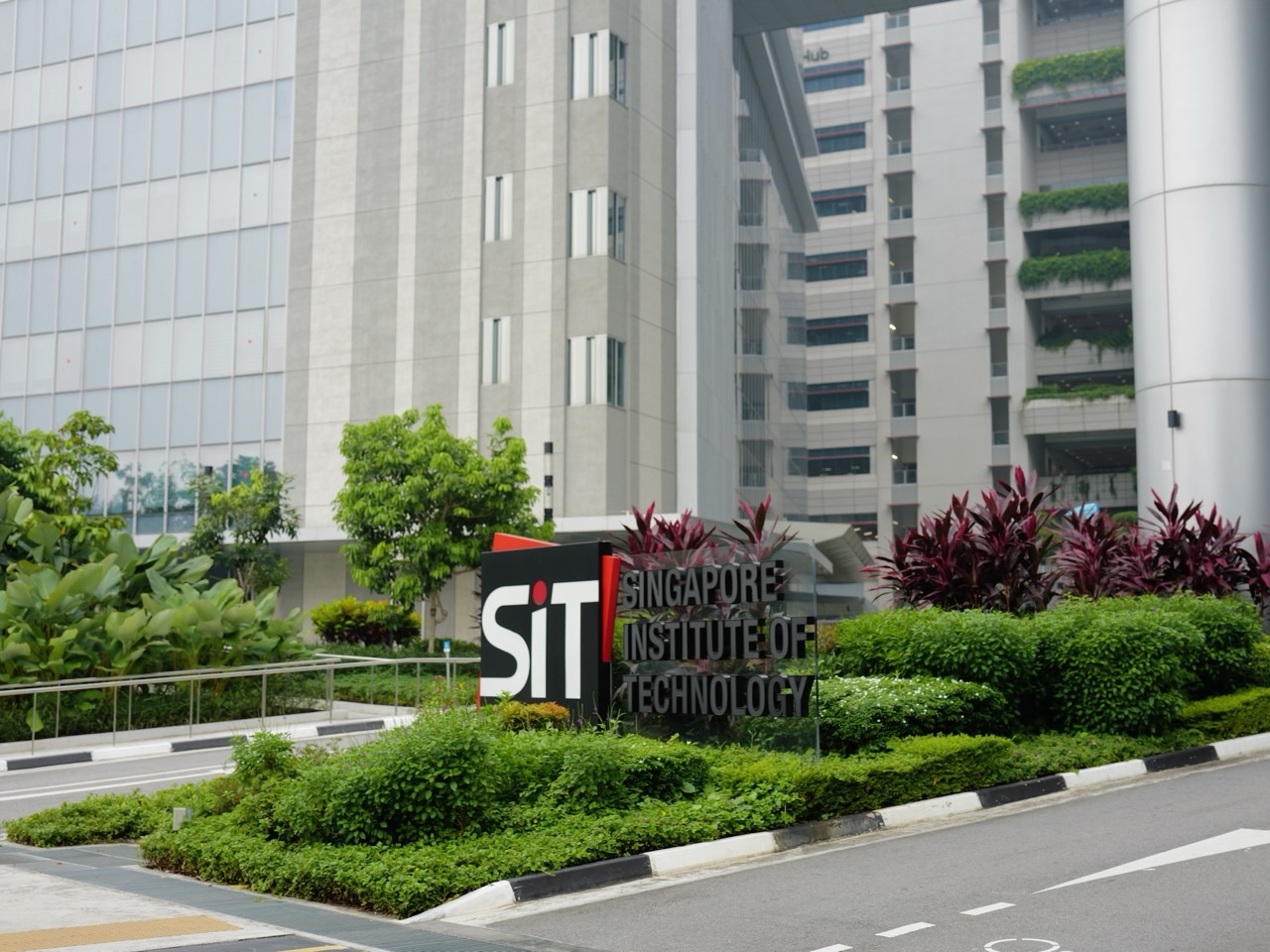
Quick answer, checked 23 October 2026: SITLEARN at the Singapore Institute of Technology has scheduled a two-day Membrane Technology: Membrane Bioreactor (MBR) for Wastewater Treatment course at SIT Punggol Campus, 1 Punggol Coast Road on 19–20 November 2026. The official course listing gives an application deadline of 29 October 2026 at 11.59 pm, a published full fee of S$1,744 including GST, and funding illustrations for eligible learners. This is a specialist professional course about water-treatment engineering; it is not a Primary-school outing, an open tour of a water reclamation plant or a claim that Punggol Waterway itself is a wastewater treatment facility.
The SITLEARN official course page identifies engineers, water-treatment specialists, supervisors and managers as its intended audience. It covers microfiltration, ultrafiltration, membrane bioreactors, pretreatment, design calculations, fouling, operation, maintenance and case studies. Learners must meet stated attendance and assessment requirements to earn the Certificate of Attainment. Anyone relying on the date or fee should recheck the provider’s page before applying, because SIT reserves the right to modify course information.
Why should Punggol families care about a water-engineering course? Because it shows a practical form of the town’s education future: a university district where working adults can update specialised skills while younger students can connect Chemistry, Biology, Physics and Mathematics to public infrastructure. Singapore’s national water agency PUB also describes membrane bioreactors as part of actual water-reclamation technology. This article is an educational explainer as well as a dated course guide, with clear boundaries between confirmed programme details, national engineering background and fictional worked exercises.
The essential facts and deadline
- Course: Membrane Technology: Membrane Bioreactor (MBR) for Wastewater Treatment, delivered by SITLEARN.
- Dates: Thursday 19 and Friday 20 November 2026; in-person, two days.
- Venue: SIT Punggol Campus, 1 Punggol Coast Road, Singapore 828608.
- Apply by: 29 October 2026 at 23:59, as listed on the course page. Submission or application does not itself guarantee a seat.
- Published full fee: S$1,744 with GST, with certain SkillsFuture subsidies and UTAP support subject to eligibility.
- Intended audience: Engineers, water-treatment specialists, water-treatment supervisors and water-treatment managers.
- Outcome: Certificate of Attainment for learners satisfying the attendance and assessment conditions; different participation documentation is described for those who attend but do not pass.
- Official next step: Read the live SIT programme description, confirm available registration and request a fee quotation appropriate to your citizenship and funding status.
What is a membrane bioreactor?
A membrane bioreactor combines biological treatment and membrane filtration to help separate treated water from solids and microorganisms in a controlled treatment process. In biological treatment, appropriate microbial communities help break down organic pollutants under engineered conditions. The membranes then help separate material from the treated stream. The system is not simply a kitchen filter attached to a tank, because water chemistry, aeration, hydraulic flows, fouling, sludge handling and process control all influence performance.
PUB describes MBR in Singapore as a three-in-one solution combining a conventional biological reactor, the role of secondary sedimentation and microfiltration or ultrafiltration within a more integrated stage. Singapore’s national water-treatment system uses such engineering to improve treatment and support further purification. Read PUB’s official used-water treatment explanation for the professional context. This establishes that MBR is not merely an experimental classroom trend, while leaving the actual operating arrangements of particular facilities to their official documents.
Students often picture filtration as a sieve holding back large particles. That analogy works only at a limited scale. In water engineering, membranes have controlled separation characteristics and must work with pumps, pressure conditions, biological activity and pretreatment. A membrane can foul. A treatment process may also need further stages before water is suitable for a particular use. Engineers must therefore consider the full treatment train rather than treating the membrane as a magical final step.
Where does this fit in Singapore’s water story?
Used water generated by homes, businesses and industries is collected and treated through Singapore’s organised sewerage and water-reclamation system. PUB explains the stages and distinguishes used-water treatment from later production of high-grade NEWater. In conventional biological treatment, microorganisms help reduce organic pollutants and settling can separate sludge. MBR configurations integrate biological treatment and membrane separation in ways that affect equipment, footprint and downstream water quality.
The distinction between MBR and NEWater is especially important. NEWater production involves advanced water purification, and PUB describes combinations of microfiltration or ultrafiltration, reverse osmosis and ultraviolet disinfection. An MBR can be part of the upstream reclamation process and can help simplify portions of downstream treatment, but it does not follow that every drop leaving any membrane bioreactor is immediately drinking-quality water. Engineering claims must identify the stage and the quality standard that applies.
PUB’s national explanations also describe ongoing work to increase water-treatment efficiency, optimise energy use and support future infrastructure. Such developments are useful background for a professional course in Punggol. They do not prove that SIT’s November class involves a visit to Changi or Tuas facilities. The course page lists the Punggol Campus as its in-person venue, and it is important not to convert a national technology example into an invented site visit.
Punggol Waterway is not a wastewater-reclamation plant
Punggol residents know the waterfront, the park, and the pedestrian and cycling routes around Punggol Waterway. Those neighbourhood features provide interesting opportunities to discuss water, ecology and urban design. But the canal or waterway should not be presented as a membrane bioreactor. A professional MBR belongs to an engineered treatment facility with controlled operating conditions. No source in this guide establishes that the recreational waterway uses the particular process being taught in the SIT course.
A family can still make a valid educational connection by asking how Singapore manages different categories of water: stormwater, reservoirs, treated used water and high-grade reclaimed water. These systems may interact at the scale of national planning, but they have different purposes, safeguards and operating rules. Calling them all simply ‘water treatment’ can erase the distinctions students need to understand. Accurate terminology is the beginning of sound science.
Likewise, visible water looking clear does not prove that it is safe to drink, and murky water is not by itself a measurement of all chemical or microbiological risks. A student should never collect or consume water from an unknown source on the assumption that a home filter has made it safe. The examples below are explanatory and should not be used to design or operate a real treatment plant without qualified professionals and applicable approvals.
What the two course days cover
Day one: fundamentals, biology and process design
SITLEARN’s published schedule places state-of-the-art membrane technologies, microfiltration and ultrafiltration fundamentals, the MBR treatment process, water chemistry, pretreatment, system components and initial design work on the first day. This is a sequence with a clear rationale. A learner first needs to know what is being separated, what affects the separation, and how biological and physical stages interact. Only then can a design calculation be interpreted meaningfully.
A membrane does not function in isolation from the feed water. Suspended solids, chemicals and operating conditions affect fouling, cleaning and service life. Biological processes must provide appropriate conditions for microbes to perform their intended treatment role. Pretreatment can protect equipment downstream. Each decision changes both cost and reliability. A course that brings these topics together can help experienced practitioners understand why apparently isolated failures often reflect system interactions.
Day two: modules, fouling, maintenance and cases
The second published day continues MBR design and adds membrane or module design, process calculations, fouling and fouling control, operation, maintenance, case studies and a quiz or question period. This is an appropriately applied emphasis. It is not enough to calculate that a membrane can deliver a theoretical flow; professionals must know what happens as the surface accumulates foulants, equipment ages or feed conditions vary.
Case studies should prompt learners to identify a problem, consider several explanations and recommend a response grounded in measurements. The official description does not provide the confidential details of each case in advance. A reader should therefore avoid asserting that the class will train on one particular facility’s data, software or live process. The examples in this article are original teaching exercises, not leaks or reproductions of course assessment materials.
Microfiltration, ultrafiltration and reverse osmosis are not synonyms
Microfiltration and ultrafiltration are membrane-separation approaches that can remove suspended material and particles at different scales under appropriate designs. Their performance depends on membrane properties and actual conditions. Reverse osmosis is a separate, more selective membrane process widely associated with removing dissolved constituents under suitable pressure and other operating conditions. These techniques can appear at different stages of a treatment train, but they should not be swapped casually in a sentence.
Suppose a child asks whether a coffee filter is ‘the same as’ a water-reclamation membrane. The most helpful answer is that both involve separating material, but the similarity ends quickly. A kitchen filter is not a validated device for removing the microbial and chemical hazards associated with untreated used water. Industrial membrane modules are engineered for defined separation requirements and monitored under controlled processes. Understanding that distinction protects children from unsafe experiments and professionals from oversimplified descriptions.
For older students, the general lesson is about scale and measurement. A material can appear smooth to the eye while containing features far smaller than visible particles. A membrane’s performance cannot be inferred from its colour or the fact that water passes through it. Appropriate engineering specifications and validated tests matter. This connects Physics, Chemistry and the scientific method with the need for quality assurance in public infrastructure.
Biological treatment: why microorganisms matter
The biological element of a membrane bioreactor uses microbial activity to transform or remove appropriate pollutants under controlled conditions. Microorganisms do not all behave identically, and their effectiveness depends on environmental conditions such as oxygen availability, feed composition and operating stability. A plant operator must understand the overall biology and process measurements rather than relying on the assumption that ‘more bacteria always means better treatment’.
Aeration illustrates the interaction between biology and engineering. Oxygen may be required for particular treatment reactions, but supplying it uses energy and depends on equipment design. Too little oxygen can compromise the intended process; indiscriminately increasing aeration may consume resources without solving a different underlying problem. A professional needs to interpret data and the actual process design before adjusting operating conditions.
A useful Secondary Science analogy is a carefully maintained aquarium, where living organisms depend on environmental conditions. The analogy explains why life and equipment interact, but wastewater treatment is more complex and carries different safety risks. Do not encourage pupils to grow unknown microbial cultures from dirty water. Classroom discussion can use diagrams, sealed demonstrations provided by an educator, or publicly available illustrations rather than uncontrolled biological samples.
A worked calculation: membrane flux
Engineers may use the term flux to describe a volume passing through a unit membrane area per unit time. Consider a fictional membrane system delivering 1,200 litres per hour through 40 square metres of membrane. The illustrative flux is 1,200 ÷ 40 = 30 litres per square metre per hour, often abbreviated L/m²/h or LMH. The unit shows why both flow and area must be specified; a statement such as ‘the system has 30 flux’ is incomplete.
Now suppose the flow falls to 900 litres per hour while the membrane area remains 40 m². Observed flux becomes 900 ÷ 40 = 22.5 LMH. That reduction is measurable, but it does not alone establish that fouling caused it. Feed temperature, operating pressure, control settings, instrumentation or other factors may have changed. A careful engineer checks the wider operating record and applicable procedures rather than making a cleaning decision from one number.
For another hypothetical calculation, suppose a system must produce 20,000 litres in twenty operating hours at a sustained design flux of 30 LMH. The required nominal area under those simplified assumptions is 20,000 ÷ (20 × 30) = approximately 33.3 m². A real design must incorporate margins, operating constraints, variations, cleaning downtime and validated engineering assumptions. This arithmetic teaches dimensional reasoning; it is not a real-world membrane sizing recommendation.
Why the units in a technical report matter
Engineers work with litres, cubic metres, hours, days, square metres, pressure units, energy and chemical concentrations. A common error is to combine quantities with incompatible time units. If a flow is expressed in cubic metres per day while a flux is in litres per hour, both units need conversion before an area calculation. A result that appears numerically plausible can still be wrong by a large factor when units are inconsistent.
For practice, convert 1,200 litres per hour into cubic metres per hour: 1,200 ÷ 1,000 = 1.2 m³/h. Over eight hours, that would correspond to 9.6 m³ if the flow were constant. This is a mathematical identity, not a claim about the capacity of the SIT training equipment or a PUB plant. Encourage students to write each unit in the calculation and verify that the final unit matches the question being answered.
A useful professional habit is to label every graph with the quantity, measurement unit and time period. An unlabelled graph that slopes upward can suggest improvement while concealing what was measured. Water-engineering decisions can involve public health, reliability and substantial equipment cost. Clear technical communication is not cosmetic; it allows someone else to reproduce the interpretation and find mistakes before they cause harm.
A worked mass-balance illustration
Imagine a fictional closed treatment stage receiving 10,000 litres of water over a period. It directs 9,000 litres to one outlet and 1,000 litres to another, with no changes in internal storage and no other flows for this simplified example. The volume balance is 10,000 = 9,000 + 1,000. This says only that the simplified incoming and outgoing volumes match. It does not say that the outlets have equal quality, that the second outlet is pure sludge, or that the system has met any required treatment standard.
Now allow a small volume to accumulate in a holding tank. The basic accounting becomes input = outputs + change in stored volume. Students can see why measuring only an outlet and calling the difference ‘loss’ may be misleading. Some volume may simply be temporarily stored. In real processes, additional flows, measurement accuracy, evaporation and specific water or solids balances matter. The aim of the example is to teach conservation and precise assumptions without pretending to model a complex industrial unit in a few lines.
Mass-balance reasoning supports an important form of honesty. If measurements do not reconcile, an engineer should investigate sensors, flow definitions, storage changes and sampling before declaring that water has mysteriously disappeared. The same principle applies to electricity, materials, food production and school Science experiments. A model must account for the quantities it claims to describe.
Fouling: when separation becomes harder
Fouling broadly describes the build-up or interaction of material that impairs membrane performance. Depending on the system, influences may include particles, biological growth, organic substances or inorganic scale. The consequences can include changed pressure requirements, reduced flux, greater energy demand and more maintenance. The correct response depends on the membrane, feed, fouling mechanism and authorised operating procedure, not simply washing something with whatever chemical is available.
A child’s analogy is a strainer becoming clogged with food particles, but a real membrane system is more complex. Fouling can involve material far smaller than visible debris and can interact with operating conditions. Pretreatment, monitoring and appropriate maintenance help manage it. Engineers distinguish symptoms from causes, because a pressure increase can result from several conditions. Treating the wrong cause may waste resources or damage equipment.
A professional learner can practise making a diagnostic table: observation; possible causes; data required; safe next action. Observation: reduced permeate flow. Possible causes: changed feed conditions, membrane resistance, temperature effects or instrument error. Data: pressure, temperature, feed quality, recent maintenance and the relevant operating history. Next action: check approved procedures and escalate appropriately. The table is illustrative, not a substitute for plant-specific safety and technical instructions.
Energy, water recovery and sustainability
Water treatment requires a balance among quality, energy, materials, footprint and operational reliability. A method that reduces the footprint of one stage may still need careful evaluation of pumping, cleaning and sludge management. PUB has described MBR as part of efforts to make Singapore’s used-water system more efficient, and its public materials discuss benefits and constraints. Engineers should compare complete treatment processes instead of relying on a single promotional adjective such as ‘green’.
A simplified energy example: if an imaginary unit consumes 100 kilowatt-hours while treating 50 cubic metres, the measured ratio is 100 ÷ 50 = 2 kWh/m³. This is an invented number for mathematical practice, not a published energy figure for an MBR or Singapore facility. If another run uses 90 kWh to treat 60 m³, its ratio is 1.5 kWh/m³. A lower ratio may be promising, but the quality of treatment, boundary of measurement and conditions must be comparable before claiming an improvement.
An engineer should also ask which stages are included in the energy total. Reporting only membrane pumping while ignoring pretreatment or aeration would distort the comparison. The full process boundary matters. Students can transfer that habit to everyday energy claims: what exactly was counted, which conditions were held constant, and what trade-offs were ignored? This is how scientific literacy helps evaluate future infrastructure rather than simply repeating optimistic figures.
Why a water-treatment specialist needs Chemistry
Water chemistry influences membrane behaviour, biological activity, pretreatment requirements and the suitability of various processes. A professional may need to understand concepts such as pH, concentration, solubility, reaction conditions and the effects of different feed streams. Merely knowing that a substance is ‘chemical’ is not useful; water itself is a chemical substance, and safety depends on properties, exposures and controlled processes.
Secondary learners can practise calculating concentration using safe fictional data. If 2 grams of a harmless hypothetical solute are present in 1 litre of solution, the nominal concentration is 2 g/L. If the same mass is diluted to 2 litres with no loss or reaction, it becomes 1 g/L. The calculation illustrates dilution under stated assumptions. It cannot establish how a particular pollutant behaves in a real plant, because chemical interactions and measurement conditions may matter.
Chemical cleaning of actual membranes must be handled by trained personnel following approved procedures. Students should not make their own cleaning agents or mix household chemicals to imitate industrial practice. Some mixtures can release dangerous gases or cause burns. The safe educational route is to study diagrams, properties and unit conversions, not perform an improvised wastewater experiment at home.
Biology, Physics and Mathematics work together
Biology provides insight into microbial treatment. Chemistry helps explain dissolved substances and interactions. Physics helps with flow, pressure and transport through membranes. Mathematics links measurements with design calculations and uncertainty. In the professional world, the boundaries between these school subjects become less rigid. A water engineer may need to understand all four domains well enough to make one integrated decision.
A learner preparing for this SITLEARN course can therefore review foundational statistics, unit conversion, proportional reasoning and interpretation of graphs. Those tools support the practical modules listed by SIT. Yet a technically strong learner may still need help writing a clear explanation for a manager or colleague. Professional education involves communication as well as calculation. The most valuable learner habit is to state assumptions and acknowledge uncertainty rather than hide it behind technical vocabulary.
How to decide whether the course is right for you
SITLEARN lists a professional audience, a two-day in-person timetable, a fee and an assessment outcome. A reader should compare those features with their current role. Is membrane technology used in your work? Are you responsible for treatment processes, equipment design, commissioning, maintenance or decisions that depend on water quality? Do you understand enough process engineering to benefit from the case studies? What do you need to do more competently after the course that you cannot do now?
A professional who only wants a general explanation of NEWater may be better served first by PUB’s publicly available education materials. This is not a criticism of the course; specialist training is valuable when the learner’s needs match its assumed level and objectives. Enrolling in the wrong level wastes money and can make learning frustrating. The educational decision should begin with a defined task and prerequisite gap, not the attraction of a university logo.
If the course is relevant, ask whether the two days include the demonstrations and problem types you need, what preparation materials are expected, and how the assessment is conducted. A brochure cannot replace a direct answer to a specific workplace training need. Do not assume a course about membrane bioreactors covers every type of industrial wastewater, every regulation or every manufacturer-specific operation.
Fees and funding: calculate only what applies
SIT’s published full fee is S$1,744 inclusive of GST. The listed after-funding illustrations are S$523.20 for Singapore Citizens below 40, S$203.20 for Singapore Citizens aged 40 and above under relevant funding, S$523.20 for Singapore PR or LTVP+ holders, and S$1,744 for non-Singapore Citizens in the non-funded category. SIT also describes the course as supported by the Union Training Assistance Programme, subject to that scheme’s conditions.
These figures are not evidence that every reader will automatically pay the lowest amount. Funding depends on eligibility, course approval and applicable requirements. UTAP is a separate support arrangement and should not be treated as an automatic second reduction for everyone. A reader should request an up-to-date itemised fee estimate from SIT and verify any personal eligibility directly through the relevant official channels. A claim that something is ‘up to 90% funded’ cannot substitute for checking the actual amount payable.
Training cost also includes time. A shift worker may need permission to attend both days, and a manager may have to arrange coverage for essential responsibilities. Travel to SIT Punggol Campus matters for people coming from other towns. Those constraints do not reduce the educational value; they are simply parts of a realistic decision. A household budget based on confirmed costs is more responsible than a plan assuming both employer leave and every grant will be approved.
What certificate can an attendee receive?
According to SITLEARN, a Certificate of Attainment is issued when a participant meets the stated 75% attendance condition and passes the non-credit-bearing assessment. Those who attend sufficiently but do not pass the assessment may receive a Certificate of Participation, under the provider’s conditions. This is a different model from the credit-bearing stackable micro-credential described in our separate January 2027 operations-excellence article. Readers should not treat all ‘SITLEARN certificates’ as academically interchangeable.
A certificate can provide evidence of completing a defined learning process, but it does not act as a professional licence, safety approval, site-access pass or employment offer. Water-treatment equipment has real hazards and regulations. Actual design, maintenance and operation should remain under authorised and appropriately qualified professionals. Ask the course provider how its credential is recognised for the particular role you have in mind rather than relying on generic claims about career transformation.
How an employer might evaluate the training
A water-services company considering a course for staff may ask whether it improves understanding of membrane performance, troubleshooting, safe maintenance or process-design calculations. The manager should identify the real competence gap and decide how to evaluate it later. For example, a learner could explain a documented process change using data from authorised sources and under workplace supervision. The employer should not expect two days of instruction to replace site-specific induction or permit requirements.
If several staff attend, knowledge sharing can help the organisation. A short session explaining the differences between MF, UF, MBR and downstream polishing may prevent confusion in technical discussions. A practical checklist for monitoring a real plant must still be developed through approved engineering procedures. The course is a learning resource, not a direct substitute for organisational governance.
A safe science demonstration for families
A parent can use two clear glasses of clean tap water and a clean coffee filter to show that some visible suspended material can be held back by a simple filter. Use only ordinary safe demonstration materials. Explain that this is a coarse filtration analogy, not a membrane bioreactor and not a demonstration that unsafe water becomes drinkable. Do not sample Punggol Waterway, drains, ponds or sewage for a home experiment. Do not taste the filtered demonstration liquid if it has been mixed with anything during the exercise.
Ask the child to predict what the filter will capture and what it cannot establish. Fine dissolved substances may pass through a coarse filter, and microorganisms or chemicals cannot be evaluated by how clear the water looks. The lesson is the limitation of observation and the importance of knowing the separation method. A stronger learner can write a short reflection on why a professional water plant needs more evidence than visual clarity.
Another safe option is to compare two drawings of treatment trains using PUB’s public descriptions: conventional secondary separation followed by membrane processes, and an integrated membrane bioreactor arrangement. Ask the student to label stages and identify where assumptions about water quality would be dangerous. This creates an educational connection without asking children to handle hazardous material or claiming the family is performing a plant experiment.
What Primary, secondary and university learners can take from this news
Primary school: measurement, observation and truthful limits
A Primary 4 child can practise volume conversion and carefully describing observations. A Primary 5 or 6 student may explore ratios, percentages and how a filter analogy fails to prove water safety. The aim is scientific curiosity and language precision, not to make them memorise industrial module codes. A child who says, ‘The water looks clear, but I do not know whether dissolved substances remain’ has demonstrated excellent recognition of limits.
Lower secondary: variables, units and explanations
A lower-secondary student can work with unit rates, graphs and simple models of flow. They should recognise that variables in equations describe relationships and that measurement units must be consistent. A useful assignment is to check a fictional flux calculation and identify which missing assumptions would matter. The student can also learn why a safe scientific investigation controls conditions before interpreting a comparison.
Upper secondary: Chemistry, Physics and biology
Older pupils can connect concentration, transport, pressure and microbial activity with the need for different treatment stages. They may learn to read PUB’s public diagrams and distinguish biological processing from membrane filtration and reverse osmosis. The level of detail should remain appropriate to their curriculum; adult engineering calculations are interesting extensions, not compulsory knowledge for every pupil.
Polytechnic and university: design, uncertainty and ethics
Students studying environmental or chemical engineering can ask more demanding questions about feed characteristics, hydraulic conditions, recovery, fouling mechanisms and lifecycle costs. They should also consider professional responsibility. The apparent success of a model means little without verified inputs and a defined performance requirement. University education develops both the technical apparatus and the discipline to recognise when one lacks enough evidence.
A one-week preparation checklist for professional applicants
- Verify that the SIT course is still accepting applications and that the 29 October 2026 deadline has not changed.
- Read the target learner description and compare it with your experience in water-treatment processes.
- Check whether the course’s two-day scope covers your actual competence gap.
- Review the official schedule and assessment outcome rather than relying on a summary or older forwarded flyer.
- Request a current fee quote and confirm SkillsFuture and, if relevant, UTAP eligibility.
- Arrange employer permission, leave or work coverage and a realistic journey to the Punggol campus.
- Refresh unit conversions, flow calculations and relevant process fundamentals.
- Prepare one technical question that can be asked without disclosing confidential employer information.
- Keep evidence of application submission and follow the provider’s confirmation process.
Frequently asked questions
When is the next published course?
SITLEARN lists 19–20 November 2026 as the in-person run at SIT Punggol Campus, with an application deadline of 29 October at 23:59. Check current availability and updated dates with SIT.
Can any Punggol resident sign up?
Living in Punggol does not establish academic readiness or admission. SIT identifies a professional audience and its own registration process. Ask whether the course is suitable for your background.
Does the course take place at a water-treatment plant?
The course listing names SIT Punggol Campus. It does not establish a field visit to a reclamation facility. Do not assume access to PUB infrastructure unless a specific authorised arrangement is communicated.
Will the course make me a licensed water engineer?
The provider describes a two-day training course and certificate outcome, not a licence or waiver of professional or regulatory responsibilities. Role-specific qualifications remain separate.
Can a secondary-school child attend?
The published intended audience comprises working professionals in engineering and water treatment. School pupils can learn from the science topics, but this course should not be advertised as a children’s enrichment event.
Is an MBR the same as NEWater?
No. MBR is a used-water treatment technology integrating biological treatment and membrane separation. NEWater involves additional high-grade purification stages and quality requirements, as PUB explains.
Is water visibly clear after filtration always safe to drink?
No. Clarity does not establish microbiological or chemical safety. Never use improvised filtration as proof that untreated water is potable.
How much will the course cost me?
SIT publishes S$1,744 full fee and specific category-based after-funding illustrations, which are conditional. Obtain a confirmed quotation and verify your individual subsidy eligibility.
Is the course credit-bearing and stackable into a degree?
The page describes it as a short course with a non-credit-bearing assessment and Certificate of Attainment conditions. Do not confuse it with a separate credit-bearing stackable micro-credential; ask SIT about the specific qualification if progression is your goal.
Official sources and useful next reading
- SITLEARN — Membrane Technology / MBR, course, dates, fees and application
- PUB — Official overview of used-water treatment and membrane bioreactors
- PUB — NEWater and the additional purification stages
- PUB — Singapore’s NEWater journey and water-engineering research
- eduKatePunggol — Short courses at SIT for working adults
- eduKatePunggol — January 2027 Operations Excellence micro-credential and degree stackability
- JTC — Punggol Digital District context
Fact check dated 23 October 2026. SIT is the source for the course run, curriculum, target professionals, fees and certificate conditions. PUB is the primary source for Singapore’s actual water-reclamation technologies. Numerical exercises are clearly hypothetical teaching examples, not engineering advice or performance measurements from local plants. Do not use them to design or operate wastewater equipment; verify admissions and fees with SIT.


