
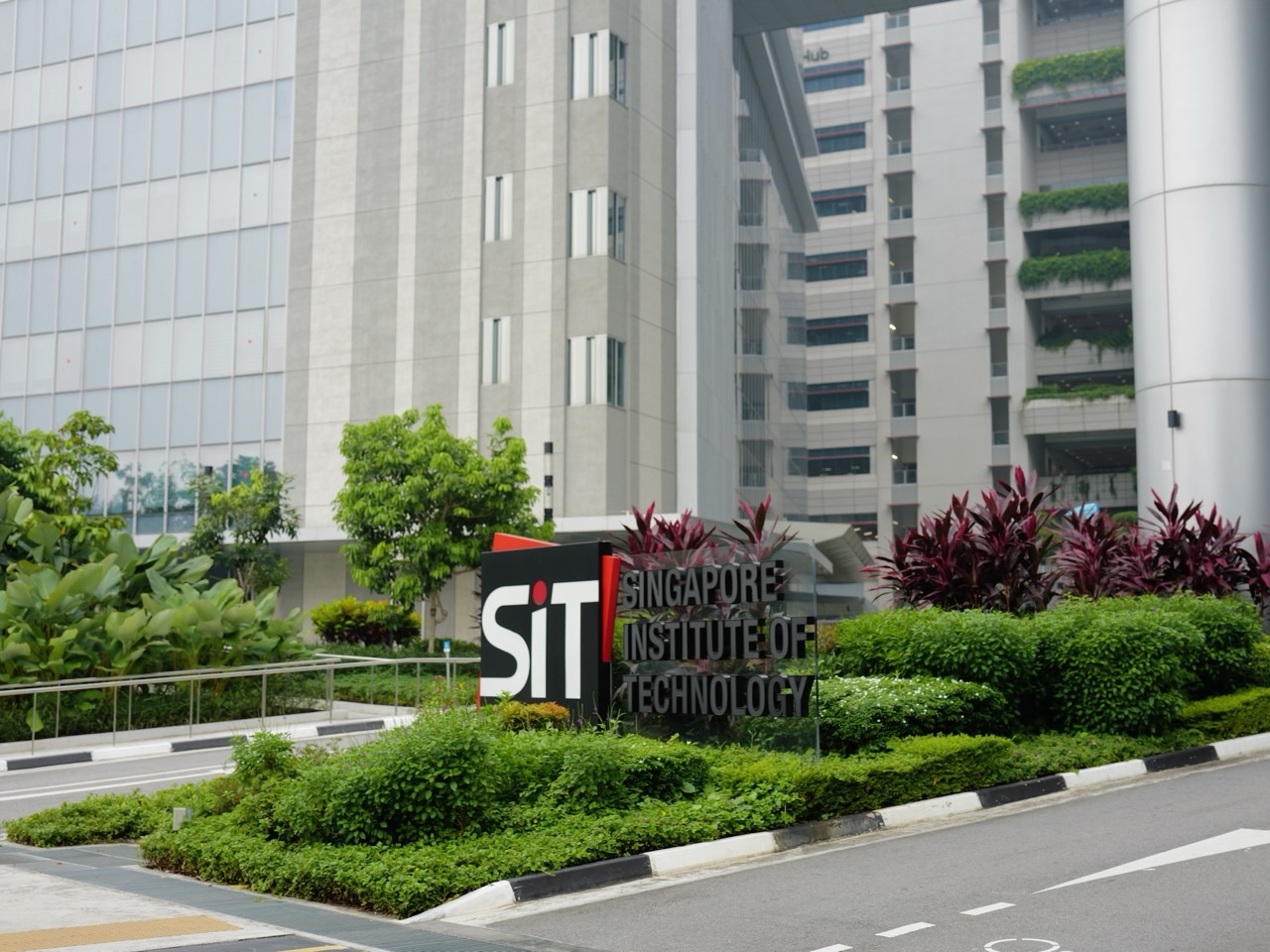
The next major education-to-work milestone at Singapore Institute of Technology’s Punggol Campus is already on the calendar. SIT Career Nexus 2027 takes place on Wednesday, 27 January 2027, from 1 pm to 5 pm at Campus Court, 1 Punggol Coast Road, Singapore 828608. The university is planning a large networking event with around 230 industry partners and more than 3,500 students and alumni. It is designed around Integrated Work Study Programme (IWSP) opportunities and graduate employment, not as a general walk-in career fair for Punggol residents.

For students and families in Punggol, that distinction is the important first answer. This is a real scheduled event at the town’s university, but attendance is restricted. SIT students and alumni can use the event to meet employers. Confirmed participating employers have a separate registration process. A secondary-school parent or a member of the public cannot simply arrive at the venue and expect to enter the fair. The official Career Nexus 2027 FAQs explicitly describe its audience.
The educational significance is much larger than a single afternoon. As Punggol Digital District develops alongside SIT, a student can see how academic knowledge, professional communication, work-study placements and employer expectations meet in one district. That is a tangible future-of-education development: learning is not complete merely because a student passes an examination. Students are also expected to explain what they can do with what they know.
Career Nexus 2027: the essential facts
SIT identifies the event as its largest professional networking event, organised by the Centre for Career Readiness. It brings together students, alumni and industry representatives from five academic clusters: Business, Communication and Design; Engineering; Food, Chemical and Biotechnology; Health and Social Sciences; and Infocomm Technology. The event page describes potential participation across 42 degree programmes, which provides a sense of its breadth.
The published date is 27 January 2027. Networking runs 1 pm–5 pm. Student check-in opens at 11 am, while company booth setup starts at 10 am. The venue is SIT Punggol Campus, Campus Court. This is a future booking, not a report that the event has already happened. The event programme, company names and detailed floor plan may continue to change before January.
Student registration is scheduled to open on 16 November 2026. The stated company registration window is 1–31 October 2026, and employers should follow their confirmation and waiting-list arrangements. This guide is dated 23 October 2026, so it is particularly important not to write as though November student registration has already opened. Verify at the official Career Nexus website before making arrangements.
SIT reports that the 2026 event helped participants practise rapport-building, professional conversation and career choice. The university quotes event feedback such as 92% of industry partners recognising students’ ability to build rapport, and around seven in ten student respondents reporting clearer company preferences. Those are survey summaries for a previous event, not a prediction of how many 2027 attendees will secure employment. They are useful because they reveal what the organisers value: communication and informed choices, not just business cards collected.
What is different about an Integrated Work Study Programme opportunity?
A common misunderstanding is to treat IWSP as another name for a casual part-time job. At SIT, IWSP is a structured part of degree education. Its university programmes incorporate extended industry experience so learners can connect taught content with real workplace systems, problems and teams. A job offer after graduation is a separate possible outcome, not the same arrangement.
Career Nexus helps students start or deepen conversations with employers who may provide IWSP placements or graduate jobs. An event conversation may be the first introduction, a chance to clarify job fit or a prompt to prepare a stronger application. It is not an automatic assignment to an internship.
SIT’s 2027 FAQs are precise: all IWSP applications must go through the SIT ReadyTalent Portal. For full-time positions, students may apply directly with participating companies. This should be underlined in every practical parent guide. A promising conversation at a stand can help a student understand an opportunity, but an application only exists when submitted through the relevant actual route.
That distinction also helps employers. A campus fair can introduce candidates, communicate skills requirements, demonstrate company projects and collect expressions of interest. It does not displace programme eligibility rules, formal screening or employment contracts. A student should ask what the selection stages actually are rather than asking only whether a representative “likes” their portfolio.
Who can attend and who cannot?
SIT students and alumni are the student-facing audience. The fair also welcomes employers whose participation has been confirmed by the organiser. It is not advertised as open to the general public. This matters especially in Punggol because a prominent new university and nearby digital-district companies may make residents assume that every campus event is a community event.
SIT’s student FAQ requires business attire. Students who do not meet the dress code may be refused entry. A QR entry code is provided upon successful registration. Students who miss the advance-registration deadline may still register at the event before entering, according to the current student FAQ; however that flexibility is not the same as open public walk-in access.
Companies face different conditions. As of the official guidance checked, participation requires a confirmed registration and a non-refundable $200 nett registration fee. Company walk-ins are not permitted. Participating companies can bring up to five representatives, with event-specific booth arrangements and logistics rules. Parents should not confuse the employer fee with a fee charged to student visitors.
For an SIT alumnus working nearby, the correct starting point is the official event registration instructions, not a general Punggol attraction listing. For a student at a polytechnic or another university, the appropriate route is that student’s own institution’s career centre or employer application channels unless SIT announces broader access.
How to prepare before 16 November 2026
An effective student begins by knowing which career questions remain open. A first-year student may want to explore job roles and technical skills. An IWSP applicant needs a sharper fit analysis. A graduating student may already have a résumé but need to target vacancies and differentiate employers. These are three different preparations.
First, map the current degree and likely role categories. “I study computer engineering” is too broad to help when comparing cybersecurity operations, embedded systems, industrial automation or software testing. Write down specific assignments completed, the tools used, and the constraint each project solved. Include one instance where the outcome was measured, even if the result was imperfect.
Second, prepare a one-page résumé that is truthful and easy to scan. A technical student should include project evidence, not just a row of software names. An employer cannot judge “Python, SQL, teamwork” in isolation. More useful evidence would explain that the student cleaned a dataset, documented assumptions, tested a model, reviewed errors with teammates and submitted an understandable report. The same principle applies in nursing, design, business and engineering.
Third, prepare two versions of a brief self-introduction. The 20-second version should identify the degree, the type of work sought and the most relevant evidence. The 60-second version can add a meaningful project, what was learned and a question for the recruiter. Neither should sound like a memorised advertisement.
Fourth, review the participating company list as SIT progressively updates it. Do not invent confirmed company attendance from the fact that a brand has offices in Punggol Digital District. The district’s tenant list and Career Nexus’s event roster are separate sets of information.
A three-question conversation that leads somewhere
A student who has prepared well might say: “I am studying engineering and worked on a data collection project that taught me how to verify sensor readings. I am looking for an IWSP setting where I can strengthen testing and documentation. What types of engineering problems do students on your team normally work on?”
That introduction is stronger than “Are you hiring?” because it supplies evidence and asks for the nature of the work. A student can then ask three practical questions: what work would I actually do, what competency evidence matters most when applying, and which application route and deadline should I use?
Listen to the answer and write notes soon afterward. If the role has limited coding and more operations work, that is useful information. If the company expects practical demonstrations or a short technical test, it gives the student a preparation target. An informative conversation is already an educational outcome, even before an application.
Do not treat a recruiter as an examiner. Students can say they do not yet have a required skill, explain how they are learning it and ask how it is used in the team. Equally, do not inflate projects, claim a leadership role the student did not perform or assert mastery of a tool based on a single tutorial.
The five clusters: the questions worth asking
In Engineering, the student should probe the relationship among safety, design, testing, maintenance, quality assurance and system integration. A discussion about a smart facility can reveal that reliability and documentation matter as much as writing code. Ask how failures are tested and which standards a junior engineer must learn to interpret.
In Infocomm Technology, ask whether work centres on software delivery, cybersecurity, data management, cloud infrastructure or service operations. “AI-related role” is a broad label; a real placement has datasets, tools, privacy boundaries, model evaluation and operational responsibilities. A student should recognise the difference between experimenting with a chatbot and deploying reliable systems for users.
In Business, Communication and Design, ask how client needs are translated into decisions. Strong evidence includes research, prioritisation, accessible communication, user testing and evidence that an idea improved something measurable. Not every business role requires programming, and not every design project succeeds by looking attractive.
In Food, Chemical and Biotechnology, probe laboratory practice, process controls, quality records, contamination risks and the distinction between research and production. A student who understands experimental controls and repeatability has a better basis for the conversation than one who can only name school subjects.
In Health and Social Sciences, focus on clinical supervision, professional registration requirements, patient confidentiality, ethical boundaries and whether a particular placement is suitable for a student at their stage of training. A recruitment event must never be treated as a shortcut around clinical or licensing rules.
Three worked student situations
Example one: the learner who has grades but no convincing portfolio. A student has passed modules and completed multiple group assignments but their résumé lists only the module names. Before the fair, they choose one project and reconstruct their contribution: the problem, constraint, approach, tests, feedback and resulting improvement. They bring a concise non-confidential summary. When a recruiter asks about teamwork, there is a real example.
Example two: the learner who wants every company. Another student plans to speak to forty booths and collect contact names without reading a single employer profile. A better approach is to identify perhaps eight high-fit companies, leave room for informed exploration and write down a next action after each conversation. A smaller set of valuable conversations beats a pile of unexplained brochures.
Example three: the student whose preferred employer says no. A conversation may reveal a qualification gap, an application window that has closed or a role that differs from expectations. This can feel disappointing. But it offers a specific adjustment: acquire the missing skill, prepare evidence for another cycle, or redirect to a more suitable position. Education improves when feedback becomes an actionable plan.
None of these examples is a report of individual participants at Career Nexus 2027. They illustrate practical decisions students can practise before the event.
For Punggol parents: what can be taught long before university?
Most Punggol parents reading about this event will have children in primary or secondary school, not at SIT. They can still learn something useful without trying to register a minor for a restricted university event. The transferable lesson is that an academic subject becomes more powerful when a learner can use it, explain it and reflect on results.
In mathematics, that means showing the model and checking whether its answer makes sense. In English, it means explaining a position clearly and listening to another person’s question. In science, it means distinguishing observation from inference, recording mistakes and repeating tests fairly. These practices can begin years before internships become relevant.
A Secondary 1 student might keep a short project note after studying percentages: “What real price comparison did I make? What assumptions affected it? How did I explain the result?” By Secondary 3, the same habit can support a simple experiment, community service reflection or practical portfolio. The goal is not an oversized collection of certificates. It is credible evidence of learning.
Parents can ask children what they did, how they know it worked, what changed after feedback and what question they would ask someone who does that work professionally. Those four questions train habits a graduate will eventually need in an employer conversation.
The relationship to Punggol Digital District
Career Nexus is held at the SIT Punggol Campus, which is integrated with Punggol Digital District. JTC describes the broader district as a place for academia, businesses, government agencies and technology industries to interact. That context helps explain why a large industry-facing university event belongs in Punggol’s future-education story.
Yet a simple distinction prevents exaggerated claims: a company located in Punggol Digital District is not automatically a Career Nexus exhibitor, and a Career Nexus employer does not necessarily have a Punggol office. Students should verify the actual job location, work arrangement and employer name separately. The proximity of buildings does not guarantee a placement or local employment.
The educational value of the ecosystem is the possibility of sustained dialogue between study and work: industry problems informing curriculum, students learning what employers expect, and employers seeing what learners can actually demonstrate. Whether a particular student obtains that benefit depends on programme fit, effort, selection and access.
For orientation to the district itself, read Understanding Punggol Digital District and SIT. This Career Nexus guide owns the specific 27 January 2027 event and its application behaviour, rather than republishing a general business-park overview.
Getting to the venue without adding unnecessary stress
SIT lists the campus at 1 Punggol Coast Road, Singapore 828608. It is within a car-lite district, and the event FAQs strongly encourage public transport because parking is limited. Participants can plan around Punggol Coast MRT and official campus travel instructions. If a visitor uses ride-hailing, the event guide specifies the Campus Court E6 Lobby drop-off.
Check the event floor plan and assigned booth locations closer to the date. The organiser says the company floor plan is expected by 11 January 2027. For an attendee who finds large events overwhelming, previewing entrances, the route, essential booths and nearby quiet breaks can make participation more productive.
Lunch is not provided to students. Food options include campus and neighbourhood facilities, but participants should not build a tightly timed plan around an unverified queue or outlet opening hour. Give yourself enough time to eat, charge a device and settle before the networking session.
A student should bring only what supports a meaningful conversation: phone with QR entry code, accessible résumé, examples that can be shared without breaching confidentiality, a small set of questions and a way to record notes. Long printouts of every module taken are rarely necessary.
The day itself: a practical decision sequence
Arrive with a clear first stop but do not make the first employer conversation the most intimidating one of the day. Start by checking the event information and choosing an appropriate lower-pressure booth where the student can practise introducing a project.
After two or three conversations, review what is working. If introductions are rambling, shorten them. If recruiters repeatedly ask about a skill the student has not mentioned, check whether it should be better represented. If an employer asks for a private document, do not share it without knowing that the request and channel are appropriate.
Prioritise quality of engagement over frantic movement. A student who can remember what each company does and why they are interested is in a stronger position to submit good applications later. Even when there are hundreds of partner representatives, there is no educational advantage in racing through them.
At the end, sort notes into three groups: suitable now, suitable after a skills gap is addressed, and not a good fit. This is a small but important act of judgement. It converts an event visit into an informed career plan rather than a vague impression.
After Career Nexus: where the actual learning happens
Within the next couple of days, a student should translate conversations into specific actions. That may mean updating a portfolio, applying through ReadyTalent for IWSP, applying directly to a company for full-time employment, asking a career coach for feedback or practising a technical interview.
If a student needs a project example, they should create a truthful summary and be ready to answer follow-up questions. If a recruiter recommended reading a standard or learning a tool, confirm which parts are essential and make a modest study plan. A high-impact improvement may be a single clear diagram or a better test log, not an entirely new certificate.
A graduate can also review whether the role aligns with their interests and working conditions. An attractive job title may conceal routine tasks they would not enjoy. An ordinary-sounding position may offer stronger supervision and more valuable technical growth. Career decisions depend on the work itself.
Parents can support without taking over the applicant’s voice. Helping the student rehearse a professional introduction is useful. Writing the student’s résumé, answering recruiter emails on their behalf or pressuring them to accept the most prestigious employer can undermine the autonomy the event is designed to develop.
What the published 2026 feedback does and does not prove
SIT highlights feedback from the preceding year’s Career Nexus: strong recognition of rapport, communication and workplace readiness, and students reporting clearer preferences and increased confidence. That supports the interpretation that networking can teach something. It does not establish causation, representative employment outcomes or 2027 conversion rates.
Students should not select companies based on those general percentages. They should inspect vacancies, programme requirements, the nature of work and their own preparedness. Employers’ positive impressions of an event do not mean every attendee has become work-ready, just as one conversation does not establish a good long-term match.
For families reading statistics critically, there is a helpful lesson here too: always ask who was surveyed, what question was asked, and whether the data measures satisfaction, learning or actual outcomes. The difference between these ideas is part of the numeracy and reasoning that Punggol’s students need for the future.
Mistakes to avoid
Do not tell residents that the fair is an open-door Punggol job market. The official rules restrict access. Do not assume a booth conversation substitutes for an IWSP submission in ReadyTalent. Do not invent a list of confirmed employers based on brands seen in Punggol Digital District. And do not confuse the employer’s $200 registration charge with a fee for students.
Do not wait until the evening before the event to draft a résumé. Do not exaggerate the academic level of a project; the ability to explain a small real task is more persuasive than a large imaginary one. Do not pursue a role solely because its brand or office building looks exciting. Learn what the working day actually entails.
Equally, do not assume that a rejection makes the whole visit useless. When a student leaves knowing their strongest evidence, a next competency to develop and how to use the proper application channels, the event has already contributed to their education.
Frequently asked questions
When and where is SIT Career Nexus 2027?
Wednesday, 27 January 2027, 1 pm to 5 pm, at SIT Punggol Campus, Campus Court, 1 Punggol Coast Road, Singapore 828608.
Can members of the public attend?
No. The current event rules restrict participation to SIT students, alumni and confirmed industry partners. It is not a general neighbourhood career fair.
When can SIT students register?
The official schedule states that student registration opens on 16 November 2026. Registration and event information should be checked at SIT’s Career Nexus website.
What should students wear?
Business attire is required. SIT states that students who do not follow the dress code will not be admitted.
Are IWSP positions offered immediately at the stands?
Employer representatives may discuss available opportunities, but SIT requires IWSP applications to be submitted through ReadyTalent. Direct application to participating companies may be possible for full-time roles.
How many employers are taking part?
SIT describes participation at around 230 industry partners. Treat it as an event planning figure, and check the live list rather than assuming a named company is attending.
Should a Punggol Secondary 3 student go?
Not as a public attendee under the announced rules. A secondary student can instead use the event’s lessons about skills evidence, projects, professional communication and later pathway research, and attend appropriate school open houses or public outreach when advertised.
Does the fair guarantee a local Punggol job?
No. Employer presence, job location, eligibility and hiring outcome are distinct questions.
What if a student misses advance registration?
The current SIT student FAQ says eligible students can register on site before entering if they miss the advance deadline. This does not create public access, and organisers may update the procedure.
Who can clarify a change?
Use the official event site or the student’s programme career coach. Event communications can change as January approaches.
What to verify before acting
For the event’s fixed details and latest entry rules, use SIT Career Nexus 2027’s event page and official FAQs. To understand the surrounding town’s learning ecosystem, see JTC’s Punggol Digital District overview and our SIT living labs and work-study explainer. The live university pages take priority over any event details quoted here.
Reviewed 23 October 2026. This article describes a scheduled January 2027 event and the publicly stated rules at review time. It does not claim that the event has occurred, that an individual can enter without meeting the rules, or that any employer has offered a position.
The larger educational change
When students walk into a university career event, they need more than exam results. They need evidence, communication, judgement, self-knowledge and the willingness to learn what a real workplace demands. Punggol’s emerging university-and-industry district makes that connection particularly visible.
The practical question for every learner is therefore not simply, “Which company might hire me?” It is, “What have I learned that I can explain, test, demonstrate and improve?” Career Nexus 2027 offers eligible SIT students a specific place and time to begin answering that question with the people who work in those industries.


