
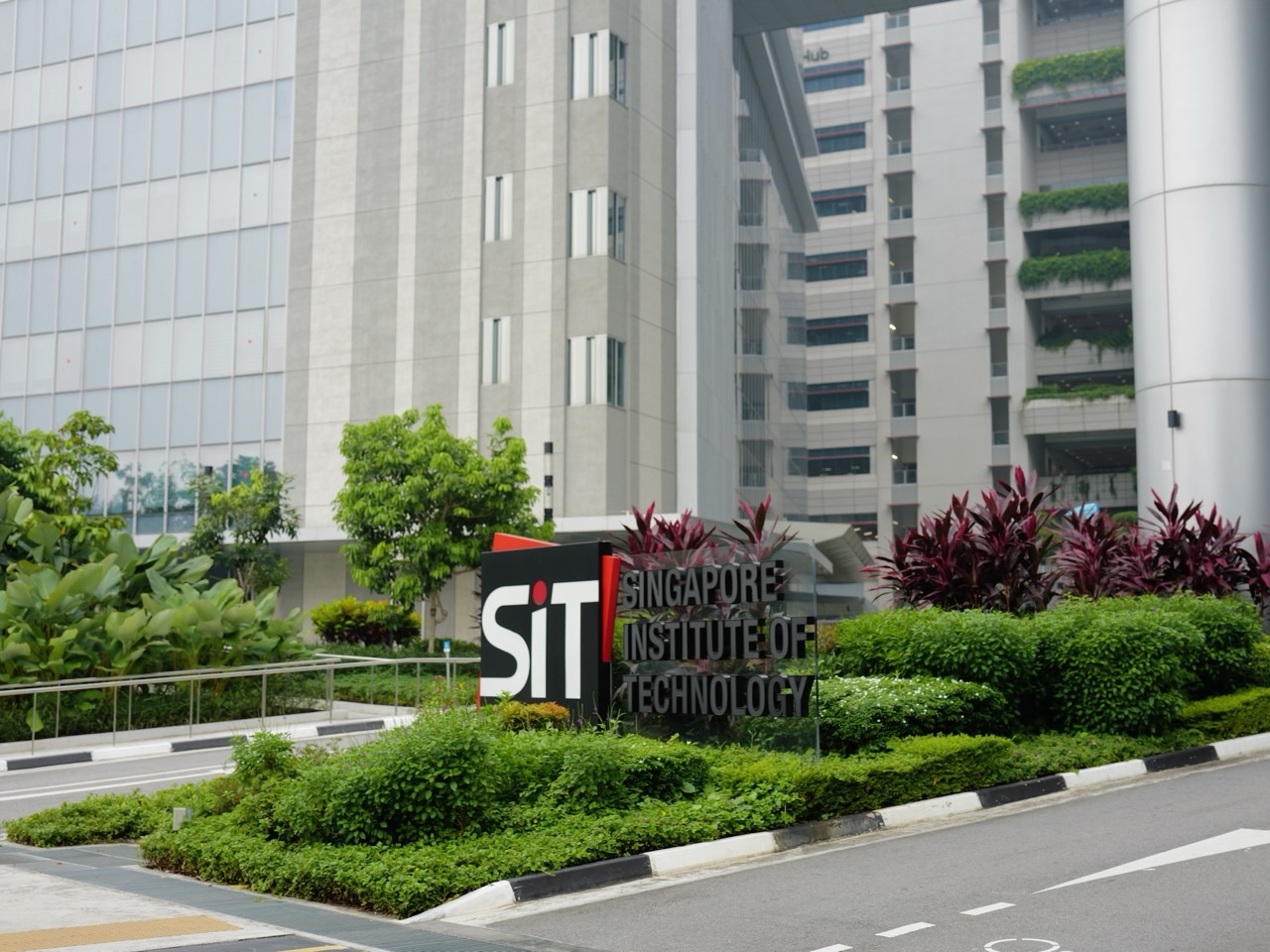
The future of university education in Punggol is already taking shape at the Singapore Institute of Technology (SIT). Its Punggol campus officially opened on 16 September 2025 inside JTC’s Punggol Digital District. The next development is not simply another new university building: it is the growth of applied learning through industry placements, real-world projects, living laboratories, skills assessment and collaboration between students, researchers and companies.

That distinction answers two common questions. Yes, SIT is operating in Punggol now. No, being next to technology companies does not mean every student is guaranteed a job, a place in every research lab or an internship with a company they can see from campus. Those outcomes depend on individual programmes, assessments, selection and partnership arrangements.
First, the Campus Is Open — The Ecosystem Is Still Developing
SIT’s move to Punggol was completed in phases, and the university formally inaugurated its campus in September 2025. SIT’s own history and current admissions information now identify Punggol as its home. It would therefore be misleading to publish an article in late 2026 that describes the entire university as a proposed future institution.
What is evolving is the relationship between campus education and its surroundings. JTC has planned Punggol Digital District as a 50-hectare integrated business park that places SIT alongside companies working in areas including cybersecurity, artificial intelligence, digital services and smart-city infrastructure.
The district’s published planning figures include about 28,000 jobs and 12,000 students. These figures describe the district’s intended scale, not a verified count of people employed or enrolled on a particular day in October 2026. A development’s design capacity should never be confused with current occupancy.
The education story begins with the existing campus, then follows the specific mechanisms that can make location useful: meaningful tasks, supervision, access to facilities, collaboration agreements and ways to judge whether skills have actually improved.
For the baseline facts, see SIT’s official history and its Punggol Campus information.
What Applied Learning Looks Like Beyond a Lecture Theatre
Traditional explanations of university life often divide learning into two parts: listen to a lecture, then sit for an examination. Applied learning adds a practical question: can a student use what they have learnt to solve a problem that has real constraints?
Those constraints might include a limited budget, changing data, safety requirements, several users with conflicting needs, or a deadline set by someone outside the classroom. Unlike a clean textbook exercise, a real-world task may have multiple workable answers but no perfect answer.
Imagine engineering students designing a system that detects when a building’s energy use is unusually high. First, they need mathematical and scientific principles. Next, they need to understand the sensors, data quality and the consequences of a false alarm. Finally, they must explain whether their method works reliably in a particular operating environment.
The example is illustrative, not a claim that every SIT cohort has received that exact assignment. It shows how applied learning connects knowledge, technical skill, teamwork and accountable judgement.
The important educational outcome is not merely a gadget. It is the student’s ability to say what problem was addressed, what evidence was used, what failed in testing and what would be improved.
Why the “Living Lab” Idea Matters
A living laboratory is an environment in which systems operating in everyday life can support learning, testing and improvement. At SIT’s Punggol campus, the Living Lab Network is designed to connect teaching and research to campus-wide systems. JTC’s Punggol Digital District also uses the Open Digital Platform to support the operation of connected district infrastructure and the evaluation of new technologies.
This can make certain problems more realistic than simulated exercises in an isolated classroom. Students may encounter imperfect measurements, different user needs and the challenge of assessing a solution over time. Researchers and companies can investigate whether a design works under conditions that are difficult to reproduce in a small laboratory.
In July 2026, for example, JTC described Punggol Digital District’s Open Digital Platform as integrating information from more than 20,000 sensors into a shared backend for authorised uses. That is infrastructure for building management, digital-twin simulation and selected test projects. It is not a promise that any student or member of the public can freely read every sensor or download sensitive operational data.
A sound living-lab project needs permissions, ethical safeguards, cybersecurity, technical validation and a way to protect the people whose environment is involved. The educational value grows when students have to think carefully about these limits.
The Campus’ Learning Spaces Are Designed for More Than Note-Taking
JTC’s explanation of the campus describes maker spaces, project hubs, design-innovation labs and flexible teaching rooms. One feature is the “lectorial”: a learning space blending lecture and tutorial functions, with layouts that can support discussion and group activities.
The design matters because physical space influences the kinds of activities that are easy to run. Moveable seating can make group discussion simpler. A prototyping workshop supports iterative design. A shared project hub makes it easier for students from different disciplines to work on one problem.
Yet furniture alone does not create collaboration. An effective group needs a clear question, divided responsibilities, feedback and a reasonable way to resolve disagreement. The person leading the learning activity still needs to explain why a group task will deepen understanding rather than simply divide the workload.
A parent walking past the university might see striking architecture. The educational test is less glamorous: can a student move between theory, evidence, prototype and evaluation?
What Is SIT’s Integrated Work Study Programme?
SIT’s Integrated Work Study Programme, commonly called IWSP, combines academic learning with structured industry experience. SIT’s current admissions information explains that its trimester structure accommodates an approximately eight-to-twelve-month work-study period, helping students gain substantial exposure while pursuing a degree.
The exact arrangement varies by programme and should be checked in the individual degree information. It is not accurate to assume every placement lasts precisely one year or that all students are attached to companies within Punggol Digital District.
A meaningful work-study period is more than temporary office attendance. Ideally, students undertake tasks connected to their course, learn workplace standards, receive supervision and use feedback to understand where academic methods need adaptation.
A student might discover that a technically correct software solution is difficult for real users to operate. Another might learn that a sound engineering concept fails because equipment maintenance was not considered. These are valuable discoveries when the learning arrangement is properly structured.
Read SIT’s admissions FAQs for the university’s current explanation of the IWSP time frame, then verify the curriculum and placement conditions for the exact degree being considered.
Why Working Next Door to Industry Is Different from Guaranteed Employment
The district deliberately places university and business facilities close together. JTC describes collaboration opportunities that arise when students, faculty and companies can work on shared challenges. Proximity can reduce friction: a company representative may be able to meet a teaching team, researchers may access a relevant test environment, and students may learn from a practitioner without travelling across Singapore.
But a bridge between two buildings does not confer an internship offer. Students still need to meet programme requirements, perform well and go through relevant placement or recruitment processes. Companies choose projects based on their needs and budgets.
Similarly, an official collaboration agreement can provide a framework, but it does not prove that every proposed project is already functioning. Check the institution’s latest description to distinguish a signed partnership, planned facility, pilot, launched lab and commercially deployed product.
For students thinking about their careers, this distinction creates a healthier question. Instead of “Which famous company is next door?”, ask “What technical or professional capability does this degree help me demonstrate, and through which assessed experiences?”
Real-World Example: Maritime Robotics at SIT
An example of the evolving ecosystem arrived on 18 June 2026, when SIT and autonomous-underwater-robotics company BeeX announced the Autonomous Marine Foundry at the SIT Punggol Campus. The initiative is a platform for applied research, technology development and work involving autonomous underwater systems.
Why is this an education story? Maritime robotics combines several disciplines. An autonomous machine working underwater must be able to sense its environment, follow a mission, cope with communication limitations and operate safely. It cannot be designed through one subject alone.
A university-industry facility gives researchers and appropriate students an opportunity to connect software, controls, mechanical systems, environmental conditions and testing. It also brings commercial and operational perspectives into the research discussion.
However, the official announcement should not be interpreted as a public invitation to enter a robotics workshop. Participation, safety access, course eligibility and research roles are subject to institutional rules.
The broader takeaway is that new facilities can turn the district into a place where knowledge is tested against difficult practical problems. Not every student needs to study underwater vehicles for that educational model to matter.
Skills-Based Assessment: Showing What a Learner Can Do
SIT has described a competency-based approach in which learning is organised around demonstrable skills and knowledge that connect to real work. In its September 2025 campus-opening announcement, the university also discussed partnerships for improved skills assessment and validation.
This direction responds to a problem familiar to employers and students: a course title or degree classification does not always tell someone how well a graduate can perform a particular task. An assessment that requires a learner to demonstrate a skill can offer more specific evidence.
In a computing project, demonstration might involve documenting a tested application and explaining security choices. In an engineering exercise, it might involve justifying a design under measured limits. In a professional communication task, it might involve presenting a recommendation to a non-specialist audience.
These are examples of performance evidence, not a claim that SIT has adopted a single standard assessment for all degrees. Different disciplines require different forms of proof.
Parents comparing universities should therefore examine actual modules, accreditation where relevant, work-study structures, capstone requirements, assessment methods and student support. University branding alone is a poor substitute for that work.
What Punggol Secondary Students Can Learn From the District
A younger student does not have to enter a university lab to benefit from its educational ideas. Consider a Secondary 2 class studying energy efficiency. Students can measure classroom electricity use with appropriate school supervision, look at how temperature changes cooling demand and present a recommendation.
The conceptual connection to a smart district is clear: real measurements, assumptions, constraints, alternative solutions and uncertainty. But the classroom task remains appropriately sized for Secondary 2 and does not pretend to use Punggol Digital District’s protected infrastructure.
A student interested in coding can learn to document inputs, errors and tests. A student who prefers design can study how people use shared spaces. A student interested in biology can explore environmental monitoring and ethical data collection.
These interests may eventually lead toward SIT or another institution, but the purpose of lower-secondary exposure is wider understanding, not premature commitment to one degree.
The local school and university open-house guide provides useful questions to ask when choosing real opportunities.
What a Punggol Primary School Visit Can — and Cannot — Promise
JTC’s education and district materials discuss efforts to build ties with schools and the wider community. Such outreach could include carefully arranged STEM workshops, learning journeys and educational events. That is a legitimate direction to follow.
It does not mean every Punggol Primary 4 pupil will automatically receive a robotics workshop, campus lab visit or university certificate. A school needs to plan an activity, obtain the appropriate permissions and communicate the logistics. Access to specialised research spaces requires further safeguards.
If a school announces a trip, ask which part of the district is being visited, who will lead the group, what age-appropriate learning outcome is intended and whether equipment or personal data is involved.
A good learning journey is not a photo opportunity disguised as education. Its purpose might be to ask why a building uses district cooling or what makes a pedestrian route accessible. A short, well-framed activity can teach more than an elaborate tour without clear questions.
Three Future Pathways Through One Town
Pathway one: a technically curious teenager. The student enjoys science and coding and is considering computer engineering. Rather than assuming a Punggol address leads directly to SIT admission, the family compares the latest entry requirements, subject prerequisites, degree modules and the structure of work-study learning.
Pathway two: a student who enjoys people-centred problems. They are interested in healthcare or the design of accessible community services. They may explore relevant SIT programmes, other universities, polytechnics or professional pathways. Digital district facilities offer a setting for questions about real users, but the correct course choice depends on the student and the programme.
Pathway three: a working adult changing roles. The adult is interested in applied courses, recognised competencies and flexible study options. SIT’s university-level and continuing-education offerings may be relevant, but financial support, qualification type, schedule and prerequisites have to be verified separately.
The pathways overlap in location, not entitlement. Punggol’s future education ecosystem gives residents more things to investigate; it does not erase the normal standards of selection and progression.
The Role of Industry in Learning, Research and Responsibility
University-industry partnerships can help define problems that matter outside academia. A company may offer operational experience while faculty contribute research methods and independent evaluation. Students gain exposure to professional constraints.
There are also risks. A real-world project may handle confidential information. A commercial goal may conflict with a student’s learning pace. An experimental device may raise public safety questions. A sponsor may wish to publicise results earlier than the evidence allows.
Good applied education addresses these issues openly through ethics, permissions, supervision, assessment and responsible communications. A test that fails safely can be more educational than a glossy demonstration that conceals its limitations.
Punggol Digital District’s use of the Open Digital Platform creates particularly rich questions about cybersecurity, data minimisation, human oversight and trust. Students should learn that systems affecting the public require more than clever programming.
How to Judge a Degree or Project Opportunity
A useful evaluation begins with the learning outcomes. What will a student know and be able to demonstrate? Next, look at the curriculum and the depth of foundational subjects. Real-world exposure is valuable only when there is enough underlying knowledge to interpret it.
Then examine the placement arrangements. Is the work-study period required? How is it structured? Who supervises? How is student performance assessed? What happens when a placement does not go as expected? Does the programme require professional accreditation or specific prerequisites?
Finally, consider practical life. How are modules scheduled? What support exists for accessibility or financial need? What is the travel routine? A nearby campus may reduce commuting for a Punggol resident, but the student’s designated placement or external activities may still require travel elsewhere.
Do not judge educational quality solely by a promotional rendering, company logo or job target published for the surrounding district.
Common Mistakes About SIT and the Digital District
Mistake: “SIT is still waiting to open in Punggol.” Correction: the campus officially opened in September 2025. New facilities and partnerships may continue developing within the operating ecosystem.
Mistake: “Every student works in Punggol Digital District.” Correction: work-study opportunities and placements vary. The employer and location depend on programme and operational arrangements.
Mistake: “The district has 28,000 current jobs because a website lists that figure.” Correction: treat the figure as a district planning target unless a source provides an independently verified current employment count.
Mistake: “A lab announcement means anyone can enter.” Correction: research facilities operate under access and safety rules. Verify public visitor arrangements separately.
Mistake: “Every student has exactly a 12-month attachment.” Correction: SIT’s general information describes an eight-to-twelve-month IWSP, with specific arrangements depending on the programme.
Mistake: “A robotics project is only about programming.” Correction: real applications also involve physical systems, testing, safety, human users, ethics and maintenance.
Four Questions That Reveal Real Educational Value
First, does the project solve a defined problem, or is it mainly a demonstration? Second, what evidence shows that the proposed solution works? Third, what were the limitations or errors? Fourth, could the student explain their own contribution to someone outside their subject?
These questions can be asked after an internship, a university project, a school exhibition or a small home experiment. They cut across educational levels because they reveal the difference between activity and learning.
For a parent, a student’s thoughtful explanation of a failed prototype may be a stronger signal than a collection of fashionable technology terms. For an employer, clear evidence of professional judgement may matter more than a generic claim of being “future-ready”.
That does not make grades or qualifications irrelevant. It makes the evidence behind them easier to interpret.
Frequently Asked Questions
Is SIT Punggol open in 2026?
Yes. Its official opening took place on 16 September 2025. Check SIT’s current Punggol campus page for directions and public-facing facilities.
Are Punggol Digital District’s companies part of the university?
The university and business park are separate institutions within an integrated district. Collaborations can connect them for specific education and research activities.
How long is SIT’s work-study period?
SIT’s admissions FAQs describe an eight-to-twelve-month Integrated Work Study Programme within its trimester-based degree structure. Check the exact degree for its current arrangement.
Will SIT students automatically be employed by companies in Punggol?
No. Admission, placements and job offers have their own requirements and selection processes. No district plan guarantees individual employment.
Can primary school students visit university research labs?
Only through appropriate arrangements where available. Do not presume access; contact the institution or follow school-organised, age-appropriate visits.
Is the BeeX maritime robotics lab already real?
The SIT–BeeX Autonomous Marine Foundry was announced as launched on 18 June 2026. Entry, research participation and training opportunities must still be verified with the institution.
Does a “living lab” mean all district sensor data is public?
No. Living-lab projects use authorised access and governance. Data availability, security and the scope of research vary.
Is an SIT degree the only route to a digital-sector career?
No. Singapore offers different university, polytechnic, ITE, industry-training and lifelong-learning routes. Choose based on prerequisites, programme quality and career direction.
Official Sources, Local Guides and Next Steps
The most reliable foundations are SIT’s Punggol Campus page, SIT admissions FAQs, and the JTC Punggol Digital District overview. For the official campus-opening milestone, see SIT’s 16 September 2025 announcement. JTC also explains the design of collaborative learning spaces and the connection between work-study and industry.
For related but distinct perspectives, read how SIT and PDD fit Punggol’s future capabilities and the Punggol Education and Town-Life Article Index.
Before choosing a degree, visit the current programme page and compare its prerequisites, curriculum, industry exposure, accreditation where relevant, costs and support. A local campus is an advantage only when the programme fits the learner.
A University That Changes Its Neighbourhood Through Learning
SIT’s Punggol campus makes a larger idea visible: education does not have to end at the edge of a classroom or at graduation. Students can learn through carefully supervised work, researchers can test ideas, companies can pose real problems and adults can return to develop capabilities as industries change.
The next chapter for Punggol will be determined less by how many technology slogans appear on a banner than by how thoughtfully these relationships are built and assessed. The future of education here is not a promise that every learner becomes a software engineer. It is a stronger connection between knowledge, practical judgement and the wider community.
Fact-check date: 23 October 2026. The campus-opening date is historical; new partnership activities, degree offerings and visitor access conditions can change and should be checked with SIT or JTC.


