
- Health Promotion Board — Nutri-Grade Requirements for Beverages.
- HealthHub — Make Better Drink Choices with Nutri-Grade.
- HealthHub — How to Order Healthier Drinks.
- MOH — Freshly Prepared Beverages and Nutri-Grade.
- HPB — No Added Sugar Fruit Juice Still Contains Natural Sugars.
- Waterway Point — Official Mall Directory.
- Punggol Food Guide.
- Complete Punggol Guide
Editorial checked 23 October 2026. Featured image is an original October 2026 Waterway Point media record. The photographed stall’s exact brand, unit number, present products, hygiene results and prices were not independently confirmed. Sugar and Nutri-Grade explanations are based on Singapore official sources. This is general consumer education, not individual medical or nutritional advice.
- Venue: Waterway Point, 83 Punggol Central, Singapore 828761.
- Photo evidence: one original October 2026 image catalogued as a fruit juice stall inside the mall.
- Vendor’s current name, unit and price: unverified from the image; follow the current mall directory and counter signage.
- HealthHub guidance: whole fruit generally provides more fibre and fullness than juice; choose water routinely and keep juice servings moderate.
- Important difference: no added sugar does not mean no sugar. Fruit contains naturally occurring sugars.
- Nutri-Grade: Singapore grades drinks A–D based on sugar and saturated fat. Freshly prepared juices are within the programme’s scope.
- Mandatory labels: C/D grades must generally be displayed at the point of purchase; A/B labels are optional, and qualifying small-business exemptions exist.
- Family check: ask what fruit is used, whether other ingredients are added, and which serving size is actually being sold.
- Safety: supervise children, check hygiene and food requirements, and don’t leave perishable drinks standing for unnecessarily long periods.
- Purpose: make an informed drink choice without treating one photograph as a nutrition test.
Official information: Health Promotion Board’s Nutri-Grade measures and HealthHub’s Nutri-Grade consumer guide, plus HealthHub’s healthier drinks advice. MOH’s freshly prepared drinks announcement explains the 30 December 2023 implementation. Always check current retail information on Waterway Point’s website.
What can actually be learned from the photograph
The October image identifies a fruit juice counter in the Waterway Point environment. It provides a useful visual reference for a parent who remembers the mall and wants to discuss drink choices. It does not establish whether the pictured vendor sells fresh oranges, mixed juices or bottled products on every date.
A counter can change its menu, tenants or opening arrangements after a photograph. The appropriate source for current purchases is the actual stall and mall directory. This article avoids creating a false brand profile from a general media-library title.
The words fresh, natural and no added sugar are different
Fresh commonly describes a drink prepared from ingredients near the time of sale. Natural may be a marketing description. No added sugar means the seller has not put extra sugar into the recipe. None of those phrases necessarily means the drink contains no sugar at all.
Fruit juice may contain substantial naturally occurring fructose and other sugars from the fruit. HealthHub’s Nutri-Grade guide explains that some juices are graded C or D even without additional sugar. Read the grade and ask about the current recipe rather than treating a familiar healthy-sounding word as complete evidence.
Why whole fruit and juice aren’t nutritionally identical
Eating an orange and drinking a glass of orange juice are related experiences but not identical. Juicing usually removes much of the pulp and fibre, making it easier to consume the sugar from multiple fruits quickly. Whole fruit generally requires more chewing and offers greater fullness.
HealthHub recommends moderation with fruit juice and promotes whole fruit where practical. A child who wants a fruit flavour can enjoy an actual piece of fruit instead of automatically choosing a large drink. This isn’t a ban on juice; it is an explanation of why the form matters.
What the Nutri-Grade label measures
Singapore’s Nutri-Grade system rates drinks from A to D using their sugar and saturated-fat contents. Grade A corresponds to lower amounts, while D indicates the highest range under the system. The grade is based on the beverage, not the quality of the shop’s customer service or whether the fruit looks appealing.
HealthHub encourages choosing drinks with lower sugar and saturated fat and limiting C/D drinks. Water remains a reliable ordinary choice. A label can help compare beverages, but individual nutritional needs and the drink’s serving size still matter.
Freshly prepared drinks joined the scheme in December 2023
MOH and HPB extended Nutri-Grade requirements to freshly prepared beverages from 30 December 2023. That scope includes freshly squeezed juices and smoothies prepared by hand for sale, as well as certain customisable drinks. The rules are not limited to cans and bottled soft drinks.
The introduction is useful background for anyone comparing a juice counter with packaged beverages. It doesn’t mean this article has checked the exact grade of the photographed stall. Look for the present menu and ask staff about any relevant posted information.
Why some stall menus don’t show an A or B badge
Under the rules, displaying a Nutri-Grade mark is mandatory for C and D drinks for businesses within scope, while A and B marks are optional. A drink without a visible grade is not necessarily noncompliant or automatically an A-rated product. The operator’s circumstances and current regulatory requirements matter.
HPB also describes concessions for qualifying smaller freshly prepared beverage businesses that meet the revenue and premises conditions. The image doesn’t establish whether that exception applies to its vendor. Avoid accusing a specific stall of breaking labelling rules based on one broad photograph.
No added sugar is not sugar-free
The Health Promotion Board explains that juice can contain naturally occurring sugars even when no sugar has been added during production. Sugar-free, by contrast, is a different claim. A family should not treat the two phrases as interchangeable when choosing drinks.
This distinction is particularly useful for older children beginning to understand food labels. Ask them to find the wording on a current product and explain what it does and doesn’t promise. Then compare serving sizes and any declared sugar amounts. The exercise is about reading accurately, not judging what another person drinks.
Fruit juice versus a fruit smoothie
A juice is often extracted liquid, while a smoothie can contain blended fruit with more pulp or other added ingredients. But recipes vary: some smoothies include syrup, sweetened milk or other components. A word such as smoothie isn’t a nutritional certificate.
If fibre or added sugar matters to your family, ask the current vendor which ingredients and preparation methods are used. An image of fruit displays at a counter cannot answer those questions. A home-prepared smoothie may offer different ingredients from a retail recipe, and even then portion size matters.
How to choose a sensible serving size
A large cup can contain substantially more fruit sugar than a small cup even when both have the same recipe. Don’t compare two drinks only by whether their labels say ‘no added sugar’. First establish the amount being served.
HealthHub’s general consumer advice suggests moderating juice intake, often around a cup rather than treating it as unlimited hydration. For an adult or child with specific dietary guidance, follow that advice rather than a generic blog serving rule. A family can choose a smaller portion when that better suits the occasion.
The easiest everyday drink is still water
When someone is thirsty after walking around Waterway Point, plain water is an easy way to hydrate without taking in sugar from a beverage. It doesn’t require a specialised diet plan. Juice may be enjoyed as a food choice, but doesn’t have to be the default answer to thirst.
A practical family habit is to carry an appropriate water bottle and choose a fruit drink occasionally for taste. That preserves flexibility and reduces the pressure to buy something sweet whenever a child sees a colourful counter.
Reading the menu without guessing from a fruit display
A stall may display fruit, bottles, pictures or menu boards. Some products may combine multiple fruits, ice, syrups or other ingredients. An attractive photograph of oranges or watermelons cannot tell the exact recipe of a mixed drink.
Read the actual item description and ask a short question: ‘Is this just fruit, or does it include syrup?’ Staff may explain what can be changed. If the seller doesn’t provide the information needed for an important restriction, choose another suitable option.
What to ask about added syrup
Some fruit drinks may include additional sugar syrup for sweetness, depending on the recipe. If avoiding added sugar is important, ask whether it is included and whether it can be omitted. Do not assume every juice counter uses syrup or that every product in the same store does.
The answer should come from the actual vendor, not the person taking the photograph. A clear question helps staff respond without requiring a long conversation at a busy point of sale. Respect a statement that a prepared component cannot be altered.
What to ask about milk or other additions
Fruit beverages can sometimes include milk, yoghurt or toppings. Those ingredients may affect saturated fat, allergens and texture. A person with a dairy allergy or a specific dietary requirement needs actual ingredient and preparation information.
The drink’s colour and name may not reveal every addition. Ask about the particular recipe and potential cross-contact when appropriate. If an essential safety question cannot be answered reliably, pick another drink rather than gambling on appearances.
An orange juice isn’t a whole orange
An orange can provide fibre along with vitamins and natural sugars. A squeezed glass can take the juice from more than one orange while leaving much of the fibre behind. That is one reason HealthHub recommends whole fruit as a regular choice and moderation with juice.
Parents can explain this without portraying the drink as dangerous. Juice can be pleasant, but a large cup isn’t nutritionally identical to biting into fruit. Older children can understand that processing changes how food is consumed even when its source is the same.
What if an older relative has difficulty chewing fruit?
HealthHub notes that in some situations, including seniors who have difficulty chewing whole fruit, a moderate amount of 100% juice may have a role. The specific choice depends on health circumstances and any professional dietary advice. A general preference for whole fruit doesn’t mean every person can eat it comfortably.
Ask the relative what they want and follow any relevant medical guidance. A compassionate food decision considers the actual person, not an abstract perfect menu. The photographed stall is simply one possible retail setting.
Children and juice: avoid using a cup as a reward for everything
A child may enjoy watching fruit being prepared, but repeated sweet drinks aren’t the only way to celebrate an outing. Water, whole fruit or a different snack may suit the family better. A small enjoyable cup from time to time can be part of a varied routine without becoming automatic after every visit.
Parents can ask the child to choose among a few realistic options and explain the decision. The aim is developing judgement, not creating guilt around a favourite flavour. The conversation should remain relaxed and age-appropriate.
After sports, think about hydration first
Punggol has parks, courts and walking routes, and someone may enter Waterway Point after an active outing. They might feel thirsty and tempted by a colourful fruit drink. For ordinary hydration, plain water remains a practical default; sports and health needs vary by duration and intensity.
A retail juice isn’t automatically a sports recovery drink. Don’t advertise an unverified stall product as an electrolyte replacement or medical solution. If a participant needs specific hydration advice, follow relevant professional guidance.
How cold drinks are handled in a crowded mall
A cold cup can develop condensation and may spill when carried through busy corridors or escalators. Keep lids secure where supplied, avoid balancing cups on an overloaded stroller and make sure children can handle the container appropriately.
Don’t stop suddenly in an escalator landing to open a drink or take a photograph. Move to a suitable public standing or seating area. Basic care for other shoppers is part of enjoying a public place.
Food safety is more than seeing fresh fruit
Attractive fruit on display doesn’t independently verify cleaning, equipment hygiene or food handling. A photograph cannot establish whether a particular vendor complies with every Singapore Food Agency requirement. Nor does one visually untidy moment alone prove an offence.
Consumers can observe the current setting, ask meaningful questions and use official channels for genuine concerns. Don’t accuse a photographed business without verified evidence. The useful standard is food safety, not speculation based on image aesthetics.
The vendor shown in the photo isn’t independently identified
A dated Waterway Point F&B list included a listing called SF Fruits & Juices, but the photograph’s own metadata only says ‘Fruit Juice Stall at Waterway Point’. Linking the two as if they necessarily represented the same operator would create a risk of misidentification.
This guide therefore uses the mall’s current directory for present location information and keeps the image caption descriptive. Anyone seeking a particular brand should verify it with the business itself. Careful uncertainty is better than an invented unit number.
How to use the grade when comparing two drinks
Suppose two freshly prepared drinks have visible Nutri-Grade marks. One is B and the other C. The B grade generally indicates lower amounts of the grade’s measured nutrients, but serving size and the rest of the person’s diet remain relevant.
HealthHub advises limiting C/D beverages and considering water. Don’t treat the grade as a comprehensive score of vitamins, fibre or food safety. It is an aid for understanding sugar and saturated fat, not a complete product review.
The importance of serving size in an example
Imagine an illustrative drink with 8 grams of sugar per 100 millilitres. A 250-millilitre serving would contain 20 grams if the concentration is uniform; a 500-millilitre cup would contain 40 grams. These are made-up educational values, not the photographed stall’s measured sugar content.
An older pupil can practise multiplying the label’s amount by the volume. The result shows why a larger cup matters even when the recipe is unchanged. Real comparisons should use the actual disclosed sugar percentage and the true cup size.
How to read a sugar percentage
Nutri-Grade labels for beverages can display sugar level as a percentage of total volume. The purpose is to let consumers compare the sugar content of drinks rather than rely only on terms like natural or premium. The actual label should be read as presented by the retailer.
A child can learn to identify a percentage and ask what it means. For important medical needs, families should use the full current nutritional information and professional advice rather than an approximate calculation from a photograph.
What about toppings added to drinks?
Singapore’s Nutri-Grade rules include declarations for sugar-containing toppings on freshly prepared beverage menus. Those may be relevant to drinks sold with pearls, jellies, ice cream or other extras, although the photographed fruit stall is not confirmed to sell any of them.
If a drink includes a topping, ask about the total choice, not just the base beverage. An extra ingredient can change sweetness, texture and cost. Consumers shouldn’t assume a no-added-sugar fruit base makes every finished combination sugar-free.
Ordering with family allergies in mind
Fruit allergies and reactions to additional ingredients can matter. Some customers may require information about nuts, dairy, shared blending equipment or other substances. Ask the vendor about the particular recipe and its preparation if the restriction is serious.
If the outlet cannot provide sufficient assurance, choose a different appropriate product. A person’s health needs take precedence over making use of a photographed option. This article does not certify allergen-free handling.
What is a sensible child-friendly question at the counter?
A child could practise saying, ‘Could I have a small juice with no added syrup, please?’—but only if that choice is actually offered by the vendor. Parents can help the child notice that clear questions may have clear answers, including ‘We don’t make it that way.’
Don’t hold up a busy queue for an extended lesson. Practise the phrase beforehand, allow the order to be completed and thank the staff. Everyday communication can become a learning experience without making workers part of a staged classroom exercise.
A family spending example without inventing live prices
Suppose a family has a hypothetical S$15 allowance for drinks. Three imagined cups cost S$4, S$4.50 and S$3.50, adding to S$12, leaving S$3. Those figures are not sourced from the photographed Waterway Point stall.
The exercise helps children learn addition and spending limits. In a real visit, use the current displayed menu and choose whether every person actually wants juice. A family budget is most useful when it prevents unnecessary purchases rather than encouraging everyone to spend the allowance.
The difference between a photograph and a nutritional test
An image of a brightly coloured juice may suggest the fruit used, but colour is affected by ingredients, lighting and camera processing. It cannot measure sugar, vitamins or cleanliness. A darker drink isn’t automatically healthier, and a pale drink isn’t automatically sugar-free.
Good photo captions stick to visible evidence. A writer should say ‘fruit juice stall in Waterway Point, October 2026’, not assign an unverified Nutri-Grade label to the drink. Current vendor information and regulatory labelling provide the relevant facts.
Waterway Point has several choices, not one compulsory drink
The mall contains food and beverage operators whose offerings change over time. A family may find plain water, a whole-fruit option elsewhere, coffee or tea, or a drink at another counter more suitable. The aim isn’t to persuade everyone to buy from the pictured stall.
Visitors can follow the mall’s current directory to find a choice that suits them. For broader meal options, the Punggol Food Guide owns that discovery task. This article focuses only on the nutrition and purchasing questions raised by a juice-stall photograph.
Avoid turning the Nutri-Grade badge into a personal judgement
A person might choose juice for taste, convenience or a specific dietary reason. Others may prefer water or whole fruit. The Nutri-Grade system is designed to inform, not to shame individual customers. The right response is to understand what the label measures and consider the context.
A child who learns that fruit juice contains natural sugar hasn’t learned that it is forbidden. They have learned to make an informed choice. That’s a more sustainable lesson than imposing arbitrary rules based on an appealing or unappealing photo.
How this article connects with other Punggol photo guides
Our Waterway Point fish soup guide handles meal components and hot soup. The Ya Kun and Toast Box breakfast article handles coffee and toast routines.
The juice guide owns a different question: understanding fresh drinks, fruit fibre and Nutri-Grade. Readers can navigate among them to plan a meal without one giant repetitive directory. Separate topic ownership improves both clarity and factual maintenance.
The five-step decision at a juice stall
Find the real current seller, check the actual fruit or blend, consider serving size, read any relevant Nutri-Grade information and ask about added ingredients or dietary requirements. Then decide whether juice is what you really want or if whole fruit or water would suit you better.
After purchase, carry the cup safely and enjoy it without blocking other mall users. It is a simple ordinary decision, but it draws on accurate observation, nutrition literacy, consumer care and courtesy. That’s what makes a local photograph useful beyond its visual appeal.

Frequently asked questions about fruit juice at Waterway Point
Is there a juice stall at Waterway Point?
An October 2026 original photograph in eduKatePunggol’s media library shows a counter identified as a fruit juice stall. Current vendor details should be verified.
Which exact brand is pictured?
Not independently confirmed. An old retailer list contains a fruit-and-juice listing, but the photo alone does not establish the same vendor.
Where is Waterway Point?
83 Punggol Central, Singapore 828761, beside Punggol MRT/LRT.
Is fresh juice always better than a soft drink?
It can contain nutrients from fruit, but natural sugars and serving size matter. HealthHub recommends moderation and makes water a useful default.
Does no added sugar mean zero sugar?
No. Fruit naturally contains sugars. Check the actual drink information.
Is whole fruit generally preferable?
Whole fruit usually provides more fibre and fullness. HealthHub advises whole fruit as a regular choice and moderation with juice.
What is Nutri-Grade?
Singapore’s A–D beverage grading system based on sugar and saturated-fat content.
Does Nutri-Grade apply to fresh juice?
Yes. Singapore extended its framework to freshly prepared beverages from 30 December 2023.
Must a juice counter display a C or D grade?
Generally for businesses in scope, with a concession for qualifying small firms. Check official regulatory requirements rather than infer noncompliance from a photo.
Why might A or B not be shown?
Displaying A and B marks is optional under the framework.
Can a juice with no extra syrup have a C or D grade?
Yes. Natural fruit sugars can lead to those grades.
Are C and D grades the same as a food-safety grade?
No. Nutri-Grade concerns sugar and saturated fat, not hygiene inspection outcomes.
Is a smoothie the same as juice?
They can differ in fibre and added ingredients. Ask the current vendor about the exact recipe.
What if my family needs a dairy-free drink?
Check whether the product includes milk, yoghurt or other relevant ingredients and whether preparation involves cross-contact.
How much sugar is in the photographed drink?
No particular finished drink has been nutritionally analysed or identified here.
Does the picture prove the stall is hygienic?
No. A photograph does not establish regulatory inspection results or food-handling compliance.
Can a senior have fruit juice?
Individual needs vary. HealthHub notes moderate 100% juice can have a place for some people who struggle to eat whole fruit; use relevant personal guidance.
Does choosing a small cup help?
The total sugar consumed can depend on the quantity. Check actual size and composition.
Can children order no syrup?
Only if the vendor offers that preparation. Ask politely and verify.
Is plain water a reasonable choice instead?
Yes. HealthHub promotes water as a routine beverage without sugar.
Where do I learn more about meals in Punggol?
Use the existing Punggol Food Guide and the related Waterway Point meal articles.
Official sources and connected reading
- Health Promotion Board — Nutri-Grade Requirements for Beverages.
- HealthHub — Make Better Drink Choices with Nutri-Grade.
- HealthHub — How to Order Healthier Drinks.
- MOH — Freshly Prepared Beverages and Nutri-Grade.
- HPB — No Added Sugar Fruit Juice Still Contains Natural Sugars.
- Waterway Point — Official Mall Directory.
- Punggol Food Guide.
- Complete Punggol Guide
Editorial checked 23 October 2026. Featured image is an original October 2026 Waterway Point media record. The photographed stall’s exact brand, unit number, present products, hygiene results and prices were not independently confirmed. Sugar and Nutri-Grade explanations are based on Singapore official sources. This is general consumer education, not individual medical or nutritional advice.
- Venue: Waterway Point, 83 Punggol Central, Singapore 828761.
- Photo evidence: one original October 2026 image catalogued as a fruit juice stall inside the mall.
- Vendor’s current name, unit and price: unverified from the image; follow the current mall directory and counter signage.
- HealthHub guidance: whole fruit generally provides more fibre and fullness than juice; choose water routinely and keep juice servings moderate.
- Important difference: no added sugar does not mean no sugar. Fruit contains naturally occurring sugars.
- Nutri-Grade: Singapore grades drinks A–D based on sugar and saturated fat. Freshly prepared juices are within the programme’s scope.
- Mandatory labels: C/D grades must generally be displayed at the point of purchase; A/B labels are optional, and qualifying small-business exemptions exist.
- Family check: ask what fruit is used, whether other ingredients are added, and which serving size is actually being sold.
- Safety: supervise children, check hygiene and food requirements, and don’t leave perishable drinks standing for unnecessarily long periods.
- Purpose: make an informed drink choice without treating one photograph as a nutrition test.
Official information: Health Promotion Board’s Nutri-Grade measures and HealthHub’s Nutri-Grade consumer guide, plus HealthHub’s healthier drinks advice. MOH’s freshly prepared drinks announcement explains the 30 December 2023 implementation. Always check current retail information on Waterway Point’s website.
What can actually be learned from the photograph
The October image identifies a fruit juice counter in the Waterway Point environment. It provides a useful visual reference for a parent who remembers the mall and wants to discuss drink choices. It does not establish whether the pictured vendor sells fresh oranges, mixed juices or bottled products on every date.
A counter can change its menu, tenants or opening arrangements after a photograph. The appropriate source for current purchases is the actual stall and mall directory. This article avoids creating a false brand profile from a general media-library title.
The words fresh, natural and no added sugar are different
Fresh commonly describes a drink prepared from ingredients near the time of sale. Natural may be a marketing description. No added sugar means the seller has not put extra sugar into the recipe. None of those phrases necessarily means the drink contains no sugar at all.
Fruit juice may contain substantial naturally occurring fructose and other sugars from the fruit. HealthHub’s Nutri-Grade guide explains that some juices are graded C or D even without additional sugar. Read the grade and ask about the current recipe rather than treating a familiar healthy-sounding word as complete evidence.
Why whole fruit and juice aren’t nutritionally identical
Eating an orange and drinking a glass of orange juice are related experiences but not identical. Juicing usually removes much of the pulp and fibre, making it easier to consume the sugar from multiple fruits quickly. Whole fruit generally requires more chewing and offers greater fullness.
HealthHub recommends moderation with fruit juice and promotes whole fruit where practical. A child who wants a fruit flavour can enjoy an actual piece of fruit instead of automatically choosing a large drink. This isn’t a ban on juice; it is an explanation of why the form matters.
What the Nutri-Grade label measures
Singapore’s Nutri-Grade system rates drinks from A to D using their sugar and saturated-fat contents. Grade A corresponds to lower amounts, while D indicates the highest range under the system. The grade is based on the beverage, not the quality of the shop’s customer service or whether the fruit looks appealing.
HealthHub encourages choosing drinks with lower sugar and saturated fat and limiting C/D drinks. Water remains a reliable ordinary choice. A label can help compare beverages, but individual nutritional needs and the drink’s serving size still matter.
Freshly prepared drinks joined the scheme in December 2023
MOH and HPB extended Nutri-Grade requirements to freshly prepared beverages from 30 December 2023. That scope includes freshly squeezed juices and smoothies prepared by hand for sale, as well as certain customisable drinks. The rules are not limited to cans and bottled soft drinks.
The introduction is useful background for anyone comparing a juice counter with packaged beverages. It doesn’t mean this article has checked the exact grade of the photographed stall. Look for the present menu and ask staff about any relevant posted information.
Why some stall menus don’t show an A or B badge
Under the rules, displaying a Nutri-Grade mark is mandatory for C and D drinks for businesses within scope, while A and B marks are optional. A drink without a visible grade is not necessarily noncompliant or automatically an A-rated product. The operator’s circumstances and current regulatory requirements matter.
HPB also describes concessions for qualifying smaller freshly prepared beverage businesses that meet the revenue and premises conditions. The image doesn’t establish whether that exception applies to its vendor. Avoid accusing a specific stall of breaking labelling rules based on one broad photograph.
No added sugar is not sugar-free
The Health Promotion Board explains that juice can contain naturally occurring sugars even when no sugar has been added during production. Sugar-free, by contrast, is a different claim. A family should not treat the two phrases as interchangeable when choosing drinks.
This distinction is particularly useful for older children beginning to understand food labels. Ask them to find the wording on a current product and explain what it does and doesn’t promise. Then compare serving sizes and any declared sugar amounts. The exercise is about reading accurately, not judging what another person drinks.
Fruit juice versus a fruit smoothie
A juice is often extracted liquid, while a smoothie can contain blended fruit with more pulp or other added ingredients. But recipes vary: some smoothies include syrup, sweetened milk or other components. A word such as smoothie isn’t a nutritional certificate.
If fibre or added sugar matters to your family, ask the current vendor which ingredients and preparation methods are used. An image of fruit displays at a counter cannot answer those questions. A home-prepared smoothie may offer different ingredients from a retail recipe, and even then portion size matters.
How to choose a sensible serving size
A large cup can contain substantially more fruit sugar than a small cup even when both have the same recipe. Don’t compare two drinks only by whether their labels say ‘no added sugar’. First establish the amount being served.
HealthHub’s general consumer advice suggests moderating juice intake, often around a cup rather than treating it as unlimited hydration. For an adult or child with specific dietary guidance, follow that advice rather than a generic blog serving rule. A family can choose a smaller portion when that better suits the occasion.
The easiest everyday drink is still water
When someone is thirsty after walking around Waterway Point, plain water is an easy way to hydrate without taking in sugar from a beverage. It doesn’t require a specialised diet plan. Juice may be enjoyed as a food choice, but doesn’t have to be the default answer to thirst.
A practical family habit is to carry an appropriate water bottle and choose a fruit drink occasionally for taste. That preserves flexibility and reduces the pressure to buy something sweet whenever a child sees a colourful counter.
Reading the menu without guessing from a fruit display
A stall may display fruit, bottles, pictures or menu boards. Some products may combine multiple fruits, ice, syrups or other ingredients. An attractive photograph of oranges or watermelons cannot tell the exact recipe of a mixed drink.
Read the actual item description and ask a short question: ‘Is this just fruit, or does it include syrup?’ Staff may explain what can be changed. If the seller doesn’t provide the information needed for an important restriction, choose another suitable option.
What to ask about added syrup
Some fruit drinks may include additional sugar syrup for sweetness, depending on the recipe. If avoiding added sugar is important, ask whether it is included and whether it can be omitted. Do not assume every juice counter uses syrup or that every product in the same store does.
The answer should come from the actual vendor, not the person taking the photograph. A clear question helps staff respond without requiring a long conversation at a busy point of sale. Respect a statement that a prepared component cannot be altered.
What to ask about milk or other additions
Fruit beverages can sometimes include milk, yoghurt or toppings. Those ingredients may affect saturated fat, allergens and texture. A person with a dairy allergy or a specific dietary requirement needs actual ingredient and preparation information.
The drink’s colour and name may not reveal every addition. Ask about the particular recipe and potential cross-contact when appropriate. If an essential safety question cannot be answered reliably, pick another drink rather than gambling on appearances.
An orange juice isn’t a whole orange
An orange can provide fibre along with vitamins and natural sugars. A squeezed glass can take the juice from more than one orange while leaving much of the fibre behind. That is one reason HealthHub recommends whole fruit as a regular choice and moderation with juice.
Parents can explain this without portraying the drink as dangerous. Juice can be pleasant, but a large cup isn’t nutritionally identical to biting into fruit. Older children can understand that processing changes how food is consumed even when its source is the same.
What if an older relative has difficulty chewing fruit?
HealthHub notes that in some situations, including seniors who have difficulty chewing whole fruit, a moderate amount of 100% juice may have a role. The specific choice depends on health circumstances and any professional dietary advice. A general preference for whole fruit doesn’t mean every person can eat it comfortably.
Ask the relative what they want and follow any relevant medical guidance. A compassionate food decision considers the actual person, not an abstract perfect menu. The photographed stall is simply one possible retail setting.
Children and juice: avoid using a cup as a reward for everything
A child may enjoy watching fruit being prepared, but repeated sweet drinks aren’t the only way to celebrate an outing. Water, whole fruit or a different snack may suit the family better. A small enjoyable cup from time to time can be part of a varied routine without becoming automatic after every visit.
Parents can ask the child to choose among a few realistic options and explain the decision. The aim is developing judgement, not creating guilt around a favourite flavour. The conversation should remain relaxed and age-appropriate.
After sports, think about hydration first
Punggol has parks, courts and walking routes, and someone may enter Waterway Point after an active outing. They might feel thirsty and tempted by a colourful fruit drink. For ordinary hydration, plain water remains a practical default; sports and health needs vary by duration and intensity.
A retail juice isn’t automatically a sports recovery drink. Don’t advertise an unverified stall product as an electrolyte replacement or medical solution. If a participant needs specific hydration advice, follow relevant professional guidance.
How cold drinks are handled in a crowded mall
A cold cup can develop condensation and may spill when carried through busy corridors or escalators. Keep lids secure where supplied, avoid balancing cups on an overloaded stroller and make sure children can handle the container appropriately.
Don’t stop suddenly in an escalator landing to open a drink or take a photograph. Move to a suitable public standing or seating area. Basic care for other shoppers is part of enjoying a public place.
Food safety is more than seeing fresh fruit
Attractive fruit on display doesn’t independently verify cleaning, equipment hygiene or food handling. A photograph cannot establish whether a particular vendor complies with every Singapore Food Agency requirement. Nor does one visually untidy moment alone prove an offence.
Consumers can observe the current setting, ask meaningful questions and use official channels for genuine concerns. Don’t accuse a photographed business without verified evidence. The useful standard is food safety, not speculation based on image aesthetics.
The vendor shown in the photo isn’t independently identified
A dated Waterway Point F&B list included a listing called SF Fruits & Juices, but the photograph’s own metadata only says ‘Fruit Juice Stall at Waterway Point’. Linking the two as if they necessarily represented the same operator would create a risk of misidentification.
This guide therefore uses the mall’s current directory for present location information and keeps the image caption descriptive. Anyone seeking a particular brand should verify it with the business itself. Careful uncertainty is better than an invented unit number.
How to use the grade when comparing two drinks
Suppose two freshly prepared drinks have visible Nutri-Grade marks. One is B and the other C. The B grade generally indicates lower amounts of the grade’s measured nutrients, but serving size and the rest of the person’s diet remain relevant.
HealthHub advises limiting C/D beverages and considering water. Don’t treat the grade as a comprehensive score of vitamins, fibre or food safety. It is an aid for understanding sugar and saturated fat, not a complete product review.
The importance of serving size in an example
Imagine an illustrative drink with 8 grams of sugar per 100 millilitres. A 250-millilitre serving would contain 20 grams if the concentration is uniform; a 500-millilitre cup would contain 40 grams. These are made-up educational values, not the photographed stall’s measured sugar content.
An older pupil can practise multiplying the label’s amount by the volume. The result shows why a larger cup matters even when the recipe is unchanged. Real comparisons should use the actual disclosed sugar percentage and the true cup size.
How to read a sugar percentage
Nutri-Grade labels for beverages can display sugar level as a percentage of total volume. The purpose is to let consumers compare the sugar content of drinks rather than rely only on terms like natural or premium. The actual label should be read as presented by the retailer.
A child can learn to identify a percentage and ask what it means. For important medical needs, families should use the full current nutritional information and professional advice rather than an approximate calculation from a photograph.
What about toppings added to drinks?
Singapore’s Nutri-Grade rules include declarations for sugar-containing toppings on freshly prepared beverage menus. Those may be relevant to drinks sold with pearls, jellies, ice cream or other extras, although the photographed fruit stall is not confirmed to sell any of them.
If a drink includes a topping, ask about the total choice, not just the base beverage. An extra ingredient can change sweetness, texture and cost. Consumers shouldn’t assume a no-added-sugar fruit base makes every finished combination sugar-free.
Ordering with family allergies in mind
Fruit allergies and reactions to additional ingredients can matter. Some customers may require information about nuts, dairy, shared blending equipment or other substances. Ask the vendor about the particular recipe and its preparation if the restriction is serious.
If the outlet cannot provide sufficient assurance, choose a different appropriate product. A person’s health needs take precedence over making use of a photographed option. This article does not certify allergen-free handling.
What is a sensible child-friendly question at the counter?
A child could practise saying, ‘Could I have a small juice with no added syrup, please?’—but only if that choice is actually offered by the vendor. Parents can help the child notice that clear questions may have clear answers, including ‘We don’t make it that way.’
Don’t hold up a busy queue for an extended lesson. Practise the phrase beforehand, allow the order to be completed and thank the staff. Everyday communication can become a learning experience without making workers part of a staged classroom exercise.
A family spending example without inventing live prices
Suppose a family has a hypothetical S$15 allowance for drinks. Three imagined cups cost S$4, S$4.50 and S$3.50, adding to S$12, leaving S$3. Those figures are not sourced from the photographed Waterway Point stall.
The exercise helps children learn addition and spending limits. In a real visit, use the current displayed menu and choose whether every person actually wants juice. A family budget is most useful when it prevents unnecessary purchases rather than encouraging everyone to spend the allowance.
The difference between a photograph and a nutritional test
An image of a brightly coloured juice may suggest the fruit used, but colour is affected by ingredients, lighting and camera processing. It cannot measure sugar, vitamins or cleanliness. A darker drink isn’t automatically healthier, and a pale drink isn’t automatically sugar-free.
Good photo captions stick to visible evidence. A writer should say ‘fruit juice stall in Waterway Point, October 2026’, not assign an unverified Nutri-Grade label to the drink. Current vendor information and regulatory labelling provide the relevant facts.
Waterway Point has several choices, not one compulsory drink
The mall contains food and beverage operators whose offerings change over time. A family may find plain water, a whole-fruit option elsewhere, coffee or tea, or a drink at another counter more suitable. The aim isn’t to persuade everyone to buy from the pictured stall.
Visitors can follow the mall’s current directory to find a choice that suits them. For broader meal options, the Punggol Food Guide owns that discovery task. This article focuses only on the nutrition and purchasing questions raised by a juice-stall photograph.
Avoid turning the Nutri-Grade badge into a personal judgement
A person might choose juice for taste, convenience or a specific dietary reason. Others may prefer water or whole fruit. The Nutri-Grade system is designed to inform, not to shame individual customers. The right response is to understand what the label measures and consider the context.
A child who learns that fruit juice contains natural sugar hasn’t learned that it is forbidden. They have learned to make an informed choice. That’s a more sustainable lesson than imposing arbitrary rules based on an appealing or unappealing photo.
How this article connects with other Punggol photo guides
Our Waterway Point fish soup guide handles meal components and hot soup. The Ya Kun and Toast Box breakfast article handles coffee and toast routines.
The juice guide owns a different question: understanding fresh drinks, fruit fibre and Nutri-Grade. Readers can navigate among them to plan a meal without one giant repetitive directory. Separate topic ownership improves both clarity and factual maintenance.
The five-step decision at a juice stall
Find the real current seller, check the actual fruit or blend, consider serving size, read any relevant Nutri-Grade information and ask about added ingredients or dietary requirements. Then decide whether juice is what you really want or if whole fruit or water would suit you better.
After purchase, carry the cup safely and enjoy it without blocking other mall users. It is a simple ordinary decision, but it draws on accurate observation, nutrition literacy, consumer care and courtesy. That’s what makes a local photograph useful beyond its visual appeal.
Frequently asked questions about fruit juice at Waterway Point
Is there a juice stall at Waterway Point?
An October 2026 original photograph in eduKatePunggol’s media library shows a counter identified as a fruit juice stall. Current vendor details should be verified.
Which exact brand is pictured?
Not independently confirmed. An old retailer list contains a fruit-and-juice listing, but the photo alone does not establish the same vendor.
Where is Waterway Point?
83 Punggol Central, Singapore 828761, beside Punggol MRT/LRT.
Is fresh juice always better than a soft drink?
It can contain nutrients from fruit, but natural sugars and serving size matter. HealthHub recommends moderation and makes water a useful default.
Does no added sugar mean zero sugar?
No. Fruit naturally contains sugars. Check the actual drink information.
Is whole fruit generally preferable?
Whole fruit usually provides more fibre and fullness. HealthHub advises whole fruit as a regular choice and moderation with juice.
What is Nutri-Grade?
Singapore’s A–D beverage grading system based on sugar and saturated-fat content.
Does Nutri-Grade apply to fresh juice?
Yes. Singapore extended its framework to freshly prepared beverages from 30 December 2023.
Must a juice counter display a C or D grade?
Generally for businesses in scope, with a concession for qualifying small firms. Check official regulatory requirements rather than infer noncompliance from a photo.
Why might A or B not be shown?
Displaying A and B marks is optional under the framework.
Can a juice with no extra syrup have a C or D grade?
Yes. Natural fruit sugars can lead to those grades.
Are C and D grades the same as a food-safety grade?
No. Nutri-Grade concerns sugar and saturated fat, not hygiene inspection outcomes.
Is a smoothie the same as juice?
They can differ in fibre and added ingredients. Ask the current vendor about the exact recipe.
What if my family needs a dairy-free drink?
Check whether the product includes milk, yoghurt or other relevant ingredients and whether preparation involves cross-contact.
How much sugar is in the photographed drink?
No particular finished drink has been nutritionally analysed or identified here.
Does the picture prove the stall is hygienic?
No. A photograph does not establish regulatory inspection results or food-handling compliance.
Can a senior have fruit juice?
Individual needs vary. HealthHub notes moderate 100% juice can have a place for some people who struggle to eat whole fruit; use relevant personal guidance.
Does choosing a small cup help?
The total sugar consumed can depend on the quantity. Check actual size and composition.
Can children order no syrup?
Only if the vendor offers that preparation. Ask politely and verify.
Is plain water a reasonable choice instead?
Yes. HealthHub promotes water as a routine beverage without sugar.
Where do I learn more about meals in Punggol?
Use the existing Punggol Food Guide and the related Waterway Point meal articles.
Official sources and connected reading
- Health Promotion Board — Nutri-Grade Requirements for Beverages.
- HealthHub — Make Better Drink Choices with Nutri-Grade.
- HealthHub — How to Order Healthier Drinks.
- MOH — Freshly Prepared Beverages and Nutri-Grade.
- HPB — No Added Sugar Fruit Juice Still Contains Natural Sugars.
- Waterway Point — Official Mall Directory.
- Punggol Food Guide.
- Complete Punggol Guide
Editorial checked 23 October 2026. Featured image is an original October 2026 Waterway Point media record. The photographed stall’s exact brand, unit number, present products, hygiene results and prices were not independently confirmed. Sugar and Nutri-Grade explanations are based on Singapore official sources. This is general consumer education, not individual medical or nutritional advice.
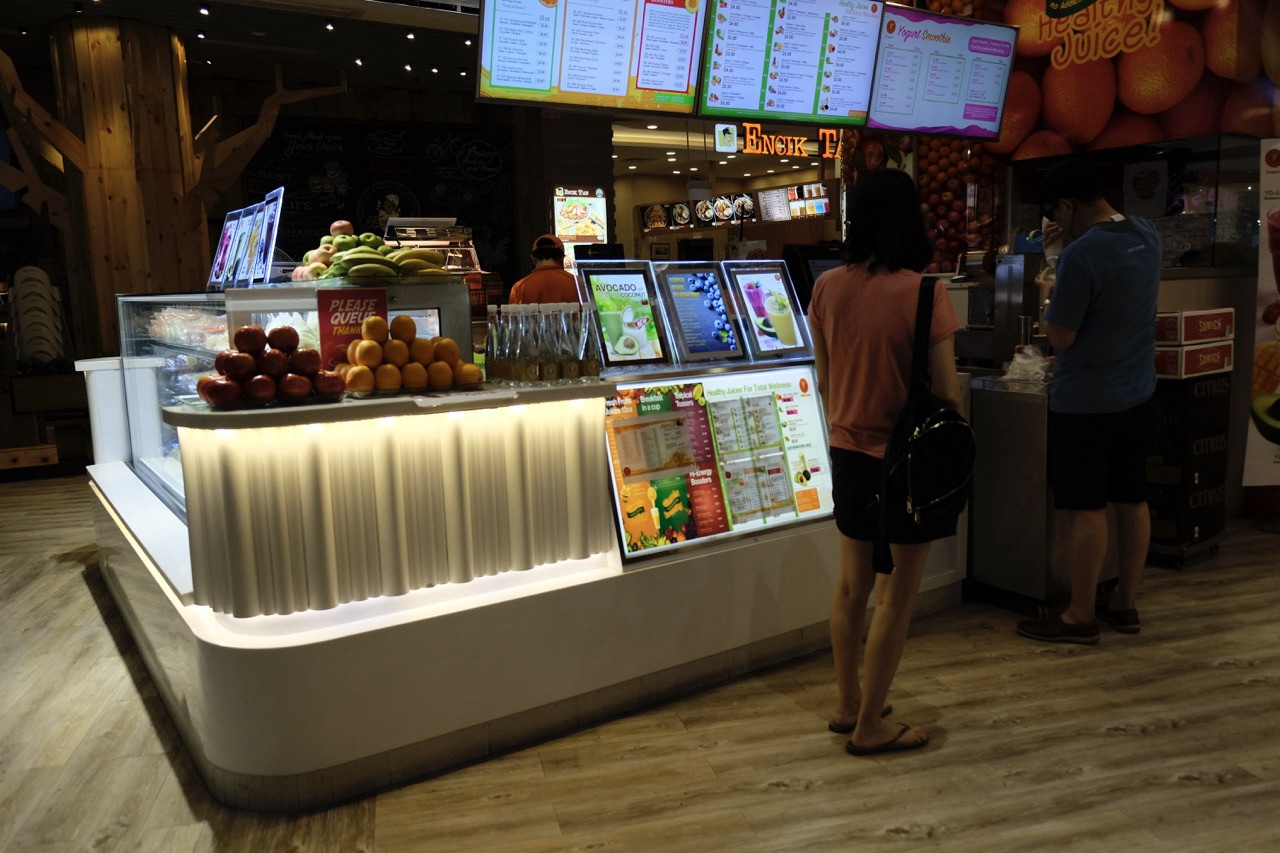
New October 2026 photographs in eduKatePunggol’s media library include a fruit juice stall inside Waterway Point, 83 Punggol Central, beside Punggol MRT. A freshly squeezed drink can be a tempting part of a family outing, but the phrase ‘fresh fruit juice’ doesn’t automatically tell us how much sugar is in the serving or whether whole fruit would be a better everyday choice. HealthHub explains that juicing removes much of the fibre and sense of fullness associated with eating the fruit, and Singapore’s Nutri-Grade system includes freshly prepared juices.
This is a practical, photo-led guide to choosing a drink at the mall without inventing the name, price or nutritional information of the particular photographed vendor. The photograph is labelled ‘Fruit Juice Stall at Waterway Point’—it is not sufficient to establish the operator’s legal entity, unit number, current menu or certificate. A dated mall list included SF Fruits & Juices, but we do not use that older directory to identify the person or business in the picture. The useful questions are: what fruits, how much juice, any added sugar, what does Nutri-Grade mean, and what does the family actually need?

Waterway Point fruit juice: the essentials
- Venue: Waterway Point, 83 Punggol Central, Singapore 828761.
- Photo evidence: one original October 2026 image catalogued as a fruit juice stall inside the mall.
- Vendor’s current name, unit and price: unverified from the image; follow the current mall directory and counter signage.
- HealthHub guidance: whole fruit generally provides more fibre and fullness than juice; choose water routinely and keep juice servings moderate.
- Important difference: no added sugar does not mean no sugar. Fruit contains naturally occurring sugars.
- Nutri-Grade: Singapore grades drinks A–D based on sugar and saturated fat. Freshly prepared juices are within the programme’s scope.
- Mandatory labels: C/D grades must generally be displayed at the point of purchase; A/B labels are optional, and qualifying small-business exemptions exist.
- Family check: ask what fruit is used, whether other ingredients are added, and which serving size is actually being sold.
- Safety: supervise children, check hygiene and food requirements, and don’t leave perishable drinks standing for unnecessarily long periods.
- Purpose: make an informed drink choice without treating one photograph as a nutrition test.
Official information: Health Promotion Board’s Nutri-Grade measures and HealthHub’s Nutri-Grade consumer guide, plus HealthHub’s healthier drinks advice. MOH’s freshly prepared drinks announcement explains the 30 December 2023 implementation. Always check current retail information on Waterway Point’s website.
What can actually be learned from the photograph
The October image identifies a fruit juice counter in the Waterway Point environment. It provides a useful visual reference for a parent who remembers the mall and wants to discuss drink choices. It does not establish whether the pictured vendor sells fresh oranges, mixed juices or bottled products on every date.
A counter can change its menu, tenants or opening arrangements after a photograph. The appropriate source for current purchases is the actual stall and mall directory. This article avoids creating a false brand profile from a general media-library title.
The words fresh, natural and no added sugar are different
Fresh commonly describes a drink prepared from ingredients near the time of sale. Natural may be a marketing description. No added sugar means the seller has not put extra sugar into the recipe. None of those phrases necessarily means the drink contains no sugar at all.
Fruit juice may contain substantial naturally occurring fructose and other sugars from the fruit. HealthHub’s Nutri-Grade guide explains that some juices are graded C or D even without additional sugar. Read the grade and ask about the current recipe rather than treating a familiar healthy-sounding word as complete evidence.
Why whole fruit and juice aren’t nutritionally identical
Eating an orange and drinking a glass of orange juice are related experiences but not identical. Juicing usually removes much of the pulp and fibre, making it easier to consume the sugar from multiple fruits quickly. Whole fruit generally requires more chewing and offers greater fullness.
HealthHub recommends moderation with fruit juice and promotes whole fruit where practical. A child who wants a fruit flavour can enjoy an actual piece of fruit instead of automatically choosing a large drink. This isn’t a ban on juice; it is an explanation of why the form matters.
What the Nutri-Grade label measures
Singapore’s Nutri-Grade system rates drinks from A to D using their sugar and saturated-fat contents. Grade A corresponds to lower amounts, while D indicates the highest range under the system. The grade is based on the beverage, not the quality of the shop’s customer service or whether the fruit looks appealing.
HealthHub encourages choosing drinks with lower sugar and saturated fat and limiting C/D drinks. Water remains a reliable ordinary choice. A label can help compare beverages, but individual nutritional needs and the drink’s serving size still matter.
Freshly prepared drinks joined the scheme in December 2023
MOH and HPB extended Nutri-Grade requirements to freshly prepared beverages from 30 December 2023. That scope includes freshly squeezed juices and smoothies prepared by hand for sale, as well as certain customisable drinks. The rules are not limited to cans and bottled soft drinks.
The introduction is useful background for anyone comparing a juice counter with packaged beverages. It doesn’t mean this article has checked the exact grade of the photographed stall. Look for the present menu and ask staff about any relevant posted information.
Why some stall menus don’t show an A or B badge
Under the rules, displaying a Nutri-Grade mark is mandatory for C and D drinks for businesses within scope, while A and B marks are optional. A drink without a visible grade is not necessarily noncompliant or automatically an A-rated product. The operator’s circumstances and current regulatory requirements matter.
HPB also describes concessions for qualifying smaller freshly prepared beverage businesses that meet the revenue and premises conditions. The image doesn’t establish whether that exception applies to its vendor. Avoid accusing a specific stall of breaking labelling rules based on one broad photograph.
No added sugar is not sugar-free
The Health Promotion Board explains that juice can contain naturally occurring sugars even when no sugar has been added during production. Sugar-free, by contrast, is a different claim. A family should not treat the two phrases as interchangeable when choosing drinks.
This distinction is particularly useful for older children beginning to understand food labels. Ask them to find the wording on a current product and explain what it does and doesn’t promise. Then compare serving sizes and any declared sugar amounts. The exercise is about reading accurately, not judging what another person drinks.
Fruit juice versus a fruit smoothie
A juice is often extracted liquid, while a smoothie can contain blended fruit with more pulp or other added ingredients. But recipes vary: some smoothies include syrup, sweetened milk or other components. A word such as smoothie isn’t a nutritional certificate.
If fibre or added sugar matters to your family, ask the current vendor which ingredients and preparation methods are used. An image of fruit displays at a counter cannot answer those questions. A home-prepared smoothie may offer different ingredients from a retail recipe, and even then portion size matters.
How to choose a sensible serving size
A large cup can contain substantially more fruit sugar than a small cup even when both have the same recipe. Don’t compare two drinks only by whether their labels say ‘no added sugar’. First establish the amount being served.
HealthHub’s general consumer advice suggests moderating juice intake, often around a cup rather than treating it as unlimited hydration. For an adult or child with specific dietary guidance, follow that advice rather than a generic blog serving rule. A family can choose a smaller portion when that better suits the occasion.
The easiest everyday drink is still water
When someone is thirsty after walking around Waterway Point, plain water is an easy way to hydrate without taking in sugar from a beverage. It doesn’t require a specialised diet plan. Juice may be enjoyed as a food choice, but doesn’t have to be the default answer to thirst.
A practical family habit is to carry an appropriate water bottle and choose a fruit drink occasionally for taste. That preserves flexibility and reduces the pressure to buy something sweet whenever a child sees a colourful counter.
Reading the menu without guessing from a fruit display
A stall may display fruit, bottles, pictures or menu boards. Some products may combine multiple fruits, ice, syrups or other ingredients. An attractive photograph of oranges or watermelons cannot tell the exact recipe of a mixed drink.
Read the actual item description and ask a short question: ‘Is this just fruit, or does it include syrup?’ Staff may explain what can be changed. If the seller doesn’t provide the information needed for an important restriction, choose another suitable option.
What to ask about added syrup
Some fruit drinks may include additional sugar syrup for sweetness, depending on the recipe. If avoiding added sugar is important, ask whether it is included and whether it can be omitted. Do not assume every juice counter uses syrup or that every product in the same store does.
The answer should come from the actual vendor, not the person taking the photograph. A clear question helps staff respond without requiring a long conversation at a busy point of sale. Respect a statement that a prepared component cannot be altered.
What to ask about milk or other additions
Fruit beverages can sometimes include milk, yoghurt or toppings. Those ingredients may affect saturated fat, allergens and texture. A person with a dairy allergy or a specific dietary requirement needs actual ingredient and preparation information.
The drink’s colour and name may not reveal every addition. Ask about the particular recipe and potential cross-contact when appropriate. If an essential safety question cannot be answered reliably, pick another drink rather than gambling on appearances.
An orange juice isn’t a whole orange
An orange can provide fibre along with vitamins and natural sugars. A squeezed glass can take the juice from more than one orange while leaving much of the fibre behind. That is one reason HealthHub recommends whole fruit as a regular choice and moderation with juice.
Parents can explain this without portraying the drink as dangerous. Juice can be pleasant, but a large cup isn’t nutritionally identical to biting into fruit. Older children can understand that processing changes how food is consumed even when its source is the same.
What if an older relative has difficulty chewing fruit?
HealthHub notes that in some situations, including seniors who have difficulty chewing whole fruit, a moderate amount of 100% juice may have a role. The specific choice depends on health circumstances and any professional dietary advice. A general preference for whole fruit doesn’t mean every person can eat it comfortably.
Ask the relative what they want and follow any relevant medical guidance. A compassionate food decision considers the actual person, not an abstract perfect menu. The photographed stall is simply one possible retail setting.
Children and juice: avoid using a cup as a reward for everything
A child may enjoy watching fruit being prepared, but repeated sweet drinks aren’t the only way to celebrate an outing. Water, whole fruit or a different snack may suit the family better. A small enjoyable cup from time to time can be part of a varied routine without becoming automatic after every visit.
Parents can ask the child to choose among a few realistic options and explain the decision. The aim is developing judgement, not creating guilt around a favourite flavour. The conversation should remain relaxed and age-appropriate.
After sports, think about hydration first
Punggol has parks, courts and walking routes, and someone may enter Waterway Point after an active outing. They might feel thirsty and tempted by a colourful fruit drink. For ordinary hydration, plain water remains a practical default; sports and health needs vary by duration and intensity.
A retail juice isn’t automatically a sports recovery drink. Don’t advertise an unverified stall product as an electrolyte replacement or medical solution. If a participant needs specific hydration advice, follow relevant professional guidance.
How cold drinks are handled in a crowded mall
A cold cup can develop condensation and may spill when carried through busy corridors or escalators. Keep lids secure where supplied, avoid balancing cups on an overloaded stroller and make sure children can handle the container appropriately.
Don’t stop suddenly in an escalator landing to open a drink or take a photograph. Move to a suitable public standing or seating area. Basic care for other shoppers is part of enjoying a public place.
Food safety is more than seeing fresh fruit
Attractive fruit on display doesn’t independently verify cleaning, equipment hygiene or food handling. A photograph cannot establish whether a particular vendor complies with every Singapore Food Agency requirement. Nor does one visually untidy moment alone prove an offence.
Consumers can observe the current setting, ask meaningful questions and use official channels for genuine concerns. Don’t accuse a photographed business without verified evidence. The useful standard is food safety, not speculation based on image aesthetics.
The vendor shown in the photo isn’t independently identified
A dated Waterway Point F&B list included a listing called SF Fruits & Juices, but the photograph’s own metadata only says ‘Fruit Juice Stall at Waterway Point’. Linking the two as if they necessarily represented the same operator would create a risk of misidentification.
This guide therefore uses the mall’s current directory for present location information and keeps the image caption descriptive. Anyone seeking a particular brand should verify it with the business itself. Careful uncertainty is better than an invented unit number.
How to use the grade when comparing two drinks
Suppose two freshly prepared drinks have visible Nutri-Grade marks. One is B and the other C. The B grade generally indicates lower amounts of the grade’s measured nutrients, but serving size and the rest of the person’s diet remain relevant.
HealthHub advises limiting C/D beverages and considering water. Don’t treat the grade as a comprehensive score of vitamins, fibre or food safety. It is an aid for understanding sugar and saturated fat, not a complete product review.
The importance of serving size in an example
Imagine an illustrative drink with 8 grams of sugar per 100 millilitres. A 250-millilitre serving would contain 20 grams if the concentration is uniform; a 500-millilitre cup would contain 40 grams. These are made-up educational values, not the photographed stall’s measured sugar content.
An older pupil can practise multiplying the label’s amount by the volume. The result shows why a larger cup matters even when the recipe is unchanged. Real comparisons should use the actual disclosed sugar percentage and the true cup size.
How to read a sugar percentage
Nutri-Grade labels for beverages can display sugar level as a percentage of total volume. The purpose is to let consumers compare the sugar content of drinks rather than rely only on terms like natural or premium. The actual label should be read as presented by the retailer.
A child can learn to identify a percentage and ask what it means. For important medical needs, families should use the full current nutritional information and professional advice rather than an approximate calculation from a photograph.
What about toppings added to drinks?
Singapore’s Nutri-Grade rules include declarations for sugar-containing toppings on freshly prepared beverage menus. Those may be relevant to drinks sold with pearls, jellies, ice cream or other extras, although the photographed fruit stall is not confirmed to sell any of them.
If a drink includes a topping, ask about the total choice, not just the base beverage. An extra ingredient can change sweetness, texture and cost. Consumers shouldn’t assume a no-added-sugar fruit base makes every finished combination sugar-free.
Ordering with family allergies in mind
Fruit allergies and reactions to additional ingredients can matter. Some customers may require information about nuts, dairy, shared blending equipment or other substances. Ask the vendor about the particular recipe and its preparation if the restriction is serious.
If the outlet cannot provide sufficient assurance, choose a different appropriate product. A person’s health needs take precedence over making use of a photographed option. This article does not certify allergen-free handling.
What is a sensible child-friendly question at the counter?
A child could practise saying, ‘Could I have a small juice with no added syrup, please?’—but only if that choice is actually offered by the vendor. Parents can help the child notice that clear questions may have clear answers, including ‘We don’t make it that way.’
Don’t hold up a busy queue for an extended lesson. Practise the phrase beforehand, allow the order to be completed and thank the staff. Everyday communication can become a learning experience without making workers part of a staged classroom exercise.
A family spending example without inventing live prices
Suppose a family has a hypothetical S$15 allowance for drinks. Three imagined cups cost S$4, S$4.50 and S$3.50, adding to S$12, leaving S$3. Those figures are not sourced from the photographed Waterway Point stall.
The exercise helps children learn addition and spending limits. In a real visit, use the current displayed menu and choose whether every person actually wants juice. A family budget is most useful when it prevents unnecessary purchases rather than encouraging everyone to spend the allowance.
The difference between a photograph and a nutritional test
An image of a brightly coloured juice may suggest the fruit used, but colour is affected by ingredients, lighting and camera processing. It cannot measure sugar, vitamins or cleanliness. A darker drink isn’t automatically healthier, and a pale drink isn’t automatically sugar-free.
Good photo captions stick to visible evidence. A writer should say ‘fruit juice stall in Waterway Point, October 2026’, not assign an unverified Nutri-Grade label to the drink. Current vendor information and regulatory labelling provide the relevant facts.
Waterway Point has several choices, not one compulsory drink
The mall contains food and beverage operators whose offerings change over time. A family may find plain water, a whole-fruit option elsewhere, coffee or tea, or a drink at another counter more suitable. The aim isn’t to persuade everyone to buy from the pictured stall.
Visitors can follow the mall’s current directory to find a choice that suits them. For broader meal options, the Punggol Food Guide owns that discovery task. This article focuses only on the nutrition and purchasing questions raised by a juice-stall photograph.
Avoid turning the Nutri-Grade badge into a personal judgement
A person might choose juice for taste, convenience or a specific dietary reason. Others may prefer water or whole fruit. The Nutri-Grade system is designed to inform, not to shame individual customers. The right response is to understand what the label measures and consider the context.
A child who learns that fruit juice contains natural sugar hasn’t learned that it is forbidden. They have learned to make an informed choice. That’s a more sustainable lesson than imposing arbitrary rules based on an appealing or unappealing photo.
How this article connects with other Punggol photo guides
Our Waterway Point fish soup guide handles meal components and hot soup. The Ya Kun and Toast Box breakfast article handles coffee and toast routines.
The juice guide owns a different question: understanding fresh drinks, fruit fibre and Nutri-Grade. Readers can navigate among them to plan a meal without one giant repetitive directory. Separate topic ownership improves both clarity and factual maintenance.
The five-step decision at a juice stall
Find the real current seller, check the actual fruit or blend, consider serving size, read any relevant Nutri-Grade information and ask about added ingredients or dietary requirements. Then decide whether juice is what you really want or if whole fruit or water would suit you better.
After purchase, carry the cup safely and enjoy it without blocking other mall users. It is a simple ordinary decision, but it draws on accurate observation, nutrition literacy, consumer care and courtesy. That’s what makes a local photograph useful beyond its visual appeal.
Frequently asked questions about fruit juice at Waterway Point
Is there a juice stall at Waterway Point?
An October 2026 original photograph in eduKatePunggol’s media library shows a counter identified as a fruit juice stall. Current vendor details should be verified.
Which exact brand is pictured?
Not independently confirmed. An old retailer list contains a fruit-and-juice listing, but the photo alone does not establish the same vendor.
Where is Waterway Point?
83 Punggol Central, Singapore 828761, beside Punggol MRT/LRT.
Is fresh juice always better than a soft drink?
It can contain nutrients from fruit, but natural sugars and serving size matter. HealthHub recommends moderation and makes water a useful default.
Does no added sugar mean zero sugar?
No. Fruit naturally contains sugars. Check the actual drink information.
Is whole fruit generally preferable?
Whole fruit usually provides more fibre and fullness. HealthHub advises whole fruit as a regular choice and moderation with juice.
What is Nutri-Grade?
Singapore’s A–D beverage grading system based on sugar and saturated-fat content.
Does Nutri-Grade apply to fresh juice?
Yes. Singapore extended its framework to freshly prepared beverages from 30 December 2023.
Must a juice counter display a C or D grade?
Generally for businesses in scope, with a concession for qualifying small firms. Check official regulatory requirements rather than infer noncompliance from a photo.
Why might A or B not be shown?
Displaying A and B marks is optional under the framework.
Can a juice with no extra syrup have a C or D grade?
Yes. Natural fruit sugars can lead to those grades.
Are C and D grades the same as a food-safety grade?
No. Nutri-Grade concerns sugar and saturated fat, not hygiene inspection outcomes.
Is a smoothie the same as juice?
They can differ in fibre and added ingredients. Ask the current vendor about the exact recipe.
What if my family needs a dairy-free drink?
Check whether the product includes milk, yoghurt or other relevant ingredients and whether preparation involves cross-contact.
How much sugar is in the photographed drink?
No particular finished drink has been nutritionally analysed or identified here.
Does the picture prove the stall is hygienic?
No. A photograph does not establish regulatory inspection results or food-handling compliance.
Can a senior have fruit juice?
Individual needs vary. HealthHub notes moderate 100% juice can have a place for some people who struggle to eat whole fruit; use relevant personal guidance.
Does choosing a small cup help?
The total sugar consumed can depend on the quantity. Check actual size and composition.
Can children order no syrup?
Only if the vendor offers that preparation. Ask politely and verify.
Is plain water a reasonable choice instead?
Yes. HealthHub promotes water as a routine beverage without sugar.
Where do I learn more about meals in Punggol?
Use the existing Punggol Food Guide and the related Waterway Point meal articles.
Official sources and connected reading
- Health Promotion Board — Nutri-Grade Requirements for Beverages.
- HealthHub — Make Better Drink Choices with Nutri-Grade.
- HealthHub — How to Order Healthier Drinks.
- MOH — Freshly Prepared Beverages and Nutri-Grade.
- HPB — No Added Sugar Fruit Juice Still Contains Natural Sugars.
- Waterway Point — Official Mall Directory.
- Punggol Food Guide.
- Complete Punggol Guide
Editorial checked 23 October 2026. Featured image is an original October 2026 Waterway Point media record. The photographed stall’s exact brand, unit number, present products, hygiene results and prices were not independently confirmed. Sugar and Nutri-Grade explanations are based on Singapore official sources. This is general consumer education, not individual medical or nutritional advice.


