
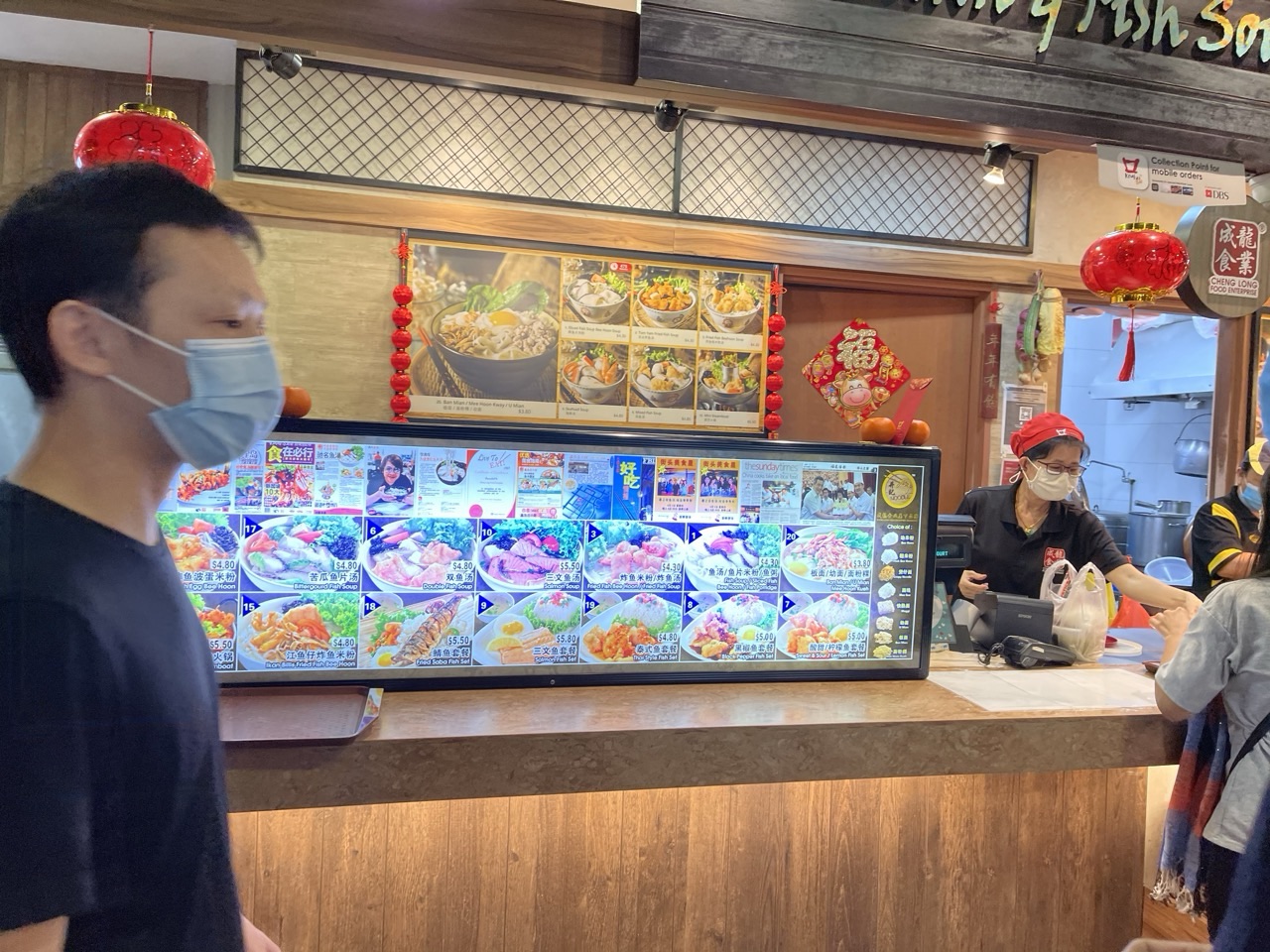
Looking for fish soup with rice at Waterway Point in Punggol? An October 2026 photo in eduKatePunggol’s media library shows a fish-soup-and-rice counter in a Waterway Point food-court setting. Waterway Point is at 83 Punggol Central, beside Punggol MRT. The photograph gives the place a useful visual reference, but it does not identify the stall operator reliably enough to promise that the exact counter, dish or price is still there today. Instead, this guide explains how to choose and order fish soup sensibly at a Punggol food court, especially with children or older family members.
The practical question is broader than ‘Is fish soup healthy?’ A person must read today’s menu, know whether the fish is sliced or fried, decide on rice or noodles, consider vegetables and broth, check allergens or dietary needs, plan the cost and carry the hot food to a table. Singapore’s Health Promotion Board recommends fish soup as one possible lighter hawker-food choice while specifically reminding diners that soup broths can contain significant sodium. A good meal is a combination of the actual ingredients, portion, personal needs and sensible choices—not a health guarantee attached to a food name.

Fish soup at Waterway Point: what to know first
- Location: Waterway Point, 83 Punggol Central, Singapore 828761.
- Photographic record: an October 2026 food-court image labelled ‘Fish Soup Rice Stall at Waterway Point Food Court’.
- Exact shop identity and unit: not independently confirmed from the photo; check the mall directory and current signs.
- Typical ordering distinctions: sliced versus fried fish if offered, rice versus noodles, and any optional vegetable or soup adjustments.
- HealthHub guidance: fish can be a source of lean protein; ask for more vegetables when available and be mindful of salty broth.
- Personal food needs: confirm fish allergies, ingredients, preparation and cross-contact with the current food vendor.
- Children: inspect for bones, check the food temperature, choose a suitable texture and supervise eating.
- Cost: read the live menu, including extra fish, rice, vegetable or takeaway charges, before ordering.
- Meal completion: clear your table and dispose of litter according to the actual food-court instructions.
The nutrition guidance is grounded in HealthHub’s Healthy Hawker Eats, Lower-Calorie Hawker Foods and My Healthy Plate. For the mall itself, use Waterway Point’s official directory. This is not a restaurant review, a list of supposedly verified menu prices or individual medical advice.
What a fish soup stall photograph can establish
The picture shows a food counter described in its source metadata as a fish soup rice stall. It can help a reader recognise the broad kind of dish available during the October 2026 photo visit. It cannot verify the fish species, the cooking oil, the sodium level, which staff worked that day or whether the same stall is trading now.
This is a useful distinction because food photos invite confident assumptions. A white broth might contain milk or other additions; a clear broth can still be highly seasoned. A picture of rice on a menu is not proof that brown rice is offered. The actual vendor and menu own the facts that matter to a person’s current meal.
Find the food court rather than assuming the same counter is permanent
Waterway Point has an East Wing and West Wing, with food choices on several levels. A current independent directory lists a food-court option in the West Wing on Level 2, but this should not be substituted for today’s mall signs when locating the photographed fish soup counter. The photo metadata doesn’t establish the unit number and does not prove that the operator has remained unchanged.
Begin at 83 Punggol Central, check the official mall directory and follow the wing, floor and unit information. If fish soup is the specific reason for your trip, confirm its availability before travelling. Someone simply looking for a balanced lunch can remain flexible and choose among current vendors.
Sliced fish and fried fish may be different menu choices
Many Singapore fish soup stalls offer different ways of preparing the fish. Sliced fish usually refers to pieces cooked in broth, while fried fish may be battered or fried separately. These choices can change the dish’s fat content, texture and taste. However, not every stall offers both and the same label can hide different recipes.
Ask the current stall what is included rather than insisting that its fish soup match a generic description. If you want to follow HealthHub’s suggestion of lighter preparation, check whether the fish is fried and how the broth is made. Your preference can be respectful and specific without turning an ordinary lunch into an interrogation.
Why the broth deserves attention
A fish soup bowl can look light and still contain a substantial amount of seasoning. HealthHub recommends clear-based soups as one type of healthier eating-out option but also advises diners not to finish soup broth automatically because it may be high in salt. The relevant decision is how much broth you drink and what has been added, not whether the soup looks pale.
If the counter offers a less salty preparation or sauces on the side, ask politely. A person on a clinician-prescribed sodium restriction should follow their medical advice rather than a general blog tip. The photograph cannot estimate sodium content, and this guide does not claim a verified value for the dish shown.
The difference between eating fish and drinking the soup
Fish can provide protein, while broth supplies flavour and fluid but may also carry salt. They serve different nutritional roles in a meal. A diner might choose to eat the fish and vegetables without finishing every drop of soup. That is consistent with HealthHub’s advice about sodium but is not a rule that everybody must follow in exactly the same way.
For children, temperature is an additional issue: soup can remain very hot even when the bowl looks comfortable to touch. An adult can portion and cool food appropriately before a younger child eats. A simple act of checking the actual food is more useful than assuming that a food-court meal is immediately ready.
Rice, bee hoon and noodles solve different preferences
Some fish soup counters serve plain rice, while others offer different noodle choices. The combination depends on the vendor. A person who wants a more filling meal might choose rice; another might prefer noodles. HealthHub encourages wholegrains where available, but no photograph proves that this specific stall provides brown rice or wholegrain bee hoon.
Read the menu carefully before ordering. If a wholegrain option is unavailable, don’t turn the meal into a failure. My Healthy Plate is intended as flexible guidance across the day and week. Other meals can provide different fibre sources, fruit and vegetables. The key is consistency, not perfection in one bowl.
Vegetables are easy to forget in a soup meal
Fish and rice may dominate the bowl, leaving only a small amount of greens. HealthHub specifically suggests asking for extra vegetables when ordering fish-slice soup or similar dishes. If the vendor offers this option, a family can use it to improve the meal’s balance. If not, a vegetable side or fruit elsewhere in the day may help.
A photograph showing a green leaf is not a reliable calculation of vegetable servings. Portion sizes matter. Rather than guess how much spinach or chye sim is present, look at the bowl you’re actually buying. A child can learn to identify the food groups without needing a measuring scale at lunch.
My Healthy Plate is guidance, not a photograph
The Health Promotion Board’s Quarter–Quarter–Half model encourages a quarter of the meal from wholegrains, a quarter from protein and about half from vegetables and fruit across balanced eating patterns. A fish soup meal could contribute fish and carbohydrates, and may contain vegetables, but it cannot be declared perfectly balanced from a blurry counter image.
The method works as a check: what protein is present, what carbohydrate was chosen and where are the vegetables or fruit? Families can make a reasonable adjustment based on what’s available. If this meal has fewer vegetables, include them later. HealthHub explicitly presents the approach as flexible, which is more realistic than treating every lunch as a nutrition exam.
A working adult’s quick lunch
Some residents visit Waterway Point during an errand or break from work. A fish soup with rice may be a convenient choice, but the actual time depends on queue length, how the vendor prepares orders and whether tables are available. A picture of a counter cannot promise an express pickup or a fixed number of minutes.
Plan around your next commitment rather than joining a long queue and hoping it will move quickly. Confirm whether takeaway is offered, whether it adds a charge and whether carrying hot soup is practical for the next journey. A quick meal should not create a risk of spilling food on crowded public transport.
A family lunch with two very different appetites
One child may enjoy clear fish soup; a teenager may need a more substantial portion; a grandparent may prefer a gentler dish with a specific ingredient adjustment. One stall may accommodate those needs, but you should not assume it can make every requested change. Ask about portions and sides, then choose a meal that genuinely suits each person.
The goal is to eat together comfortably. If someone has a medical or allergy requirement the vendor cannot confirm, another meal may be appropriate. A family menu decision does not have to be identical for all members. Different people can make different sensible choices.
What to ask before ordering for a child
Ask whether the fish contains bones and examine the served fish carefully; do not assume all small bones have been removed. Check that the soup and rice are at a suitable temperature, and portion the meal according to the child’s age and ability. Young children require appropriate supervision while eating, particularly with hot liquids.
Also ask about ingredients if the child has an allergy or dietary restriction. The word fish soup does not disclose every stock component, sauce or garnish. For an infant or child with feeding difficulties, use appropriate personalised professional guidance rather than treating a general food guide as a feeding plan.
Fish allergies are a reason to verify, not guess
A fish allergy can be serious. The appearance of a bowl or a vendor’s name does not establish whether it contains fish, seafood-derived ingredients or cross-contact from shared equipment. If someone has an allergy, clearly communicate the specific ingredient concern to the staff and ask about ingredients and preparation procedures.
If the stall cannot provide adequate assurance for the person’s needs, choose another appropriate food source. Do not suggest removing visible fish pieces makes a broth allergy-safe. A photo-led article cannot certify ingredients or kitchen processes it has not inspected.
The difference between preference and a necessary restriction
Some people prefer less chilli or no fried fish, while others must avoid an ingredient for medical, religious or personal reasons. Staff may be able to accommodate certain preferences but not every restriction. Phrase the request clearly and respectfully, and listen to the answer. ‘Can this be prepared without the sauce?’ is a different question from ‘Can you guarantee there was no shared-contact exposure?’
Never claim a stall is halal-certified, vegetarian-friendly or allergen-free from its menu photograph. Check the relevant current displayed certification and actual ingredients. Protecting a person’s needs is more important than trying the stall named in an old image caption.
Reading a price board honestly
Fish soup prices depend on portion, fish type, rice or noodles, additions and sometimes takeaway packaging. A current price cannot be extracted from the media caption. If a family is budgeting, check the real board and ask about the cost before confirming the order.
A hypothetical exercise might give one adult S$10 for a meal. If the main dish costs an invented S$6.80 and water S$1.20, S$2 remains. Those are example numbers for arithmetic, not verified Waterway Point charges. Real-life Mathematics begins by identifying which numbers are facts.
How to handle a line without guessing its speed
A busy counter can attract a line because diners like the food, because the preparation is slow or simply because several customers arrive together. One photograph cannot rank the dish or establish its average waiting time. A person with a short lunch break should consider the live queue and ask about the wait where practical.
Parents can model patient behaviour: stand in the designated queue, avoid blocking neighbouring counters and have the order ready when it is their turn. If a young child becomes restless, one adult can supervise them away from the busy counter while another orders, where the family’s arrangements permit.
Safe movement with hot soup
Carry hot bowls deliberately rather than rushing between people. Do not stack loose containers on a stroller handle or ask a small child to carry a heavy tray. Choose a table and route that can be reached without weaving through a crowd. If you spill something, alert staff so the area can be made safe.
A meal that is only a few metres away can still involve a hazard if the carrying route is narrow. Restaurant and food-court spaces are shared. A parent who slows down while carrying soup is helping the next diner as much as their own family.
Tables, seating and shared spaces
Food-court tables may be occupied by diners from different stalls. Use only the seats you need, allow others room to move and avoid leaving bags unattended to reserve tables. A person who needs accessible seating should look for an appropriate space rather than assume every row has the same clearance.
After eating, follow the venue’s tray return and litter instructions. Singapore’s clean-table rules apply to food courts and hawker centres, with detailed guidance from NEA. Even without knowing the photographed counter’s specific return station, a family can learn to leave the table ready for the next diner.
How to keep fish soup from turning into an awkward takeaway
Soup is less convenient to carry than a dry rice dish. If you need takeaway, ask how the broth is packed and whether the packaging is suitable for your onward trip. Ensure lids are secure and keep hot containers upright. Never open a hot soup tub while on a moving bus or train.
If the meal needs to sit for a long time before consumption, consider food temperature and safe handling. SFA provides general consumer food-safety guidance, and the responsible vendor should explain any packaging or storage instructions. A photo cannot justify guessing how long the soup remains safe at room temperature.
When you are eating before a school activity
A family might stop at Waterway Point before a child’s enrichment class, film or another outing. Plan the meal around the child’s needs and the actual appointment time. A hot soup dish may take longer to eat than a snack, particularly if the child needs help checking fish bones and cooling the broth.
Don’t build a schedule where a child has to rush to finish a very hot bowl. If time is short, a simpler alternative or a later meal may be preferable. The point of a practical guide is to support the real outing rather than insist that a particular dish fits every situation.
When you are eating after sport
After activity, people may be hungry and thirsty. A meal containing fish and a carbohydrate source can contribute nutrients, but individual requirements differ. Plain water is a sensible routine choice for many diners. A child returning from sport may also need a chance to rest rather than being hurried through an ordering line.
Do not make claims that this specific pictured soup accelerates recovery or provides a measured amount of protein. Those facts require actual ingredients and portion data. For relevant medical or specialist sports needs, professional guidance should take priority over casual menu descriptions.
What does ‘healthier choice’ really mean?
Healthier is comparative and contextual. A soup may be less oily than another meal but still contain substantial sodium. Fried fish may add energy and fat compared with non-fried fish, while a larger portion may or may not suit the diner. HealthHub’s general principles help readers make these distinctions without requiring one universal ranking.
The important question is ‘Healthier for what purpose and for whom?’ A parent might be trying to include vegetables; another person may have a salt restriction; somebody else simply needs a convenient ordinary lunch. Avoid declaring the photographed stall a certified health option when no such certification was verified.
Fish soup isn’t always a low-calorie dish
People sometimes assume that soup automatically contains fewer calories than a dry meal. Recipes and portions vary: oil, fried toppings, milk, noodles, rice and extras can alter the total. Without a weighed recipe or vendor nutrition disclosure, this article cannot assign a calorie count to the photographed dish.
A simple useful action is to consider the meal’s actual composition rather than fixate on the word soup. HealthHub recommends looking at cooking methods, vegetables, wholegrain choices and the amount of broth consumed. The family can make an informed choice without pretending to know a number not provided by the seller.
Comparing fish soup with another food-court option
Imagine you are deciding between a fish soup meal and another rice dish. Compare what matters to you: preparation method, sides, price, availability, food restrictions and how much time you have. There is no automatic winner. A dish advertised with vegetables may still have a different portion from what a diner expects.
Instead of copying internet ratings, read the current menu and ask precise questions. An older person may prefer a soup texture; a child may enjoy a familiar rice dish. A practical comparison respects the diners rather than reducing food to a generic label.
The food-court photograph is an invitation to observe carefully
Look at the counter from the customer’s position. A diner needs to read the board, understand possible combinations and then interact with a person who is preparing food for multiple customers. A child can learn to say ‘One portion with rice, please’ and clarify whether extra vegetables are available. The interaction builds confidence in ordinary community life.
Keep the learning gentle. Do not hold up a busy line so the child can conduct a long interview. Practise the words before reaching the counter and accept that staff may be unable to make a particular adjustment. Respect for workers is part of using a public food space.
A Science question: why does hot soup cool?
A bowl of soup loses thermal energy to its surroundings, and the rate depends on temperature differences, container properties, airflow and other factors. Children can observe that food becomes more comfortable to eat after cooling, but must not experiment with dangerously hot liquids or infer exact temperatures from appearance.
At home, an older pupil could investigate cooling using appropriately safe warm water under adult supervision and a suitable thermometer, recording time and temperature. The experiment should be separate from eating at the mall. A food photograph cannot show the temperature of the dish when served.
A Mathematics question: how to compare value
A family might want to compare two menu options with different prices and portion sizes. But ‘value’ isn’t simply the lower price. Dietary needs, food quality and whether the person will enjoy the meal also matter. A hypothetical S$7 meal containing rice, fish and vegetables can be compared with a hypothetical S$9 version with extras without claiming these are real prices.
An older student can calculate the price difference and discuss whether the extras matter to the eater. A good conclusion explains assumptions rather than pretending one number decides every preference. This is the same reasoning used in more complex everyday financial decisions.
An English composition prompt grounded in a real place
Ask a pupil to describe a food-court scene without inventing facts about real customers. They can write about menus, queues, hot dishes and the sequence of ordering. The picture offers setting details, but dialogue and emotional experiences should be identified as fictional if the pupil creates a story.
That separation matters when using local images for learning. A photograph can inspire creative writing without becoming evidence that a particular customer said something. Accuracy and imagination work well together when the writer knows where each belongs.
A Social Studies conversation about food-court work
A fish soup counter depends on staff preparation, ingredients, cleaning, payment systems and shared dining infrastructure. A shopper mostly sees the last part of the process. Children can learn that a prepared meal represents work by multiple people, and that courteous ordering and clearing help keep the public setting pleasant.
A photograph is not evidence about any particular worker’s hours, pay or employment conditions. Those are separate questions requiring appropriate sources. The value of the image is to make ordinary public service visible without claiming to know the private circumstances of individuals pictured.
Why a queue photograph is not an independent review
An image of people waiting at a restaurant elsewhere in Waterway Point may make a place look popular. But queue length alone cannot measure food quality, value, hygiene or satisfaction. Some customers may be collecting multiple orders, and different counters prepare dishes at different speeds.
A reliable food guide should distinguish a scene photograph from an evaluated review. Here, we do not invent ratings or testimonials for the fish soup stall. Instead, we give readers a set of questions that help them decide whether a real meal meets their needs.
Our October food photos are snapshots, not a live vendor directory
Waterway Point tenants and menus can change. A source image uploaded in October documents a food counter as photographed, but a visitor in December or next year needs current information. The original image should retain its date and descriptive caption so future readers understand its evidentiary limit.
That doesn’t make the photograph useless. It helps readers see the setting and understand the kind of food-court question they may encounter. The live answer—exact counter, menu, price, allergen information—belongs with the current vendor.
A practical checklist for the next meal
First, find the actual current fish soup counter through the mall’s directory. Second, read the displayed menu for fish preparation, rice or noodles and optional vegetables. Third, ask clearly about an allergy, dietary restriction or preparation concern if relevant. Fourth, verify the full price, order calmly and plan a safe way to carry hot food to a table.
Finally, give everyone time to eat comfortably, supervise children as needed and clear the dining area under the venue’s rules. A short routine like this is more useful than an unsupported promise that one photograph shows Punggol’s healthiest or best-value bowl.


Frequently asked questions about fish soup at Waterway Point
Where is Waterway Point?
83 Punggol Central, Singapore 828761, adjacent to Punggol MRT/LRT.
Is there a fish soup rice stall at Waterway Point?
An October 2026 eduKatePunggol photograph documents a counter described by that name. Current vendor identity and menu should be verified with the mall.
Which unit sells it today?
A current, verified unit number is not established here. Use the official Waterway Point directory or current on-site signs.
Is fish soup always healthy?
Not automatically. Preparation, portion, vegetables, accompaniments and broth sodium all matter. HealthHub recommends thoughtful choices rather than relying on a dish name.
What does HealthHub say about fish soup?
It identifies fish-slice soups as a possible lighter hawker option, recommends more vegetables where available and cautions against drinking all salty broth.
Should I order plain rice or noodles?
That depends on preference and current options; wholegrain choices can be beneficial if offered. Neither is guaranteed by the photo.
Does the stall offer brown rice?
Not verified. Ask the current stall and use other wholegrain options across the day if appropriate.
Can I ask for extra vegetables?
Many stalls may offer that option, but the exact counter’s menu must be checked. HealthHub encourages more vegetables in meals.
Is fried fish the same as sliced fish?
They can involve different cooking methods and nutritional profiles. Ask which preparation the stall uses.
How much is the meal?
The photographed price was not verified. Read the current menu, including additional rice, ingredients and takeaway charges.
Is the fish boneless?
Do not assume so. Check the actual serving for bones, especially for children.
Is the soup safe for somebody allergic to fish?
No general assurance can be provided. Seek specific ingredient and cross-contact information and avoid the dish if safe suitability cannot be confirmed.
Does clear broth always mean low sodium?
No. Clear soup can contain substantial seasoning. HealthHub advises being mindful of broth sodium.
Is it suitable for a young child?
Suitability depends on the child’s age, feeding abilities, ingredients, fish bones and food temperature. Supervise appropriately and follow any individual health advice.
What if the photographed stall has closed?
Use the current directory to find an available food option; an older photo is not a guarantee that the vendor remains.
Can I get takeaway?
That depends on the actual vendor; confirm packaging, extra charges and safe handling of hot soup.
Can I eat fish soup before or after exercise?
It can contribute to an ordinary meal, but exact nutritional needs vary. This article makes no performance or recovery claim about the photographed bowl.
Is fish soup a halal-certified option?
No blanket claim is made. Check current MUIS certification or the actual vendor’s relevant displayed information.
What should a person limiting salt do?
Use personal medical advice when relevant; general HealthHub guidance recommends moderation with salty broth and seasonings.
Where can I read a broader Punggol food guide?
Follow the existing Punggol food overview and Waterway Point directory rather than relying on this photo-based article for all restaurants.
Evidence and related guides
- HealthHub — Healthy Hawker Eats.
- HealthHub — Lower-Calorie Hawker Foods.
- HealthHub — Plan Your Meals with My Healthy Plate.
- Waterway Point — Current Mall Directory.
- Singapore Food Agency — Food Safety Information.
- Healthy Hawker and Grocery Choices in Punggol.
- Punggol Food Guide.
- Complete Punggol Guide.
Article checked 23 October 2026. Images are dated original Waterway Point media assets uploaded in October 2026. The page offers general, evidence-based meal-selection guidance and does not assert a current fish soup stall’s identity, price, halal status, nutrition panel or medical suitability. Vendor and official health information should guide individual decisions.


