
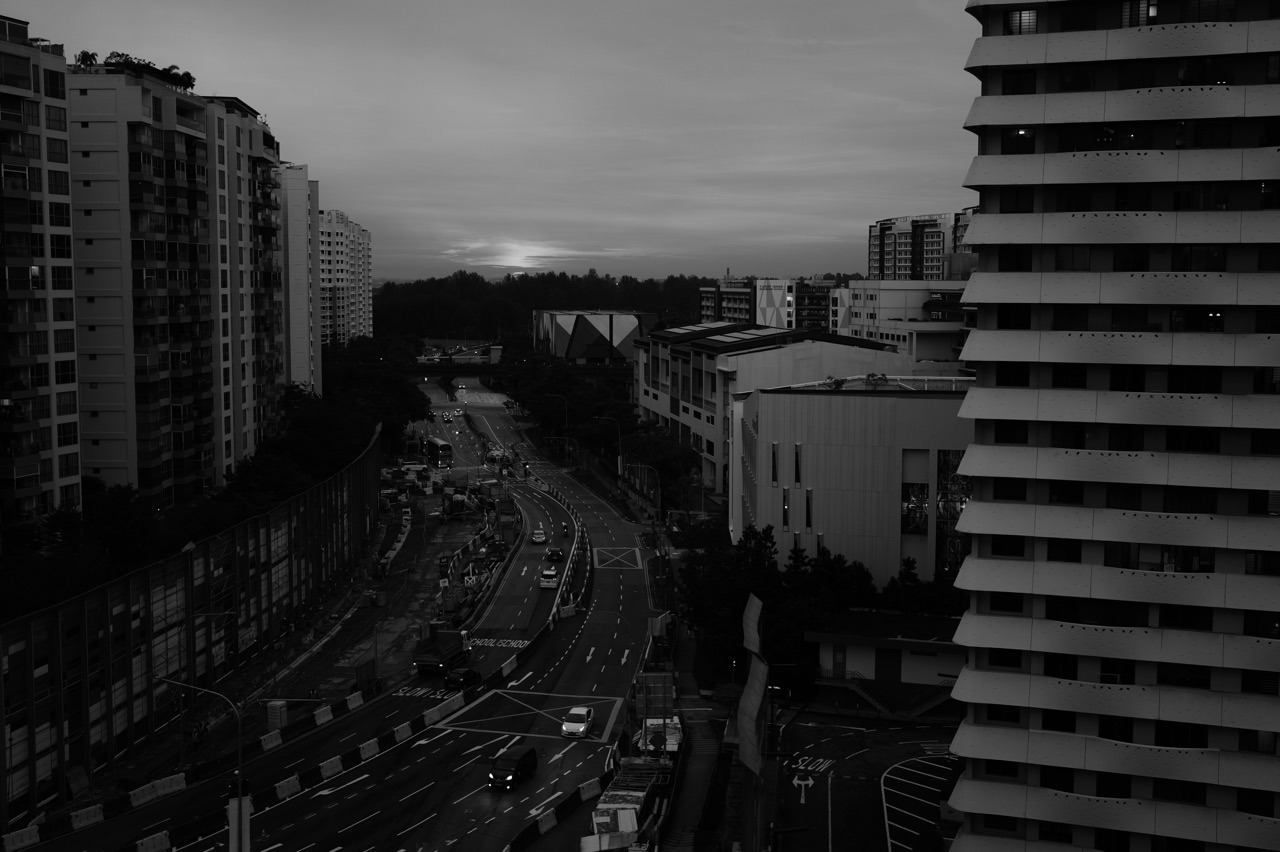
A Punggol HDB flat is normally bought on a 99-year lease, not as a promise that the government will rebuild the block or pay for a replacement home when the lease ends. Singapore has several different programmes for ageing public housing. The Selective En bloc Redevelopment Scheme (SERS) involves rare government-led compulsory acquisition of selected blocks, with compensation and defined rehousing options. The future Voluntary Early Redevelopment Scheme (VERS) is being prepared for some older precincts, potentially when their flats are around 70 years old, with residents voting under rules still being developed. The Home Improvement Programme (HIP), HIP II and EASE concern improving or adapting existing flats; they are not automatically redevelopment schemes.
The crucial status as at 23 October 2026: HDB says there are currently no plans for further SERS projects, because most sites with high redevelopment potential have already been selected. The government has signalled that the first VERS sites are likely in the first half of the 2030s, following public consultation and development of the framework. It has not announced that every HDB block will receive VERS, a guaranteed payout percentage or a confirmed voting threshold for every future precinct. No official announcement cited here identifies an existing Punggol block as a selected VERS pilot.
Punggol’s contemporary public-housing growth began later than Singapore’s original new towns, and the estate contains projects of different vintages around its MRT, LRT, Waterway and northern districts. Residents may reasonably want to understand how long their home’s lease will last and what happens as the town ages, but a current map or an estate agent’s claim cannot establish a future SERS or VERS invitation. This Understanding Punggol | Things to Know guide is based on HDB, Ministry of National Development (MND) and CPF Board information checked in October 2026. It explains what is in force, what has been proposed and how to make housing and retirement decisions without speculative promises.
What the three programmes mean
- Ordinary 99-year HDB lease: a time-limited ownership interest whose actual commencement and remaining term must be checked for each flat.
- SERS: rare, selective compulsory acquisition under a current framework with a structured rehousing process for eligible households.
- Current SERS status: HDB says it has no plans for more SERS projects at present.
- VERS: future voluntary early redevelopment framework being developed for selected ageing precincts, discussed at about 70 years of age.
- VERS timing: first selected sites expected in the first half of the 2030s, not an open universal application available today.
- VERS voting: resident-owner participation is planned; precise threshold and full procedure depend on eventual official rules.
- VERS compensation: government has indicated it will be less generous than SERS; exact future packages are not yet a universal approved entitlement.
- HIP: upgrade and repair programme for selected older blocks, normally after a qualifying poll.
- HIP II: a planned later round of improvements intended for ageing flats during the second half of their leases; not an automatic lease extension.
- EASE: optional accessibility improvements for eligible residents; may be available independently of a block’s HIP selection.
- HDB resale: the remaining lease affects price, financing, CPF usage, retirement plans and future buyers’ circumstances.
- CPF planning: full CPF housing usage and certain retirement withdrawal options depend on whether the remaining lease can last the relevant person until age 95.
- Do not assume: a waterfront location, nearby MRT station or valuable plot entitles a Punggol block to SERS.
- Most useful first check: inspect your actual HDB flat information and remaining lease in the authorised HDB services.
1. A lease is different from perpetual ownership
A buyer can own the lawful leasehold interest in an HDB flat, sell it subject to rules and enjoy it as a home for many years. The underlying tenure is normally 99 years, however, and does not automatically renew at the end. The property interest is therefore different from perpetual ownership of land.
A family may have bought a flat thirty years after its lease commenced. The legal term remaining may be shorter than ninety-nine years even if the keys in their pocket are new to them. A resale transaction does not restart the original lease from year zero.
Understanding tenure is essential to honest property comparison. A flat’s attractive condition or new kitchen does not erase the years already elapsed under its title.
2. The lease commencement date is the operative record
An HDB project may be announced, built, completed and occupied across different calendar years. Its legal lease commencement is not necessarily the same as the year a real estate agent describes as “built in”. A family should check the official HDB record for the particular flat or development.
For practical calculations, use the actual remaining lease displayed by HDB rather than estimating solely from the first photograph of the project. A headline saying “20-year-old block” is useful context but insufficient for a legal or financing decision.
If the record is unclear, ask HDB through its authorised service. Do not assume a second-hand advertisement has accurately calculated the remaining months.
3. The end of a 99-year lease is not SERS
A normal lease reaching the end of its term is a different situation from the government selecting a block for early redevelopment under SERS. SERS involves a formal acquisition and rehousing arrangement. Ordinary lease expiry does not automatically produce the same compensation or a fresh 99-year flat.
This distinction is particularly important when residents speak of public housing as an asset that must always appreciate. The value of a finite lease depends partly on the time remaining, even though broader property prices also respond to location and market conditions.
A responsible long-term plan acknowledges that tenure matters rather than relying on a hypothetical compulsory acquisition.
4. Punggol contains different housing generations
Punggol’s contemporary residential expansion includes early Punggol 21 neighbourhoods, Waterway projects, Northshore, Punggol Point and newer developments associated with the northern district. They were not all completed in one year, and their actual lease commencement dates can differ.
A resident should avoid talking about the whole town as though every block has the same lease age. That error makes comparisons of resale price, retirement suitability and future redevelopment speculation unreliable.
Start with the exact block and legal record. An HDB town is a planning and community entity; a residential lease belongs to a particular property.
5. What SERS was created to achieve
HDB introduced the Selective En bloc Redevelopment Scheme in August 1995 to rejuvenate selected older estates and optimise land use where redevelopment offers particular benefits. The scheme has allowed qualifying owners to move to new flats with modern facilities under defined compensation and rehousing arrangements.
The emphasis is selective. Not every ageing flat has the same redevelopment potential or land constraints, and the government has never promised to acquire all HDB units early. The historic project list reflects particular planning decisions at particular times.
For a Punggol family, past SERS examples elsewhere in Singapore explain the mechanism, not the probability that their own block will be chosen.
6. SERS is compulsory acquisition, not a popularity poll
Under SERS, an announced affected site is acquired through the applicable public process. Owners do not simply vote against a proposed improvement and leave their flat unchanged for the entire lease. The formal acquisition changes the housing position and triggers the scheme’s specific compensation and options.
That makes SERS different from HIP polling and the planned voluntary nature of VERS. The legal instrument matters: a compulsory acquisition cannot be interpreted as an ordinary contractor refurbishment.
A homeowner who receives a genuine SERS notice should read the official site-specific conditions, identify the deadlines and seek appropriate financial or legal advice where necessary.
7. SERS status in 2026 is unusually important
HDB’s currently published SERS page says there are no plans for more SERS projects at present. This is a material 2026 fact. Old articles speculating that a particular Punggol plot might be “next for SERS” should not be treated as current official announcements.
The statement does not repeal every law governing acquisition or promise that the government can never change policy. It simply means readers should not make present commitments based on an anticipated SERS exercise without actual credible evidence.
A seller using “SERS potential” to justify a particular asking price is providing a speculative claim, not an approved entitlement.
8. Compensation under SERS involves the actual project
HDB’s SERS approach includes compensation and appropriate rehousing benefits for eligible owners, with the exact options affected by the site’s formal notice and household status. Historic arrangements can include market-value-based compensation, removal-related allowances and access to designated replacement flat options.
However, the details may differ across exercises and may have changed over time. A family should not copy one 2016 compensation example and claim that it is the amount automatically payable to another block in 2026.
If a genuine SERS announcement is ever made, the property-specific notice and current HDB officer guidance should take precedence.
9. A new replacement flat may still require money
An owner who receives compensation under a redevelopment exercise may be offered the opportunity to purchase a replacement flat under the specific rehousing programme. The purchase price, lease duration, housing loan, grants and available sale proceeds determine whether additional funds are needed.
It is false to describe every SERS outcome as “the government gives everyone a brand-new flat free of charge”. A replacement can have a different floor area, location and financing structure. Subsidies and options can help while leaving important choices.
Households should model the full replacement cost and monthly affordability, not just compare the nominal compensation with the earlier purchase price.
10. Household circumstances affect rehousing options
A family of four, an older couple and a single surviving flat owner may have different priorities and eligibility conditions. SERS rehousing details can also depend on previous housing subsidies, property ownership and marital or family status.
An older owner may prefer a shorter-lease flat or smaller home. Another household may need proximity to a child’s school or a medical provider. The formal benefits determine available choices, but the actual family’s needs shape the decision.
Do not promise that every person receives identical priority, identical cash or an unrestricted choice of any HDB flat in Singapore.
11. The SERS process has real deadlines
An official acquisition and rehousing process includes decisions, applications, booking arrangements and surrender or transfer dates. Missing a required booking or eligibility deadline can affect benefits under the actual terms.
A family should keep a secure file containing the formal notice, valuation, relevant correspondence and housing finances. If a household member is overseas or requires accessibility assistance, contact the responsible officer promptly.
These procedures apply to people actually affected by a genuine notice. A speculative rumour about a future Punggol exercise is not an invitation to apply for SERS benefits.
12. What VERS is intended to change
VERS is the planned Voluntary Early Redevelopment Scheme. Its objective is to provide a way to progressively redevelop older HDB precincts before the very end of their leases, with residents participating in the decision rather than through the same compulsory selection process as SERS.
Public announcements have discussed flats of around 70 years old and a voting-based approach. This is strategic policy direction, not a complete manual available for every block in 2026.
The word voluntary matters. It signals a different process from SERS, but the eventual precise eligibility, voting and compensation rules require official confirmation.
13. The first VERS sites are not operating today
MND has stated that the initial VERS sites are likely to start in the first half of the 2030s, following consultation and implementation planning. That makes the programme a future development in October 2026, not an ongoing application that a Punggol homeowner can submit immediately.
Residents should not pay an agent to add their block to a fictitious “VERS priority list”. Nor should they claim a confirmed 2027 ballot date from an old speech about future policy goals.
Monitor HDB and MND for the actual framework and site selection announcements. A credible future plan keeps its timing conditional where government statements do.
14. VERS will not necessarily include every old block
Singapore has many ageing HDB developments, and redevelopment requires land, replacement housing and substantial public resources. The programme has been described as proceeding selectively or progressively rather than instantly acquiring every flat once its lease reaches seventy years.
An old flat’s age alone will not establish that it has an approved VERS offer. The eventual programme will need to balance national supply, urban planning, financial sustainability and residents’ needs.
For Punggol, no site should be presented as selected without a dated official announcement. A block’s proximity to Punggol Coast MRT or a commercial area is not enough evidence.
15. VERS voting threshold must not be invented
Officials have described resident voting and a need for sufficient support as part of the proposed VERS mechanism. However, the final detailed threshold and process cannot be universally assumed from HIP’s 75% approval rule or from the vote in another kind of private property redevelopment.
A housing policy article should not simply announce “every VERS precinct requires 80%” without a current final statutory basis. The future system may have specific eligible voters, records and procedural protections.
Residents can understand the intention now while remaining clear that detailed implementing rules will come from the government.
16. VERS compensation has not become a universal published entitlement
Government explanations have indicated that VERS compensation will be less generous than SERS, partly because much older flats have shorter remaining leases and the scheme may operate on a wider scale. A definite compensation table for every future household was not in force for a Punggol VERS site on the date of this guide.
A seller claiming “VERS guarantees S$400,000 on this block” is making an unsupported prediction unless a valid official site-specific offer exists. Future public consultations may help define fairness and options.
The correct financial assumption for a homeowner today is that VERS benefits are uncertain, not a booked addition to retirement savings.
17. A voluntary decision involves different households’ interests
A future precinct vote can raise difficult trade-offs. Some residents may prefer staying in familiar homes with social networks and accessible services. Others may want newer flats, upgraded facilities or a clearer long-term tenure arrangement. Family size, age, finances and disability needs can affect preferences.
The system must ultimately determine how valid collective decisions operate while protecting rights under law. Residents should not harass neighbours who might prefer a different option. Honest information is essential to community trust.
Planning material should present potential choices fairly rather than campaign for one outcome without the final rules.
18. What if a precinct votes not to take up VERS?
The voluntary concept implies that a future offered precinct may not proceed if its applicable voting requirements are not met. Under the announced policy intent, owners would then continue with the existing leases subject to law and maintenance arrangements.
The precise consequences and whether another offer could occur later must be determined by the official eventual framework. Do not promise automatic new offers every five years or a particular compensation for people who reject one.
A proper voter information pack should make outcomes and obligations clear once the programme is implemented.
19. HIP addresses maintenance, not early acquisition
The Home Improvement Programme (HIP) repairs common maintenance issues in ageing HDB blocks, with essential and optional improvements under its subsidy and polling arrangements. It has helped address problems such as spalling concrete, waste pipes and ageing bathroom fixtures.
HIP normally allows the existing flat and its lease to continue; it does not restart the property’s original ninety-nine years. Residents may enjoy improved living conditions without receiving a new title or replacement flat.
This is why a block undergoing HIP should not be advertised as “approved for SERS”. The two programmes have different legal purposes.
20. HIP polling is not VERS polling
HDB’s HIP framework requires at least 75% of a block’s eligible Singapore Citizen households to support the programme before a block proceeds under the stated process. Singapore PR households cannot vote in that particular HIP poll. That is a specific rule for an operating upgrading programme.
VERS’s final voting framework has not been established as identical merely because policymakers have discussed a democratic process. A future redevelopment involves a different decision and possibly different rights and compensation consequences.
When reading an article, check whether a quoted percentage concerns HIP, private strata collective sales or an announced VERS rule. They are not interchangeable.
21. HIP II is a second wave of improvement planning
The government has discussed HIP II, a second round of improvements for ageing HDB flats during the later part of their leases. The intention is to keep homes liveable and support ageing estates, complementing rather than replacing the long-term VERS concept.
The actual HIP II scope, rollout and subsidies need to be checked against current official decisions as implementation develops. A general statement about future HIP II support is not proof that one named Punggol block has a contractor or commencement date.
Our Understanding Punggol: HIP, EASE and Home Maintenance explains the operating HIP system and distinct accessibility improvements.
22. EASE serves accessibility needs, not lease extension
The Enhancement for Active Seniors (EASE) offers qualifying HDB households improvements such as grab bars, slip-resistant treatment, ramps or suitable accessibility features under specified conditions. Some improvements may be available through direct applications rather than waiting for a block HIP exercise.
The goal is safer daily living in an existing home. An EASE ramp does not extend the property’s lease or create an entitlement to early acquisition, but it may substantially improve the resident’s quality of life.
For Punggol families planning ageing in place, immediate safety adaptations may be more relevant than speculating about VERS many decades away.
23. Why a modern town can still have long-term maintenance needs
Punggol includes relatively new housing, but every building has components with limited service lives: lifts, roofs, pumps, plumbing, protective finishes and windows. A sensible estate maintenance programme accounts for wear even before a flat approaches the end of its lease.
Town Councils manage relevant HDB common property, while owners maintain their interiors under the housing framework. HDB’s upgrading programmes are additional interventions for selected blocks and defined works.
Residents should not wait for a speculative redevelopment announcement before reporting genuine water seepage, a lift fault or unsafe common-area condition.
24. A completed renovation does not increase the lease term
A homeowner may spend tens of thousands of dollars on cabinetry, flooring or a new kitchen. Such work can improve present usability or appeal, but it does not change the original HDB lease commencement date or guarantee recovery of the full renovation cost on resale.
A potential buyer should assess both the physical condition and the remaining lease. Fresh finishes may conceal older building services; a very new design can exist inside a property with an ageing title.
A sensible renovation budget is based on actual expected years of enjoyment and household needs, not an assumption that VERS will pay back all improvements.
25. Remaining lease affects CPF usage for housing
CPF Board explains that the permitted amount of CPF Ordinary Account savings for a property depends partly on whether its remaining lease can last the youngest buyer using CPF until age 95. Where that condition is not met, CPF usage can be pro-rated, subject to the full rules.
This is a tangible effect of an ageing lease today. A buyer’s financing may be constrained even while the flat is otherwise habitable. The actual calculation depends on ages, purchase price, valuation, property and financing details.
Use CPF’s official housing usage calculator and the real HDB lease record instead of treating every older flat as fully eligible for unrestricted CPF financing.
26. Worked example: a thirty-five-year-old buyer
Imagine a fictional Punggol buyer aged 35 considering a flat with 60 years of remaining lease. In simple arithmetic, the lease would last until around the buyer’s 95th birthday. That is relevant to CPF’s age-95 framework, although exact qualification depends on the legal lease dates and other owners.
If the same buyer considered a flat with only 48 years remaining, it would last to around age 83, which may affect CPF usage limits and retirement considerations. These are arithmetic illustrations, not an official financing determination.
The correct method is to calculate using actual birth dates, co-owners and the current lease record, then use CPF’s calculator for the lawful result.
27. HDB loan decisions also involve remaining lease
A buyer’s financing choices may include an HDB loan if eligible or a bank loan. The loan amount and usable CPF funds depend on several tests, including tenure and affordability. A flat can satisfy general purchase eligibility while creating a different financing outcome because of its remaining lease.
A family should not agree to a price solely from the maximum amount an online advertisement says “banks will lend”. Obtain the actual HDB Flat Eligibility letter or authorised bank financing information for the transaction.
Future VERS speculation cannot be used as guaranteed collateral value for the loan.
28. Lease age affects retirement withdrawal flexibility
CPF Board allows certain property owners aged 55 and above to use a qualifying property in their retirement withdrawal arrangements when its remaining lease lasts them to at least age 95, subject to the detailed criteria. The property can help them set aside the Full Retirement Sum with a combination of cash and property, with trade-offs.
A property whose lease ends earlier may not satisfy the standard condition, with limited grandfathered exceptions for certain historical cases. The resident should not assume owning any HDB flat permits withdrawal of all RA savings down to BRS.
Our Understanding Punggol CPF Retirement and Housing Refunds examines those account mechanics.
29. Buying an older flat can still be a reasonable decision
An older HDB flat may suit someone seeking a particular location, space, affordability or proximity to family. The finite lease is a relevant cost and financing issue, but it does not make every older flat unsuitable.
A buyer expecting to live in the property for twenty years may ask different questions from one who hopes to pass it to heirs several decades later. School routes, transport, healthcare, maintenance and cash reserves also matter.
Make the decision using current costs and realistic remaining tenure, not either a sensational prediction that every lease will become worthless tomorrow or a promise that the government will rescue every old property through VERS.
30. The resale value is not dictated by a simple straight line
An ageing lease generally influences property value, but market prices also respond to demand, location, supply, unit condition, transport connections and finance rules. It would be misleading to assert that a flat loses exactly one-ninety-ninth of its price every year.
Two Punggol flats with similar remaining leases may transact differently because of layout, floor, view or amenities. A resale advertisement can reflect an asking price rather than a completed transaction.
Use HDB’s actual resale transaction information and a suitable professional assessment instead of treating an oversimplified lease-depreciation chart as a market forecast.
31. Worked example: lease arithmetic across decades
Consider a hypothetical flat whose 99-year lease commenced in 2005. In simplified year-count terms, its lease would reach ninety-nine years in 2104. Around 2026, about 78 years would remain, subject to exact commencement and dates.
A flat whose lease began in 1995 would have approximately 68 years left in 2026, again subject to actual legal records. The ten-year difference can be relevant to financing and a family’s planned duration of occupation.
These fictional examples are not statements that the named Punggol area contains particular blocks with either lease date. Always use HDB’s official information.
32. Why Punggol is not expected to be an early VERS example without evidence
The proposed VERS framework targets certain much older flats, with public discussion centred on the around-70-year mark. Most contemporary Punggol public housing was built from the late 1990s and 2000s onward, although precise dates vary. It is therefore not justified to promise a near-term townwide VERS offer.
The government has not identified all future pilot precincts for residents to claim. A property salesperson who offers a fixed redevelopment payout date for Punggol should be asked to show the official dated announcement for that exact block.
The safe conclusion is no confirmed selection based on the sources reviewed, not a prediction that no Punggol block could ever be considered in the distant future.
33. Urban planning value does not automatically trigger SERS
A site near Punggol MRT, Waterway Point or Punggol Digital District may have strategic planning importance. But land value is only one possible consideration in a redevelopment decision, and the national government has made clear that SERS is highly selective.
Residents cannot infer eligibility from an adjacent commercial project or an attractive zoning colour. URA’s Master Plan also does not function as an HDB SERS approval list.
See our Understanding Punggol URA Master Plan 2025 to distinguish statutory land use from confirmed project delivery.
34. SERS is not a normal private collective sale
Owners of private strata developments may discuss collective sale or “en bloc” transactions under the private strata legal framework. Those follow different ownership, voting and sale rules from HDB’s SERS. The similar term “en bloc” should not hide the legal difference.
An HDB flat owner cannot simply organise a private condominium-style sale of the public-housing block under the Building (Strata Management) Act. Public housing is governed by HDB’s statutory framework.
Our Understanding Punggol Condominium MCST Guide covers those separate governance responsibilities.
35. Lease Buyback is a different retirement programme
HDB’s Lease Buyback Scheme (LBS) allows qualifying senior flat owners to sell part of the remaining lease back to HDB under a defined arrangement while retaining a lease for residence, with related retirement-income requirements and benefits. It is not SERS or VERS.
The homeowner is making a personal retirement-housing decision, not participating in a precinct redevelopment vote. A qualifying LBS applicant may remain in the existing flat rather than move to a newly rebuilt neighbourhood.
Our Understanding Punggol: Lease Buyback, Silver Housing Bonus and Retirement Housing explains those choices.
36. Downsizing is another independent decision
An older owner may sell a larger flat and purchase a smaller eligible one. This is a real estate transaction governed by housing eligibility, CPF refunds, available homes and financing. It does not require VERS to exist.
Downsizing may release some cash or support retirement income under relevant schemes, but transaction costs, grants, remaining lease and location can change the result. A person should not be pressured to sell simply because a relative expects redevelopment.
A clear retirement plan considers both the practical home and monthly income. Waiting for a speculative compensation package is not a substitute.
37. Ageing in place is relevant even if redevelopment never comes
The family may want to remain in Punggol near familiar neighbours, healthcare services and daily routines. Maintenance, accessibility features, community support and safer home layouts can help people stay in their existing flat.
HIP II and EASE address parts of that challenge through different mechanisms. The fact that a flat has an old lease does not automatically make it unsafe to live in; safety depends on actual condition, upkeep and statutory standards.
A useful housing plan includes what can be improved today, not only what might happen under a future national scheme.
38. Public consultation can change policy design
MND has indicated a need for public consultation and careful design of VERS, including financial sustainability and fairness between generations. The process is complex because it concerns current occupants, public expenditure and future housing supply.
A resident can contribute constructive perspectives about suitable rehousing, affordability, familiar community ties and vulnerable households when an official consultation opens. However, a social-media poll is not automatically an authorised policy ballot.
The status of policy details should be updated only when government publishes them, not when an influencer speculates about what a minister “must mean”.
39. Worked scenario: an early-era Punggol owner nearing retirement
A fictional homeowner bought an HDB flat in an early Punggol development and is approaching retirement. They check the actual remaining lease, outstanding mortgage, CPF balances and whether the home suits ageing needs. They also review legitimate current retirement-housing schemes.
They do not budget a guaranteed VERS payout in 2035 without a confirmed selection or financial package. The household may decide to remain, make EASE improvements or explore downsizing based on current needs.
This scenario illustrates prudent planning without telling every older owner to sell or predicting a precise resale price.
40. Worked scenario: a new BTO buyer hears a SERS rumour
A couple considering a newer Punggol BTO hears that neighbouring land may be developed for commercial use and that nearby HDB blocks will therefore be acquired. They inspect HDB’s official SERS status and find no named project announcement for the block.
They then assess the flat on current affordability, actual lease, transport, facilities and family plans. A future development may affect the neighbourhood, but it is not compensation or a guaranteed new flat.
The couple can enjoy the town’s growth without paying an unverified speculative premium.
41. Worked scenario: comparing a 70-year and 85-year remaining lease
Imagine two fictional eligible resale flats with 70 and 85 years of remaining lease. A forty-year-old buyer would find that the seventy-year property lasts well beyond age 95 in simple arithmetic, while a sixty-year-old buyer might have different lease and retirement considerations in an older property.
The financing rules use exact dates and the ages of the owners, not only the two round numbers. Purchase price, valuation and loan type also matter.
The example shows why buyers of different ages can face different permissible CPF usage for the same flat, while no one should assume SERS or VERS will erase the age-95 analysis.
42. Worked scenario: a formal SERS notice is actually received
If a qualifying owner receives a genuine formal HDB SERS notice, the immediate priority changes. The family should obtain the site-specific valuation and compensation information, understand rehousing options and deadlines, and discuss financing and relocation needs.
They should not rely on a friend’s compensation from another estate. Decisions about replacement flat size, location, lease and subsidies require the actual present rules and documents. Professional advice may be appropriate for a complicated household.
This scenario is about responding to a real announcement; it does not imply Punggol currently has one.
43. Worked scenario: a future VERS consultation arrives
Suppose, hypothetically, a much older precinct in a later decade is invited to consider VERS. Owners would need the official proposal showing who may vote, compensation basis, rehousing possibilities, deadlines and consequences of accepting or rejecting it.
The appropriate response would be to compare the household’s real choices and discuss them respectfully with affected neighbours. Do not assume the future paperwork will be identical to a present HIP poll or to SERS documents.
Until the implementing framework exists, assigning exact payout amounts or vote percentages to such a hypothetical scenario would be fabrication.
44. What a property agent may and may not reliably claim
An agent can help identify current lease, recent transactions, housing eligibility and available market evidence. They should not claim that a future government redevelopment is guaranteed without official documentation. A persuasive presentation of local growth is not the same as statutory entitlement.
Ask for the source, date and project ID supporting any claimed redevelopment announcement. Where an agent’s answer rests on speculation, separate it from the verified property facts.
A home purchase should be durable even if no VERS offer materialises during the owner’s lifetime.
45. Misinformation spreads through tempting simplifications
Myth one: every HDB flat receives SERS before age 99. SERS is highly selective and has no new projects planned at present. Myth two: VERS is already open for Punggol applications. Its first sites are expected only in the 2030s under the current planning direction.
Myth three: the VERS threshold is definitely the same 75% as HIP. Detailed rules are not yet confirmed. Myth four: all VERS payouts match SERS. Government statements indicate a less generous compensation framework.
Myth five: HIP II creates a fresh 99-year lease. It concerns upgrading, not tenure renewal. Myth six: every site near a new MRT station is a SERS candidate. Location alone proves nothing. Myth seven: a new renovation resets lease age. The legal commencement date remains separate.
46. A practical Punggol lease and redevelopment checklist
- Identify the actual HDB block and flat’s lease commencement date.
- Obtain the current remaining lease from an official HDB record.
- Check how long the lease covers the youngest buyer’s age under CPF rules.
- Separate lease age from the home’s decoration and renovation condition.
- Verify mortgage and CPF accrued-interest obligations before selling.
- Read HDB’s current SERS status rather than rely on historic speculation.
- Treat VERS as a future programme, not a present entitlement.
- Do not invent a VERS voting threshold, payout or selected precinct.
- Distinguish SERS compulsory acquisition from proposed VERS voluntary voting.
- Distinguish both from HIP, HIP II, EASE and routine home maintenance.
- Consider housing suitability and accessibility for older household members.
- Check current HDB retirement-housing schemes rather than await uncertain payouts.
- Keep property, CPF, mortgage and renovation records accessible.
- Use URA’s plan for land-use information, not as a redevelopment approval list.
- Review any future official VERS consultation and site-specific documents.
- Seek qualified assistance where complicated family or financial rights arise.
- Preserve affordability even if no early redevelopment is ever offered.
Frequently asked questions
Will every Punggol HDB flat receive SERS before its lease ends?
No. SERS is a highly selective compulsory acquisition scheme; HDB currently says there are no plans for more SERS projects.
What is VERS?
The Voluntary Early Redevelopment Scheme is a planned programme to offer some ageing HDB precincts the opportunity for early redevelopment, with residents participating in a formal voting process.
Is VERS already available to apply for in October 2026?
No. The first selected sites are expected in the first half of the 2030s, and the detailed implementation framework is still being developed.
At what age would a flat potentially be considered for VERS?
Government policy discussion has centred on selected flats around 70 years old, but that is not automatic eligibility for every block.
Will VERS compensation equal SERS compensation?
Not under the government’s announced policy direction. VERS is intended to involve a less generous package than SERS; exact future benefits have not become universal entitlements.
Is a VERS vote definitely a 75% approval threshold?
Do not assume so. The 75% figure belongs to HIP’s current block polling; VERS’s final detailed voting procedures must be confirmed through its own official framework.
Does HIP II extend the HDB lease?
No. HIP II concerns improving ageing flats and their liveability, not automatically resetting the original 99-year tenure.
Can a homeowner make an older flat suitable without waiting for VERS?
Yes, through appropriate maintenance, eligible EASE improvements or other suitable housing arrangements. Actual safety and repair requirements remain important.
Does remaining lease affect CPF housing use?
Yes. CPF’s rules consider whether the remaining lease can last the youngest buyer using CPF until age 95, with pro-ration or other conditions when it does not.
How can I verify that my block is selected for SERS or future VERS?
Use the official HDB and MND announcements and the exact site-specific notice. A real estate advertisement or neighbourhood rumour is not a valid government selection notice.
Official references and connected eduKate Punggol guides
- HDB: Selective En bloc Redevelopment Scheme and present project status.
- HDB: Upgrading and Redevelopment programmes.
- MND: 2025–26 Voluntary Early Redevelopment Scheme policy discussions.
- MND: 2026 ministerial discussion of VERS and long-term estate renewal.
- MND: VERS and the future of ageing HDB estates.
- MND: Stakeholder engagement and speculation concerns.
- HDB: Home Improvement Programme rules and scope.
- HDB: Official Punggol town development history.
- CPF Board: Property remaining lease and CPF housing limits.
- CPF Board: How to check the property lease to age 95.
- CPF Board: Retirement Account withdrawals for property owners.
- HDB: Home buying process and eligibility.
- Understanding Punggol: HIP, EASE, Lift Upgrading and Maintenance.
- Understanding Punggol: Lease Buyback and Retirement Housing.
- Understanding Punggol: CPF Retirement, Housing Refunds and Nomination.
- Understanding Punggol: IRAS Property Tax and Ownership.
- Understanding Punggol: URA Master Plan 2025 and Future Developments.
- Understanding Punggol: HDB Homes, BTO and Resale.
Bottom line: a Punggol home’s remaining lease is real and finite. SERS is a rare compulsory scheme with no new projects planned at present; VERS is a future voluntary policy, not a guaranteed payout; HIP and HIP II improve existing homes without renewing their title. Good housing decisions use the actual lease, CPF and financing records instead of speculative redevelopment promises.


