
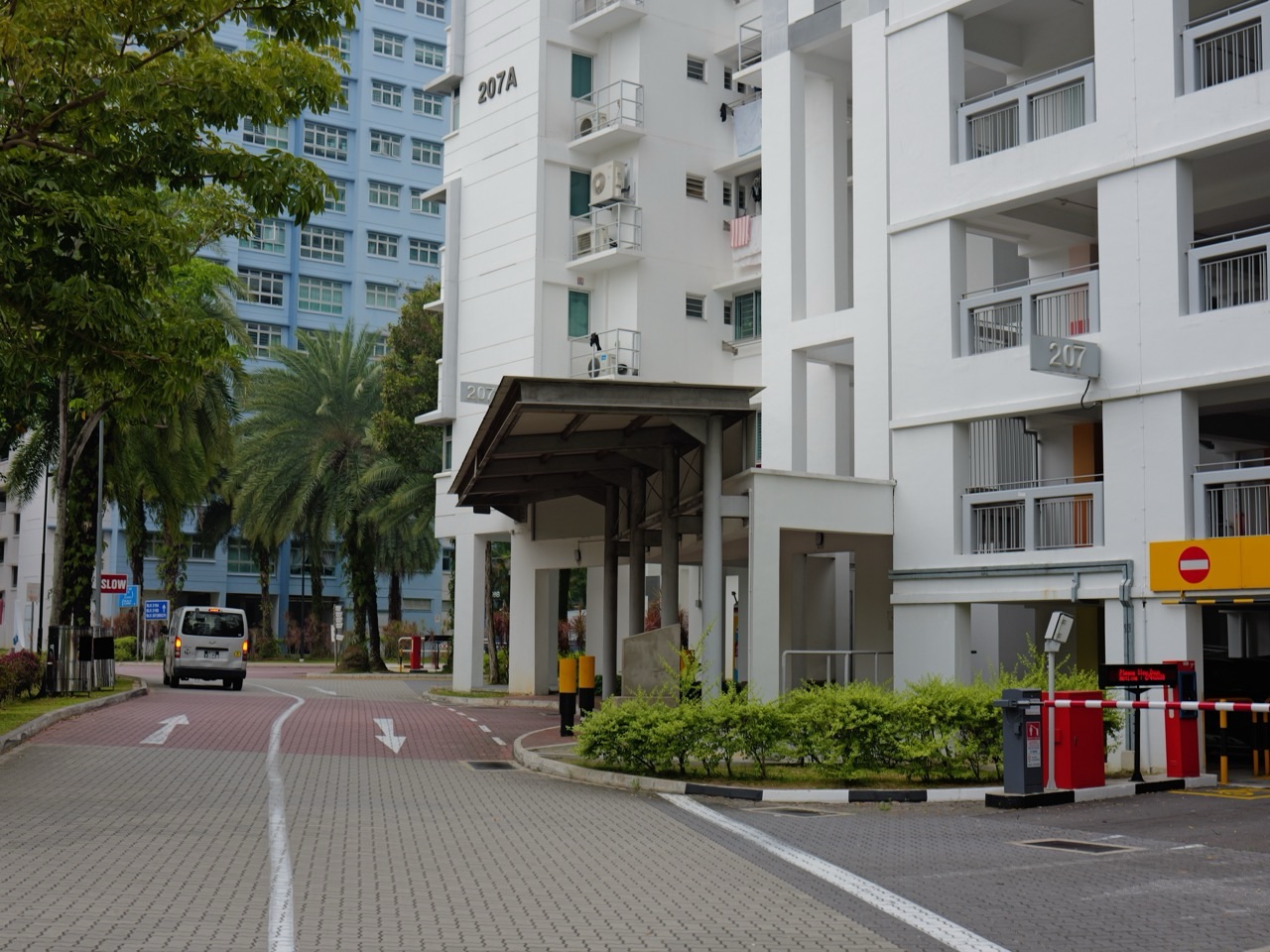
A problem inside a Punggol HDB flat is not automatically a Town Council repair, and an ageing-flat upgrading scheme is not an unrestricted home renovation subsidy. Singapore divides housing care among individual owners, neighbouring owners, HDB, the relevant Town Council and authorised upgrading programmes. Understanding the boundary is essential when there is a ceiling leak, spalling concrete, a broken window, an inaccessible entrance, a faulty lift or a proposal to refurbish shared areas.
The fastest first decision is to locate the source of the issue. HDB says homeowners are generally responsible for maintaining the interior of their flats. If a ceiling leak originates between two flats, the upper and lower owners generally arrange investigation and share appropriate repair costs. If water enters the highest flat from a common roof, the Town Council normally handles repairs to that common property. For a new BTO flat, HDB provides a one-year Defects Liability Period (DLP) from key collection, and owners should report defects promptly, preferably within the first month and before private renovation.
Government upgrading schemes have their own eligibility. HDB’s Home Improvement Programme (HIP) currently addresses selected ageing-flat cohorts, originally those built by 1986 and later expanded to flats built 1987–1997; it is not automatically available to every newer Punggol BTO block. Eligible blocks normally require at least 75% support from qualifying Singapore Citizen households in a poll. EASE Direct Application can, by contrast, help eligible households with age- or mobility-related home improvements without waiting for a HIP selection. Older estates with incomplete lift access may have a separate Lift Upgrading Programme.
This Understanding Punggol | Things to Know article was checked against official HDB home-care, HIP, EASE, lift and 2026 upgrading information on 21 October 2026. It is for owners, tenants, neighbours and caregivers who need to know *what to repair, who is responsible, which programme applies and how to avoid unnecessary cost*. It is not a contractor quotation, project-eligibility approval or engineering report. Actual HDB block selection, warranty coverage and technical solutions must be verified with the relevant authority.
The most useful HDB maintenance answers
- New flat defects: report to HDB or the precinct Building Service Centre under the one-year DLP and preferably before renovation begins.
- Normal internal wear or fittings: the flat owner usually arranges maintenance and repairs, engaging qualified trades where needed.
- Ceiling leak between two units: upper and lower owners normally coordinate assessment and share suitable rectification costs.
- Roof leak reaching the highest floor: normally Town Council common-property maintenance when the roof is identified as source.
- Spalling concrete inside a flat: generally an owner maintenance responsibility; serious areas require prompt safe professional attention.
- Broken common corridor light, lift or shared facility: use the Town Council or appropriate estate operator.
- HIP: selected older HDB blocks, subject to eligibility and polling; not a free universal makeover.
- HIP threshold: at least 75% of eligible Singapore Citizen households in the block must support the programme.
- HIP essential works: safety-related works funded by government for qualifying Singapore Citizen households.
- HIP optional works: defined improvements such as toilets or doors, with subsidies for qualifying homeowners.
- EASE: defined subsidised fittings for eligible seniors or household members with assessed daily-living needs.
- LUP: selected older blocks with incomplete direct lift access, subject to technical feasibility and its own poll.
- NRP: precinct-level community/environment improvements, distinct from repairs inside a particular unit.
- Always verify: the exact block, programme status, proposed work, cost-sharing category, start date and formal notice.
1. Who looks after what in an HDB estate?
An HDB block contains private or individually occupied units and shared common property. The wall and floor inside a flat may be the homeowner’s maintenance responsibility, while the common lift, corridor, roof or shared infrastructure may be maintained by the Town Council or another responsible public body. The physical boundary and cause of damage matter.
This means a water stain on a bedroom ceiling cannot be assigned to the Town Council merely because the flat is in an HDB building. If the source is the unit directly above, the affected owners typically need to coordinate. If the leak comes from common roofing, a different responsibility applies.
The practical approach is to identify the location, the suspected source and the responsible asset before demanding a particular repair. An accurate diagnosis usually matters more than where the damage first becomes visible.
2. HDB, Town Council and a private contractor have distinct roles
HDB develops flats, runs relevant public housing schemes and oversees some renovation and upgrading requirements. Town Councils manage common property in their HDB estates. Private repair contractors carry out commissioned works under their licences, technical qualifications and contracts.
A contractor can repair a leaking pipe within a home but cannot unilaterally order the Town Council to close a public corridor. An estate manager can address a shared fitting but is not automatically responsible for replacing a privately purchased refrigerator.
Use the HDB Home Care Guide for internal maintenance, and the Punggol community-services guide for the estate agency map.
3. New BTO flats have a one-year Defects Liability Period
HDB says newly completed flats receive a one-year DLP beginning from key collection. During that period HDB follows up on valid items requiring rectification under the applicable scheme. This is a construction-defect mechanism, not unrestricted insurance for any damage after moving in.
A buyer should conduct a careful inspection soon after receiving keys. Note possible faulty fittings, windows, taps, finishes or other issues and submit accurate descriptions through the authorised HDB route. The Building Service Centre for that precinct can arrange joint assessment and follow-up.
The term one year is not permission to wait until day 364 to report everything. Early inspection makes it easier to distinguish original workmanship from later changes.
4. The first month is a practical reporting window
HDB explicitly advises owners to report suspected new-flat defects within one month of key collection and before private renovation. This helps avoid arguments about whether an item was defective from construction or damaged by a contractor installing cabinets, tiles or electrical fittings.
Take clear photos, record the room and location, and submit through the QR code in the Welcome Kit or the relevant HDB service. Do not deliberately damage a fitting to prove it is weak.
The owner can still report valid covered issues within the actual DLP, but waiting until after extensive renovation may make attribution more complicated. A proper pre-renovation inspection protects both the owner and the responsible repair process.
5. Reporting a defect is not automatically admitting every claim
HDB’s Building Service Centre arranges a joint inspection to verify reported items and determine the appropriate rectification. Some issues may fall within the original construction obligations, while wear, misuse or private renovation changes may not. The final position depends on the actual inspection and HDB conditions.
An owner should provide accurate observations rather than state conclusions about hidden construction defects without evidence. A loose cabinet door is different from an appliance the owner installed privately after collecting keys.
A useful defect list identifies room, component, symptom, date noticed and whether any subsequent work was done. This gives inspectors facts they can use.
6. HDB’s new-flat repair and closing inspection process
After reviewing valid defects, the Building Service Centre coordinates the relevant contractors. HDB says it generally takes less than two weeks for ordinary repairs, but the actual time depends on the issue. Some repairs may be arranged around renovation or occupancy where suitable.
When work is complete, the homeowner and project team can conduct a closing inspection. Do not sign off an unresolved issue casually merely to clear an administrative screen. Equally, avoid withholding acknowledgment when work has genuinely been completed under the agreed scope.
If a defect persists, record the specific problem and use the project team’s legitimate follow-up route rather than arguing with unrelated neighbours.
7. A DLP is not an indefinite warranty on daily living
After the DLP ends, owners normally handle maintenance and repair within the flat, subject to any separate product warranty, latent defect or other legal arrangement. A complaint that a faucet drips years later is not automatically a valid original-construction claim.
Homeownership includes maintaining seals, windows, plumbing, switches and other components. Proper early repair can prevent a minor leak or corrosion from becoming a larger problem affecting neighbours.
For work requiring a licensed plumber, electrical worker, gas worker or approved window specialist, use the correct professional under applicable rules. The fact that the home is no longer new does not relax safety requirements.
8. A renovation permit is different from repair responsibility
HDB regulates certain renovation works involving structures, wet areas, windows and other technical matters. But the question who pays for an existing leak is distinct from whether a proposed repair method needs approval. Both can matter simultaneously.
For example, correcting a bathroom waterproofing problem might require an authorised contractor and compliance with the applicable HDB guidelines. A homeowner cannot simply choose to hack a structural slab because they are responsible for the repair.
See the Punggol HDB renovation permits guide for the permission and noisy-work framework.
9. What is a ceiling leak between flats?
HDB explains that water from a flat above can pass through the floor and ceiling slab into the unit below when bathroom or toilet waterproofing and screed deteriorate. The symptom may be damp patches, dripping water, peeling finishes or mould. Such problems can worsen if left unaddressed.
The water’s appearance in the lower unit does not automatically prove misconduct by the neighbour upstairs. The waterproof membrane may have deteriorated through ordinary wear, or a different plumbing issue may be involved.
A neutral, cooperative approach with both owners and a competent professional often makes diagnosis and repair more achievable than early accusations.
10. Who normally pays for an inter-floor ceiling leak?
HDB’s guidance says owners are responsible for maintaining their respective flats, including relevant slabs, and upper and lower owners generally arrange repair and split the appropriate costs for an inter-floor leak. The actual cause and responsibility must be confirmed through an appropriate assessment.
Do not assume that the upper owner must automatically pay everything, or that the lower owner is solely responsible because their ceiling is stained. Cost sharing may depend on the actual source, work and rules.
The practical sequence is to contact the upper neighbour politely, agree on an inspection, choose a lawful repair method and document the cost-sharing arrangement.
11. Repairing a leak is not the same as painting over it
A damp patch may look better after a fresh coat of paint, but repainting alone will not reliably restore a failed waterproof membrane. HDB describes methods such as re-screeding and waterproofing, local treatment around floor traps and other suitable approaches selected according to actual conditions.
The contractor should investigate and explain why the proposed method addresses the source. A cosmetic fix can leave hidden water ingress continuing and damage electrical items or finishes.
If water is near active electricity, prioritise safety and qualified assistance. Do not touch a wet switch or open electrical equipment to investigate on your own.
12. Roof leaks are a different responsibility
For a top-floor HDB flat affected by water entering from the common roof, HDB generally directs the resident to the Town Council, which maintains the relevant common property. The source must be established: a leak from a privately owned fixture may not be a roof leak simply because the top-floor ceiling is wet.
Record the place and timing, particularly whether leakage appears during heavy rain. Contact the correct estate manager for inspection. The Town Council may need access or coordination to identify the actual source.
This is a useful example of why the visible symptom and legal maintenance boundary can differ. The appropriate responsible party depends on what failed, not which floor first noticed damage.
13. Leakage at a void deck has another arrangement
HDB’s ceiling-leak guide describes cases involving the void deck, which is common property, and explains joint arrangements between the Town Council and flat owner where the source and affected slab require that. For an external wall or rooftop common-property cause, the Town Council ordinarily bears the appropriate repair cost.
A resident cannot generalise one cost-sharing sentence across every location. The relevant structure and confirmed source determine the parties involved.
A safe, precise maintenance request should name the exact block and affected location, with observations of moisture and any immediate hazard.
14. What spalling concrete actually is
Spalling concrete occurs when the protective concrete covering reinforcement deteriorates, often due to carbonation and moisture contributing to corrosion of the embedded steel. The surface may crack, bulge or detach. HDB describes it as a common maintenance issue especially in older flats and humid kitchens or bathrooms.
The problem is not simply an unattractive stain. Loose material can injure someone, and delayed repairs may permit deterioration to spread. Large or potentially dangerous areas deserve prompt professional evaluation.
Do not assume every hairline crack is spalling, and do not diagnose structural safety from a photo shared in a chat group. Observe facts and obtain appropriate assessment.
15. Owners normally maintain spalling concrete in their flats
HDB says the flat owner is responsible for preventing and repairing spalling concrete within the unit. Its home-care guide offers preventive suggestions and notes that larger affected areas should be repaired by a suitable contractor promptly.
A property owner should not climb an unstable ladder under loose concrete merely to save a repair fee. Falling fragments and exposed reinforcement can present hazards. Keep household members away from a dangerous area and ask qualified professionals for safe advice.
The public-sector upgrading system may address selected essential issues in eligible older flats, but that does not transfer all ordinary maintenance responsibilities to HDB indefinitely.
16. Ventilation and surface maintenance can help reduce deterioration
HDB recommends keeping susceptible areas well ventilated, maintaining ceiling paint and sealing inappropriate holes or cracks properly to help limit exposure to moisture and carbon dioxide. These are preventive actions, not guarantees that corrosion can never occur.
Bathroom and kitchen conditions deserve periodic attention because humidity and leaks can accelerate deterioration. Use appropriate products and contractors, especially where a repair could affect structural elements or waterproofing.
A family can include ceiling and window inspection in a simple annual maintenance schedule. Small routine observations are often easier than emergency repairs after extensive damage.
17. Windows have owner maintenance responsibilities
HDB advises homeowners to check windows periodically, generally every six months, for loosened screws, corrosion, damaged hinges and other safety concerns. High-rise windows can endanger people below if fittings fail, so this is more than cosmetic upkeep.
Window replacement and specified repair work require appropriately qualified or approved contractors and compliance with HDB and BCA requirements. Do not hire an unverified handyman to replace a full window assembly solely because a price seems attractive.
Where a panel looks at risk of detaching, avoid unsafe use and obtain suitable urgent assistance. The fact that a window is part of the building does not mean its safe upkeep can be ignored by the flat owner.
18. Internal pipes and common pipes need separation
A leaking tap, household water pipe or toilet fitting may be the owner’s responsibility. A failure in a common supply or discharge system can have a different managing authority. The pipe’s location alone may not establish ownership without checking the estate’s technical layout.
For serious plumbing changes, an appropriately licensed plumber may be necessary. Do not tamper with shared valves or pipework outside the flat without proper permission, and do not use corrosive chemicals or force to clear a blockage that may involve common infrastructure.
Use HDB’s home-maintenance guide or the appropriate utility provider to identify the likely issue before choosing a repair.
19. HDB’s HIP is for selected ageing flat cohorts
The Home Improvement Programme (HIP) began in 2007 for qualifying older flats and was extended in 2018 to those built between 1987 and 1997 under the current published coverage. It addresses recurrent age-related maintenance concerns systematically.
This is not a generic subsidy for any homeowner who wants a new kitchen design. Many Punggol flats were completed after the specified cohorts, so do not assume HIP applies merely because an HDB logo appears on the entrance sign.
Use HDB’s official upgrading programme status search for the actual block, and read any specific polling notice rather than infer eligibility from the neighbourhood name.
20. What HIP aims to accomplish
HIP targets common ageing-flat problems such as spalling concrete, structural cracks, deteriorated service stacks and older fixtures. By coordinating works across a precinct, HDB can address certain recurring defects more efficiently than each household scheduling unrelated private work.
This does not mean all dwellings in Singapore are necessarily undergoing HIP at once. Selection follows defined age, technical and programme conditions. In 2026 HDB announced another national group of flats for the programme; the number selected nationwide is not evidence that a particular newer Punggol block was included.
The reader’s first question should be has this specific block actually been selected? A published national upgrading target is not the individual block’s programme approval.
21. HIP requires a qualifying poll
HDB’s current HIP page says the programme proceeds in a block only if at least 75% of eligible Singapore Citizen households vote in favour. Singapore Permanent Resident households are not entitled to vote in the specified HIP poll under the current scheme.
The poll is distinct from signing a contractor quotation or requesting a repair. A person should not treat a proposal as already approved if the qualifying vote has not been held or has failed to meet the threshold.
Residents can examine the official exhibition and information materials before voting. The decision affects multiple households, so useful questions include cost, work duration, the essential items and disruption.
22. HIP Essential Improvements cover specified safety work
The programme distinguishes Essential Improvements that are important for safety and public health. These can include selected spalling concrete and structural-crack repair, replacement of certain discharge stacks and other prescribed works under HDB’s programme conditions.
For eligible Singapore Citizen households, the Government fully funds the Essential Improvements under the prevailing HIP arrangement. This is not the same as a blanket reimbursement for a private bathroom renovation performed before the HIP contract.
A homeowner should use the actual precinct package to know which works are essential and compulsory within that project. Technical findings can affect what a particular unit needs.
23. HIP Optional Improvements involve the owner’s selection
HIP can offer Optional Improvements, such as specified toilet or bathroom upgrades, entrance door or gate replacement and a refuse-chute hopper where applicable. The owner chooses among offered items within the selection window and pays their applicable share after government subsidy if eligible.
Optional does not mean infinitely customisable. A homeowner wanting a completely different designer bathroom may need a separate private renovation agreement. The standard HIP package and a bespoke commercial upgrade have different scopes and prices.
A useful cost comparison should isolate the eligible standard work from extras purchased privately. Otherwise a family may believe the Government has quoted a much higher fee than the actual subsidised programme item.
24. HIP subsidy varies by household and flat type
HDB’s current information says eligible Singapore Citizen households can pay as low as 5% of the cost of certain Optional Improvements, with contribution rates depending on the relevant flat type and scheme. Permanent Resident households generally pay full applicable HIP costs rather than the same citizen subsidy.
It would be inaccurate to claim every Punggol resident pays only 5% for a new bathroom or that all old-flat repairs are entirely free. Eligibility, selection and actual contracted works matter.
Read the official cost table for the block and item, and preserve the final invoice rather than use one headline percentage to calculate all home renovation expenses.
25. A worked optional-upgrading contribution
Imagine a hypothetical eligible Optional Improvement has an approved underlying cost of S$4,000, and the homeowner qualifies for a 5% contribution under the relevant programme. The simplified homeowner share is S$4,000 × 0.05 = S$200, before any other applicable actual charges or adjustments.
For another eligible flat category with a different contribution ratio, the payable amount changes. This arithmetic does not establish the current package price or category for any Punggol flat.
The lesson is to separate programme cost, subsidy percentage, selected works and invoice. Only the real HDB proposal provides the correct payable amount.
26. HIP can take longer at precinct level than inside one flat
HDB describes a typical HIP precinct project as taking roughly 1.5–2 years overall, while the work inside an individual flat is commonly ten working days or fewer, depending on the selected improvements. Those times serve different purposes.
A block can have scaffolding or common-area works while a particular flat is not yet scheduled for its internal changes. A family should not assume the entire estate project ends ten days after the first contractor arrives, or that it must vacate the home for two full years.
Use the project’s actual block schedule and notice. Duration can change because of site conditions, and individual accessibility or care needs may need advance coordination.
27. Residents need a plan for days when bathrooms are unusable
Where HIP involves internal bathroom work, a household may face temporary loss of facilities, dust and movement restrictions. The project team can explain the expected daily sequence and available arrangements. Residents with babies, older relatives or mobility needs should raise concerns early.
Do not assume an advertised typical duration is identical for every toilet. Ask which fixtures will be unavailable, how water supply is managed and what alternative sanitation arrangements the operator provides.
A carefully coordinated schedule reduces stress without requiring a household to improvise unsafe plumbing or leave a dependent adult without essential access.
28. HIP’s own Defects Liability Period must not be confused with BTO DLP
HDB’s HIP information describes a one-year defect liability arrangement for the completed upgrading work. This is a separate coverage period from the one-year DLP for a newly completed HDB flat after key collection.
A homeowner should note what work was performed by the HIP contractor and which project contact handles problems. A leak from a newly upgraded fixture may need to be reported through the programme’s stated claim route during its applicable period.
Keep the completion acknowledgment, scope and warranty terms. A repair claim becomes harder when nobody remembers which contractor performed the work or when.
29. EASE is intended to improve mobility and safety at home
The Enhancement for Active Seniors (EASE) programme can provide subsidised fittings such as grab bars, slip-resistant treatment, ramps, shower seats or other eligible improvements in appropriate flats. It is focused on age-related or functional access needs, not general decoration.
EASE can be offered as part of HIP, but a qualifying household may also seek EASE Direct Application without waiting for HIP selection. That distinction matters for Punggol, where some newer blocks may not fit HIP’s ageing-flat cohort but residents can still have relevant mobility needs.
Read HDB EASE for current eligibility and technical conditions.
30. EASE Direct Application has age or care criteria
HDB lists eligible Singapore Citizen households in sold flats and qualifying registered rental tenants where a family member is 65 or older, or 60–64 and requires assistance with at least one Activity of Daily Living under the specified criteria.
Activities of daily living include tasks such as washing, dressing, eating, toileting, mobility and transfers. The programme may require a relevant functional assessment for the younger qualifying category. Being retired or simply wanting attractive grab bars does not establish eligibility.
An occupational or rehabilitation professional may help evaluate practical needs, depending on the case. The actual improvement must be technically suitable for the flat.
31. EASE and a general hardware-store installation are different
A resident can buy safety products privately, but a Government-subsidised EASE installation has eligibility, specified items and technical-assessment requirements. A shop-bought ramp cannot automatically be reimbursed through EASE simply because it assists an older person.
Home access is a person-plus-environment problem. A badly positioned grab bar or ramp can create new hazards. Choose fittings based on the intended movement, actual layout and required professional advice.
Our Understanding Punggol seniors and accessibility guide explains the care-services context; this article focuses on housing maintenance and upgrading boundaries.
32. Lift Upgrading Programme solves a specific older-estate problem
Some older HDB blocks were not originally designed with direct lift access at every floor. The Lift Upgrading Programme (LUP) adds or modifies lift facilities where technically and economically feasible to improve access for residents, especially older people and persons with disabilities.
This differs from routine repair of a faulty lift that already exists. A lift motor failure is a maintenance issue; building a new lift shaft or creating access to previously unserved floors is capital upgrading work.
Many modern Punggol blocks already have direct lift access by design, so a resident should not assume the LUP is the programme for any slow or occasionally faulty lift.
33. Lift upgrading has its own poll and technical constraints
HDB explains that LUP generally proceeds only if 75% of eligible Singapore Citizen households in the block support the project. Selection considers age, need, technical feasibility and cost. Some older structures may not support a complete direct-access solution.
A homeowner should examine the displayed lift-upgrading proposal and ask what it actually delivers. A half-landing solution, direct floor lift and repair of an existing lift are not identical.
Do not promise an older neighbour that any block can receive a new lift simply because residents sign a petition. Structural and technical constraints matter.
34. Lift upgrading cost is not automatically zero
HDB states that qualifying Singapore Citizen owners who benefit from LUP may have to contribute up to a specified capped share, with Government and Town Council subsidies. Its published guidance refers to a maximum of S$3,000 subject to GST for eligible citizen owners in the stated arrangement, depending on actual block configuration.
Permanent Resident households can face different full-cost terms. The actual bill is normally determined and issued after completion according to the scheme’s rules and ownership at billing.
This is not a general quote for replacing an ordinary Punggol lift. Only the specific approved LUP package determines the homeowner’s financial position.
35. Lift failure and lift installation should have separate contacts
When an operating lift breaks down, residents need to report the exact block, lift identification and observed problem to the responsible Town Council or appointed operator. A trapped person should use the lift emergency communication and follow official instructions rather than attempt a dangerous rescue.
A request for new lift access requires HDB’s relevant upgrading or accessibility pathway where applicable. Reporting a current breakdown to OneService will not by itself approve a new shaft.
Clear language matters: fault, maintenance, replacement and upgrading describe different requests with different assessment and funding.
36. Neighbourhood Renewal Programme is about shared precincts
The Neighbourhood Renewal Programme (NRP) can improve public areas and amenities across qualifying precincts, with residents taking part in consultation and programme processes. It differs from an owner replacing a bathroom seal inside a single flat.
Possible precinct-level features can include selected public-space enhancements, community areas or movement improvements under the particular approved plan. The actual package depends on the blocks, consultation and funding arrangements.
A Punggol resident interested in shared seating or better precinct circulation should use relevant Town Council and HDB feedback channels, not confuse the NRP with a personal kitchen renovation grant.
37. Estate renewal is not a guarantee of en bloc redevelopment
Selective En bloc Redevelopment Scheme (SERS) is another distinct HDB process involving selected older blocks. HIP, LUP and NRP are not announcements that the block will be demolished or that every owner will receive a replacement flat.
An estate can undergo maintenance and upgrading without any SERS plan. A resident should not interpret a routine improvement notice as a property speculation signal.
Use the actual HDB official scheme status for the identified block. Never tell a Punggol buyer that an upgrading project automatically increases resale value by a particular amount.
38. A Punggol block must be checked individually
Punggol has precincts developed across different phases, and eligibility for ageing-flat programmes is not identical across the whole town. The official HDB upgrading status enquiry allows users to check whether a named block has been selected or affected by specified upgrading or redevelopment programmes.
A resident should note the block number and street name, locate the correct HDB page and inspect any status or published notice. Do not generalise from a project in Pasir Ris, Jurong or another town just because the scheme title is the same.
This is central to quality local information: national programme existence is not evidence of individual Punggol block selection.
39. Cost responsibility for private repairs depends on actual cause
An owner can face privately paid repairs that fall outside DLP, HIP and EASE. The appropriate cost may be shared with another owner for an inter-floor leak or borne by the Town Council for verified common-property causes. Insurance may or may not respond, depending on contract.
A useful decision tree begins with the source, responsible property, coverage period and authorised work. Do not start by purchasing a new component before checking whether it is part of a valid defect or warranty process.
Our Punggol HDB fire and home insurance guide explains why maintenance duty and insured loss are different questions.
40. Worked scenario: a leaking ceiling below a bathroom
A fictional Punggol resident sees a spreading stain in the bathroom ceiling. They document the condition safely, contact the upstairs owner and agree to obtain an assessment. The contractor identifies deteriorated waterproofing in the upper bathroom. Under HDB’s ordinary inter-floor guidance, the owners coordinate a suitable repair and cost sharing.
They do not simply paint the lower ceiling or accuse the other family of deliberate damage. After work, they retain the invoice, test and warranty information, and monitor whether the problem is resolved.
The example shows the sequence observe → identify source → agree scope → repair → verify, which is more reliable than choosing blame before finding the cause.
41. Worked scenario: a new BTO door does not close correctly
A homeowner collects keys to a new flat and discovers a misaligned original door. They record the problem in the first month and submit it through HDB’s new-flat defect reporting route before a private carpenter modifies the frame. The Building Service Centre can then inspect and assess whether rectification falls within the DLP.
If the family first removes the frame and installs a different private design, attributing a later problem may become harder. The sequence of work matters as much as the date.
This scenario explains why an orderly defect inspection should come before a hurried renovation handover.
42. Worked scenario: an older relative needs safer bathroom access
A Punggol family has an eligible household member aged 67 who struggles stepping into the shower. Rather than assume HIP will select their relatively new block, they check EASE Direct Application and ask about suitable technical and functional assessment.
A properly fitted grab bar, surface treatment or other available item may reduce difficulty, subject to individual needs. This is not a guarantee that every requested renovation qualifies or that a general home improvement contractor can claim subsidy afterward.
The relevant programme is chosen by age or function and technical feasibility, not simply the building’s geographical location.
43. Worked scenario: damaged corridor lighting
A resident finds that lights outside the flat are no longer functioning. Because the issue concerns HDB common property rather than a private lamp within a room, they report the exact location and observed fault to the relevant estate manager or OneService.
They should not attempt electrical work on shared fixtures. If the dark area presents an immediate safety risk, the report should describe that urgency accurately and follow appropriate safety instructions.
The correct repair authority is determined by common-property responsibility, not by who lives nearest the broken fitting.
44. Worked scenario: a hypothetical HIP poll
Imagine a block with 100 eligible Singapore Citizen households in the defined poll, and 78 cast votes in favour under the official counting rules. The percentage is 78 ÷ 100 × 100% = 78%, exceeding the 75% threshold. In this simplified example the poll condition would be met, assuming all other applicable requirements.
If only 72 support it, the result is 72%, below that condition. But a passed poll still requires HDB’s actual project implementation; it does not automatically make every private desired improvement available.
This is a mathematical illustration, not a real Punggol polling result. Verify the project, eligible voters and official announcement before reporting that upgrading will proceed.
45. Worked repair-cost comparison
Suppose a hypothetical ceiling leak between two flats needs an agreed repair priced at S$1,800. If the normal equal split is applicable to the confirmed work, each homeowner’s share would be S$900, before special circumstances or any separate policy arrangements.
That calculation does not mean every leak must be divided exactly in half regardless of its origin. A verified common roof defect, private installation damage or other legal condition may change responsibility.
The worked example demonstrates why assessment of the source comes before finalising cost allocation. A repair quote by itself does not establish legal liability.
46. Common myths about HDB maintenance and upgrades
Myth one: Town Council must repair everything inside a flat. Owners have defined internal maintenance responsibilities. Myth two: all water leaks originate from careless neighbours. Waterproofing and service failures need proper diagnosis. Myth three: painting a stain repairs a failed membrane. It addresses appearance, not necessarily source.
Myth four: every Punggol HDB block automatically qualifies for HIP. The published programme targets selected older cohorts and blocks. Myth five: EASE requires waiting for HIP. Eligible Direct Application is a separate pathway.
Myth six: a new-flat DLP and a HIP-work DLP are the same contract. They relate to different work and start points. Myth seven: an ordinary lift breakdown triggers LUP. Repair and capital upgrading are different. Myth eight: a block that receives HIP is going to be demolished. HIP is not a SERS announcement.
47. Punggol home and estate maintenance checklist
- Record the flat’s exact block, street, key-collection date and current ownership.
- For a new BTO, inspect and report valid defects promptly before private renovation.
- Keep the BSC and DLP documentation where authorised household members can find it.
- Identify whether a problem concerns private interior or common property.
- For ceiling leaks, document the symptoms and investigate the actual source.
- Coordinate with affected neighbours respectfully and keep agreed repair terms in writing.
- Use the responsible Town Council for verified common-roof and shared-area issues.
- Treat falling concrete, electrical hazards and unsafe windows as safety concerns.
- Engage appropriately licensed or approved professionals for regulated trades.
- Do not confuse cosmetic improvements with repair of the underlying defect.
- Check the exact block before assuming HIP, LUP or NRP eligibility.
- Review official HIP polling, Essential/Optional items and real subsidies.
- Check EASE Direct Application for age- or function-related home safety needs.
- Record planned internal work windows and practical household disruption.
- Keep contractor invoices, warranties and closing-inspection records.
- Use authorised channels for faults or unsafe conditions and protect neighbour privacy.
- Revisit maintenance needs as the home and its residents age.
Frequently asked questions
Who maintains a Punggol HDB flat internally?
The flat owner generally maintains internal fixtures and components, subject to the applicable new-flat DLP, warranties and specialised legal obligations. Town Councils maintain relevant common property.
How long is the warranty for new HDB BTO flat defects?
HDB provides a one-year Defects Liability Period from key collection. It recommends reporting defects within the first month and before renovations begin.
Who pays for a ceiling leak between HDB units?
HDB’s ordinary guidance says affected upper and lower owners coordinate assessment and share appropriate repair cost for an inter-floor leak. A confirmed roof/common-property cause can involve the Town Council instead.
Is spalling concrete the Town Council’s responsibility inside my flat?
HDB says the homeowner is generally responsible for preventing and repairing spalling concrete within the unit. Serious or large areas should receive prompt suitable professional attention.
Does every Punggol flat qualify for HIP?
No. HIP covers selected ageing HDB blocks, currently built within its defined older cohorts through 1997, with specified polling and eligibility conditions. Many newer Punggol blocks do not automatically qualify.
What percentage must support HIP?
At least 75% of eligible Singapore Citizen households in a selected block must support the programme under its polling rules.
Can I apply for EASE even if my block is not undergoing HIP?
Potentially yes. EASE Direct Application is available to eligible households under its own age and functional needs criteria and technical conditions.
What is LUP compared with a normal lift repair?
The Lift Upgrading Programme seeks direct lift access for selected older buildings where feasible. Routine faults in an existing lift are common-property maintenance matters.
Does a 2026 national HIP announcement mean my Punggol block was chosen?
No. Check the exact block through HDB’s official upgrading programme status and notices before drawing a conclusion.
Can I claim home insurance for every maintenance problem?
No. Maintenance duties, new-flat defect liability and insurance coverage are separate systems. A policy responds only to its actual insured risks and conditions.
Official sources and connected Punggol guides
- HDB: Home Care Guide, maintenance and owner responsibilities.
- HDB: Rectification of Defects in New Flats.
- HDB: Preventing and fixing ceiling leaks.
- HDB: Preventing and fixing spalling concrete.
- HDB: Home Improvement Programme and current scope.
- HDB: May 2026 HIP national selection update.
- HDB: EASE Direct Application and eligible fittings.
- HDB: Lift Upgrading Programme and poll.
- HDB: Neighbourhood Renewal Programme.
- HDB: Upgrading and Redevelopment programme navigation.
- HDB: Minor repair contractor information.
- Punggol: HDB renovation permits and licensed contractors.
- Punggol: Community services and Town Council responsibility.
- Punggol: Seniors, caregiving and accessibility.
- Punggol: HDB housing, BTO and resale.
- Punggol: Home insurance, HPS and contents.
- Punggol: Neighbour disputes and mediation.
Bottom line: the correct route depends on where the defect originates and which programme actually applies. Maintain the interior of the flat, report common-property faults to the proper estate manager, use the real DLP for new homes, and verify HIP, EASE or LUP by eligibility rather than assumption. A safe, well-maintained Punggol home starts with accurate responsibility and a repair that addresses the cause.


