
On 31 March 2005, the Housing and Development Board decided not to proceed with The Anthias, a Build-to-Order (BTO) housing project offered in Punggol in December 2004. The same decision applied to Coral Green in Sengkang. A contemporaneous HDB letter, preserved in an online collection of public correspondence, explains that demand had not reached the level required for construction to go ahead.
This is a surprisingly revealing chapter in Punggol’s history: a town is shaped not only by the flats that were built, but also by applications, thresholds, withdrawals and households that had to rethink their choices. The cancellation was announced after an earlier warning that the projects would proceed only with sufficient take-up.
Keep the date straight: December 2004 was the launch period, 31 March 2005 was the cancellation announcement, and 20 April 2005 was the stated deadline for applicants who wanted to transfer to the March BTO exercise. These were different steps, not a single event.
The Anthias history, chapter by chapter
- What did HDB announce on 31 March 2005?
- Why the term Build-to-Order matters
- The proposal had appeared in December 2004
- The earlier warning about take-up
- Where the HDB reply survives
- A buyer’s objection prompted an explanation
- Transfer to another BTO exercise was offered
- Why 20 April 2005 matters
- The March 2005 offer was not a guaranteed replacement home
- Other housing paths were mentioned
- Why the two towns were considered together
- Not all old project tables give the same flat count
- The cancellation came during a difficult development period
- Why the project name matters even without a building
- A cancellation is a historical outcome
- The applicants were planning years ahead
- A useful distinction: launch, booking, construction, completion
- A primary-source exercise for secondary students
- How to read cancellation figures responsibly
- What this tells us about Punggol’s pace
- Frequently asked questions
- Source record and next reading
What did HDB announce on 31 March 2005?
HDB said that The Anthias at Punggol and Coral Green at Sengkang would not proceed because take-up was insufficient. It wrote to the applicants on the same date as the announcement, according to its published reply to a reader’s complaint.
The record does not tell us that building work had begun and then stopped halfway through. A BTO exercise tests whether enough people are willing to book the proposed homes before the authority commits to construction. Cancellation at that stage is not the same as abandoning an occupied estate.
Why the term Build-to-Order matters
The Build-to-Order approach was introduced so that housing supply could respond more closely to actual buyer interest. Applicants could express demand for proposed flats, and a project moved towards construction when enough bookings had been secured.
That mechanism is central to the Anthias story. The name was more than a planned cluster on a map; it was a test of whether families wanted that particular offer under the rules and market conditions of the day.
The proposal had appeared in December 2004
HDB’s letter referred to launching The Anthias and Coral Green in December of the preceding year. This places the offer within the first years of the BTO system, before the scheme became the routine starting point many later Singapore homebuyers know.
A project that appeared in a launch brochure or application list was not yet a finished building. In a historical timeline, write ‘offered in December 2004’ and ‘not proceeded with in March 2005’ rather than invent an opening year.
The earlier warning about take-up
In its 6 April 2005 reply, HDB said applicants had been informed at launch that the projects depended on a sufficient take-up rate. That qualification mattered because buyers were applying to a conditional construction programme.
This does not make disappointment insignificant. People may still have made plans based on the possibility of a future flat. But it helps explain why the institution believed the cancellation was consistent with the scheme’s published conditions.
Where the HDB reply survives
The text is preserved as a reproduced 6 April 2005 newspaper letter attributed to Tay Koon Quie, Deputy Director (Sales), writing for the Director of Estate Administration and Property at HDB. The copy is in a contemporaneous forum thread collecting HDB’s public correspondence.
Because this is a transcription rather than the original HDB-hosted letter, the article distinguishes the reproduced text from an independently retrieved first-party archive. It is still a traceable period document; a historian seeking editorial-critical reproduction should try to locate the newspaper issue or HDB’s original communication.
A buyer’s objection prompted an explanation
The reply addressed the concern expressed by a writer whose housing plans had been disrupted. It acknowledged that applicants could be disappointed when a BTO project did not gather sufficient interest.
A public response to a complaint helps us see a second layer of the policy: families experienced the same rules that housing administrators viewed as demand management. This does not prove every applicant felt the same way, but it gives a documented reason why the authority responded in public.
Transfer to another BTO exercise was offered
HDB said applicants could transfer their applications to its March 2005 BTO exercise. It stated that they did not need to complete new application forms, but could return an enclosed option form.
This was a specific transitional arrangement for affected applicants. It should not be rewritten as a permanent rule guaranteeing priority at any present-day BTO launch. Housing eligibility and allocation procedures change over time.
Why 20 April 2005 matters
The HDB letter specified 20 April 2005 as the deadline for returning the transfer option form. Applications transferred in that way would be processed with new submissions under the March exercise.
That is a response deadline, not the date on which The Anthias was cancelled or the date when any replacement flat was completed. Precise timelines often contain several dates whose meanings should never be swapped.
The March 2005 offer was not a guaranteed replacement home
Being permitted to submit or transfer an application is not the same as a successful allocation. The letter said transferred applications would be processed together with new applications.
We cannot claim that every Anthias applicant secured a different flat or recovered the same proposed location. Individual outcomes would require application histories or first-hand testimony from the households concerned.
Other housing paths were mentioned
HDB pointed out that completed flats were periodically made available through walk-in selection and balloting, and that eligible first-time buyers could consider resale flats with CPF housing grants.
These alternatives show how policymakers offered different routes to home ownership at the time. It is not a reliable guide to using those old schemes today; current HDB procedures and grant names should be checked separately.
Why the two towns were considered together
The Anthias and Coral Green appeared as two affected projects in one HDB letter because both failed the threshold for proceeding. Punggol and Sengkang were neighbouring growth areas where household demand and infrastructure development were being monitored.
The joint announcement does not mean the projects were physically one estate or used the same land parcel. Historical geography must preserve each project’s name and town.
Not all old project tables give the same flat count
Later enthusiast-maintained lists identify The Anthias as a 2004 cancelled BTO development, but historical secondary tables can disagree on the proposed number of flats or mix a first release with a complete master-plan count.
The official reply used here establishes the cancellation and options given to applicants without resolving every advertised unit total. Rather than select whichever number seems attractive, this chapter leaves the proposed count unasserted until a contemporaneous HDB sales brochure is verified.
The cancellation came during a difficult development period
Punggol 21 was promoted in the 1990s, but the Asian financial crisis and changing housing-market conditions affected the speed of the new town’s rollout. A demand-tested BTO system was partly a response to the risk of building homes before enough households wanted them.
That broad history is relevant, yet it should not become a claim that the financial crisis alone directly cancelled The Anthias. The HDB letter attributes this specific cancellation to insufficient take-up.
Why the project name matters even without a building
When residents look at old BTO lists, they may find a project name that does not correspond to a visible estate today. It can be tempting to assume that a building was renamed or demolished.
The more direct explanation may be that construction never proceeded. The Anthias preserves a chapter of Punggol’s decision-making even though the proposed scheme did not become the familiar occupied estate imagined at launch.
A cancellation is a historical outcome
Housing histories often highlight groundbreaking ceremonies, ribbon-cuttings and award-winning buildings. Yet an advertised project that failed to proceed can reveal the relationship between planning, demand, financing and household expectations.
A cancelled proposal should not be erased from the historical record as though it never mattered. Nor should it be presented as a completed estate. Historians need both the proposed future and the decision that changed its course.
The applicants were planning years ahead
An applicant thinking about a BTO flat could be making long-term decisions about marriage, family support, commuting and savings. A cancelled proposal would require some people to reconsider that plan.
These are plausible reasons the letter generated concern, but the surviving reply does not describe each family’s finances or personal situation. The correct language is that it could disrupt plans, not that it affected every household identically.
A useful distinction: launch, booking, construction, completion
Four stages are easy to confuse. A launch advertises the chance to apply. Booking confirms demand and establishes individual applications. Construction occurs only after sufficient decisions and necessary approvals. Completion is when the building becomes available for occupation.
The Anthias is a case study in why a historic ‘launch date’ is not proof of completed flats. Students comparing BTO estates should label each stage separately.
A primary-source exercise for secondary students
Ask pupils to identify the letter’s publication date, the two projects, the date of the non-proceed decision, the stated reason and the 20 April transfer deadline. Then ask which facts are direct statements from the HDB representative and which are general interpretations.
Students can contrast this with an estate that did progress to completion. The source-comparison question becomes: how did the same BTO mechanism produce different outcomes under different levels of demand?
How to read cancellation figures responsibly
If a separate source eventually provides the number of proposed flats and actual applications, calculate a take-up ratio only after confirming that numerator and denominator cover the same sales exercise, eligible flat types and booking cutoff.
Do not infer the precise number of applicants from a general statement that the take-up rate was insufficient. The surviving HDB correspondence does not provide a validated project-level rate.
What this tells us about Punggol’s pace
Punggol did not appear as a finished town the moment its master plan was announced. Some homes were offered and built; other projects were postponed, rethought or cancelled. New residents therefore experienced change in increments.
The Anthias demonstrates a development process that responds to real choices, not only a perfectly linear plan on paper. It is valuable precisely because the outcome was different from the launch proposal.
Frequently asked questions
Was The Anthias a built estate that was demolished? The sources reviewed here establish that HDB decided not to proceed with its BTO development in March 2005; they do not document a completed estate. Was it launched in 2005? It was offered in December 2004, with the cancellation announced the following March.
Did all applicants receive replacement flats? The correspondence offers a transfer option but does not establish every individual’s outcome. Was Coral Green in Punggol? No, that project was in Sengkang. What was the deadline for the transfer option? 20 April 2005.
Source record and next reading
Read the contemporary forum transcription of HDB’s 6 April 2005 public reply, especially the portion beginning ‘HDB did write to flat applicants’. The National Library Board’s research guide to Singapore public housing explains the early BTO shift and contains period newspaper references. The housing-project listing is useful as a secondary cross-check for the cancelled project name, though its unit count must not be taken uncritically.
For the earlier local housing scheme, see the December 2002 Punggol BTO history; for context across the town, see our Punggol history directory. The core documented fact is that HDB stopped The Anthias on 31 March 2005 because sufficient take-up had not been secured, and offered applicants a time-limited way to transfer their applications.
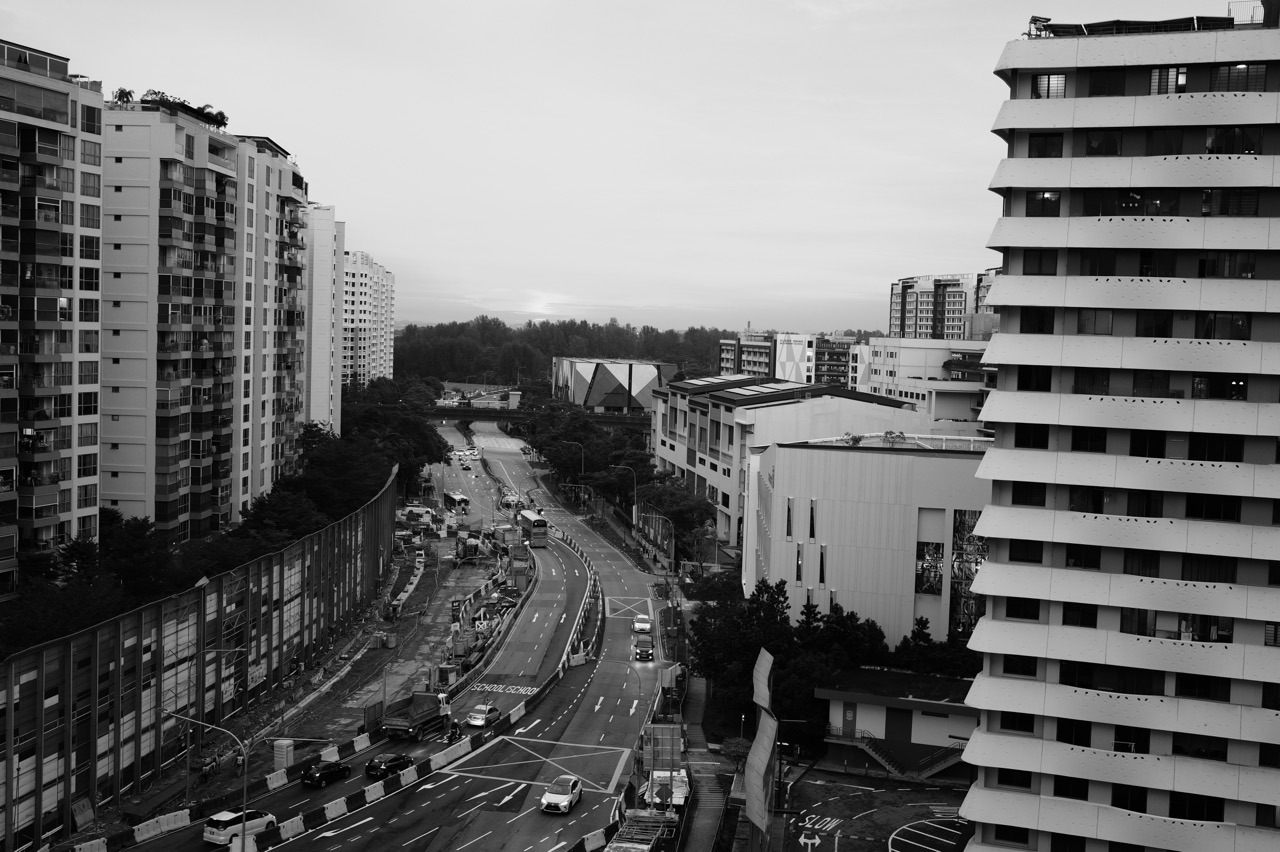
Featured photograph: an illustrative present-day view of Punggol housing. It does not depict The Anthias as a completed estate.


