
Quick answer. Singapore participates in the Progress in International Reading Literacy Study (PIRLS), a research assessment of reading at roughly Primary 4 age organised by the International Association for the Evaluation of Educational Achievement (IEA). PIRLS is not the PSLE, not an entrance examination and not a public league table ranking individual Punggol primary schools. It studies how well sampled pupils understand literary and informational texts and uses information about home and school learning contexts to help education systems evaluate reading development. The latest international cycle, PIRLS 2026, includes Singapore among 64 participating education systems. It moves to a fully digital reading assessment, incorporating passages, interactive material and simulated online-reading environments; the IEA main survey is conducted in 2026. International results are scheduled for December 2027, so claims that Singapore “won PIRLS 2026” in October 2026 are premature. The result will describe education-system performance, not guarantee an individual student’s examination grade. The previous PIRLS 2021 international results were published in May 2023. Singapore’s Primary 4 cohort achieved an average reading scale score of 587, the highest national average in that cycle, compared with 576 in 2016. The PIRLS scale centrepoint of 500 is a fixed historical reference, not a pass mark or “average Singapore child” score. Official reporting also highlighted a challenge: strong reading achievement does not mean every child necessarily enjoys reading or receives the same home support. For Punggol families, PIRLS provides a useful way to distinguish decoding, comprehension, reading for pleasure, informational reading and digital source evaluation. The practical objective is to develop a child who can understand a new story, find evidence in unfamiliar information and explain uncertainty—not to purchase unofficial “PIRLS rank boosting” tuition. This guide explains the assessment, dates, data limits, example text reasoning, useful library routines and school–home support, with 26 FAQs and official IEA/MOE sources. Editorial fact-check: 23 October 2026.
PIRLS 2021 and PIRLS 2026 at a glance
| Question | 2021 study | 2026 study |
|---|---|---|
| Singapore | Participated; national mean score 587 | Listed among 64 participating systems |
| Results release | 16 May 2023 | Scheduled December 2027 |
| Format | Transition period with different modes | Fully digital international assessment |
| Purpose | System-level reading and context research | System-level reading, digital experience and trends |
| Individual PSLE entry | Not an admissions credential | Not an admissions credential |
Jump to an answer
- What PIRLS tests and when results arrive
- Digital reading and ePIRLS
- Original comprehension and data examples
- Singapore’s 2021 results and interpretation
- Punggol reading routines and family action
- Frequently asked questions
1. PIRLS measures education systems, not Punggol school status
PIRLS is a large international research study involving sampled pupils and participating national education systems. It offers comparable evidence about reading achievement and surrounding conditions. Its results are used for system evaluation, not for admitting a named student into a particular secondary school.
A pupil’s ability to read a school assessment passage is relevant to learning, but no individual Punggol family should expect an official PIRLS personal rank comparable to a PSLE result. The two examinations serve different purposes and involve different administration.
Parents can learn from broad findings without converting them into a guarantee that one local school or child has a particular level of reading ability.
2. Why Primary 4 is an important reading stage
By approximately fourth grade, children are often transitioning from initial reading acquisition to using texts to learn increasingly complex ideas. They must do more than pronounce familiar words. Science and humanities can ask them to interpret diagrams, follow explanations and evaluate information.
PIRLS is positioned to study this important developmental stage. A child may decode accurately but struggle to explain a character’s motivation or how a factual article supports its main point.
A family can respond through conversation and suitable reading opportunities rather than simply assigning harder texts. Developing comprehension requires checking what the learner understands, not treating page count as the only target.
3. PIRLS has assessed reading since 2001
The international study began in 2001 and has run on a five-year cycle, generating trend data for participating systems. PIRLS 2026 is its sixth cycle and represents twenty-five years of longitudinal system comparison.
Trend information is valuable because it allows policymakers to ask whether performance and learning conditions change, not merely where a country appears in one year’s ranking. Comparisons still need appropriate attention to participation, sampling and statistical uncertainty.
Parents should read the study year and release year separately. A news article published in 2023 discussing PIRLS 2021 is not reporting a fresh 2023 national student examination.
4. IEA coordinates the international study
The International Association for the Evaluation of Educational Achievement oversees PIRLS with an international study centre at Boston College and national research partners. It publishes assessment frameworks, country participation, data procedures and eventual findings.
These source documents are more authoritative than a private table claiming to rank individual schools without research data. The public framework explains which reading processes and contexts are measured.
Readers can use IEA’s site to check whether a number relates to 2021 or 2026 and whether it describes country-level achievement, contextual questionnaire data or another component of the study.
5. The 2026 participant list includes Singapore
IEA’s current PIRLS 2026 programme page lists Singapore among sixty-four education systems, including participating countries and relevant subnational benchmarking entities. Being on the participant list does not mean every Primary 4 pupil in Singapore sits the assessment.
International research is ordinarily administered to representative samples, with prescribed procedures. A parent should not claim the local school is excluded from national education unless the child’s class personally received a test invitation.
The study is an evidence source about a population, not a compulsory admission examination for every student or an alternative to Singapore’s primary curriculum.
6. 2026 collection and 2027 release are different events
IEA’s official timeline places main PIRLS 2026 data collection in March–June for participating Northern Hemisphere settings and September–December for Southern Hemisphere settings, with cross-national results scheduled for December 2027.
That means a headline announcing “Singapore PIRLS 2026 results” before the international report is released should be checked carefully. It may refer to testing, a preview or older scores rather than final comparable results.
A family should preserve these exact dates and avoid celebrating or worrying about an imaginary 2026 rank. National and school teaching decisions use more than one research indicator.
7. The fully digital assessment is a meaningful change
PIRLS 2026 completes the transition to a digital assessment format using visually engaging passages and interactive reading tasks. The digital environment can capture process data about how students approach the material, beyond only their final response.
This does not mean children are graded on their skill using a particular commercial tablet brand. The assessment is controlled by IEA’s procedures and participating research partners.
Digital format matters because pupils increasingly encounter information through screens, links and combinations of text with visual material. Reading competence must include understanding the message rather than merely clicking quickly.
8. Simulated websites test informational reading
The ePIRLS component uses simulated websites or online informational environments. This allows a research task to ask how pupils locate, interpret and evaluate information that resembles real digital reading without giving them unrestricted exposure to arbitrary live internet content.
A student may be able to read a printed paragraph but struggle to distinguish a useful heading from a distracting link. That is a difference in reading strategy, not necessarily overall intelligence.
Parents can practise with safe, age-appropriate digital information and ask how the child knows a fact is supported by the source. The learning goal is thoughtful navigation and comprehension.
9. Group-adaptive design does not give a personal IQ
IEA’s PIRLS 2026 framework describes group-adaptive assessment design. Different test forms are distributed in ways intended to improve measurement across varied achievement levels and participating education systems.
This is a research assessment method. It does not mean PIRLS directly diagnoses a child’s intelligence, dyslexia or future secondary-school eligibility. Nor should a parent assume two sampled pupils received exactly the same passages.
The study’s methodology supports system-level estimates. Families should rely on their own school’s authentic teaching evidence when identifying one child’s learning needs.
10. PIRLS evaluates literary and informational purposes
A literary text may ask readers to understand events, characters, motivations, themes or the effect of language. An informational text may require identifying explanations, comparing details, interpreting a sequence or drawing a justified conclusion from facts.
Both demand accurate language and reasoning but can reveal different student strengths. A child who loves stories may still need explicit practice with science explanations and charts.
Parents should give reading opportunities in both purposes. A single favourite genre provides enjoyment but does not necessarily develop every skill required across the national curriculum.
11. Literal comprehension begins with what is stated
A learner can answer a simple reading question by locating a fact in the passage. This is an essential skill, especially when unfamiliar wording makes a sentence difficult to interpret.
For example, if a text states that a bridge was opened in June, the answer to “When did it open?” should use that stated month. An invented explanation about why it opened is not a substitute.
A teacher can guide children to point to the exact words supporting their answer. This encourages reliable reading before asking for more advanced interpretation.
12. Inference requires evidence rather than a guess
An inference goes beyond a literal statement but must still be supported by the passage. A pupil who invents a dramatic story may sound creative while failing to answer a comprehension question accurately.
Teachers can ask what the text actually states, which detail suggests an interpretation and what cannot be determined. This three-part discussion is more useful than a memorised “feelings” vocabulary list alone.
The goal is disciplined thinking. Children should be allowed to say that a fact is uncertain when the evidence does not settle it.
13. Original story example: a character’s action
Read the fictional sentence: “Maya put her raincoat in her bag after seeing dark clouds, although the morning forecast had said the weather would be clear.” The stated actions are noticing clouds and packing the coat.
A reasonable inference is that Maya is cautious about possible rain. It is not proven that the forecast was false or that rain started. A pupil who says “Maya was soaked” has added an unsupported event.
For transfer, change the text to a child carrying spare batteries despite the device reporting a full charge. Ask what the action suggests and what remains unknown.
14. Original informational example: a planting experiment
Consider a short fictional report: “Plant A grew from 10 cm to 16 cm over three weeks. Plant B grew from 12 cm to 17 cm. Both received similar amounts of water and light.” Plant A increased by 6 cm, while Plant B increased by 5 cm.
The text does not prove Plant A is genetically superior, because the sample and other conditions are limited. It supports only a comparison of the stated growth over the observed period.
This is original educational material, not a PIRLS test item. It combines reading accuracy, arithmetic and cautious inference in an age-appropriate context.
15. Reading a chart needs labels and units
An informational passage may include a chart or table. A child can misinterpret it by ignoring the axis labels, mixing numbers from different categories or confusing total with average.
For example, a bar of height twelve representing books borrowed in one week does not mean twelve pages were read. The chart’s title and units define what is being counted.
Parents can ask children to describe a chart in a complete sentence and identify which values support a conclusion. This creates a bridge between English reading, Mathematics data interpretation and Science literacy.
16. Main idea is not the same as an isolated detail
A pupil may accurately remember a surprising sentence but misunderstand what the whole informational passage is trying to explain. Teachers can ask for the main claim, supporting details and whether the conclusion follows.
In a paragraph about recycling, one example involving plastic bottles may be only part of a broader argument about separating materials. Repeating the example is not necessarily a summary.
A useful practice is to write one precise sentence stating the main point, then choose two relevant details. This builds structure without requiring an unnecessarily long essay.
17. Vocabulary needs contextual understanding
Words such as “however”, “because”, “unless” and “therefore” change relationships between sentences. A child can pronounce the words and still misunderstand their logical function.
Ask what changed when “although” replaces “because”. A learner who understands the contrast or cause can use the sentence meaningfully rather than memorise a translation.
At home, short conversations about everyday decisions can reinforce these relationships. The goal is language competence that transfers to unfamiliar stories, not merely higher recognition scores on a repeated wordlist.
18. PIRLS also asks about reading contexts
The international study collects contextual information about school, home, student and teacher circumstances related to reading development. These questionnaires can help researchers examine relationships between resources, attitudes, learning opportunities and achievement.
A statistical association should not be treated automatically as a causal explanation. Households with more books may differ in several other respects, and the study’s methods must be considered carefully.
Parents can learn that the reading environment matters without assuming buying an expensive bookshelf guarantees a particular score. Actual interaction with texts and teaching remain important.
19. Student enjoyment is a separate research outcome
A child can score highly on reading assessments yet find reading unappealing, especially when reading has become associated exclusively with timed worksheets. PIRLS contextual measures can help distinguish achievement from attitudes toward reading.
Singapore’s 2021 results prompted discussion that, despite strong reading performance, fewer pupils reported enjoying reading a lot than in some earlier cycles. These are group-level survey findings, not a diagnosis that every child dislikes books.
Families should create room for enjoyable reading alongside formal comprehension work. Genuine interest can support sustained learning beyond a particular examination.
20. Why Singapore’s 2021 score of 587 matters
PIRLS 2021 reported Singapore with an average scale score of 587, higher than other participating national averages in that cycle. The measure is useful for comparing system-level achievement and looking at trends over repeated cycles.
It does not mean a Singapore pupil should score 587 on a school worksheet or PSLE English paper. The PIRLS statistical scale is not a percentage, class mark or personal pass requirement.
A strong national result is a reason to examine educational strengths with care, not proof that no student ever struggles with reading or requires language support.
21. Comparing 2016 and 2021 needs the same scale
Singapore’s PIRLS reading average was 576 in 2016 and 587 in 2021, an increase of eleven scale points under the reported trend measure. A valid trend comparison uses the study’s established statistical scale and accounts for the design.
It would be incorrect to say the score increased by eleven percentage points. The value is not a proportion of questions answered correctly. Nor does the trend prove one specific teaching product caused the change.
Families can appreciate improvement while keeping causal explanations honest. The study supports investigation of many educational factors rather than assigning all credit to one policy.
22. The scale centrepoint of 500 has a specific meaning
PIRLS uses a fixed scale centrepoint of 500 established from the first 2001 cycle. That enables international comparisons over time even when the set of participating countries changes.
A family should not interpret 500 as the current world average in every cycle or as a benchmark dividing individual pupils into pass and fail groups. It is a statistical reference point.
Understanding this helps prevent misleading headlines. The score of a national education system is not the mark of a single child and cannot be converted to a local school ranking through simple arithmetic.
23. High national results conceal variation among learners
An average can be strong while some pupils need more reading support and others are ready for deeper literary analysis. Distribution matters: pupils within the same education system do not all achieve the average.
A student who reads confidently in English may still struggle with Mother Tongue print, mathematical word problems or long informational passages. Other students may enjoy literature but need assistance with technical vocabulary.
Parents should use individual schoolwork and teacher feedback to identify the relevant skill. National rankings are too broad to decide an individual learning plan.
24. International rankings are not direct school rankings
PIRLS compares participating education systems. It does not publish a public rank for each Punggol primary school, class or tuition provider. A local school cannot legitimately claim it “ranked first in PIRLS” merely because Singapore’s national average was high.
Sampling and statistical estimation are designed for the research purpose. A single pupil’s experience or one institution’s enrolment brochure cannot substitute for the study methodology.
When a commercial article uses PIRLS in its marketing, ask exactly what data support the claim. If no local school-level evidence exists, the inference should not be made.
25. PIRLS and PSLE differ in timing and purpose
PIRLS focuses on reading at approximately Primary 4 and is an international research assessment. PSLE is the national Primary 6 examination used within Singapore’s transition to secondary education and its formal subject scoring system.
The two may both involve reading comprehension but have different question design, administration, sampling, reporting and consequences. Preparing for PIRLS does not create a separate admissions credential.
Parents should build reading understanding for its educational value. No household needs to buy a special “PIRLS entrance exam” package to secure a P1 or S1 place.
26. PIRLS and PISA also measure different stages
PISA examines educational outcomes of 15-year-old students in domains such as reading, mathematics and science, while PIRLS focuses on primary-age reading literacy. TIMSS focuses on school Mathematics and Science achievement at selected grades.
These are complementary national evidence sources rather than interchangeable scores. A country’s high rank in one does not prove a particular pupil will get a distinction in another.
This article deliberately concentrates on the PIRLS reading mechanism rather than recreating the broader PISA and TIMSS comparisons covered elsewhere in eduKate’s ecosystem.
27. No individual Punggol PIRLS “score guarantee” exists
A child attending a school sampled for PIRLS follows its research procedures; participation does not mean the family can buy an official guaranteed individual percentile. The study’s public release is about education systems and reading distributions.
Private claims offering to “raise the PIRLS score” of a named pupil should be treated cautiously, especially when the underlying measurement is not a normal individual certification route.
Tutors can still improve reading by diagnosing misconceptions, explaining language and practising unfamiliar texts. Educational value should not be confused with unverified research-test marketing.
28. Reading pleasure and academic reading can coexist
A learner may choose comics, stories or factual books for enjoyment while practising careful comprehension with school materials. Both can be valuable when matched to the child’s age and language needs.
Parents can allow children to select suitable books, then discuss one interesting question without turning every story into a graded test. A child who feels free to stop and ask about an unfamiliar word may build stronger understanding than one compelled to race through pages.
A balanced reading life supports pleasure, vocabulary and sustained attention while leaving room for formal school expectations.
29. Punggol Regional Library is a real local resource
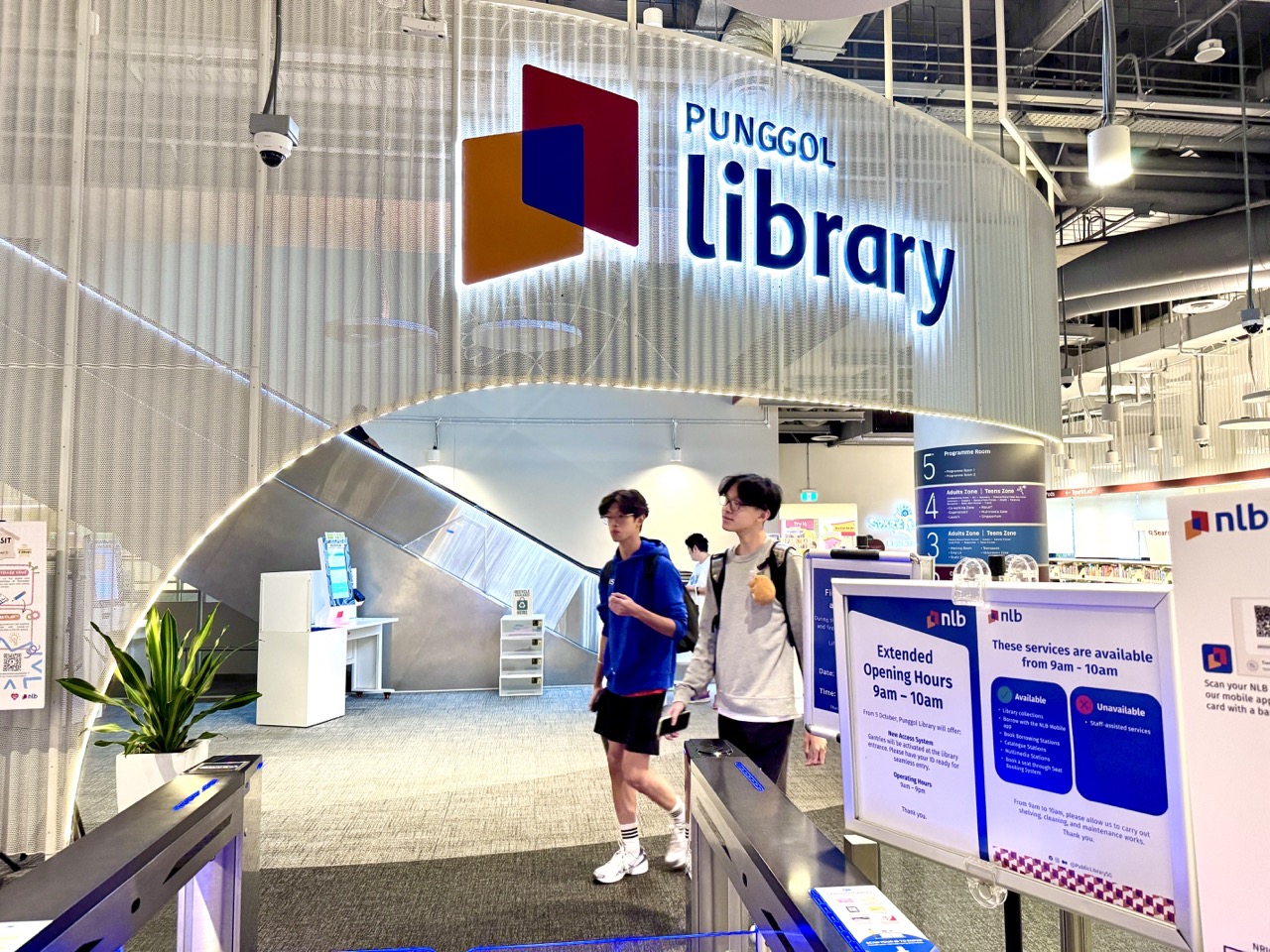
Punggol Regional Library at One Punggol provides public reading and learning resources operated by the National Library Board. It is separate from a school’s own library and from a commercial tuition centre.
Families can use NLB’s catalogue and current rules to borrow age-appropriate materials. A child may explore fiction, informational works and safe digital reading without needing a particular PIRLS preparation package.
The library is useful because it expands access to texts and supports self-directed interest. Borrowing books alone is not proof of comprehension, so parents can add meaningful conversation.
30. School libraries have different borrowing arrangements
A primary school’s library may follow its own collection, timetable, pupil borrowing limit and teacher-guided reading activities. These should not be assumed identical to NLB membership or the Punggol public library’s hours.
A parent can ask the teacher how the school supports lower-primary decoding and upper-primary informational literacy. A pupil who borrows regularly but rarely completes a book may need help matching choice to readiness.
Library access is one resource within a broader teaching system. The educational purpose is to develop independent readers, not simply maximise the number of borrowed titles.
31. A reading diary should track understanding, not surveillance
A brief private family note can record a text, what the child understood independently and one interesting question. It need not contain every page or a long score sheet.
For example: “Read an article about birds; identified two reasons nesting habitats matter; asked how we know the population changed.” That records comprehension and curiosity without treating the child as a research subject.
Parents should respect the child’s enjoyment and privacy. The log is a learning aid, not evidence for a fictional personal PIRLS certification.
32. A five-question informational reading routine
After a short age-appropriate article, ask: What is its main point? Which two facts support that point? What does one unfamiliar word mean here? What cannot be concluded from the text? Which source would help verify a doubtful claim?
The questions encourage literal understanding, evidence, contextual vocabulary and limitations. They can be adjusted for pupils at different readiness levels.
A learner who cannot answer one question needs a precise explanation, not a general accusation of not paying attention. Repeat the method on a different article to assess independent transfer.
33. Original reading task: a simulated website
Imagine a fictional page titled “Safe Visits to a Nature Park”. It includes three headings: opening hours, permitted paths and wildlife etiquette. A child asked whether bicycles are allowed should locate the relevant rule instead of assuming the answer from a photograph.
If the simulated page does not state bicycle permission, the correct response may be that more official information is needed. A decorative image is not evidence of a policy.
This is not a released PIRLS item. It illustrates the same broad digital reading discipline: identify the source, locate the relevant section and separate observation from a supported answer.
34. Visual appeal does not determine credibility
Colourful digital pages can contain both reliable and misleading information. A pupil should notice the source, date, definitions and whether a factual claim can be verified.
For example, a website claiming a new Punggol school opening next week should be checked against MOE or the institution’s actual notice, not accepted because the layout resembles a government page.
Age-appropriate digital literacy is a reading skill. Students can learn to pause before sharing a claim and explain what evidence would make it trustworthy.
35. Use texts in both English and Mother Tongue meaningfully
Singapore’s bilingual system gives many children access to more than one language. A pupil may read fluently in English while still developing Mother Tongue literacy, or vice versa. The skills are related but cannot be treated as identical.
Parents can encourage stories and everyday discussion in both relevant languages without expecting a child to instantly reach the same reading speed in each.
PIRLS is a defined international reading study, while school Mother Tongue qualifications follow their own curricula. The family should examine the actual skills and official subject rules separately.
36. How a teacher diagnoses reading comprehension
A teacher can compare a learner’s ability to decode words, explain a sentence, identify the main idea and infer meaning from evidence. A child who misreads one technical term may need vocabulary teaching, while another who invents unsupported claims needs a different comprehension strategy.
The correction should focus on the first weak step. The teacher can model the reasoning and then ask for a fresh passage with similar structure.
The educational objective is independent understanding, not simply the completion of more timed practice sheets. This is useful far beyond one international study.
37. Original worked example: a cause-and-effect sentence
Read the invented sentence: “The seedlings bent towards the window because light reached them mainly from that direction.” The stated explanation connects light direction with bending. A pupil should not infer that the plants received no water or were all unhealthy unless the text adds that evidence.
Ask the learner to underline the phrase giving the cause and describe the resulting event. Then change the sentence to a different context involving water flow or transport delays.
A child who explains the new cause-and-effect structure without hints has developed transferable reading competence relevant to Science and ordinary informational texts.
38. Different children need different levels of challenge
A pupil who struggles to read short paragraphs may benefit from guided decoding and vocabulary practice, while a strong reader may need deeper interpretation, longer informational texts or comparison of competing explanations.
A single national mean cannot identify which path the child needs. Teachers and parents should select suitable material from the learner’s actual performance.
Reading confidence develops through achievable success and thoughtful stretch. More difficult texts are not automatically better when foundational language remains unstable.
39. What if a child reads fluently but avoids books?
Reluctance may reflect fatigue, limited choice, past pressure, reading difficulty hidden by memorisation, or other factors. A parent should ask what the child dislikes rather than assume laziness.
Offer a genuine selection of suitable texts and short discussions without compulsory quizzes. A shared reading routine or public-library visit may help a child discover a subject they enjoy.
Persistent difficulty understanding age-appropriate texts deserves collaboration with the teacher. Reading enjoyment and competence are distinct but both matter to long-term learning.
40. Reading research should not be overinterpreted causally
PIRLS contextual questionnaires may show statistical relationships between home reading resources and achievement. Such findings should not be rewritten as proof that simply buying more books causes a fixed score increase.
Households vary in language exposure, educational opportunities, time and other circumstances. Careful researchers account for methodology and limitations when explaining associations.
Parents can still take sensible actions: provide accessible reading, talk about ideas and support specific learning needs. Those actions are educationally meaningful without an invented causal guarantee.
41. What the scheduled 2027 results will and will not show
IEA currently schedules the international PIRLS 2026 report for December 2027. It should provide comparisons, trends and reading-related contextual findings for participating systems under the new digital design.
It cannot tell a Punggol parent that their individual child’s PSLE mark is guaranteed or that one local school is the top performer. Researchers must also consider changes in assessment mode and population context when interpreting trends.
Families should read the report when released rather than rely on a premature ranking headline in 2026.
42. A fictional Punggol Primary 4 reading case
Imagine a child attending a Punggol primary school who reads stories eagerly but struggles with informational passages containing diagrams. The parent sees Singapore’s national reading ranking and assumes the pupil should already be strong at every text.
A teacher identifies a narrower gap: the student is ignoring diagram labels and making unsupported guesses. The family practises one short factual article each week, discussing the graph’s units and the difference between stated information and interpretation.
This fictional case shows how national success and individual learning needs can coexist. The intervention targets a real skill rather than a fictitious PIRLS personal rank.
43. Four weeks of balanced reading support
Week 1: observe the child’s reading of one story and one informational text, separating decoding, vocabulary and comprehension. Preserve enjoyment and adequate rest.
Week 2: teach one missing skill, such as interpreting a heading, identifying evidence or explaining a connector. Model the idea briefly and allow an independent attempt.
Week 3: change the text and medium—print or safe digital content where appropriate—and check whether the skill transfers.
Week 4: review independent progress with the teacher where useful, choose suitable reading for pleasure and set the next manageable goal. Do not invent a national-study score for the child.
44. Common mistake: mixing PIRLS with PSLE or PISA
PIRLS is an international reading research study at approximately Primary 4, PSLE is Singapore’s Primary 6 national examination and PISA assesses older students internationally. Their scores, sampling and purposes differ.
A parent should not compare 587 PIRLS scale points with a PSLE Achievement Level or assume a PISA Mathematics rank predicts one child’s English comprehension.
Keeping assessment systems separate allows evidence to be useful. It protects children from misleading comparisons and prevents articles from reusing a dramatic ranking without explaining what was measured.
45. Final Punggol parent checklist
Understand what PIRLS measures, why the fully digital 2026 cycle is different, and when its 2027 results are due. Remember that national performance does not diagnose a particular child or determine admission to any local school.
Ask the child to read unfamiliar literary and informational texts, explain evidence and recognise limits of a claim. Use public and school libraries where appropriate, and seek teacher guidance for persistent gaps.
A strong reading journey is not built by chasing international rank. It develops comprehension, curiosity and independent judgement across the texts children will meet throughout their education.
Frequently asked questions
What does PIRLS stand for?
Progress in International Reading Literacy Study, an international reading assessment run under IEA arrangements.
Does Singapore participate in PIRLS 2026?
Yes. IEA lists Singapore among the participating education systems for the 2026 cycle.
How many education systems are involved in 2026?
IEA’s current list has 64 participating national and relevant benchmarking education systems.
What school level is PIRLS about?
Approximately fourth-grade/Primary 4 reading achievement.
Is PIRLS the PSLE?
No. PIRLS is international system research; PSLE is Singapore’s national Primary 6 examination.
Does every Punggol pupil have to sit PIRLS?
No. The international study uses research sampling; it is not a universal individual entrance examination.
Does PIRLS rank individual Punggol schools?
Not as a public local league table. Country-level comparisons do not establish school-specific ranks.
Is PIRLS 2026 digital?
Yes, IEA describes a fully digital assessment including engaging and simulated online informational reading tasks.
What is ePIRLS?
Online informational reading tasks using simulated website-like material within the PIRLS assessment approach.
Does digital PIRLS test one specific tablet brand?
No. The study measures reading processes through its controlled assessment environment.
What is group-adaptive design?
A research test-design feature distributing different test forms to improve measurement across achievement levels.
When is PIRLS 2026 data collected?
IEA schedules main 2026 data collection, with windows depending on participant geography.
When will PIRLS 2026 international results appear?
IEA’s current timeline schedules December 2027.
Can an article report Singapore’s final PIRLS 2026 rank in October 2026?
No. The final international results have not yet been released.
How did Singapore perform in PIRLS 2021?
Singapore’s average reading scale score was 587, the highest national average in that cycle.
What was Singapore’s 2016 score?
Published trend sources report 576 on the PIRLS scale.
Does 587 mean 587 out of 100?
No. PIRLS scale scores are statistical achievement measures, not percentages.
What does a scale centrepoint of 500 mean?
A fixed reference established in the first PIRLS cycle for comparing trends, not an individual pass mark.
Can a high national result mean some children still struggle?
Yes. A national average does not erase the distribution of individual reading needs.
Does PIRLS measure enjoyment of reading too?
It collects contextual information about student attitudes and home/school learning conditions in addition to achievement.
What are the two broad reading purposes?
Literary reading and informational reading, with relevant comprehension processes.
Should parents make every story a graded quiz?
No. Balanced literacy includes pleasure, conversation and targeted comprehension guidance.
How can a child practise digital informational reading?
Use safe age-appropriate material and ask about source, main point, evidence and unsupported claims.
Does reading more books guarantee a specific score?
No. Books can support learning, but comprehension and causal claims require actual evidence.
Is Punggol Regional Library connected to PIRLS admissions?
No. It is a public NLB resource, not a PIRLS or school-admission authority.
What should parents do first?
Observe one story and one informational reading task, identify a specific comprehension gap and support independent understanding.
Primary international research sources and Punggol reading
- IEA PIRLS 2026 participants, digital transition and December 2027 release
- IEA PIRLS assessment overview
- IEA PIRLS 2026 frameworks
- IEA 2026 digital assessment features
- IEA PIRLS 2021 previous cycle
- Boston College PIRLS 2021 results announcement
- New Zealand Education Ministry analysis confirming Singapore 587 (2021)
- Australian Council for Educational Research PIRLS trend comparison
- IEA PIRLS data repository and user guidance
- MOE Singapore reading and learning developments
- NLB Punggol Regional Library
- Punggol English reading and library learning pathway
- Punggol Primary 1–2 learning progress guide
- Punggol Primary 3–4 English comprehension guide
- Clementi immutable reasoning-first reference
Editorial verification, 23 October 2026: The 2026 assessment has not yet released its international results; December 2027 is the IEA’s scheduled publication. The 2021 Singapore scale score is attributed to the IEA research cycle and national research agencies. All reading passages, sample pupils and arithmetic illustrations are original and are not released PIRLS items or individual assessments.


