
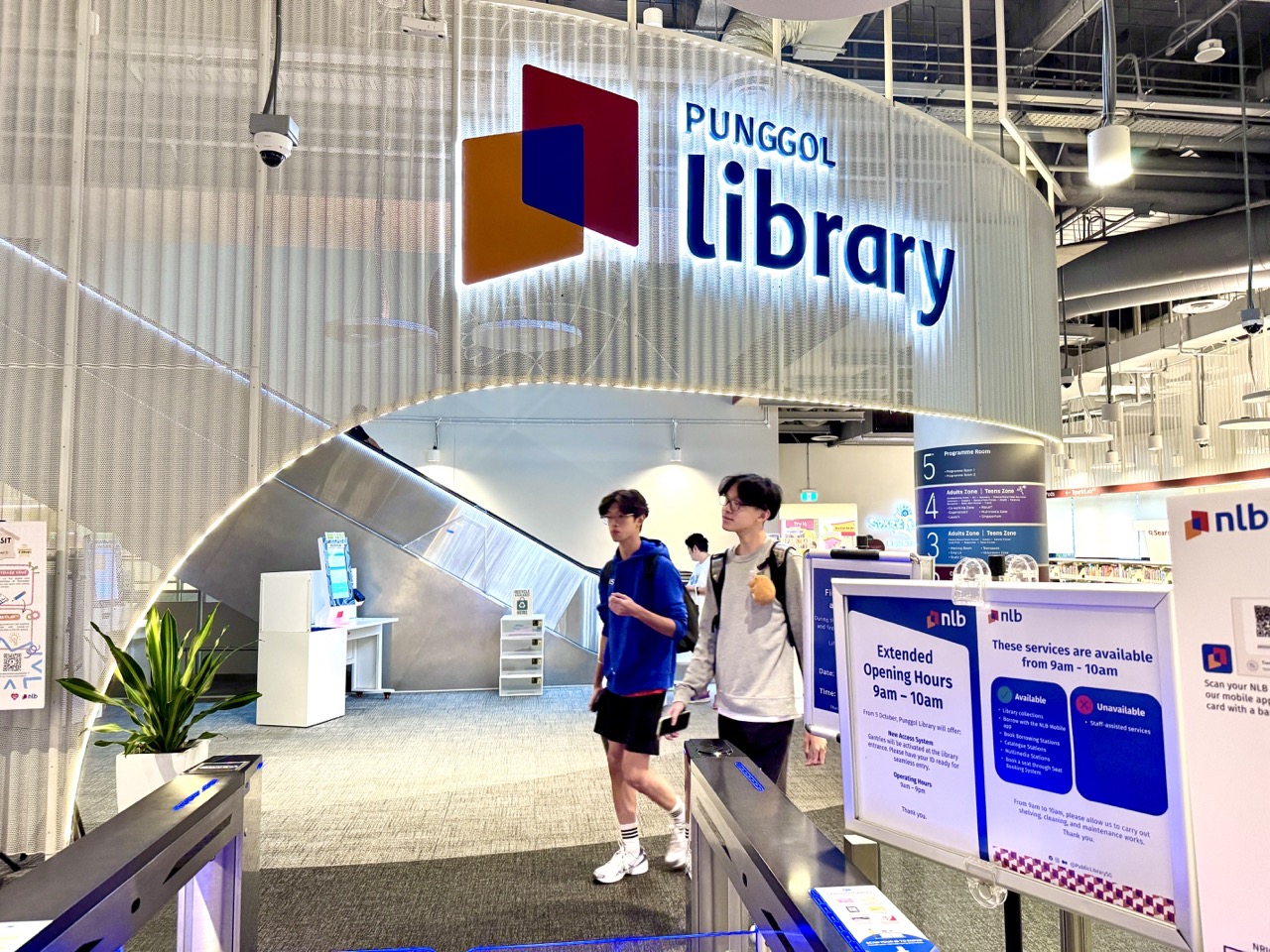
The top 10 things to do in Punggol for Library and Information Science students are to search NLB OneSearch properly, create an accurate book metadata record, compare digital borrowing with ownership, study accessible Borrow-n-Go services, trace historical provenance through Punggol Stories, understand Archives Online request procedures, compare the Comics & Games Library at Punggol Coast Mall with a traditional collection, examine multilingual literary discovery, plan preservation for an original digital file and build a small rights-aware Punggol resource catalogue.
Best first information-science exercise: search OneSearch for a specific Punggol historical term, then check whether the result is a book, map, photograph, archival record or just a catalogue description. NLB’s OneSearch FAQ supports exact-phrase searches and Boolean OR. For an in-person visit, Punggol Regional Library is at One Punggol; NLB also operates a separate Comics & Games Library at Punggol Coast Mall. Those collections have different purposes and access arrangements.
This October 2026 guide is not simply an itinerary for book lovers. Its focus is on retrieval, metadata, provenance, cataloguing, licensing, inclusive information services and digital preservation. Every task makes a distinction between a resource’s existence, what its catalogue says, whether a user may access the underlying item and what rights govern reuse. Students can complete most work at home without holding other people’s library cards or requesting restricted archival material.
Choose the information-science skill
- Search: compare keywords, exact phrases, variant spellings and result-format filters.
- Metadata: describe one resource precisely enough that somebody else can find it.
- Access: distinguish a catalogue record from an available loan or licensed full text.
- Inclusion: evaluate whether an information interface is usable for readers with varied needs.
- Provenance: separate the historic event date, original record and modern exhibition.
- Archives: learn when a request, permission or onsite consultation is required.
- Multilingual discovery: preserve original scripts and responsibly attributed translations.
- Preservation: keep versions, rights, dates and file context clear.
- Portfolio: assemble a traceable small catalogue rather than a long unverified list.
A good search result is the start of research
In an information system, discovery is not the same as full access. A search result may confirm the existence of a newspaper record while leaving the actual page unavailable remotely. A library catalogue can indicate a book’s publication history while its physical copy is on loan. A digitised photograph can have a readable preview but still carry copyright or donor restrictions. Treating all three as complete and freely reusable content creates factual and rights problems. Students must label exactly which layer they consulted.
Metadata adds structure to this process. Dates, creators, languages, material types, subject headings, identifiers and holding institutions help avoid confusing similar resources. A researcher who mistakes the year of a digital upload for the original year of a historic photograph can distort Punggol’s history. A user who cannot find an item because its title is only stored as an image faces a discovery barrier. Information Science studies these problems and designs ways to reduce them.
User needs should shape the system. A child browsing comics, a senior using Borrow-n-Go, a heritage researcher requesting archival records and a multilingual reader searching for an original title have different needs. A single interface can support many people through accurate categorisation, flexible access, clear help and meaningful error recovery. But there is no reason to collect unnecessary personal data to make an information service look smarter.
Ten Punggol Library and Information Science investigations
1. Search OneSearch and distinguish a resource from a search-result snippet
Where: NLB’s official OneSearch portal, usable from home or Punggol Regional Library.
Information-science significance
NLB’s OneSearch is a discovery service linking multiple content types, including physical books, ebooks, images, newspapers, archival records and other heritage holdings. Its FAQ describes exact phrase quotation marks and Boolean OR, alongside other ways of narrowing searches. This is a real Information Science lesson because a search-result snippet is not the item itself and an apparent match may be about a place without providing full content. Resource discovery, licensing and access are separate processes.
How to perform the exercise
Choose a narrow question such as ‘Which records mention historical Punggol Road?’ Search both a simple term and an exact phrase in quotation marks, recording the total result count if available, the format filter and top relevant metadata. Use OR to compare spelling variants such as Punggol OR Ponggol, according to OneSearch’s supported syntax. Build a small table describing which results are books, photographs or records, and why each might answer the question differently. Do not assume all results can be opened from home.
Worked Punggol example
A student sees a catalogue result for a digitised newspaper and writes as though they read the full historical article. They had in fact viewed only an abstract and bibliographic description. The corrected citation identifies the record consulted, its source, publication date and the fact that full text was not accessed. This is a crucial difference between finding evidence and examining it. Later, they can use the authorised access route if fuller analysis is necessary.
A deeper systems question
Compare precision and recall in a simple qualitative way: a very narrow exact phrase may miss variant spellings, while a broad keyword search may retrieve many irrelevant references. Explain why an information professional changes the query and reviews source metadata rather than treating the first page of results as an exhaustive bibliography. Record which search method produced a useful item without claiming a numerical precision percentage from an unreviewed dataset.
Access, rights and privacy
Access to some subscribed databases requires membership or on-site resources. Don’t bypass authentication, scrape excessive search results or reproduce copyrighted full records. Keep quotation and use within permitted conditions.
Official catalogue or institution reference: Search OneSearch and distinguish a resource from a search-result snippet. Check current resource records and rights before reproduction.
2. Build a metadata record for a Punggol-related book
Where: Punggol Regional Library or an NLB catalogue item viewed online.
Information-science significance
A catalogue record allows readers to identify, compare and retrieve resources. Useful fields include title, creator, subject, publication year, language, material format, identifier and access status. Two books can share the same title but be different editions; a digital edition can differ from a physical copy in rights and availability. Students who record only ‘a book about Punggol’ leave too little information for somebody else to find it. Library and Information Science trains attention to the record as a bridge between the resource and the reader.
How to perform the exercise
Select one genuine item from NLB’s current catalogue with an accessible public record. Copy only its bibliographic facts—do not copy protected full content—and prepare a short original citation. Then create a clearly fictional second edition of the same title with a different publication year and show how the metadata would need to distinguish it. Add a subject term that correctly describes the item without assigning an unsupported historical period. Ask another student whether they can retrieve the original source from your record.
Worked Punggol example
A student lists a Punggol guide as ‘Punggol, 2026’ with no author, item title, format or source. A reader cannot distinguish it from dozens of other works. The corrected record includes title, responsible creator where known, date, the NLB catalogue identifier and whether it is a printed or digital resource. If a field is missing from the actual listing, the student writes ‘not shown’ rather than inventing it.
A deeper systems question
Compare creator metadata with subject metadata. A book written by an artist about bridges is not necessarily a bridge constructed by that artist. Controlled fields help prevent entity conflation. Ask how authority control might connect variant spellings of an author’s name while keeping two different people with similar names distinct. In a classroom model, give each imaginary creator a unique identifier and test search results for ambiguity.
Access, rights and privacy
Do not invent ISBNs, call numbers, publication years or rights holders. A catalogue record is not a guarantee that a physical copy is currently on a particular shelf; check current loan status separately.
Official catalogue or institution reference: Build a metadata record for a Punggol-related book. Check current resource records and rights before reproduction.
3. Differentiate borrowing, licensing and ownership with NLB Mobile
Where: Official NLB Mobile eResources information and a personal eligible library account.
Information-science significance
NLB Mobile provides access to ebooks, audiobooks, eMagazines and other resources under applicable borrowing or streaming licences. Reading a digital item on a phone is not necessarily the same as owning unrestricted copyright or the right to make copies. The distinction becomes especially clear when one format has a waiting list or access period. Library science students should understand what a user may find, borrow, stream, reserve, export or quote under the actual terms. The fact that an app allows a screenshot does not automatically authorise public redistribution.
How to perform the exercise
Read NLB’s current Mobile and eResources pages and select a book or audio title you are eligible to access. Without sharing login credentials, note the format, access or loan conditions and whether it requires a separate reader. Create a diagram showing discovery, eligibility, borrowing or streaming, access period and eventual return or expiration. Compare that pathway with an outright purchased physical copy while clearly identifying the rights that remain with the creator or publisher. Use a fictional licence example if the actual app’s terms are unclear.
Worked Punggol example
A learner borrows an ebook and assumes the electronic file can be shared permanently with their class as an uploaded PDF. NLB access is governed by borrowing and content-use conditions, and the publisher’s copyright remains relevant. The corrected plan is to share a legal catalogue link or reading recommendation rather than the full file. The learner has understood a licence distinction even if the book is free to borrow.
A deeper systems question
Discuss digital preservation versus licensed access. An individual ebook borrower may lose access at the end of a loan, while NLB retains the responsibility for collection access under institutional arrangements. Consider accessibility requirements: different reading formats and assistive features can affect who benefits. Information work aims to make legitimate resources findable and usable, not to defeat licence controls.
Access, rights and privacy
Never share passwords, download pirated ebooks or assume subscriptions are universally accessible. NLB holdings and app interfaces change; verify the current account and copyright terms.
Official catalogue or institution reference: Differentiate borrowing, licensing and ownership with NLB Mobile. Check current resource records and rights before reproduction.
4. Study inclusive discovery at Punggol Regional Library’s Borrow-n-Go
Where: Punggol Regional Library’s public Level 1 accessible facilities at One Punggol.
Information-science significance
NLB describes Punggol Regional Library as designed for patrons with a range of physical and sensory needs. Its Borrow-n-Go feature includes a screen positioned at a height suited to wheelchair users, alongside accessible collection and assistive technologies such as adapted input devices or reading aids. This is a critical Information Science issue: a perfectly catalogued resource has little practical value if a reader cannot discover, understand or borrow it through the interface. Access involves physical, digital, sensory and instructional design.
How to perform the exercise
Study the library’s official accessibility description and visual schedule. If visiting an open public area, notice the location of wayfinding and equipment only without interfering with current users. On paper sketch an inclusive borrowing interface with readable text, clear back and confirmation actions, no unnecessary account details exposed, and a useful route to staff help when needed. Ask a consenting tester to identify the next action, but never pretend their experience represents every person with disability.
Worked Punggol example
A prototype interface uses a small unlabeled arrow for confirm and an equally small arrow for cancel. Several users cannot tell the difference. The student redesigns the controls with meaningful labels and legible contrast, then retests. The improvement supports simple navigation in a fictional interface, but does not certify that a real NLB system has a defect or that the new proposal meets every accessibility regulation.
A deeper systems question
Separate discoverability, usability and accessibility in your review. Can a reader find the item? Can they understand the steps? Can someone using different input or communication methods perform the task? Consider alternative text, screen reader order, language options and a fallback to human assistance. Information architecture should make error recovery possible without requiring public display of private membership data.
Access, rights and privacy
Specialist assistive devices and rooms may have separate use rules. Do not use an occupied accessibility station as an exhibition prop or ask disabled visitors to demonstrate their needs. An educational paper redesign is not an approved NLB system change.
Official catalogue or institution reference: Study inclusive discovery at Punggol Regional Library’s Borrow-n-Go. Check current resource records and rights before reproduction.
5. Trace provenance through the Punggol Stories Memory Map
Where: Punggol Stories permanent exhibition, Level 4 Singaporium.
Information-science significance
The Punggol Stories exhibition brings archival material and recorded memories into a modern interpretive setting. Each item can have several important dates: the event described, original recording, cataloguing and current exhibition. An Information Science student should preserve provenance rather than flatten all these into the webpage’s publication year. The Memory Map is especially useful because a personal recollection can be accurately preserved as testimony while still requiring other evidence for a precise geographical or chronological claim.
How to perform the exercise
From NLB’s official exhibition page or an authorised visit, choose one public exhibit theme and record which collection or creator is credited. Create a chain-of-custody-inspired descriptive timeline: original event period if known, date of the source, archive or library holding, current digital or physical display. Avoid calling every stage a new ‘creation date’. If the object is a recollection, note the speaker’s stated position and the difference between personal account and later curatorial summary.
Worked Punggol example
A learner discovers a memory about historical pig farms in an exhibit updated in 2026. They initially cite 2026 as the year of the farming activity. The correction preserves the actual historical period separately from the display’s current update date. Another error would be treating an NLB caption as proof that the original creator personally wrote the whole exhibition text. A provenance record attributes each layer accurately.
A deeper systems question
Design a metadata template for ‘original source creator’, ‘source format’, ‘date represented’, ‘recording date’, ‘holding institution’, ‘rights’, ‘exhibition date’ and ‘questions unanswered’. Test it on two different fictional items, a photograph and an oral history, to see which fields are applicable. A well-designed schema accommodates missing values without fabricating them.
Access, rights and privacy
Do not photograph or copy long exhibition texts in breach of NLB rules. Personal memories can involve identifiable people and need respectful attribution. A catalogue description is not permission to redistribute a protected archival photograph.
Official catalogue or institution reference: Trace provenance through the Punggol Stories Memory Map. Check current resource records and rights before reproduction.
6. Learn how Archives Online differs from an archives reading-room visit
Where: National Archives of Singapore online search; physical Archives Reading Room is at 1 Canning Rise, not Punggol.
Information-science significance
The National Archives of Singapore’s March 2026 guidance identifies Archives Online as the discovery portal for government records, photographs, maps, oral histories, audiovisual material, posters and related holdings. Selected records can be viewed remotely while others require a ‘Request to View’ action and possible permissions. Its physical Archives Reading Room is at 1 Canning Rise, separate from Punggol Regional Library. Knowing the difference among a catalogue, digital access and physical viewing request prevents readers from travelling to the wrong building.
How to perform the exercise
Search Archives Online for one harmless Punggol topic, such as older roads or photographs. Record the format, identifier, original date, holding information and whether a preview, full record or request action is actually available. If a document cannot be opened at home, do not claim to have read it. Create a paper request plan based on the official guidance, including how far ahead to apply, without submitting an unnecessary request merely for an exercise. Explain whether a reproduction might need further clearance or fees.
Worked Punggol example
An enthusiastic student finds the title of an oral-history reel but only a catalogue description. They write a detailed quotation purportedly from the interview. This is fabricated access. The corrected research note states that the catalogue record was located and the underlying interview was not yet viewed, then identifies the legitimate request pathway. The project becomes more transparent and easier for another researcher to reproduce.
A deeper systems question
Compare an archival original with an access copy. The NAS page explains that copies are made available at the reading room to reduce handling of originals. Discuss how digitisation aids discovery while leaving questions of authenticity, preservation, redaction, context and rights. A good citation should make clear whether the student used a transcription, scan, catalogue record or later secondary summary.
Access, rights and privacy
Do not invent an Archives Reading Room in Punggol or promise that every record is immediately downloadable. Follow the NAS March 2026 request and permission arrangements. Do not share sensitive personal archival information in a public school project.
Official catalogue or institution reference: Learn how Archives Online differs from an archives reading-room visit. Check current resource records and rights before reproduction.
7. Compare the Comics & Games Library with a conventional book collection
Where: Comics & Games Library at Punggol Coast Mall, 88 Punggol Way, Tower 7 #01-140.
Information-science significance
NLB’s current Nodes and Grab-n-Go pages identify a self-service Comics & Games Library at Punggol Coast Mall. It began operating in April 2025 and holds a collection of more than 7,000 comics, graphic novels, game-themed reads and board games. Visitors may enter using a library-compliant card, an NLB eCard or an eligible QR day pass, with borrowing via NLB Mobile. The pop-up is a genuine information-service example with collection types and access rules that differ from a conventional shelved novel collection.
How to perform the exercise
Use NLB’s official description and choose a conceptual sample containing one comic, one graphic novel, one game-themed nonfiction book and one board game. For each write the likely descriptive fields needed: title, creator or manufacturer, material type, language, components, age guidance if legitimately available, and borrowing conditions. Consider whether Dewey-like shelf categorisation alone would help a visitor find a specific board game. If visiting, follow the current entry and self-service rules rather than expecting staff to provide an unscheduled guided catalogue tour.
Worked Punggol example
A student creates a catalogue with all board games listed only as ‘books, 2025’. A user cannot distinguish a multi-component game from a graphic novel. The revised schema includes an appropriate material type and component description, then flags that actual catalogue fields must be sourced rather than guessed. The learner identifies how collection format affects information retrieval.
A deeper systems question
Design a subject-facet filter such as language, game type, readership, format and local-creator status, and test whether it helps a fictional visitor. Discuss the tension between broad popular labels and precise discoverability. A category such as ‘comics’ may include very different ages and genres; good cataloguing preserves useful distinctions without stereotyping readers.
Access, rights and privacy
NLB lists operating hours of 10am–10pm daily for the pop-up, but check current status and holiday updates. The collection and any board-game use must follow its actual rules. Do not assume every catalogue item can be removed from the premises or is currently available.
Official catalogue or institution reference: Compare the Comics & Games Library with a conventional book collection. Check current resource records and rights before reproduction.
8. Study multilingual discovery through The Lens of Literature
Where: Punggol Regional Library’s Level 3 Sing Lit installation.
Information-science significance
NLB’s Punggol Stories features The Lens of Literature with curated literary works in English, Chinese, Malay and Tamil. The programme illustrates a problem for information services: a search interface can be technically functional while excluding readers who use different scripts, transliterations or subject terms. An anthology’s translation, original title and different language editions should be represented as related but distinct records. Information Science asks how collections remain discoverable without falsely asserting that a translation and original text are identical.
How to perform the exercise
Read NLB’s current exhibition themes and choose one public item whose title and credits are given in more than one language, or create clearly fictional sample records. Write metadata fields for original language, display script, transliteration if available and translated title with a source credit. Test two queries, one using the original-language text and one in English. If you cannot read the original language, do not invent a translation; rely on a credited source or qualified assistance.
Worked Punggol example
A learner stores the Chinese title of a poem as an image with no associated text metadata. A user searching by the author’s name or a translated title may not discover it. The student redesigns the paper record to preserve the original script as text and add an appropriately attributed title translation. The outcome is better potential discovery while respecting the distinction between the two language expressions.
A deeper systems question
Compare access and representation. A system that translates every title without retaining the original may lose cultural nuance, while one using only original scripts may be inaccessible to some readers. A useful interface can display parallel metadata, clear language tags and source attribution. Explore how search indexing, Unicode, romanisation and controlled names affect retrieval.
Access, rights and privacy
Do not reproduce complete poems or claim to be a certified translator. A public installation is not permission to extract all its multimedia files. Observe current access times and readers’ privacy.
Official catalogue or institution reference: Study multilingual discovery through The Lens of Literature. Check current resource records and rights before reproduction.
9. Build a rights-aware digital preservation plan for a Punggol photo
Where: Home, school or approved NLB research room using an original student-owned photo.
Information-science significance
Digital files are fragile in different ways from physical books. A smartphone photograph may lose its original filename, capture context or licence information when repeatedly shared. Library and archival preservation aims to maintain content, provenance and usable access over time. A student can learn these principles with a harmless photograph they own instead of downloading a protected archival image and declaring it public domain. The key distinction is among storage, backup, preservation metadata and permissions for distribution.
How to perform the exercise
Take or use one original non-identifying photo of an ordinary object, such as a notebook or an empty authorised classroom table. Record the actual creator, capture date, format, file size and why it was created, keeping private home or school details out. Make a local working copy and an appropriate safe backup under the school or family’s security arrangements. Create a text manifest containing descriptive metadata and a simple rights statement. Rename a derivative only after preserving the connection to the original.
Worked Punggol example
A student edits a photograph into an art poster and deletes its original, then labels the edited file as the untouched photograph from October 2026. The correction keeps the original file, calls the new image a derivative, and records the edits and creator. Later viewers can distinguish documentary evidence from a designed presentation. The portfolio demonstrates preservation awareness without copying any restricted material.
A deeper systems question
Discuss why storage in two folders on the same damaged device may not constitute meaningful redundancy. Explore checksums conceptually as a way to detect file change, using non-sensitive files only. Ask what information is necessary for future use: rights holder, date, place at a suitable non-private granularity, format and relationship among versions. A good preservation policy also considers when deletion is appropriate.
Access, rights and privacy
Avoid uploading private images, minors’ identities or precise sensitive wildlife locations to a public repository. Copyright ownership and privacy remain separate from a file’s technical format or availability.
Official catalogue or institution reference: Build a rights-aware digital preservation plan for a Punggol photo. Check current resource records and rights before reproduction.
10. Create an ethical micro-catalogue of ten Punggol learning resources
Where: A student portfolio using OneSearch, NAS and Punggol Stories official public records.
Information-science significance
An information professional serves the user by making credible resources identifiable and accessible without fabricating completeness. A ten-record micro-catalogue can combine one printed book, a digital reading item, a map, an oral-history catalogue description and a current public exhibition entry. It is not a claim to list every item about Punggol, and it should not reproduce source content beyond permitted use. The finished work tests organisation, metadata, retrieval, accessibility, rights and source checking together.
How to perform the exercise
Choose a narrow user question, such as ‘How did Punggol’s place names and waterways change?’ Select up to ten genuinely identified resources from official discovery portals. For each record capture title, creator where known, format, original publication date, holding or provider, public link, access conditions and two useful subject tags. Write a fifty-word annotation of what the resource can help answer and what remains unverified. Have another student use your catalogue to locate one entry they did not already know.
Worked Punggol example
The first version contains ten records all called ‘Punggol historical image’ with guessed dates and no source links. A tester cannot retrieve them. The revised catalogue uses clear titles or catalogue descriptions, holding identifiers, actual source types and explicit missing-date labels. The student removes a duplicate record instead of inflating the count. The result is smaller but substantially more trustworthy.
A deeper systems question
Perform an access audit: can a reader navigate to the record without an account, if not, which legitimate route applies? Is the description understandable to someone using a screen reader? Are language variants captured? Are rights and citations clear? Create a revisions log and specify that holdings and access arrangements may change after your review date.
Access, rights and privacy
Do not scrape services, share subscriber credentials or present a student index as an official NLB catalogue. Respect copyright, personal information and archive reproduction rules. A cataloguer should never invent a primary source they have not located.
Official catalogue or institution reference: Create an ethical micro-catalogue of ten Punggol learning resources. Check current resource records and rights before reproduction.
Three practical Punggol information-science sessions
The OneSearch discovery lab
Choose one narrow topic, such as a former Punggol Road name or a particular archive photo. Start with a broad keyword, test a quoted exact phrase, and add a legitimate spelling variant using NLB’s supported OR syntax. Record the format and source institution of a few results, then open only the items that you are authorised to access. End with one accurate citation and a note explaining whether you reviewed full content or only its catalogue description.
The library interface study
Read the Punggol Regional Library facility guide and OneSearch’s access description. If an ordinary visit is appropriate, review public wayfinding and ask staff about permitted accessibility services rather than using occupied equipment as a prop. On paper redesign one hypothetical catalogue or borrow-confirmation screen. Give it to a consenting tester and observe whether the instructions are understandable. Do not ask the tester to disclose their real membership details.
The Punggol Coast multi-format collection project
Use the current NLB Grab-n-Go description for the Comics & Games Library at Punggol Coast Mall. Develop metadata templates for a graphic novel, board game and local comic, keeping original records separate from your invented samples. Ask whether a simple ‘book title’ field is sufficient for all formats. Finish with a small retrieval test and explain how a real borrower’s eligibility and the collection’s operating rules differ from descriptive metadata.
How to evaluate your ten-record mini-catalogue
- Can another reader retrieve each item from the original source?
- Are title, creator and date recorded accurately, with unknown fields left unknown?
- Is the material type correct: book, image, sound, game, oral history or map?
- Have you distinguished catalogue metadata from the original content actually viewed?
- Are language and script variants treated accurately?
- Does each item state its access and borrowing limitations?
- Have copyright, donor or archive reproduction conditions been checked?
- Could a reader using a different input method navigate the description?
- Are private identifiers and unnecessary personal data absent?
- Is the catalogue explicitly a small curated sample rather than a claim of completeness?
Three mistakes information professionals must learn to avoid
First, assuming retrieval equals reading. A catalogue’s title and abstract may support a citation to the record, but not a direct quotation of an underlying interview you never heard. The repair is to identify the level of access and seek the original through the proper NAS or NLB route when necessary.
Second, losing provenance through editing. A historical image may be cropped or colour-adjusted in a modern display. If that derivative is presented as the unmodified original, later viewers can be misled. The repair is to preserve links between the original description, digitised copy and interpreted derivative, including rights and change history.
Third, designing only for the typical reader. An interface may work for a person using a mouse at a comfortable height but become difficult for someone with a different input device or sensory need. The repair is to test clear labels, alternative formats and assistance routes without claiming a single test certifies universal accessibility.
Frequently asked questions
What does Library and Information Science study?
It studies how information is organised, found, preserved, accessed and used responsibly by different communities.
Where can students study it in Punggol?
Punggol Regional Library, NLB’s online services, the Comics & Games Library and official archival resources provide suitable cases.
What is OneSearch?
NLB’s resource discovery service connecting multiple formats and partner collections, with borrowing and full-text access governed separately.
Can I use an exact phrase in OneSearch?
Yes. NLB’s FAQ describes quoted exact phrases and OR for alternative keywords.
Can I search OneSearch without a library login?
The search interface is generally accessible, but licensed content and borrowing may require an eligible account.
Does finding a book mean a Punggol copy is available?
Not necessarily. Format, branch, loan status and reservation conditions must be checked separately.
What is bibliographic metadata?
Descriptive information such as title, creator, date, format and identifier that helps identify and retrieve a resource.
Is a catalogue record the same as the full archival item?
No. A record may describe an item that requires a separate request or restricted access.
What is Punggol Stories?
NLB’s permanent exhibition across Levels 1, 3 and 4 of Punggol Regional Library, with literary and heritage collections.
Why must I preserve an interview recording date?
It is distinct from the period the interviewee remembers and the current date when the record is displayed.
Where is the National Archives Reading Room?
NAS lists it at 1 Canning Rise, not at Punggol Regional Library.
Can all Archives Online records be downloaded immediately?
No. Some require a Request to View or permission under NAS’s current access conditions.
What is Borrow-n-Go?
NLB’s accessible borrowing service at Punggol Regional Library, with an interface designed to be usable at accessible heights.
Is Borrow-n-Go a guaranteed solution for every patron?
No one interface meets every person’s needs without further consideration; individual assistance and other accessible formats remain relevant.
Where is the Comics & Games Library?
NLB lists it at Punggol Coast Mall, Tower 7, 88 Punggol Way, #01-140.
Does it only lend physical novels?
No. NLB describes comics, graphic novels, themed reads and board games, with collection-specific access rules.
What is a controlled vocabulary?
A structured set of preferred terms used for consistent information description and retrieval.
Can I invent dates for an old photograph if the year is unknown?
No. Mark the date unknown or approximate only when a credible source actually supports a range.
What is digital provenance?
A record of where digital content came from, what it represents and which transformations it underwent.
Does downloading an ebook mean I own its copyright?
No. Borrowing or licensed access does not automatically grant unrestricted reproduction or publication rights.
Official library and archive sources and related Punggol guides
- Search OneSearch and distinguish a resource from a search-result snippet
- Build a metadata record for a Punggol-related book
- Differentiate borrowing, licensing and ownership with NLB Mobile
- Study inclusive discovery at Punggol Regional Library’s Borrow-n-Go
- Trace provenance through the Punggol Stories Memory Map
- Learn how Archives Online differs from an archives reading-room visit
- Compare the Comics & Games Library with a conventional book collection
- Study multilingual discovery through The Lens of Literature
- Build a rights-aware digital preservation plan for a Punggol photo
- Create an ethical micro-catalogue of ten Punggol learning resources
- NLB OneSearch catalogue entry
- NLB Punggol Coast Comics & Games Library
- National Archives March 2026 access requirements
- NLB Punggol Stories exhibition information
- Punggol public artworks and attribution methods
- Punggol journalism source verification
- Punggol historical records and provenance
- eduKateSG focused error diagnosis and guided explanation
Trustworthy information has a recoverable trail
A Punggol library resource is not useful merely because a search engine displays it. A reader needs to know what it is, who made it, when it dates from, where it can be found and which use rights apply. Learn to trace that chain, represent unknown information honestly and test whether the next reader can retrieve the same record. The result is an information service that earns trust through clarity, accessibility and preservation.


