
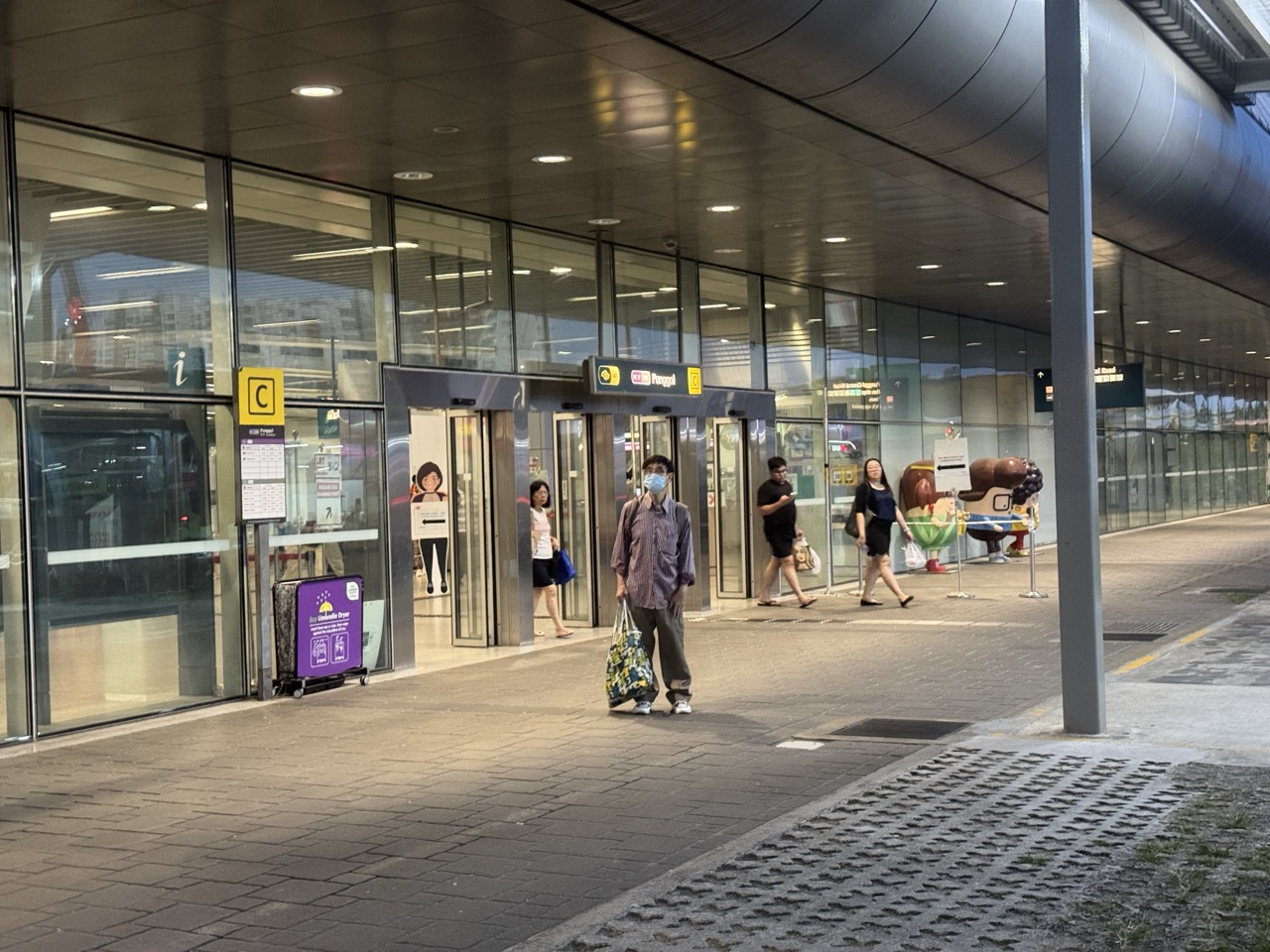
The top 10 things to do in Punggol for Art History students are to analyse Goh Beng Kwan’s glass installation at Punggol MRT, study Zul Othman’s TRAJECTORIES at Punggol Coast MRT, compare the two Art in Transit commissions, research Matilda House as conserved architectural heritage, trace photographic provenance in Punggol Stories, study the multilingual Words That Move installation, examine the curatorial design of The Lens of Literature, investigate JTC’s Shaping Hearts mural, distinguish park design from stand-alone art at Punggol Waterway Park and create a properly credited mini-exhibition of the town’s visual culture.
Best starting route: use the LTA Art in Transit catalogue to read about the two commissioned MRT artworks first, then make a simple comparison of medium, artist and relationship to place. Punggol MRT’s Water, Landscape & Future is a layered glass work by Goh Beng Kwan; Punggol Coast MRT’s TRAJECTORIES is by Zul Othman, also known as ZERO, and uses his memories of the area’s transformation. Both works are documented by LTA and SBS Transit. A site visit is optional, and station access remains governed by public transport rules.
This October 2026 guide teaches art-historical method rather than listing places for art lovers. Each activity begins with attribution and medium, follows with an original analytical task, and distinguishes verified object facts from the viewer’s personal interpretation. It also separates visual art, curatorial displays, conserved architecture and heritage-inspired infrastructure instead of giving all of them the same label.
Choose the art-history question you want to answer
- Artist and medium: investigate why Goh Beng Kwan used layered glass at Punggol MRT.
- Personal place narrative: study how Zul Othman’s TRAJECTORIES links memory with the district’s development.
- Chronology: compare two art commissions made for stations at different points in Punggol’s growth.
- Conservation: understand Matilda House through URA’s documented building history and restoration requirements.
- Provenance: investigate who created an image and how NLB uses it in a present-day exhibition.
- Multimedia: consider animation, text, sound and public participation at Words That Move.
- Public art: distinguish a commissioned mural from building or landscape decoration.
- Curatorship: write precise catalogue labels and organise a small coherent exhibition.
What an art historian records before giving an opinion
Begin with an object card. A proper card identifies the artist or creator if known, the title, medium, date where genuinely supported, location, commissioner or holding collection, and source. Do not assign the name of a well-known artist because a work resembles a style, and do not treat an unknown date as the current year merely because the web page was last updated recently. A glass artwork, an old photograph, a preserved building and a digital installation carry different kinds of evidence.
Next separate the visible form from its context. Form includes colour, texture, materials, size, arrangement and how the viewer encounters the piece. Context includes who commissioned or exhibited it, which place or period it addresses, and which source supports that account. Interpretation is a claim about possible meanings that should remain consistent with the object’s visible and documented features. Good art history does not ban personal responses; it helps a reader see where those responses begin.
Finally ask whether the object’s setting matters. Station artworks are encountered by people travelling to work or home, often for seconds at a time. A library installation invites deliberate interaction. A preserved house embodies historical building practices even when it is not an art gallery. A public mural may stretch across a large part of the built environment. Art-historical analysis should recognise these different modes of encounter rather than treating every image as a framed picture.
Ten Punggol art-history investigations
1. Analyse Goh Beng Kwan’s Water, Landscape & Future at Punggol MRT
Where: Punggol MRT, North East Line station NE17, in authorised public passenger areas.
Why the object or site matters
LTA’s Art in Transit catalogue identifies Water, Landscape & Future by Goh Beng Kwan as the art commissioned for Punggol MRT. SBS Transit’s description explains that the work comprises hand-painted, layered and fired glass with fragments embedded between the layers. It evokes water, Punggol’s earlier seaside, kampongs, sky and trees. This is an unusually rich local work for art history because the medium, setting and subject are documented together; its luminous appearance is not just a generic mural.
How to investigate it
Read the LTA and SBS Transit records and make an object record: title, artist, station, medium, documented motifs and authority credited. If travelling by train, observe only from legal passenger areas and never linger where passengers need to move. Describe one observable feature, such as intense glass colour, layering or change in appearance with viewing position, without touching the installation. Then explain how the piece relates to Punggol’s earlier landscape according to its official attribution. Keep any subjective emotional reading in a separate paragraph.
Worked Punggol attribution or interpretation example
A student writes, ‘The painting on the wall uses blue paint to represent modern skyscrapers.’ The source says it is glass, its layers were fired, and the depicted themes include water, seaside and old Punggol. The student corrects the medium, identifies the documented local imagery and writes that blue personally makes them think of water. The interpretation is now grounded in material and context rather than misidentification. The student does not assert an exact date or technique not supported by the current catalogue.
Take the analysis further
Compare how a transparent or translucent layered medium can interact with natural station lighting differently from opaque canvas. Research Goh Beng Kwan’s own documented career without inventing a school, mentor or artistic movement from visual impression. Ask what would happen to the work’s experience if it were reproduced as a small photograph in a textbook. The loss of actual scale, placement and changing light should form part of the analysis.
Rights, access and evidence limits
A working MRT station is not a gallery whose paths can be blocked for a class discussion. Follow station and photo rules, keep tripods or extended equipment out unless authorised, and protect other passengers’ privacy. The artwork’s artist and medium come from the operator; do not claim the right to reproduce its full image commercially.
Primary record: Analyse Goh Beng Kwan’s Water, Landscape & Future at Punggol MRT. Check current access and credited ownership before using images.
2. Read Zul Othman’s TRAJECTORIES at Punggol Coast as a contemporary place narrative
Where: Punggol Coast MRT, North East Line station NE18.
Why the object or site matters
LTA identifies TRAJECTORIES by Zul Othman, also known as ZERO, at Punggol Coast MRT. Its official account explains that the artist connects his personal memories of Punggol’s older paths, forests and waterways with subsequent housing and Punggol Digital District development. This differs from the earlier Punggol MRT artwork not merely because the station opened later, but because it uses a contemporary personal relationship to the town as part of the work’s narrative. A student’s task is to distinguish artist biography, curatorial explanation and visual form.
How to investigate it
Read LTA’s documented explanation before preparing a visit. Note the artwork’s precise name, artist and station code. From a permitted public view, record what is directly visible in composition and imagery, then compare it with the artist’s published contextual narrative. If the artwork is temporarily inaccessible, work from properly credited official images and label the exercise as secondary-source analysis. Compose a three-part timeline—past, present, imagined future—without inserting unverified private recollections into the artist’s biography.
Worked Punggol attribution or interpretation example
An initial caption says, ‘TRAJECTORIES proves that the entire natural Punggol landscape vanished when the digital district opened.’ The artwork reflects change and personal memory, but it is not a scientific land-cover census. The revised label attributes the past-to-future theme to LTA and explains that visual art can invite reflection on transformation without itself quantifying environmental change. A good art historian makes the difference visible.
Take the analysis further
Compare memory as a theme in contemporary art with direct archival evidence. Can an artwork preserve an experience that a technical map omits? Can a personal map have emotional truth without being geographically precise? Write a short answer using one visible feature and one statement from the actual artist or LTA, and explicitly mark which is interpretive. Advanced students can examine how digital districts shape public commissions and viewership.
Rights, access and evidence limits
Punggol Coast MRT provides transport access, not unrestricted access to SIT or private business spaces. The artist’s memories and identity should be attributed accurately, not fictionalised. Follow rail operating rules and avoid making a paid film or reproduction without the relevant permissions.
Primary record: Read Zul Othman’s TRAJECTORIES at Punggol Coast as a contemporary place narrative. Check current access and credited ownership before using images.
3. Compare two Punggol Art in Transit commissions across different periods
Where: LTA’s Art in Transit digital catalogue, followed by optional lawful MRT visits.
Why the object or site matters
LTA says Art in Transit was established in 1997 with the North East Line and commissions original artwork to connect station architecture with local communities and histories. Punggol MRT and Punggol Coast MRT provide a rare within-town comparison of different artists representing change in the same general place. Both works have titles, medium or subject descriptions and distinct stations. The relevant art-history question is not which station looks prettier but what each commission asks viewers to remember or imagine.
How to investigate it
Build a comparison table with artist, artwork, station, documented medium, themes, relation to place and what remains unknown. Use current LTA and SBS records instead of relying on a social caption. Choose one comparable analytical criterion—material and light, personal memory, use of historical motifs or viewer experience. Write two balanced paragraphs, one describing a genuine difference and one exploring a similarity. If visiting both, purchase legitimate fares and plan sensible travel without performing a platform photography tour at peak hour.
Worked Punggol attribution or interpretation example
A student writes ‘Punggol Coast’s art is better because the district is newer’. This equates date with artistic value and does not examine either object. The revised comparison asks how Goh Beng Kwan’s layered glass invokes water and rural imagery, while Zul Othman’s narrative foregrounds an artist’s memories of Punggol’s transformation. The evidence identifies a difference in approach, leaving aesthetic preference clearly separate.
Take the analysis further
Add a third station artwork from LTA’s official catalogue, such as another North East Line site, to check whether the observed pattern is unique to Punggol. Explain why public commissioning context matters: station architecture, audience movement, material maintenance and civic identity can shape the work’s presentation. A stronger essay distinguishes an era trend from one artist’s individual choice without overgeneralising from two objects.
Rights, access and evidence limits
Do not state that Art in Transit began when Punggol Coast opened; LTA dates the programme’s origin to 1997. Do not invent commissions, artists or operating gallery tours. Travel and artwork access depend on actual station arrangements.
Primary record: Compare two Punggol Art in Transit commissions across different periods. Check current access and credited ownership before using images.
4. Study Matilda House as conserved architectural heritage and a visual artefact
Where: Matilda House, 78 Punggol Walk, through URA’s conservation record and legal exterior views.
Why the object or site matters
URA records Matilda House as Punggol’s only remaining historical bungalow, built in 1902 and gazetted for conservation on 21 February 2000. The official entry describes tropical residential features such as open verandahs, raised floors, timber-framed latticework and louvres for cross ventilation, alongside its Cashin-family history. Architecture can be approached as visual-cultural evidence: scale, materials, climate adaptation and social history are part of how a building is represented and preserved. That does not make the building an unrestricted public museum.
How to investigate it
Read the URA entry and list five documented physical attributes without copying its full prose. Make a simplified original facade sketch from the official public imagery or from a lawful exterior viewpoint, clearly labelled not to scale. Distinguish a feature directly visible from a claim that relies on the URA record, such as original interior rooms or the date of gazetting. Write a short label explaining why climate-responsive features are significant and what the conservation status legally means for alterations.
Worked Punggol attribution or interpretation example
A learner sees tropical rooflines and assumes the bungalow can be rebuilt freely using modern materials because ‘it is old’. The URA record says that conservation permission and specific restoration guidelines are relevant to works. The corrected label states the documented conservation constraints and notes that a hypothetical redesign needs professional review. The student then asks how original building fabric carries historic evidence that a modern replica may not preserve.
Take the analysis further
Create two annotated drawings: one for the documented original architectural traits and one for a clearly imaginary adaptive-reuse proposal. Use a different line style to separate authentic conserved features from proposed additions. Ask which questions require historical photographs, an architect or URA permission rather than aesthetic preference. This develops conservation literacy without performing any work on the property.
Rights, access and evidence limits
Do not trespass, promise an interior tour or take pieces from the site. Matilda House is a conserved property with specific approval procedures; an educational illustration is not a conservation plan. Avoid presenting unverified folklore as building history.
Primary record: Study Matilda House as conserved architectural heritage and a visual artefact. Check current access and credited ownership before using images.
5. Trace the history of a photograph in Punggol Stories’ Singaporium
Where: Punggol Regional Library, Level 4 Singaporium.
Why the object or site matters
NLB’s Punggol Stories exhibition includes sections named Punggol Pioneers, Seaside Solace, Farm to Fable and Winding Waterways. Its curation makes local historical images and documents accessible alongside explanations. For art history students, this is an exercise in provenance: who created the image, when, for what purpose, and how does a modern exhibition change the way it is encountered? A black-and-white photo may look old but does not necessarily represent every community or year in Punggol.
How to investigate it
Choose a photograph or visual document in a currently accessible official display. Read its credit line before drawing conclusions about the people or place. Record the object or accession details, original date where available, holding collection and curatorial caption. Then identify visual form—framing, viewpoint, contrast or composition—without treating aesthetic choices as proof of the photographer’s private intentions. If the item is unavailable on site, use NLB’s credited online materials and say you performed desktop source research.
Worked Punggol attribution or interpretation example
A pupil sees an image of a fishing boat and writes ‘All Punggol residents were fishermen in the 1950s’. One image cannot establish the whole community’s occupations. The revised interpretation states what the object depicts and which date or collection the caption supports, then consults NLB’s broader Punggol Pioneers and Farm to Fable sections for contrasting social histories. The art-history result becomes an analysis of representation and context.
Take the analysis further
Compare a photograph, an artist’s impression and an oral account. They can help answer different questions, but visual realism does not make a later artist’s impression a photograph of an earlier event. Create a small label saying exactly what the viewer should know about the evidence. Explain why omission, cropping and exhibition juxtaposition can influence interpretation even when each item is genuine.
Rights, access and evidence limits
NLB images and exhibits have credited copyright holders and access rules. Do not publish complete reproductions without the necessary permissions or invent a photographer’s name. A present-day exhibition date must not be confused with the historical date of the image.
Primary record: Trace the history of a photograph in Punggol Stories’ Singaporium. Check current access and credited ownership before using images.
6. Analyse Words That Move as multilingual installation art
Where: Punggol Regional Library Level 1 Stories Come Alive Room, within its listed 5pm–7pm presentation window.
Why the object or site matters
NLB’s Words That Move uses animation, projected text, light and sound to interpret poetry in English, Chinese, Malay and Tamil. NLB credits Ronald JJ Wong, Liang Wern Fook, Norisah A Bakar and Amiroudine for the four featured poems. This is an example of contemporary installation practice that changes how a text is experienced spatially. It invites art historians to investigate the relationship among writer, visual designers, historical imagery, curatorial selection and the audience’s bodily movement through a room.
How to investigate it
Study the official credits and check the installation’s current access conditions. If available, observe how text changes through projection, motion or sound. Do not copy the full poems. Choose one formal feature—scale of letters, change of colour, image transition or the role of sound—and describe it from your own observation. At home create an original two-line text and a three-frame paper animation storyboard inspired by the general idea of moving words, clearly labelling it your own work rather than a reproduction of the exhibit.
Worked Punggol attribution or interpretation example
A student writes that Words That Move is a painting by one named artist. NLB actually describes a multimedia installation presenting four poets’ works with image credits and interactive elements. The correction distinguishes authorship of the words from production and curation of the installation. A clearer catalogue record mentions the poet associated with a selected section and does not invent the names of every visual contributor.
Take the analysis further
Compare how reading a poem silently on a page differs from encountering it projected at large scale with changing sound. Does the installation direct attention to certain words? Is the audience an active participant or a viewer? A mature answer can discuss both medium and interpretation, while acknowledging that different visitors might experience the work differently.
Rights, access and evidence limits
NLB lists this specific installation from 5pm to 7pm, a narrower window than the exhibition’s general 10am–9pm range. Confirm current access. Reproduction and recording may be restricted; follow venue rules and respect the poets’ rights.
Primary record: Analyse Words That Move as multilingual installation art. Check current access and credited ownership before using images.
7. Interpret The Lens of Literature as visual curation of changing neighbourhoods
Where: Punggol Regional Library Level 3 Sing Lit zone.
Why the object or site matters
NLB’s The Lens of Literature uses an interactive table of curated poems, novels and short-story excerpts to explore heartland change. Its themes include Balik Kampong, Life Interrupted, Tides of Change and Our Future is Now. Art history students can study the exhibition’s selection, language, grouping and visitor interaction as forms of interpretation. The experience is not simply a printed literary anthology; spatial presentation and thematic sequencing influence how readers imagine place and time.
How to investigate it
Read the NLB guide first, then identify one curatorial theme and record what kinds of source texts it represents. If visiting, observe the display only in permitted public spaces and take short paraphrase notes. Design a hypothetical two-object micro-exhibition using your own writing and one original drawing of contemporary Punggol. Place the items in two different orders and ask a reader which narrative each sequence suggests. Cite NLB for the actual exhibition’s themes, not for your imagined works.
Worked Punggol attribution or interpretation example
An original drawing of a modern LRT platform appears before a fictional memory of an old seaside journey. A reader may interpret the pair as contrast between speed and recollection. Reversing the order may make the new transport scene feel like a conclusion. The same two items produce different readings through sequence. The student has demonstrated a curatorial decision without claiming an authentic archival photograph or borrowing a poet’s words.
Take the analysis further
Discuss the difference between curatorial framing and historical proof. An exhibition can invite reflection on a transition while still needing captions, credits and source dates to sustain factual claims. Compare one theme with Punggol Stories’ Level 4 historical display and explain what each does differently. Do not confuse speculative fiction about the future with an announcement of actual future construction.
Rights, access and evidence limits
Literary excerpts and the interactive content remain protected by their original rights. General library opening does not guarantee every feature is continuously available. Preserve the distinction between direct experience and information read online.
Primary record: Interpret The Lens of Literature as visual curation of changing neighbourhoods. Check current access and credited ownership before using images.
8. Research JTC’s Shaping Hearts mural as community public art
Where: Punggol Digital District, using JTC’s official mural information and current public access details.
Why the object or site matters
JTC’s current Punggol Digital District community page identifies a Shaping Hearts Mural and describes it as Singapore’s longest hand-painted mural, with a link to further directions. This establishes the operator’s public-art claim, but a student should not invent the mural’s exact length, creator or all its imagery if those details were not checked in the dedicated source. The mural offers an art-history question about a large-scale public work: what makes an artwork part of a neighbourhood rather than just decoration on a surface?
How to investigate it
Open JTC’s mural link from its current community page and read the artist, location and project description actually provided. Before a visit, establish whether the relevant walkway is publicly accessible and any rules on photography. Make an object record that differentiates the authority’s superlative claim from independently confirmed measurements. If attending in person, observe from a permitted public spot without blocking circulation and document the relationship between artwork, nearby district buildings and ordinary users. If not, work from the official material alone.
Worked Punggol attribution or interpretation example
A learner reads ‘Singapore’s longest hand-painted mural’ and invents a 1.3km length because another JTC page mentions the planned Punggol Heritage Trail. The two figures refer to different things. The student removes the invented mural length and uses JTC’s exact wording with proper attribution, while leaving numerical size blank until the dedicated original record confirms it. The correction prevents accidental blending of unrelated Punggol facts.
Take the analysis further
Ask whether a large mural is better understood through detail photography, a panoramic sequence or a walking encounter. Design a simple three-frame paper exhibition with one general context image, one motif and one explanatory label. Compare how scale affects the viewer’s experience and why an image on a phone screen cannot fully substitute for the original. Discuss community authorship and commissioning only using verified credits.
Rights, access and evidence limits
Do not assume unrestricted access to construction zones, private campus walls or technical areas. Do not reproduce a complete copyrighted mural in commercial work without permission. JTC’s operator description is the source for the superlative, not an independent measurement by this article.
Primary record: Research JTC’s Shaping Hearts mural as community public art. Check current access and credited ownership before using images.
9. Distinguish design, heritage interpretation and standalone art at Waterway Park
Where: Punggol Waterway Park’s Kelong Bridge, Jewel Bridge and preserved Old Punggol Road bus shelter.
Why the object or site matters
NParks documents a Kelong Bridge designed to resemble an offshore fishing platform, the dome-inspired Jewel Bridge and a preserved 160-metre stretch of Old Punggol Road with an old bus-stop shelter. These are significant visual features of the public realm, but their classifications matter. A designed bridge has structural and transport functions, while a preserved shelter is heritage evidence. Both can carry aesthetic and historical meaning without automatically being listed as standalone gallery artworks with a named individual artist.
How to investigate it
Read the current NParks park page and prepare an object-type table: designed bridge, preserved object, public artwork and exhibition artefact. For each note whether the authority gives an artist, architect, engineer, conservation description or only a functional name. Create a sketch of a bridge’s form from a safe public view or official description and discuss how reference to a traditional kelong communicates Punggol’s fishing history. Do not invent a celebrated sculptor for a structure whose artist is not named.
Worked Punggol attribution or interpretation example
A student labels the preserved bus shelter an original sculpture by a famous Singapore artist despite having no source. The corrected card identifies it as heritage interpretation or retained transport infrastructure described by NParks. Another card describes the Kelong Bridge’s historical visual reference without claiming the structure was originally a fishermen’s kelong. Accurate object classification is the foundation for an art-historical analysis.
Take the analysis further
Discuss whether design objects can be studied by art historians. Consider visual form, symbolism, material, patron, user and historical context, while keeping structural engineering and legal heritage status distinct. Compare a functional bridge’s visual reference with Goh Beng Kwan’s artwork that explicitly depicts Punggol themes. Ask where categories overlap and why precise object metadata still matters.
Rights, access and evidence limits
Do not obstruct bridges, climb rails, touch heritage objects or treat a preserved bus shelter as an operating bus stop. The park is shared public infrastructure, not a permission-free production set. Current management rules and closures take precedence.
Primary record: Distinguish design, heritage interpretation and standalone art at Waterway Park. Check current access and credited ownership before using images.
10. Curate a ten-object Punggol art-history mini-exhibition with proper credits
Where: Home or approved school exhibition space, using only original or suitably licensed images.
Why the object or site matters
A strong final art-history project demonstrates selection and interpretation rather than merely assembling attractive images. Punggol provides several documented object types: MRT commissions, a conserved bungalow, institutional heritage images, animated literary art, a mural and designed park structures. They span different dates, makers, media and purposes. Students can curate a small exhibit about how Punggol is represented without pretending all items belong to one movement or one historical decade.
How to investigate it
Choose up to ten objects from reliable sources and build an inventory with title, artist or creator where known, medium, date where confirmed, original location, rights holder, source and one interpretive question. Use your own sketches in place of photographs without reuse permission. Arrange the inventory into a narrative such as water and memory, public movement, or old and new places. Write a fifty-word catalogue label for each and a 200-word curatorial statement explaining why the objects are grouped. Have another reader check whether they can distinguish factual captions from interpretation.
Worked Punggol attribution or interpretation example
A student places Goh Beng Kwan’s Punggol MRT glass artwork, Matilda House and a fictional AI-generated waterfront painting under ‘Historical photographs’. The label is false for all three: one is an Art in Transit glass installation, one is a conserved building and one is a new synthetic illustration. The corrected show separates object types and discloses the student’s fictional image. The exhibition’s thesis about changing Punggol becomes clearer because provenance is explicit.
Take the analysis further
Evaluate how order changes meaning. Starting with Matilda House can frame the present as a journey from the early twentieth century; starting with TRAJECTORIES may create a contemporary-memory frame looking backward. Ask whether the sequence unfairly privileges one narrative or omits significant community histories. Add a limitations note on what was not examined, including artworks without sufficient credits or access.
Rights, access and evidence limits
An online exhibition must respect image reproduction and music rights, station operating rules and privacy. A classroom curatorial project is not an official LTA, NLB, JTC or URA exhibition. Present source reviews and known unknowns transparently.
Primary record: Curate a ten-object Punggol art-history mini-exhibition with proper credits. Check current access and credited ownership before using images.
Three art-history learning itineraries
A short two-station art comparison
Start from the current LTA or SBS Transit descriptions, then travel only if an ordinary legitimate passenger visit fits the group. The study uses Punggol MRT and Punggol Coast MRT as two distinct venues. At each, locate the named artwork from public passenger areas, make a brief discreet note about material, imagery and visual effect, and avoid blocking other travellers. Afterwards write a 250-word comparison in two parts: which similarities are documented and which differences in artistic approach are evident. If a work is inaccessible, use the official online record and label that limitation.
An indoor Punggol Stories research afternoon
Read NLB’s current exhibition guide. Choose one Singaporium historical image, one literature-curation theme and one animation approach from Words That Move. Visit appropriate library spaces only when they are actually open, noting that Words That Move has its own shorter time window. Create three object cards with source details and a short paragraph describing why their media differ. This is a complete learning exercise without any need to reproduce the exhibition’s copyrighted images or poems.
A conservation and public-art desk portfolio
From home or a lawful study space, compare URA’s Matilda House conservation entry with JTC’s public mural description and NParks’ Kelong Bridge interpretation. Draw or describe each in original words and classify the kind of object. Ask what each preserves or communicates about the town. A conserved bungalow, commissioned mural and heritage-referencing bridge can belong in one exhibition while retaining different legal and artistic statuses.
How to write a 150-word artwork label
A useful museum-style label begins with the correct object information: title, creator, material and place. It then gives one verified piece of context and one question the object invites viewers to consider. For the Punggol MRT artwork, the label can say that LTA credits Goh Beng Kwan and describes painted layers of glass with water, seaside, kampong and tree imagery. A student may add that the work invites them to think about time and the changing district, but should not attribute those exact personal feelings to the artist without evidence.
Avoid padding a label with generic praise such as ‘beautiful and inspiring’ when it does not help a visitor understand the object. Explain which details create the impression and why they matter in the particular public setting. If the medium or exact date is unverified, do not conceal that gap by writing an invented precise statement. The reader deserves to know what is recorded and what is an interpretation.
A responsible visual-source checklist
- Confirm the exact artwork or building name and where it is located.
- Identify the credited maker and distinguish co-authors, commissioning bodies and curators.
- Name the material or artistic medium correctly; do not call glass a painting on canvas.
- Preserve dates for the creation, original event, later recording and current exhibition separately.
- Describe features visible in the original or the authenticated reference image.
- Separate an official interpretation from the student’s own reading.
- Keep public-art, design and heritage object categories accurate.
- Check whether a proposed route or venue is actually open before recommending a visit.
- Respect photographs, poems, artworks and archival records as rights-protected content.
- Make it possible for another researcher to return to the same source.
Frequently asked questions
What public artworks can Art History students study in Punggol?
LTA documents art commissions at Punggol MRT and Punggol Coast MRT, while JTC identifies a public Shaping Hearts mural within Punggol Digital District.
What artwork is at Punggol MRT?
Water, Landscape & Future by Goh Beng Kwan at NE17 Punggol, documented by LTA and SBS Transit.
What material did Goh Beng Kwan use?
LTA and SBS Transit describe layered hand-painted glass with embedded fragments and light-responsive colour.
What artwork is at Punggol Coast MRT?
TRAJECTORIES by Zul Othman, also known as ZERO, at NE18 Punggol Coast.
What is TRAJECTORIES about?
LTA explains that it connects the artist’s personal memories of Punggol’s earlier landscape with its transformation into a residential and digital district.
When did Art in Transit begin?
LTA states that the Art in Transit programme began in 1997 with the North East Line.
Are the two Punggol artworks by the same artist?
No. They are credited to Goh Beng Kwan and Zul Othman respectively.
Can I see Art in Transit without permission?
Rail passenger access and operator rules apply. An ordinary public visit is different from a formal filming, commercial photo shoot or organised performance.
What is Matilda House?
URA lists a historical Punggol bungalow built in 1902 and conserved since 21 February 2000.
Can I walk into Matilda House for an art-history tour?
Do not assume interior public access. URA’s conservation record is information about the property, not an open-house booking.
Does conservation mean a building cannot change at all?
Not necessarily. Relevant works must follow URA’s applicable conservation and specific restoration guidelines and obtain required permission.
What is Punggol Stories?
NLB’s permanent exhibition at Punggol Regional Library explores the town’s communities and changing landscape through collections and creative displays.
What is Words That Move?
A Level 1 interactive installation presenting poetry through animated text, imagery, sound and movement in four languages.
What are the Words That Move hours?
NLB lists it from 5pm to 7pm, narrower than the overall exhibition’s general listed hours; check current access.
What is The Lens of Literature?
An interactive NLB Level 3 literary display grouping works into themes about heritage, urban change and future possibilities.
Is a historical artist’s impression a photograph?
No. An illustration made later must not be labelled an archival photograph of the event it depicts.
What is the Shaping Hearts mural?
JTC identifies a public mural at Punggol Digital District and describes it as Singapore’s longest hand-painted mural, with further site information.
Can I copy a mural image into my portfolio?
Check the applicable image and artwork rights. You can instead prepare original sketches and properly attributed research notes.
Is Kelong Bridge an actual old kelong?
No. NParks describes it as a bridge whose design resembles a traditional offshore fishing platform.
How should I write an art-history essay?
Begin with accurate object information, analyse form and medium, include attributable context and distinguish interpretation from documented facts.
How do I cite exhibition images?
Record the credited artist or creator, title or descriptive caption, date if known, holding collection or institution, original identifier and any reuse conditions.
Does Punggol have an official NAC public-art trail?
NAC’s six named self-guided art trails cover other districts. Do not invent a formally designated Punggol NAC trail simply because public artworks exist there.
Primary records and related Punggol guides
- Analyse Goh Beng Kwan’s Water, Landscape & Future at Punggol MRT
- Read Zul Othman’s TRAJECTORIES at Punggol Coast as a contemporary place narrative
- Compare two Punggol Art in Transit commissions across different periods
- Study Matilda House as conserved architectural heritage and a visual artefact
- Trace the history of a photograph in Punggol Stories’ Singaporium
- Analyse Words That Move as multilingual installation art
- Interpret The Lens of Literature as visual curation of changing neighbourhoods
- Research JTC’s Shaping Hearts mural as community public art
- Distinguish design, heritage interpretation and standalone art at Waterway Park
- Curate a ten-object Punggol art-history mini-exhibition with proper credits
- SBS Transit North East Line artwork catalogue
- NLB image and poetry credits for Words That Move
- NAC documented public-art trails and source cautions
- JTC current district and mural information
- Punggol observational visual arts exercises
- Punggol built-form and conservation design guide
- Punggol historic-image provenance and source checking
- Punggol literature and interpretive contexts
- eduKateSG disciplined research and worked-example reference
Art history gives the town’s changing images a reliable context
Punggol’s railway artworks, conserved architecture, literary installations, public mural and heritage-inspired structures offer more than a colourful walk. They show how artists, institutions and residents have represented a place that keeps changing. A careful learner records maker, medium, date, source and site before offering an interpretation, then tests that interpretation against what the artwork actually shows. This makes local art appreciation both more generous and more trustworthy.


