
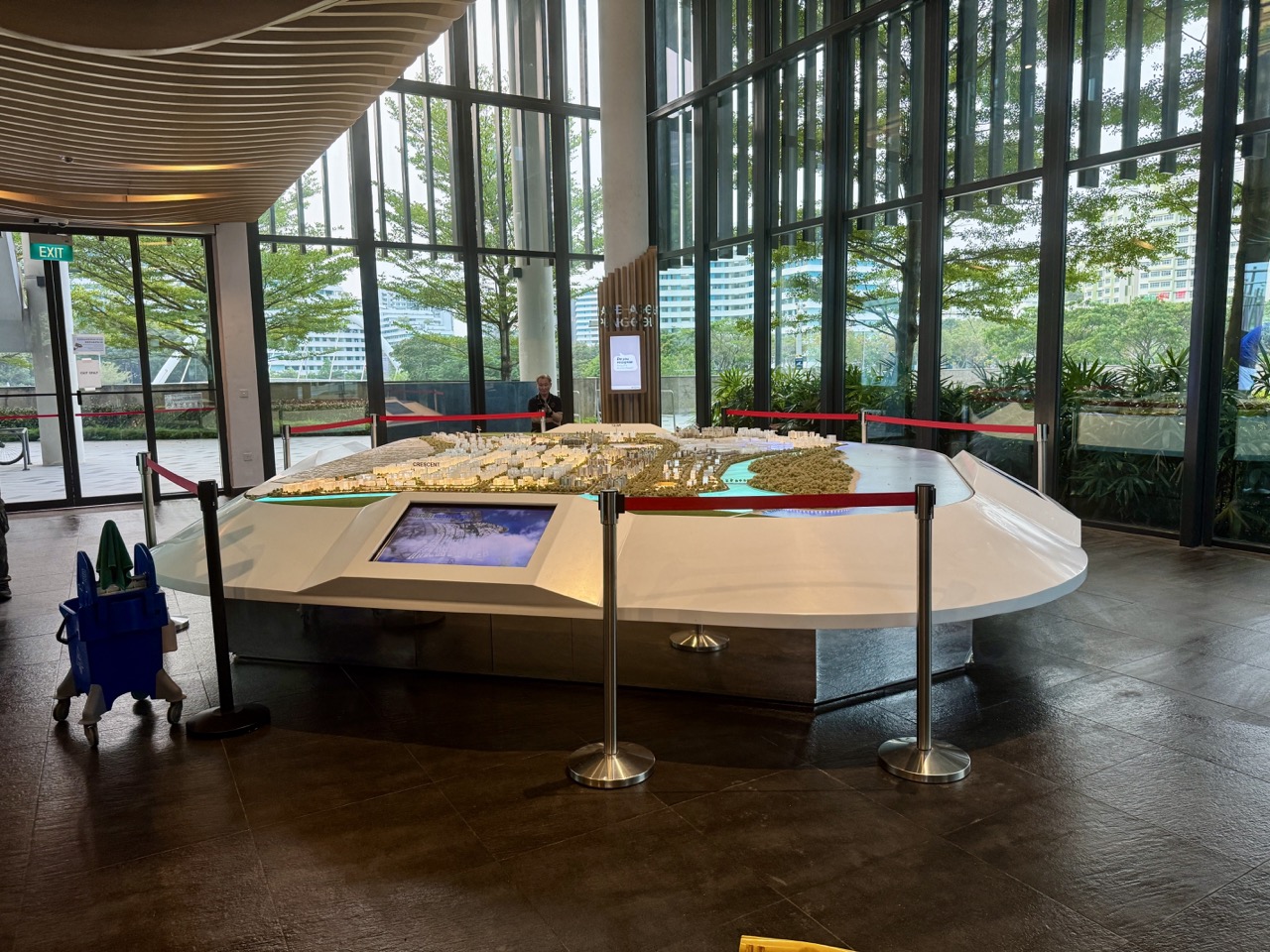
The top 10 things to do in Punggol for Anthropology students are to examine the Memory Map at Punggol Stories, compare historic and present place names, study how One Punggol brings services together, reflect on one’s own hawker meal routines, model commuter lives without following strangers, compare traditions about Kampong Wak Sumang, examine multilingual texts at The Lens of Literature, investigate meanings of Matilda House, analyse Punggol Digital District’s public narrative and write a consent-aware mini-ethnography about one’s own ordinary routine.
Start at Punggol Regional Library. NLB’s Punggol Stories exhibition provides a documented setting for studying memory, place and social change. Its Level 4 Memory Map can introduce the difference between an individual’s account and a claim about a whole community. For a no-travel option, use NLB’s Punggol story map and make a dated source card at home. Formal interviews and photography of strangers are not necessary to begin learning anthropology.
This October 2026 guide distinguishes Anthropology from a simple heritage walk or tourism list. The focus is on social practices, meaning, identity, field methods, reflexivity and research ethics. Official NLB, PA, LTA, URA, JTC and PDPC information anchors place facts. The worked examples are original educational thought exercises and personal-research models, not reports of interviews we have conducted.
Choose a small anthropological question
- Memory: what can one person’s recollection tell us, and what does it not prove?
- Place identity: how do current administrative boundaries differ from older and informal understandings of Punggol?
- Everyday social life: how might an integrated hub or hawker centre shape ordinary routines?
- Movement: how do transport services connect different life purposes without revealing a particular commuter’s story?
- Culture and language: what do specific literary or oral sources express, and how should they be attributed?
- Material culture: why can an old house, a preserved road or a new community building carry meaning?
- Ethnographic practice: start with careful personal observation and state ethical limits before seeking human participants.
Why anthropology is not simply observing other people
An anthropologist tries to understand the context and meaning of social practices. A busy hawker centre can be a place where families meet, workers eat quickly and community members carry out errands, but these are possible practices, not identities that can be assigned from appearance. Observing one person for a few moments cannot reveal their household structure, ethnicity, work or beliefs. Good field notes record what was actually observed, distinguish it from interpretation and avoid surveillance.
Source context is equally important. Punggol’s history is represented through oral recollections, documents, maps, photographs and curatorial exhibitions. A photograph establishes a visual scene under its credited conditions; an interview records one participant’s account; an official map uses particular dates and boundaries. Students must resist combining these into a single invented first-person narrative. Cultural meaning is rich precisely because different people and sources offer different perspectives.
Research design should be proportional to risk. A private reflection on the student’s own route generally needs much less information about other people than an interview study. A formal study involving children, patients or vulnerable communities may require institutional approval and strict safeguarding. Public accessibility of a building does not authorise collection of everybody’s personal stories. These are essential parts of anthropology, not obstacles to its creativity.
Ten Punggol Anthropology learning experiences
1. Use Punggol Stories’ Memory Map to learn what a personal account establishes
Where: Punggol Regional Library Level 4 Singaporium, One Punggol.
The anthropological question
The National Library Board’s permanent Punggol Stories exhibition contains a Memory Map as well as sections on kampongs, seaside leisure, agriculture and the urban waterway. Anthropology values lived perspectives alongside material and documentary evidence. A person’s recalled experience can reveal what change felt like for that person, but it cannot automatically stand for all residents of the same period. The Memory Map allows students to discuss this distinction without approaching strangers or collecting private memories themselves.
Research method
Consult NLB’s current exhibition page and visit only if the display is open and suitable. Select one public memory or theme and record the source’s stated period, type of account and attribution. Write two columns: ‘What this source tells us about the speaker’s experience’ and ‘What it cannot establish about every resident’. A third column can identify which historical map, newspaper or other source would help check a date or geography claim. If the actual content is inaccessible, study the online NLB description and clearly label the work as desk research.
Worked Punggol example
A student sees a memory of Punggol seaside recreation and writes that every young person grew up with identical leisure activities. The account may support an individual remembered experience; it does not justify universal participation. The corrected note says a participant recalled seaside life and asks whether period photographs, archives or additional testimonies provide other perspectives. This is a change in research method, not a rejection of oral history.
An extension for deeper research
Ask how nostalgia might shape recollection without assuming the speaker is dishonest. Discuss the difference between a recorded account, a curatorial summary and a later student interpretation. Make a source card with its original date and current exhibition context. Explain how an anthropologist can honour testimony while keeping its limits visible.
Ethics and accuracy
Do not pretend to be an interviewer for NLB, extract private contact details or attribute invented quotations to residents. Copyright and visitor privacy rules apply; the general exhibition hours are listed as 10am–9pm, but installations can have separate conditions.
Verified source: Use Punggol Stories’ Memory Map to learn what a personal account establishes. Preserve source and access dates in the research notebook.
2. Map how the name Punggol has described different places over time
Where: NLB Curiocity Punggol story map and current publicly available maps.
The anthropological question
NLB’s Punggol story map documents that the historical term Punggol also encompassed parts of present-day Sengkang and Hougang, with older Punggol Road geography extending into areas now known by different names. Place naming is an anthropological issue because residents use names to tell stories of belonging, familiarity and movement. A name does not have one timeless administrative boundary merely because it sounds unchanged. Contemporary addresses, oral usage and historical geography need to be examined at their respective dates.
Research method
Start with NLB’s Curiocity resource dated 15 December 2021. Make a three-layer map: historical named area, current official district labels and one fictional resident’s informal use of the name. Record which layer is officially sourced and which is a thought experiment. Ask how a family might use ‘old Punggol’ when reminiscing while a delivery driver needs a current precise address. Add a note on why historical maps have varying scale and cannot simply be turned into current GPS pins.
Worked Punggol example
A learner encounters a recollection of ‘Punggol Road near Hougang’ and initially marks the speaker as confused because the present town map differs. NLB’s source explains earlier naming relationships. The student’s revised interpretation recognises that a historical local place name can be meaningful in its own context. They do not invent the speaker’s street address from a broad geographic reference.
An extension for deeper research
Distinguish official place names, neighbourhood nicknames and nostalgic identities. Build an interview question that does not presume an answer, such as ‘When you say Punggol, which area are you referring to?’ Discuss why such a question would need genuine consent before being asked of an actual person. Otherwise answer it as a fictional classroom dialogue.
Ethics and accuracy
Do not publish private home coordinates, claim modern buildings occupy exact historic village houses without evidence or trespass to recreate old roads. NLB says the story map is not a comprehensive catalogue of every building.
Verified source: Map how the name Punggol has described different places over time. Preserve source and access dates in the research notebook.
3. Understand One Punggol as a place for everyday intergenerational life
Where: One Punggol integrated community hub, 1 Punggol Drive.
The anthropological question
The People’s Association describes One Punggol as a resident-centric integrated hub with nine co-location partners, including community, learning, food, eldercare and other public services. The architectural fact of co-location invites an anthropological question about how people use and interpret a shared place. A student should not assume that families of different generations always use the same services or that every visitor feels included. Real participation patterns require systematic research and appropriate permissions.
Research method
From the PA public directory, identify three different service categories, such as library learning, communal dining and senior-oriented care. Make a conceptual map showing how a hypothetical multi-generation family could combine their errands. On a lawful ordinary visit, observe only the public signage and layout, not individuals’ healthcare activities. Record broad conditions such as whether the route to a public service is clearly signed; do not photograph patients, children or staff to ‘prove’ a social pattern.
Worked Punggol example
An undergraduate sees families in the hub and concludes that all Punggol residents frequently use One Punggol together. The observation supports only that some people were present at that time. Their refined question is whether co-location makes multi-purpose journeys easier for different households, which would require consent-based, appropriately sampled interviews or existing agency research. The distinction prevents a few faces becoming an invented population statistic.
An extension for deeper research
Discuss how a building’s intended resident-centricity might differ from users’ experiences. Consider questions about waiting, language, affordability, caregiving and accessible movement, without assigning those experiences to identifiable people. Create a diagram separating the operator’s stated goals from your proposed research questions.
Ethics and accuracy
Healthcare, childcare, eldercare and treatment facilities are not open observation laboratories. Do not solicit users of sensitive services, record their identities or enter private care rooms. Verify facility hours separately.
Verified source: Understand One Punggol as a place for everyday intergenerational life. Preserve source and access dates in the research notebook.
4. Study hawker dining as a shared social practice, not a judgement of strangers
Where: One Punggol Hawker Centre, Level 2 of One Punggol.
The anthropological question
The People’s Association identifies an operating Level 2 hawker centre designed for family-friendly communal dining. Food choices, seating, conversation and shared meals are common subjects in anthropology because they connect material objects and social routines. But an ethically conducted beginner activity need not catalogue other diners’ identities or speculate about ethnicity, religion or income from appearance. A first personal reflection on one’s own meal can reveal ritual and preference without becoming invasive research.
Research method
Make a short autoethnographic notebook entry about your own ordinary dining experience. Before eating, write why you chose the meal and who, if anyone, accompanied you with their consent. Afterwards record the sequence of paying, waiting, sharing and clearing your own dining area. Compare your personal routine with the venue’s stated public functions. Identify what is direct experience, what the operator confirms and what remains a question about wider community practices. Do not treat stall prices or opening hours as permanent facts.
Worked Punggol example
A student notices a table sharing food and writes that this reveals the diners’ nationality and family structure. Appearance and one observed meal cannot establish either. In a safer exercise, the student writes about their own family’s choice to share one dish during lunch and explains that this is one household practice, not representative of Punggol’s entire population. The corrected work has less spectacle but more ethical and methodological value.
An extension for deeper research
Introduce ‘thick description’: describe the context and meaning of one’s own actions, not only a list of physical objects. How does a family decide who orders food and when to start eating? Is the answer different for a quick workday lunch? To research other people formally, discuss consent and sampling with a responsible instructor first.
Ethics and accuracy
Do not make secret audio recordings, photograph identifiable customers or infer sensitive personal characteristics from clothing or food choices. Shared public tables are not bookable interview stations by default.
Verified source: Study hawker dining as a shared social practice, not a judgement of strangers. Preserve source and access dates in the research notebook.
5. Compare commuter practices without following people through the LRT
Where: Public information at Punggol MRT, its LRT loops and Punggol Coast MRT.
The anthropological question
Public transport connects housing, work, study and leisure, so station systems offer an accessible illustration of daily mobility. LTA opened Punggol Coast MRT on 10 December 2024, adding service to Punggol Digital District; Punggol MRT also serves as the interchange with both LRT loops. The anthropological question is how transport shapes people’s daily routines and sense of distance. The student must not infer a passenger’s destination, employment or private life merely by seeing them board a train.
Research method
From official LTA materials, identify two transport functions: local residential access and rapid travel to a new employment-and-education district. Draw two fictional trip diaries for invented commuters with different constraints, such as a carer completing an errand and a student reaching class. State the assumptions openly. If making a lawful site visit, confine observations to public directional signs and movement infrastructure; do not follow particular passengers or record their journey histories.
Worked Punggol example
A pupil sees someone boarding at Punggol Coast and assumes they work in technology because JTC describes the nearby district as a technology hub. The station also serves public retail, education and other journeys, and the person’s private purpose is unknown. The corrected report compares documented land uses and possible journeys without turning one traveller into a data point about occupation.
An extension for deeper research
Discuss time geography: a person’s options depend on available time, transport routes, caregiving obligations and accessibility. A map may show proximity without showing an individual’s ability to make the trip. Design a hypothetical journey log that preserves purpose categories but stores no identifying passengers’ details.
Ethics and accuracy
Never observe inside restricted station rooms, collect other riders’ tickets, secretly record conversations or interfere with queues. Follow real service and fare rules; current operator signs supersede old maps.
Verified source: Compare commuter practices without following people through the LRT. Preserve source and access dates in the research notebook.
6. Investigate Wak Sumang traditions as multiple forms of cultural memory
Where: NLB BiblioAsia’s Kampong Wak Sumang research.
The anthropological question
NLB’s research explores different traditions and documentary accounts associated with Kampong Wak Sumang and its namesake. Anthropology distinguishes an origin story’s significance to a community from a claim that every detail is historically settled. Narrative traditions, family memories, maps and printed interpretations can coexist while offering different kinds of knowledge. This is different from proving the exact location of every historic village house; it is about how people use accounts of the past to explain belonging.
Research method
Read NLB’s source-led article and make cards titled ‘oral tradition’, ‘map’, ‘later printed narrative’ and ‘interpretation’. On each card record what the source actually says and what it can establish. Compare variations without labelling a community inaccurate merely because accounts differ. Write a short paragraph about why a founding story matters to identity even when the research must acknowledge uncertainty. Do not invent direct quotations from Wak Sumang or living descendants.
Worked Punggol example
A student finds two different interpretations of the village name and writes that one must be a deliberate lie. Disagreement may arise from transmission, translation or changing forms of recording. The revised note states the documented versions and examines what additional contemporaneous evidence might help adjudicate their factual differences. The cultural significance of the traditions does not disappear because a detail remains unresolved.
An extension for deeper research
Discuss emic and etic perspectives. Emic language tries to understand how people within a community frame their experience; etic analysis applies an externally defined research concept. Neither authorises the researcher to speak for a group without engagement. Produce two properly labelled summaries of the same source from these distinct viewpoints.
Ethics and accuracy
Do not turn a historic named person into an invented eyewitness quotation, stereotype villagers or approach private family members on the assumption their ancestry makes them research subjects. Preserve archive and copyright credits.
Verified source: Investigate Wak Sumang traditions as multiple forms of cultural memory. Preserve source and access dates in the research notebook.
7. Explore multilingual representations through The Lens of Literature
Where: Level 3 Sing Lit area, Punggol Regional Library.
The anthropological question
NLB’s The Lens of Literature features English, Chinese, Malay and Tamil works under themes such as Balik Kampong, Life Interrupted, Tides of Change and Our Future is Now. For anthropology, different languages and literary forms can express relationships with place, memory and social transformation. A cultural text does not automatically stand for every speaker of the language, and literary fiction is not a transcript of ordinary daily life. The task is to compare framing and genre, not assert that one text captures an entire community.
Research method
Select two exhibition themes from NLB’s public description. If visiting, note the authors and actual texts credited by the curator without copying copyrighted passages. Make a short comparison of how the themes connect memory and change. Use an appropriate translation or a qualified reader when studying a language you cannot read; do not guess meanings from visual script alone. Write one original paragraph about a remembered place and label it clearly as personal creative response.
Worked Punggol example
A student sees Malay and Tamil excerpts and assumes all such-language speakers share one rural childhood experience. The exhibition shows curated works selected for particular themes, not a survey of every community member. The corrected note identifies the texts as specific authored cultural representations and asks which other genres or voices might complicate the picture.
An extension for deeper research
Consider the difference between multilingual presentation, translation and code-switching in everyday life. Which are evidenced by the display and which would require actual speech data? A careful anthropologist does not convert the existence of several languages into invented claims about a particular household’s language practices.
Ethics and accuracy
The display has current NLB access and copyright rules. Do not reproduce long excerpts, record nearby patrons or stage unsanctioned interviews in the library.
Verified source: Explore multilingual representations through The Lens of Literature. Preserve source and access dates in the research notebook.
8. Understand why conserved Matilda House carries different meanings
Where: URA’s Matilda House conservation record and lawful exterior viewpoints.
The anthropological question
URA records Matilda House at 78 Punggol Walk as a historical bungalow built in 1902 and conserved in 2000. An anthropological reading considers who attributes meaning to a preserved building—heritage authorities, past residents, current neighbours or people who know it only from stories. A preserved structure does not have a single meaning simply because its architectural details are documented. The student should distinguish what URA records from any interpretations about what the house symbolises in contemporary Punggol.
Research method
Read URA’s account, identifying the historic Cashin-family association and documented features of tropical design. Build an ‘object biography’ timeline with construction, later uses, conservation and present public interpretation. Add a column for meanings that could be investigated through properly approved interviews or published community histories, without claiming such interviews have occurred. Sketch the building from approved images or a safe public exterior viewpoint and mark the source.
Worked Punggol example
A student labels Matilda House ‘an abandoned haunted bungalow visited by all children in old Punggol’. The legend-like language is not a reliable account of actual visits, and URA supplies a different documented building history. The corrected interpretation introduces the house as conserved heritage and says that particular folklore traditions would require separate attributable sources and contextual analysis.
An extension for deeper research
Ask how physical conservation can change the public meaning of a place: is preserving a facade the same as preserving a community’s memories? Compare an institutional conservation narrative with a fictional resident’s imagined story, marking the latter clearly as a teaching example. Avoid treating architectural preservation as proof of how every Punggol resident feels.
Ethics and accuracy
Do not trespass, request unofficial entry, disturb current occupants or claim ghost stories as verified. Actual conservation works and site access are governed by the owner and URA’s applicable requirements.
Verified source: Understand why conserved Matilda House carries different meanings. Preserve source and access dates in the research notebook.
9. Study what a new district’s public spaces ask people to imagine
Where: Publicly accessible Punggol Digital District amenities near Punggol Coast MRT.
The anthropological question
JTC describes Punggol Digital District as a place integrating business, higher education and community amenities; its 2026 public information identifies a mall, hawker centre and the opened first section of a Heritage Trail. Anthropology can examine how new public spaces are presented as part of town identity and how older landscape stories are used in that presentation. The fact that an amenity is open does not prove how every person experiences it. A promotional vision and a lived practice are different kinds of evidence.
Research method
Read JTC’s current community and heritage information, then identify the words used to describe the district’s purpose. Draw a simple ‘official narrative versus possible lived questions’ table. A hypothetical question might ask how a student, an employee and an older resident find their way through the area. Do not assign actual people to these categories from their appearance. If visiting, remain in confirmed public areas and make notes about signage, route connections and interpretive displays only.
Worked Punggol example
A learner reads a district brochure and concludes that all young people feel the same excitement about smart technology. JTC’s description establishes a planning and promotional purpose, not a survey of emotions. The revised statement says the district is presented as an integrated technology-and-education hub and identifies residents’ lived experiences as an open research question.
An extension for deeper research
Compare the role of an old-road heritage feature with a new shopping area in shaping identity. A qualitative study could use voluntary interviews approved by an institution, but an individual student can begin with a defensible analysis of official language, public maps and observable design. Discuss how future plans should be labelled separately from presently operating features.
Ethics and accuracy
Do not enter SIT classrooms, private offices, technical systems or trail phases that are not open. Never represent a study of promotional text as direct research into all residents’ attitudes.
Verified source: Study what a new district’s public spaces ask people to imagine. Preserve source and access dates in the research notebook.
10. Produce a consent-aware mini-ethnography about one’s own routine
Where: A Punggol home or ordinary authorised public outing, with writing completed privately.
The anthropological question
The most important anthropological skill is not accumulating photos of strangers; it is being transparent about how the researcher came to know what they claim. Autoethnography uses one’s own lived experience as a subject while acknowledging the narrow perspective. A student may compare their routine for reaching a library, choosing a meal or visiting a park with public information, and examine how family responsibilities or transport shapes it. Such reflection can be meaningful without posing as a statistically representative community study.
Research method
Select a low-risk personal routine: travelling to an ordinary public service or preparing for a weekend walk. Over three days, record only your own decisions, timing categories, expectations and feelings. Do not include the real names, phones, home addresses or private events of other household members without consent. Keep a separate source ledger for any official Punggol facility facts. Organise notes as context, observation, interpretation, alternative explanation and researcher position. Finish with a short paragraph saying whom the data actually represents.
Worked Punggol example
A student writes ‘Punggol residents dislike walking in the afternoon’ because they personally avoided a hot route. The note supports only their own choice. The corrected sentence says, ‘In my three-day personal diary, I chose an indoor route on two afternoons; other residents may make different choices.’ The research can then identify what broader sampling and weather information would be needed to examine a townwide pattern.
An extension for deeper research
Introduce reflexivity: how does the student’s age, travel habits, language comfort and family responsibilities shape what they notice? Add a brief positionality statement. Then ask a peer to identify the strongest alternative interpretation. A more advanced project may require formal institutional ethics review for interviews or recording, even when the location seems public.
Ethics and accuracy
Do not conduct covert surveillance, assume a public venue waives everyone’s privacy or publish a private family member’s personal story without permission. Organisational research and publication may have applicable PDPA and institutional safeguarding duties.
Verified source: Produce a consent-aware mini-ethnography about one’s own routine. Preserve source and access dates in the research notebook.
An ethical field notebook structure
- Name one research question narrowly enough to answer.
- Record whether the evidence is a source description, personal experience or consented direct interview.
- Preserve the original date, source owner, location and relevant context.
- Write what was observed before writing why it may have happened.
- Avoid assigning personal attributes from appearances or food choices.
- Do not collect unnecessary names, phone numbers, private routes or images.
- Separate direct evidence, an inference and a hypothetical scenario.
- Explain the limits of the sample and one’s own position as a researcher.
- Seek appropriate institutional and participant permissions before interviews or recordings.
- Invite an honest alternative explanation and revise the conclusion if warranted.
Three Punggol Anthropology learning itineraries
A one-hour source-led library session
Read NLB’s Punggol Stories guide and locate one currently available exhibit theme, such as Punggol Pioneers or Farm to Fable. Record the credited source, period and type of evidence. Write one paragraph about the account’s social significance and another about what cannot be assumed from it. Compare with Curiocity’s historical Punggol map at home, distinguishing the source’s publication date from the events it describes. This makes a complete beginner study without interviewing a stranger.
A personal meal-and-travel routine study
Choose an ordinary legitimate visit to One Punggol. Record only your own transport choice, route decisions, reason for visiting and meal or reading activity. Use the operator’s directory for facility facts and avoid recording unrelated people. Afterwards write how the building’s co-located functions affected your personal experience. Make clear that one account is not proof of every household’s behaviour. If the weather or access conditions make travel unsuitable, substitute a carefully labelled fictional journey planning exercise.
A digital-district place-identity exercise
Study JTC’s present public amenities and NLB’s older place-name sources. Write a two-column comparison of historical images of Punggol and the official contemporary description. Ask how a town can be narrated as both a remembered coastal settlement and a technology-and-education district. Use actual named sources, not invented photographs of residents. A clear result identifies competing or complementary narratives without claiming to know how every person feels about them.
Three mistakes anthropology students must correct early
First, one account becomes everybody’s voice. A former resident’s memory is compelling, but it does not establish how every contemporary family lived. The repair is to preserve the speaker and recording context, quote or paraphrase lawfully and seek triangulation for broader claims.
Second, social categories are inferred from appearances. Clothing, age estimates, food or a boarding station do not reveal sensitive personal identity, religious practice or household income reliably. The repair is to remove the inference and describe only information actually known from a legitimate source.
Third, the researcher’s viewpoint disappears. A student who lives near the MRT may experience Punggol differently from somebody whose journey involves a long walk or caregiving constraints. The repair is a small positionality note explaining the student’s own route, language and access assumptions, not a claim of objectivity produced by ignoring them.
Frequently asked questions
What can anthropology students study in Punggol?
Everyday routines, language, memory, place naming, food practices, community spaces, material culture and the ethics of qualitative research.
Is anthropology the same as local history?
They overlap, but anthropology particularly studies how people understand, practise and give meaning to social life, including the present.
Where can students begin without contacting research participants?
NLB’s Punggol Stories and Curiocity materials offer public source-led research; one’s own ordinary routines provide a low-risk reflective subject.
What is an ethnography?
A carefully contextualised study of social practices and meanings using appropriate qualitative research methods.
What is autoethnography?
A reflective approach using the researcher’s own situated experience while acknowledging its narrow perspective and relation to larger questions.
Can I photograph hawker-centre strangers for an assignment?
Do not assume that public presence gives unrestricted filming and publication rights. Follow venue rules, institutional ethics and applicable privacy requirements.
Does Punggol Stories include real memories?
Yes. NLB describes a Level 4 Memory Map featuring recollections of historical Punggol.
Can a resident’s story prove how everyone lived?
No. It supports an individual account; broader claims require other evidence and appropriate methods.
Why did older maps use Punggol for areas now called Hougang or Sengkang?
NLB documents historical naming relationships and boundary changes. Compare maps within their correct periods.
What is the meaning of Wak Sumang?
BiblioAsia discusses several accounts and traditions about Kampong Wak Sumang; a careful student should examine variations rather than assert one unsupported origin.
What can be studied at One Punggol?
Its documented co-location of community, library, dining and care services provides questions about daily routines, public interaction and accessibility.
Can students enter the hub’s childcare or care facilities for observation?
No general permission exists for walk-in research. Sensitive services have their own access and safeguarding requirements.
Is an observed person’s job known from their MRT stop?
No. Stations serve different purposes; occupation cannot be inferred from one ride.
Why study literary texts in anthropology?
Specific authored works reveal representations and cultural frameworks, but fiction is not automatically a record of typical daily behaviour.
Can a conserved building have multiple cultural meanings?
Yes. URA’s building history and individual residents’ experiences are different but potentially complementary kinds of information.
Does the Punggol Heritage Trail prove all earlier landscapes were preserved?
No. JTC describes retained selected features and the opening status of a first stretch; interpret each claim at its own scope.
What is reflexivity?
The practice of examining how a researcher’s background, assumptions and role influence inquiry and interpretation.
What does a good qualitative field note contain?
Date, setting, actual observation, source, interpretation, alternative explanation, privacy constraints and the writer’s position.
Can schoolchildren conduct interviews about community life?
Only with age-appropriate consent, safeguarding and any required school approval. They can begin with source research instead.
What is an ethical way to finish an anthropology project?
State what the evidence covers, give a credible source trail, protect participants and acknowledge people or views the study cannot represent.
Original references and related Punggol guides
- Use Punggol Stories’ Memory Map to learn what a personal account establishes
- Map how the name Punggol has described different places over time
- Understand One Punggol as a place for everyday intergenerational life
- Study hawker dining as a shared social practice, not a judgement of strangers
- Compare commuter practices without following people through the LRT
- Investigate Wak Sumang traditions as multiple forms of cultural memory
- Explore multilingual representations through The Lens of Literature
- Understand why conserved Matilda House carries different meanings
- Study what a new district’s public spaces ask people to imagine
- Produce a consent-aware mini-ethnography about one’s own routine
- PA One Punggol service and space details
- NLB Punggol Stories exhibition themes and Memory Map
- NLB historical place-name story map
- Punggol local history source checking
- Punggol ethics and social reasoning
- Punggol reporting and ethical interviews
- Punggol language and place-name questions
- eduKateSG evidence-led worked explanations
Begin with one honest perspective
Punggol’s older village names, new transport systems, library memories, shared meals and evolving district invite questions about how people understand the places where they live. An anthropology student should start with a precisely documented source or a careful reflection on their own routine, not a claim to speak for strangers. Context, consent, uncertainty and clear reasoning make the work more human as well as more trustworthy.


