
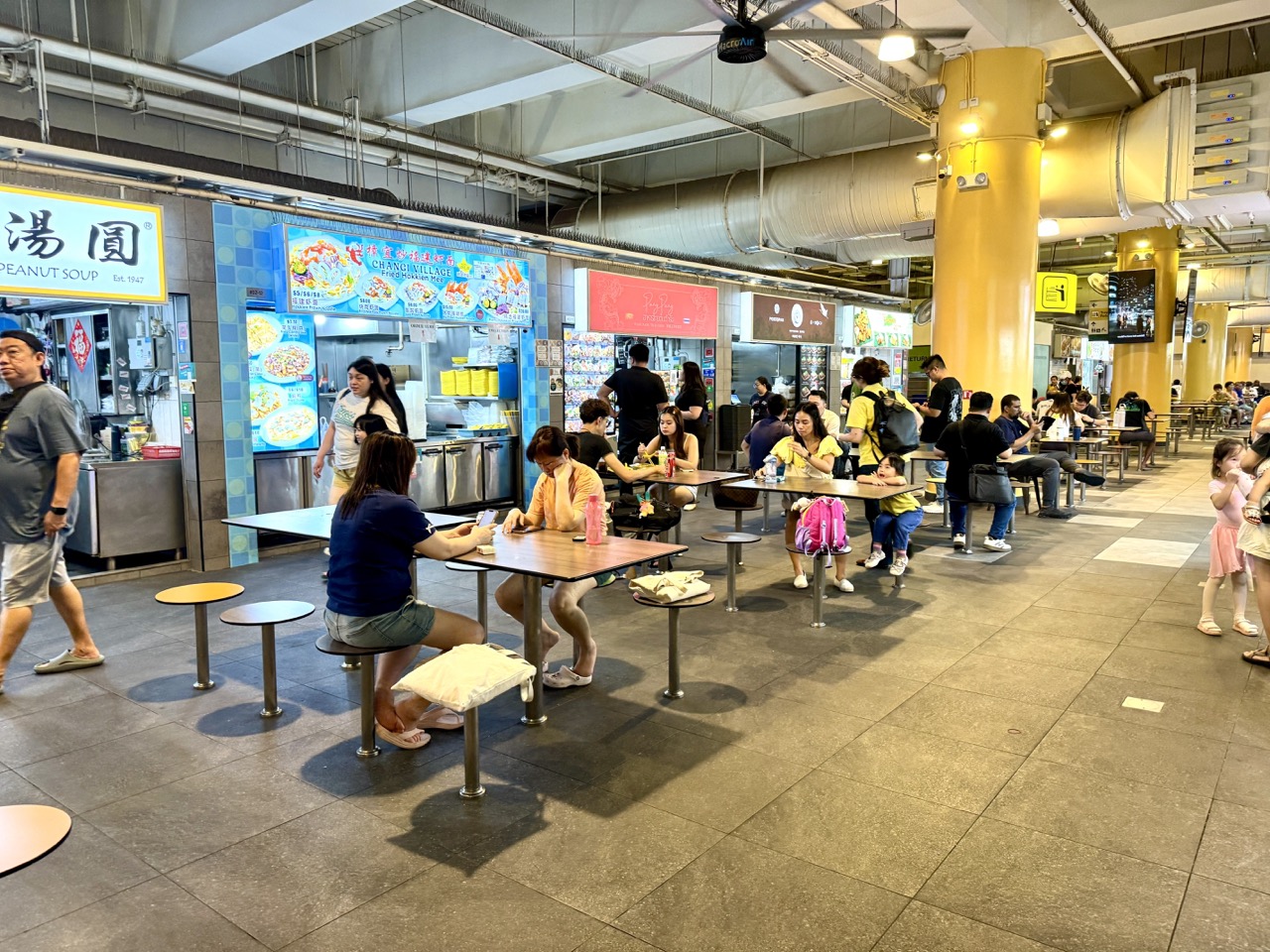
How can someone with a food allergy eat more safely around Punggol’s hawker centres, cafés and supermarkets? Know the specific allergy confirmed by a healthcare professional, check prepacked product labels every time, ask food sellers directly about ingredients and preparation, and do not eat a dish when the business cannot give enough information to establish its suitability. Hawker meals can be part of everyday Punggol life, but no named stall is certified allergen-free by this article. For severe allergies, follow a personal clinician-provided emergency action plan and keep prescribed medication available as advised.
This Food Allergy Safety in Punggol 2026 guide explains Singapore Food Agency (SFA) allergen rules, the difference between prepacked labels and cooked-to-order hawker food, cross-contact, what to ask at One Punggol Hawker Centre and Waterway Point, household meal preparation, school and workplace communication, emergency symptoms and a practical decision checklist. It is not a restaurant recommendation, a medical diagnosis or a substitute for a specialist allergy action plan. For general local meals see Healthy Hawker and Grocery Choices in Punggol; for the whole lifestyle system use Life in Punggol 2026.
Punggol food allergy safety: the important quick answers
| Question | Correct starting point | Never assume |
|---|---|---|
| What foods can trigger an allergy? | Different individuals react to particular allergens; SFA lists mandatory label categories. | One generic ‘allergy-free’ menu suits everyone. |
| Can a restaurant meal have a printed allergen label? | Some provide information, but the full prepacked-food label regime differs from cooked-to-order food. | Every hawker meal carries a statutory prepacked label. |
| What should I ask a stall? | Whether the dish, sauces and preparation may contain the specific allergen or cross-contact. | A vague ‘should be okay’ guarantees safety. |
| Can labels change? | Yes. Read the actual product label each time. | A brand’s previous ingredient list is permanent. |
| Is a ‘may contain’ statement important? | It indicates potential unintended allergen presence and needs careful assessment. | No ‘may contain’ statement proves absence of cross-contact. |
| Are shared cooking utensils relevant? | Yes. Cross-contact can transfer allergens even when not deliberately added. | Removing visible nuts or prawns makes the dish safe. |
| What if a food seller is uncertain? | Choose another verifiable food arrangement. | A cheap meal is worth the risk. |
| What does anaphylaxis mean? | A severe, potentially life-threatening allergic reaction. | It can always be managed at home. |
| What if someone has breathing difficulty or collapse? | Follow the personal emergency plan and call 995 for an emergency ambulance in Singapore. | Continue eating, drive casually or wait for symptoms to disappear. |
| Do children need special support? | Share the clinician’s plan and relevant food rules with school/caregivers. | A young child can safely assess every snack alone. |
1. Food allergy is not the same as disliking or avoiding a food
A food allergy is an immune-mediated reaction to a particular food or ingredient. A food intolerance can involve a different mechanism, and a personal preference may not be a medical condition at all. These distinctions matter because a person with an allergy may require strict avoidance and a clinical emergency plan, while another person may simply choose not to eat a certain dish. A Punggol food seller needs clear, accurate information rather than a vague request that could be interpreted several ways.
The Singapore Food Agency’s Food Allergy in Individuals explains that reactions can involve hives, swelling, breathing difficulty, digestive symptoms and, in severe cases, collapse or loss of consciousness. Individuals vary in what triggers them and how they respond. A person should not self-diagnose a severe food allergy because they once experienced a mild upset stomach after a meal.
If someone suspects a food allergy, an appropriate healthcare professional can evaluate the history and determine whether specialist advice or testing is warranted. Unsupervised food challenges or deliberate re-exposure can be dangerous. The goal is to identify the person’s real allergen and appropriate management plan, not to avoid a long list of unrelated foods without a clinical reason.
Families also benefit from using precise language. “My child has a medically diagnosed peanut allergy” communicates a different concern from “we would prefer no peanuts.” Both wishes can be stated respectfully, but a severe allergy requires a more rigorous approach to ingredients and cross-contact. A seller’s ability to make a safe meal should be assessed honestly rather than assumed from politeness.
2. Singapore’s mandatory prepacked-food allergen declarations
SFA requires prepacked foods sold in Singapore to declare ingredients, including defined groups known to cause hypersensitivity. A packaged snack, jarred sauce or supermarket product normally has an ingredient statement to inspect. The current SFA framework names cereals containing gluten, crustaceans, eggs, fish, peanuts and soybeans, milk products, tree nuts, and sulphites above a specified threshold. The exact regulatory terms are important: not all possible allergens are captured under a simple global “top eight” phrase.
| SFA declaration group | Examples that may appear in ingredients | Why a Punggol shopper checks carefully |
|---|---|---|
| Cereals containing gluten | Wheat, barley, rye, oats and products. | A sauce or snack may contain grain ingredients. |
| Crustaceans | Prawns, shrimp, crab, lobster. | Seasonings and pastes can contain crustacean ingredients. |
| Eggs | Hen or other egg products. | Dressings, bakery items and sauces may use eggs. |
| Fish | Fish and fish-derived ingredients, including molluscs in SFA’s category. | Stocks, pastes or sauces can contain seafood components. |
| Peanuts and soybeans | Groundnuts, soy, soya and derived products. | Oils, sauces and processed foods need label checking. |
| Milk and milk products | Milk, cheese, whey and related ingredients. | Snacks and bakery products may contain dairy. |
| Tree nuts | Cashew, almond, hazelnut, walnut and related nuts. | Desserts, sauces and snack mixes can contain them. |
| Sulphites at regulated amounts | Added sulphites in concentrations meeting SFA threshold. | Relevant for those who have a specific sensitivity. |
See SFA’s Food Allergy and Intolerance and Understanding Food Labels for the formal definitions. Do not assume every food that could cause an individual allergy must carry a separately bolded warning box. SFA allows relevant ingredients to be declared in the normal ingredient list without a special coloured panel, provided the regulatory disclosure requirements are met.
A practical shopper scans the full ingredient list as well as any “contains” or cautionary language. Look for alternative names such as soya/soy, groundnut/peanut and ingredients hidden in composite sauces. If the label is damaged, absent or unclear, do not invent an answer. Contact the responsible food business or choose an appropriate alternative. The person with the allergy and their clinician’s advice govern the suitability decision.
3. Prepacked food is different from a hawker meal prepared on order
This is arguably the most important Punggol-specific food safety distinction. SFA’s Labelling Requirements for Food says the statutory prepacked-food label requirements apply to prepacked products. They do not operate identically for cooked-to-order meals in restaurants, takeaway shops or catering. A freshly prepared dish at One Punggol Hawker Centre will not necessarily have the ingredient statement expected on a supermarket box.
SFA nevertheless advises consumers to ask food businesses about food ingredients and allergens. The guidance says non-prepacked food operators should provide information typically found on labels upon request, for example through menus or signs. A diner should ask direct questions and understand that a stall’s ability to confirm ingredient details varies. If the vendor does not know, it is safer to avoid the uncertain dish.
This means “no allergen printed on the menu” does not guarantee the meal is free of that allergen. Nor does a familiar name like fish soup, fried rice or vegetable noodles tell a customer everything in its seasonings, stock, frying oil or finishing sauce. A stall may change suppliers or use a shared preparation station. Ingredient information needs to come from the actual food business.
A Punggol guide should not certify any named outlet as allergy-safe based on a photo, a Google review or a popular order. The prudent approach is to identify a food establishment that can answer the relevant questions and prepare the dish under conditions acceptable to the individual and their healthcare advice. If necessary, a safely prepared home meal may be a better option than an uncertain purchase.
4. What to ask at One Punggol Hawker Centre
One Punggol Hawker Centre offers many familiar Singapore food styles and is a convenient local destination. But each stall, menu and preparation process is separate. Someone with a serious crustacean allergy might need to ask whether a dish uses dried shrimp, prawn paste, shellfish stock or related sauces. Someone avoiding milk needs to ask about dairy ingredients rather than simply choosing a meal that looks savoury.
Questions should be specific and courteous. For example: “I have an allergy to prawns and shrimp. Does this dish or any sauce contain them, and is it prepared with utensils or oil also used for those ingredients?” The seller may have information or may be unable to guarantee separation. A vague affirmative response to “no seafood, right?” is not enough for a person who needs reliable avoidance.
Crowded peak-hour service can make detailed questions difficult. If a stall is busy and the operator cannot respond carefully, the safest choice may be to return at another time or choose an alternative with clearer information. A customer’s health is more important than avoiding a brief social inconvenience. Never pressure a seller to declare a meal safe when they do not know.
The site’s Punggol Hawker Centres and Coffee Shops guide helps locate food destinations, but it is not an allergen certification list. Our Punggol Healthy Hawker and Grocery Choices guide discusses ordinary nutrition; ingredient allergy safety requires this separate level of care.
5. What to ask at Waterway Point, cafés and takeaway outlets
At Waterway Point, a diner may encounter restaurant chains, cafés, beverage outlets and takeaway counters. A branded menu may have corporate ingredient information or a staff reference, but a chain’s general internet menu is not proof that every local dish is prepared without cross-contact. Ask the specific outlet and read the up-to-date product information. If staff must check with a manager or kitchen, allow the time.
For a bakery, check both the named product ingredients and the handling of shared equipment. A bread or pastry without visible nuts could still be made near nut-containing products. Drinks can contain milk or other ingredients in syrups, powders and toppings. A person with allergies needs an actual ingredient answer, not a guess based on the item’s colour or whether it tastes sweet.
At a self-service food court, shared utensils and condiments create another consideration. Use dedicated clean utensils where appropriate and avoid assuming that a communal sauce bottle is safe. Food contact with another item can occur during serving as well as cooking. SFA describes the importance of preventing unintended allergen transfer through handling and equipment.
If a provider offers an ingredient PDF, check that it is current and applies to Singapore’s particular menu, not a foreign-market version. Recipes and suppliers vary by country and can change. Keep the allergen name precise, and if answers remain inconsistent do not eat the uncertain product.
6. Cross-contact: why removing an ingredient may not be enough
Cross-contact occurs when an allergen is unintentionally transferred from food containing it to another food. It can happen through shared pans, ladles, chopping boards, containers, gloves, preparation surfaces or serving utensils. SFA’s allergen management guidance highlights separating ingredients, using suitable cleaning practices and preventing cross-contamination through food production. This is why a dish may be risky even when an ingredient is not intentionally added.
Imagine fried rice prepared in a wok that previously cooked prawns. A customer with a crustacean allergy asks for fried rice without prawns. Whether the dish can be suitable depends on the cooking process, cleaning, ingredients and the person’s allergy plan; removing visible prawns from the final plate does not necessarily address cross-contact. Ask the actual seller about the process. If they cannot guarantee appropriate handling, choose another option.
Another example is peanut-containing garnish added at the counter. Asking staff to remove the nuts after plating may leave traces, shared utensils or contact with sauce. An ingredient should not be removed after exposure as though that restores safety. The relevant question belongs before preparation, with a clear understanding of how the kitchen works.
Households also need to separate relevant ingredients when making food for someone with allergies, follow cleaning practices and avoid sharing utensils without care. Personal risk tolerance and management must be based on professional advice. A generic article cannot establish the trace amount that might trigger a particular person, and no one should experiment at home to find out.
7. What ‘may contain’ really means
Some prepacked products state “May contain peanuts” or “Produced in a facility that also processes tree nuts.” These are precautionary allergen labels (PAL), used to signal potential unintended presence rather than an ingredient deliberately included in the recipe. SFA’s guidance explains their purpose and notes that precautionary statements are not subject to a single internationally harmonised legal definition. Consumers should consider their clinician’s advice and seek clarification from the manufacturer where needed.
It is wrong to conclude that every product without a PAL statement is completely free of cross-contact. Labelling rules require declaration of defined intentionally used ingredients, but SFA explicitly distinguishes the unintentional presence of allergens. Manufacturing and transport conditions still matter. Likewise, the presence of a PAL statement does not reveal the exact allergen amount in the particular packet.
A person with a serious allergy should follow an individual avoidance plan developed with their healthcare professional. Do not use social media to decide that a particular “may contain” statement can be ignored. When product information is inadequate, contact the food business or choose a more suitable verifiable product.
8. January 2026 labelling changes: why the date matters
Singapore’s food-labelling amendments took effect on 30 January 2026. SFA materials explain changes that include greater clarity around ingredients known to cause hypersensitivity in some foods, including relevant material from biotechnology. For readers in October 2026, this is a current regulatory context, not something due next year. But it does not transform cooked-to-order hawker meals into fully prepacked-labelled food.
For everyday shopping, the useful action remains reading the actual current label and asking food businesses about uncertainty. A household should not rely on a photo of last year’s product packaging to confirm a brand’s present ingredients. Ingredient statements may change, and imported products must be evaluated using appropriate Singapore labelling and applicable information.
A technically compliant prepacked label is also different from a personalised declaration that a product is safe for an individual allergy. It describes declared ingredients within regulatory requirements. The person’s allergen avoidance and response plan still need suitable medical guidance. Regulatory compliance makes information more available; it does not eliminate every possible food allergy risk.
9. Emergency awareness: what must not be treated as ordinary discomfort
KK Women’s and Children’s Hospital’s Project SAFE and HealthHub materials describe severe allergic reactions—anaphylaxis—as potentially life-threatening. Concerning features can include breathing difficulty, wheezing, voice changes, throat or tongue swelling, collapse, confusion or loss of consciousness. A reaction can worsen rapidly. A person showing severe symptoms after possible allergen exposure needs immediate emergency attention, not an internet search to determine whether the dish was safe.
In Singapore, call 995 for a life-threatening medical emergency. The Singapore Civil Defence Force Emergency Medical Services page confirms the emergency ambulance number. For someone prescribed an adrenaline auto-injector, follow the clinician-provided emergency action plan and the prescribed device instructions; do not wait for a blog to calculate medication, and do not substitute antihistamines for the prescribed emergency response.
HealthHub’s Adrenaline Auto-Injector resource explains the treatment’s emergency role and that medical evaluation is still required even after medication is given. Personal training from healthcare professionals is important because device use and the person’s plan must be understood before an emergency occurs. This article deliberately does not provide a personalised dose or challenge-test procedure.
A restaurant manager or friend should never declare that someone’s breathing symptoms are “probably anxiety” without appropriate assessment. A person may have serious allergic symptoms even if a previous reaction was mild. Follow professional emergency advice and call for help. Food choice can be planned in advance; emergency symptoms require immediate action.
10. Schoolchildren, CCA, excursions and shared snacks
Punggol families with school-going children need to consider canteen meals, packed snacks, class celebrations, birthday treats, CCAs and learning journeys. A child with a diagnosed allergy should have an agreed school plan developed with parents, healthcare professionals and the school as appropriate. The plan should clarify the relevant allergen, food sharing, who to contact and how trained adults respond in an emergency.
An unfamiliar snack from a friend may have ingredients that the child cannot verify. Adults should teach an age-appropriate method for checking whether food is permitted without expecting a young child to independently manage serious risk. A student should not be teased or pressured to eat something to prove an allergy is real. Teachers and caregivers also need to respect privacy and avoid sharing medical details beyond what safety requires.
For a school excursion to One Punggol, Waterway Point or a sports facility, food may be bought from several different outlets. The organiser should consider participants’ reported allergies and follow the institution’s safeguarding processes. A generic restaurant list cannot replace individual dietary arrangements. The Life in Punggol — School Canteen and Campus Eating page provides broader education context.
For the specific nutritional planning role of packed food, see Packed Lunches in Punggol 2026. Food temperature and allergen cross-contact are two separate safety dimensions. A safely chilled dish can still contain an allergen, while an allergen-free recipe may still be unsafe if improperly stored.
11. Households and shared kitchens around Punggol
An HDB household may include people with different dietary needs: a child with a nut allergy, an adult who prefers vegetarian meals and an older relative requiring a clinically advised diet. These are not all the same issue. Clear food labels, separate clean equipment where appropriate, and agreed meal plans can reduce confusion without making meals joyless. Ask who is preparing a dish, what ingredients are used and how serving will happen.
For someone with a medically diagnosed severe allergy, the kitchen plan should come from healthcare guidance. SFA describes ingredient separation and cleaning as important controls. Family members should not test the person’s tolerance by placing tiny amounts of an allergen in food. Such experiments can be dangerous and are not a legitimate substitute for clinical evaluation.
Shared celebrations create extra risk when guests bring homemade dishes without ingredient information. A host can ask visitors to label ingredients and follow the affected person’s plan, but labels written by friends are only as reliable as their understanding and handling. If a dish cannot be verified, it should not be pressed on someone with an allergy. A warm social experience does not require everyone to eat the same food.
In Punggol, a family may decide to prepare one carefully controlled meal at home rather than take chances during a crowded event. That is a reasonable choice, not evidence that all restaurants are unsafe. The point is to choose based on evidence and the person’s needs, rather than embarrassment or pressure.
12. A real-world Punggol meal decision flow
| Step | Question | Possible action | If the answer remains uncertain |
|---|---|---|---|
| 1 — Identify | What specific allergen must be avoided? | Use the clinician-confirmed list and plan. | Do not guess from broad symptoms. |
| 2 — Choose | Is this prepacked or made to order? | Read the relevant label or ask the kitchen. | Avoid relying on an absent label. |
| 3 — Inspect | Are sauces, seasonings and composite ingredients included? | Ask detailed ingredient questions. | Select another dish if unresolved. |
| 4 — Consider cross-contact | Are equipment, oil and utensils shared? | Discuss the real preparation process. | Do not accept verbal reassurance without substance. |
| 5 — Decide | Can the individual use this food under their plan? | Choose the verified suitable option. | Do not eat when safety cannot be established. |
| 6 — Prepare | Is the personal emergency plan accessible? | Follow clinician guidance, prescriptions and contacts. | Seek professional support to correct gaps. |
| 7 — Review | Did a menu or supplier change? | Recheck on later visits. | Past success is not a permanent guarantee. |
This flow is not a method for proving that a meal contains zero allergen particles. It is a structured way to ask questions and recognise uncertainty. The individual and healthcare team determine what level of avoidance and emergency readiness is needed. A food seller’s inability to confirm something should be accepted as a boundary, not interpreted as a challenge to persuade them.
13. Four Punggol eating situations worked through
A seafood allergy at One Punggol Hawker Centre
A resident has a diagnosed prawn allergy and wants a noodle dish. The family asks whether prawn paste, dried shrimp, seafood stock or shared cooking equipment is used. The stall cannot confidently explain the sauces or wok handling. The resident chooses another verified option rather than saying “just don’t put prawns on top”. The story’s lesson is that hidden components and cross-contact matter as much as visible ingredients.
A milk allergy during a Waterway Point café outing
A person requests a drink without cow’s milk. Staff offer a plant-based alternative but cannot confirm whether the powder, topping or shared preparation equipment contains the person’s allergen. The customer asks for ingredient information and decides whether the option meets their clinical plan. A drink labelled ‘non-dairy’ by marketing is not automatically safe for every diagnosed allergy.
A family buying packaged snacks near Oasis
A parent recognises a snack brand that the child previously ate without problems. The packaging has changed. Instead of assuming the recipe is identical, the parent checks the current ingredients and precautionary statements. When something is unclear, they contact the manufacturer or select another suitable product. Past brand familiarity does not replace reading the actual label.
An office lunch with mixed dietary requirements
Several coworkers plan takeaway food from Waterway Point. One has a medically diagnosed allergy and another follows a voluntary dietary preference. The group respects both but treats the allergy as a specific safety issue. They confirm ingredients with the chosen business and do not pressure the allergic person to accept an uncertain shared meal. The outing remains social even when different people order from different places.
14. Money, convenience and an allergy-aware food budget
Living with a food allergy can make food choices feel expensive or restrictive, but paying more is not proof that a meal is safe. A premium café may still use shared equipment. Conversely, a simple supermarket product with a clear accurate label may be easier to assess under an individual plan. Compare information quality, handling and actual dietary suitability, not just the price or venue’s branding.
A Punggol household can maintain a small selection of familiar suitable ingredients and build regular meals around them, taking care to verify labels whenever bought. This reduces decisions during busy school and work days. Do not buy large quantities of a product before confirming it still meets the person’s needs. Allergies and preferences can coexist with balanced ordinary family meals when managed appropriately.
For general nutrition and budgeting see Healthy Hawker and Grocery Choices and Packed Lunches in Punggol. The allergy-specific article adds a safety boundary: a generally healthy dish is not an acceptable choice when it contains or may contain the particular allergen under the person’s avoidance plan.
15. Seven habits that make future meals easier
- Carry precise information. Know the diagnosed allergen and relevant alternative names.
- Check labels on every purchase. Do not rely solely on the brand name.
- Ask before food is prepared. A last-minute ingredient removal may be too late.
- Assess cross-contact. Shared utensils, oil, pans and serving spaces can matter.
- Accept uncertainty. When a provider cannot establish suitability, choose another option.
- Follow a clinical emergency plan. Know how to access prescribed medication and urgent care.
- Coordinate schools, family and work. Clear appropriate communication reduces avoidable exposure.
These habits are not a seven-day treatment programme. Food allergy management is ongoing and individual, and a person with severe allergy may need additional specialist steps. The purpose is to reduce needless surprises in a food-rich neighbourhood while acknowledging that some risks cannot be resolved by a short conversation at a busy hawker stall.
16. Common misconceptions to stop repeating
- Every Punggol restaurant must put a complete prepacked label on its menu. SFA’s rules distinguish categories.
- Any dish without visible prawns or nuts is safe. Sauces and cross-contact can matter.
- Removing the allergen after cooking fixes the dish. Exposure may already have occurred.
- One previous safe visit proves permanent safety. Recipes and suppliers change.
- A ‘may contain’ absence guarantees zero cross-contact. It does not.
- Unlabelled food is automatically allergen-free. Information must be assessed.
- All unpleasant digestive symptoms are food allergy. Diagnosis needs healthcare assessment.
- Anaphylaxis always has the same early skin signs. Severe presentations can vary.
- An antihistamine can replace an emergency plan. Follow professional anaphylaxis guidance.
- Food allergy can be tested safely by a small bite at home. Do not conduct unsupervised challenges.
- Children can always manage emergencies alone. Age-appropriate adult support is vital.
- Expensive eateries are automatically safer than hawker stalls. The actual process matters.
17. Frequently asked questions about allergies in Punggol
Is One Punggol Hawker Centre safe for someone with a food allergy?
There is no universal guarantee. Ask the specific stall about ingredients and cross-contact and follow the individual’s clinical plan.
Are all hawker stalls required to display full prepacked allergen labels?
No. SFA distinguishes made-to-order/non-prepacked foods from products that must bear prepacked labels.
What should I ask about a prawn allergy?
Ask about prawns, dried shrimp, prawn paste, shellfish-containing sauces and relevant shared preparation equipment.
Can I just ask a stall to remove nuts?
Removing visible nuts may not address cross-contact. Clarify ingredients and the full process.
Do Singapore prepacked foods have allergen rules?
Yes. SFA requires declarations for specified allergen groups in prepacked products.
Do ingredients need to be bold or inside a separate box?
Not necessarily; relevant declarations can appear in the normal ingredient statement.
What does ‘may contain’ mean?
A precautionary notice about potential unintended allergen presence, not a precise concentration measure.
Does no warning mean there is zero cross-contact?
No. A product’s label and process should be assessed according to individual allergy advice.
Can a food allergy appear in adulthood?
Food allergy can affect adults and children. Seek appropriate professional assessment for symptoms.
Is food intolerance the same as food allergy?
No. Their mechanisms and management can differ; diagnosis matters.
Are sesame and every other possible allergen always in the same Singapore mandatory list?
No. The regulatory list has defined categories; personal allergies can extend beyond them.
Can I trust an online menu photo?
Do not treat an old image as current ingredient information. Ask the provider or review up-to-date labels.
What if a seller is unsure?
Avoid the uncertain dish and choose another suitable verifiable food arrangement.
What is anaphylaxis?
A severe potentially life-threatening allergic reaction requiring immediate emergency attention.
When do I call 995?
For life-threatening emergencies, including severe allergic symptoms such as major breathing difficulty or collapse.
What if an adrenaline auto-injector was prescribed?
Follow the person’s clinician-provided action plan and obtain emergency medical care as instructed.
Can a child share snacks at school?
Follow school policy and the child’s allergy plan; don’t rely on a child to evaluate unknown food alone.
Can a vegetarian dish contain an allergen?
Yes. Dietary style does not establish absence of eggs, milk, nuts, soy or other allergens.
Will buying expensive food make me safer?
Not automatically. Ingredient information, preparation and individual risk are more important.
Is a fresh takeaway different from a supermarket prepacked meal?
Yes. SFA’s formal labelling requirements differ; made-to-order food needs direct ingredient enquiries.
Do I need to tell every family member about the allergy?
Share relevant safety information appropriately and respect personal privacy and consent.
What is the best first step after a suspected new allergy?
Seek qualified healthcare assessment rather than conducting an unsupervised food challenge.
Connected reading in eduKate Punggol’s family lifestyle library
- Life in Punggol — Master Lifestyle Guide
- Healthy Hawker and Grocery Choices in Punggol
- Healthy Living in Punggol
- Healthy HDB Home in Punggol
- Packed Lunches in Punggol — School and Work Food Safety
- Midlife and Menopause Wellbeing in Punggol
- Pregnancy-Friendly Walking in Punggol
- Punggol Hawker Centres and Coffee Shops
- School Canteens and Campus Eating in Punggol
- eduKateSG — School Canteens, Recess and Pocket Money
- eduKateSG — Careful First-Principles Learning
Official food-safety and emergency sources
- SFA — Food Allergy in Individuals
- SFA — Food Allergens, Labelling and Cross-Contact
- SFA — Prepacked and Non-Prepacked Labelling Requirements
- SFA — Understanding Food Ingredient Labels
- SCDF — Emergency Medical Services and 995
- HealthHub — Emergency Adrenaline Auto-Injector Information
- SFA — Safe Food Preparation and Handling
Reviewed 23 October 2026. This is general food allergy safety and Punggol dining education, not diagnosis, personal allergen testing, endorsement of any stall as allergen-free or individual medication instructions. Follow specialist advice, read current labels, seek reliable ingredient information and use 995 for life-threatening emergencies. All scenarios are fictional.


