
Punggol Digital District is experimenting with a productive new use for commercial rooftops: combining urban farming with solar-panel structures. JTC’s plan is about food, electricity and land efficiency, but it is not a promise that every roof is already an operating farm. This guide explains what has been announced, what remains experimental and how the idea can be evaluated properly.

The answer first: a working prototype, not a district-wide harvest promise
As at 23 October 2026, JTC describes rooftop urban farms at Punggol Digital District as part of its green-infrastructure programme, with prototypes intended to inform possible expansion in future development phases. A more unusual strand is the prospect of combining commercial urban farming with rooftop photovoltaic or building-integrated photovoltaic canopies. JTC’s 2024 Green Mark District award announcement and November 2024 smart-grid partnership announcement describe the concept. There is no published universal opening date, fixed annual vegetable yield or guarantee of public access to all planned rooftop facilities.
This is a future-of-Punggol story about learning how to use scarce urban space for more than one purpose. Roof area can be valuable for renewable electricity, vegetation, rainwater management, equipment and in some cases food production. These functions are not magically compatible merely because they all sound sustainable. The experiments need to test light, heat, access, structures and actual outcomes before wider deployment can be considered.
Why rooftop space has become valuable
Singapore has many competing land needs, including homes, workplaces, transport, recreation and food systems. Punggol Digital District puts a university beside business buildings, creating a setting where new forms of mixed-use rooftop infrastructure can be researched. In a dense city, finding additional productive uses for existing buildings may be attractive compared with assigning another ground-level site to agriculture.
A roof, however, is not empty free land. It must safely carry equipment, people and water. It also protects the building below from weather. Any proposed agricultural use has to work around drainage, structural capacity, fire access and maintenance, all while respecting the building’s original purpose. Productive rooftops are engineering projects, not simply gardens moved upstairs.
Where solar generation and agriculture meet
Solar panels use sunlight to generate electricity, while plants need light to grow. Sharing a rooftop can bring benefits such as shading some crops from strong sun, but can also reduce the light reaching leaves and affect growth. The actual outcome depends on canopy height, panel spacing, plant species, local weather and the method of cultivation. A single attractive rendering cannot establish the best configuration.
This tension is the key question for the proposed PDD approach. A farm producing little food may waste valuable space, while panels installed too densely may reduce the plants’ growth. A sensible pilot measures both outputs under clearly described conditions, instead of celebrating only the electricity generated or the vegetables visible in photographs.
The official green-building context
JTC announced in May 2024 that the 50-hectare Punggol Digital District had received BCA’s Green Mark Districts Platinum Award. The district’s sustainability planning combines energy systems, building design, waste management, water conservation and green transport. Rooftop farming belongs inside that larger effort, rather than replacing it. The award is genuine, but it is not a certification of every later agriculture experiment.
Readers should distinguish award criteria from actual farm operations. A planned rooftop installation may remain under test while the surrounding office building is already occupied. Some future phases may adopt the model if results justify it, while other rooftops may be better suited to solar equipment or public landscaping. That is a normal design decision, not automatically a failure of sustainability.
What JTC’s November 2024 smart-grid announcement adds
JTC appointed Univers and PacificLight to develop the district’s smart grid, integrating solar photovoltaic systems, batteries and data-driven management. Its announcement also listed the demonstration of commercial urban farming beneath rooftop photovoltaic trellises as a possible smart-grid-related initiative. The development connects the energy and food questions more concretely than a generic suggestion to grow vegetables on roofs.
The energy system’s operation has its own controls and regulation. A farm needs reliable water pumping and appropriate environmental conditions, while a smart grid seeks to manage electricity demand efficiently. The most useful relationship would be one in which the needs of plants remain protected while energy use is optimised. None of this means growers may connect equipment to district power systems without authorisation.
Why the chosen crop is important
Different vegetables and herbs need different levels of light, temperature, space and care. A crop that tolerates partial shade might suit some canopy designs, while another may underperform without full sun. The trial must therefore identify compatible crops instead of assuming every plant is equally suitable. Selection influences planting density, harvest schedule and commercial value.
Cultivation methods also affect the roof. Soil beds can be heavy when wet, while hydroponic methods require pumps, nutrient management and reliable water systems. Both have operating costs and maintenance needs. An experiment should make the chosen approach explicit before comparing it with another design. JTC’s broad rooftop concept should not be treated as a public confirmation of a particular crop portfolio.
What a safe rooftop farm requires
A farm at building height needs safe access, barriers where required, appropriate drainage and protection of electrical installations. Growing media and stored water add load. The solar structure has to withstand wind and weather, while people need safe routes for maintenance and harvest. Engineers and competent building managers must determine whether the arrangement is appropriate for the particular roof.
For residents, this also sets a firm boundary: no one should imitate the PDD concept by entering a restricted rooftop or adding planters to a building’s shared roof without permission. A rooftop farm is not an invitation to use an HDB roof for private cultivation. Families interested in growing can start with approved community gardening spaces instead.
The tropical weather problem
Punggol can experience intense sunlight, hot humid weather, thunderstorms and heavy rain. A rooftop growing system has to remain safe through those variations. Heavy rainfall affects drainage and potential water accumulation; prolonged cloud cover changes energy generation and plant light. Wind can affect plant structures and solar canopies, especially at height.
The correct response is resilient design and measurement. A farm that works only on clear days is not a robust commercial system. A pilot should record performance during typical and adverse conditions, identify safe shutdown or maintenance procedures and ensure that electrical safety and roof drainage are not compromised by cultivation.
What a dual-use roof might measure
A meaningful pilot should measure electricity generation, crop yield and quality, water use, maintenance effort, safety incidents and operating cost. The results should be compared against a suitable baseline, such as a solar-only or farm-only arrangement under reasonably comparable conditions. If one output rises but another falls, the combined project may still have value, but it must be explained honestly.
A glossy photograph of tomatoes beneath panels proves only that something was planted at one moment. It does not prove a consistent harvest, safe long-term maintenance or a positive financial return. Professional research asks what happened across repeated periods and what external factors might explain the changes.
Water is a crucial piece of the equation
Food production consumes water, and a rooftop cultivation system must manage runoff appropriately. JTC’s wider PDD sustainability programme includes rain gardens, bioswales and rainwater harvesting, though this does not automatically mean every farm is irrigated from harvested rainwater. The source and quality of agricultural water have to be suitable for the intended crop and method.
An efficient project should prevent leaks, manage nutrient solutions responsibly and avoid introducing contamination into inappropriate drainage systems. These details are less visible than solar panels but essential to a functioning installation. Claims of water savings need measured use and an accurate baseline.
What a commercial farm must prove
A farm does not become a viable business merely because the building is green. It needs an operator with agricultural competence, safe growing and handling practices, predictable output, suitable sales channels and realistic cost. Labour, seeds, nutrients, equipment replacement and maintenance all contribute to the economics. Licensing and food-safety requirements must be observed where applicable.
The prototype’s value may include research learning rather than immediate sales revenue. That is legitimate, but it should be stated clearly. A rooftop installation designed to test a concept is not necessarily meant to supply the public with vegetables today. Local residents should wait for an actual operator’s announcement before assuming produce is for sale.
What the experiment could teach Singapore
If a shared solar-and-farm configuration proves useful, the lessons might transfer to some other commercial rooftops with compatible structures. That would require adapting the design to each building, not copying dimensions blindly. Different roofs have different exposures, equipment needs and capacities.
The wider insight is that land-use efficiency depends on integration. Electricity, growing space and maintenance can complement one another when constraints are understood. At the same time, the costs of complexity may outweigh benefits in some cases. Knowing when not to combine functions is also a valuable engineering result.
A Mathematics worked example: net area is not roof area
Suppose a hypothetical roof contains 1,000 square metres. Solar canopy frames occupy a certain portion, while fire access, drains and mechanical services require other areas. It would be incorrect to multiply the full 1,000 square metres by an assumed vegetable yield and call that the farm’s output. Usable growing area is a separate figure needing a precise definition.
Students can calculate scenarios with 300, 450 and 600 square metres of hypothetical cultivation and compare the implied yields using clearly invented assumptions. They can then discuss how those estimates would change if paths widened or shading reduced production. The exercise teaches optimisation and precision without claiming to model JTC’s actual site.
A Science worked example: shade and plant growth
A class could test how two different safe light conditions affect the same variety of seedling. Keep water, planting medium and observation intervals as consistent as possible. Record not only stem height but other appropriate indicators such as leaf number or condition. A taller seedling is not always healthier or more productive.
The most important lesson is fair testing. If one plant receives different nutrients and water, the experiment cannot isolate the effect of light. Students should explain sample limitations and avoid claiming that classroom results automatically determine the best solar-canopy design for a commercial rooftop.
A student entrepreneur’s prototype
A Punggol student interested in agriculture and technology might create a low-cost sensor that records the moisture of an authorised school growing tray. The first version need not use AI. A reliable, clearly labelled measurement with appropriate calibration is more valuable than an impressive but inaccurate dashboard.
The student can test whether an alert genuinely helps someone water plants at the right time, then document failures and changes. The project combines Science, simple electronics, Mathematics and clear communication. It does not require access to a private rooftop or imply that JTC endorses the student’s product.
How the rooftop programme relates to employment
Future urban farming can involve growers, engineers, maintenance technicians, quality-control staff, logistics providers and data specialists. But a planning statement does not provide a confirmed vacancy count or promise permanent jobs for Punggol residents. An individual project may be small, highly automated or structured for research rather than commercial production.
A jobseeker should follow real openings from legitimate operators, not estimates made by multiplying hypothetical farm area by staffing assumptions. Students can prepare through recognised agricultural and engineering pathways, internships and projects, while remaining open to other employers and sectors.
Can the public visit or harvest?
The presence of roof farms in the district’s design does not establish public-tour rights, allotment opportunities or a self-harvest programme. Business-park rooftops may contain plant equipment, restricted mechanical zones and secure areas. Unauthorised entry would be unsafe and inappropriate.
If JTC, a tenant or a university later offers an authorised educational event, the organiser should publish access arrangements, age limits, booking rules and safety instructions. Until then, visitors can learn about the concept from public sources and enjoy the currently open public spaces of the district without entering restricted areas.
Food security: meaningful contribution without overclaiming
Food resilience can involve diversifying production methods and reducing dependence on any one source of supply. Rooftop farms may contribute research and potentially some produce, but their role cannot be measured from a sustainability slogan. The crop type, yearly volume, production reliability and cost all matter.
It would be inaccurate to announce that Punggol is becoming self-sufficient in food because it has roof-farm prototypes. A few high-tech installations may demonstrate ideas without meeting anything like the food needs of a large town. Good local writing explains potential and scale separately.
What households might learn about urban agriculture
For families, the strongest lesson may be the process of making design trade-offs. Children can compare a roof used for energy, greenery, equipment and crops and ask how to allocate limited space fairly. A small authorised home or school gardening experiment is enough to introduce light, water, growth and care.
Parents should not need to buy expensive smart-farming devices. Observation, a ruler, a simple chart and regular reflection teach much of the scientific reasoning. The point is to learn how a real experiment works before adopting the marketing language of automation.
The 2026–2028 status questions worth monitoring
Watch for an official announcement of a named prototype location, cultivation partner, operational trial or measured result. If a roof is opened for an educational visit, use only the authorised programme details. If JTC announces a later phase, read its actual scope: a second rooftop does not mean the entire district is covered.
A useful update will state what has changed since JTC’s 2024 announcements rather than simply repeat that solar canopies and urban farms are planned. Public projects mature through experimentation, design review and eventually operations. Each stage requires different evidence.
Frequently asked questions
Will PDD have rooftop urban farms? JTC includes prototypes in the district’s sustainability programme and has discussed future expansion. Are all farms open to visitors? No public access is established by the project announcement. Will the crops grow beneath solar panels? A combined photovoltaic canopy and cultivation arrangement is among the ideas to be tested.
Does Green Mark Platinum prove a harvest? No. The certification belongs to the larger development framework. Can rooftops be converted without assessment? No, structures and building safety must be considered. Are the farms intended to supply all Punggol households? No such output target is documented.
Can students use the idea for projects? Yes, through safe authorised models that do not enter restricted spaces. Is this the same as HDB rooftop solar? No, this article covers commercial farm-and-solar experiments at PDD, not ordinary residential PV installations.
Why the lease and operating responsibilities matter
The roof of a commercial building is part of its structural and operational system. If a farming company is invited to use part of it, the business arrangement should identify who may enter, who maintains waterproofing, who pays for electricity and water, and what happens after the trial. A tenant operating on a roof may have different responsibilities from the building owner or its facility-management contractor.
Those details determine whether a successful experiment can be sustained. Imagine a farm that produces well but requires maintenance staff to close the roof for electrical inspections. Without a carefully planned access agreement, routine building work could repeatedly disrupt cultivation. A commercial proposal should therefore discuss scheduling, liability, emergency procedures and safe site restoration before focusing on the growing technology.
A press announcement about a prototype does not resolve the legal and operational relationship for every future roof. Anyone seeking a space at PDD should use JTC’s legitimate enquiry channels and obtain real permission, not assume the generic master plan is a tenancy offer.
Food quality cannot be judged from a rooftop photograph
A healthy-looking plant may still be affected by unsafe handling, contamination, inconsistent irrigation or improper storage after harvest. Commercial produce needs procedures suited to the crop, growing system and intended customer. Workers must understand cleaning, traceability, pest management and safe packaging. The appeal of local food cannot replace evidence of food safety.
If a future operator offers produce to businesses or residents, readers should look for an authentic business identity, current product information and appropriate regulatory compliance. The absence of that announcement today should be stated explicitly. A facility used for testing may not be authorised or intended to sell its experimental crops.
For parents, this is an opportunity to teach the difference between appearance and evidence. A photograph tells us how a plant looked at one instant. Reliable food production is a repeating process with documented controls.
Who owns the data from an experiment?
A roof farm could collect readings on light, temperature, moisture, energy and crop performance. Some of that information may belong to a private company, while other data are relevant to building systems or research. A genuine partnership should agree which information can be collected, shared, retained or published before a pilot starts.
The presence of PDD’s Open Digital Platform does not grant unrestricted access to every dataset. A public environmental demonstration may choose to share aggregate findings without revealing confidential operations. A student involved in a project should understand those boundaries and use only authorised material in assignments and portfolios.
Data governance may appear less visible than a solar canopy, but it affects whether businesses and researchers can collaborate with confidence. A project that publishes exciting graphs without permission is not a model of responsible innovation.
The twelve things a credible pilot report should tell readers
An informative future report could give the site location; prototype start date; cultivated area; crop type; measurement period; usable harvested output; electricity generation; water use; equipment uptime; maintenance hours; safety constraints; and the operator’s interpretation of results. Each item needs a clear definition and should distinguish measured values from projections.
Not all of these figures must be commercially public. If some remain confidential, a responsible account can state the limits of the available evidence. What matters is that readers are not led to believe an unmeasured claim is an audited result. A single volume or percentage without a baseline seldom tells the full story.
For a high-school learner, the checklist can serve as a model of good research communication. Claims become stronger when another person can see exactly what was tested and what remains unknown.
What the future of Punggol really gains from a rooftop pilot
The immediate public benefit may be limited if the prototype is located in a restricted commercial area. Its wider value could come through technical knowledge, improved building design and future operators adopting a better configuration elsewhere. That is a valid form of progress. But it should be described as a potential knowledge contribution rather than a guaranteed improvement in residents’ food bills.
A learning district should make experimentation accountable. Some ideas will scale, some will need redesign and some may be abandoned because they are too costly or complex. Residents can appreciate this process without expecting every concept in the original master plan to turn into a public attraction.
The best future update will identify an actual change—another operational roof, a published finding or a new authorised partnership—rather than simply repeat the 2024 prototype ambition in future tense.
Official sources and related guides
Primary sources: JTC’s Green Mark Platinum District announcement, May 2024; JTC’s smart-grid partnership release, November 2024; and JTC’s current sustainability overview. The releases describe prototypes and intended future use, not a public market selling named farm produce.
For related Punggol reading, see PDD waterfront design and urban greening and HDB rooftop solar and SolarNova. These have different reader purposes from this experimental food-and-energy topic.
Editorial boundary: The examples and calculations are teaching illustrations. No specific crop, farm operator, harvest volume, opening date or public access entitlement has been confirmed in the cited plan.
The crop-production arithmetic no photo can supply
Before describing a rooftop as a significant food producer, a reporter would need the net cultivated area, crop type, average marketable yield per square metre, number of production cycles and losses. Gross rooftop area cannot be used as the numerator because walkways, utilities and structures occupy space. Even the area immediately beneath a panel may not receive enough suitable light throughout the year.
A purely illustrative calculation makes this clear. If a school imagines 300 square metres of useful growing area and assumes four hypothetical kilograms of marketable produce per square metre each production period, it obtains 1,200 kilograms per period. But that assumption says nothing about crop viability, losses, energy or the number of periods achievable in a real year. It is a classroom model, not a forecast for any PDD farm.
What counts as a successful agricultural pilot
Agricultural researchers should first define an objective: is the aim to test crop growth, measure a solar-canopy arrangement, create a commercially viable supply or educate students? A pilot designed for one purpose may legitimately produce little food while generating useful technical knowledge. Presenting its harvest volume alone could therefore misrepresent its success or failure.
A credible evaluation records inputs and outcomes over multiple cycles, compares against a baseline and describes disruptions. A trial that works only on clear dry days may still reveal valuable information, but should not be presented as ready for unrestricted rollout. A carefully documented negative result can save future operators from repeating a costly design mistake.
How to compare costs between a farm-only and shared roof
A combined project might share structure or services, yet it can also introduce extra design, access and maintenance costs. A commercial operator needs to consider annualised capital expense, labour, nutrients, seeds, equipment replacement, crop losses, water, electricity and distribution. A solar operator similarly needs to measure installation costs, generation and upkeep. The meaningful comparison is total performance, not only the cost of one isolated item.
Students can construct two invented scenarios with clearly labelled figures and ask which design yields higher useful value under different assumptions. They should avoid declaring a national cost-saving percentage from imaginary inputs. Sensitivity analysis—showing what changes when yield or electricity output falls—teaches the uncertainty behind any proposed dual-use roof.
Maintenance access is productive infrastructure too
A rooftop agriculture drawing can appear to waste space on aisles and maintenance clearance. Yet workers need safe movement for inspection, cleaning, harvest and emergency response. Solar panels, wiring, pumps and filters also need access. Reducing these areas merely to increase the stated crop footprint may create a hazardous and expensive installation.
A competent plan should include safe manual isolation of equipment, appropriate barriers, emergency procedures and a workable route for replacing failed parts. PDD’s role as a testbed makes such operational lessons valuable. The best design is one that can be maintained reliably for years, not only photographed impressively at its opening.
Water quality and nutrients make a difference
Food crops are sensitive to the suitability of the water and nutrient supply. Reusing water can be valuable but requires attention to potential contaminants and the intended growing method. A general district rainwater-harvesting feature does not prove rainwater can be supplied directly to edible crops without appropriate treatment and monitoring.
A good farm plan describes water sources, testing, storage, backflow prevention, disposal and responsibility for maintenance. These requirements are easy to overlook when discussing sustainability in general terms, but they are essential to both food safety and the building’s systems.
The role of pollination, pests and plant diseases
Some crops need different pollination arrangements, while others are better suited to enclosed or protected growing systems. Dense urban buildings can create unusual wind and microclimate conditions. Pests and disease risks still exist at height; a rooftop is not a sterile environment by default.
A professional operator must choose preventive measures consistent with food and workplace safety, not improvise with unapproved chemicals. For children, a safe learning activity is careful observation of ordinary plant health in an authorised garden. It should not include collecting unrecognised insects or experimenting with pesticides.
Why harvest distribution can change the environmental outcome
A crop grown close to customers may reduce some transport, but it may also require specialist packaging, refrigeration or frequent small deliveries. The net environmental balance depends on the entire process. A delivery route that carries tiny batches repeatedly may lose some of the expected transport advantage.
Operators should compare actual distribution needs rather than automatically using “local” as a synonym for low carbon. Local production has potential benefits, but meaningful accounting includes inputs, energy, packaging and losses. That is a broader lesson in responsible sustainability reporting.
Could these farms supply restaurants at Punggol Coast?
A restaurant could theoretically purchase produce from a nearby commercial farm if a real operator offered suitable products, reliable volume and commercial terms. But the JTC prototype announcement does not identify a supplier catalogue or public restaurant partnership. Naming any restaurant as a customer would require separate evidence.
For a merchant, quality, price, safe handling and delivery reliability are critical. A locally grown garnish might be attractive for a limited menu, whereas an outlet serving hundreds of meals needs predictable supply. A good future story would report an actual contract or pilot, not invent one because buildings are close together.
What a university–industry collaboration would need
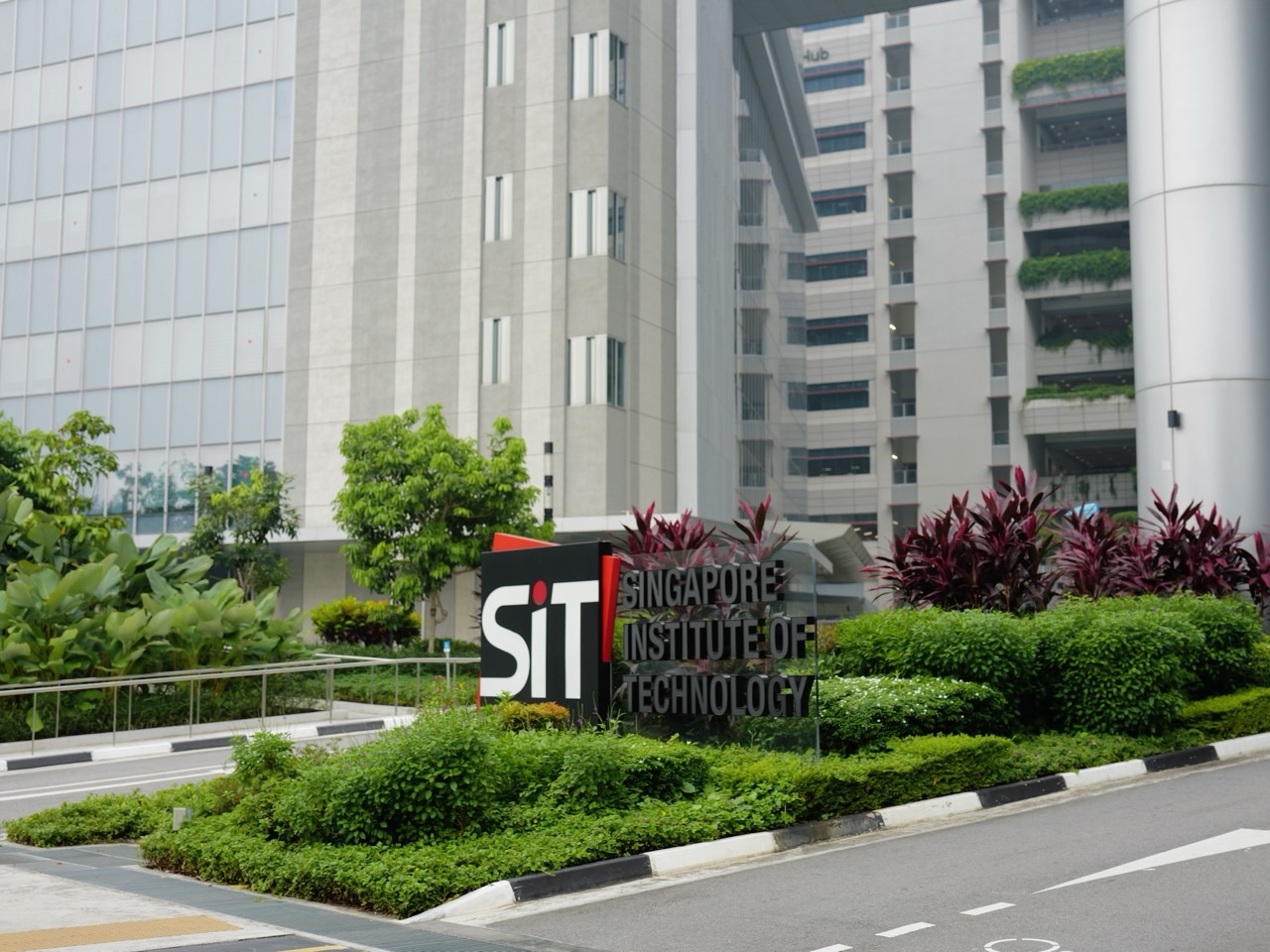
SIT and PDD businesses have opportunities for applied research, but the roof-farming announcement alone does not identify which SIT programme is responsible for every experiment. An authentic partnership should describe agreed research questions, student supervision, site permissions, data ownership and how any findings may be published.
A student thesis could investigate safe monitoring of water use, light patterns or equipment maintenance, but it must use authorised spaces and appropriate academic procedures. The educational benefit arises from disciplined research rather than the prestige of working on a landmark building.
How rooftop farms differ from community gardens
Community gardens primarily serve residents who cultivate plants for recreation, learning or small harvests within permitted arrangements. Commercial rooftop farms are operating sites with professional staff, equipment and obligations. They may be closed to the public for good reasons. The two can share plant science without sharing access rights or business models.
A parent looking for a hands-on gardening activity should check NParks’ relevant community-garden and allotment programmes rather than assume a PDD roof is available. Local enrichment is valuable when it occurs in an appropriate accessible setting, regardless of whether the building has advanced technology.
Does the roof need artificial lighting?
A canopy-based farm might use natural light alone or incorporate supplemental systems, depending on the crop and design. Artificial lighting increases electricity consumption and must be assessed as part of the production model. The presence of rooftop solar does not guarantee that lighting loads are fully offset at all hours.
Any claim that a farm is “solar powered” should specify what is measured. Electricity may enter a shared building system, be stored, or be consumed at different times from generation. Without metering and a clearly defined accounting boundary, the label can conceal more than it explains.
What happens when the farm stops operating?
A truly resilient design needs an end-of-life plan. If an operator leaves, who removes trays, growing media, pumps and irrigation systems? How will drains be checked and waterproofing inspected? Can the roof return to another use without extensive damage? Temporary experiments are easier to manage when restoration requirements are agreed at the start.
The same question applies to solar equipment with different service lives. Long-term maintenance and eventual replacement are part of environmental performance. Sustainable design should not produce a difficult or unsafe disposal problem when technology changes.
An environmental field report a student can actually write
A school report can begin with the official JTC statement, then explain why combining farm and solar functions involves competing needs. The student can cite the date of the source, draw an illustrative roof plan and identify variables such as crop light exposure, panel output and maintenance access. Their observations should be described as classroom reasoning, not evidence gathered from a restricted PDD roof.
The conclusion should identify which future data would settle the question: a verified cultivated area, measured electricity generation, harvest yields, water use and maintenance costs. That answer may be more scientifically mature than a glossy drawing labelled “fully sustainable” without measurements.
How to evaluate a promotional claim about a rooftop harvest
Suppose a company announces that its new system produces twice as much food as a conventional growing area. Ask what was counted, the unit of comparison, crop species, area definition, period and how losses were handled. If one figure uses marketable kilograms and another includes immature or spoiled produce, the comparison is unreliable.
Also ask whether the claim accounts for labour and energy. A high-yield crop can still be costly or environmentally inefficient. A useful public pilot report should make the measurement method transparent without exposing sensitive commercial information.
The broader Punggol future: buildings as living laboratories
Punggol Digital District was conceived as an integrated place where industry and academia can test practical systems. The rooftop farming concept sits alongside district cooling, energy storage, data platforms and water-sensitive design. The common thread is experimentation linked to actual operation, not the installation of a gadget simply for display.
The most valuable future impact may be knowledge that other buildings can use. Some lessons will transfer widely; others may apply only to a particular roof, crop or weather setting. A responsible future-town article distinguishes those outcomes and avoids the claim that every innovation must scale across Singapore to count as worthwhile.
A household discussion of trade-offs
Parents can invite children to make a list of what a roof could accommodate: solar panels, a farm, a garden, mechanical equipment, drainage, access routes and maintenance space. Then ask whether every item can be maximised at once. Children quickly discover that giving more space to one function may reduce another.
This is a practical lesson about trade-offs that applies beyond agriculture. Schools, parks, roads and housing also compete for limited space. Learning to justify priorities with evidence is one way the Punggol development story can enrich everyday education.
How to interpret the next official update
A new JTC announcement might say that a prototype has begun operating, that a second site will be tested or that a particular design performed better in measured conditions. Each would be a meaningful milestone. But a second roof does not by itself establish full rollout, and a successful demonstration does not guarantee the public can buy produce there.
The best update will state exactly what changed, where, when and under whose responsibility. A date in a press release should be attached to the particular stage it describes—design, prototype, commissioning, commercial operations or public outreach. This prevents the same future plan from being repackaged as completed year after year.
A final decision table for readers
Residents need to know that the concept exists but does not establish public access. Students can explore the underlying Science and Mathematics safely in school. Startups should assess the actual permissions and commercial terms before proposing a rooftop pilot. Researchers need a clear experiment and suitable data governance. Building operators need engineering compliance, reliable maintenance and an end-of-life plan.
These different reader decisions show why one generic claim that Punggol will have urban farms is insufficient. A useful development guide answers what is confirmed and which practical action follows for each audience.
| Key point | Meaning |
| Prototype | Test of a configuration; not proof of viable mass production |
| Scaling decision | Requires yields, costs, safety and maintenance evidence |
| Public access | Not implied by commercial rooftop location |
| Energy output | Measure separately from crop productivity |
| Food safety | Dependent on operator procedures and relevant rules |
| Verified source | JTC’s 2024 releases and current 2026 sustainability page |


